Category Archives: SF

The Three Lorraines of Back to the Future


In this essay I am going to look at the three representations of the character Lorraine Baines-McFly presented in 1985’s Back to the Future and what might be suggested about the character and her history. This piece will not deal with subsequent variants presented in the two sequels.

Lorrain — Prime

Lorraine McFly as she first appears in the film is a woman struggling with alcoholism, a prudish defensive approach to sexuality, and who is deeply unhappy. She doesn’t give voice to the unhappiness, having long ago surrendered to her despair with all traces of self-confidence and agency vanished from her personality. She is in short, a broken person. Adding to the tragedy is that her pain, her shattered nature is invisible to the men in her life. Her husband, George McFly, blindly laughs at the dinner table while watching re-runs wholly unaware of his wife’s grief. Neither of her son appear to notice. the painful evening, the large amount of alcohol is so routine as to be invisible. This suggests that Lorraine’s fractured psyche is decades old.

The only other male present in the prime timeline that has any notice of Lorraine is the bully Biff Tannen. While the two characters have no direct interaction in the establishing scenes of the film Biff does tell Marty, Lorraine’s youngest son and the story protagonist, ‘tell your mom I said hi.’ An innocuous statement but actor Thomas F Wilson’s line reading fills it with menace and meaning. There is a clear implication of a deep and unsettling history.

Lorrain — Base

Lorraine Baine, Marty’s mother before marriage and a lifetime of crushing pain, in 1955 is a vibrant, outgoing, and bold teenager. She is unafraid in her risk taking, groping crushes under the dinner table with her parents present, venturing to a stranger’s house in pursuit of that crush, and adventurous in her dating, willing to make confident first moves rather than wait on her partner. It would seem to be inconvincible that this self-confident teenage loses all her fire and vitality simply from the confines of matrimony.

Lorraine — variant

After Marty’s excursion to 1955 and his interference with his parent’s courtship and lives, including alteration that prompted to his father to interrupt Biff sexually assaulting Lorrain, Marty returns to discover that his entire world has changed.

Lorraine now is fit, healthy, and confidence. Vanished has all traces of her sexual prudishness and defensiveness as she exhibits both an open sexuality with her husband, a George variant that is successful and confident, and accepting of her son’s sexual life. The Lorraine variant is logical progression of the teenage Lorraine the audience was introduced to. Marty’s meddling has dramatically changed both his parents.

What broke Lorraine prime?

It would seem to be down to two possible explanations. Life with a George that never found his self-confidence or success drained Lorraine of his own agency and vitality. This explanation reduces Lorraine to simply an extension of George and would seem to be tension with the Lorrain that existed before George entered her life. It also ignores the relationship between Biff and Lorraine. 30 years after their high school days Biff still feels the need to make vague and unsettling comments about Lorraine.

Everything seems to suggest that Lorraine suffered a deep and shattering trauma that psychologically damaged her and coming to adulthood in an era that disparaged psychological health and treatments she was left to suffer, dealing with her trauma by self-medication with alcohol.

The alteration of history with George interrupting Biff’s sexual assault in a manner that forever reduced Biff to simpering subservient character is the also the event that prevented Lorraine’s trauma, providing her with the space to blossom into the woman she always had the potential to be.

Perhaps not the night of the ‘Enchantment under the Sea’ dance as it happened in the Marty altered timeline, but it would seem likely that at some point in the original timeline Biff completed his sexual assault on Lorraine, and bereft of resources and mental health treatments, she shattered.

Share

Halfway There

After the brief suspension of daily writing while I looked after my sweetie-wife and then the week and a half it took to return to full speed clocking in around a thousand words per day at lunch, I have passed the halfway point of my current novel in progress.

This novel certainly has had a long meandering and strange journey. The central core concept, a telepath that planting ideas in your head but your inner monologue remains in your ‘voice’, so you are unaware that it is not your thought, dates to the late 1980s. Since then, the whole setting has been crafted, short stories, both of this idea and others in the same setting, have been written, and more than one novel has been written.

Yesterday the word count passed 53,000 words and with the momentum back I hope to have the first draft completed in about two months. Luckily for me my first drafts in terms of character, plot, and events, are fairly close to my final drafts. (An advantage to detailed outlining.) And subsequent drafts are principally about editing and proofing.

I will be thrilled to finish this novel and get it out the door. (Though sadden because one editor who had seen a novel of mine in the same setting and liked the character has now retired.) I am thrilled because I can’t wait to research and write my next novel a d dark noir sf set on Mars.

Share

Finally Getting Back my Rhythm


The last month has been quite hectic. Early in March my Sweetie-Wife underwent a total hip replacement for one of her hips and I took two weeks of paid family leave to look after my sweetie as she recovered.

She has recovered and the medical procedure went swimmingly, so all is good there.

Before the surgery I was writing north of 1000 words a day on my next Military SF adventure novel but braked to a complete stop as I transitioned to care giver for the recovery period.

When I did return to work, I found it difficult to regain my writing’s momentum. This is a fact of my writing process. A project that gets paused or halted becomes very difficult to restart. It is why I cannot write more than one project at a time. One with always end up the preferred one and the project ‘paused’ simply dies.

Last week I was averaging 800-900 words a day but yesterday I passed the 1000 words at lunch mark. The momentum is back and now I just have to keep the thing rolling.

It’s a particular challenge right now because a second surgery will be taking place and my mind has been racing on a new novel idea that has me very excited but requires a ton of research.


Share

My Favorite April Fool’s Joke of 2022

Mostly April Fool’s jokes are tired tedious and not for me. Howvere this year there was one that I throughly enjoyed.

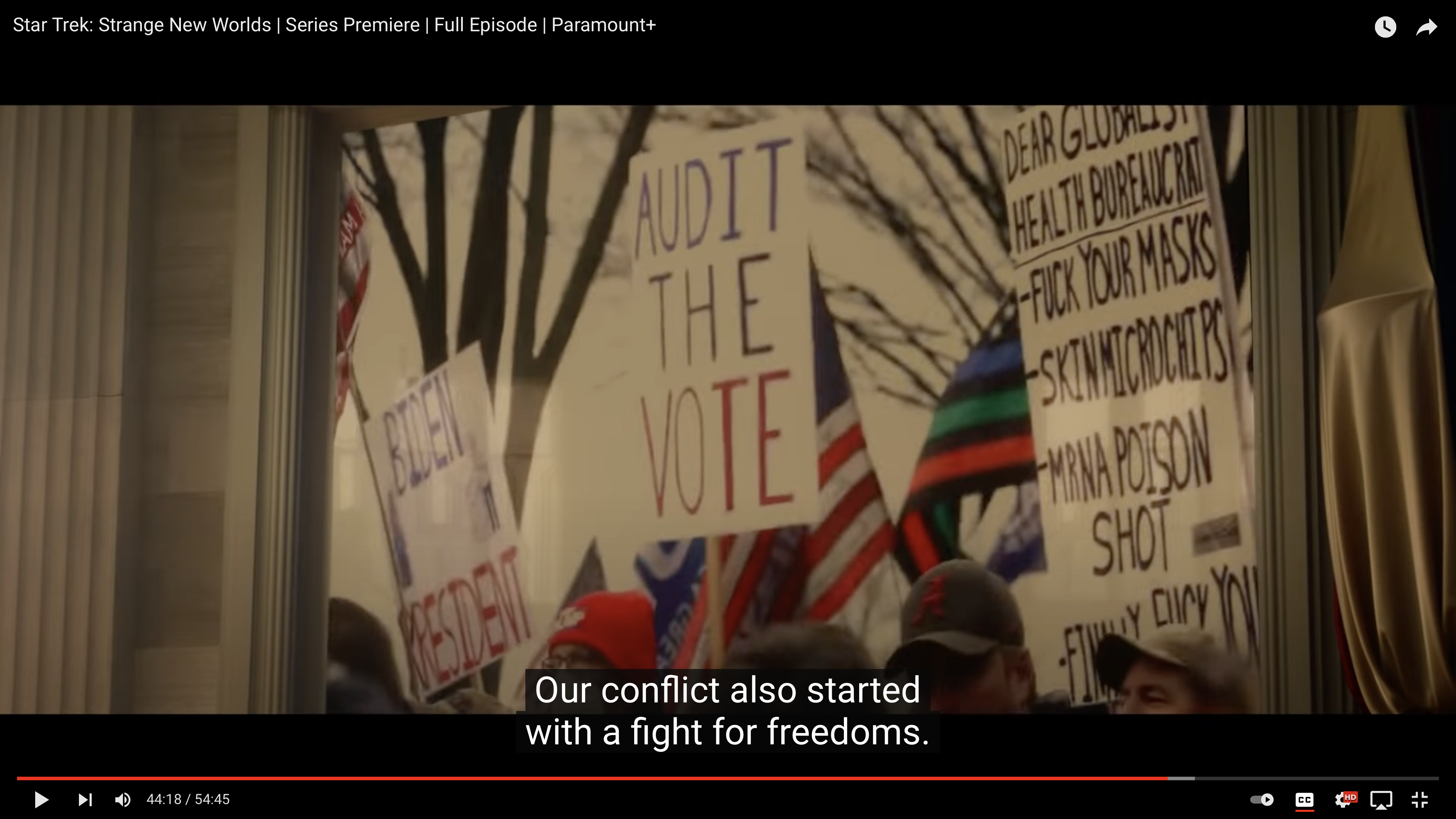
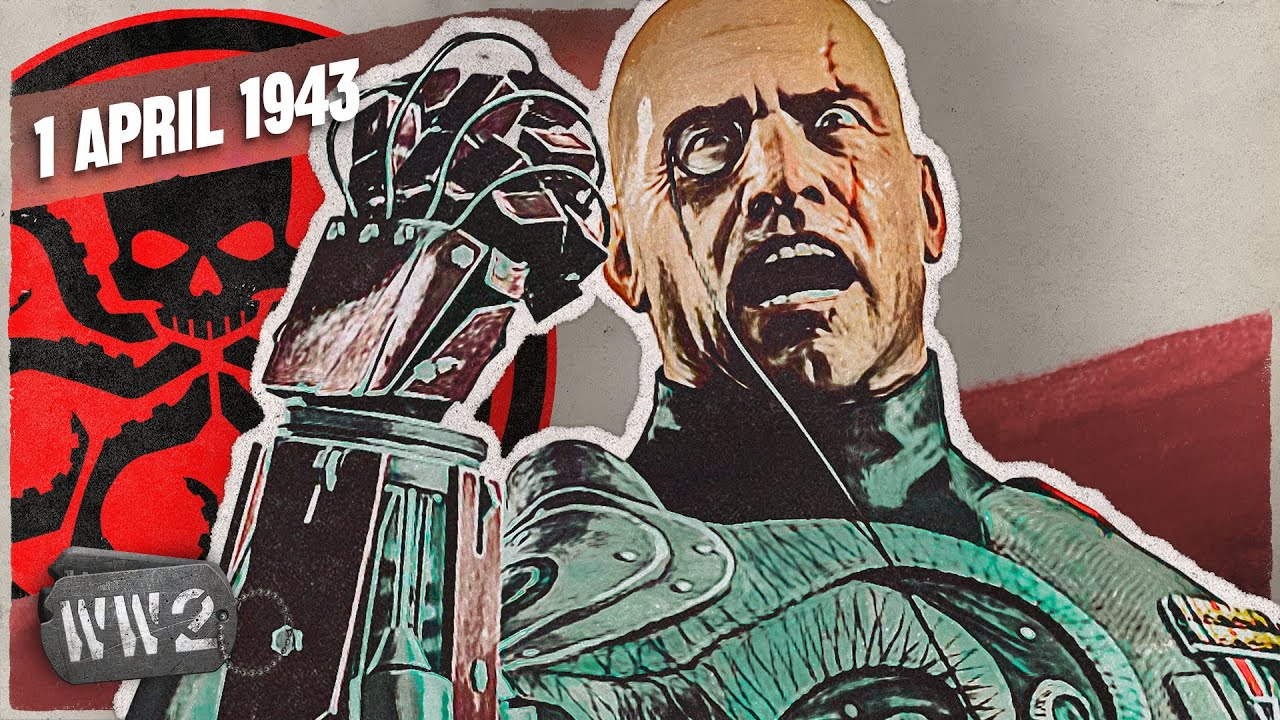
WWII in real time is a Youtube channel that is following the events of the Second World War week by week. (They are currently in April of 1943.)

This was the special episode that aired on Friday April 1st. (I particularly like the David Hasselhoff deep cut.)

youtube placeholder image

Share

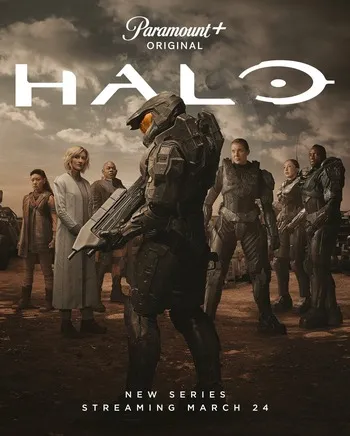
Series Review: HALO


Adapted from the 2001 Xbox game HALO: COMBAT EVOLOVED Paramount + debuted yesterday the pilot episode of their Sci-Fi series HALO.

While I have played the game and its sequel I have never dived deeply into the lore or worldbuilding for HALO and as such my interpretation of the series is not a comparison but as a new viewer.

Set in the distant future of the mid 26th century, HALO is concerned with both a conflict between the Interstellar human government, breakaway rebel/insurrectionists colonies the war between the humans an alien coalition known as the Covenant. The story centers on a cybernetic warrior Spartan 117 ‘Master Chief,’ part of an elite unit of cybernetic fighters.

When the Covenant attack the separatist world of Madrigal, the Spartan intervene and discover in addition to a sole survivor of the massacre that the aliens were seeking some device on the colony. Factions with the human government splinter and contest each other for the best methods in dealing with both the Covenant and the Separatists with Master Chief, acting on an element of his reawakened humanity, finding a measure of independence from his programing.

HALO boasts impressive production design and special effects with many of the game elements both faithfully reproduced visually and credibly for today’s discerning audiences. The storyline is not a direct adaptation of the game’s plot and I believe I read somewhere that the show runners have no intent to adapt the already existing lore and story from the games.

The pilot episode seems to be unable to make up its mind what it wants in terms of tone. The action sequences are fairly well staged and fast paced but with the tangled political plotlines leaving the viewer without any clear faction to support the action is undercut. In the pilot it is unclear if any of the factions deserve the viewers sympathy or emotional investment.

Pablo Schreiber performed quite well as Master Chief but with and without his helmet. However, I found Natascha McElhone’s performance as Dr Halsey, creator of the Spartan Program, stiff and unconvincing. Several times we have her looking directly down the camera lens and I was at a loss to understand just what emotion or thought she was attempting to convey. This may be a directorial issue as I had no such troubles when she was in the American version of Solaris.

The episode’s dialog is best described as serviceable. While the exposition is not as heavy handed slapped into your face as JMS’s on Babylon 5 there were repeated instances where the characters spoke more for the audience benefit than from any inner need.

Overall, there is enough there to hold my interest and bring me back for another episode, but the series has failed to truly hook and me and leave me with anything more than a mile interest. Hopefully that will change with more and better episodes.

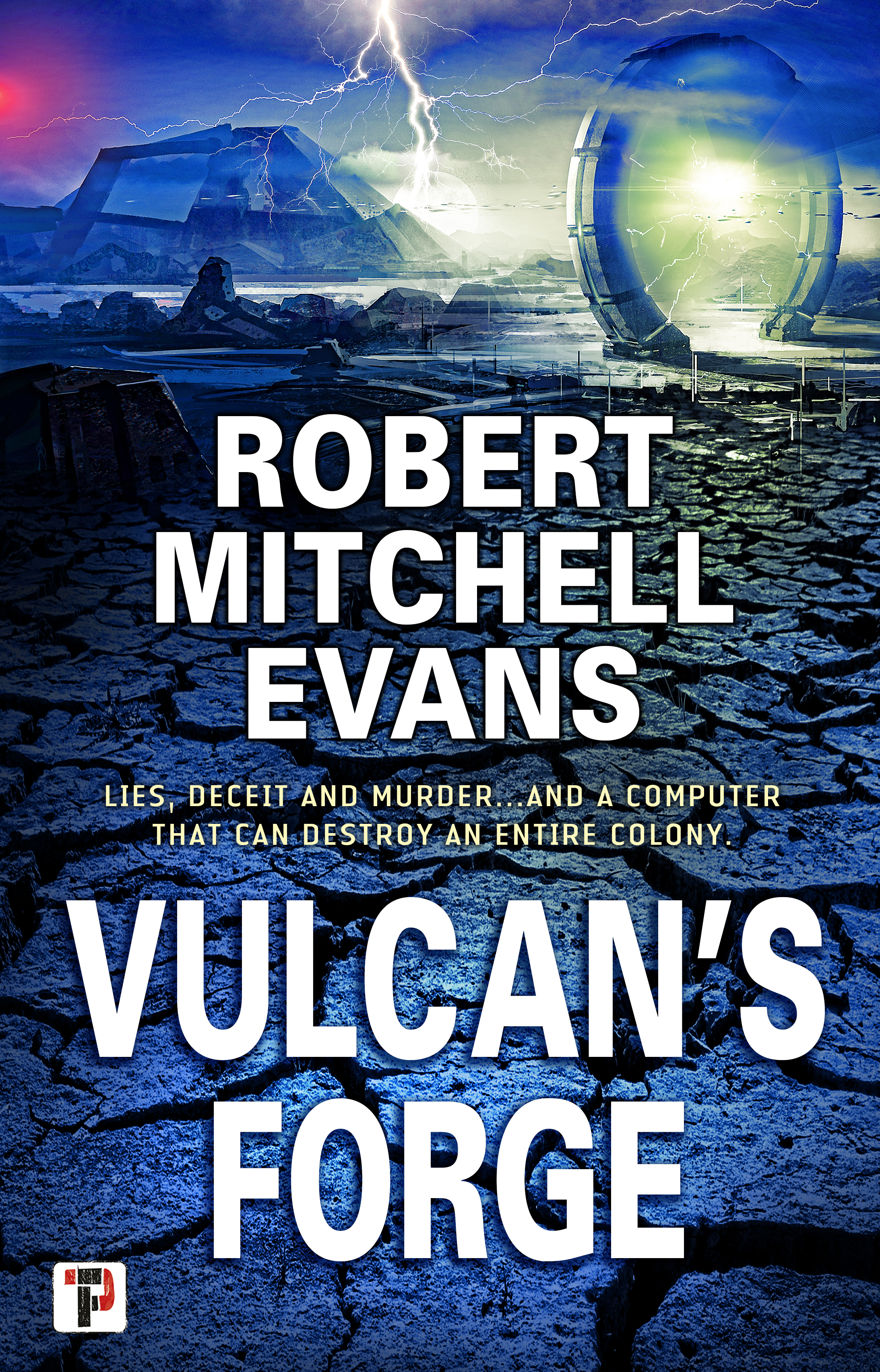
A gentle reminder that I have my own SF novel available from any bookseller. Vulcan’s Forge is about the final human colony, one that attempt to live by the social standard of 1950s America and the sole surviving outpost following Earth’s destruction. Jason Kessler doesn’t fit into the repressive 50s social constraints, and he desire for a more libertine lifestyle leads him into conspiracies and crime.

Share

An Abominable Adaptation: Verhoeven’s Starship Troopers


Before the essay gets rolling the subject and point of this piece is not to debate Heinlein’s novel Starship Troopers and whether it is or is not fascist. If your comments are about the novel and politics, save them. That’s not the issue at hand.

Verhoeven’s 1997 film is a piece of political satire, a cinematic tradition with a distinguished and proud linage including the likes of Doctor Strangelove” Or How I Stopped Worrying and Learned to Love the Bomb. Satire has a rich history and can be a great tool for arguing a case and it is not always about humor and laughter. Swift’s A Modest Proposal isn’t funny, but it is excellent political satire. So, the fact that the film Starship Troopers isn’t a comedy does not remove it from the category of satire.

What makes this adaptation abominable isn’t that it isn’t faithful to the novel threadbare and nearly non-existent plot or that the film is a satire where the novel is not. The issue is that it targets its satire directly on the novel’s argument while presenting itself as an adaptation of the novel’s argument. This is disingenuous and a perversion.

Consider a hypothetical counter example. Let’s stipulate a satirical adaptation of Orwell’s classic novel 1984. The setting is already very close to satire and Gilliam used it as a jumping off point for his own comedic satire Brazil but importantly created his own work rather than abuse another artist’s. So, in this 1984 adaptation we not only make it satire we make the target Winston Smith and ridicule his character and his outlook, raising Big Brother to a benevolent force concerned with the happiness and safety of its citizens. This would be a perversion of Orwell’s work and in my opinion it would be immoral. I think it is wrong to take another artist’s creation and twist it, mutate it, and abuse it to make it attack itself. We could do the same thought experiment with countless classic works, sch as transforming Fahrenheit 451 into a defense of ignorance and illiteracy but I think the point is made.

Obviously not only can you attack viewpoints itis good to challenge other ideas and themes. My understanding is that Joe Haldeman’s The Forever War is in part a direct answer to Heinlein’s Starship Trooper. Verhoeven often returns to the idea of fascism and the dangers it presents. I applaud him and his stand as an anti-fascist but inverting another artist’s work is a dishonest and disrespectful method. It is far better to craft your own piece and argument such as with The Forever War or Brazil than to engage in blatant distortion.

Share

Resident Alien: Mid-Season Impressions


The SyFy channel’s series Resident Alien has been progressing through its second season and now with several episodes completed here are my thoughts.

For those who missed the first season the show is about an alien whose mission was to destroy human life on Earth. However, after crashing he becomes stranded and adopts the identity of a doctor in a tiny Colorado mountain town. The second season continue the story with several residents of the town aware of the doctor’s true nature and the conflict between the alien ‘harry’ and his emotional ties to his friends and humanity in general. There are also secret government agencies chasing after Harry to capture him.

The second season feels a little more scattered, with less narrative momentum than the first one, though the character interaction and rich comedy are still quite present. Harry had clear goals is season one which provided most of the character’s motivations and in this season, he seems more adrift, more buffeted by the plot than driving it. That said, the ending is where this ties together and it, they pull it off then the season will still be a success,

Share

Final Thoughts: The Book of Boba Fett


This week the Disney+ series The Book of Boba Fett aired its final episode of season one. The show proved to be a disappointment. Now, I have never neem enthralled by the character of Boba Fett. In The Empire Strikes Back, he was clever, resourceful, and stood up to Bader but as a character he was essentially a cypher. His demise in Return of the Jedi was ham-handed and stank of authorial intrusion and as such he eventually survival rectified that mistake.

That said what transpired in this series lacked emotional heft. After slaughtering Jabba the Hutt’s successor Fett attempts to become the new crime lord for the city with a crew smaller than Jimmy the Gent’s in Goodfellas. Pitted against several crime families and an off-world drug syndicate Fett unites several disparate forces for a final stand to free the city of Mos Espa from the evil crime lords and syndicate.

At its heart it looked as if The Book Of Boba Fett actually had a story that could have been interesting. Fett, a ruthless and amoral bounty hunter learns, after living extensively with natives of the Tatooine dessert, that community matters and rejects his former life of hunting for one of protecting. Sadly, the execution of the series hopelessly muddled the story, and the series most emotionally meaningful moments all came from cameo of character visiting from the series The Mandalorian.

Perhaps a worse cinematic crime is that in the series finale the character of Boba Fett is made to be plainly stupid. Fett and his right-hand enforcer are pinned down at the west end of a wide street by an armed force closing in from the east. (I picked the directions at random so the blocking can be clear.) Suddenly new allies from the free town arrive and join the fight on Fett’s side. Do they attack from the east, forcing Fett’s attackers to defend from both sides? No, they swoop in and join Fett in being pinned down at the west end of the street. Then the Mods, colorful biker gang allies of Fett arrive, and go straight to west end and join in being pinned down. After than another ally, then experienced Wookie fighter also ignores attacking from the east and joins his already besieged allies. I muttered to my sweetie-wife as we watched ‘I wished my players were this stupid.’

An opportunity to expand and deepen the Star Wars universe had been wasted on confused storytelling and pointless action.

Share

Doctor Who’s James Bond Problem


I have been fairly unengaged with the last few seasons of Britain’s most popular cultural export, Doctor Who, the long-running fantasy adventure series about a space and time traveling alien and his various human companions.

The series, first started in the 60s, has told stories that spanned galaxies and stories restricted to a single isolated lighthouse. Sometimes the Doctor, for the character is never properly named, has a curt gruff personality, sometimes the Doctor is silly, and sometimes, tragic. The eternal ‘regeneration’ that has allowed the character to pass from actor to actor has also allowed the series to remain relevant to the times of each series giving the show powerful staying ability.

Lately however it has come to resemble late period James Bond before the reboot of that classic franchise in 2006. Bond’s adventures grew in scale and stakes, or at least attempted to. The truth of the matter is there are only so many times you can ‘save the world’ before that become old hat and the audience turns disinterested.

Who took this issue to greater heights. With settings beyond one planet the Doctor began saving the universe, then destroying and recreating the universe. And each iteration presented stranger and more powerful antagonists for the doctor to battle, replacing emotional connection based in character with what they hoped was thrilling expansive scale.

For me scale never surpasses character as emotionally engaging. I remember the 2009 Christmas Special for Doctor Who The Waters of Mars with the Doctor one a single planet trying to save a small, doomed crew far more clearly than I do the season that just finished with another universe threatening pair villain and absolutely no emotional heft.

The problem is the writing. Which is strange because show runner Chris Chibnall has turned out very compelling character-based drama such as with his series Broadchurch but seeming has forgotten the basic of good character and story when handed a fantasy franchise.

I hope the Doctor’s future has more small scale but greater character driven stories rather than more failed attempts at ‘mind blowing’ concept that are emotionally meaningless.

Share

A Phantom Fidelity: Frankenstein Monster’s Creation


It is difficult to count the number of times Mary Shelley’s 1818 novel Frankenstein has been adapted in some form or another to motion pictures, but the count is in the scores. Some have attempted to hew closely to the novel as in Kenneth Branagh’s 1994 Mary Shelley’ Frankensteinwhile other are so disregarding of the text that creature is made into a kaiju fighting other oversized monsters in the Japanese wilderness.

What nearly all these adaptations have in common is a visually dynamic creation process where the creature is brought to life. The method varies wildly, in the first film adaptation from Edison’s company the creature is born in fire and in the aforementioned 1994 film the processed is wet and liquid much like a fetus growing in a womb. However, the most famous and most used process is lightning during a fantastic storm as inspired by the pre-code 1931 James Whale film Frankenstein. (Ironically it is not electricity that provides life the creature in this film but the undiscovered ‘Great Ray’ beyond ultraviolet that is the source of life, but the movie fixed in the popular imagination the idea of electrification into life.) This production also created another recurring fixture in future adaptations, the twisted assistant, here named Fritz, who later and indelibly became Igor.

What makes these phantom fidelities is that the novel spends an amazingly little amount of time or text on the creation itself. One paragraph, 98 words out 75,000 depict the creature creation.

It was on a dreary night of November that I beheld the accomplishment of my toils. With an anxiety that almost amounted to agony, I collected the instruments of life around me, that I might infuse a spark of being into the lifeless thing that lay at my feet. It was already one in the morning; the rain pattered dismally against the panes, and my candle was nearly burnt out, when, by the glimmer of the half-extinguished light, I saw the dull yellow eye of the creature open; it breathed hard, and a convulsive motion agitated its limbs.

And yet I think it would be very difficult to persuade a production company to fund a new adaptation of Frankenstein without a climatic creation scene present. And Igor has become so accepted as cannon that in the 2004 film Van Helsing when asked why he tortures the creature Igor responds, “It’s what I do.” His existence not only as assistant but as tormentor is so fixed it no longer needs any form of explanation. The mad scientist, the sadistic assistant, and the grand act of creation seem foundational to the story and none of it existed in the original text. Perhaps the person who casts the longest shadow in the universal myth, second only to Shelley herself, is James Whale.

Share