Category Archives: writing

A Lethal Literary Trope

Tropes, in prose and in cinema, are commonly used ideas or conventions that are at once familiar and if overused trite and cliche. Enemies-to-Lovers, The Real Enemy is the Best Friend, The Chosen One, The Hidden Society or World, are but a tiny sampling of well-worn tropes. The Harry Potterfranchise makes extensive use of two, Harry is the Chosen One, destined by prophecy to end the villain’s reign and life, and the entire ‘Wizarding World’ is hidden from the rest of humanity, existing in a secret space just outside of the public’s knowledge.

Used correctly tropes can make the world building of a piece of fiction faster and more easily grasped by the reader or audience; subverted they generate surprise and a fresh perspective that can illuminate actual reality; and badly deployed or overused they become cliches that tarnish and degrade a work. But something that is less considered is the danger a trope can present to the world that the reader or audience lives in, when a trope ceases to be a device for fiction and is taken on as a representation of reality.

The hidden but vast conspiracy, such as vampires, aliens, or a cabal of ultra-wealthy Satanists, who manipulate the world’s events, is, in my opinion, a terribly dangerous trope because it aligns so closely with actual paranoid delusions held by far too many.

In 1988’s John Carpenter’s They Live, adapted from the short story Eight O’clock in the Morningby Ray Nelson, a down on his luck itinerant worker, Nada, stumbles onto the fact that human society is being managed by extraterrestrial aliens who keep humanity in a perpetual state of perceptional blindness in order to craft the global capitalist culture by which they extract the world’s resources with the assistance of a small cabal of quislings that have betrayed the rest of the world for personal wealth and power. Nada, after a brief spree of killing the aliens as he encounters them, joins a band of resistance fighters and, in clear trope fashion, succeeds in revealing the vast conspiracy to the wider population.

Carpenter, whose political leanings are clearly on the left side of the accepted spectrum, intended his film to be a critique of capitalism and specifically the culture around the American Republican Party and the head of that party at the time President Ronald Reagan. However, not everyone interpreted his satire in the manner that Carpenter intended.

American neo-Nazis saw a very clear metaphor in the film, one that reflected and validated their own twisted conspiratorial delusions. To them the movie was very boldly speaking about the international influence and control exerted by ‘the Jews.’  Carpenter augmented this interpretation by not only having the aliens occupying the very top of American society, including the presidency itself, but they also lived and worked in the most common of professions, putting in their hours as beat cops and random businessmen on the streets — a bit of clumsy worldbuilding that validated the delusional and evil beliefs of the neo-Nazis and their ilk.

I do wonder just how much of the conspiratorial culture we suffer today was fertilized by the paranoid political thrillers of the 1970s. The movies that espoused the idea that the CIA manipulated events, that every assassination is evidence of secret plots operating behind the scene. Hell, how much of the moon landing hoax was supercharged by Capricorn One and its faked Mars mission plot? What looks ‘popcorn movies’ that only existing to pass a few hours are really ideas. Ideas that in the true sense of the word ‘meme’ take hold in people’s minds and spread like a virus.

This goes beyond the poorly thought out worldbuilding of They Live and into the heart of the story conceit, that, in the face of all reason and evidence, it is possible for a vast and all-powerful conspiracy to exist in the world. It doesn’t matter that in the end this is a silly and overly simple adventure story, the foundations of that story validates the very concept of that vast conspiracy. People may come away knowing that aliens aren’t real, but they ‘know’ that conspiracies are and the subtle effect of such tales is to reinforce and nurture such fantasies that are mistaken for reality.

Antisemitism is a live and terrible thing in our world. It is not a thing born of fantasies but one that is driven by dark and twisted ones, clumsy and ill-considered employment of conspiratorial tropes feeds into and reinforces it. There is not a direct line between stories like They Live and events such as The Tree of Life mass murder, but because the line is not straight or easily seen doesn’t mean that no connections exist. Stories shape how we see the world, what we believe to be true and what is false and they also instruct us how to fight the evil that they present. Because of this I think that vast and all powerful conspiracies need to be used in fiction with extreme caution and perhaps best of all, never.

Share

Dreams Do Not Work That Way … at Least Not For Me

.

There’s a trope in writing and even a little in the visual arts of television and film that also annoys me when it pops its head over the battlements but to unpack it, I must first talk about the way I experience dreams.

Dreaming while asleep apparently appears across species and while nearly universal are also powerfully idiosyncratic. I had one friend who described that as a child and into his teenage years every nightmare started in exactly the same manner; he was belly crawling through the tall grass of his backyard and suddenly he would come across a hideous stone idol, bats would fly, and then the scene would change as he fell into the terrifying dream his subconscious had cooked up that night.

I myself will sometimes have dreams in which I do not appear, but play out like movies with close-ups, cuts, and even recognizable stars playing parts in what are often frightening horror stories that my mind conjures up for its own amusement. Those dreams are uncommon, and the more generalized dream is one that plays out entirely from my own point of view, I am there experiencing the events and sensation of whatever the dream has crafted. And no matter how outlandish or at odds the dream is with reality, be it that I am having a grand time at an amusement park with a dear friend who in real life had passed away some years earlier, or the strange shifting scenery when walking around a corner and I find myself in a location that could not possibly have existed around that bend, such as walking from a school hallway and directly into the deep desert, the dream presents, at that moment, as absolute and uncontested reality. If something makes me question the events as impossible, that is the moment sleep slips away and I awake in my bed. Dreams, while they are playing, are unquestioned. They are what is.

That very unquestioned nature, that aura of total acceptance, bring us to the trope that annoys me so very much.

When a character in a book or in a show or movie finds themselves suddenly confronted with events that are far beyond their daily life and who mutters or exclaims ‘I must be dreaming,’ my suspension of disbelief shatters. That’s not how it works. If you are dreaming you do not know that you are dreaming and you accept it. So this trope, not only is it tired and worn, something that should be rejected on those grounds alone, it also breaks character for me and I would be so very happy if I never ever come across it again.

Share

Momentum, Inertia, and My Writing Style

.

Inertia in physics is the quality of an object to resist any change in motion or direction and that property is directly related to the object’s mass. High mass items require more force to start, stop, or change their motion. Momentum is the quality of a moving object and is determined by both the object’s mass and by the object’s velocity.  A low mass item moving at high speed may very well have more momentum than a much heavier object that is moving much much slower.

How do these concepts of physics apply to the esoteric and decidedly far less physical activity of my writing?

To me, projects, be they short stories or novels, seem to possess qualities very much like inertia and momentum. The idea, the character, the plot, and the themes of the piece can all exist in that void that I call my brain, but until I overcome the inertia at my keyboard, it does not move from the fog of imagination to the concrete existence of words, sentences, paragraphs in a document.

Once that inertia is overcome and the words flow out of my mind and onto the page, then the project acquires its own version of momentum. It doesn’t want to stop but it wants to continue moving forward, gathering speed as it hurtles towards its conclusion. This is both a blessing and a curse. A blessing in that once I have passed some ineffable point the project becomes self-sustaining and the probability of it crashing and burning before the tale is told shrinks with each passing word and page. A curse in two manners, 1) I cannot work on more than one project at a time. Even a little short story can overturn a novel in progress by stealing all the momentum for itself and 2) if anything seriously disrupts the process, like a derailed locomotive the project crashes and can be very very difficult to get back onto its track and moving again.

The latter is what I am dealing with at the moment. The week I spent out of commission while I dealt with a case of RSV, get your vaccinations I sincerely believe mine kept me out of the hospital, has killed all the momentum of the novel I was working on. Now, with so much more crafted about it you might think that it would be easier to get the thing moving again but reality seems to operate in the opposite. It feels harder to get the thing rolling down the track but I am determined to do so. I am determined that before 2026 is done I will have my Cascade mountain folk horror drafted.

Share

I am no Salesman

.

I have long accepted the fact that the talent to sell things is simply not part of my personality or skill set. Many years ago, so many that the event lay in the last century, during a job interview for a telephone customer representative position with a cable company I was tasked with selling the interviewer on ‘buying’ an ink pen from the desk. I failed and I did not get the position. When I have worked retail, it has always been the straight-forward cashier role, never a position that required me to upsell or convince anyone that any particular product is what they really needed or desired.  The closest I have ever come to that sort of service was working in a video rental store and recommending films to customers when they asked, but even then, that was always based on what the customer told me about their previous tastes.

It is with terrible dismay that I have come to the conclusion that this failure to ‘sell’ people may also be my greatest stumbling block as I seek traditional publishing for my novels.

A recent reply from an agent that passed on my 80s, gay, cinephile, southern California horror novel read in part, ‘ I’m afraid I didn’t feel as though your pitch and concept were quite strong enough for me to confidently present in today’s market’.

The query process, where an author sends off an introductory letter along with the opening pages of the novel is in fact a sales pitch. I recognize this. You are trying to sell two things simultaneously, the novel in question as a marketable book ready to compete with others in its genre for shelf space and sales, and yourself as a professional, able to work with others such as agents, editors, and the like, in the publishing world.  There is the rub, that is get past the gate, to transition into that world I need to sell myself and I need to sell my writing, utilizing the very skill that I most suck at.

Now, being aware of the problem, knowing its existence, is the problem half solved, but only half. This is forcing me to reframe precisely how I approach the crafting of query letters, recognizing what they truly are and just how far my skills fall short in that area. I can’t very well quit, that is simply not an option, so I have no choice but to try, and no matter what that little Muppet says, there is a ‘try’. It is time to become a salesman and hope that I am not in that damned play.

Share

Andy Weir, Social Commentary, & World Building

.

Recently Andy Weir, author of The Martian, Artemis, and Project Hail Mary, commented that he dislikes and avoids social commentary in fiction, preferring to seek to simply entertain with his novel and expressing a disdain for ‘lecturing.’

I will take Mr. Weir at his word that he dislikes the tendency for some authors and projects to pull out the soap box and lecture their readers and audiences, but I do believe that it is impossible for an artist, particularly a creator of fiction, to craft their work wholly absent of social commentary. In creating the setting for their stories, a process known as world building an author makes decisions and choices, sometimes with intent and sometimes by subconscious processes, about how that world works and that reflects what the author thinks of the world that they inhabit.

World building by an author can fall into one of three major categories, a world that they fear, a world that they dream of, and a world as they see it around them.

1984, Fahrenheit 451, and The Handmaid’s Tale are all examples of world building where the author has constructed a world that they fear, one that makes a decidedly explicit social comment on what would be bad for the world to be like, be that a tyranny of political power, a tyranny of ignorance, or a tyranny of sexual domination. While all three are works set in the author’s future they are not predictions but a nightmare of a world that the author desperately wants to avoid.

Stories such as No Country for Old Men or The Remains of the Day, reflect an author that is world building from the world around them as they see it. These settings are often morally grey or even absent any morality at all though that is not a requirement of the type of world building. When such aspects are absent the piece is often called naive for its representation of humanity as basically good in the face of the few bad and evil individuals. It should be noted that world building as they perceive the world around them is not limited to contemporary fictions. Martin’s A Song of Ice and Fire while set in a world of magic, dragons, and multi-year seasonal cycles reflects a world Martin sees around him, one where, as he has said, ‘ruling is hard’ and power attracts the corruptible. JMS’ Babylon 5 is as much about America as he sees it as it is about space wars and alien races.

The final category of world building, the world as they want it to be is usually, but not always, the domain of utopian fiction. Star Trek, both the original series and even more so for Star Trek: The Next Generation is world building that reflects a world that the author wants to be real but is not. Roddenberry explicitly created Trek in the 60s because he wanted to talk about social issues that the network’s standards and practices would not allow. (see some of the script he produced for his earlier series The Lieutenant for examples.)

So, with these categories of world building in mind let’s look at the three novels of Andy Weir.

The Martian is the story of Mark Watney, stranded on Mars when the rest of the crew evacuated and believed Mark had died. The entire novel is Watney’s brilliant struggle for survival on the environmentally hostile planet and the desperate rescue attempt by NASA and the international community to save him. The Martian has no villains. There are no bad guys, no one that hated Watney and stranded him for some misplaced revenge, no ‘bean counters’ that decide that rescue is too expensive and undermine the efforts, no grandiose figure proclaiming that Watney is dying due to man’s hubris. The entire book from front to back is packed with smart capable and competent people working hard to save the life of another human being. Dictatorial governments give up state secrets to save Mark Watney, that is the extent to which Weir goes to have a story that is purely about people working together for the good of one singular person. The Martian is world building for a world that I would argue Mr. Weir wants to be real. It is an idealized world, one in which smart capable people make smart intelligent decisions and without greed or self-importance derailing the greater project.

Project Hail Mary presents a very similar style of world building, but replaces the one man in danger of losing his life with the prospect of the entire world dying should the solution not be found. Once again, we are presented with a narrative in which there are no explicit villains, no religious fundamentalists proclaiming that the dimming of the sun is ‘God’s will’ nor are their fanatical environmentalist announcing that the crisis is humanity paying for their sins of pollution. No, once again we are presented with intelligent capable people working selflessly and tirelessly towards a common goal. (There is a twist on that but its major reveal in the story and I shan’t spoil it here. But even that instance is not presented as evil but simply one born of all too understandable fear.)

Artemis is a horse of a different color, a story of corruption and conspiracy set on the moon’s only city. The novel in addition to being a very different plot that Weir’s other books is also quite forgettable. I read the novel the moment it was published and found it quite lacking. Weir handled a criminal and frankly noirish plot quite badly and aside from a few scenes that have stuck in memory for their faults the entire book has vacated itself from my brain. While I am sure this novel of criminal and conspiracies had its villain or villains I for the life of me cannot recall a single one. His attempt to write about human evil left absolutely no impression at all.

Weir, despite his protestations, does indeed make ‘social commentary’ in his novel, it is clear that in his view of an idealized world, people work together for the common good and without selfish and petty considerations.  It might strike some as Pollyannish and perhaps even deeply naive but that is a social commentary and one that strikes a deep and popular chord. Weir should take care when hurling stones concerning other artists displaying strong points of view and social commentary as it is inescapable for any artist, including himself, to not have a point of view that reveals itself in their creation.

Share

That Old Excited Feeling is Back

.

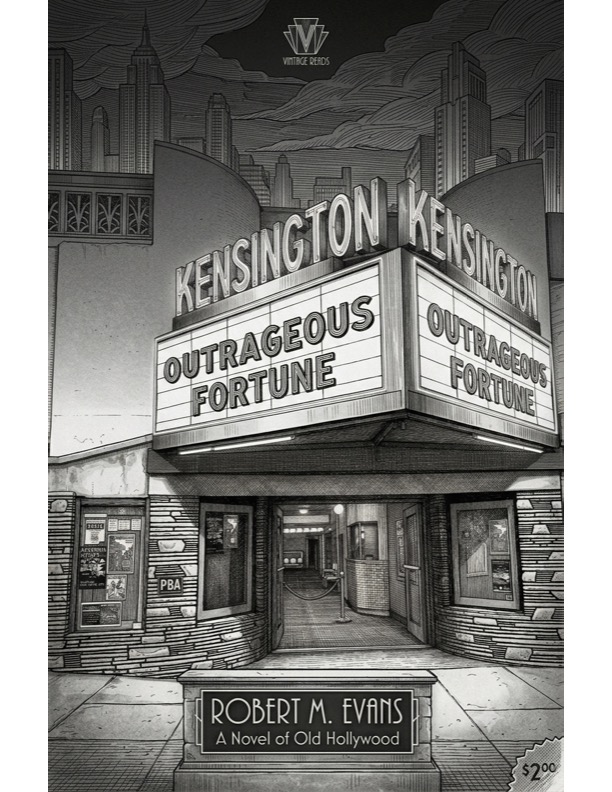
With Outrageous Fortune in the query trenches hoping to catch the right agent’s eye I wanted to turn most of my creative focus to writing my next novel. When Fortune popped up and took over my brain quite unexpectedly I had been working on a large, expansive idea that mashed-up ghost stories with disaster movies and I sought to return to that idea. A prologue and a chapter one were written but the spark wasn’t there, and I couldn’t force it. I stopped work in drafting and thought that my troubles lay with trying to write sans outline but I found myself floundering to produce even that. There is a light, a fire of inspiration, that I need to get a ball rolling on a project but I just couldn’t find it.

This past Friday a stray thought meandered its way into my skull and it set me pondering. The thought was about how you can draw a parallel between unorganized religions that practice the technique of having a sin-eater and with the theology of Christianity where Christ and not a sacrificial goat or person removes sin from a community. The idea prompted research online and began forming into settings, characters and a bit of misdirection.

After a few hours of work over the weekend and yesterday at lunch I have the bones of a new horror novel, with my fires of creation are burning bright. The five-act structure that I love to utilize is coming together with plots running in parallel each with its own set of acts. Theme is not quite there but it’s close and for myself theme usually emerges organically as the story and the characters come together. I do have a working title, Haugland’s Claim and characters that are already beginning to have discussions amongst themselves in my noggin.

It’s good to be excited about a story again.

Share

Not My Skill Set

.

So, I have been tinkering with a book cover for my werewolf novel, The Wolves of Wallace Point. I am actually unlikely to self-publish the book but the thought continues to run through my head.

I have no graphic training and very little talent in that art, but I did have a concept, an idea for something that I might like even if it was out of step with current trends in book cover design.

Decades ago, and I am talking like 80 years, one accepted design school for books was to have the cover very simple, one or two colors as your background, some very simple design elements and the text of the title and the author. No illustrations, no paintings or photographic elements, a cover stripped down to bare minimalism.

So, using Claude, because I have no experience or skill with photoshop or the like, and public-domain clip art, I knocked together this cover. It’s not sized for a paperback or hardback book, but just the front image of an eBook, but you know, I think it kind of works. I don’t consider it to be an A.I. made cover, though I used an A.I. to help me make it. I selected the color, the font, the clip-art paw prints and used Claude to execute my vision much quicker and much more easily than if I had tried to learn enough Photoshop to achieve the same effect.

Share

Stalled and Going Into a Spin

.

My current Work in Progress, WIP, is stuck with me not having added any new text to the project in about two weeks. This is usually an indication that if a project is not dead then it is in critical condition and scarcely alive in the Intensive Care Unit.

It has been a very long time since a novel sized project of mine has crashed and burned without reaching a completed manuscript and even far longer since one has crashed so early in the process. Having an unfinished manuscript is a bit of an embarrassment and something that ignites guilt and a little depression, prompting motivation to get the thing some forward momentum. But I think before I do that, I need to understand why it stalled and how I can recover this aircraft before it discovers that its altimeter has reached an AGL of zero.

The novel before this one, my gay, 80s, San Diego-centric, ghost story, written sans outline, was a great variation from my usual authorial practice and I am very happy with the results. (Even if to date I haven’t found an agent that shares that opinion.) I started this next project also without an outline and between that lack and the nature of the story, large spread out with what I hope to be a collection of important characters but lacking a single point of view carrying it through, I think those factors are why it is struggling.

So, my recovery plan right now is to stop work on the manuscript itself and revert to an outline. Make sure I know the various characters that are exploring the multiple themes of the novel and then resume writing. If that fails then it would be best to move on to a new project, something, perhaps, less ambitious.

Share

Art Is Choices Not Prompts

.

With generative A.I. getting more and more capable in nearly all areas but particularly in creating video imagery there have been a number of voices, not industry voices mind you, proclaiming the death of Hollywood with some short video piece that they crafted.

The videos are impressive for what they are, a machine mimicking the data that has been fed into it, but there is so much more to a film, a novel, a painting or any other art than how it appears in its final form. Art is about the choices the artist made along the path of creation and not just the final product that was created.

Some artists are very intellectual, plotting out every detail of their art, knowing with deliberate decision why everything is the way it is, why that color was employed and not some other hue, why the character has that particular name. Other artists work more from hunches and intuition, making decisions on the fly, exploring the piece as they create it. Why that color? It just seemed right. Both types, and every type in between, are making choices, and those choices in aggregate create what is the style and voice of the artist. It is the sum of the choices that let us look at a movie and tell the difference from one directed by James Cameron and one directed by Steven Spielberg, why a song by Taylor Swift doesn’t sound like one from Danny Elfman, why a novel from Kazuo Ishiguro hits different than one from Gail Carriger.

That voice that is generated by the thousands and thousands of choices made by the artist is a product of the artist, the events of their lives, and the way they see and interpret the world around them. It is why only they could have produced that one piece of art, because it is a reflection of everything that they are, had been, and how they are interacting with the world at that exact moment of creation.

Generative A.I. does not make choices, it uses probability on what the next word, or pixel is going to be, probability that is derived from the blending of all the similar data that it has been fed. Mind you, that is still a vast powerful tool. An A.I. powered grammar review will nearly all the time catch when you have typed “tub” when you meant “tube” making it a powerful assist in catching those nasty little errors, but it has no voice. Generative A.I. has no opinions on the world, it has never suffered heartbreak of love not returned nor the heights of joyous love that is returned. It’s an impressive parrot regurgitating with stunning ability what it has been fed, but by that very nature what it creates is bland, without the strong point of view that makes art last.

Share

Life, Uninterrupted

.

Not a lot going on at the moment in my life, just the usual day to day action, reactions, and observations that is the slow steady passing of time from today to tomorrow. Certainly, there is a tremendous amount going on in the world but I am far from inclined to write even short posts about the terrible state of the United States. Those inclined to see it my way already do and those who are not so inclined are for all effective purposes immune to any arguments I might make. This is the reason why I am so terrible at Twitter. I see a stupid post from some random person I scroll right on by.  There’s nothing to gain from arguing with strangers on the internet. When I do respond to a post it is nearly always because I personally know that person. Even then I merely note and move on from most of their posts without interaction.

I have started a new novel but it’s very vague at this time and I am just sort of feeling my way through the opening chapters to see if I can uncover the voice for this book before committing myself to its creation.

My Sweetie-Wife and I watched Predators: Badlands a film I suspect will slip quietly and quickly from my memory. It is not bad; it is very competently crafted but I never crossed the gulf of empathy between myself and the characters. Taking us into the Yautja culture robbed them of most of their power as a force and the character came off as pretty one-note.

In anticipation of the next season, I have begun a  rewatch of Dune: Prophecy  the HBO series about the founding of the Bene Gesserit, and it’s just as wonderful on the second watch as it was on the first and like The Godfather, a rewatching actually helps me with the tangled and dense plotting.

Last night I watched the trailer for the Netflix series How to get to Heaven from Belfast and had the most enjoyable reaction to a trailer that I have experienced in a very long time. This quickly shot up the list for something for us to watch in our household.

You know when the manufacturer suggests a part should be replaced annually, that’s something to listen to, I was shaving Monday morning and felt a strange sensation against my cheek and something pinged off the countertop. A part of the electric shaver head had abandoned its post and one of the two metal foils that cover the cutting surface had sprung up. I wasn’t cut in any way and a replaced head showed up quickly via Amazon. My order history showed that it had been two years to the month since I had replaced the head that should be replaced annually.

And that, my friends is my life, mostly dull, somewhat creative, and at least a little entertaining.

Share