Category Archives: Movies

The Plaid Project Continues — The Keeper of the Flame

.

As I wrote in February, I have made it a project of mine to watch every classic film noir that was clipped and used in the montage comedy Dead Men Don’t Wear Plaid, the Steve Martin/Carl Reiner feature from 1982. This past weekend I finally got back on the train and watched the 1942 film The Keeper of the Flame starring Spencer Tracy and Katherine Hepburn.

MGM

The film started with a terrible thunderstorm and a car hurtling off a bridge, killing its sole occupant Robert Forrest, an idolized and beloved patriot of the United States, driving the entire nation into grief and mourning. The small New England community is quickly overrun with reporters eager to cover the man’s untimely death, eulogize him to the nation, and perhaps impossibly get access to the secretive Forrest estate and elusive and reclusive widow. Among the throng reporters is Stephen O’Malley (Tracy) freshly back from Germany as the Nazis begin their march towards war, already deep in their persecutions of the Jewish population along with everyone else they deem ‘undesirable’ to their deluded notions of national and racial purity. O’Malley, a devoted follower of Forrest and his ideal, intends not to simply cover the tragic accident but to produce a definitive biography of his idol but when he succeeds in infiltrating the estate his reporter’s instincts kick in and his suspicions grow that something is off, that a truth about the crash and about the man is being hidden and O’Malley digs for that secret while becoming enamored with Forrest’s widow, Catherine (Hepburn.)

Dead Men Don’t Wear Plaid used only the car crash at this film’s start for their feature, leaving the rest of this deeply political drama untouched for me to discover in this viewing. The secret that is hidden by the estate and the family I found to be one that was readily apparent but perhaps would not have been so obvious to an audience in 1942 freshly thrown into the global conflict that would see millions dead before it finally ended. Hepburn and Tracy maintain their unique chemistry even as they play, at least initially, characters who harbor a deep distrust of one another. The film was well shot and well written though my suspicion, later confirmed, about the ‘twist’ kept me from fully enjoying this feature. If you wish to see this film unspoiled, and its currently streaming on HBOMax, then stop here. Those unconcerned about spoilers, care read on.

The secret is of course that this beloved ultra-patriot who so perfectly embodied the ideals of the perfect American was in fact a fascist with intent to use his influence, connections, and wealth to seize control of the nation with himself as dictator like the foreign despots he so admired. His widow, seeing that the bridge had failed and knowing he would be taking that route, withheld any warning for her husband leaving him to die a hero in an accident and saving the nation from his plots.

It is charmingly naive that in 1942 the writers and creatives could only conceive of a fascist coming to power in the United States by hiding his true nature and not by blatantly bragging about his desires to be a dictator and openly flaunting his hatred and racism. Hopefully the next film, Johnny Eager, will be far less relevant.

Share

A Weekend of Cinema … or at Least Movies

.

Friday has arrived bringing the weekend, and I, provided I do not manage to injure myself by performing the terribly risky action of turning my head, the weekend should contain two trips the theater for in-auditorium cinematic experiences.

Last weekend I had planned to see the horror film Hokum Saturday evening. Hokum has been getting good notices, though I have been burned before by movies being talked up — I am looking at you X and Barbarian — and it looks fascinating. However, when I went out to pick up the takeaway food for me and my sweetie-wife’s dinner, I twisted my neck in a wrong manner, pinched something, and found the pain too intense to allow me to submerge my mind into a film. So, I canceled my AMC theater’s A-List reservation and suffered at home. This weekend, on either Friday or Saturday, I shall once again try to see this Irish-set horror film about an unpleasant man and a haunted hotel.

In addition to creepy isolated locations and unsettling events, I also plan to enjoy a comedic murder mystery with The Sheep Detectives.

Co-written by Craig Mazin, the creator of the astounding limited series Chernobyl and showrunner for the equally well-received The Last of Us, Mazin returns to his comedy roots with a tale of a herd of sheep determined to solve the murder of their beloved herder. With a fantastic cast and a plethora of good reviews it promises to be entertaining, funny, and heartfelt. I had planned on seeing this film long before any of the reviews had arrived. Mazin also co-hosts the podcast Scriptnotes for screenwriters and things interesting to screenwriters, and has talked, without spoiling any of the details, about this script for years, naming it his personal favorite.

Aside from those two excursions to the cinema I plan to sit down and watch the next film in the Dead Men Don’t Wear Plaid catalogue, Keeper of the Flame, here at home. It will be perhaps the last feature film to be shown on my dying LCD television.

Share

A Lethal Literary Trope

Tropes, in prose and in cinema, are commonly used ideas or conventions that are at once familiar and if overused trite and cliche. Enemies-to-Lovers, The Real Enemy is the Best Friend, The Chosen One, The Hidden Society or World, are but a tiny sampling of well-worn tropes. The Harry Potterfranchise makes extensive use of two, Harry is the Chosen One, destined by prophecy to end the villain’s reign and life, and the entire ‘Wizarding World’ is hidden from the rest of humanity, existing in a secret space just outside of the public’s knowledge.

Used correctly tropes can make the world building of a piece of fiction faster and more easily grasped by the reader or audience; subverted they generate surprise and a fresh perspective that can illuminate actual reality; and badly deployed or overused they become cliches that tarnish and degrade a work. But something that is less considered is the danger a trope can present to the world that the reader or audience lives in, when a trope ceases to be a device for fiction and is taken on as a representation of reality.

The hidden but vast conspiracy, such as vampires, aliens, or a cabal of ultra-wealthy Satanists, who manipulate the world’s events, is, in my opinion, a terribly dangerous trope because it aligns so closely with actual paranoid delusions held by far too many.

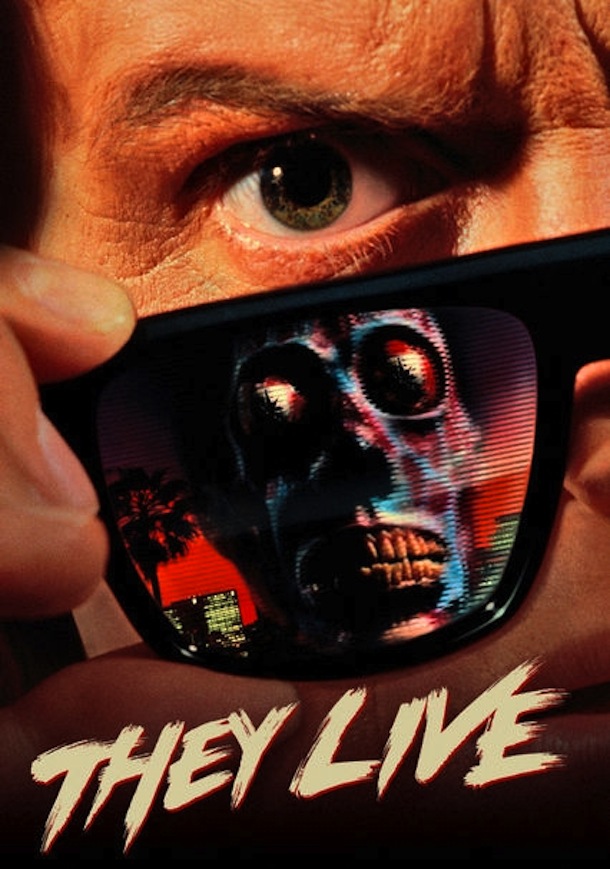
In 1988’s John Carpenter’s They Live, adapted from the short story Eight O’clock in the Morningby Ray Nelson, a down on his luck itinerant worker, Nada, stumbles onto the fact that human society is being managed by extraterrestrial aliens who keep humanity in a perpetual state of perceptional blindness in order to craft the global capitalist culture by which they extract the world’s resources with the assistance of a small cabal of quislings that have betrayed the rest of the world for personal wealth and power. Nada, after a brief spree of killing the aliens as he encounters them, joins a band of resistance fighters and, in clear trope fashion, succeeds in revealing the vast conspiracy to the wider population.

Carpenter, whose political leanings are clearly on the left side of the accepted spectrum, intended his film to be a critique of capitalism and specifically the culture around the American Republican Party and the head of that party at the time President Ronald Reagan. However, not everyone interpreted his satire in the manner that Carpenter intended.

American neo-Nazis saw a very clear metaphor in the film, one that reflected and validated their own twisted conspiratorial delusions. To them the movie was very boldly speaking about the international influence and control exerted by ‘the Jews.’  Carpenter augmented this interpretation by not only having the aliens occupying the very top of American society, including the presidency itself, but they also lived and worked in the most common of professions, putting in their hours as beat cops and random businessmen on the streets — a bit of clumsy worldbuilding that validated the delusional and evil beliefs of the neo-Nazis and their ilk.

I do wonder just how much of the conspiratorial culture we suffer today was fertilized by the paranoid political thrillers of the 1970s. The movies that espoused the idea that the CIA manipulated events, that every assassination is evidence of secret plots operating behind the scene. Hell, how much of the moon landing hoax was supercharged by Capricorn One and its faked Mars mission plot? What looks ‘popcorn movies’ that only existing to pass a few hours are really ideas. Ideas that in the true sense of the word ‘meme’ take hold in people’s minds and spread like a virus.

This goes beyond the poorly thought out worldbuilding of They Live and into the heart of the story conceit, that, in the face of all reason and evidence, it is possible for a vast and all-powerful conspiracy to exist in the world. It doesn’t matter that in the end this is a silly and overly simple adventure story, the foundations of that story validates the very concept of that vast conspiracy. People may come away knowing that aliens aren’t real, but they ‘know’ that conspiracies are and the subtle effect of such tales is to reinforce and nurture such fantasies that are mistaken for reality.

Antisemitism is a live and terrible thing in our world. It is not a thing born of fantasies but one that is driven by dark and twisted ones, clumsy and ill-considered employment of conspiratorial tropes feeds into and reinforces it. There is not a direct line between stories like They Live and events such as The Tree of Life mass murder, but because the line is not straight or easily seen doesn’t mean that no connections exist. Stories shape how we see the world, what we believe to be true and what is false and they also instruct us how to fight the evil that they present. Because of this I think that vast and all powerful conspiracies need to be used in fiction with extreme caution and perhaps best of all, never.

Share

Revisiting: The First Omen

.

This past weekend the Irish-set horror film Hokum, which I had been looking forward to, opened to its theatrical run, but after pinching a nerve or something in my neck by doing the idiotic thing of turning my head, and with the pain forcing me to abandon my plan to go see the film, I stayed home, nursing the protesting area.

20th Century Studios

I got my weekend horror fix by rewatching The First Omen, a 2024 prequel to the wildly successful Richard Donner film The Omen which, like The Exorcist, inspired a franchise of mediocre to terrible sequels. (Yes, I am aware that The Exorcist III possesses a vocal fan base, but that movie is the best of the lot and for me it rises only to mediocre.)

I ventured forth a little more than a year ago to catch The First Omen in theaters and gave the film a middling review here on my blog. So, why revisit something that hadn’t been all that inspiring the first time around? Sometimes the headspace I am in when I see a movie can cause me to come away with an impression that the movie did not earn or is unjust to the feature. The first time I watched The Godfatherit did not make that great of an impression on me. perhaps I was distracted, perhaps I didn’t quite allow the film in, or perhaps it was simply the wrong movie for my emotional state. However, when I rewatched it a few years later suddenly I ‘got it.’ The film is brilliant, and I adore it.

Did the same thing happen with the unloved The First Omen?

No.

The movie remains middling. A competently crafted piece of cinema that is not terrible but failed to reach the potential that had been possible with a stronger script and a bit more attention to the story it was attempting to integrate with.  The performances remain strong, and Ralph Ineson stepping into the role originated by Patrick Troughton is inspired casting. Ineson, while physically very different from Troughton pulls in the sense of the character so powerfully and so perfectly that it is wholly credible that this is the same man who tried, in vain, to warn Ambassador Thorne that his child was in fact the antichrist. Nell Tiger Free as Margaret, a young American woman on a voyage to become a nun and who is pulled into the conspiracy to birth the antichrist, is quite good in her role and none of the failures of the feature can be laid at her feet.

No, the script is the trouble.

In addition to not melding seamlessly with the film it is a prequel to, ignoring such things as that it was very clear that the child Damien, the future antichrist, did not have a human mother but had been birthed from a jackal, or ignoring that Father Brennan had been riddled with cancer, The First Omentried too hard to reset the franchise and set itself up for sequels that could never mesh with the established continuity.

Some years ago, there had been released a remake of the original The Omen, a film I have never been able to watch in its entirety. It is proof that casting and direction are essential elements and put a step wrong there and you’ve critically damaged your production. In my opinion the best course of action as a horror fan is to consider that there is only one Omen film, the first, and ignore the existence of all the rest.

Share

Remake Hell

.

I am not one of those movie watchers who decry the very concept of remaking a film. Quite the contrary, there are several films where the remake is the classic that we revere to this very day. 1941’s The Maltese Falcon was the third adaptation of the novel, while The Thing from 1982 is a wonderful and unique adaptation of the source material while leaving the original film version standing as its own version and a classic. This applies to foreign film remade into English language version as well with Christopher Nolan’s Insomnia crafting a better film than the 1997 Norwegian production. There are also films crying out for a new version, such as Starship Troopers, which while having its fans, so thoroughly inverts the themes and point of the novel as to be like an adaptation of 1984 that crafts Big Brother as the hero.

But, with all that said, there are certainly mountains of remakes that exist for no purpose and that terribly miss the mark, skill, and heights of the films that they imitate. The made for television version of Double Indemnity drops a crucial subplot and an entire act and spends its time with a lifeless cast that only serve to remind the audience why John Huston once proclaimed that he solves 90 percent of his problems by casting the film correctly.

Last night my sweetie-wife and I began watching the 2016 production of Ben-Hur on Amazon Prime. This, like the ’41 Maltese Falcon is the third adaptation of the 1880 novel by Lew Wallace, the first being a silent film from the ’20s and the well-known and massive production which made a star of Charlton Heston from 1959. We decided to watch this 2016 version because we are fans of the director, Timur Bekmambetov who directed the Russian fantasy/horror film Nightwatch. We have watched about half of this Ben-Hur and while we will complete the movie I can already announce that it is a terrible remake that missed the point of the story and presents the audience with visuals that are meant to excite but instead provoke, at least in me, laughter, such as oar-powered galleys judging by the bow-wake that are slicing through the seas at nearly twenty knots.

In the sprawling story of Ben-Hur: A Tale of the Christ Judah Ben-Hur and the Roman Messala are friends closer than brothers, torn apart when Messala, made the military commander of the local legion, demands the names of Jews agitating against Rome and Ben-Hur refuses. Messala, following an accident that nearly kills the Roman governor of Judea, condemns Ben-Hur to enslavement aboard a galley. By a circuitous sequence of events Ben-Hur returns years later burning with hatred and a thirst for revenge for the treatment of his family at the cruelty of Roman occupation and even the death of Messala was unable to lift the hate from his heart. However, witnessing Jesus’ crucifixion transforms Juda Ben-Hur, making him a believer in the Christ and turning him away from hatred and revenge.

This version’s Judah Ben-Hur begins as a pacifist making the presumed ending as a return to baseline rather than a transformation of a hate filled man into a devout Christian. The accident from the source is changed into an actual assassination attempt with Ben-Hur giving the would-be killer time to escape, changing an unjust political conviction into one that can only be judged as fair considering Ben-Hur’s guilt in not turning the man over. The entire revenge plot of the story, both in the novel and in the previous adaptation turns on the fact that Ben-Hur and his family were actually innocent, removing that element weakens the story beyond measure.

Beyond the changes to the plot, the 2016 movie only throws into sharp relief the genius of the 1959 film. Director William Wyler never showed the face or allowed the audience to hear the voice of Jesus, but instead as in every great horror film, left it to the audience’s imagination, showing the effectthis man had on others, how this face that we never see caused hardened Roman warriors to quell their spirit and to wordlessly lower their swords.

We, my sweetie-wife and I, will finish this movie but what I have seen already is more than enough evidence that it should have never been produced.

Share

Movie Review: Over Your Dead Body

.

Last week I published a list of the summer movies I anticipated going out to the theaters to enjoy and here is my review of the first film on that list, the black comedy, Over Your Dead Body.

Independent Film Compan

Married couple Lisa (Samara Weaving) and Dan (Jason Segel) Burton have retreated to their isolated wooded cabin for the weekend, ignorant of the fact that each has plotted to murder the other as a solution to their marital troubles. Wholly inept as would-be killers their plans are exposed to one another but before either party can fulfill their rather simple and highly unlikely to succeed plots, the couple is confronted by a trio of strangers,  Pete (Timothy Olyphant), Allegra (Juliette Lewis), and Todd (Andre Eriksen), that present a far more credible, if not equally comedic, threat to them both, resulting in the film climaxing with over-the-top, farcical, Sam Raimi-like gore.


Over Your Dead Body, adapted from the Norwegian film, I Onde Dager, (Streaming on Netflix with the English language title The Trip) works as broad comedy with a strong sense of the absurd. All of the actors involved play their characters well, walking that fine line between believable, credible persons and exaggerated caricatures, never straying so far on either side as to damage the entirety of the story or the project. The director and the screenwriters, Jorma Taccone and Nick Kocher & Brian McElhaney respectively, played an expert level of set-up and payoff through the film, with several moments that are first presented seem minor color details later revealed to be clever and subtle foreshadowing.

Perhaps the most elegant and deft piece of screenwriting centers around the possibility of a sexual assault that threatens one of the characters. (It is not the character that you would expect that is threatened, providing an inversion of the trope, sliding away from the terrible titillation that often accompanies such sequences in lesser movies.) Once this element arose, I became seriously concerned about the rest of the film. It looked as if the writers had maneuvered themselves into a nasty, ugly little corner. If they took the scene to its conclusion the tone of the movie would irreparably rupture never to return to its comedic color and yet once begun it looked as if there was no way but to play the scene out as it threatened. Their solution displayed the genius of the scribes and saved the movie. I salute such brave and inventive writing.

The film’s final act escalated into cartoonish, wildly impossible, and, for my tastes, hilarious gory violence. I suspect for some it may be a bridge too far which shatters their suspension of disbelief but for those who had correctly calibrated their engagement and understand the movie’s attitude, it should play perfectly.

Over Your Dead Body is a movie that is best seen in a theater, with few distractions and preferably an engaged and laughing audience.

Share

Summer Movies

.

While not every movie being released over the next four months or so is to my taste, there are enough to make this summer something to look forward to cinematically.

In roughly release order but with no particular preference, here are some of the films and movies that I plan to see in the theater.

Independent Film Company

Over Your Dead Body – A black comedy about a couple’s weekend plans to off each other. Samara Weaving has sold me that her performance in these types of movies is worth a ticket alone.


Black Bear Pictures

Hokum– An American and a haunted hotel in Ireland. It’s not a slasher or adapted from a video game so that grows my interest.


Amazon/MGM

The Sheep Detective – The favorite script from the man who wrote Chernobyl  and show-runsThe Last of Us, returning to his comedic roots as sheep set out to solve the murder of their shepherd.


Black Bear Pictures

In The Grey – Guy Ritchie, action and crime film with a lighthearted tone. His action movies have worked for me and my sweetie-wife in the past, particularly when they have that light tone to them


Blumhouse

Obsession – Horror movie about the dangers of getting what you wished for with a what looks to be a side statement about male entitlement.


Lucasfilm/Disney Studios

Star Wars: The Mandalorian and Grogu – Do I really need to say anything here?


A24

Backrooms – Atmospheric horror adapted from a viral YouTube short film. This could be very good or it could become too self-important. It will all be in the script or not.


StudioCanal

Pressure – Weather forecasting as drama leading up to the Normandy invasion on D-Day turning on the very real historical fact that access to north Atlantic monitoring may have turned the war.

Masters of the Universe – Live action, tongue in cheek adaptation of the 80s toy selling cartoon. I was out of the age range, too old, for the cartoon but the silliness of the trailer has sold me on this as ‘popcorn fun.’


Universal Pictures

Disclosure Day – Steven Spielberg returning to aliens and conspiracies, launching the conspiracy that this is a stealth sequel to Close Encounters of the Third Kind.


Signature Entertainment

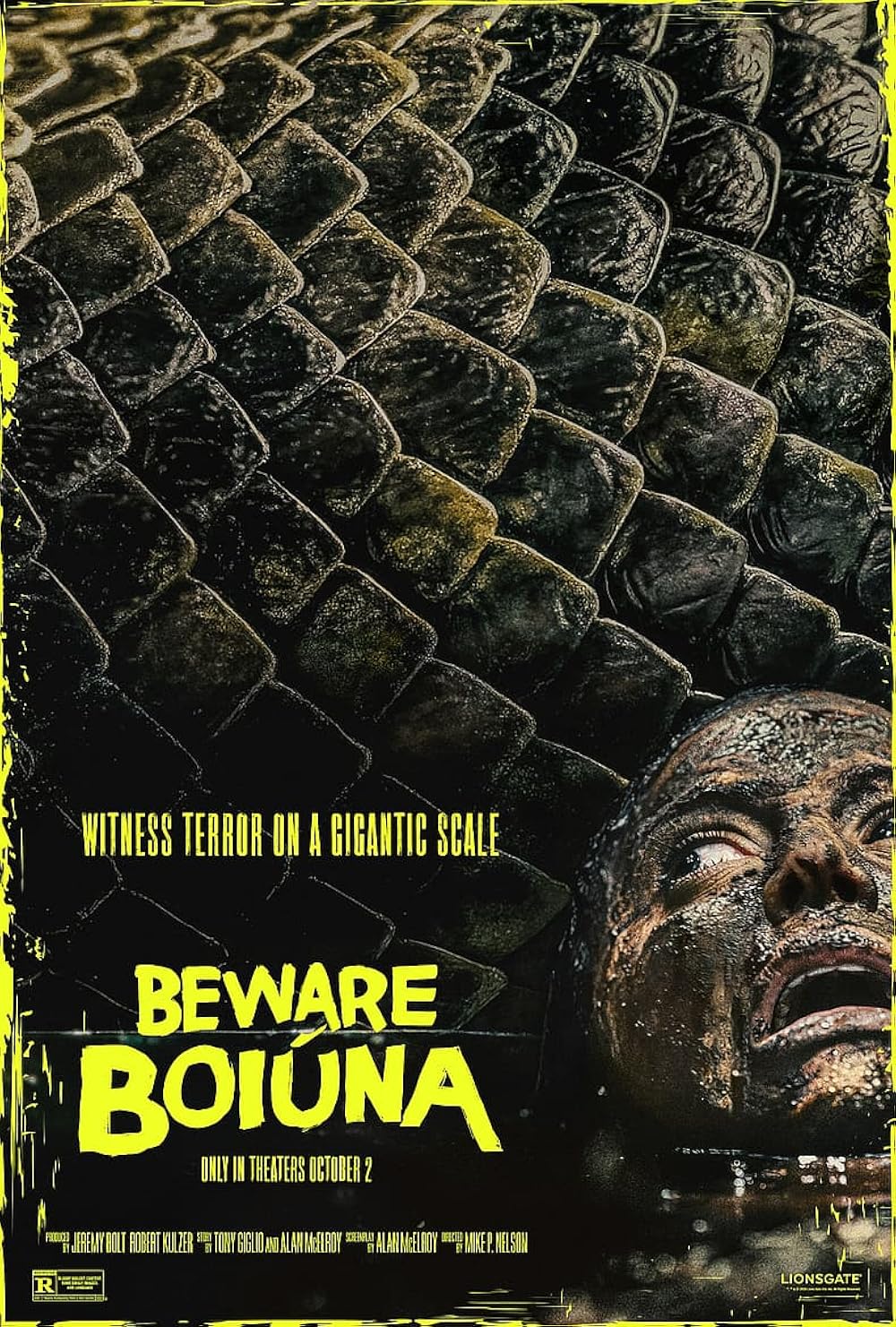
Hungry – A rogue hippopotamus stalks unlucky tourists in the Louisiana bayou. Hollywood still chasing the Jaws high but this looks to be a ‘turn off your brain’ creature feature and have fun.


Universal Pictures

The Odyssey – Christopher Nolan’s adaptation of the ancient classic.


Disney/Marvel Studios

Spider-Man: Brand New Day – The next Marvel Cinematic Universe feature.


Ketchup Entertainment

Coyote vs ACME – The movie that the studio tried to kill in favor of a tax break. As a Baby Boomer, I grew up on these cartoons, and the trailer looks interesting enough and I despise the ‘tax loss’ argument so much that I must see this in the theater.


Share

Movie Review: Ready or Not, Here I come

.

 You may have noticed that I did not use the numeral ‘2’ in the title of the film as all the advertising has done. I was unimpressed with the addition of the numeral as I thought the title worked perfectly without and when the film’s title card appeared on the screen it pleased me that the filmmakers agreed with my sentiment over the marketers.

Search Light Picture

Ready or Not, Here I Come is a direct sequel to 2019’s Ready or Not. The previous film Grace MacGaullay (Samara Weaving) marries into the insanely wealthy Le Domas family, only to discover that her new in-laws obtained their wealth and power by way of a dark pact with Satan and only by sacrificing her life to their dark god could they not only retain their privilege but their very lives. Ready or Not ends with Grace surviving her ordeal and her in-laws facing the wrath of their benefactor. The sequel, despite 6 years passing between the two movies’ production, starts precisely where the previous entry ended, with Grace sitting on the steps of the burning mansion as first responders arrive.

Grace’s escape from the torments of the satanic cult is quickly ended when she and her estranged sister Faith (Kathryn Newton) are abducted by the wider cult that the La Domas’ were only one facet of. As explained the organization’s Lawyer (Elijah Wood) control of the global cult, which until their destruction, rested with the La Domas, is now up for grabs. Determination of the family to take control is by yet another game of hide and seek with Grace and Faith as the targets of the murderous representatives.

While the sequel is much the same as the original film, the basic plot remaining unchanged, and the retcon creation of a sister for the orphaned Grace of the first film could have been ham-handed Ready or Not, Here I Come works surprisingly well. Weaving and Newton have a great sibling chemistry which acts as tonal counterbalance to the principal antagonists the fraternal twins  Ursula and Chester Danforth (Sarah Michelle Gellar and Shawn Hatosy.) Like the previous movie Ready or Not, Here I Come is more comedy than horror with few sequences of intense dread and more of exaggerated cartoonish violence. In some ways this compares favorably with Alien and Aliens. Where Ridley Scott crafted a slow burn horror film which James Cameron did not try to replicate but instead focused on an action driven film that share the same beats as its predecessor with this pair of movies, the first is more of a horror film, albeit interspersed with absurdist comedy, the sequel never tries to duplicate the horror of the first, understanding its mission to plow new ground.

Running a mere 108 minutes, this movie doesn’t waste time before diving into its central plot and troubles for its protagonists. The sequence of events is laid out in such a manner that the newly introduced Faith does not suffer an extended period of ‘disbelief’ that would only frustrate an audience that had already been exposed to the supernatural reality of this film’s world. Economical with time and exposition Ready or Not Here I Come knows just why the audience has come to the theater and it delivers. This is a not a horror film that is meditating on grief, or obsession, or the nature of good and evil in a complex world, it is here to show you a good time as two morally decent women are faced with seemingly insurmountable challenges.

If you were a fan of the first one then there is no reason to avoid its sequel, this is a movie best seen in a theater with few distractions and a loud engaged audience.

Share

Do Not Think About Timeline of Star Wars

.

I am sure that there are some devoted Star Wars fans out there that can conjure some twisty and convoluted explanation for the compressed and strange timeline that flows through the main sequence of the Skywalker saga in Star Wars, but if you sit and think about the years and the characters it really doesn’t quite add up.

20th century studios/Disney

Before I continue let me stress that there is much of the franchise that I am a fan of. I am an old fart and saw the original release in the theaters and when people mention Star Wars, much like with Star Trek, the images that fly to mind are of that original late 70s and early 80s adventure films. All the assorted material in comic books, novels, and television programs, both live action and animated, held little draw for me except for Andor, which I adore and is brilliant, even as it exposes the fault line in the ‘canon’ history of the saga.

The saga of Star Wars from the prequels, through the various programs, and the original trilogy, is the story of the fall of the Galactic Republic, the rise of the Empire, and, the restoration of the Republic by a dedicated rebellion. A story that in the films is principally told through the viewpoint of the Skywalkers, Anakin and his son Luke. When we meet Luke in Star Wars he is nineteen and ready to apply to the ‘Academy’ desperate to leave his life as a farmer and see the wider galaxy.

Nineteen.

Luke was born simultaneously with the Galactic Empire, Emperor Palpatine’s entire reign as the despot of the galaxy is about 24 years from start to his death on the second Death Star. In terms of Empires that’s a very short time, though it beats out Nazi Germany that lasted a mere dozen years, and Fascist Italy that managed to squeeze out 21 years. However a quarter of a century is still a very short period of time, you have only the youngest cohort of adults that know only the Imperial system with a much larger segment of the population that lived in the Republic era.

This was really brought home to me while watching Andor. (And again I adore Andor I think it is a masterpiece of television.) The character Dedra Meeroa, played beautifully by Denise Gough, announces that she has no family. Her parents were criminals and she was raised in an ‘Imperial Kinder Block.’ Ms. Gough was born in 1980. Andor  had its principal photography in 2020 making the actor 40 years old when she first portrayed Meero. Now, even if the character is 5 years younger than the performer that makes her 35 at the start of the series and by the ‘canon’ calendar with this being a mere five years before the destruction of the first Death Star, making the entire Imperial system just 14 years old. This makes Dedra 16 or so when she goes into the Imperial Kinder Block, provided that the systems starts with the Empire and still this is hardly ‘raised in a Kinder Block.’ The numbers simply do not add up.

And you know what — I don’t really care. It is a great bit of character building and backstory that explains the cold hard and dedicated Dedra Meero. I will always take good story over slavish devotion to ‘canon.’  Of course it is always best if you make everything fit neatly, but given the choice, give me great characters and great stories over a perfectly fitted history.

Share

Movie Review: Project Hail Mary

.

Adapted from the novel by Andy Weir, who also wrote The Martian, Project Hail Mary is a

MGM/Amazon Studios

science fiction adventure to save the Earth from a dimming sun which threatens all life on our fragile planet. A fantastic microorganism is populating the sun, causing the dimming, and a molecular biologist, Dr. Ryland Grace, whose published theories align with the newly discovered ‘astrophages,’ is recruited by a global effort to reverse the ‘infection,’ by traveling to Tau Ceti, the only star in the corner of the galaxy not showing signs of dimming. The film opens with Dr. Grace awakening from a medically induced coma used during their transit to Tau Ceti, finding himself the only survivor of the process and with his memory damaged and only recovering as he suffers intrusive flashbacks. The mystery of Tau Ceti’s immunity to the astrophages deepens when Grace encounters a massive alien vessel in orbit about the star.

Like Weir’s novel The Martian, this story is really about the sacrifice, skill, and dedication of highly competent people who have set out to solve a seemingly unsolvable problem. Project Hail Mary functions without the need for a villain or motivated antagonist, with the closest analogy being a medical drama as doctors fight to diagnose, treat, and save a terminal patient, but in this case the patient is all of humanity.

Ryan Gosling plays Dr. Grace managing to convey both the character’s brilliance and his goofy ‘every man’ nature keeping the audience engaged both intellectually and emotionally as Grace navigates a strange, terrifying, and nearly impossible task alone.

Directed by Phil Lord and Christopher Miller, the team responsible for writing and producing the Spider-Verse films, this film is visually stunning, inventive, and striking in its emotional core. Aided by a sharp script by Drew Goddard, who also adapted The Martian, Gosling carries the film effectively alone. While there are other important performers in this film the ultimate success or failure of the project rested on his shoulders and Gosling’s ability to make you laugh and cry in moments while still conveying unrevealed depths to his character is what makes him a star.

All in all this is a remarkable film and while the two-and-a-half-hour running time might give some pause before buying a ticket, I would recommend seeing this in a proper theatrical setting.

Share