Category Archives: Movies

Detective Fiction vs. Noir

In now way am I proposing a final definitive definition of Noir fiction and what sets a story in that particular sub-genre but I do think I may have stumbled across one of the lines that separates noir  from its close elder cousin detective fiction.

Detective fiction, in general, derives from a European tradition of the intellectual puzzle solver that reveals the killers identity in a dramatic drawing room monologue. In the United States, a rougher culture, this transformed into the genre of hard boiled, where the detective still uncovered the killer’s identity, but through the course of resolving the mystery the protagonist usually faced more serious danger to his life and was often less than a stellar individual himself. Noir  also often dealt with detectives and a crime that needed resolving but as often as not the protagonists of noir  fiction were the criminals themselves and in the cases where the protagonists weren’t the perpetrators they often were as morally compromised as the characters the challenged.

Dividing the genre between hard-boiled and noir is difficult thing but I think it can be done with the concept of moral order and which characters are responsible for restoring the moral order.

In a murder mystery the moral order has been destroyed by the immoral killing of a character and it is restored when the killer is revealed and brought to justice. In this situation the detective is the agency that restores the moral order, it is the detective intelligence and devotion to that moral order that propels the characters, (Side note it is interesting that in Murder on the Orient Express  Poirot does not bring the killers to justice because it is determine that the murder itself is an expression of the moral order. In others words, ‘He had it comin’.’)

Noir  particularly that films made in the classic period of the 19640s and 1950s also restored the moral order by the time the credits appeared on the screen what set them apart was how the moral order was restored.

In noir  films the moral order isn’t restored by way of an intelligent and morally upright character but usually because the seeds of their own destruction sowed by the characters themselves fruited with the final justice. Consider how Keyes was unable to reveal the murders in Double Indemnity but instead Walter and Phyllis bring about their own destruction. The moral order is restored, after all the production code insisted upon that, but the restoration had little to nothing to do with the integrity of the upstanding characters.

Perhaps an interesting boundary case is the classic The Maltese Falcon.Sam unravels the mystery and turns Brigid over t the police, restoring the moral order, she will pay the price for her crimes, as will al the other criminals, but there is the lingering question of why does Sam do this? In the final scene between the lovers he gives lots of potential answers, when your partner is murdered you need to do something about it, maybe he loves her maybe he doesn’t, and of course if he doesn’t he could never trust her and not turning her over puts him, at the risk of ending up like Thursby. Pick an answer and you change the moral calculus. Is Sam doing the right thing because you honor your partner? Then this is more like detective fiction. Is he just looking out for himself? The moral tone gets darker with that outlook. Neither the novel nor the film provides any definitive answer to Sam and his motivation leaving it to our interpretation.

So one test, and only one test of many, for is something noir or not ask how does the moral order get restored and you’ll have a leg up on answering the question.

Share

Knowing What You Write

There’s an adage in writing that goes “Write what you know,” but I think it should more properly be phrased as ‘Know what you write.’ It isn’t about sticking to things you already know but knowing and understanding your subject well enough to write honestly.

One of the short films at this year’s Horrible Imaginings Festival brought this home to me.

In the film Vicious a family of urbanites are in the lonely rural south when they become guests of an odd local family that invites them for dinner. The film starts off looking as though it is going to be a rather bog standard ‘folk horror’ about the strange and scary people found in the countryside but the filmmakers invert the paradigm and end of a rather different note.

What might have been a fun reversal of a trope felt flat and inauthentic because the filmmakers did not know what they wrote. When visiting a culture not your own it is important to get people who are deeply familiar with it to help you in avoiding simple mistakes.  Here are two of the most glaring examples from the film where inaccuracies damaged my enjoyment.

First off, in the south you do not have dinner outdoors shortly after dusk. Californians might think of this time as pleasant, the cooling air, the breeze heading towards the sea, but California is dry and the south is wet and filled with mosquitos. A table outside is setting a table for those biting insects.

Second, if a Southern family invites another for supper, particularly is this Southern family has a large lovely brick home, the meal they set out will not be a plate of beans and nothing more. Southern culture is a very food centric one and the offerings would have been numerous both as a matter of hospitality and of pride.

These may feel like small errors but they destroy the credibility of the film, yanking audience member who see them out of the tale and shattering the illusion. It is always vitally important to ‘Write What You Know.”

Share

Horrible Imaginings 2019

This year was the 10thannual Horrible Imaginings Horror Film Festival. For the second year, the festival has been hosted by the non-profit theater The Frida Cinema and this year I managed to attend 2 of the 3 day run time. I am sad that I missed Friday but day-job commitments are paramount.

Saturday started with a block of short films programed around the theme ‘A Shock to the System’ where the horror lies more in systemic and cultural issues than a beastie or man with a knife. There were 11 films in this block and many were quite compelling. The film that most disturbed me was Off Fleek  which centered in a young woman and the terrible effect of the cyber-abuse she endured. It is a film that haunts the mind well after its brief running time has ended. Per haps most entertaining  was Kathy  a film about growing up gay in a fundamentalist household where demons and possession are common dinnertime discussions. And most artistic visually striking of the block was LVRS a film without dialog that symbolically explored the nature of abusive relationships.

The next block continue the theme with the longer films Conversion Therapist  and What Daphne Sawand included a panel discussion about the issues of ‘reparative’ therapy and human trafficking. We rounded out Saturday with two feature films but the one I enjoyed the most from that evening was Reborn  starring Barbara Crampton and Michael Pare.

Sunday again started with a block of short subjects, this time the theme being Monsters, Sci-Fi and Beyond. Nest  was a ‘found footage’ style short that understood brevity if powerful in that model of filmmaking. How to be Alone  was a wonderful exploration of isolation and the mental toll that can take on a person while Ulysses  presented perhaps the best mermaid design I have ever watched.

Then we were treated to a long form short film block where instead of running times between 2 and 12 minutes the films were along the lines of a half an hour including a lovly film about a séance in the White House at the height of the Civil War. Though perhaps my favorite of that black came from Brazil For My Cat, Mieze  where justice comes paired with a fine wine.

We rounded out the day with two feature films, Antrum – the Deadliest Film Ever Made  which included as part of its conceit a mini-documentary about the fictional film Antrum  and the deaths associated with it, but the film struck me as more gimmick that story. The final feature was Pornoa movie about religious teenagers who accidentally summon a succubus in the theater where they work. It’s over-the top, bloody, sexy, and funny, providing one of the festival’s’ most memorable line of dialog; “I’m not going to get excited by your exploded testicles!”

All in all the festival was a grand time well worth the 3 hours of drive time each day.

Share

Film Review: All the Colors of the Dark (1972)

Hailing from 1972 and currently streaming on the specialized horror service Shudder, All the Colors of the Dark  is a giallo,  a genre of Italian cinema that specialized in sensation lurid tales often centered on aspects of sex, sexual perversion, and violence. Part of the global exploitive cinema of the 1970s and 1980s, giallos  are colorful, have amazing photography, and bold art direction, the best of them are usually associated with the noted directors Mario Bava and Dario Argento. Though an Italian film All the Colors of the Dark  was filmed and set in England.

Jane (Edwige Fenech), while recovering from a car crash that injured her and killed her unborn baby, is tormented by terrifying visions of a knife-wielding attacker. The vision manifest most often when Jane and her boyfriend Richard (George Hilton) attempt to be sexually involved. Richard insists she needs vitamins, while her sister Barbara, who works for a psychiatrist presses for psychiatry. Jane’s neighbor, Mary, introduces Jane to a satanic coven and the events explode into debauchery, assault, and murder with Jane’s visions becoming apparently real as she loses connection with reality.

With plenty of blood and nudity All the Colors of the Dark is not a film for the young, sensitive, or easily offended. The final act of the movie ties things together with an explanation, but this, as with most giallos  in my opinion, is more a perfunctory move providing only the barest of rationales that allow the dream-like and nightmarish imagery to play out.  This sort of movie you do not watch for logical consistency or carefully interlocking plotting but rather for the surreal nature of the visuals and the emotional punch of the scenes. I find the style reminiscent of David Lynch albeit with a much more conventional approach.


Share

Reading HBO’s Chernobyl

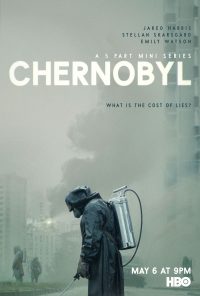
Unless you have been under a rock hiding from the insanity of today’s world, and honestly who could blame you, you have probably heard of HBO’s fantastic mini-series Chernobyl  chronicling the infamous Soviet nuclear disaster. Show runner and writer Craig Mazin, best know for films such as The Hangover 2,  delivered an amazing, frightening, and moving depiction of the terrifying and heroic events surrounding the 1986 event.

Mazin also co hosts with fellow screen scribe John August the podcast Scriptnotes  where the pair, along with occasional guests, discuss screenwriting from both a creative and a business practical viewpoint.  As part of their mission to help screenwriters Mazin has published all five scripts for Chernobyl  and I have spent the last two days lost in a wonderful reading experience.

I have read a number of scripts for both television and feature films and I have to say that Mazin has really opened my eyes to ways this particular art form can be expressed. His approach is a close subjective style with elements that I have not seen often in screenplays. The narrative elements of the script contain descriptions that are purely internal to the character. It’s a guide to the reader, the director, and the actor how a scene needs to be played. I have to say that these scripts are a good reading experience one that is as enjoyable as any well-crafted short story or novel. Not only has it made me appreciate the craft more, but also it has enhanced my respect for the series as a whole and ignited a desire to re-watch the entire run.

The scripts are available for free downloading at John August’s website.


Share

Foreign Movie Review: Salyut-7

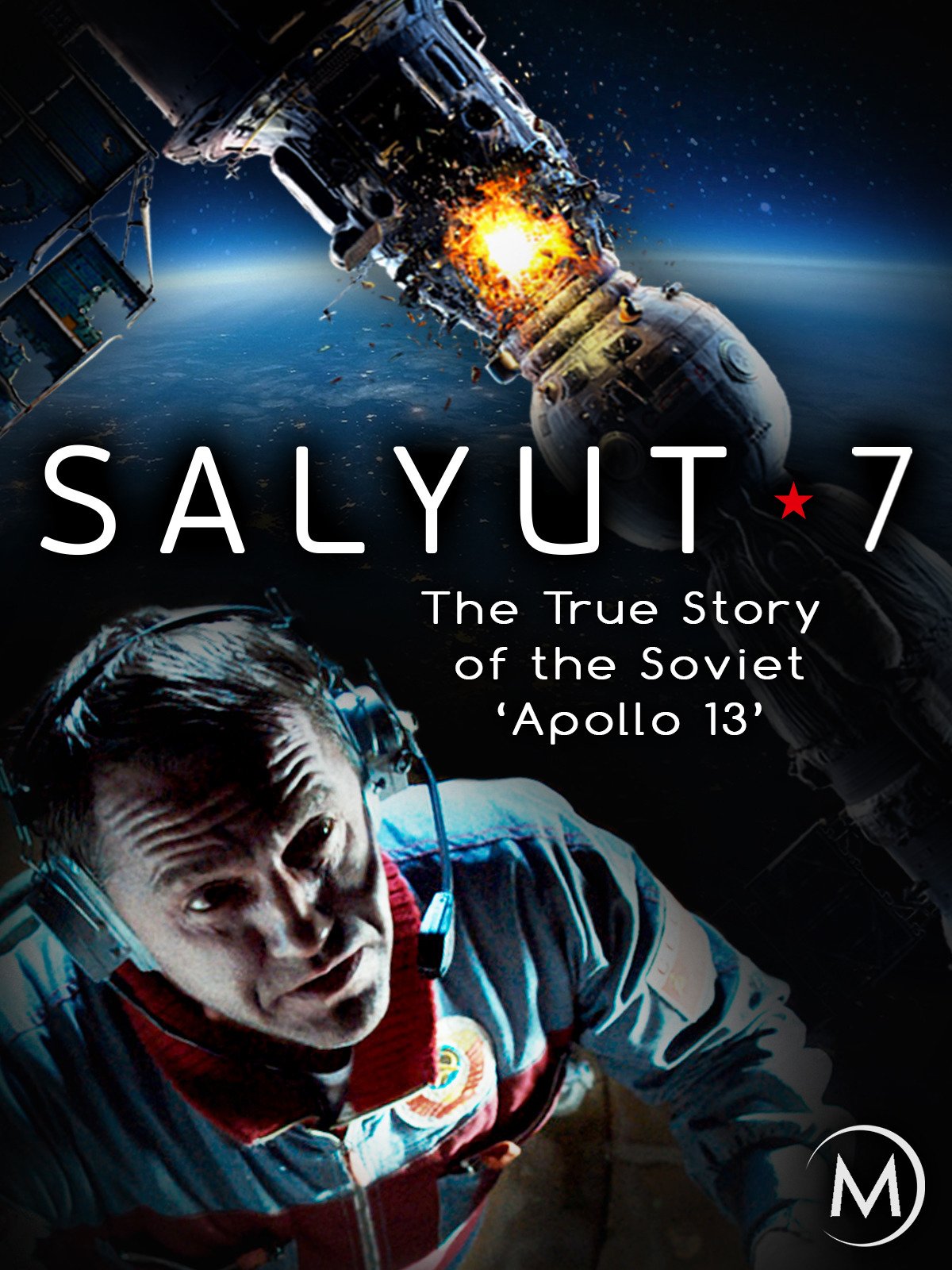
Inspired by the Soviet Mission to save their crippled space station the film Salyut 7is a fictionalized drama in low Earth orbit.

Vladimir Fyodorov is a Soviet Cosmonaut grounded after reporting having seen ‘angels’ in orbit during a life-threatening emergency. His wife and daughter are relieved that Vladimir will no longer be risking his life in dangerous space missions. Everything is upturned when the space station Salyut 7 that was un-crewed and flying on automatic suddenly loses all power and is rendered dead in orbit. Fearful that either the Americans may steal the station by way of a shuttle mission or that the station in an uncontrolled re-entry posses a hazard the Soviet’s decide to launch a mission to repair the station. After all other cosmonauts fail to dock with tumbling station in simulation it is decided to reactive Vladimir and along with an engineer is sent to Salyut 7. Once there they face numerous challenges both technical and personal as they struggle to rescue the station, Soviet prestige, and their very lives in a desperate bid to save the station.

With only a few technical errors, Salyut 7 is a gorgeous film utilizing the very best special effects to recreate the sensation of flying 200 miles above the Earth at 17,000 miles per hour.  In the interests of narrative and drama, the story deviates significantly from the historical record and should be best viewed as a work of fiction rather than a view of actual events. The acting is very good, the drama is tight and the characters believable and relatable. Currently available on Amazon Prime in Russian with English subtitles Salyut 7 is worth the time for anyone who enjoys a heavy dose of technical realism in their space films/


Share

Fantastic Films Ahead

As we wind down into the end of August and the end of summer, I can look forward to two different fantastic film events.

First up, starting on August 30thand running for three days is the Horrible Imaginings Film Festival. Started ten years ago by my friend Miguel Rodriguez the festival is dedicated to horror films of all stripes. Miguel and his team cast a wide net using a liberal definition of horror that includes everything from neo-noir crime thrillers to surrealist experimentations exploring deadly vampire clay. Started in San Diego with a tiny venue, the festival now is hosted in Orange County California at the wonderful art house theater The Frida Cinema, and while the locale has added about an hour and a half of travel time, it is still well worth the effort. Sadly, because August 31stis the first day of a long holiday weekend and I do not yet have 15 plus years of seniority at my day-job I will be missing the first evening’s festivities including what looks to be a fun film Satanic Panic. Seriously, at my job people rarely leave once they get in the door, and that is understandable, but to get any time off around the holidays is neigh impossible for anyone with less than 15 years of seniority. I do miss the days when the festival was located in San Diego and I could simply drive down to the Museum of Photographic Arts to catch the first evening, but the Frida is a great venue and I would rather the festival thrive than wither simply because it would be easier for me.

The second film event is on September 28thand is The Secret Morgue 2. Created by our local film fanatics Film Geeks SD, of which Miguel is a founding member he’s responsible for in part or in whole for a whole lot of good film stuff in San Diego, this is a 13 hours marathon of horror film hosted by the Comic-Con Museum in Balboa Park. Last year at the first Secret Morgue the theme was 70s and 80s horror, the sort of title you would discover in video rental stores, if you remember what those were. The titles were secret and I rolled the dice and attended the screenings. What fun I had! Every film was one I had never seen, and while some were tedious than entertaining, I don’t regret attending. This year the theme is SF Horror and I suspect I will have seen some of these titles before but I could be wrong. Film Geeks SD has a deep cinematic knowledge and their choice can be quite surprising.

Share

Sunday Night Movie: Circus of Fear (1966)

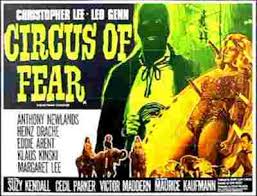
Last night my sweetie-wife and I watched an older British film of Amazon Prime, Circus of Fear. From 1966 and starring Christopher Lee and Leo Genn, who struck both of us as a low-rent James Mason, the movie is far less about horror than it is about crime.

After a daring daylight armored car robbery, are they all daring, which ends in the unintentional murder of a guard, Scotland Yard Inspector Elliott, (Genn), chases down leads until he’s confronted with a rogue’s gallery of suspects at a circus that is wintering over. With every character seeming harboring a deep and dangerous secret and a masked foreign lion tamer, (Lee) Elliott’s task of discovering the murderer and recovering the stolen 250,000 British pounds becomes much more difficult.

Comprised of studios shoots, tired stock footage of an actual circus, and emaciated elephants, Circus of Fear  can hardly be called a good movie. There were times, particularly with the repeated shots of a gloved hand throwing knives with lethal precision as character were eliminated from the story, that I was reminded of the Italian Giallo genre of lurid and sensation exploitative movies but sadly we were not watching one of those and whatever charm this movie had quickly faded.

The cast included Klaus Kinski as a mostly unnamed and looming threat over the proceedings but his part was rather small and did not provide enough screen time for ample amusement. Repeated uses of crash zooms and abrupt cuts failed to provoke any real sense of shock or dread and for the most part what you can say about this movie is that it was shot in focus and without absurd cuts covering poor editing choices. This is suitable for Riff Tracks ofrMST3K should they ever get around to it.

Share

It is Probably a Bad Movie Anyway

Some weeks ago I first saw the trailer for the thriller The Hunt and I was unmoved and uninterested. If you are familiar with the classic story The Most Dangerous Game, a piece of literary fiction that has been adapted into film several time or the Ozploitation movie Turkey Shoot  then you are aware of the basic set-up for The Hunt, a group of people are forced to the objects of a big game hunt and must fight and use their wits to survive. When I saw the trailer my thoughts went to Turkey Shoot  and frankly seeing that again prompted more interest.

Last weekend a conservative friend of mine brought up the film because of controversy that was apparently bubbling over at conservative websites. The movie grand satire was that gun-toting liberal elites were the hunters and that they had selected ‘deplorables’ Trump supporters and the like as their game. Under fire for this set-up, with Trump taking part in condemning the movie, and the horrific tragedy of three mass shooting events, one certainly politically motivated, within seven days, Universal pulled the movie indefinitely from their release schedule.

Ruben Baron at the website CBR reports having read the script by Damon Lindelof and Nick Cuse and compares it to an episode of South Park  where both the liberal hunters and conservative prey are presented in a bad light. In an attempt to be even handed apparently the script treats the liberal hunters as stereotypes and the people selected for the hunt are guilt of more than simple right-wing political positions but are also spousal abusers and such. (Though that itself ignore that domestic violence spans the political spectrum and reveals more about the screenwriters than perhaps they intended.) The central hero is a Red Stater who was selected by mistake when her name is confused for the hunt’s actual target.

I find it amusing that before Fox News, Trump, and PJ media jumped into the fray certain that this was nothing more than a liberal hit job on ‘real’ America that the most sympathetic characters were likely to be the conservatives being hunted. Narrative fiction, at least in the European tradition, is about character struggling to overcome adversity to achieve a goal and in that mold the characters an audience is most likely to root for are the ones fighting to survive. They have with the highest stakes in the conflict, are the ones suffering at a disadvantage, and the ones more likely to fail. I am reminded of a WWII training film about enemy interrogation where an allied aircrew is captured by the German and subject to various tricks, threats, and subtle techniques to divulge classified information. When I watched the film it was very difficult not to root for the Germans. They had the objective, they were facing the clock, and to win all the Americans had to do was shut up and say nothing. I suspect this script, in addition to being bad satire, would have placed the audience sympathies with the hunted.

youtube placeholder image

youtube placeholder image


Share

Are they Alternative Histories?

The following post has spoilers for Inglorious Basterds and Once Upon a Time in Hollywood so proceed at your own discretion.


In the film Inglorious Basterds the heroes in a bloody and suicidal action murder the inner circle of the Nazi party including Hitler himself, presumably bring World War II to a premature close while in the current movie Once Upon a Time in Hollywood the cult followers of Charles Manson instead of murdering Sharon Tate and her houseguests attack her neighbors presumably launching Hollywood into a utterly novel sociological path.

Are these films with their fantastic premises and fairy tale ending popular examples of Alternative History fiction? Alternative History is that genre of speculative fiction which imagines how the world might have been different had history taken a different track than the one we know. For example what if the USA had lost its war of independence, or if WWI had not started? Harry Turtledove is today’s best practitioner of this art.

One the face of it this answer seems obvious, both of Tarantino’s film wildly diverge from actual history making those cinematic excursions truly an alternative to our own. However I think it require more than that. After Braveheart has loads of things wildly different from actual history and yet I have not heard anyone argue that it is an ‘alternative history.’

I believe an essential component of alternative history is an examination of what those differences mean to our understanding of the world. It is an examination of the consequencesof the change not just the change itself. In both films the story ends with the change, we never see what that means for the wider world. How does Hitler dying in 1944 change the Cold War, with Tate’s brutal murder how does film making change? We have no answer from the filmmaker, not even the hint of one. These are fairy tales, not alternative histories.

Share