Category Archives: Movies

Quick Hits Aug 20, 2020

Just a few quick thoughts and observations for today.

Democratic Convention: Despite being a former poli-sci major and minor political junkie I have not been watching the convention. However, from analysis and coverage from both the right and the left it seems that they’ve found a way to do their messaging in these strange terrible times. They are keeping their aim fixed on the prize, defeating Trump, and are showing a level of unity quite unusual for this party. I understand the frustration from progressive that Republicans have highly placed speaking slots at the convention but this election is unlike any other in our nation’s history and the first problem, removing Trump from office, takes priority over everything else at the moment. More than ever, policy must come after victory.

Agents of SHIELD: The series, with all its ups and down, completed its seventh and final season swinging for the fences and engaging in some seriously epic storylines. Overall, I really enjoyed the series and I have started a re-watch from season one. The hints and rumors of a tie-in with the next phase of the MCU are intriguing and we’ll see where they go.

Writing my Next Novel: I’m almost ready for the prose outline of the new and still untitled novel. I’m currently working on a bullet point outline, just the most critical points for each of the five acts but as I go each act has more bullet points than the previous indicating that the story is taking off on its own. For this murder mystery aboard a generations starship I plan to incorporate some of the story structure ideas advocated my screenplays writer and Chernobylseries creator Craig Mazin.

Share

Streaming Review: Sputnik

With the pandemic closing exhibition theaters movie watching has transitioned to on-line model and experience and the selection of feature on-line is expanded from what would normally be available at the local megaplex showing mostly tent-poles movies with a very few scattered smaller films in the smaller auditoriums. This weekend a friend and I discovered a Russian science-fiction horror film that had been released August 14th for Video of Demand and not at the ‘theater at home’ price of $20 but a mere 7.

Sputnik is set in 1983 during a time when the Soviet Union still existed and competed with the Americans both globally and beyond. Dr Tatyana Klimova, (Oksana Akinshina) a brilliant but unconventional psychiatrist is summoned to a remote facility on the steppes of Soviet Kazakhstan to treat the sole survivor of a recent orbital mission, Konstantin (Fyodor Bondarchuk). Konstantin suffers from specific amnesia and can’t recall what happened during the mission, the return to earth, of is even aware that his fellow cosmonaut was killed. Convinced that she has not been given all the pertinent facts Tatyana forces the officer in charge Col Semiradov, to reveal what has been kept from her and the reason that everything has been located in this isolated facility, Konstantin did not return alone but now harbors an alien parasite but all attempts to separate the cosmonaut from the creature have failed and Semiradov fears that Konstantin is withholding something from them all.

When we rented Sputnik based on the strength of its trailer, we honestly expect nothing more than mediocre Alien clone but the film exceeded our expectations. While it is far from a perfect film Sputnik is competently written, acted, and directed taking its time to reveal the horrors both alien and human as secrets drip from the script like water from a leaky faucet. Akinshina is well cast as the troubled doctor and Bondarchuk manages both the ‘Hero of the Union’ aspect of his cosmonaut while slowly revealing the character’s more human and sometimes darker nature. The cinematography is atmospheric and moody with the visual effects of alien credible in every scene.

While I would seriously hesitate to recommend this as an expensive ‘theater at home’ rental, for a more usual video on demand rental fee I was quite satisfied and willing to suggest this to fans of moderately graphic SF horror.

Share

Taika Waititi’s The Hunt for the Wilderpeople

2016, a year before his enormous popular and critical success of Thro: Ragnarök Kiwi writer/director Taika Waititi enjoyed praise for his more modest release The Hunt for the Wilderpeople.

Wilderpeople is the story of Ricky Baker a rootless boy in foster care bouncing from home to home until he winds up in the care of Bella and her gruff husband Herc. Bella manages to pierce Ricky’s defensive anti-social shell but Herc remains aloof, and distant to the troubled boy. The film’s central genre, mismatched odd couple, flowers when Herc and Ricky end up on the run from the authorities and are forced to survive for several months in New Zealand’s wild and mountainous bush country. While the premise and even the eventual mutual understanding the characters achieve are typical for the odd couple genre Taika’s unique and slightly absurdist style both visually and in the script elevates Wilderpeople to a charming emotional ride with the sort of unexpected gut punches that Taika would later deploy in films such as JoJo Rabbit.

The Hunt for the Wilderpeople is currently streaming on Hulu and should not be missed.

Share

A Grab Bag of Items

The Haunted Palace

This is a Roger Corman movie that supposedly is part of his Poe cycle of the adaptation but in reality it is a film version of The Strange Case of Charles Dexter Ward. A single line from a poem by Poe is used to justify the pretense adaptation but as a Lovecraft film it actually works pretty well. It’s always nice to see Vincent Price in one of these moody atmospheric films. I’m glad I sent away for the Blu-ray from the U.K.

The NRA

Last week the Attorneys General for the State of New York and the District of Columbia files suits to dissolve the National Rifle Association. The NRA operates as a non-profit organization dedicated education and training of the general public on matters related to firearm use and ownership with a supposedly side interest in lobbying and political work. The suits however are not related to lobbying and political activism but rather focus on corruption and the senior leadership using the non-profit as their own personal profit centers and in that respect the suits are not dissimilar to the ones used to dissolve the Trump Foundation that had also engaged in serious financial corruption.

There are those who advance the idea that this is an election year political ploy by the various Attorneys General to harm the GOP in the upcoming election but I have serious doubts about that hypothesis. This action is likely to energize the GOP base and provoke them to turn out in greater numbers and with less than 90 days until the election it is highly doubtful that these suits can sideline the NRA before the voting. Legal gears do not turn that quickly. I think it is clear that the New York AG was hostile to the NRA but it is also clear that the NRA suffered from deep systemic corruption.

Horrible Imaginings Film Festival

Next month is the 11th annual Horrible Imaginings Film Festival and the first year that the festival will be entirely virtual. The pandemic has been terrible with the economic damage and the loss of life that is nowhere near ending and in these dark fearful times it is good to find what little joy and light there is and one of those things is the festival dedicated to horror films short and long from around the world. I have taken days off around that weekend and while I will desperately miss the in-person event at the Freda Cinema I will thoroughly enjoy the films.


Share

Late to the Party: Blood Quantum

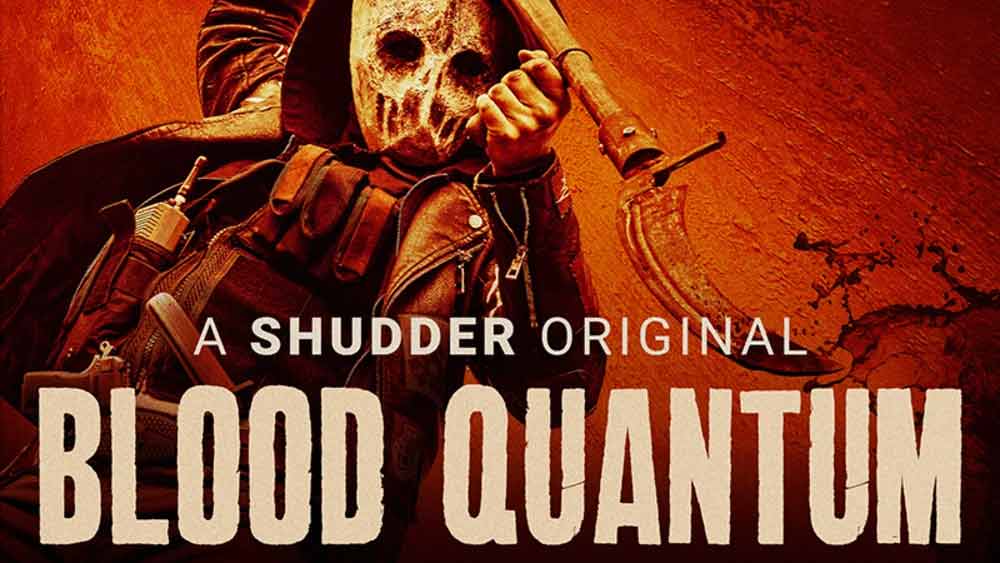
Okay I really should have watched this months ago when it premiered on Shudder and that streaming service is still the only place to view the new zombie film.

Hailing from Canada Blood Quantum is a zombie movie set in 1981 on a Canadian Native-American reservation. Produced, directed, written, and starring member of First Nation Tribes the film approaches the now tired zombie sub-genre from a thematic perspective of colonization and does a damn fine job of it.

The story centers on Traylor, his estranged wife Joss, their son Joseph and his pregnant white girl friend and Joseph’s half-brother and Traylor’s delinquent son ‘Lysol.’ The movie unfolds in two distinct periods, the first day, the day the Zombie plague erupted and six months later as winter approaching and the tribe is dealing with an influx of refugees to the safe harbor that they have created on the former reservation. The twist to the genre and source of the film’s title is the quirk that Native Americans are immune to the infection bites of the zombie and do not rise up as walking corpses. All of the is driven by the Native-American characters with their interpersonal dynamics and prejudices propelling the plot. Much like the little seen Maggie this is a family drama that unfolding during a zombie pandemic but albeit with much more Dawn of the Deadinspired blood and gore effects.

Blood Quantum is a shining example of how to use speculative fiction and its unreality to explore issue bedeviling our real world without pulling out a tired soapbox or losing track of the entertainment required to keep an audience engaged. If you have access to Shudder this is a movie well worth watching.

Share

YouTube Discovery

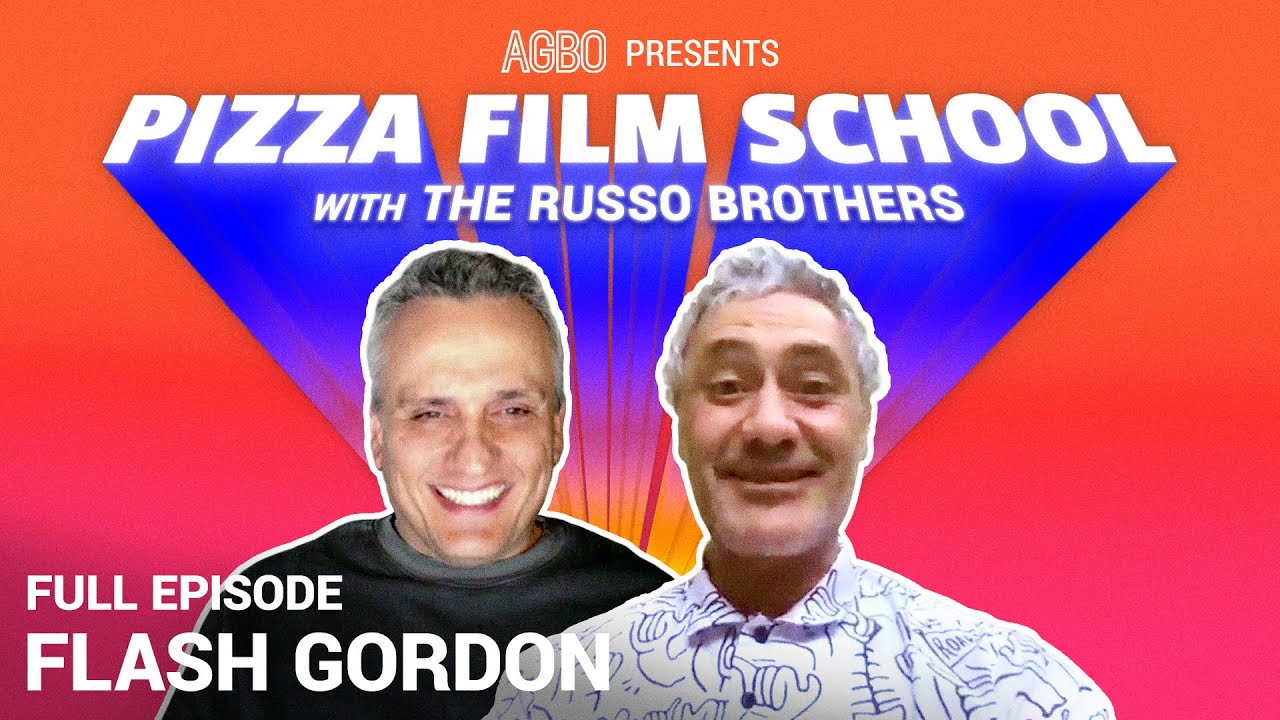
So, with movie theaters closed along with everything else I have been spending quite a bit of time streaming various channels on YouTube. In addition to my history and technology viewing there’s a lot of cinema YouTube and the algorithm recently suggested something that turned out to be quite interesting, The Russo’s Pizza Film School.

The Russo Brothers, Joe and Anthony, are responsible for my favorite Marvel Cinematic Universe films, The Winter Soldier, Civil War, Infinity War, and End Game. During this enforced lockdown they have been holding a virtual film school, focused on screenplay and structure, exploring films that influence their tastes and craft. The films are a diverse lot ranging from Blue Velvet and No Country for Old Men to genre and cult favorites such as The Evil Dead and 1980’s Flash Gordon.

They also bring on guests to help them discuss the movies ranging from film critics to actors and directors. It’s named the Pizza Film School because they suggest ordering a pie from a local shop, to support small local businesses, and enjoying a slice or two as they explore what makes these films tick and work.

If you have an interest in story structure and how these films influenced a pair of truly talented film makers check out the Pizza Film School, I’ll link to the Flash Gordon episode as a starter. The episodes mostly run about an hour long, mostly.

youtube placeholder image

Share

Moments of Transition

I think that some of the most vital moments in a story, and it doesn’t matter if that story is told through a visual medium such a feature film or a narrative medium such as novel, are those moment when the character crosses a transformational threshold and enters a new phase of their journey of change.

The best stories are stories about a character’s change where at the end of the tale the character makes choices that would have been beyond them at the start. But along the way to those ultimate transformations the characters cross smaller thresholds that build upon one another until the full transformation takes place and those smaller moments of change are often powerful moments in the story. Here are just a few examples from popular films, and I am going to use older movies because it does dip into spoiler territory.

Jaws

Chief Brody’s transformation from a man who fears water to a man able to venture comfortably forth on the sea is clear but a vital moment of change comes at the hand of Mrs. Kintner. The fishermen have brought in their tiger shark and everyone is celebrating the end of the threat. The moods crashes when Mrs. Kintner slaps Brody because her son is dead, he knew the beaches were unsafe and left them open anyway. It’s a powerful emotional scene and Brody after it cannot go back to who he was before her accusation. It is crossing this threshold that propels him to do a ‘half-assed autopsy on a fish’ and make his first foray onto the ocean and stiffens his spine in encounters with the Mayor. Mrs. Kintner literal slaps his character onto a new path.

Alien

Alien is a tricky beast. The film’s opening acts it hides the identity of the main character. Ellen Ripley, and she didn’t get a first name until the sequel Aliens, a first presents as a person who avoids direct conflict and dangers. She doesn’t volunteer as part of the expedition to investigate the signal, and she’s evasive with Parker and Brett over the bonus situation. Ripley’s first moment of transformation occurs when Dallas and Lambert return with the stricken and ridden Kane. She makes the hard call and denies them access to the ship, almost certainly dooming Kane to death. This is a threshold the character had avoided but faced with an unknown danger she steps across it and after Ash violates the quarantine she is more willing to confront other characters over their misdeeds and actions. The sequence at the airlock is not only vital to the plot, getting the alien aboard the ship, but vital to Ripley’s character development.

When you are craft the important moments of your story look to the one-way door of transformation it is vital to your character.

Share

Anticipation

This year there has been precious little to look forward to. It started well with the release of my book in March and my first in-person author event at the tremendous Mysterious Galaxy but the pandemic swept the globe, shuttering society, collapsing the economy, and leaving a terrible toll of death in its wake. In the face of cataclysmic events my little novel and its release seemed such a small thing. Still, I am grateful to everyone who has been ordering on-line and those who have left such positive reviews. Honest, I did not pay them for that.

Normally science-fiction conventions are events that help moderate my mood but naturally those have been canceled or moved to purely on-line gatherings.

Luckily the pandemic has not stolen from me entirely one of the year’s most enjoyable and anticipated events the Horrible Imaginings Horror Film Festival.

The festival was founded in 2009 by my pal Miguel Rodriguez and year after year has grown. Due to scheduling and other real-life issues I was never able to attend until 2015 but each year after that this has been one of my go to jams for good times, good people, and great discoveries.

Naturally this year there is no in-person festival but there will be an on-line celebration and exhibition. This is not as fun as a few hundred attendees jamming into the terrific Freda Cinema in Orange County for big screen presentations of short and feature length horror films from around the globe but there still will be new and exciting cinema to discover. I have already experienced the on-line presentation with Miguel’s quarterly mini-festival Campfire Tales and the process works well and while it is no substitute for a proper theater screen my 55” 4K television is passable for experiencing new and exciting film.

I have already purchased my all access pass for the festival and the next year’s worth of Campfire Tales so September should have a least a few moments of horrifying escapism to make life more bearable.


Share

Revisiting Sleep Hollow

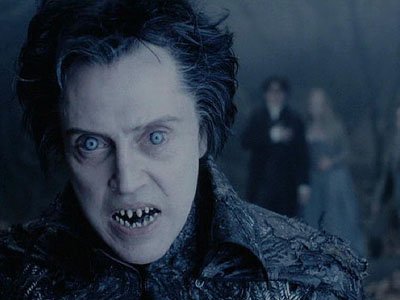
Last night, with a big bowl a buttered popcorn, I put the DVD into the machine and settled in to enjoy 1999’s Sleep Hollow. Directed by Tim Burton, produced by Francis Ford Coppola, and starring Johnny Depp. Sleepy Hollow was less of an adaptation of the classic tale by Washington Irving and more of an excursion by Burton into the lovely lush landscape of a classic Hammer Horror movie.

Hammer Studios was a UK film company that produced many genres of movies but is perhaps best known for their impressive run of horror film starting with The Quatermass Xperiment a feature film adaptation of a live television play and running through the dismal and tired To the Devil a Daughter. Between those films Hammer discovered and promoted actors who would go on to be some of the biggest genre stars in the world, Peter Cushing and Christopher Lee. Bring color to Frankenstein with their production The Curst of Frankenstein Hammer studios leaned into exploitive film styles with garish blood and explicit imagery of human organs that previous studios had obscured with edits.

Sleepy Hollow, though with a muted color plate save for vividly bright blood, is thoroughly a throwback to these Hammer Films, Burton has populated the cast with distinguished British actors and a small speaking part for Hammer’s star Christopher Lee as a New York City judge. While the film is supposedly set in New York state the manner, accents, and culture of the cast and characters scream a British environment. The set design in this movie doesn’t reflect Burton’s usual obsessions with German expressionism but reflects a more grounded realistic approach to the setting something I think may have come from the producer Francis Ford Coppola who just a few years earlier had experiment himself with classic horror directing his production of Dracula.

In this film inspired by the classic story Ichabod Crane isn’t a schoolteacher but a young police detective dedicated to science and reason as the sole methods for solving any crime’s mystery. He is dispatched to the isolated settlement of Sleepy Hollow to investigate a series of murders by beheading. Upon arrival the town’s leading citizens advised him that these are no ordinary killing but rather the supernatural vengeance of a hessian mercenary slain during the Revolutionary War. Dismissing the stories of ghosts and goblins Crane finds himself in a tangled mystery of greed, forbidden love, and undead mercenaries while discovering the truth of his own forgotten history.

Sleepy Hollow is an enjoyable film that doesn’t put on airs with a greater meaning buried in its subtext. It is an entertaining tale of love, greed, and vengeance that uses the Washington Irving story for a few moments of imagery but lives and succeeds on its own terms.

Share

Cinematic Social Commentary: Robocop vs They Live


In the essay I will not be taking a position on the merits of either films observations. I trust my readers are more than competent to make their own value judgements and evaluations politically but rather I am looking at how the films made their comments and which films, in my opinion, succeeded more adeptly at its intentions.

In 1987, the penultimate year of Ronald Reagan’s presidency, Paul Verhoeven’s Robocop was released to theaters, the story Alex Murphy, husband, father, cop, who is murdered and then scientifically resurrected as Robocop makes important comments on the nature of humanity and identity but its sharpest social observations are on conservatism and Reaganism.

The next year John Carpenter’s They Live debuted and under the guise of an alien invasion movie spoke to the same social commentary about its views on conservatives and the effects of the Reagan presidency.

They Live posits aliens living amongst us that are subtly controlling and directly all facets of human life and social development. The title refers to the ‘waking sleep,’ created by a signal broadcasted by aliens, that keeps people from seeing the aliens around them and the subliminal messaging used to control the population. Global pollution is not a side effect of unregulated industrialization but rather a deliberate project of ‘terraforming’ the Earth to alien standards. Capitalism is an alien system imposed upon humanity for the purpose of extracting the planet’s wealth to the aliens and corrupting select human into acting as quislings for the invaders. Aliens live amongst us at every level of society but most importantly solely occupy the commanding heights of our cultural and political institutions.

The commentary here is not subtle. The direct one to one mapping of capitalist, the wealthy, and the powerful as a parasitic and controlling force with the alien invaders is a clear analog to class-based observations of our real-world economies, However, the worldbuilding is sloppy and not thought out in any logical manner. How the aliens extract wealth is hand waved away. The illogic of aliens travelling hundreds if not thousands of lightyears at great expense of energy to live as beat cops and bank tellers is ludicrous mudding Carpenter’s social commentary allowing neo-Nazis to reinterpret the text in an anti-Semitic screed. The fact that extremists on the right can see the commentary as supporting their racists position rather than attacking the economic system  they favor speaks volumes to the film’s failure to build any coherent statement.

Robocop is set in an undefined near future where crime is rampant and social services are nearly non-existent. The city of Detroit is crumbling under the lack of resources as the tax base evaporates and crime runs uncontrolled in the streets. Changes in the tax codes have benefited corporations concentrating wealth and privatization has turned social services such as prisons, hospitals, and schools over to corporate control and as the film open the fiction OCP corporation takes over management of Detroit’s police force. While corporate control of social services is presented in a plain and unflattering light the factions within OCP, standing in for all of corporate America, are given a richer and more nuanced portrayal. Dick Jones, a senior vice-president who is in bed with the city’s criminal boss, is a greedy immoral man only interested in the wealth and power he can extract from his positions. Bob Morton is a corporate climber and ambitious young man but seems to believe that the corporation can be a force for good and actually wants to deliver beneficial services. The ‘Old Man’ heading OCP is more of an enigma, it is unclear if he is even aware of the corruption within the company or if his ‘it’s time to give back’ speech is heartful or merely for appearances.

What is clear is that the film’s stand that corporate government is an ill is quite clear. Despite the story being about social disintegration and collapse there is no representation of actual government. Aside from a brief use as hostages, and there’s powerful symbolism in that, there is no mayor or civic leader presented in the film. The people and their representatives are whole absent a comment on their invisibility to corporate views.

As social commentary Robocop succeeds for better than They Live

Share