Author Archives: Bob Evans

Every Book Is Different

As I embark on the start of writing another novel it has struck me as curious that each of the books I have written ahs taken a different path in the pre-writing work.

Now, there are, of course, a lot of similarities, after all I am the author of each of these works and while I evolve and change those changes are not so radical as to turn me from a plotter to a pantser. However there are significant changes to my approach with each and every book. The quest for ‘The Way’ to write a novel never truly finds a whole and unifying answer.

Outline vary a great deal from fairly simple and straight forward affairs of just a few pages to the monster outline that reached 87 double spaced pages which detailed nearly every single scene in the work. I like using act structure to plan and plot my narrative but that too changes from book to book, with some using a three-act format such as you might see in a typical movie to more recently a five-act structure inspired by the plays of William Shakespeare. Often my act structure is nothing more than the key events that define the changing of an act, but I have also crafted spreadsheet tracking each character through the acts showing their relations to not only the changing of the acts but to each other as they approach these key story beats.

Often I will amass a list of characters as I compose an outline, with new characters created and added to my list as I discover them in the process and even that changes. For my most recent work, which isn’t yet to the outlining stage, I ended up creating a visual map of the characters, color-coded for if they were primarily associated with a protagonists or an antagonist and with lines connecting the character that had significant relationships to each other. This exposed a hole in the narrative that required a character that connected to several of my major characters and straddled the divided between protagonists and antagonist.

This all makes a weird kind of sense to me. Each novel is unique, with its own set of characters, themes, and events, and that fact that each requires a unique approach should not be that surprising.

Share

Sunday Night Movie: Circus of Fear (1966)

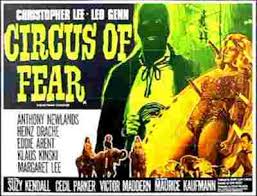
Last night my sweetie-wife and I watched an older British film of Amazon Prime, Circus of Fear. From 1966 and starring Christopher Lee and Leo Genn, who struck both of us as a low-rent James Mason, the movie is far less about horror than it is about crime.

After a daring daylight armored car robbery, are they all daring, which ends in the unintentional murder of a guard, Scotland Yard Inspector Elliott, (Genn), chases down leads until he’s confronted with a rogue’s gallery of suspects at a circus that is wintering over. With every character seeming harboring a deep and dangerous secret and a masked foreign lion tamer, (Lee) Elliott’s task of discovering the murderer and recovering the stolen 250,000 British pounds becomes much more difficult.

Comprised of studios shoots, tired stock footage of an actual circus, and emaciated elephants, Circus of Fear  can hardly be called a good movie. There were times, particularly with the repeated shots of a gloved hand throwing knives with lethal precision as character were eliminated from the story, that I was reminded of the Italian Giallo genre of lurid and sensation exploitative movies but sadly we were not watching one of those and whatever charm this movie had quickly faded.

The cast included Klaus Kinski as a mostly unnamed and looming threat over the proceedings but his part was rather small and did not provide enough screen time for ample amusement. Repeated uses of crash zooms and abrupt cuts failed to provoke any real sense of shock or dread and for the most part what you can say about this movie is that it was shot in focus and without absurd cuts covering poor editing choices. This is suitable for Riff Tracks ofrMST3K should they ever get around to it.

Share

It is Probably a Bad Movie Anyway

Some weeks ago I first saw the trailer for the thriller The Hunt and I was unmoved and uninterested. If you are familiar with the classic story The Most Dangerous Game, a piece of literary fiction that has been adapted into film several time or the Ozploitation movie Turkey Shoot  then you are aware of the basic set-up for The Hunt, a group of people are forced to the objects of a big game hunt and must fight and use their wits to survive. When I saw the trailer my thoughts went to Turkey Shoot  and frankly seeing that again prompted more interest.

Last weekend a conservative friend of mine brought up the film because of controversy that was apparently bubbling over at conservative websites. The movie grand satire was that gun-toting liberal elites were the hunters and that they had selected ‘deplorables’ Trump supporters and the like as their game. Under fire for this set-up, with Trump taking part in condemning the movie, and the horrific tragedy of three mass shooting events, one certainly politically motivated, within seven days, Universal pulled the movie indefinitely from their release schedule.

Ruben Baron at the website CBR reports having read the script by Damon Lindelof and Nick Cuse and compares it to an episode of South Park  where both the liberal hunters and conservative prey are presented in a bad light. In an attempt to be even handed apparently the script treats the liberal hunters as stereotypes and the people selected for the hunt are guilt of more than simple right-wing political positions but are also spousal abusers and such. (Though that itself ignore that domestic violence spans the political spectrum and reveals more about the screenwriters than perhaps they intended.) The central hero is a Red Stater who was selected by mistake when her name is confused for the hunt’s actual target.

I find it amusing that before Fox News, Trump, and PJ media jumped into the fray certain that this was nothing more than a liberal hit job on ‘real’ America that the most sympathetic characters were likely to be the conservatives being hunted. Narrative fiction, at least in the European tradition, is about character struggling to overcome adversity to achieve a goal and in that mold the characters an audience is most likely to root for are the ones fighting to survive. They have with the highest stakes in the conflict, are the ones suffering at a disadvantage, and the ones more likely to fail. I am reminded of a WWII training film about enemy interrogation where an allied aircrew is captured by the German and subject to various tricks, threats, and subtle techniques to divulge classified information. When I watched the film it was very difficult not to root for the Germans. They had the objective, they were facing the clock, and to win all the Americans had to do was shut up and say nothing. I suspect this script, in addition to being bad satire, would have placed the audience sympathies with the hunted.

youtube placeholder image

youtube placeholder image


Share

One Year Without an Agent

It was a little more than a year ago when my literary agency made it official and dropped me from their list.

I won’t lie, that hurt.

I won’t lie, I saw it coming. Emails went unanswered manuscripts went unread and in general I seemed to be more and more of an afterthought so the eventual move was hardly surprising. I am not naming names and I am not here to trash talk anyone or make a big public angry rant. The Author/Agent relations is a relation and now all of them work out, people have the be compatible just as with romantic entanglements there comes a time when it is better to walk away than to stay in one that is unhealthy and counter-productive. For those who are still with that agent and that agency I wish you all the best.

So, what has happened to me in the intervening twelve months?

I mentioned that ‘manuscripts went unread’ well that referred to a strange little novel I wrote where I combined Science-Fiction with Film Noir. I am certainly not the first person to that, there a plenty of novels exploring that blending of genres but what is different in mine are the exact sub-genres I braided together. Noir has two major branches, the ‘Hard Boiled’ school of police and private detectives and the ‘dark underbelly’ of society. That second branch is represented by works such as ‘Double Indemnity’ and ‘The Postman Always Rings Twice’ and it is the flavor I wanted to work with, merging it with colonial science-fiction about humanity as it struggles to survive on alien worlds.

I took that SF/Noir manuscript that had languished unread and found a publisher that produced books of both SF and crime narrative and submitted it. The book sold. First time, first publisher I submitted it to. I just completed the edits to the manuscript and my editor has submitted to the house’s production department. Vulcan’s Forge is expected to hit the shelves next March.

The manuscript that started the relationship with my former agent is showing promise as well. A major house that specializes in military SF, which is what that manuscript is, just alerted me that the work had been pulled of ‘closer examination.’ Of course they may still pass on the book but it’s more activity that it had been getting.

On the short story front I made it to ‘Finalist’ for the Writers of the Future Contest. That’s in the top eight slots out of thousands that had entered. I did not win, but it felt good that my odd little AI/Ghost story made it so far.

The point of all this?

If you’re queries are bouncing off agencies, do not despair. There are more paths in that just that one. Keep writing, keep plugging, and remember never ever self-reject

Share

Are they Alternative Histories?

The following post has spoilers for Inglorious Basterds and Once Upon a Time in Hollywood so proceed at your own discretion.


In the film Inglorious Basterds the heroes in a bloody and suicidal action murder the inner circle of the Nazi party including Hitler himself, presumably bring World War II to a premature close while in the current movie Once Upon a Time in Hollywood the cult followers of Charles Manson instead of murdering Sharon Tate and her houseguests attack her neighbors presumably launching Hollywood into a utterly novel sociological path.

Are these films with their fantastic premises and fairy tale ending popular examples of Alternative History fiction? Alternative History is that genre of speculative fiction which imagines how the world might have been different had history taken a different track than the one we know. For example what if the USA had lost its war of independence, or if WWI had not started? Harry Turtledove is today’s best practitioner of this art.

One the face of it this answer seems obvious, both of Tarantino’s film wildly diverge from actual history making those cinematic excursions truly an alternative to our own. However I think it require more than that. After Braveheart has loads of things wildly different from actual history and yet I have not heard anyone argue that it is an ‘alternative history.’

I believe an essential component of alternative history is an examination of what those differences mean to our understanding of the world. It is an examination of the consequencesof the change not just the change itself. In both films the story ends with the change, we never see what that means for the wider world. How does Hitler dying in 1944 change the Cold War, with Tate’s brutal murder how does film making change? We have no answer from the filmmaker, not even the hint of one. These are fairy tales, not alternative histories.

Share

The Missing Parallel

Often my mind will wander down counter examples when I hear a familiar phrase or explanation. For example many years ago during a conversation when a friend who had been in the US Navy with me discussed a bit of debauchery ashore during liberty in a foreign port he excused his behavior by saying ‘I’m only human.’ It occurred to me that no one ever says that when doing good actions even though altruism is also a very human thing to do.

Recently my mind has tripped over a familiar construction and the missing parallel to it, Judeo-Christian.

The phrase Judeo-Christian is often used as a stand in for Western European, though both elements of the phrase originate from the Middle East. Judeo naturally relates to Judaism, that ancient religion tracing its history back through Genesis and Adam and Eve. Christian of course refers to the religion that sprang up around Jesus, a Jewish holy man from the early Common Era and whose life and teachings represent the fundamental break between the two religions. The two religions have had a quite contentious and violent history as over the centuries followers of the Christian faith have engaged in pogroms, Inquisitions, conspiratorial slander, and murderous hate against the Jewish minority. This recent and mostly fictional welding of the two philosophies in a single Judeo-Christian tradition is really at odds with their history and is primarily propaganda. A propaganda that for the most part the Jewish people are not participants in. Consider this counter construction, Judeo-Islamic.

Islam, just as with Christianity, traces its history and origins through the Jewish faith and traditions. Where Christians believe Jesus was the final prophet from a long line of Jewish holy men and the living god made flesh the Islamic faith views Mohammed as the final Prophet that culminate the linage begat in the Old Testament. Where the Jewish faith traces its origins to Abraham’s son Isaac, the Islamic tradition is to trace their heritage Abraham’s other son, Ishmael. All three religions site Abraham as the man God selected to give birth to a chosen people and the followers of these major religions are often referred to as ‘The people of the Book’ because of their common origin and yet I have never heard any speak of a Judeo-Islam culture or tradition.

Share

When You Stare Into The Art The Art Stares Back Into You

Obviously this post’s title is a play on the famous statement about staring into the void and how that changes you what I am speaking about is not so much about change as revelation.

With the release of Tarantino’s Once Upon a Time In Hollywood his largest box-office opening to date, there have been a slew of reviews with interesting takes on what the themes and cultural significance of this cinematic fairytale. Given the subject matter, 1969, the Manson Murders, the transition from ‘Old Hollywood’ to a new star system, and the failure of the ‘Hippie’ movement as the idealistic 60s gave way to the cynical and dark 70s Once  quickly became a mirror that reflected the philosophies, politics, and morals of those critiquing the film.

It is an interesting and I think often forgotten aspect of critique that what once comments upon, compliments, or derides in any work of art but particularly with narrative pieces, says as much about the reviewer as it does about the art itself.

In my writers circle I often say ‘No honest review can be wrong,’ as a truthful critique, one that if reflected of the person’s sincere thoughts and reactions, paints the art as it impacted and moved, or failed to move, that person.

It has been fascinating watching the political chatterers liberal and conservative react to Once  revealing their internal biases, talking past each other, and illuminating the very real differences between those world-views. It could be an interesting experiment for some writers to write phony reviews in their characters’ voices.

Share

The Strangely Enduring Relevance of Shock Treatment

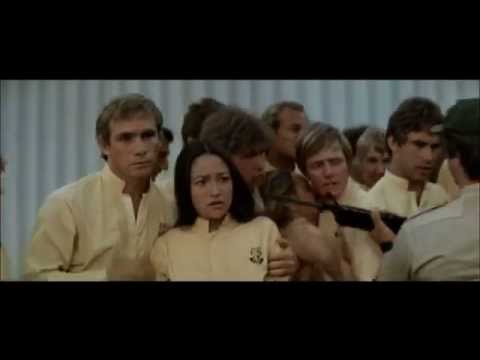
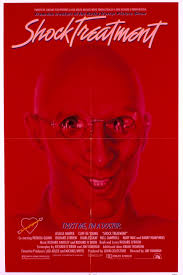
This week I re-watched 1981’s curious film Shock Treatment. Originally conceived as a sequel to the cult hit The Rocky Horror Picture Show  Shock Treatment  evolved into something darker, deeper, and more serious that that beloved rock musical. On one level the story is a simple straight forward sort of musical faire, Brad and Janet’s marriage is tested by temptation, fame, and manipulation by romantic rival for Janet’s affections until they ultimately triumph and literally ride off into the sunset. yet the film is also a biting commentary on television, the slippery nature of truth, and the power audience surrender to performers and content creators. Shock Treatment  is a deeply symbolic film with an approach that has more in common with David Lynch than most conventional filmmakers and it asks audiences to accept a level of unreality that transcends conventional narrative construction. Released long before the plague that is ‘reality’ programming this film speaks to the inherent deceptive quality of television and the dangers of accepting as ‘real’ anything that is presented in that flicking tube. And even though cathode ray tube and raster scans have vanished from out living rooms the film’s themes resonate stronger then they ever did in 1981.

Corporate control of mass culture, celebrity invasion of politics, and the deadly siren lure of instant fame, dangers we grapple with today are all major elements in Shock Treatment’ssly satire. The sinister similarity between Farley Flavors and Donald Trump feel more real to me than that other cinematic creation his inspired, Back to the Future’s  Biff Tannen. Lies are the beating heart of Shock Treatment,  the lies that seduces us, the lies we tell ourselves, and the lies we endure to simply ‘get along’ and in that theme I can’t help be feel that Shock Treatment’s  cinematic cousin is Craig Mazin’s outstanding series Chernobyl.

Nearly forgotten it is shocking just how relevant Shock Treatment  remains in 2019.

Share

It’s Not About Being Mentally Ill

Three mass murder shootings in seven day. It’s utterly horrifying to contemplate but today I am not going to discuss the pros or cons of firearm regulation but rather the tired cliché of describing the cowards behind the trigger as ‘mentally ill.’

It has been said before and will be said again that people suffering from mental illnesses are far more likely to be victims of violent crimes and assault than perpetrators and yet every single time this happens there are those who rush forward to blithely pronounce the murderers as mentally deranged and ill. If the facts so clearly support the concept that the mentally ill are victims of violence why are people always placing the blame on them? I think it comes down to three major reasons. I am not presenting the three reason in any order of importance, each one’s weight varies upon who is making the argument and why but I do think that all three broadly and culturally apply.

It’s a Dodge.

In the context of mass shooting when someone with a firearm starts killing as many people as they are able politically for those on the right it’s vitally important to shift the conversation as fast as possible. This is not to say that either side of the control argument has the stronger case but rather an observation that the political payoff for the right and conservative is to move the topic away from the gun itself. I call it a dodge rather than a reason because if this were a sincerely held belief, that these events are a result of seriously mentally disturbed people then those making that argument would be at least attempting to mitigate the effect with some action but that is almost never the case. No serious attempts are made to strengthen or enhance our deplorable mental health facilities in this nation and hence this argument is a dodge.

Popular Entertainment

For literally decades lazy incompetent screenwriters, and creators of all sorts, have waved away the haphazard and inconsistent motivations of their antagonists with the proclamation that the characters are ‘mad.’ The insane violent psychopath became an easy tired trope of bad writing and burrowed itself into a collection consciousness until for far too many people the blurry line between flawed artistic creation and reality faded into nothingness leaving us with the actually belief that murderous violent people are in fact psychopaths and that psychopaths are murderous and violent.

Rationality has Destroyed Evil.

The Enlightenment and Modernists thought insists that the world is a rational construction and that everything within it can be understood with the power reason. For so many aspects of reality this has held up extraordinarily well modern scientific thought has given us a world of abundance, long life, and unparalleled health even if those benefits are not yet even distributed but one thing we have loss in the calm logical model of the world is the concept of genuine evil. When these evil cowards appear and begin their indiscriminate slaughtering logic and reason fail to comfort us and in a desperate attempt to ‘explain’ people reach for madness as the answer. Because believing in actual evil has fallen out of favor insanity, a vastly misunderstood aspect of human health with much more to learn than is known provides a rational if utterly wrong answer to the question Why.

Share

Movie Review: Fast Furious & Presents: Hobbs and Shaw

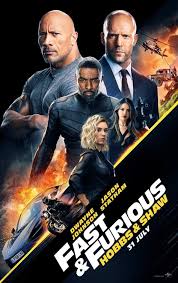
I have never watched, in whole or in part, any installment in the Fast & Furious franchise, so why did my Sweetie-wife and I go see this spin off from that popular series? The simple answer is we enjoyed the trailer. The joyous, funny, and decidedly over the top tone of the this movie’s preview promised the sort of ‘don’t take this seriously’ fun that can make for great escapist entertainment and that it is exactly what was delivered. We got what was listed on the tin. Now, the best frame of mind to enjoy this movie is not to go in thinking of it as an action film but to rather think of it as a super heromovie. The action, the stunts, the stakes, and the plotting are all much more in line with the lighter comedic styles of many modern comic book movies than anything as mundane as super spy James Bond. Approach Hobbs and Shawfrom that perspective and I think you’ll be ready to appreciate this enterprise.

The set-up of the movie is simple. Hobbs (Dwayne Johnson) an elite member of the Diplomatic Security Service and Shaw (Jason Statham) a outcast outlaw are forced to work together when Shaw’s sister Hattie (Vanessa Kirby) an MI6 operative is framed for stealing a super virus capable of wiping out humanity when in fact she secured the sample to protect it from Brixton (Idris Elba) a cybernetic enhanced mercenary worked for the shadowy organization Eteon which has the goal of saving humanity by eliminating ‘the weak’ and taking control of the planet. On the run and pursued by this ‘black superman’ Hobbs and Shaw must work together and learn the meaning of family.

Directed by David Leitch who also helmed John Wick  and Atomic Blonde this movie is naturally heavy on fights, stunts, and action with an emphasis on comedic turns.  Both of the leads, Johnson and Statham, have shown the comedic chops and timing to carry the movie and joined by Kirby the trio is a powerhouse of charisma that carries the audience over and through the movie’s incredible story and sequences. Personally I am quite happy to see that Kirby is getting a wide variety of roles. She first came to my notice as Princess Margaret in Netflix’s terrific historical drama series The Crown and in everything else I have seen her in she has never disappointed. Idris Elba is much better served by this role than he was in the forgettable Star Trek: Beyond.

Over all if you can suspend disbelief and simply accept the wild premises and action Hobbs and Shaw  is an excellent entry into escapist fun.

Share