Author Archives: Bob Evans

Actions Define Character

There is often a gulf between what a character says is their nature and the actions performed by that character. I am not speaking about plot-required deceptions, such as an agent who poses as a businessperson while traveling through hostile and dangerous territory but rather to gap between how a character perceives themselves and that the character’s actual nature.

In an introductory psychology course, I was exposed to the concept of the Johari Window. Take a square and divide it into four quadrants. One section is what that person knows about themselves that is also known by others, it is their public face and identity. Another sector is what the person knows but it is unknown to others, this is the person’s guarded identity. The third sector is what is unknown by the person but known to others, this is the person’s blind spots, aspects of their personality and identity that they are blind to. And the final sector is those aspects of the person that is unknown to both the person and to others, traits, identity, and personality facets that have yet to be discovered. The sectors are rarely even and their areas vary greatly from person to person. It can be a useful tool in character design to consider how the Johari Window applied to people you may create for any work of fiction.

The tension between what a character may believe about themselves and how thy actually act can be a great source of development and conflict. Consider a character that considers themselves to be a ‘progressive’ supportive of LGBQT rights and for drug legalization but if that character is also wealthy and their political energies are spent on the candidates and initiates to reduce their tax burden then the characters actions are in conflict with not only their expressed ideals but perhaps even their own sense of identity. Such a character may not even be a hypocrite as they may unable to even perceive the contradictions between their stated positions and their actual actions. Never under estimate a person’s ability to self-deceive particularly in order to protect a self-image that may be at odds with reality.

The old adage is that ‘actions speak louder than words,’ and we consider it a truism especially when we need to consider characters who believe that own words and yet defy them with action after action.

Share

A Democratic Decision

It seems clear that the field of Democratic candidates for President can be divided into the leading three, Biden, Warren, and Sanders, and then the rest of the field hoping for a break out that would allow them to replace on of these leading personalities.

What I think is interesting is that the leading three represent very different points of view on the future of the Democratic Party and America’s political system.

Biden’s holds the conceptual space that they system is not broken and that with the right leadership we can return to a mode of operation that operated in the past. That with good will and proper leadership the hyper- partisan combat can be cooled and normalcy can be restored.

Sanders is operating from the presumption that the system is irreparably broken and that not only is there no ability to return to a previous normal, that the previous normal itself was bad. His stand seems to be that the old ways and the old systems must be brushed away and replaced with a new way of doing things. Burn it down and build a new political reality is the strategic aim of the Sanders camp and it is fitting considering that the candidate is not even a member of the Democratic Party.

Warren stands between these two poles. Her position rejects the ‘return to normalcy’ of the Biden campaign and rejects the revolutionary nature of the Sanders. It is fitting that Warren grew up on the Republican side of the political spectrum before finding herself and her voice with the Democratic Party. It is reminiscent of Reagan’s voyage from Democrat to Republican decades earlier. She vocally takes the stand that she is a capitalist and wants to save capitalism while advocating for deeper systemic changes than Biden seems willing to tolerate.

It is likely that the nominee will come from one of these three people and it will be fascinating to see what direct the Democratic Party moves.

Share

Opening a Story

Sorry I have been away from my blog but last week I managed to injure my lower back and that pulled muscle made it fairly painful to sit at my work desk. I am recovered enough to return to my desk, both here at home and at my day job.

Last night I attended the twice monthly meeting of the Mysterious Galaxy Writers Group and some of the feedback and discussion has gotten my mind churning on the elements needed to successfully open a story.

Of course, you want something dramatic, something interesting capturing the reader’s interest and imagination. I have also long maintained that the opening scene must be one of conflict, presenting a character with an objective and something that stand between the character achieving that goal. There an often used example of starting off wrong by stating in combat that because we do not yet know who the characters are and what motivates them it is difficult to have emotional investment in battle right from the start. This correct more often than it is wrong, but skillful deployment of character beats can allow a combat focused opening as well.

What I have been thinking and pondering since last night is the importance of the nature of the conflict that you opens the story. It seems rather obvious but sometime the most important elements are only obvious when seen in retrospect. The exact conflict that opens the story informs the reader about the nature of the character and situation. It lays down a lot of foundation for the tone and style of the story that will follow. Why this character is facing this particular challenge and that choices that are forced upon them to resolve it informs the reader who the character is and the nature of their personality.

The challenge doesn’t have to be the central challenge of the story or novel, but it should be there is give us these vital insights.

Consider a character who needs to get to work but whose car is out of gas. Already we know that this character has financial troubles, has work troubles, and is teetering on the edge. A person secure in their finances can easily maintain their vehicle, and someone doing well at their job can afford a single tardy or missed day. So that little conflict has already shared a lot of information. If the character resolves this issue by stealing money from their roommate’s wallet that’s one sort of person if they wake up hours early to walk three miles to get to work on time that a different moral character and either choice gives the reader a taste of who this person is.

When opening a story you have a very special window for establishing tone and character, make the most of it.


Share

Knowing What You Write

There’s an adage in writing that goes “Write what you know,” but I think it should more properly be phrased as ‘Know what you write.’ It isn’t about sticking to things you already know but knowing and understanding your subject well enough to write honestly.

One of the short films at this year’s Horrible Imaginings Festival brought this home to me.

In the film Vicious a family of urbanites are in the lonely rural south when they become guests of an odd local family that invites them for dinner. The film starts off looking as though it is going to be a rather bog standard ‘folk horror’ about the strange and scary people found in the countryside but the filmmakers invert the paradigm and end of a rather different note.

What might have been a fun reversal of a trope felt flat and inauthentic because the filmmakers did not know what they wrote. When visiting a culture not your own it is important to get people who are deeply familiar with it to help you in avoiding simple mistakes.  Here are two of the most glaring examples from the film where inaccuracies damaged my enjoyment.

First off, in the south you do not have dinner outdoors shortly after dusk. Californians might think of this time as pleasant, the cooling air, the breeze heading towards the sea, but California is dry and the south is wet and filled with mosquitos. A table outside is setting a table for those biting insects.

Second, if a Southern family invites another for supper, particularly is this Southern family has a large lovely brick home, the meal they set out will not be a plate of beans and nothing more. Southern culture is a very food centric one and the offerings would have been numerous both as a matter of hospitality and of pride.

These may feel like small errors but they destroy the credibility of the film, yanking audience member who see them out of the tale and shattering the illusion. It is always vitally important to ‘Write What You Know.”

Share

Horrible Imaginings 2019

This year was the 10thannual Horrible Imaginings Horror Film Festival. For the second year, the festival has been hosted by the non-profit theater The Frida Cinema and this year I managed to attend 2 of the 3 day run time. I am sad that I missed Friday but day-job commitments are paramount.

Saturday started with a block of short films programed around the theme ‘A Shock to the System’ where the horror lies more in systemic and cultural issues than a beastie or man with a knife. There were 11 films in this block and many were quite compelling. The film that most disturbed me was Off Fleek  which centered in a young woman and the terrible effect of the cyber-abuse she endured. It is a film that haunts the mind well after its brief running time has ended. Per haps most entertaining  was Kathy  a film about growing up gay in a fundamentalist household where demons and possession are common dinnertime discussions. And most artistic visually striking of the block was LVRS a film without dialog that symbolically explored the nature of abusive relationships.

The next block continue the theme with the longer films Conversion Therapist  and What Daphne Sawand included a panel discussion about the issues of ‘reparative’ therapy and human trafficking. We rounded out Saturday with two feature films but the one I enjoyed the most from that evening was Reborn  starring Barbara Crampton and Michael Pare.

Sunday again started with a block of short subjects, this time the theme being Monsters, Sci-Fi and Beyond. Nest  was a ‘found footage’ style short that understood brevity if powerful in that model of filmmaking. How to be Alone  was a wonderful exploration of isolation and the mental toll that can take on a person while Ulysses  presented perhaps the best mermaid design I have ever watched.

Then we were treated to a long form short film block where instead of running times between 2 and 12 minutes the films were along the lines of a half an hour including a lovly film about a séance in the White House at the height of the Civil War. Though perhaps my favorite of that black came from Brazil For My Cat, Mieze  where justice comes paired with a fine wine.

We rounded out the day with two feature films, Antrum – the Deadliest Film Ever Made  which included as part of its conceit a mini-documentary about the fictional film Antrum  and the deaths associated with it, but the film struck me as more gimmick that story. The final feature was Pornoa movie about religious teenagers who accidentally summon a succubus in the theater where they work. It’s over-the top, bloody, sexy, and funny, providing one of the festival’s’ most memorable line of dialog; “I’m not going to get excited by your exploded testicles!”

All in all the festival was a grand time well worth the 3 hours of drive time each day.

Share

Where Are the Conservative Solutions?

With my political reading and podcasts I try to read and listen to writers, publications, and thinker from both the liberal and the conservative perspectives. I’ll admit that I have yet to find a conservative podcast that seems to be about ideas and not about endless ad hominem  attacks on the viewpoints that they find disagreeable, but the search continues.

One thing I have noticed as I visit various conservative publications is what seems to be a scarcity of proposed solutions to challenges facing us today.  There is a lot of ink and bandwidth dedicated to attack solution proposed from liberals, endless streams of outrage over proposed or actual changes to our social order, and an infinite supply of arguments defending the current administration that are simply at odds with everything these publication have professed to stand for in previous years. It boils do to a lot of ‘We can’t do that!’ while offering nothing as a counter proposal.

This is not how has always been.

I think that what is happened and has been happening for about a decade or so is that we have reached the end of the life cycle for the current wave of conservative thought. I think that political thought comes in the large massive periods and when a version becomes dominant it will remain essentially unchanged for many years.

From the Great Depression through the first Bush administration the liberal political thought was very much just variations on FDR and his legacy. Until Bill Clinton’s campaign the music played at National Democratic conventions was Happy Times are Here Again   a Depression era song. Clinton, sensing that the Conservative era ushered in my Reagan had not yet passed, charted a ‘third way’ for his politics, seeking to appease conservatives as he tried to implement his programs. It was often said during his two terms that it was better to be his enemy than his ally because he would sell out his ally to gain from his enemy. Obama in my opinion represents the final breaking from the FDR legacy and is the threshold as we cross into a yet undefined period of liberal thought. It is why the three leading Democratic candidates for President lead such different coalitions.

On the conservative side the victories of Ronald Reagan broke forth a new dawn, pushing aside the conservative thought of Eisenhower, Rockefeller, and that ilk for a new way of thinking. However that victory happened in 1980, 39 years ago, and the last of Reagan ideology has been falling away. We are at the end of Reagan’s period of dominance and conservatism, particularly now that the Cold War is over, must find a new philosophy and new thought and it hasn’t done that yet. Trump represents one possible future for conservatism. It is a bitter, hate-filled future of endless nasty attacks and a very tribal warfare but it is a possible and it holds no solutions only political warfare that never ends. A decided defeat of Trump in 2020 will be a good step in closing off that future, but it will take more than one humiliation to kill that monster.

Share

Film Review: All the Colors of the Dark (1972)

Hailing from 1972 and currently streaming on the specialized horror service Shudder, All the Colors of the Dark  is a giallo,  a genre of Italian cinema that specialized in sensation lurid tales often centered on aspects of sex, sexual perversion, and violence. Part of the global exploitive cinema of the 1970s and 1980s, giallos  are colorful, have amazing photography, and bold art direction, the best of them are usually associated with the noted directors Mario Bava and Dario Argento. Though an Italian film All the Colors of the Dark  was filmed and set in England.

Jane (Edwige Fenech), while recovering from a car crash that injured her and killed her unborn baby, is tormented by terrifying visions of a knife-wielding attacker. The vision manifest most often when Jane and her boyfriend Richard (George Hilton) attempt to be sexually involved. Richard insists she needs vitamins, while her sister Barbara, who works for a psychiatrist presses for psychiatry. Jane’s neighbor, Mary, introduces Jane to a satanic coven and the events explode into debauchery, assault, and murder with Jane’s visions becoming apparently real as she loses connection with reality.

With plenty of blood and nudity All the Colors of the Dark is not a film for the young, sensitive, or easily offended. The final act of the movie ties things together with an explanation, but this, as with most giallos  in my opinion, is more a perfunctory move providing only the barest of rationales that allow the dream-like and nightmarish imagery to play out.  This sort of movie you do not watch for logical consistency or carefully interlocking plotting but rather for the surreal nature of the visuals and the emotional punch of the scenes. I find the style reminiscent of David Lynch albeit with a much more conventional approach.


Share

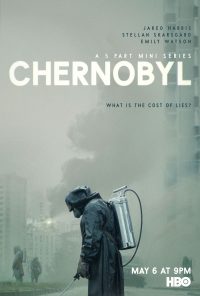
Reading HBO’s Chernobyl

Unless you have been under a rock hiding from the insanity of today’s world, and honestly who could blame you, you have probably heard of HBO’s fantastic mini-series Chernobyl  chronicling the infamous Soviet nuclear disaster. Show runner and writer Craig Mazin, best know for films such as The Hangover 2,  delivered an amazing, frightening, and moving depiction of the terrifying and heroic events surrounding the 1986 event.

Mazin also co hosts with fellow screen scribe John August the podcast Scriptnotes  where the pair, along with occasional guests, discuss screenwriting from both a creative and a business practical viewpoint.  As part of their mission to help screenwriters Mazin has published all five scripts for Chernobyl  and I have spent the last two days lost in a wonderful reading experience.

I have read a number of scripts for both television and feature films and I have to say that Mazin has really opened my eyes to ways this particular art form can be expressed. His approach is a close subjective style with elements that I have not seen often in screenplays. The narrative elements of the script contain descriptions that are purely internal to the character. It’s a guide to the reader, the director, and the actor how a scene needs to be played. I have to say that these scripts are a good reading experience one that is as enjoyable as any well-crafted short story or novel. Not only has it made me appreciate the craft more, but also it has enhanced my respect for the series as a whole and ignited a desire to re-watch the entire run.

The scripts are available for free downloading at John August’s website.


Share

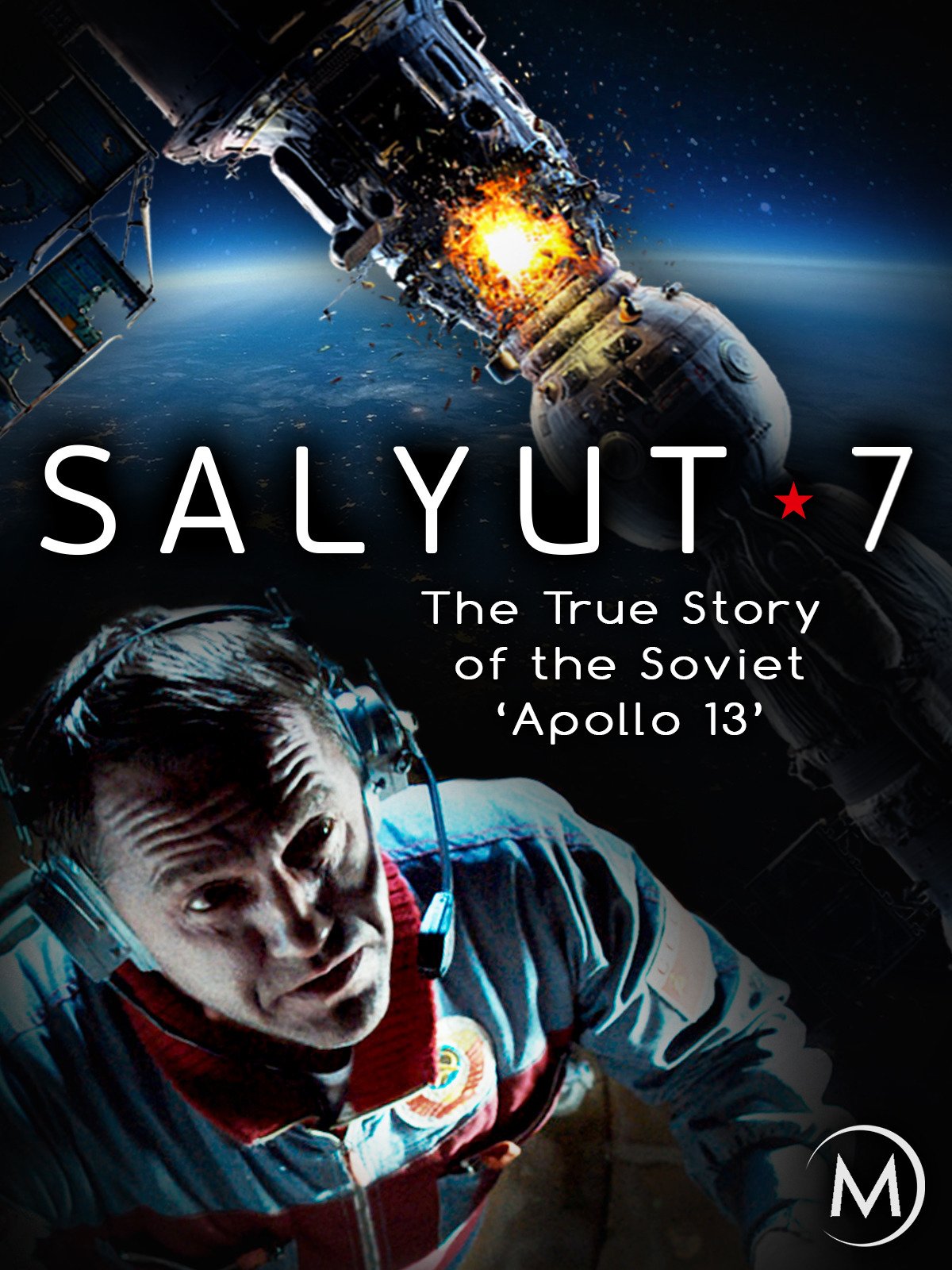
Foreign Movie Review: Salyut-7

Inspired by the Soviet Mission to save their crippled space station the film Salyut 7is a fictionalized drama in low Earth orbit.

Vladimir Fyodorov is a Soviet Cosmonaut grounded after reporting having seen ‘angels’ in orbit during a life-threatening emergency. His wife and daughter are relieved that Vladimir will no longer be risking his life in dangerous space missions. Everything is upturned when the space station Salyut 7 that was un-crewed and flying on automatic suddenly loses all power and is rendered dead in orbit. Fearful that either the Americans may steal the station by way of a shuttle mission or that the station in an uncontrolled re-entry posses a hazard the Soviet’s decide to launch a mission to repair the station. After all other cosmonauts fail to dock with tumbling station in simulation it is decided to reactive Vladimir and along with an engineer is sent to Salyut 7. Once there they face numerous challenges both technical and personal as they struggle to rescue the station, Soviet prestige, and their very lives in a desperate bid to save the station.

With only a few technical errors, Salyut 7 is a gorgeous film utilizing the very best special effects to recreate the sensation of flying 200 miles above the Earth at 17,000 miles per hour.  In the interests of narrative and drama, the story deviates significantly from the historical record and should be best viewed as a work of fiction rather than a view of actual events. The acting is very good, the drama is tight and the characters believable and relatable. Currently available on Amazon Prime in Russian with English subtitles Salyut 7 is worth the time for anyone who enjoys a heavy dose of technical realism in their space films/


Share

Fantastic Films Ahead

As we wind down into the end of August and the end of summer, I can look forward to two different fantastic film events.

First up, starting on August 30thand running for three days is the Horrible Imaginings Film Festival. Started ten years ago by my friend Miguel Rodriguez the festival is dedicated to horror films of all stripes. Miguel and his team cast a wide net using a liberal definition of horror that includes everything from neo-noir crime thrillers to surrealist experimentations exploring deadly vampire clay. Started in San Diego with a tiny venue, the festival now is hosted in Orange County California at the wonderful art house theater The Frida Cinema, and while the locale has added about an hour and a half of travel time, it is still well worth the effort. Sadly, because August 31stis the first day of a long holiday weekend and I do not yet have 15 plus years of seniority at my day-job I will be missing the first evening’s festivities including what looks to be a fun film Satanic Panic. Seriously, at my job people rarely leave once they get in the door, and that is understandable, but to get any time off around the holidays is neigh impossible for anyone with less than 15 years of seniority. I do miss the days when the festival was located in San Diego and I could simply drive down to the Museum of Photographic Arts to catch the first evening, but the Frida is a great venue and I would rather the festival thrive than wither simply because it would be easier for me.

The second film event is on September 28thand is The Secret Morgue 2. Created by our local film fanatics Film Geeks SD, of which Miguel is a founding member he’s responsible for in part or in whole for a whole lot of good film stuff in San Diego, this is a 13 hours marathon of horror film hosted by the Comic-Con Museum in Balboa Park. Last year at the first Secret Morgue the theme was 70s and 80s horror, the sort of title you would discover in video rental stores, if you remember what those were. The titles were secret and I rolled the dice and attended the screenings. What fun I had! Every film was one I had never seen, and while some were tedious than entertaining, I don’t regret attending. This year the theme is SF Horror and I suspect I will have seen some of these titles before but I could be wrong. Film Geeks SD has a deep cinematic knowledge and their choice can be quite surprising.

Share