Monthly Archives: December 2025

So, I Finally Started Pluribus

.

While the series has been the rage on my SF social media feeds, I myself, while quite curious about it, hadn’t started watching until last night. It was a series that my sweetie-wife had a possible interest in, and so not one I would end up watching on my own after she had retired for the evening. We had just finished Down Cemetery Road, Apple’s adaptation of the Mick Herron novel. (That’s the same author that gave us the absolutely wonderful Slow Horses series.)

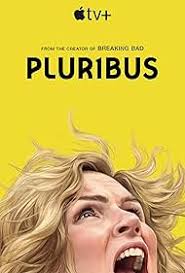
Pluribus (here on out I’m going to use the standard spelling and not the one utilizing the numeral for an ‘i’) deals with the lingering and global effects of an RNA-carried strand created
Apple TV

by following instructions beamed from an extraterrestrial source. Rhea Seehorn stars as Carol, a highly popular writer of a romantic/fantasy series that has brought her fame, money, and lines of adoring fans. Carol’s life, however, is a lie. She considers her novels to be brainless trash, her warm and welcoming front that she shows fans covers a contempt for people, and it is hinted that Carol is under court-ordered monitoring due to a drinking problem—the breathalyzer affixed to her car’s ignition. And while her novels come from a distinctly heterosexual point of view, Carol hides her own lesbian relationship from public view.

With the release of the RNA-carried strand, everything changes. Global infection leaves a number of people dead, including Carol’s longtime partner Helen, and the survivors merge into a single group mind that spans the earth.

The survivors—except for Carol and a very few others who retain their own identity—for reasons unknown to anyone, never suffered any infection effects and never merged into the new global consciousness.

You might expect that with such a treatment of the plot of Invasion of the Body Snatchers that this is a chase-and-hide story, with Carol ducking and dodging the hive mind at every turn as she searches for answers. But that is not the direction showrunner Vince Gilligan takes it. The “We” that is the rest of the world want Carol to join them; they want to understand why she is immune and to correct that. But at least as far as the first episode goes, they want to do it only with her consent and participation. They are frighteningly helpful.

I am certainly intrigued and look forward to more episodes now that Vince Gilligan has returned to SF/fantasy.

Share

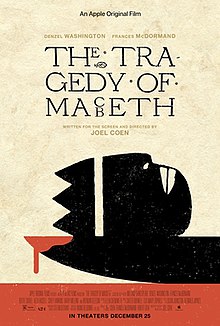
When Adaptations Neuter the Witches of Macbeth

.

I have been thinking about Macbeth lately and even revisited a partial screenplay where I adapted the play into a modern setting, preserving the text and playing with new meanings for old words.

One aspect of the play that is quite often cut down when adapted to the screen—either silver or electronic—is the scene where the witches are shown on the heath.

Apple TV

Now, the witches aren’t given much in the way of character, not even names, but they are given history and motivations that vanish when the scene is cut down.

When they “meet again” upon the heath, they bring each other up to date on what they have been doing in each other’s absence.

One has been slaughtering pigs, robbing some farm of food, or income, or both. For a farm, to lose a swineherd can be fatally disastrous.

Another witch recounts being denied chestnuts, and the trio conspire to ensure that the woman who denied the witch the desired nut suffers as his ship is blown about on the seas, lost and wrecked.

These witches are engaged in evil. They are cruel, malicious beings that delight in the terror and disaster they create for poor, pitiful humans. These are the beings that waylay Macbeth on the heath and fill his mind with prophecy of kingship.

When these aspects are removed from the adaptation, the weird sisters become nothing more than gumball prophecy machines, devoid of agency or intent. We are never left to question: Why? Why did they stop Macbeth? Why give him that foreknowledge of his future?

I think this is an artifact of our modern age. We are perfectly willing to let the witches come in and tell the character the future, but we want the tragedy to be that his ambition is his downfall, not the possibility that the tragedy is that Macbeth is trapped by fates beyond his understanding or control.

Share

That’s Not A Battleship…

So, Trump, in his boundless narcissism, has decided that the United States Navy needs battleships again, and that these should be known as ‘Trump Class’ battleships serving as the centerpiece of his golden fleet initiative.

Of course, like with nearly every single thing that comes from this man, they are not what he promises and are vaporware, produced to stroke the ego of a vain and insecure toddler.

The proposed ships are not battleships in any conventional sense of the word. Ships are rated by their displacement—that amount of water that is displaced by the vessel as it sits there floating in the ocean. The USS New Jersey fully loaded with crew, supplies and munitions displaced 61,000 tons. A destroyer, small fast and agile ships might displace as much as 9,900 tons, this proposed ‘Trump-Class Battleship,’ if it ever came into existence, is slated to displace about 35,000 tons, about half the size of an actual battleship.

The first ship to be commissioned in this proposal would be the USS Defiant, making the truth of the matter even more clear as the first ship commissioned is the lead ship and the vessel from which the class name is derived. These vaporware vessels would be Defiant Class ships, but hey we know that Trump would just love to slap his name on it before it glides down the slipway into the water. Not that it ever will, or if by happenstance it does, it will be far beyond the current presidential term and in all likelihood this president’s life expectancy.

What these deranged fantasies expose is that Trump, a dim-witted and ignorant man, is fixated on navies that haven’t actually mattered in over a century.

The last major war where battleships dominated the seas was World War I. By the next world war, the battleships lost their throne as monarchs of the seas to the aircraft carrier. Beyond delivering massive shore bombardment, battleships serve little purpose beyond being massive and terribly expensive targets.

I do wonder if we are watching the next major evolution in naval warfare as the Russian invasion of Ukraine plays out. The Black Sea fleet has been humbled and not by new sleek warships but by cheap uncrewed drones. Is perhaps the next dominant warship not something with guns that can throw shells the size of cars 20 or more miles or floating cities filled with the latest and most expensive jet fighters and pilots, but rather small fast agile vessels that can unleash hell in the manner of hundreds if not thousands of cheap hard to detect and hard to hit drones?

Either way, the man-baby that sits in the defiled Oval Office is too stupid and too vain to see it.

Share

Hogfather, Outrageous Fortune, and the Unexpected Connection

.

This past couple of days my sweetie-wife and I watched the Sky One production of Hogfather, an adaptation of the novel by Terry Pratchett, as part of our holiday traditions. The other holiday movie we often watch at this time of year is Rare Exports from Finland.
After Susan, Death’s granddaughter, has rescued the Hogfather—a Santa Claus analog—from the beings that wanted to destroy him and through that action destroy humanity’s capacity for imagination, she is told by her grandfather Death that humans need to practice believing in the little lies, like the Hogfather, to be ready for the big lies like Justice and Mercy. The theme, stated quite plainly as television is wont to do, is that without imagining such things as justice, how can they be real?
This year this ending and theme struck me quite differently. I had finished my horror novel Outrageous Fortune just a few weeks earlier and its themes were still fresh in my head. Part of the novel’s philosophical grounding is that the universe is utterly indifferent to human existence. It would be wrong to describe the universe as cold, as that implies at least some consideration. It is indifferent, not capable of having any consideration of human behavior and by extension no possibility of punishment or reward. There is existence and only existence as far as the universe is concerned.
Morality, the novel puts forward, is purely a personal perception, but it is also a trap because once it is perceived and recognized, then that knowledge is imprinted permanently on the perceiver’s mind. To recognize that an action is ‘immoral’ within the perceiver’s subjective understanding means it will remain immoral to that person. Whether you do or do not perform that action, the morality of your action is yours to carry as part of your identity regardless of the universe’s indifference. One does not ‘create’ justice; one recognizes it in oneself, or one is ignorant of it.
Pratchett’s work stipulates that belief creates an objective morality, but mine postulates that it never exists objectively but only subjectively, which is the only way we really experience life anyway.

Share

A New Motion Picture From the Creator of ‘Chernobyl’

.

Craig Mazin, the writer, producer, and show runner of the hit shows Chernobyl and The Last Of Us who has proven his ability to shock, horrify, and unsettle even the most steadfast of viewers with stories of humans caught in circumstances that test them to the limits of their endurance, often with dreadful deaths along the way.

The podcast Scriptnotes is hosted by John August and Craig Mazin and is  heaven for scriptwriting and things interesting to scriptwriters. It actually covers much more than that. I have set aside any dreams of scriptwriting but still I am devoted to the podcast as a weekly dose of sanity in my ears.

For years Craig has mentioned obliquely a script he and a producer have been working on, a challenging one to crack its story and its voice. This week the man who gave us the technological terror of Soviet Nuclear design and the uncanny horror of fungal possession released the first look at his newest project.

Here is the trailer.

youtube placeholder image

Share

Dedra & Syril: The Empire Mismatched Power Couple

.

Antagonists and Villains are tricky characters to craft. Make them too simple in their motivations and action and they become cartoonish targets, forgettable and easily swept aside by the protagonists. Develop them too well and they become so sympathetic as to displace the actual protagonists as read and audience identification grows. A careful balance between evil goals and representing their full humanity is an ideal that is so rarely achieved.
But achieved it was with Andor’s Syril Karn and Dedra Meero, agents of Star Wars’ dread Galactic Empire, lethal opponents to the protagonists, but fully realized and capable human beings trapped by circumstance and their environments.

Syril Karn (Kyle Soller) begins the series as midgrade police officer working for corporate

Lucasfilm/Disney Studios

security, desperate to prove himself and with a fierce passion for law and order. Syril gives no indication that he has ever given any thought to the politics of the empire. Syril has a much more grounded view of life: there are rules and they are the only thing that keeps the chaos at bay. Rules must be enforced and rule breakers must be dragged into the light and subjected to the legal system for correction. His rigid view of the law and justice sets him on a course for tragedy when he cannot accept his superior’s plan to sweep the murder of two fellow corporate cops under the rug. Refusing to participate in a cover-up that would allow a lawbreaker, a murderer, to escape justice, Syril ignites a series of events that lead to riots, the Empire displacing the corporate security, and his collision with Dedra Meero.

Dedra Meero (Denise Gough), a sector chief for the feared Imperial Security Bureau, ISB, has an

Lucasfilm/Disney Studios

equally rigid but more political worldview than Syril. Taken from her criminal parent and raised in an Imperial ‘KinderBloc,’ Dedra is a true believer in the Empire. For her, it is not law that brings order to the galaxy but power and the Empire’s power must be unquestioned or there will be chaos. Laws and rules are, for Dedra, permeable, but only insofar as rule breaking advances and protects the Empire’s power to provide stability, peace, and security. Frustrated by a bureaucracy which keeps sector heads and Imperial departments quarreling and warring for resources, Dedra violates rules and protocols pursuing a growing rebellion that others either cannot or will not see. Cold, competent, ruthless, and intelligent, Dedra Meero represents the Empire’s best bet for killing the Rebel Alliance before it even forms beyond the odd terrorist attack or heist.

By the second season this pair have formed both a romantic and professional union. We aren’t shown the courtship, but with the series time jumps we are presented with the couple living together in the imperial capital. When Dedra puts Syril’s overbearing mother in her place, establishing the firm boundaries required to protect her partner, it is clear that Dedra truly cares for Syril. Later Dedra pulls Syril into an intelligence operation that when he learns its true scope and purpose rattles his steadfast resolve, providing their relationship’s tragic conclusion.
Syril isn’t an evil man, he’s a man with solid understandable belief in law and order, but who by temperament doesn’t look at the hand that wields the law for its own self-interested purposes. Dedra, unbothered by both genocide and torture, is evil. She engages in torture and terrorism, putting aside what qualms remain within her withered conscience to advance a system whose true nature is revealed with the annihilation of the Ghor. Her desire for order at any price finds that even genocide is not too high a price to pay. This devotion to power brings the eventual conflict which shatters Dedra’s relationship with Syril and his rigid moral code.
Andor presents the audience with Imperials that are true characters, that are people with complex inner lives and for whom the Empire is not a setting but an environment that shaped them and that they shape. This is writing at its best.

Share

The San Diego I knew and used in Outrageous Fortune

.

My latest horror novel, Outrageous Fortune, is not the first time that my adopted hometown of San Diego, California has been used as a setting for one of my fictions, but it is the most extensive and all the other projects were short stories.

Part of the reason I used San Diego for the novel is because the principal location, the Kensington Theater is a fictionalized version of my favorite theater, the beloved Ken Cinema.

I came to San Diego in 1981 when I was assigned by the US Navy to the USS Bella Wood (LHA-3). At that time this city had a ton of movie theaters, from grand palaces like the Loma out in the Sport Arena area to the grindhouses downtown that played the most interesting exploitive fare 24 hours a day. However, the Ken, a part of the Landmark Chain, was quite special.

The theater was a revival house, played older films in double features that changed on a daily basis and arthouse and foreign films that played longer engagements. From its worn, hard seating, I watched a number of films that became favorites. A double feature of It Came from Outer Space and The Creature From the Black Lagoon, both presented in their original 3-D format. It was at the Ken that I was exposed to David Lynch with a double feature of Little Shop of Horrors(the non-musical original) with Eraserhead.

Such a beloved and treasured space made a natural setting for my story of cursed nitrate film and the ghost trapped in that celluloid.

In the forty-four years that I have lived in this city I have resided in a number of apartments and houses, nearly always with dear friends as roommates. Nearly every apartment that appears in Outrageous Fortune as a character’s home is located in a complex where I lived. These places are vivid in my memory as is Balboa Park — its trails, museums, and eateries — another aspect of my decades living in San Diego.

During 1984, the novel’s setting, I was already a performing member of the shadow cast that participated in the Rocky Horror Picture Show experience at the Ken every Saturday and Sunday. It was among that group of oddballs and misfits that I found a real community where I fitted in with them like they had been a family from which I had merely been absent and not one newly discovered. Once, at a breakfast/brunch with many of them, someone commented to Goldie that I was shy and she exclaimed quite loudly “Bob is shy?” I am quite shy around people I do not know and also in situations that are not a good fit for my personality, the people of the Rocky crowd were not that at all.

So, amid the death, the ghosts, the vengeance, and cultists murdering to advance their twisted and selfish goal, Outrageous Fortune contains love for cinema, for San Diego, and for the Ken Cinema.

Share

Wicked: The Jenga Tower of IP

.

While I was unwell this past weekend and too dizzy for my usual activities, I sat in my large recliner and watched Wicked on Amazon Prime.

Now, Wicked, the 2024 film, is an adaptation of Wicked the Stage Musical, which itself was an adaptation of the 1995 novel Wicked, which was a retelling of the classic book The Wonderful Wizard of Oz, but reimagined with the “wicked witch” of the West as its protagonist.

I am not a great fan of musicals, though there are a few in my library of DVDs and Blu-rays, so I had no burning desire or need to rush out last year and see this in the theaters. That said, it made a perfectly fine way to pass the time as my head spun with some sort of sinus issues.

Universal Studios

The story centers on Elphaba, a young woman born with two very powerful traits: one, a wild magical ability that manifests when she is emotionally upset—not quite a wizarding Hulk but close—and the second, bright verdant skin. Scorned by her father for her complexion, though the suggestion that she is a bastard is slid into the story, it is not made explicit. Ridiculed by everyone, Elphaba develops into a withdrawn and defensive young woman played by Cynthia Erivo. (Personally, I found the overt and powerful prejudice towards Elphaba a little difficult to square in a land with such a variety of strange and unusual lifeforms as Oz possesses.)

Elphaba’s life is turned around when, escorting her younger and disabled sister Nessarose to Shiz University, her untrained magical talent is noticed by an instructor, Madame Morrible (Michelle Yeoh), and she is instantly enrolled and forced to room with the popular and utterly self-centered Galinda (Ariana Grande). The two women start off with a strong dislike towards each other but become friends. Elphaba comes to the attention of and is honored with an audience with The Wizard of Oz (Jeff Goldblum), where the two friends learn a terrible and life-changing truth about the land of Oz.

Wicked in all its iterations has a large and loyal fanbase, but I have never counted myself amongst them. Now, having seen the film, I can say that I liked it but did not love it.

The central performances are compelling enough, with Ariana Grande’s coming as a bit of a surprise to me. Pop stars and singers are often thrust into acting roles, and far too often they have neither the temperament nor the skills for nuanced acting performances. Some may think that because Galinda is a vain, self-centered, and not-too-bright woman, that it would be an easy role to play, but it is a truism that playing dumb is much more difficult than playing smart. Add to the challenge that all the characters, save Elphaba who anchors the production, play heightened and exaggerated versions of themselves, and Grande’s challenge is magnified.

Cynthia Erivo delivers another stunning performance both in her singing talents and in her acting ones. She is the emotional heart of the story, and if her performance doesn’t work for you, then the entire film will not either.

Wicked is colorful, over-the-top, and fun, but it is also, not barring that this is only half of the stage musical, overlong, with beats and songs that could be excised without any appreciable change to the film.

For example, when Prince Fiyero (Jonathan Bailey) convinces the student body to break the rules and visit the club “Oz Dust,” there is a substantial and elaborate number. The Prince is a “bad boy” and they are breaking the rules. However, nothing comes of the rule-breaking, not even when “caught” by Madame Morrible, as the plot needs to progress. What matters in the club is the beginning of Galinda’s and Elphaba’s friendship. The entire song and dance served no narrative purpose.

That said, even though the film is too long, it was fun to watch, and I do not feel that I wasted my time with Wicked.

Share

My Weekend, My Fears, and Rob Reiner

.

I spent the weekend with a mysterious sinus condition that, while principally asymptomatic, left me with loss of appetite, light-headedness, and a touch of vertigo whenever I walked or stood or even sat up straight at my desk. This was nasty enough that I called in sick Monday and lost out on 2 hours of overtime. Luckily, the novel was done and I could coast being a waste in my easy chair while the issue ran its course.

I became aware of Rob Reiner’s death in bits and pieces over the course of a few hours on Sunday. First, tweets from the film side of my Twitter feed started posting RIPs and other acknowledgements of his passing. When they popped up, I noted them. It was sad to lose a talent such as his, but I had no particular reaction of concern—not because I was heartless or opposed him for some political or artistic stand, but because I tend to have no parasocial relationship with celebrities. The people we see on our screens are not who they truly are; it is their public face. Mourning, for me, is for those close to me personally and for the truly tragic.

Then more details began surfacing: Reiner and his wife had been murdered in their home.

Fear crept into my thoughts.

In these terribly heated, hateful, and charged political times, it was not at all beyond the realm of imagination that some demented, disturbed, and misguided individual had taken some form of revenge on perceived enemies. I posted nothing though, because early reports are the least reliable and it was always best to wait for more information.

Fear transmuted into sorrow when news emerged that the couple had been slaughtered by their adult son, whom the authorities then pursued and captured Monday. The murder became a terribly tragic affair that echoed the murder of performer Phil Hartman, also killed by a family member. Naturally, our egotistical and childish president could not resist making such a tragic event about himself, but fortunately he appears to be the exception and not the rule.

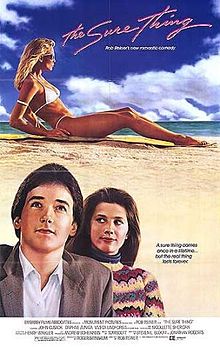
I came to Reiner as a director through his debut feature film, This Is Spinal Tap. Despite my indifference to heavy metal, I found the film fantastically funny and accessible. His next feature, The Sure Thing, though under-loved among his catalog, is another of my favorites and one I may watch this week both as tribute and as my holiday film.

Reiner was by far not a perfect director—the faults in The American President are Sorkin’s, not his, and the sexism in Sleepless in Seattle is mild but could have been easily avoided. When we paint traits for people with a wide racial or sex-based brush, it is nearly always an ‘-ism.’ (Hint: a movie that “no man gets” was written, produced, and directed by men.)

I have a number of Reiner films in my library, and in all our collections, he continues to live.

Share

Frankenstein’s ‘Red Shirt’ Problem

.

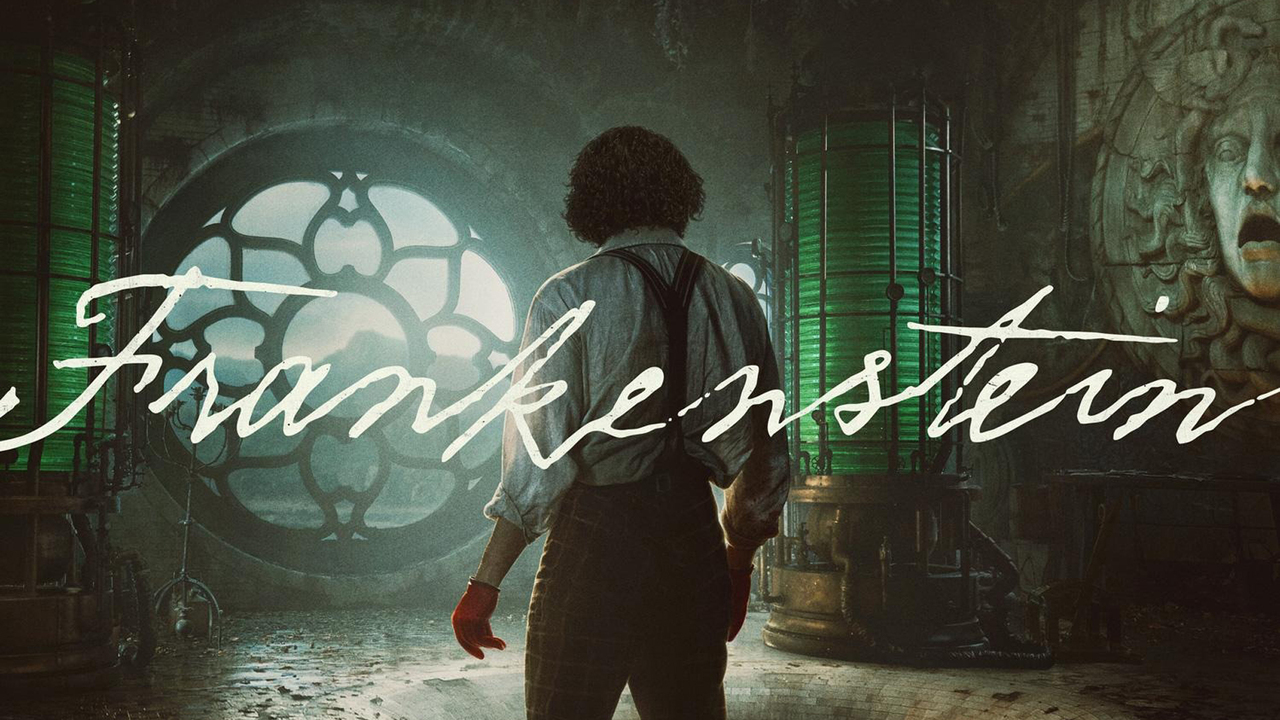
Guillermo del Toro’s production of Frankenstein is glorious to behold, visually and thematically rich, stuffed with great actors giving generally great performances, it is everything you should expect from del Toro when he’s off the leash, given a budget that fits his vision.

Netflix

It also has a shortcoming in the adaptation department. Now, I have written several times that I harbor no sympathy for the creature in the original text. From its own lips it strikes me as a vain and murderous narcissist who easily self-justifies its acts of wanton violence. Going into this film I knew that the novel’s creature was not going to make an appearance. Del Toro’s long-time sympathy for all monsters made such an interpretation simply beyond the pale. But the more I consider the film the more I am struck by just how much he had to forcibly change to have the sympathetic character that he wanted to present.

In the original text the creation kills, directly or indirectly, several characters: Elizabeth, after her wedding to Victor; Henry Clerval, Victor’s close friend; William, Victor’s brother, a mere child in the text. The thing framed the nanny Justine for William’s murder, and she is lynched for the monster’s crime.

In del Toro’s Frankenstein, the creation kills no one who has a name. William’s death comes as collateral damage in combat with Victor, and even then, in this version, he’s an adult and complicit in the creation, his innocence greatly reduced. Elizabeth dies at Victor’s hand because there can be no subtlety in the theme that he is the real monster.

In its attack on the ice-locked ship, we hear that after the first encounter it killed ‘six men,’ and it may have killed more later, but these men are given no names, they are not characters to be mourned. When the captain tells his crew that the creature is free to leave, there is no word of protest that the murderer of their shipmates is escaping any and all justice. It is as if those men simply never existed because in terms of this film they never did. They were ‘red shirts’ there to die in service of showing that there was danger and to make for an exciting scene.

Taken on its own, this production is fantastic but it is best viewed with total amnesia to the source material.

Share