Category Archives: writing

Steady Progress

Steady Progress

My newest novel and WIP is coming along nicely. I have made or exceeded my daily writing word count targets every day since I started the project in early October and this week, tomorrow in fact, I will hit the 40% completed mark.

For this project I have kept my daily target a manageable 1000 words. I know that normally that I can actually hit 1500 to 2000 words per day with only a little extra effort, but two factors led me to decide on a smaller goal.

The first was that this is in a genre I have not written before and when venturing into unexplored territory it’s best to go slowly as you learn the terrain.

The second is that this is coinciding with the busy period at my day job. Right now is the open enrollment for Medicare Advantage plans for the whole population and the dramatically increases my work load bringing with it overtime hours. Last week I worked 12 hours above my scheduled shift. Given that this is going to last through the period when I write most of the novel, I thought it best to keep my goals modest.

The importance of a modest is goal is that it can be met while not being so small as to slow the progress. If a goal is too large, then you will miss it too often and that can emotional effects that dampen one’s ability to sit and do the work. Too small and you’re too tempted to stop early and then the lack of progress becomes an emotional impediment.

If I maintain this level of productivity and if the novel lands about where I am expecting in word count, then the first draft should be complete by mid-February.


Share

I Almost Feel Like a Pantser

Today is a day to turn my attention away, at least for a few hours, from the electoral crisis gripping our nation so I’m going to talk about my writing.

I am an outliner. I can’t tackle a long form piece of fiction without an outline. For me the critical junctions in a story must be known before I can start putting the words in a row. But my outlines are not all the same.

If I am remembering correctly my longest outline for a novel was a massive 87 pages and for my current WIP it is 21 pages.

However, as I am writing this novel it feels like there is so much more being discovered in the process that wasn’t even hinted at in the outline.

Oh, the act breaks are falling on the same major event and the plot aspects are proceeding perfectly on pace, but I am inventing and uncovering aspects I had not thought about that only arise as I try to fit myself into the character’s skin. Major emotional beats are coming from out of nowhere and with the foreknowledge of where I need to end up, I can incorporate them properly.

When I started I had a lot of trepidation about this project, it’s a genre I haven’t really written in before, its main character is a challenge, and knowing that it is very likely that someone already is holding expectations about it all pile on new levels of anxiety and yet it seems to be flowing rather nicely.

Here’s hoping that continues.

Share

Quick Hits

Suffering a little headache so just a few quick observations and notes this morning.

My Work in Progress novel is coming along nicely, 11,000 words on the rough draft and exploring/discovering aspect of the story within the confines of the outline has been going well.

I have been re-watching Downfall about the final days in Hitler bunker as the Soviets take Berlin and frankly it feels like I am spying on Trump Campaign Headquarters with true Believers unable to accept reality, bootlickers scrambling to save themselves, and rank and file only just realizing that they have been led by a madman to their doom.

Did not watch the Presidential debates. Any event, however unimaginable, that would dissuade me from voting against Trump will be far larger than any verbal contest.

Going to spend at least some time this weekend with a virtual convention.

Have fun everyone.

Share

Can Ideas Go Stale?

The answer for me is an unqualified yes. I know that when an idea for a story, a game, or any other sort of creative endeavor first arrives in my shriveled brain that is a window in which if I do not start working on the concept it will never become fully realized.

It doesn’t matter if I have taken the time to produce detailed notes or outlines the idea itself seems to go stale and lose life the more time passes between its inception and its execution. I have folders on my computer of half-started ideas that I failed to follow through on in time and are now adrift without direction or propulsion.

Curious enough this does not seem to apply to any concept that is executed fully and then set aside. If I write a novel centered on a concept and the set that novel aside, I can come back ten years later, re-read it, and its vibrancy is still there, but if it’s only an outline or a synopsis. Nope, that’s as dead a week-old corpse.

Because of that fact or limitation in my creative process I am plowing ahead on my novel without having a signed contract in my back pocket.

The work is not wasted. No writing ever is, it is all honing the craft, but also even if my editor and I cannot come to terms, and that’s an outcome I doubt we have a great working relationship, there are other houses and other editors so forward I go.


Share

Activation Energy, Momentum, and the Milliped’s Problem

It seems to me that my writing requires an activation energy that must be met every single time I sit at the keyboard. I want to write, I sit with the intention of writing, but there is always a resistance and it takes an effort of will to overcome that resistance. However, once that has been overcome the writing moves forward without much resistance. It’s the barrier that I have to force myself over but knowing that it is just a momentary barrier makes it one that can be surmounted but never ignored.

In addition to the activation energy to begin writing for the day each project also seems to have their own elements of momentum. At the start of any new project, short story or novel, it is tough getting the story going. The characters kind of mill about in scenes and the scenes feel pointless generating doubt about the entire project. Again, if I push on there comes a moment when the story moves by itself. It is as if I needed to get up to a certain speed and crest a hill but once I do it slides on its own all the way to the end.

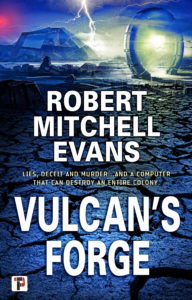
On my newest novel I have discovered a new trap, a new hazard to avoid. With the publication Vulcan’s Forge, I received some very nice praise, praise that was unknown by this reader directed at a particular aspect of the SF story that I had worked quite hard at. It was quite a moment of pride to have someone tell me that the elements that really wanted to work had been one of their selling points.

Now I am working a new SF novel and this element again needs careful attention but like the milliped after being asked how it manages to move so many feet perfectly coordinated, I find myself frozen and worried that I’m messing up what I had once done so well.

There’s no cure for this but to work through it and trust myself and my eventual beta readers.

With writing, and all the arts, there are always new barriers to overcome.

Share

Second Act Troubles

A dissatisfaction with the current progress of Lovecraft Country has me thinking about second act issues. Of course, when I speak of second acts, I am referring to the traditional three act structure that many films and television shows employ even though I myself utilize a five-act structure when building out a novel.

In the three act model the first act is establishment of the characters, the world, and the central conflict of the story. The third act is after all the major revelations and the characters hurtle towards their final conflicts and resolution leaving the second act, which is the same size in term of word or page counts as the other two combines, as a vast middle where advancement and reversal take place as the characters chart the course of the plot. It is not unusual for second acts to become muddled and messy as their purpose doesn’t seem as well defined as acts one or three. This is in part why I like the five-act system instead of one massive poorly defined act there are two with better laid out purposes.

What’s important is that the characters have goal that they have identified and chase that directly immediately impact the story. The second act of Star Wars (A New Hope for you youngsters.) Is the Flacon’s capture, the discovery and rescue of the princess and the escape from the Death Star. At each of the turns we understand exactly what it is the characters need to achieve, the cost of the fail to do that, and the escalation as obtaining the immediate goal brings further problems and troubles.

While things that happen here do affect the third act and the story’s eventual conclusion the characters are not looking off to that distant end but rather dealing with objective that if they do not meet them now there will be terrible consequences.

Keep your second act moving, as the writer keep your eye on the final prize the conclusion, but remember that the characters have to have immediate goals that matter to them now.

Share

Is This the Year for me and NaNoWriMo?

NaNoWriMo is National Novel Writing Month, which takes place in October when participants commit themselves to the lofty goal of completing 50,000 words on a manuscript between November 1 and November 30. (Couldn’t that have least selected a month with 31 days?) That comes out to an average of 1667 words per day, every day, including Saturday and Sunday.

I attempted this once before, on a lark, and experimenting with an idea that I was going to ‘pants’ all the way through. That did not work.

For reason that can’t be fully detailed here I may be producing a new novel here and unlike my other excursions into novel length projects this one may require speed.

However, my writing process is to write Monday thru Friday reserving my weekends as fun and recharge time. IF I want to commit to meeting NaNoWriMo goals that would raise my average daily word count to 2500.

That’s not undoable.

When things are going well, and I am not lolly-gagging I can maintain a production north of 2000 words per day.

Factors in my favor are that I have an outline broken down into the five acts, I have character notes and descriptions, I have world building notes and cultural details for the sub-cultures involved, so I am well prepared for this book.

Factors against me is that I’m lazy, I like playing my Xbox One, and there are too many movies to watch.


Share

The Central Dilemma of Economics

The central dilemma of economics is often presented as ‘people have infinite wants in a world of finite resources,’ and I would say that it is generally true, but it misses one vital aspect. That while there are in fact finite resources individuals are in general incapable of perceiving the limitations and emotionally react as though resources were in fact infinite.

Electricity is a limited resource, generated from limited resources and distributed by limited system but an individual’s relationship to electricity, at least in rich nations, is that it is always there in limitless amounts. Food, material good, are all produced in quantities so vast that it becomes nothing more than an abstraction in same way that a single death is a tragedy and 200,000 thousand a statistic.

However, when the resource limitations are stark and undeniable, survival and disaster situations, people do not act like engines of infinite wants. Contrary to most disaster and post-collapse stories people in general do not become self-centered engines of destruction and exclusion but often become more generous and supportive to others, including strangers.

On any scale beyond a few thousand people and with resources that feel infinite economics central dilemma applied in full force, but what happens if very tightly contained and constrained environments that last indefinitely?

That is one of the central questions in what is likely to be my next novel. It should be fun to explore.

Share

Outline Draft is Done

As has been very clear for some time on this blog I am a plotter. I can’t even write a short story unless I know how it ends and for longer form fiction such as feature screenplays and novels I must work from an outline.

Sometimes those outlines are highly detailed, one stre3cthed out an enormous 87 pages but usually they are more along the lines of 20 or so pages and that is exactly where my latest outline landed.

To construct my outline, I first break down my story into acts, usually five these days, with an understanding of where each act ends, the dramatic turn that propels the characters onto a new course for each act change.

Then when I wrote out a prose outline populating it with characters and their motivations I discover deeper level to these acts and while the locations of the act breaks occurs they often change from external events, Character A discovers the body of Character B, to decision points Characts A starts investigating Character C after discovering character B has been murdered. It is always better when the dramatic change at the end of an act is propelled by a character choice rather than a stroke of lightening from the author.

The most recent outline for a proposal going to my editor at Flametree has been a lot of fun to craft and the subject matter is exciting me. Here’s hoping my editor feels the same.

Share

Discovery During Drafting

One of the things I hear fairly often from pantsers, writer who compose their text directly without a synopsis or outline guiding their writing, is that creating an outline feels to them like something that drains away surprise and spontaneity from their work.

Fair enough for them but I find that even with my extensive outline and synopsis building the pieces still manage to surprise me with revelation along the way.

My current work in process started with just the barest idea of who got killed, who killed them and why. Okay, that’s the essential elements for a murder mystery but hardly enough for me to fully understand the world or the characters so I moved on to extensive notes about the world.

I created these notes to explain to myself how the ship, which would take generations to reach its destination, worked, how the various groupings of people coalesced into stratified cultures and how all that impact the formation of character and motivation. That itself revealed some subtle changes to the original concept that deepen the ‘reality’ of the world.

Next I produced a bullet pointed act break down of the story as experience by my protagonist. I like working with acts not because the structure is king over all but because understanding how structure emerges from story illuminate what I need for this particular tale.

The curious thing and the discovery is that when I started making the bullet points for Act 1 I had a very simple understanding of the antagonists point of view, a very reductive reason for their actions, but when I reached Act 5 and the protagonists and the antagonists clash in a final revelation of truth not only had I discovered a deeper relationship between the two but the antagonist’s motivations had deepened. It because easier to see how they were the heroes of their own story and discovering this at this very early stage will make the prose outline a richer and better document with its own surprised which will repeat with the novel itself.

Somehow, I always have discoveries inside my thoroughly plotted stories, discoveries that would have eluded me had I tried to ‘pants’ my way through it.

This is not to say pantsing is a wrong approach merely that surprise and discovery is part of every process and you need to find the process that works for you.

Share