Category Archives: writing

The Chain that Broke My Novel

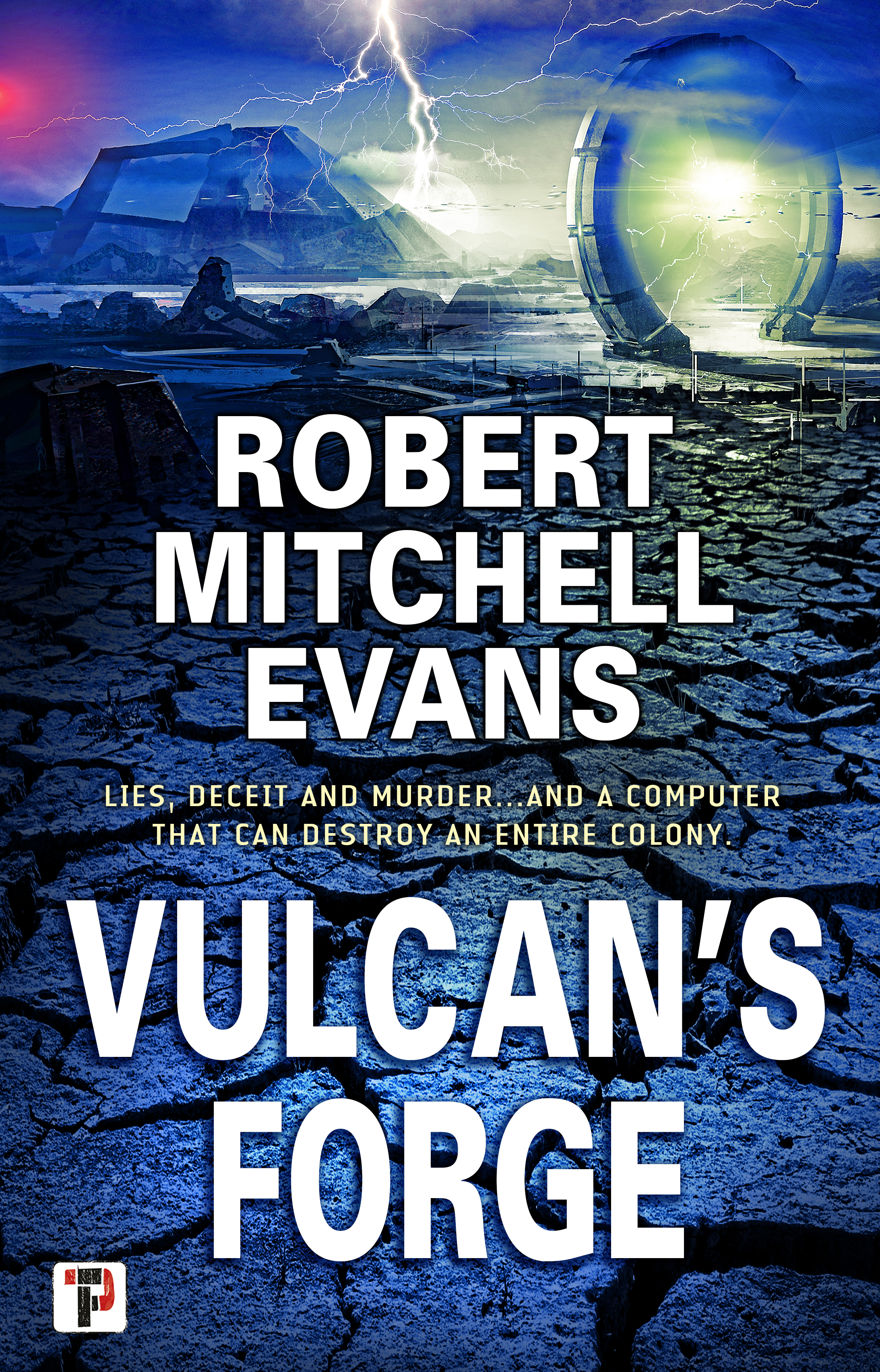
Late March 2020 saw the release of my traditionally published novel Vulcan’s Forge that played with Artificial Intelligence, the fetishization of 50’s Americana, the relationship between the

Flame Tree Publishing

individual and their larger culture, crime, Film Noir, and loads of movie references. It was a novel that I had written solely for myself and yest was purchased by the first editor I presented it to.

Late March 2020 is also the time the world shuttered, going into a prolonged lock-down as a pandemic, the likes of which had not been seen in a century, swept the globe, disrupting every aspect of life and killing far too many people. (Including a friend I had known for nearly 40 years.)

Needless to say, that was a very bad time to release a debut novel. As if a global pandemic was not enough to throw at my arrival as a novelist the fates had more hurdles to place. The publishing house was transition between physical distributors, snagging and disrupting sales to bookstores and they had just ended the contract with the studio that produced their audio versions, leaving Vulcan’s Forge without an audiobook not only as their format continued to grow but as that very format became more readily accepted during the pandemic.

Within eight weeks bookstore had worked out virtual launch events and people had begun to adjust to a new way of living during shut down, but the damage had been done and Vulcan’s Forgenever recovered from its debut.

Such is life. There are always factors in life far beyond your control or even influence. I don’t waste time crying over what has happened and cannot be changed. Life moves in one direction, forward, and that is the focus of your attention with the past providing lessons to improve your choice of paths into that future.

Now, I have not mentioned the most important link in the calamitous chain that broke my novel and the lesson I and others can learn from it.

Vulcan’s Forge sat on my agent’s desk for a year, unread and unrepresented.

When I discovered that my agent had lied to me and withheld critical information about his position at the agency, I contacted his boss and that is when he dropped me as a client. But for months I had been harboring doubts and considering dropping him. And that is the lesson, not all agents are good for you. In fact, they can hurt you in ways you cannot foresee. That is not to say you should never have an agent, but you must always remember that they work for you. If they are a poor employee, fire them and find another.

It can feel scary, nay terrifying, most of us search for years, enduring rejection after rejection searching for that representation but do not let that blind you to the truth. If they are not helping you then they are hurting you. There is no neutral position.

Vulcan’s Forge is history, though you can still order copies, but my future novels are not. I have a murder mystery/sf Novel under serious consideration at a major SF publisher, I am finishing up a military SF novel now and will then move onto crime and corruption on Mars. There is only one direction to life. Forward.

A gentle reminder that I have my own SF novel available from any bookseller. Vulcan’s Forge is about the final human colony, one that attempt to live by the social standard of 1950s America and the sole surviving outpost following Earth’s destruction. Jason Kessler doesn’t fit into the repressive 50s social constraints, and he desire for a more libertine lifestyle leads him into conspiracies and crime.

Share

My Writing Method

Some general nattering about how I approach writing.

As I have said in other posts, I am a plotter. I cannot start writing a story until I know how it ends. To me ending are where it all comes together and produces the satisfaction for the journey. For short stories I can begin just knowing where I start and where I end the few thousand word between the two I can discover. However, for novels I have to outline, sometimes just six or seven thousand words and sometimes nearly twenty-thousand words laying out character, world, story, and plot.

When I write I must write from start to finish. I cannot, as some other writers do, leap ahead, and write scenes near the end before I have gotten there in the manuscript. This may seem strange since as I have planned out the story and plot, I already know what the scenes do and why, but the truth of the matter is I can’t feel the scenes ahead of time.

Those hours and hours writing the sequences before a scene are an emotional journey not only for the fictional characters but for me as a writer. (And hopefully, for the readers as well.) I must experience the emotional journey to understand and feel the emotions in a scene I am writing. I may know that this is the scene where the scales fall from the hero’s eyes and they see the betrayal, but I can’t feel the devastation, the despair unless I have walked in their shoes and lived their trust. Other writers can leap into those souls more easily than I can. That is neither good nor bad. It is their process, and this is mine.

Share

A Writer’s Most Important Skill

Recently on Twitter someone asked what is the most important skill a writer needs to possess?

Now, in one respect that is a difficult question. Crafting compelling characters, devising interesting and engaging plots, mastering transporting dialog are all vital skills and having any one of these missing will seriously damage any book.

That said we all know published, both traditionally and independently, novels that not only had some of these flaws but still managed to find success and readers.

There is one skill that all writers need to master if their work is going to find readers and any measure of success.

You must finish the project.

The worst book you ever read, the one you hurled across the room in frustration at its lack quality was completed. That writer kept at it, worked through the hard parts, wrote when everything looks dark, and they could not see the way forward. they, persisted and reached the end.

A completed but bad manuscript can be fixed. Words can he cut out, can be added, can be rearranged. New chapters added or deleted, sequences can be reordered, new character created to fill out those thin sections.

None of that will save an unfinished story.

Worse yet abandoning a story when it’s not working, or when the plot has slipped through your fingers can become a habit. The stumbling block in the next story makes it easier to give up on that one too.

That is not to say you never abandon a project. I certainly have, but it is a fate that needs to be avoided whenever possible. Just as abandonment can be a habit so can complete and when finished it can be saved, it can be fixed. Steven King tried to abandon Carrie, but his wife refused to let him. Where would he or we be if he had?

Finish that book, that script, that short story. It may still stink but you will be better for reaching the end.

Share

What I Hate Most About Trad Publishing

Now, don’t get me wrong. I like traditional publishing, I have no real skills in marketing, layout, or cover design so it is a good thing to have paid professionals preforming those vital functions. My goal is and remains for the traditional publishing route. (And that’s no slight on those who take the hybrid or solely independent paths. In fact, it’s mad respect for managing all those skills.)

I have gotten all manner of rejections going to trad route, form cars, form emails, personalized rejections, and feedback on why didn’t work for the editors reviewing the manuscript. All of these I can take. Strangely I am rarely devastated by a rejection but move on to the next market. So, rejections cold and impersonal or detailed and inviting of further submissions I do not hate.

It is the lengthy time it takes that drives me bananas.

Yesterday was the one-year anniversary for my submission to a major SF publisher of my SF murder mystery novel. Six months since I was contacted by the acquisitions editor that it has been pulled for closer consideration. It’s waiting more than year that I find so hard to endure. (But I do for I have no real other options.)

My previous traditionally published novel, Vulcan’s Forge (A SF novel that evokes film noir) sat on my former agents desk a year unread but gloriously but sold to the first editor I sent it to. Had I not lost that year the novel would not have released the week the world went into lock down at the start of the pandemic.

Like Inigo ‘I hate waiting.’

Share

It’s Not ‘Mary Sue’ It’s J.J. Abrams

I was recently wandering through some YouTube comments on a reaction video to someone wh0 had just watched for the first time the original trilogy. Naturally there were comments from those who dislike the sequel trilogy complete with ‘woke’ as a pejorative and declarations of ‘Mary Sue.’

Now, I am not going to wade into the Rey debates, people can make up their own minds on the character and frankly heated debates over imaginary characters are dull and boring.

What I think is worthy of observation is the idea that it’s not a ‘Mary Sue’ problem but rather a J.J. Abrams has no concept how the world works problem. Abrams seems to think that skill acquisition and mastery is something that ‘heroes’ do quickly, easily, and magically. It is what happens with Rey in The Force Awakes progressing from utterly obliviousness of the Force to influencing weak minds with ease but it’s not Abrams first display of this sort of ‘easy to be the best’ mentality.

in the 2009 reboot Star Trek James Kirk enters Starfleet Academy as a cadet proclaiming he will be a captain in four years. And then doing so by the end of the movie. Ensign, Lieutenant Junior Grade, Lieutenant, Lieutenant Commander, Commander, these are just words to Abrams and not the ladder of ranks once must climb to reach Captain. All that doesn’t matter because Kirk is the hero and an Abram’s story that cloak of heroism confers all abilities required of the plot regardless of training, work, and history.

Abrams is a competent filmmaker and director, albeit with a habit of copying others’ styles, but he is a terrible crafter of story and character.

Share

Writers Going to Write

One of the unfortunate side effects of being a writer, at least for me, is that it’s quite difficult to switch off the part of my brain that writes and re-writes while I am enjoying someone else’s artistic work. I remember attending a best-selling authors book tour at our local bookstore and after he read from a piece having the urge to provide feedback and notes. This applies to movies I watch as well.

On its release I thought Doctor Strange in The Multiverse of Madness was okay but rewatching it on Disney Plus has raised my appreciation of it. That said I have found one line of dialogue I really really want to re-write. Just add three words to line. That’s all.

Wanda Maximoff (Elizabeth Olsen) when lectured about sacrifice by Stephen Strange (Benedict Cumberbatch) answers “Don’t talk to me of sacrifice Stephen Strange. I blew a hole through the head of the man I loved, and it meant nothing.”

That’s a good line, gives real weight to Wanda emotional pain and it works but I think it could be better.

“Don’t talk to me of sacrifice Stephen Strange. I blew a hole through the head of the man I loved, and, because of you, it meant nothing.”

Strange gave Thanos the Time Stone which allowed Thanos to reverse Wanda’s act of killing her love in an attempt to save half the universe. Putting in those three words helps move her motivation from Strange simply being opposed to her to something much more personal.

Share

Birthday Beg

Saturday is my birthday, and I will be spending it with friends playing the tabletop RPG Space Opera.

While others are quite charitable on Facebook using their birthdays to raise funds for causes this year, I am going to be self-centered and greedy and tell you what I want more than anything for my birthday.

Reviews

My novel, Vulcan’s Forge, has gathered a mere 11 reviews over two years and I desperately need more to appease the god algorithm.

If you have read the book, which can kind of be described as WandaVision meets Raised by Wolves (Humans raised by A.I.s obsessed with mid-twentieth century Americana) w a heavy dash of film noir, then please go to Amazon and leave a review. Even if you hated it, be honest, I am not asking nor wanting anyone to leave false flattering reviews, just reviews.

Share

Halfway There

After the brief suspension of daily writing while I looked after my sweetie-wife and then the week and a half it took to return to full speed clocking in around a thousand words per day at lunch, I have passed the halfway point of my current novel in progress.

This novel certainly has had a long meandering and strange journey. The central core concept, a telepath that planting ideas in your head but your inner monologue remains in your ‘voice’, so you are unaware that it is not your thought, dates to the late 1980s. Since then, the whole setting has been crafted, short stories, both of this idea and others in the same setting, have been written, and more than one novel has been written.

Yesterday the word count passed 53,000 words and with the momentum back I hope to have the first draft completed in about two months. Luckily for me my first drafts in terms of character, plot, and events, are fairly close to my final drafts. (An advantage to detailed outlining.) And subsequent drafts are principally about editing and proofing.

I will be thrilled to finish this novel and get it out the door. (Though sadden because one editor who had seen a novel of mine in the same setting and liked the character has now retired.) I am thrilled because I can’t wait to research and write my next novel a d dark noir sf set on Mars.

Share

Finally Getting Back my Rhythm


The last month has been quite hectic. Early in March my Sweetie-Wife underwent a total hip replacement for one of her hips and I took two weeks of paid family leave to look after my sweetie as she recovered.

She has recovered and the medical procedure went swimmingly, so all is good there.

Before the surgery I was writing north of 1000 words a day on my next Military SF adventure novel but braked to a complete stop as I transitioned to care giver for the recovery period.

When I did return to work, I found it difficult to regain my writing’s momentum. This is a fact of my writing process. A project that gets paused or halted becomes very difficult to restart. It is why I cannot write more than one project at a time. One with always end up the preferred one and the project ‘paused’ simply dies.

Last week I was averaging 800-900 words a day but yesterday I passed the 1000 words at lunch mark. The momentum is back and now I just have to keep the thing rolling.

It’s a particular challenge right now because a second surgery will be taking place and my mind has been racing on a new novel idea that has me very excited but requires a ton of research.


Share

Series Review: HALO


Adapted from the 2001 Xbox game HALO: COMBAT EVOLOVED Paramount + debuted yesterday the pilot episode of their Sci-Fi series HALO.

While I have played the game and its sequel I have never dived deeply into the lore or worldbuilding for HALO and as such my interpretation of the series is not a comparison but as a new viewer.

Set in the distant future of the mid 26th century, HALO is concerned with both a conflict between the Interstellar human government, breakaway rebel/insurrectionists colonies the war between the humans an alien coalition known as the Covenant. The story centers on a cybernetic warrior Spartan 117 ‘Master Chief,’ part of an elite unit of cybernetic fighters.

When the Covenant attack the separatist world of Madrigal, the Spartan intervene and discover in addition to a sole survivor of the massacre that the aliens were seeking some device on the colony. Factions with the human government splinter and contest each other for the best methods in dealing with both the Covenant and the Separatists with Master Chief, acting on an element of his reawakened humanity, finding a measure of independence from his programing.

HALO boasts impressive production design and special effects with many of the game elements both faithfully reproduced visually and credibly for today’s discerning audiences. The storyline is not a direct adaptation of the game’s plot and I believe I read somewhere that the show runners have no intent to adapt the already existing lore and story from the games.

The pilot episode seems to be unable to make up its mind what it wants in terms of tone. The action sequences are fairly well staged and fast paced but with the tangled political plotlines leaving the viewer without any clear faction to support the action is undercut. In the pilot it is unclear if any of the factions deserve the viewers sympathy or emotional investment.

Pablo Schreiber performed quite well as Master Chief but with and without his helmet. However, I found Natascha McElhone’s performance as Dr Halsey, creator of the Spartan Program, stiff and unconvincing. Several times we have her looking directly down the camera lens and I was at a loss to understand just what emotion or thought she was attempting to convey. This may be a directorial issue as I had no such troubles when she was in the American version of Solaris.

The episode’s dialog is best described as serviceable. While the exposition is not as heavy handed slapped into your face as JMS’s on Babylon 5 there were repeated instances where the characters spoke more for the audience benefit than from any inner need.

Overall, there is enough there to hold my interest and bring me back for another episode, but the series has failed to truly hook and me and leave me with anything more than a mile interest. Hopefully that will change with more and better episodes.

A gentle reminder that I have my own SF novel available from any bookseller. Vulcan’s Forge is about the final human colony, one that attempt to live by the social standard of 1950s America and the sole surviving outpost following Earth’s destruction. Jason Kessler doesn’t fit into the repressive 50s social constraints, and he desire for a more libertine lifestyle leads him into conspiracies and crime.

Share