.
When writers are in the process of submitting materials to agents, who are swarmed with submissions seeking representation, the writers will attempt to glean any hint at all of what was hidden in the pass or rejection sent by the agent. Because the agents are terribly overworked with those submissions, it is the rare pass that is actually composed by the agent with the vast, vast majority being form letters that are dispatched. It is on those form letters that writers engage in the black art of rejectomancy, the usually vain attempt to discern information that is in all actuality not really there.
Many, but certainly not all, agents actually possess a tiered system of form letter passes and while each agent has their own determination of their tiers and how those progress, and very few publish this information. The existence of these levels and what information that they might possibly contain is the rejectomancer’s true goal.
Because I have more than a decade’s worth of emails from agents passing on numerous projects, it occurred to me that I had a resource that might be worth investigating. Recently I have been noticing an increasing use of the ‘subjective’ in the passes coming back to me, a word that I did not really have a strong memory of being used a lot in the past. Now, this business of publishing is very subjective, hence the nearly endless stories of fantastically successful novels having collected a large number of rejections before finding publication and fame. (Dune, passed on by all the SF publishers, was actually acquired and published by a house that did auto repair manuals.)
Were more and more agents passing while encouraging me to keep trying because this business was ‘subjective’ a real trend, or something my mind was just noticing but had always been there?
Well, there were far too many emails to go through manually and I never learned to code, but now there was Claude. So, with help from that A.I. agent, I created files of all those emails and scrubbed them for the word ‘subjective’.
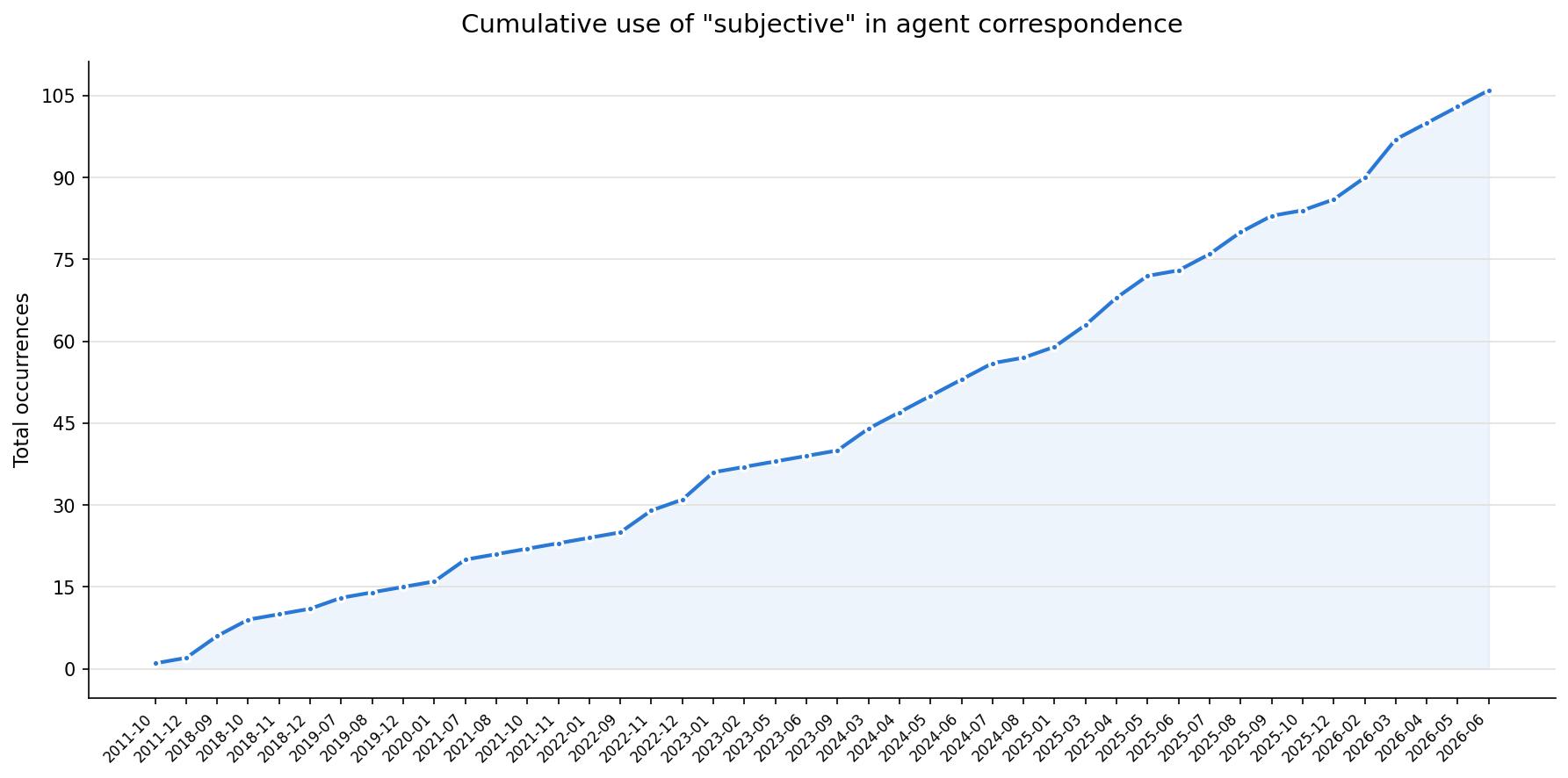
Yup, it was a very real trend, one that has become quite clear in the last few years. Does that information produce any actionable plans? Hell no. And right there is the trap of rejectomancy: you think you are learning things, but you are not. What you are doing, and it may not be entirely without merit, is providing a balm to the wounded ego. It doesn’t tell you why their subjective opinion yielded the result that they feel that they are not the right agent for this project at this time. Perhaps it can give you that little bit of encouragement to keep at it, to keep submitting and to keep writing.
In the end that is the only thing in your control.
