Category Archives: Television

Scriptnotes and Thoughts on my Career Path

I adore HBO’s limited series Chernobyl  and its associated podcast of the same name with the writer and show runner Craig Mazin explores the crafting of the show and where it deviates from the historical record. That podcast led me to Mazin’s other Podcast Scriptnotes  where he co-hosts where fellow screen scribe John August about screen writing and things interesting to screenwriters.

There had been a time in my life where I really wanted to be a screenwriter and director. Movies are a passion of mine and I adore all the aspect of cinema. This weekend I will spend 13 hours watching a marathon of SF themed horror film as part of a local cinema group’s annual celebration. My novel coming out in March 2020 Vulcan’s Forge  is not only a celebration of film noir  in prose but stuffed to its hairline with references to some of my favorite films. However, listening to Scriptnotes  I think I have learned that being a professional screenwriter may not have been for me.

Where there are lots of books about how to write screenplays and what the form of the material is like there are few recourses that can give you a real look at what the life of a screenwriter is really like, Scriptnotes  is one of those rare resources. In addition to excellent advise on character, conflict, and constructing scenes, John and Craig climb down into the muddy trenches of dealing with contracts, producers, the Guild, studios, and set realistic expectations for aspiring talent just what the business is going to expect of them. What dismayed me was the amount of work a professional screenwriter does that is being a ‘gun for hire.’ How often a person will work on projects that they did not start, did not conceive, and are expected to create and polish into gem stones as glittering as their own projects. Certainly spec scripts, that is a project that was written without a contract and without the writer being hired to writer it, get produced but more often these scripts are used to open doors and gain employment as those hired guns and the films those scripts were written for never come into existence.

That has to be heartbreaking.

As a novelist I write a manuscript with every expectation that it will be a novel. For my preferences the ideal outcome is a traditionally published novel where a publisher pays me an advance and I get the benefit of their entire production, advertising, and distribution enterprise but if need be in this digital age I can publish the book myself. I do not need to produce well-polished dreams that are likely to be discarded so I can chase work on material I did not create.

Perhaps one of my novels will eventually be sold and made into a film and then I may writer the screenplay. I think I have a real talent for that form, but as a career, I think that screenwriter would have been a poor fit.

Share

Reading HBO’s Chernobyl

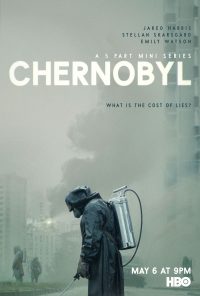
Unless you have been under a rock hiding from the insanity of today’s world, and honestly who could blame you, you have probably heard of HBO’s fantastic mini-series Chernobyl  chronicling the infamous Soviet nuclear disaster. Show runner and writer Craig Mazin, best know for films such as The Hangover 2,  delivered an amazing, frightening, and moving depiction of the terrifying and heroic events surrounding the 1986 event.

Mazin also co hosts with fellow screen scribe John August the podcast Scriptnotes  where the pair, along with occasional guests, discuss screenwriting from both a creative and a business practical viewpoint.  As part of their mission to help screenwriters Mazin has published all five scripts for Chernobyl  and I have spent the last two days lost in a wonderful reading experience.

I have read a number of scripts for both television and feature films and I have to say that Mazin has really opened my eyes to ways this particular art form can be expressed. His approach is a close subjective style with elements that I have not seen often in screenplays. The narrative elements of the script contain descriptions that are purely internal to the character. It’s a guide to the reader, the director, and the actor how a scene needs to be played. I have to say that these scripts are a good reading experience one that is as enjoyable as any well-crafted short story or novel. Not only has it made me appreciate the craft more, but also it has enhanced my respect for the series as a whole and ignited a desire to re-watch the entire run.

The scripts are available for free downloading at John August’s website.


Share

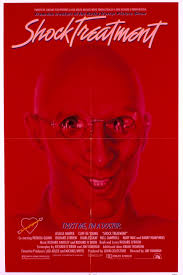
The Strangely Enduring Relevance of Shock Treatment

This week I re-watched 1981’s curious film Shock Treatment. Originally conceived as a sequel to the cult hit The Rocky Horror Picture Show  Shock Treatment  evolved into something darker, deeper, and more serious that that beloved rock musical. On one level the story is a simple straight forward sort of musical faire, Brad and Janet’s marriage is tested by temptation, fame, and manipulation by romantic rival for Janet’s affections until they ultimately triumph and literally ride off into the sunset. yet the film is also a biting commentary on television, the slippery nature of truth, and the power audience surrender to performers and content creators. Shock Treatment  is a deeply symbolic film with an approach that has more in common with David Lynch than most conventional filmmakers and it asks audiences to accept a level of unreality that transcends conventional narrative construction. Released long before the plague that is ‘reality’ programming this film speaks to the inherent deceptive quality of television and the dangers of accepting as ‘real’ anything that is presented in that flicking tube. And even though cathode ray tube and raster scans have vanished from out living rooms the film’s themes resonate stronger then they ever did in 1981.

Corporate control of mass culture, celebrity invasion of politics, and the deadly siren lure of instant fame, dangers we grapple with today are all major elements in Shock Treatment’ssly satire. The sinister similarity between Farley Flavors and Donald Trump feel more real to me than that other cinematic creation his inspired, Back to the Future’s  Biff Tannen. Lies are the beating heart of Shock Treatment,  the lies that seduces us, the lies we tell ourselves, and the lies we endure to simply ‘get along’ and in that theme I can’t help be feel that Shock Treatment’s  cinematic cousin is Craig Mazin’s outstanding series Chernobyl.

Nearly forgotten it is shocking just how relevant Shock Treatment  remains in 2019.

Share

The Fascinating Conservative Response to HBO’s ‘Chernobyl’

For the last four weeks I have been utterly engrossed by HBO’s production of Chernobyl  a dramatization of the Soviet nuclear disaster. I remember the news surrounding the event quite clearly and the series has from all accounts been a fantastically accurate portrayal of life within the Soviet Union.

For those unaware, Chernobyl was a nuclear power plant located in Soviet Ukraine that operated 4 reactors and during a safety test reactor number 4 exploded. Because Soviet reactor design did not include containment vessels the explosion spread highly radioactive debris around the facility and spewed radioactive particles into the atmosphere contaminating terrain from the Ukraine into Western Europe. The series pulls no punches depicting the horrific deaths by radiation poisoning; the herculean efforts to contain and clean up the disaster, and the search for the reason why a reactor thought impossible to explode nevertheless did explode. With a fantastic cast, deft direction, and superb writing the series is quickly becoming an ‘event.’

On social media and at conservative website I have been watching with interest as a sadly predictable reaction spreads through the waters on the right; ‘see, ‘socialism’ kills!’ The truth f the matter is that all audiences bring their own filters when they participate in any art. Part of the skill in receiving critiques is being able to correctly attribute what is a flaw in a piece versus what is a perception created by the critiquer’s own filters but it is still fascinating the lengths some will go to in order to avoid what is plainly in front of them.

What is the cost of lies?

That is the very first line uttered in Chernobyl  and it is the heart of the series’ theme. Time and time again throughout the series lies are central to the disaster, to the reaction to it, and to failures in dealing with the fall-out. In the first scene we are told the cost is not that lies might be believed but rather that when lies cloud the air we lose the ability to perceive what is true. That suborning fact, truth, and science to party positions will yield an inability to see what is fact and what is convenient myth. This is a story about the importance of truth and the courage to recognize it when the rewards for listening to lies are so terribly tempting. This is something more fundamental and far more reaching than ‘socialism.’

Do not get me wrong, the Soviet Union was a deeply evil government but the attempt to conflate that with American Liberalism is a lie, a convenient myth that exist solely to protect the party.

We are right now in a crisis of truth. It is never easy to disentangle self-interest from pleasing myths and lies but more than ever it is important that we do exactly that or our won disaster will hurtle down on our heads.

Share