Category Archives: Television

Series Review: HALO


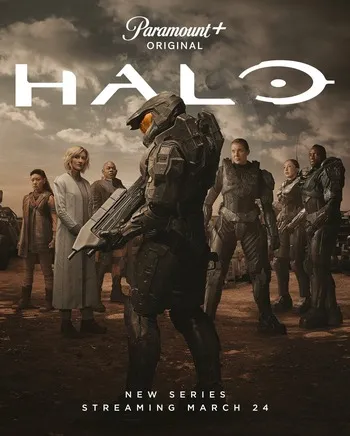
Adapted from the 2001 Xbox game HALO: COMBAT EVOLOVED Paramount + debuted yesterday the pilot episode of their Sci-Fi series HALO.

While I have played the game and its sequel I have never dived deeply into the lore or worldbuilding for HALO and as such my interpretation of the series is not a comparison but as a new viewer.

Set in the distant future of the mid 26th century, HALO is concerned with both a conflict between the Interstellar human government, breakaway rebel/insurrectionists colonies the war between the humans an alien coalition known as the Covenant. The story centers on a cybernetic warrior Spartan 117 ‘Master Chief,’ part of an elite unit of cybernetic fighters.

When the Covenant attack the separatist world of Madrigal, the Spartan intervene and discover in addition to a sole survivor of the massacre that the aliens were seeking some device on the colony. Factions with the human government splinter and contest each other for the best methods in dealing with both the Covenant and the Separatists with Master Chief, acting on an element of his reawakened humanity, finding a measure of independence from his programing.

HALO boasts impressive production design and special effects with many of the game elements both faithfully reproduced visually and credibly for today’s discerning audiences. The storyline is not a direct adaptation of the game’s plot and I believe I read somewhere that the show runners have no intent to adapt the already existing lore and story from the games.

The pilot episode seems to be unable to make up its mind what it wants in terms of tone. The action sequences are fairly well staged and fast paced but with the tangled political plotlines leaving the viewer without any clear faction to support the action is undercut. In the pilot it is unclear if any of the factions deserve the viewers sympathy or emotional investment.

Pablo Schreiber performed quite well as Master Chief but with and without his helmet. However, I found Natascha McElhone’s performance as Dr Halsey, creator of the Spartan Program, stiff and unconvincing. Several times we have her looking directly down the camera lens and I was at a loss to understand just what emotion or thought she was attempting to convey. This may be a directorial issue as I had no such troubles when she was in the American version of Solaris.

The episode’s dialog is best described as serviceable. While the exposition is not as heavy handed slapped into your face as JMS’s on Babylon 5 there were repeated instances where the characters spoke more for the audience benefit than from any inner need.

Overall, there is enough there to hold my interest and bring me back for another episode, but the series has failed to truly hook and me and leave me with anything more than a mile interest. Hopefully that will change with more and better episodes.

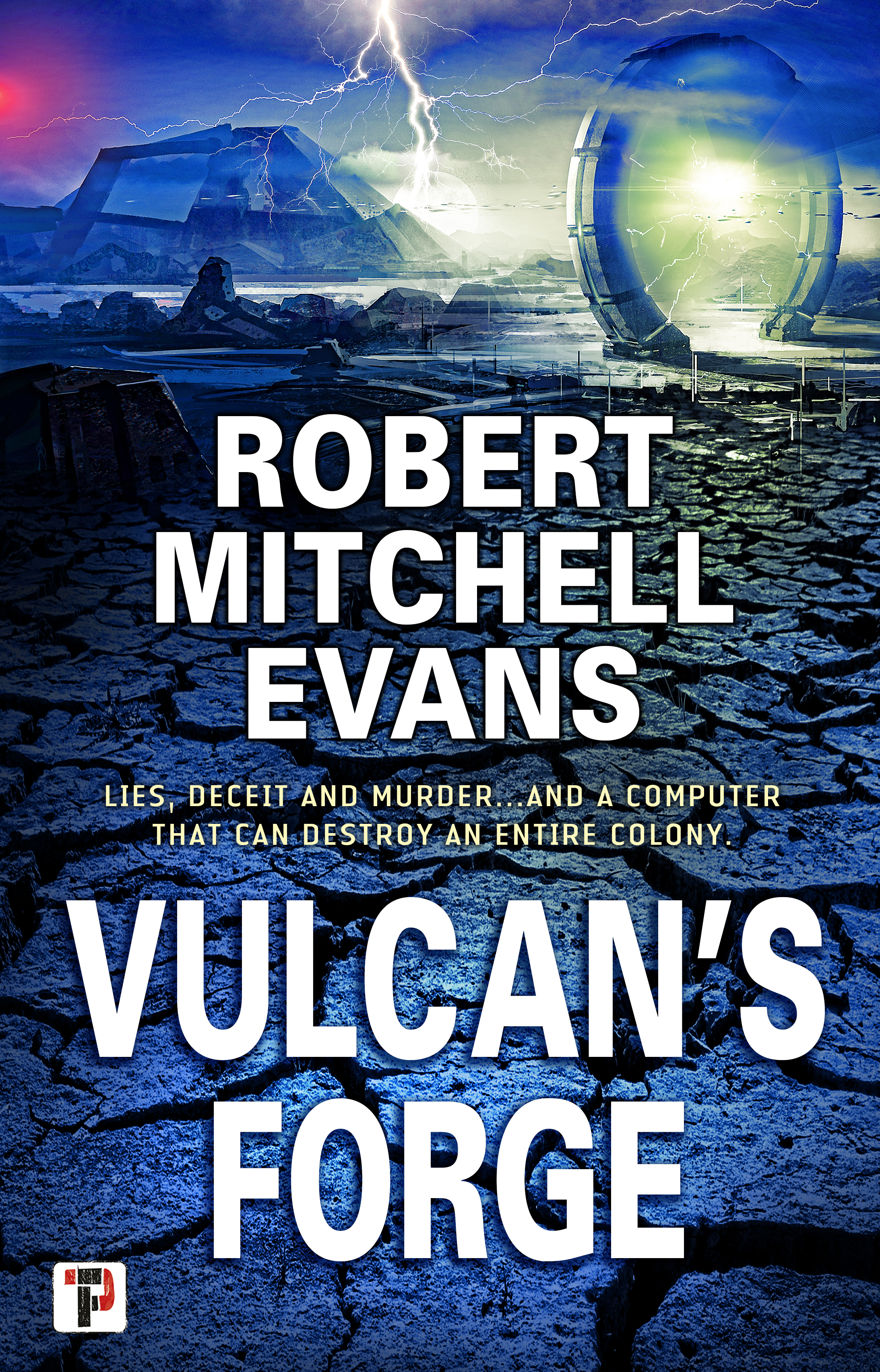
A gentle reminder that I have my own SF novel available from any bookseller. Vulcan’s Forge is about the final human colony, one that attempt to live by the social standard of 1950s America and the sole surviving outpost following Earth’s destruction. Jason Kessler doesn’t fit into the repressive 50s social constraints, and he desire for a more libertine lifestyle leads him into conspiracies and crime.

Share

Nordic Noirs

Nordic Noirs


My sweetie-wife a few years ago introduced me to Nordic Noir crime shows and I have grown to really enjoy them.

Here are a few that we have watched and I have enjoyed. Some are available on Netflix, some on Amazon, and others we watched on disc thanks to my region-free player.

The Bridge (Bron/Broen) A Swedish and a Danish detective team up when a murder victim is found on crossing the border in the middle of the bridge between their two nations. The second season has very silly virology, but the lead character is utterly fascinating.

Arctic Circle A Finnish/German co-production the series is centered on a tiny town in the far north of Finland in the Lapland area. Another storyline that has suspect virology this series is great for its small town feel while having an international plot.

Rebecka Martinsson Another Finnish production, this one adapted from a series of mystery novels about the titular character a high-powered lawyer with a screwed-up life that returns to her Lapland hometown and becomes intwined in murder investigations.

The Chestnut Man A Danish series this show follows a pair of investigators, one on load from Interpol, as they attempt to unravel a series of grisly murders where all of the victims were mothers.

The Valhalla Murders an Icelandic series about murders tied to a foster/adoption home.

Trapped another series from Iceland, this time am ocean ferry is forced into port during a storm and the local police must untangle the murder mystery during the tempest.

Bordertown Returning to Finland this series about a cross border murder investigation between Finland and Russia.

The Killing is a Danish show with a twenty-episode story arc investigating the murder of a high school girl that becomes deeply entangled with city politics.

Share

Learning to Watch Episodic Television


Not me mind you, I grew up watching TV in the 60s and 70s. Episodic TV was normal for most of my life, but it is a relic of a time now past, and some people have trouble engaging with it.

I follow a number of podcasts where younger people watch movies and television and hearing their interaction with an episodic series like the original run of Star Trek is interesting.

Having known pretty much only serialized story telling where the events of earlier episodes influence or even drive the events of later episodes they are sometimes befuddled when the character don’t reach back and use solutions that they have already discovered. Or when the characters act surprised to learn some fantastic historical fact more than once. Such as ancient Greek gods were in fact visiting aliens, such as in original Star Trek episodes Who Mourns for Adonais and Plato’s Stepchildren. It is unnatural to their story consuming habits to treat each and every individual episode as a unique story independent of the others.

This is not a slight on them. Art changes and the art forms of earlier generations are rarely consumed or interpreted the same by following generations.  I have seen people perplexed by Rick in Casablanca waiting so long to shoot Major Strasser unused to a production code that forbade the hero for shooting a man, even a Nazi, who had not yet pulled his weapon. Strasser must try to shoot Rick before Rick is justified in shooting Strasser.

It will be interesting to see what new evolutions in story telling confound and confuse future artistic consumers.

Share

Resident Alien: Mid-Season Impressions


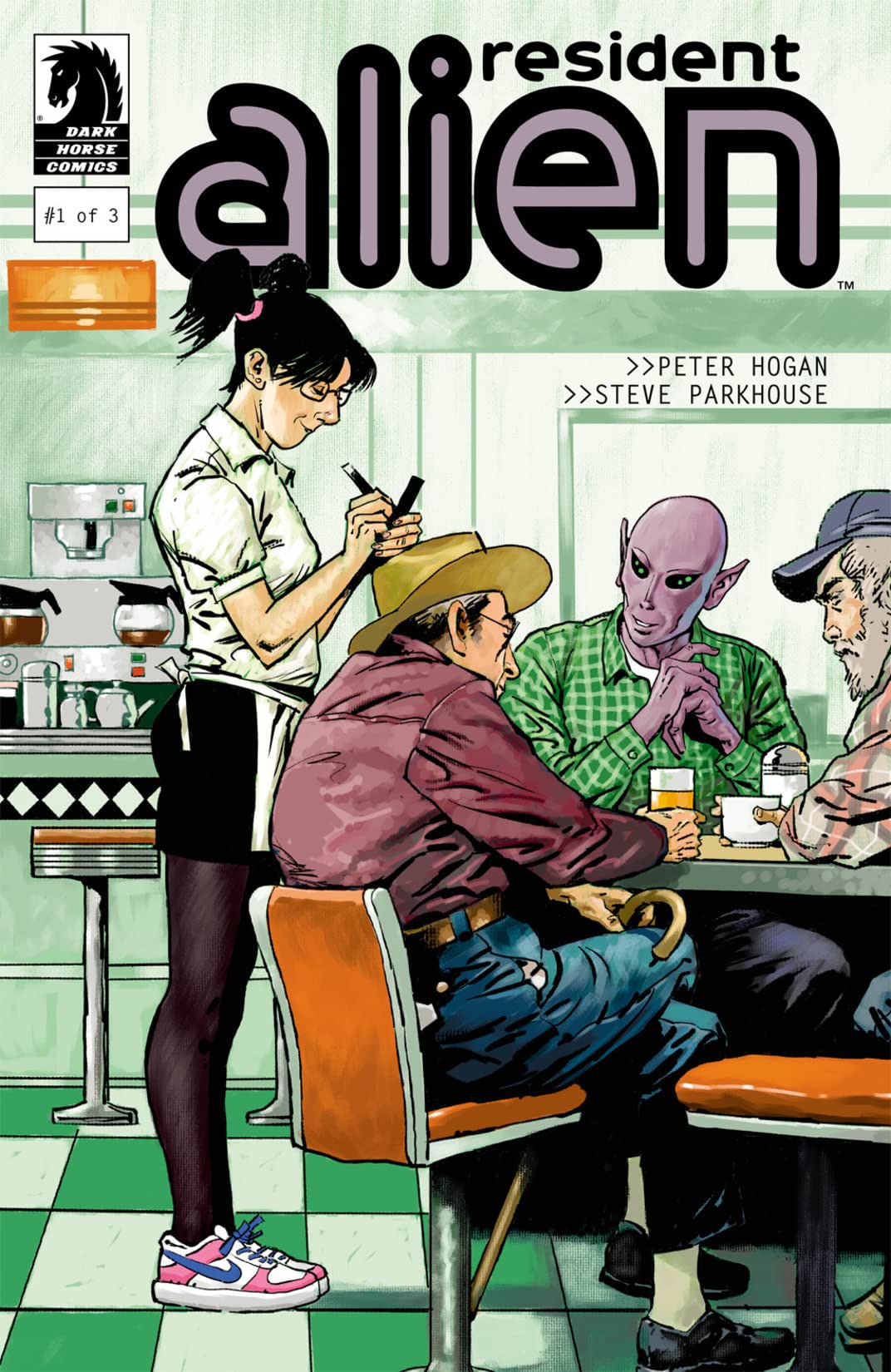
The SyFy channel’s series Resident Alien has been progressing through its second season and now with several episodes completed here are my thoughts.

For those who missed the first season the show is about an alien whose mission was to destroy human life on Earth. However, after crashing he becomes stranded and adopts the identity of a doctor in a tiny Colorado mountain town. The second season continue the story with several residents of the town aware of the doctor’s true nature and the conflict between the alien ‘harry’ and his emotional ties to his friends and humanity in general. There are also secret government agencies chasing after Harry to capture him.

The second season feels a little more scattered, with less narrative momentum than the first one, though the character interaction and rich comedy are still quite present. Harry had clear goals is season one which provided most of the character’s motivations and in this season, he seems more adrift, more buffeted by the plot than driving it. That said, the ending is where this ties together and it, they pull it off then the season will still be a success,

Share

Final Thoughts: The Book of Boba Fett


This week the Disney+ series The Book of Boba Fett aired its final episode of season one. The show proved to be a disappointment. Now, I have never neem enthralled by the character of Boba Fett. In The Empire Strikes Back, he was clever, resourceful, and stood up to Bader but as a character he was essentially a cypher. His demise in Return of the Jedi was ham-handed and stank of authorial intrusion and as such he eventually survival rectified that mistake.

That said what transpired in this series lacked emotional heft. After slaughtering Jabba the Hutt’s successor Fett attempts to become the new crime lord for the city with a crew smaller than Jimmy the Gent’s in Goodfellas. Pitted against several crime families and an off-world drug syndicate Fett unites several disparate forces for a final stand to free the city of Mos Espa from the evil crime lords and syndicate.

At its heart it looked as if The Book Of Boba Fett actually had a story that could have been interesting. Fett, a ruthless and amoral bounty hunter learns, after living extensively with natives of the Tatooine dessert, that community matters and rejects his former life of hunting for one of protecting. Sadly, the execution of the series hopelessly muddled the story, and the series most emotionally meaningful moments all came from cameo of character visiting from the series The Mandalorian.

Perhaps a worse cinematic crime is that in the series finale the character of Boba Fett is made to be plainly stupid. Fett and his right-hand enforcer are pinned down at the west end of a wide street by an armed force closing in from the east. (I picked the directions at random so the blocking can be clear.) Suddenly new allies from the free town arrive and join the fight on Fett’s side. Do they attack from the east, forcing Fett’s attackers to defend from both sides? No, they swoop in and join Fett in being pinned down at the west end of the street. Then the Mods, colorful biker gang allies of Fett arrive, and go straight to west end and join in being pinned down. After than another ally, then experienced Wookie fighter also ignores attacking from the east and joins his already besieged allies. I muttered to my sweetie-wife as we watched ‘I wished my players were this stupid.’

An opportunity to expand and deepen the Star Wars universe had been wasted on confused storytelling and pointless action.

Share

Streaming Review: Boris Karloff: The Man Behind the Monster


I recently ignited a spirited discussion on the questions was the original novel Frankenstein science-fiction or not. A number of people argues the process of using electricity to vivify the creature as a principal aspect of the science in this fiction. But that image, the grand storm, the massive bolts of lightning, the sparking machinery, all originate with the 1931 film Frankenstein and if any visual image leaps into your head of the creature, particularly if that image is hulking, brutish, and mute then the person leaping to your mind is Boris Karloff.

This week I watched a fantastic documentary on the life of Karloff, Boris Karloff: The Man Behind The Monster and while I knew some of the story there was a great deal about this extremely talented actor I never knew. For example, due to the racism of the times he hid and never discussed his ethnicity and what I had assumed was a ‘Hollywood tan’ George Hamilton was actually his South Asian (Indian) heritage.

Remember almost exclusively in popular culture as Frankenstein’s monster, a part he gave pathos and empathy to that lives on nearly a century later, Karloff’s best work came in other films. Personally I have not seen a finer performance by him than as the murderous cabman in The Body Snatcher, (1945) where he is not only frightening but also disarmingly charming. However, The documentary also gave me new films to seek out and watch with the amazingly versatile man such as Lured starring Lucile Ball searching for a killer in London, or The Black Room where Karloff plays noble brothers with one decidedly evil.

The film covers his life, its hard knocks, and that somehow this man remained giving, gracious, and inspiring throughout the turbulent turmoils. For fans of good documentaries, classic horror, and above all Karloff, this is a must see.

Boris Karloff: The Man Behind The Monster is currently streaming on Shudder.

Share

Doctor Who’s James Bond Problem


I have been fairly unengaged with the last few seasons of Britain’s most popular cultural export, Doctor Who, the long-running fantasy adventure series about a space and time traveling alien and his various human companions.

The series, first started in the 60s, has told stories that spanned galaxies and stories restricted to a single isolated lighthouse. Sometimes the Doctor, for the character is never properly named, has a curt gruff personality, sometimes the Doctor is silly, and sometimes, tragic. The eternal ‘regeneration’ that has allowed the character to pass from actor to actor has also allowed the series to remain relevant to the times of each series giving the show powerful staying ability.

Lately however it has come to resemble late period James Bond before the reboot of that classic franchise in 2006. Bond’s adventures grew in scale and stakes, or at least attempted to. The truth of the matter is there are only so many times you can ‘save the world’ before that become old hat and the audience turns disinterested.

Who took this issue to greater heights. With settings beyond one planet the Doctor began saving the universe, then destroying and recreating the universe. And each iteration presented stranger and more powerful antagonists for the doctor to battle, replacing emotional connection based in character with what they hoped was thrilling expansive scale.

For me scale never surpasses character as emotionally engaging. I remember the 2009 Christmas Special for Doctor Who The Waters of Mars with the Doctor one a single planet trying to save a small, doomed crew far more clearly than I do the season that just finished with another universe threatening pair villain and absolutely no emotional heft.

The problem is the writing. Which is strange because show runner Chris Chibnall has turned out very compelling character-based drama such as with his series Broadchurch but seeming has forgotten the basic of good character and story when handed a fantasy franchise.

I hope the Doctor’s future has more small scale but greater character driven stories rather than more failed attempts at ‘mind blowing’ concept that are emotionally meaningless.

Share

Tilbury: an Update and recommendation


On Friday Jan 28th I posted my review and comments on the 1985 made for television Icelandic Folk horror movie Tilbury and in that essay, I commented that the film apparently took an antisemitic turn in its final act.

I am pleased, very pleased, to report that such an interpretation is at odds with the director’s intention and the Menorahs visible in the setting of the films climax were ultimately just an element of set decoration that carried the potential for misinterpretation and not confirmation of a character’s earlier accusations. The film’s reached out to me to discuss this matter and I’m happy to revisit my thoughts on this interesting piece of folk horror. (I also want to note that my Sweetie-wife strongly disagreed with my initial interpretation.)

Tilbury with its folklore that is unfamiliar to most people beyond Iceland and its strange nightmare logic sequences is not the sort of cinema that everyone enjoys but that we need more of, off beat and willing to be something more than a machete wielding masked madman. So please check out this unique piece of cinema currently streaming on Shudder.

Share

Icelandic Folk Horror: Tilbury

Icelandic Folk Horror: Tilbury

Made for Icelandic television in 1987 Tilbury is a short, just 53-minute, folk horror set during the British occupation of Iceland in 1940.

Audun is young man from rural Iceland. When he is sent near Reykjavik to part of the labor force building up defenses for the occupying British forces, he’s asked by the village priest to check in on a young woman, the priest’s daughter, who traveled there earlier and who has now fallen out of contact.

Out of place and naive Audun eventually finds the young woman but begins to suspect that a British officer she’s having an affair with may in fact be an imp from Icelandic folklore. As Audun investigates his experiences become more and more nightmarish.

Despite the limitations of television and budget Tilbury has much to offer; Lynchian dream logic sequences, amusing portrayals of British and American stereotypes by Icelandic performers, and a different vibe of folk horror.

The follow bit of text I am striking through. Please see my follow-up post but essentially it was wrong and I regret the error.

That said it must be noted that halfway through the run time the piece takes an ugly anti-Semitic turn that is truly baffling and utterly unnecessary to story or plot. At first these viewpoints can be dismissed as a character’s bigotry but the movie’s climatic sequence present imagery that invalidates such an interpretation.

With such an ugly turn I cannot recommend anyone support what otherwise might have been an interesting discovery.

Tilbury is currently streaming on Shudder.

Share

Stolen Infirmity


If you follow politics, you are likely familiar with the concept of Stolen Valor where someone claims a military history or deeds that are untrue. They served in combat when in reality they never left the base admin offices and so on.

Hollywood, the most creative place on Earth, has rebooted and reimagined the concept and created what I’m calling Stolen Infirmity.

Over the least several decades there has been a general awakening in American culture to be more supportive, sympathetic, and understanding of people suffering from addictions, disorders, and past trauma. This is a good thing and these people need our attention and our compassion.

However, individuals accused of evil acts are stealing and claiming infirmities as a shield against any and all responsibility for their heinous actions.

People in actual therapy for these serious issues take responsibility for their behavior, for the harm that they have done to others, for their actions but these celebrities do just the opposite. The actions are not their fault but a result of their condition, their drinking, their sex addiction, certainly not themselves.

You can see this on full display in the recent interview where once beloved geek icon Joss Wheadon attempts to rehab his reputation. Despite numerous accusations from numerous people from nearly every production he has led. Somehow none of this true, somehow none of this is hisfault. Somehow, it’s all down to his trauma, and that actors somehow can’t understand his words.

An entire field of bulls would stink as badly.


Share