Category Archives: SF

The Deep Background of Vulcan’s Forge

.

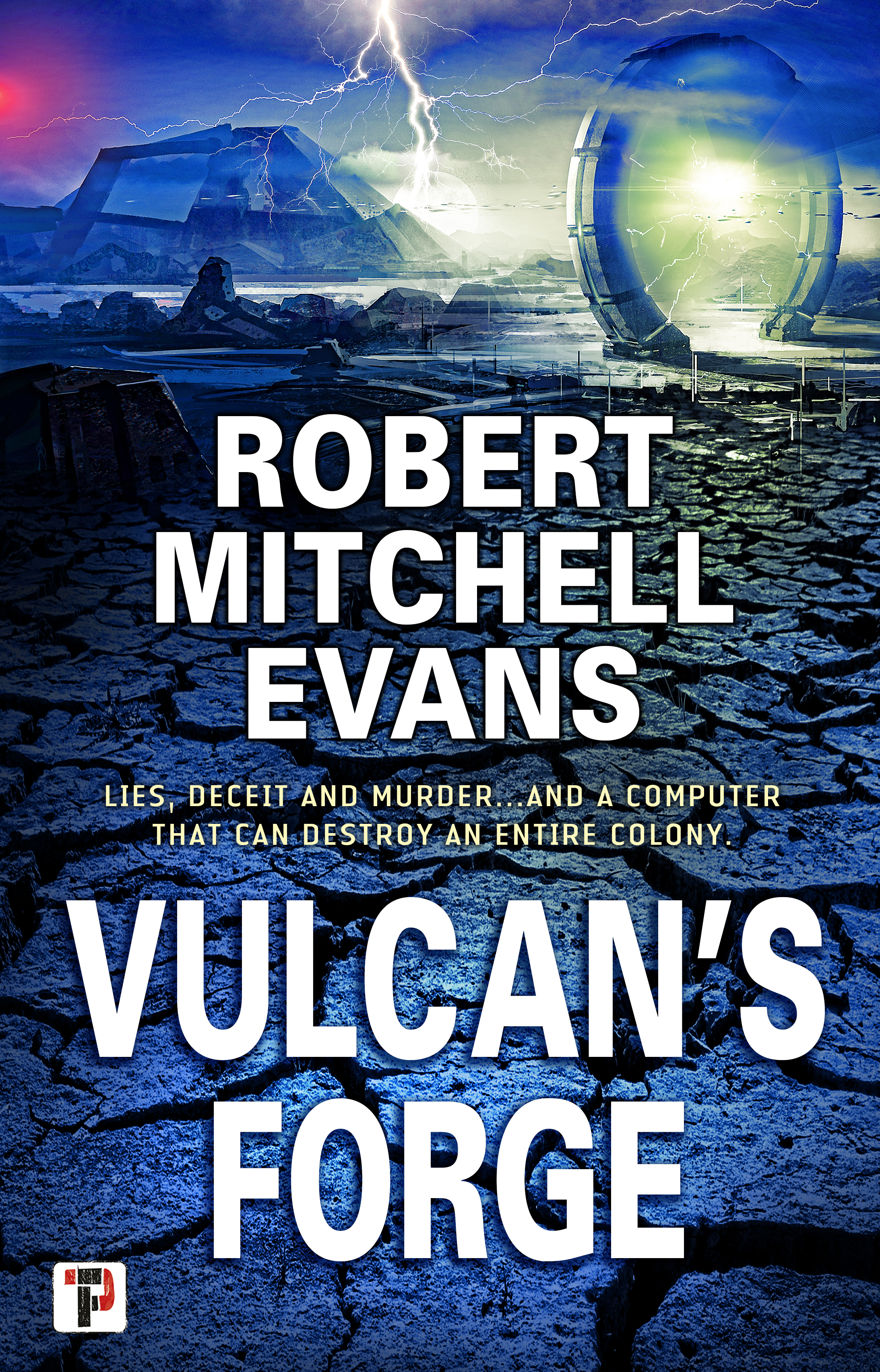
My SF/Noir novel Vulcan’s Forge, published March 2020 by Flametree Press, is set on the distant

Flame Tree Publishing

and isolated human colony of Nocturnia, but the events of the story takes place centuries and centuries after the destruction of the Earth.

In the early 22nd century, after fusion power plants had become common, Artificial intelligences practical, and humanity has settlements, some quite large, throughout the inner solar system, a rouge brown dwarf is discovered with an orbit that will take through the solar system, disrupting and destroying the rocky inner planets.

Face with extinction humanity designs, constructs, and launches hundreds of automated solar sail arks. These arks do not carry crew or people but rather the egg and sperm of animals and people along with sophisticated A.I.s and the equipment to construct human colonies. Once an ark has reached its target system, should it have survived the centuries long voyage still functional, and provided there is a planet suitable for terrestrial life, the A.I. build the colony and its required infrastructure, and then utilizing artificial wombs, birth the first generation of human born on alien worlds, preserving humanity and numerous other Earth species.

Surprisingly cheap, due to plentiful fusion power, the resources of the solar system, and artificial intelligence each ark cost in today’s dollars about half a billion to build, equip, and launch. With the arks so affordable they are not the sole domain of governments and numerous cultures, religions, sub-cultures, and even a few individuals commission arks in a bid to save and ensure to continuity of their ways of life. There is even a couple of arks dedicated to making sure that out there among the star Texas continues to survive and thrive.

The colony of Nocturnia was settled by an ark commission by a group who fetishized Urban Americana of the 1950s. Believing that mid-twentieth century America represented some sort of ideal culture they programed the A.I.s of the ark to disseminate this as the colony’s sole culture. Naturally their ideas of what comprised an ‘ideal’ culture from one which more than a century and a half separated them were based more of myth and misunderstanding.

The novel picks up on Nocturnia as the third generation has come into its own and Jason Kessler, a man ill-suited to the social conformity of the 50s discovers that the colony harbors a deep and deadly secret.

As a traditionally published novel Vulcan’s Forge can be ordered from wherever books are sold. I am including links to San Diego premier specialty bookstore Mysterious Galaxy along with links to Amazon.

Mysterious Galaxy Paperback

Mysterious Galaxy eBook

Amazon Paperback

Amazon eBook


Share

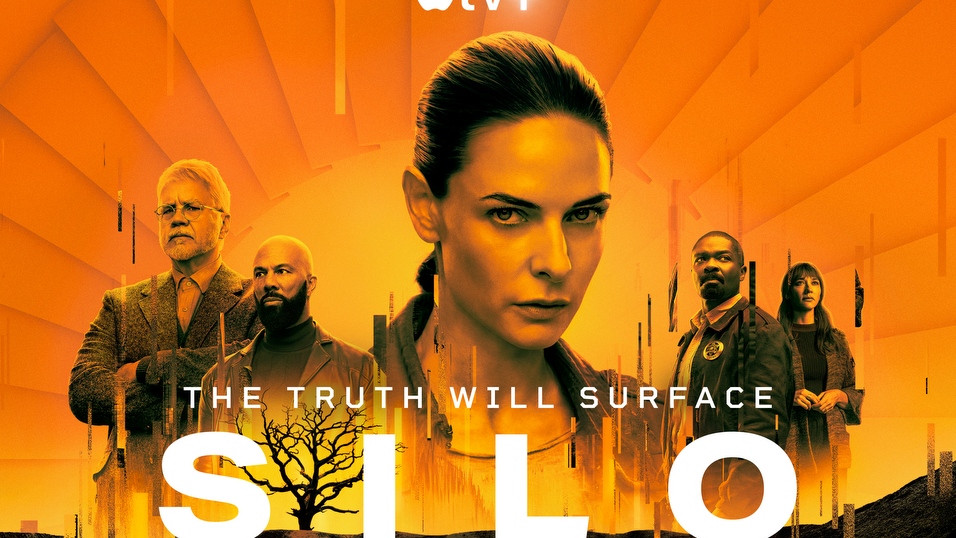
Silo: Season One, Final Thoughts

Apple TV.

Here’s my thoughts on Silo in a single sentence; I will not be back for season two.

I will go into more detailed thoughts about this series, but it will be spoiler filled, so if all you want to know is if I liked or not, I direct you back to the opening sentence.

Silo is centered on Jules Nichols (Rebecca Fergusson) as she uncovers a vast and hidden conspiracy within the close-ecology world of ‘the silo’ where some 10,000 people live hundreds of years following a global undefined ecological catastrophe. The outside world, viewed only through wall sized screen is devoid of life. Individuals exiled from the silo, though given precious resources in the form of a sealed contamination suit, die within a few dozen meters. Investigating the murder of her lover Jules discovers hints and elements of the secret powers that controls and monitors every aspect of the Silo’s life and in the end is exiled. But because her friends make sure she has working sealant tape on her contamination suit she doesn’t die and discovers amid the devastated world dozens of ‘silos’ dotting the landscape.

Stories and settings like Silo require a solid foundation of world building so everything that follows is credible. Once the world building cracks the suspension of disbelief is shattered and everything else unravels. Illogical element after illogical element are compounded throughout the season that reveal shoddy and ill-thought-out world building. The Silo has only one generator to power the vast structure and it is never taken offline for maintenance. Imagine starting your car and running it for years, decades, only added gasoline as needed. It won’t work, that can’t happen. People eat bacon and eggs in a setting where the only rational choice is vegetarianism. With such tight, limited space and resources, it makes no sense and would not be sustainable to grow calories to feed to animals so you can get fewer calories. For a place that has been utterly isolated and with such shoddy recycling as what is shown the silo is amazingly well stocked with new, clean, and pristine plastics. Nothing about how this environment is set up actually works if you give it a moment’s thought.

Even if you wave away all the illogical and irrational world building, Silo is still in my tastes fatally flawed within its own rule set.

At one point late in the season Jules is escaping the dreaded ‘judicial’, the people behind the conspiracy, and is forced to climb between levels in a garbage chute. It is stated in the dialog that she disappeared on ‘level 20’ and she and her compatriots emerge on ‘level 122’. One hundred levels climbing a vertical ladder. If a level is just 8 feet, and they look much taller than that in the sets, they just climbed 800 feet! Yet they emerge not exhausted, tired, cramped, or even sweaty. The writers simply are not thinking at all about what they have just put onto the page.

As part of the conspiracy, we seen the surveillance room where a staff of seven or eight watch many monitors visually scanning the entire silo. Let’s say its seven people, three eight-hour shifts, that 21 people. Add in another shift so you can rotate days off and we have 28 people. However, you need people who aren’t watching to maintain the equipment, so let’s say they brings you up to 35 or 40 people. But you need still more people in this conspiracy. All that equipment draws power from the electric grid, and someone would notice that the ‘janitor’s closet’ is using kilowatts upon kilowatts of juice. So, you have to have people in engineering who are covering up all that missing electricity. A conspiracy so vast simply cannot go on unknown. People talk, it’s a fact of human existence.

Silo excepts too much to be simply waved away for what at its heart is not that compelling of a story nor that interesting collection of characters.

Share

Bits and Pieces

.

Here are my thoughts on a few scattered subjects.

The Titan Tragedy

The loss of the vessel with the five people aboard was a tragedy. Albeit an avoidable tragedy and one that is wholly unsurprising given the history of the company and its attitude towards safety. The only grace in the terrible affair is that the people aboard almost certainly had no awareness of their demise. A catastrophic failure of the pressure hull at depth is an event that would be measure in milliseconds involving energies comparable to several sticks of dynamite.

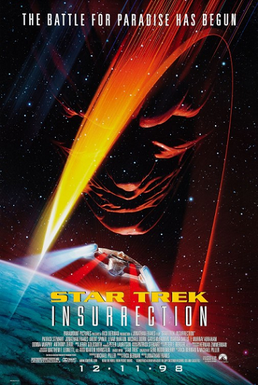
Star Trek: Strange New Worlds Season 2

Quite happy to see this series return. I am an old fart and much of the recent Star Trekofferings have not worked particularly well for me. Granted episode one gave us yet another massive court-martial event that will be swept under the rug further supporting the jest to advance in Star Fleet an officer must at some time commit mutiny, the series remains enjoyed with interesting characters and a fine cast.

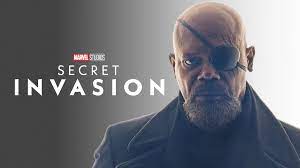
Marvel’s Secret Invasion

Off to a good start. Fun paranoia dealing with shape shifters and the eternal question of ‘who can you trust?’ A definite ‘gut punch’ of an ending at the first episode as stakes rose considerably. Of course, it won’t be until the story is concluded that I can render a final judgement. Endings are critical and a bad one can ruin an experience. e.g., Game of Thrones

Adventures in ‘Pantsing’ a novel

My experiment continues along. My first novel length attempt at horror combined with an attempt to craft the novel without an outline has now reached about 25000 words of an expected 80,000 to 100,000 word target. I suspect that the current act, Act 2 of 5, will be the most challenging and if I can get through this bit the rest should fall into place.

Share

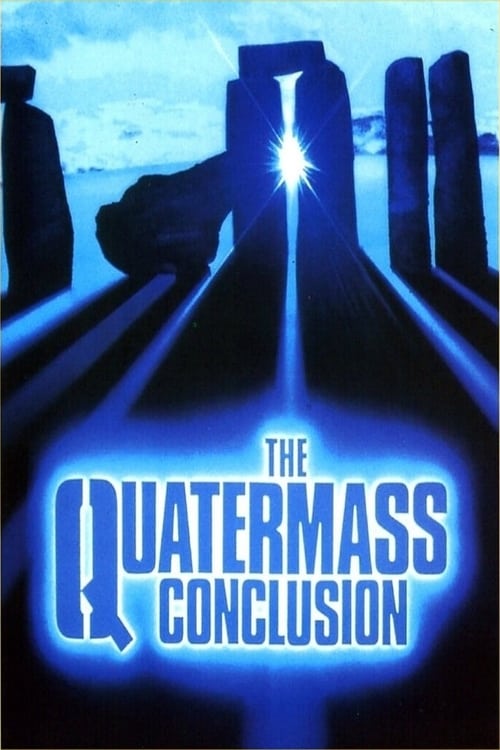
Quatermass The Conclusion (1979)

..

Bernard Quatermass the brilliant rocket scientist of Nigel Kneale’s writing embarked on numerous adventures, starting with 1953 The Quatermass Experiment a television serial adapted later into a film The Quatermass Xperiment, through my favorite version Quatermass and the Pit (Released in the USA as 5 Million Years to Earth) and then finally concluding in 1979 with another television series Quatermass also known as Quatermass the Conclusion.

Aired in 1979 Quatermass sees the famed scientist aged, and distraught as he searches for his lost granddaughter, a young woman seemingly taken by the same madness infecting the young adults of the world, as society on both sides of the Iron Curtain crumbles. Set in the waning years of the 20th century, the world of Quatermass is a world of decay, societal, governmental, and institutional. Gang battle in the streets of London without police intervention, mass executions are held in sports stadiums, and the cult like ‘Planet People’ disillusioned youth around the world await the aliens that will take them to another world of peace and love.

When a crowd of ‘Planet People’ are vaporized by an unknown energy from space it is clear that some ancient alien force is at work, an alien force that may have visited the Earth some 5000 years earlier. Working with a radio astronomer and a collection of aged scientists, who by their advanced years are immune to the alien’s call, Quatermass feverishly attempts to discover the truth of the attacks, devise a counter, and find his missing granddaughter.

Quatermass is a dark dystopic tale of a world that has quite possibly crumbled beyond restoration. Where the earlier stories had elements of darkness and ancient powers none presented the nature of humanity, even with Martian heritage, a cynical as this limited series. While Kneale was merely 57 when the series aired it has the feeling of an old man grumbling about the disrespectful youth and that the world he had known has fallen into decadence and filth. No one in this series is protected by ‘plot armor’ and Kneale deals death as indiscriminately as reality sadness does. It is surprising that in a post Star Wars environment the BBC produced something are dire and doom filled as this program. Quatermass might very well be the final gasp of the cynical seventies before the coming of the endless mindless adventure stories of the 80s.

Share

It is Getting Tougher to Watch Silo

.

While the series continues to give us good actors, kudos to Rebecca Ferguson for her non-glamorous appearance not something all model quality actors are willing to do, and decent production the continuing failures of world building are making it hard for me to suspend my disbelief in the fictional setting.

This week we learn that things that can’t be recycled or repaired are sent to the incinerators. Really? You have a close ecology, effectively a generation spaceship and you are throwing material over the side? Material that can never ever be replaced.

And where is all this plastic coming from? We see constant used of plastics, and we know it’s been more than 140 years because that was when the ‘rebellion’ occurred. I want to see the plastic oxygen mask that remained clear, perfect, and usable for 140 years.

Eggs? Really, eggs? I am not a vegan or a vegetarian, but I do know that consuming animal products is less efficient that eating the vegetable material directly. In a close ecology with very limited space, it makes no sense whatsoever to spend energy, lights, water pump, cultivation, to grow calories that you then feed to something else and consume the reduced calories from the animal. In the Silo everyone would be vegan or vegetarian.

We also had a reference to ‘burial’ in this episode. Just as with anything else the elements in human bodies are elements you can’t get back if you throw them away. In the Silo everything you eat and breathe would have been at one time a person. You can’t escape the fact that in a closed ecology everything gets recycled or the ecology collapses.

Share

Quick Thoughts on Silo

.

Premiering on May 5th, 2023, Silo is a limited series adapted from novels by Hugh Howey
concerning a community of 10,000 people surviving a devastated ecology by living underground in a massive silo.

Rebecca Ferguson plays Juliette an engineer from the structures lower levels suddenly pulled into a conspiracy that entangles the silo’s highest citizens, the sheriff, the mayor, and the judge.

Only three episodes have streamed, and it would be unfair and unjust to judge the series’ quality without having seen the final turns and revelations, but I do have a few thoughts.

First off, the production values are first rate. The environment and the setting feel real. There is a palatable sense that this place, with its undetermined age, has seen countless generations of survivors.

Second, the cast is fantastic. Led by Ferguson, who is also a producer for the show, everyone is real and complicated. The actors and their characters are engaging enough to endear attachment from the viewer helping to audience to flow past some of the less that ideal world building.

The less-than-ideal world building comes down to a few key issues.

For dramatic reasons in the 3rd episode Machines Juliette leads a dangerous but unavoidable repair procedure to correct the colony’s single massive generator before it fails and dooms everyone. The idea that the colony was constructed with a single generator, upon which everyone’s survival depended, without even the ability to shut it down for regular maintenance is absurd and a sin against rational engineering. (Not to mention the lack of a relief valve for the geothermal steam that powers the generator.)

Much is made of the vast distance from the top of the silo to its lowest inhabited level with such trips effectively taking an entire day even for the silo’s political leadership. Apparently, the structure has no elevators, which again is absurd considering the large amount of material that would be required to move between levels to sustain a large population.

A close ecology system such as the silo where no new material comes in from the outside would be very fixated on recycling and not wasting a single gram of material. Yet, the colony maintains a tradition that anyone who proclaims that they ‘want to go out,’ is allowed to go outside of the silo to their certain death taking with them kilos of fabric, plastic, and irreplaceable mass. Madness.

All that said I am still intrigues by the series and have some hope it might stick the landing. With conspiracy stories the revelation of the conspiracy is a major element that either contributes to success of failure and only when we reach that final turn can a valid judgement be rendered.

Silo streams on Apple TV+.

Share

A Curious Editing Choice

youtube placeholder image

Alien is one of the most influential science fiction horror films of all time. A credible argument can be made that Alien killed off the professional explorer style of sf movie, while military and semi-military people crewed spacecraft replacing with the ‘truckers in space.’ Scores of blatant rip-off movie followed in the Alien‘s staggering box office success with cheap direct to video production continuing to this day. Alien’s production design, direction, and cinematography are all presented with a ‘grounded’ realism. A more naturalistic ‘lived in look’ that Star Wars a few years earlier had pioneered in SF cinema.

Yet, in contrast to all this hard edged, grease covered realism Alien also boasts a singular edit that flies in the face of the rest of its choices.

For the most part editors Terry Rawlings and Peter Weatherly employ a simple invisible approach to their craft, never drawing attention to their edits from shot to shot or scene to scene. A style that melds with the film’s ‘grounded’ approach drawing the audience into the screen’s reality. Except for one edit.

When Captain Dallas fatefully goes into the air shafts to hunt the alien in hopes of corralling it into the airlock the unintrusive editing style is maintained until the very end of the sequence. Dallas, fleeing from where he believed the alien to be instead heads directly into the creature, delivering a jump scare that would have made Val Lewton proud, as the creature suddenly reached out for him, and towards us. Then the scene cuts with a very brief shot of a badly tuned CRT screen, like a television switched to a dead channel with an accompanying burst of static.

There is nothing from any of the other characters points of view that supports a sudden cut to a CRT monitor. None could see Dallas as he fled, but instead listened to him and watched him as a phosphor dot on their crude trackers. The choice for that quick startling edit was made entirely for the audience’s point of view and it works.

I have never seen anyone watching this film react with anything other than emersion during this tense, horrific scene. Never has anyone suspension of disbelief ben damaged by that choice. It is a curious and genius bit of editing artistry that a lesser team would have never employed.

Share

Sunday Night Movie: Billion Dollar Brain

.

Billion Dollar Brain is the third and final film with the protagonist Harry Palmer following The Ipcress File and Funeral in Berlin, but the first that I have watched.

Harry (Michael Caine) now retired from the British Intelligence service is scrapping by as a private investigator when a mysterious package arrives along with a promised of a substantial payment for delivering it to a location in Finland. Simultaneously Harry is recruited back in the United Artistsservice as they are aware of the job and its vital national concerns. After using a fluoroscope at a shoe store (People really did use to utilize X-ray machines unsupervised to get better fitting shoes.) and determining the package contains eggs, the method by which viruses are transported, Harry travels to Finland, worming his way into the mysterious and sinister private organization. What he discovers has the potential to spark a nuclear exchange between the world’s superpowers, and Harry must work hard to prevent the coming disaster.

I had heard of this film from one of my many movie podcasts though they made the plot sound more fantastic as though it dealt with artificial intelligence. While the massive computer from which the novel and the film took their title is impressive there is no hint of intelligence in the machine. Rather, it is being used and programmed to analyze and execute insurgency operations behind the Iron Curtain. For me, this vastly improved the nature of the film and its plot. Many technical details, such as using eggs to transport viruses or the use of a mount when attempting a long-range sniper shot, are quite accurate. There’s even a sub-plot where a member of the organization is feeding bad data into the billion dollar brain for his own greedy goals and the bad data produces bad analysis well before the term garbage in garbage out became widely known.

Ken Russel, working with a decent budget, assembled a very good cast and production team giving Billion Dollar Brain the quality that many of the 60s spy genre lacked. Filmed on location in Finland the movie captures the unique charm of that nation and its precarious geo-political position as it remained a free nation bordering directly on the USSR.

In addition of Michael Caine the cast included Karl Malden as Harry’s former friend that brought him into the clandestine organization, Francoise Dorleac as another operative, the film was released the same year she tragically died in a single car auto accident, and Ed Begley as the deranged Texan behind the entire plot.

All in all, this was a surprisingly good espionage flick, more akin to LeCarre than to Bond and that was very much my preferred taste.

Billion Dollar Brain is currently streaming on Pluto TV.

Share

Streaming Review: War-Gods of the Deep

.

1965 American International’s release War-Gods of the Deep (UK title City in the Sea)attempted to capitalize on the commercial and critical success of the Roger Corman Poe movies starring Vincent Price by hiring Price to star in this film very loosely inspired by a Poe poem.

Ben (Tab Hunter), an American working on the English coast, after discovering a corpse on the beach, becomes convince something is afoot, something unnatural. When the object of his

AIP

affections, Jill (Susan Hart) vanishes in the night, Ben and an eccentric artist, Harold, (David Tomlinson), along with the artist’s pet chicken (My sweetie-wife’s favorite part of the movie), go searching for the woman. By happenstance and the force of a plot-driven story they end up in an underwater city ruled over by a tyrannical smuggler, (Vincent Price.)

War-Gods of the Deep was the final movie directed by the legendary Jacques Tourneur who gave us lasting classics such as the original Cat People, Night of the Demon, and the wonderful noir, Out of the Past. Sadly, this movie can’t match the quality of any single shot of any of those previous films. The script is a hodgepodge of ideas, scenes, and wildly incongruent elements. This story has, mystical caverns keeping people ageless for more than a century, reincarnated wives, gill-men living in the deep, and pseudo-ancient cults and practices. None of the actors, save Price, seem to have done anything more than memorize their lines and marks, giving lifeless, empty performances.

The editing of the film is terrible with long tedious underwater sequences that are supposed to contain tension and action but are, in reality, utterly confusing leaving the viewer unable to determine one character from another.

It’s 85-minute running time drags slower than nearly any other film I have watched including some Italian zombie flicks. There is little to nothing in this production that is worth recommending unless you are a Price completionist.

War-gods of the Deep is currently streaming on Amazon Prime in the US.

Share

Impressions The Mandalorian Season 3

.

I have to confess that so far Season 3 of The Mandalorian a space fantasy series set a few years after the downfall of the Empire in Star Wars has been less compelling than the preceding two.

In season one we had a clear narrative line, Din Djarin (Pedro Pascal) accepts a bounty to collect an asset and deliver it to remnants of Imperial Forces. The asset, an immature member of the same species of Yoda, wins his affections and the plot is about keeping the child safe.

Season two Din Djarin is tasked with returning the child to a Jedi who can complete its training while dealing with the powerful enemies still intent on collecting the child for their own schemes.

Both of these plots are clear and established early in each season with Din eventually sacrificing his commitment to his warrior religion to rescue the child.

The third season, with Din Djarin and the Child reunited, has so far displayed no narrative cohesion. Feeling much more like an adventure role playing game, the season has wandered from battle to battle, event to event, with very little plot connecting the various elements. Each week stuff happens but without revealing a goal that the characters are pursuing. The season seems to be comprised of side quests while forgetting to give a central one for the side ones to branch off from.

The show is still quite well produced and directed but lack cohesion to give it narrative gravitas making it by far the weakest season so far.

Share