Category Archives: SF

Late to the Game: Star Trek Discovery


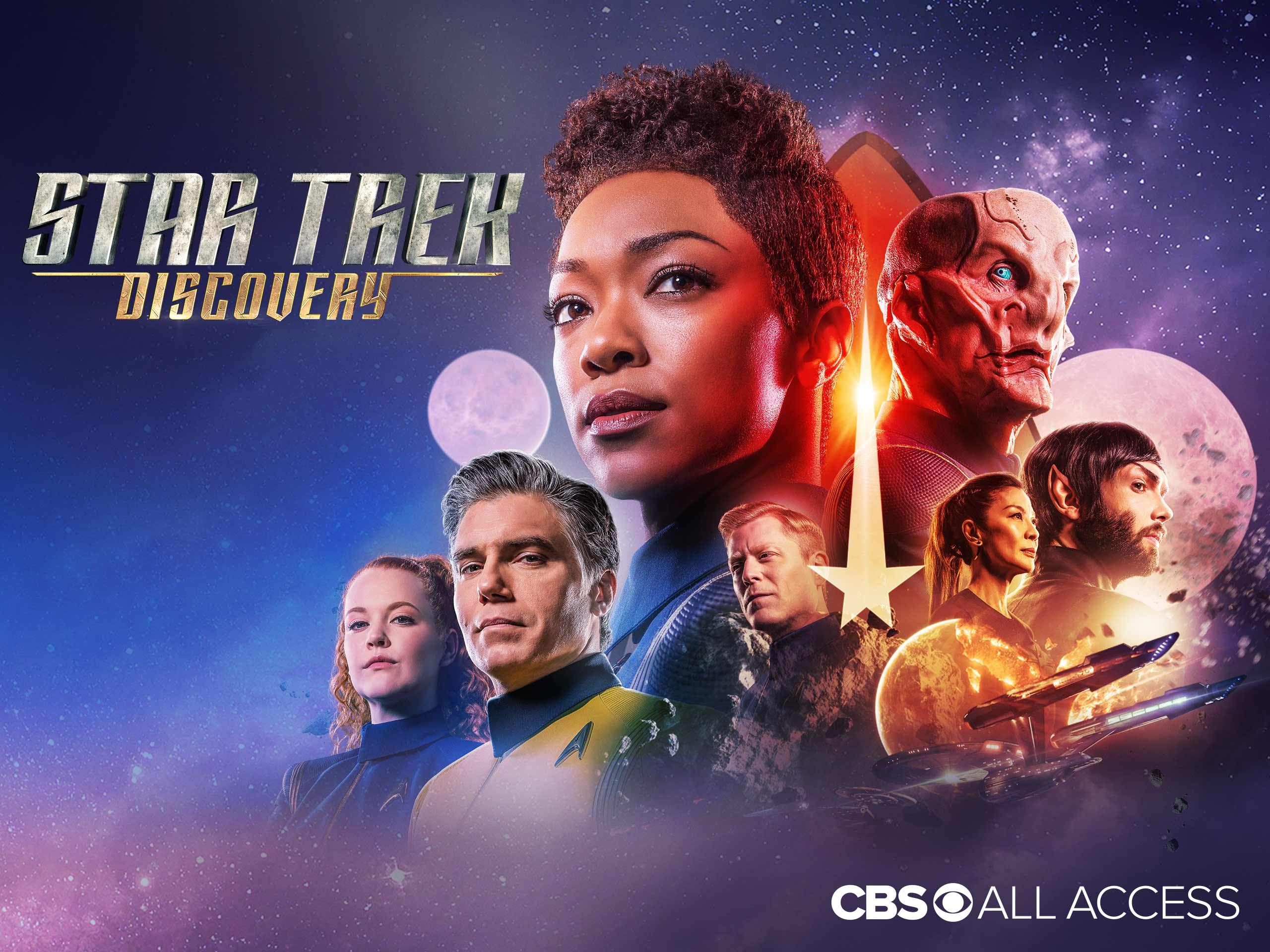
Though the series is in its third season it was only just this week that I started watching Star Trek: Discovery.

My affiliation with Star Trek goes all the way back to the series’ original run in the mid to late 1960s, though as a child my understanding of the episodes at that time was quite spotty. By the mid 70s with syndication I became quite familiar with the series and a lifelong fan. To this day the words Star Trek always conjure the 60s television show before all other images.

I enjoyed The Next Generation seasons 3 thru 5 finding the first two a little dry and the having lost interest later as the stories became to fantastical and too often resolved by hand waving rather than character motivations. Deep Space Nine was amusing but not compelling to me. I switched off Voyager by the third episode and bounced of Enterprise’s pilot, so the announcement of a new series did not exactly excite me. With the added hurdle it required subscribing to yet another pay streaming service I simply never watched Star Trek: Discovery.

A subscription deal by way of one of my credit card companies along with the promise of a much larger library of Paramount films induced me to finally try the service and now I have watched the first three episode of Discovery.

I’m enjoying it.

The stories so far are much more character based with flawed and imperfect people propelling the plot by their motivations, mistakes, and misapprehensions rather than relying on ‘It’s science-fiction so we can do anything!’ plotting.

Don’t get me wrong, the science of the show is still far from rigorous, but the same can be said of the original series. I like it when an SF property works hard to get their science right but one can be entertained by compelling characters without the edge of hard SF.

I recognize that the series is at odds with what many consider cannon for the Federation Universe but again the original show, produced during the heyday of episodic television where every episode stood alone, never bent knee to the gods of continuity. So much so that modern younger fans watching the original episodes conclude that General Order 24 in A Taste of Armageddon  must be a bluff rather than that the beloved United Federation of Planets actually has a general order for the destruction of a civilization. Old Trek and new trek have never been fully compatible.

So, recognizing those points, I like the show and it’s take on the characters. I enjoy the concept of a central human character who was raised on Vulcan and whose identity is conflicted by being biological human of culturally Vulcan. It’s possible that the first three episodes have misled me and if that is the case there are other programs to occupy my time but for now I am a fan and it has become part of my unwind ritual before bedtime.

Star Trek: Discovery currently streams on CBS All Access soon to be rebranded as Paramount +.

Share

Post-Apocalyptic Progenitor: Deluge

Post-Apocalyptic Progenitor: Deluge

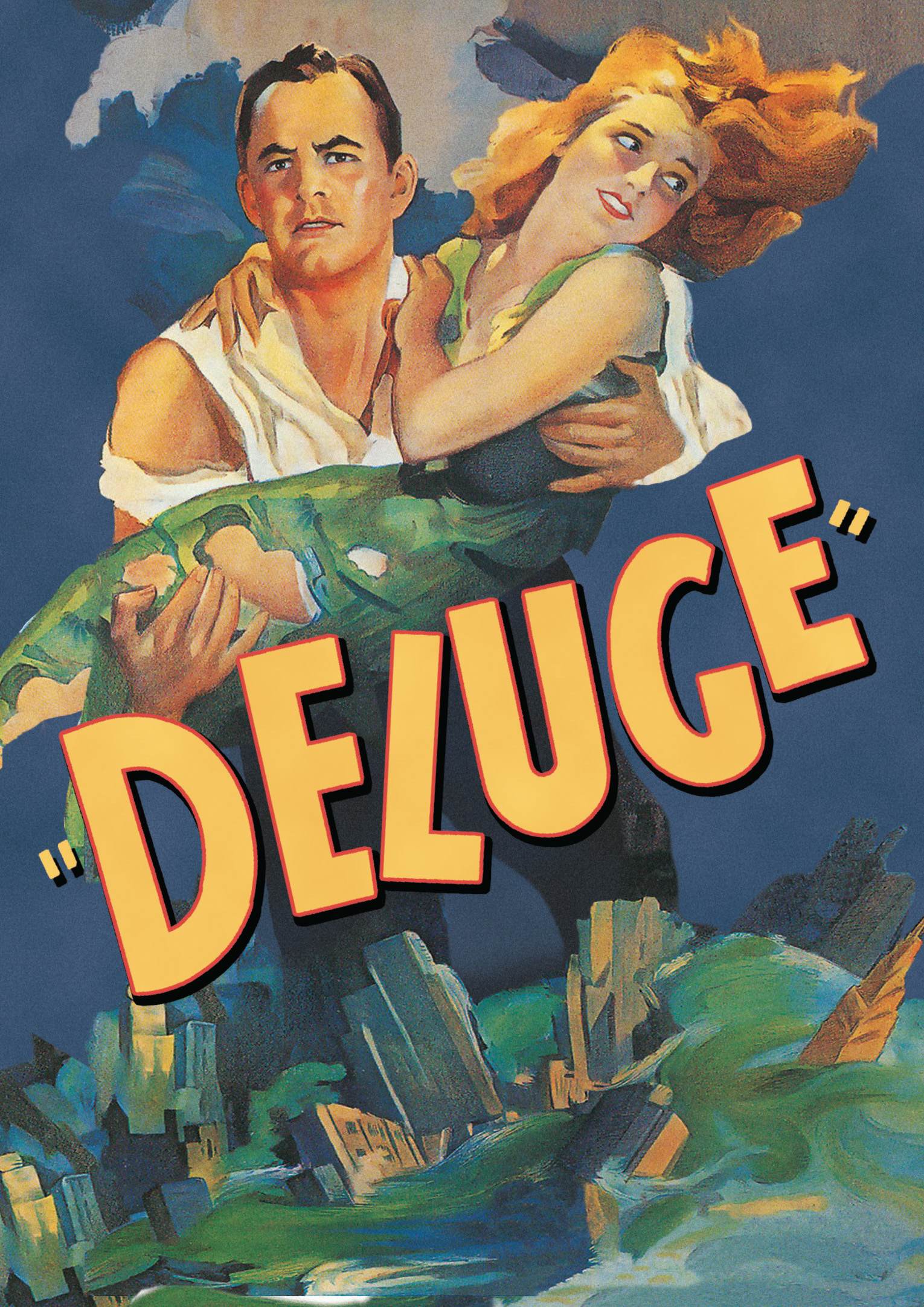
Recently on an episode of the podcast Junk Food Cinema one of the hosts, C. Robert Cargill, made a brief foray into the history of post-apocalyptic movies as part of their discussion centered on the satirical movie A Boy and his Dog. In that history when he talked about the original post-apocalyptic film, I expected him to detail 1936’s The Shape of Things to Come by H.G. Wells which covers a war that shatter civilization, the barbarity that followed, and the eventual enlightened society that developed. (It is really a fascinating movie with a look at the horrors another world war might bring created during the interwar period.) Instead of that film Cargill talked about an earlier movie 1933’s Deluge.After a little bit of searching, I found a Roku channel that streamed the movie and watched it last night.

Clocking in at a lean 70 minutes Deluge wastes no time in telling its story. Centered on three principal characters Martin and Helen Webster along with their two small children and Claire an athletic swimming champion socialite. However, none of the three are present much in the film’s establishing act. Scientists are concerned by strange weather patterns portending massive storms. A series of earthquakes moving eastward that submerge the entirety of the US’s West Coast along with reports of similar seismic events from Europe indicate a global catastrophe that crashes all of civilization. Martin and Helen attempt to endure the terrible storms but are separated leaving Martin as the apparently sole survivor of the family on an isolated spit of land. Claire finds herself at the hands of a pair of men as equally uncivilized at the landscape. She escapes and discovers Martin where they form a bond in the struggle to survive. Helen, not killed during the cataclysm, has ended up with a settlement of survivors and all three set of characters are forced to deal with a violent marauding band in the area. Deluge’s final act centers not on combating the marauders but resolving the romantic triangle of Martin/Helen/Claire.

Deluge was a far more entertaining film that I had expected. There’s no doubt that many of the tropes we still see in post-apocalyptic fictions are present in the pre-code piece of cinema which depicts the harsh times following the disaster with an unexpected brutality. I appreciate that the filmmakers made no attempt to actually explain the causes of the worldwide disaster. Sometimes in speculative fiction it is better to just have the fantastic happen and not explain than to try and craft a justification that doesn’t work. It is an interesting sociological note that the film opens with a title card reminding the audience that this is a work of fantasy because in the bible God had promised to never flood the world again.

I do not regret at all spending just over an hour watching Deluge and for people fascinated by disaster films it is well worth a watch to see the progenitor of so many cinematic cliches.

Share

Godzilla 2014


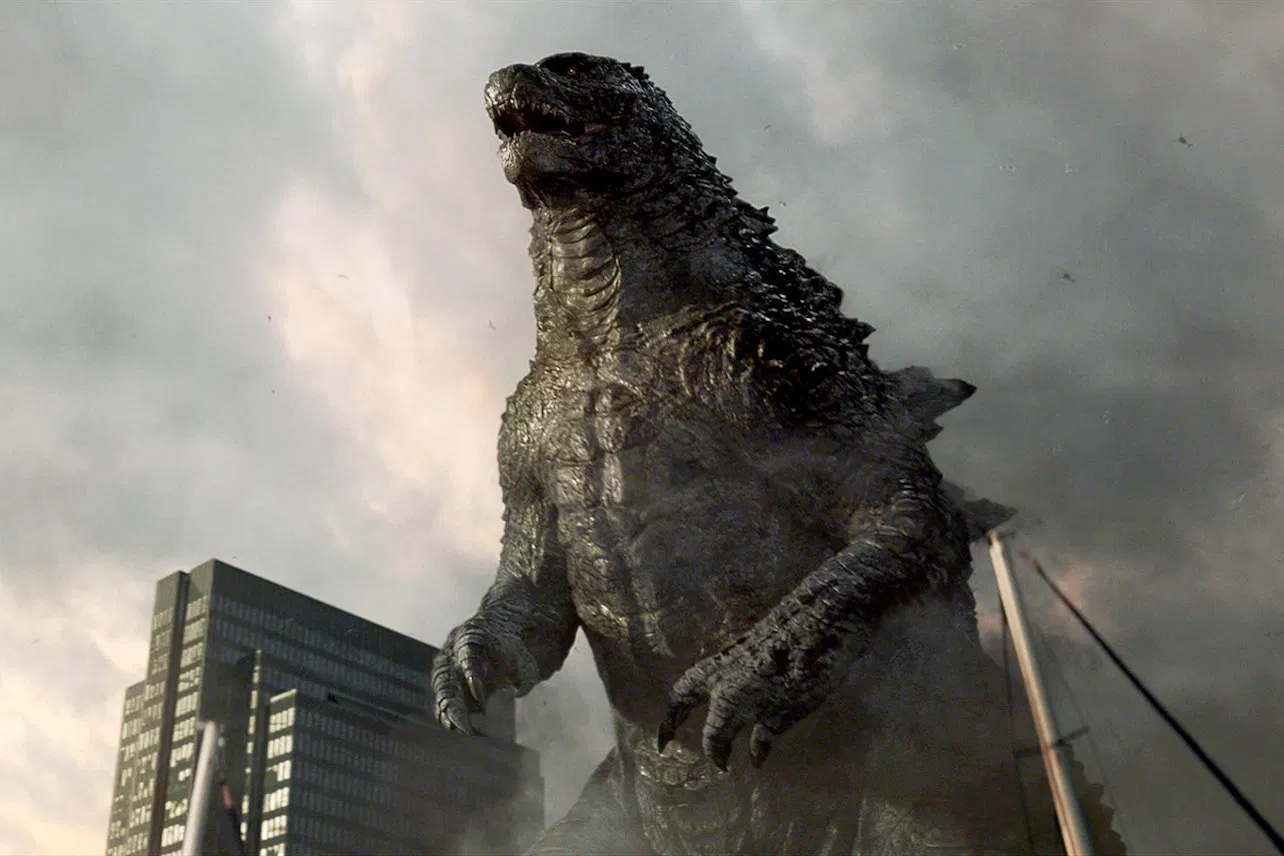
With the year’s release of the newest ‘Monsterverse’ featureGodzilla vs King Kong a massively budgeted remake of the decidedly campy 1962 film of the same name I have decided to revisit the earlier films in the series starting with 2014 American Godzilla.

The original Toho production from 1954 Godzilla is a defining piece of cinema the created the Kaiju film genre where people in suits and with miniature models created scenes of destruction and titian battles between impossibly large creatures. However, the first film Gojira in japan was a serious commentary on nuclear weapons and the terrible price of war and following in tone but not theme Godzilla 2014 was produced with an eye towards dramatic storytelling over campy kids’ entertainment.

While the trailers heavy feature Bryan Cranston, and every movie can use more Bryan Cranston, Godzilla 2014 starts Aaron-Taylor Johnson and Elizabeth Olsen whose lives, along with millions of others, are disrupted when a secret the government of the world explodes into view, that the world was once populated by Massive Unknown Terrestrial Organisms or MUTOs and that the Pacific Atomic Tests of the 50’s had been an attempt to kill one of these monstrous beasts, Godzilla. Now, following at ‘accident’ a Japanese nuclear powerplant 15 years earlier a pair of MUTOs are leaving a wake of destruction as they hunt for radioactive material to feed upon and mate, nest, and threaten humanity with a world repopulated with MUTOs.

Directed by Gareth Edwards with a screenplay by Max Borenstein Godzilla 2014 had little pretension to a deep philosophical theme or any meaningful emotional arc for its central characters but rather focuses, rightly so in my opinion, of the special effect spectacle of mighty Kaiju monsters combating humanity and each other through Japan, Hawaii, and San Francisco. It is movie built for fun. Where it is better to switch off any real-world science, nuclear and biological, and release your inner child that revels in excitement of action on inhuman scales. Taylor-Johnson and Olsen have little to do as emotional characters but we don’t watch a film like this for Kaiju version of Ordinary People.

If you enjoy massive monsters, grand destruction, and fantastic concept then Godzilla 2014 may be for you.


Share

My Favorite Season: Agents of Shield


I’m old enough to remember when having a favorite season of a television program would have been quite strange. Before the advent of long form story telling season may have been good or bad but that rarely became favorites.

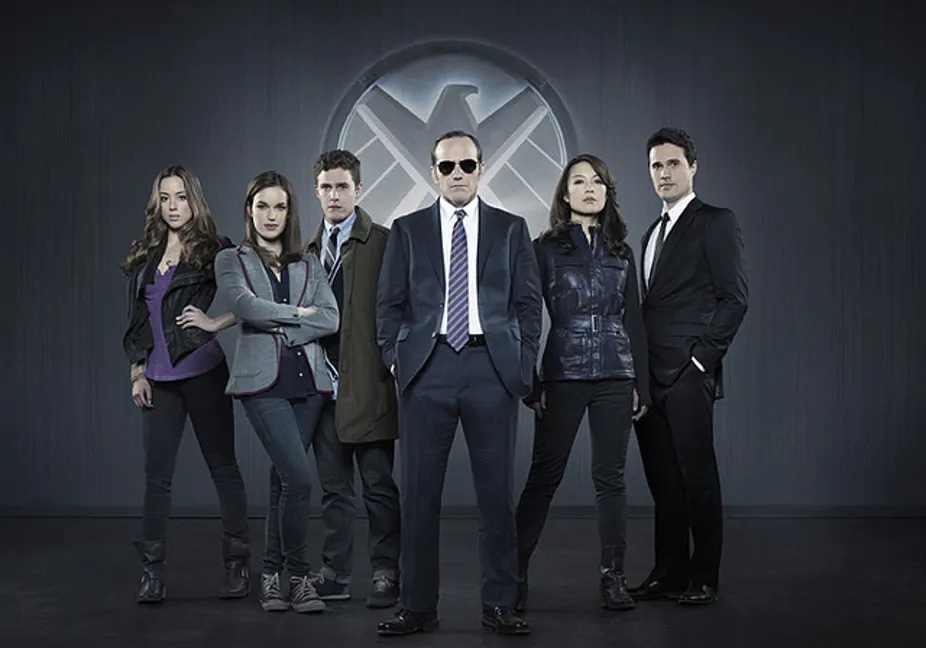
I watched all seven seasons of ABC’s Agents of SHIELD(henceforth known as AoS) during its original broadcast run and now as an unwinding before bed I am re-watching them in order from Netflix. There is no doubt in my mind, Season 4 is my favorite of the seven.

Split between two storylines, the front half centered on the Ghost Rider with the second half focused on rogue Life Model Decoys (LMDs) and the virtual world of the ‘framework’ the two halves are united by the ancient, magical, and corrupting book The Darkhold.

The Ghost Rider is fun, told well, and takes a different spin on the character than the original source but without violating the spirit of the Ghost Rider. The twist revealing the eventual ‘big bad’ was a well-played but for me the season really exploded with the ‘Framework’, the twists and turns of the artificial Intelligence ADIA and the sheer fun of watching actors and characters we had known for three and half season suddenly get to play vastly different colors and personalities.

While Mallory Jansen has been brought in during season four to play ADIA she was hands down the MVP for playing a wide range of characters during the season. She played ADIA, the LMB and rogue artificial intelligence with an evil and yet tragic motivation, Agnes the artistic human that ADIA was modeled upon, Madame Hydra, the supreme leader of Hydra in the virtual world of the Framework, and various shadings of all of these characters from the flat affectation of ADIA when she was little more than a robot to Agnes a frightened woman facing her own mortality.

Continuing storylines can make it difficult to jump into a series these days if you haven’t watched from the start but I do think season four of AoS can be enjoyed without having the watch the previous three, though of course it works much better if you have.


Share

76,000 Words


My work in progress, currently titled as Murder on the Bellerophon, has reached 76,000 words and I am expecting that the finished first draft will land between 95,000 and 100,000 words. My published novel, Vulcan’s Forge available wherever you buy books, was a slim 80,000 words but at this moment I do not feel that the current WIP is in need of any serious cutting.

I am also happy to report that I have written my way through what I expected to be the most difficult sequence in the novel. When I outlined the book, my intent was to tell the tale from a single viewpoint. I think with mysteries it is best to restrict your viewpoints as much as possible. However, in the planning I developed a sequence where a character is chased by an angry mob and it was simply impossible to have my protagonist present. A part of me dreaded this essential plot development while not having my point of view right there. It is the sort of scene that can easily be boring if told via another character’s flashback or worse yet watched by the protagonist on a monitor. Surprisingly when I actually reached that section, it rolled on with the same ease that the previous chapters had.

I have a few more scenes that will be written this week and with those Act 4 will close and I will swing into the novel’s final act. Then will come revisions and editing and then the beta readers. There is always more work to be done.


Share

First Thoughts on WandaVision


I’m a little late to the game but here are my first impressions of the Disney + new MCU series WandaVision.

‘It’s okay.’

Admittedly this is a nine-episode storyline and trying to judge it from the first one or two is unfair but that’s all we have so far. I have been an MCU fan from the first Iron Man feature film though I was never a collector of comics themselves so things like ‘Is this an adaptation of The House of M storyline go right over my head. However, as a fan I have thoroughly enjoyed the MCU and think overall it has been a spectacular success.

The first episode of WandaVision didn’t really strike me as a solid entry. They did a very good job recreating a classic late-50s sitcom but it suffered from the ‘it’s all a dream’ trope. We know what is happening isn’t reality, and to be fair the show never expects you to accept it as reality but rather part of the mystery, so the ‘impress the boss or lose your job’ stakes are meaningless filler. The first episode doesn’t give us enough stakes or even hints of stakes outside of the illusionary sitcom to create meaningful tension.

The second episode with more unmistakable intrusions by other realities and with an ending that questions who is pulling the strings does a much better job of creating the tension that the first episode lacked and is probably the reason the pair were dropped together with the rest of the series being released one the week-by-week format favored by the streaming service. Though it was nice seeing one of my Buffy the Vampire Slayer favorites, Emma Caufield now credited as Emma Caufield Ford, back on my screen even if the role is likely to remain quite small.

I will stick with WandaVision as I intrigued by the plot but at this time I have not been wooed by the series.


Share

Some of My Work

Some of My Work

What role do movies play in shaping culture? If you were building a culture from nothing how could movies help you shape the people and their attitudes?

These are two of the questions explored in my SF noir novel Vulcan’s Forge. Set on the distant human colony of Nocturnia which is isolated and without any external contact, Jason Kessler chaffs at the colonies pseudo-Americana society that he helps shape with carefully curated mass media while fascinated by the tawdry, forbidden films banned from public or private viewing. When Pamela Guest sweeps into his life offering unrestricted access to these pleasures and more Jason is drawn into a web of lies, crimes, and conspiracies that shatters everything he thought he knew about his home.

Vulcan’s Forge was released the first week of the global lockdown last year but copies are available everywhere and signed ones from my local bookseller Mysterious Galaxy.

Remember when in the original Series of Star Trek because the budgets and the technology were so limited to produce the show how often the characters encountered ‘duplicates’ of Earth? I certainly do and that inspired for the question, how could a duplicate Earth exist? What might that mean? The result of that speculation was my short story A Canvass Dark and Deep which was published by NewMyths.com and is reprinted in their anthology Twilight Worlds: The Best of Newmyths, available in both ebook and print.

Share

Streaming Review: Prospect (2018)


Prospect is a 2018 feature length adaptation of the a 2014 short film of the same title and concerns an adolescent Cee, her father Damon, prospecting for valuable biological gems on a toxic planet and the bandit they encounter, Ezra, played by Pedro pascal.

Having learned that this is a feature-length version of a much shorter work goes a very long way in explaining the film’s defects.

Deus ex Machina, which literally means the gods from the machines, is the writing sin of having spontaneous external events resolve the characters troubles, usually saving their lives, that arise from no action, pre-planning, or establishment. The gods intervene and force the happy ending. Prospect is actually an example of the opposite of that, perhaps you might call it Demons ex Machina. Throughout the run time of the film Cee encounters new and wildly unexpected troubles that have no rational set-up beforehand but exist solely to create conflict where there wouldn’t be otherwise. Just as resolutions must arise naturally from the characters, their natures, and their talents, so much the obstacles that hinder their progress and test them. In Role Playing Games there is the concept of ‘the wandering monster’ an encounter with a hostile force that is unconnected the characters’ central storyline. An attack by trolls in the middle of the night while camping. These encounters add excitement and deplete the players’ resources for later pre-plotted fights and make a good element to well-balanced games but they make a poor substituted for a well-crafted narrative and that is exactly what Prospect feels like, a series of random encounters and then a final boss fight, decent gaming but poor story telling.

Setting aside the random nature of the troubles Cee encounters the movie is decent. The actors are all good, the production values look great, with a very limited budget the filmmakers managed to craft a movie that doesn’t look limited. The dialog at times is very reminiscent of Firefly with a pseudo-western cadence but delightfully not all the characters speak in that manner creating a sense of people from very different backgrounds.

While flawed I did not regret the time spent watching Prospectand for others, I have no doubts it will work far better.

Prospect is currently streaming on Netflix.

Share

Thinking About Stakes

When crating fiction a common bit of advice to ‘raise the stakes.’ This is a suggestion of magnify the penalty for failure for the protagonist making the eventual success or failure that much more impactful for the reader or audience. However, this is usually or at least often interpreted as threaten more lives, make the potential explosions larger, the potential death toll higher but that is too simplistic a way to think about stakes.

In franchise material there is what I call the ‘Bond Effect’ where each adventure has to have more on the line than the previous adventure. Very quickly the writers find themselves in the situation where Bond has to save the entire world, from nuclear annihilation, a murderous madman with a secret orbiting space station of death, what have you, and once he has saved the world saving it again has less entertainment value We know there is never going to be a Bond film where the world dies, not even the 70s got that bleak so the combination of an assured outcome and devalued victory makes each world save less thrilling until they become boring. For this effect magnified beyond look to the UK program Doctor Who where the stakes have been repeatedly raised to the entire universe sometimes destroying and recreating the universe as their climatic conclusions.

What all this misses is that stakes are most potent when we are emotionally invested in them. Setting aside the ‘save the world or universe’ trope the protagonist is they fail should suffer deep emotional coast and or loss. This is a lesson well learned in dramatic fiction and too often not in genre stories. Marvel studios did this particularly well in a couple of films, notably Captain America: The Winter Soldier where after saving the world we got to the real stakes for Steve Rogers, saving his friend Bucky Barnes from Hydra’s mind control and Captain America: Civil War where the world was never in danger but rather at its heart it is the friendship between Steve and Tony Stark that is in danger and in that story ultimately lost. The cost of failure is the emotional damage to the characters, these are very high stakes that are intimately personal and emotionally compelling for the audience.

It’s easy to craft plots with larger and larger death star threatening planets and entire star systems it is harder but more satisfying into dive deep into character and find the thing that matters most to them as a person and make us the readers and the audience share in the terror of losing that thing. Then you will have stakes that really matter.

Share

Without Grogu is There a Story?

Light Spoilers for the Entire Run of The Mandalorian to date.

The Mandalorian is Disney +’s original Star Wars series set during the period after the fall of the Galactic Empire and before the events of The Force Awakens. Its central and titular character is Din Djarin an orphan raised in a Mandalorian creed that emphasizes warrior qualities and religious devotion to never revealing one’s face to another living being. Mandalorian in the lore of Star Wars are a people and a belief that are currently suffering a diaspora after the conquest of their home-world with many serving as mercenaries and bounty hunters. Din lives as a bounty hunter in a near sociopathic existence without compassion or remorse until a contract has him ‘obtaining’ an asset the child ‘Grogu’ or better known popularly as ‘Baby Yoda.’ Din forms a bond with the 50-year-old child and ends up forsaking his bounty hunter life with a quest to reunite the child with the Jedi that are responsible for Grogu.

Over the course of two season Din and Grogu encounter many characters, some original to the show some from other Star Wars properties until in the final episode of season two Grogu departs with a jedi master with Din revealing his face to the child before their farewell.

The Mandalorian has been a major success for Disney penetrating deep into the cultural conversation, drawing subscribers to their streaming service, and igniting fresh enthusiasm for a franchise more than 40 years old but I wonder what happens next?

I have enjoyed the series, but I also see that the episodes are often very light ion story while heavy on plot. An entire episode will be devoted to a single plot point, infiltrating an Imperial base to gain access to a piece of datum that moves the plot forward but in terms of character has very little to say. The only powerful story element of the series has been the transformation of Din because of his bond with Grogu and with Grogu departure what is there that is emotionally compelling about Din’s adventures? The series had first-rate action, ground-breaking visual effects, and a radical approach to placing actors and characters into fantastic settings that is going to change the industry forever but none of that is gripping emotional storytelling. Grogu is the reason the series has exploded culturally; Din is a cypher, and it is very difficult to make a cypher a compelling character. Not impossible mind you, mysterious samurai and gun slingers without names have carried film franchises for a few films but that’s a shorter run than a television series.

Only time and another season will show if the writers of the Mandaloriancan expand their show beyond spectacle, action, and ‘easter eggs’ of fan lore.

Share