Category Archives: SF

The Itch is Back


For me part of the writing process is ‘the itch’ I get as an idea grows from a vague concept to a near obsession returning to my thoughts again and again like guilt. As I wind down the process of my current work in progress and begin the search for publishers and agents, the horror film section of the writing process, I find quite faster than normal this time my mind is already mining the next novel.

The core idea was generated last year when it was one of a few I submitted to my then editor for consideration as a follow to my novel Vulcan’s Forge not a sequel just the next book by me. He wasn’t thrilled with the ending and frankly at the time the idea hadn’t become all-consuming for me either, so I set it aside to work on the manuscript now nearing completion.

In that time the behind-the-scenes processor apparently kept working on the concept, finding the genre it really belonged to, and supplying me with a character to drive that had conflicting wants and needs that cemented the story dark ending.

So, my little vacation from writing looks to be ending sooner than I expected and a new outline is about to be born.


Share

Draft is Done


I have completed the first draft of my newest novel and this week I will be sending it out to the brave souls that have volunteered as tributes – ah hem I mean beta readers.

This Sf mystery novel has clocked in at 103,000 words making it about 25% larger than my SF/Noir novel Vulcan’s Forge, but still a little bit on the smallish side for a lot of sf novels. As I have posted about before I tend to write lean.

I’m happy with the draft and I think I did a decent job, but these sort of warm good feelings about a work have been wrong before and the feedback from the beta readers will be a critical step in the book’s progress.

What is unquestioned is that I have earned a little break from the nocturnal writing and can be lazy with my Xbox and numerous streaming services for at least a few weeks.


Share

Reading Dune


In fits and starts I have completed a re-read of the classic Science fiction novel Dune by Frank Herbert. I had to work in fits and starts because a growing cataract situation in both eyes has limited my reading hours and much of those have been devoted to my current work in progress novel. I have read Dune before and wanted to revisit the material ahead of the release of the latest adaptation coming in October of this year.

Dune, set in a distant far-future, concerns the bitter and lethal rivalry between feuding noble houses, a treacherous emperor plotting against his own kin, a suppressed people on a harsh and unforgiven world, ecological transformation, and cartel powers all centered on a planet where deserts are the entirety of the surface area.

On one level the novel can be read as an adventure story as Paul Atreides having survived the destruction of his noble house plats, plans, and takes revenge on the forces that killed his father and exiled both he and his mother.

Another reading is as a warning about the power of charismatic leaders and religious fanaticism with Paul’s quest illustrating how even ‘just’ causes often lead to horror and injustice. The work can also be interpreted as treatise on the interconnectedness of life and the dependence everything shares with everything else in an ecology.

The theme one comes away with from Dune, adventured story, prophetic warning, or ecological explainer depends entirely on the read and what they brought with them to the process.

Published in the early 60s, Dune reflects much of its period and how prose fiction has changed in the intervening nearly sixty years.

By today’s writing styles Dune is a novel that engaged in a lot of head hopping. In the middle of a scene the point of view will shift from character to character revealing their inner unspoken thoughts. This is frowned upon current fiction where it is expected that each scene is recounted from a single character’s point of view. For modern readers Dune can appear to be frenetic, choppy, and uneven.

More out of step with current culture is Dune’s approach to homosexuality. The principal antagonist of the novel Baron Harkonnen is presented as a corpulent, greedy, vile person without any redeeming qualities and it is clear that his sexuality is meant to be a mark of his evil nature.

The novel also appears to support the concept of eugenics without expressing endorsement for the result. The Emperor’s elite troops and the Fremen of the planet Dune are both, in the eyes of the novel, superior to any other fighting force because of the harsh and unforgiving nature of their home-worlds, which is a simplistic and naïve understanding of what makes a superior fighting person or force. In addition the novel presents us with the Bene Gesserit a faction devoted to a secret plan to breed a superior human with psionic abilities that unifies the masculine and feminine natures of humanity. Even for the early 60s this is a very binary view of human gender with men reduced to ‘takers’ and women to ‘givers’ without acknowledging the subtleties and overlap even within a binary viewpoint.

Dune is very a product of its time and even given its period the basic premises were already considered quite conservative challenges that the filmmaker will have to overcome in craft a cinematic experience that will be acceptable to modern audiences.

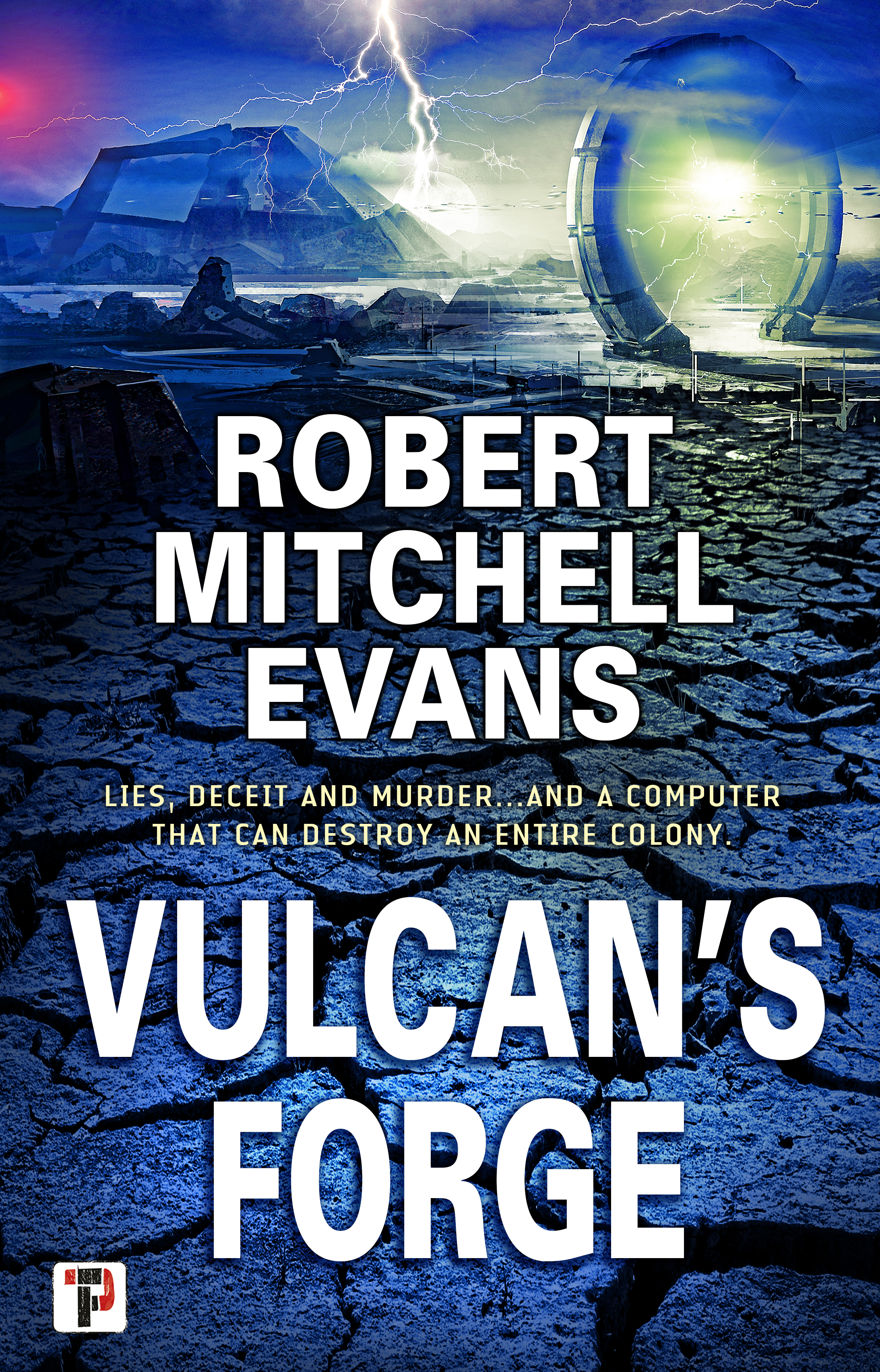
Here’s a reminder that my own SF novel, Vulcan’s Forge is available from FlameTree Press and can be purchased wherever to by fine books.


Share

Me and Movies Theaters When I was Young


For some inexplicable reason lately, I have been thinking about the movies theaters I frequented when I was a tween and a teenager.

Until about age of 10 I lived in rural North Carolina and my only solid memories of going to the movies were drive-in theaters with big bags of homemade popcorn and gloriously colorful Hammer horror.

After my father passed away, we move to Ft. Pierce Florida and soon started going to the theaters there.

The Sunrise Theater was just over two miles from my home on 32nd St and I walked the distance to see their presentations. The Sunrise was a single screen theater and the place I went to the most for my movie fix. I remember a number of fun Saturdays watching films like Escape from the Planet of the Apes, Race with the Devil, and The Towering Inferno in that darkened air-condition space.

Ft Pierce did have a multi-screen theater I seem the remember the name being the Village Twin, but I could be wrong about the name. It was just over three and half miles from my home and I also walked and sometimes biked to that theater for movies. It was there that I saw Jaws, Superman: The Movie, and Alien. I still have quite vivid memories of speeding home from Superman pumping the peddles hard with Willams’ iconic score playing in my head.

The final place to see movies in Ft. Pierce was our drive-in theater but as we had no family car, my mother did not drive, I only saw one film there. A Movie I was so desperate to see that I went on my bicycle to a drive-in, Romero’s Dawn of the Dead.

Movies have always been and always will be a major element of my life.

Share

Thinking About Another SF Noir Novel


As I close in on finishing my current work in progress, a murder mystery set on a ship that has been traveling between the start for over 230 years, I am beginning to consider what to write next.

Last year my debut novel Vulcan’s Forge was published by Flametree press and while being released the week the world shutdown at the start of this damnable pandemic did nothing good for its sales number its blending of off-world science-fiction with classic film noir styling proved to be fun to write and fairly well reviewed. I have the basics of a plot already in mind for my next novel in fact it has been sitting and cooking on the back burner for about six months and recently I had the epiphany that it may work best as a noirish story. It would however make in one way a major break with noir’s genre conventions.

Noir, in my opinion, is strongest and most compelling with the driving force of the plot is some base human emotion, greed or lust being the most common ones used. Noir has a cynical worldview and tends to view people in the worst possible light. Friends and lovers will betray you and you cannot count on even yourself much less anyone else.

But is it possible to craft a noir where the driving motivation is one that is generally considered admirable? That is the idea that has taken root in my brain. A character obsessed with something most people would agree is a good and valuable goal but in order to achieve it step by step walks themselves down a dark, twisted path where events spin beyond their control.

I think this can work. I think it could be an interesting study of how even a good person with good goals can so easily lose their way when they accept the adage that the ends justify the means.

Share

A Harebrained Film: Night of the Lepus


A dozen years after the release of her cinematically legendary showers sequence and eight years before she would appear with her daughter Jamie Lee Curtis in John Carpenter’s

CREATOR: gd-jpeg v1.0 (using IJG JPEG v62), quality = 85

atmospheric horror film The Fog, Janet Leigh, along with DeForest Kelley three years after Star Trek grounded, starred in a most unusual SF horror movie 1972’s Night of the Lepus.

Adapted from the satirical SF novel The Year of the Angry Rabbit by Russell Braddon, NOTL’s central conceit is the Arizona countryside suffering nocturnal assaults from mutated giant rabbits.

The film attempts and fails to build credibility for its premise by opening with a faux newscaster intoning seriously about rabbits upsetting the delicate ecological balance in Australia after their introduction to that continent. From there the story moves to Arizona where rancher Hillman is dealing with a rabbit infestation of his own. Rather than deploy harsh poisons to deal with the pests his friend Clark (DeForest Kelley) at the university puts him in contact with a husband/wife team of scientists Roy and Gerry Bennett (Gerry Bennett played by Janet Leigh.) The pair decide that using hormones to make ‘boy rabbits act more like girl rabbits’ is the solution to Hillman’s troubles and begin experimentation on rabbits captured from the ranch. The filmmakers use the Bennett’s young daughter both as clumsy exposition, ‘Mommy what is a control group?’ and the method by which a rabbit already mutated by the artificial is released into the wild to infect the ranch’s rouge population. And yes, the film tries to force the idea that hormonally changing one rabbit somehow infects other without the use of a bacteria or virus. Despite the EPA having been established two years earlier the scientific pair also have no hesitation in developing and deploying an unknown effect into the ecology without significant testing as their timeline from concept to eradication was mere weeks.

The greatest hurdle the filmmakers failed to clear isn’t the lack of character arcs or scientific illiteracy but rather no amount of slow-motion photography on miniature sets and even with fake blood smeared on their snouts, rabbits cannot look credibly frightening. Rabbits as a violent lethal threat belongs solely to the domain of British farce and not in the dying giant animal genre.

I found Night of the Lepus streaming for free on a Roku channel, but they interrupted the movie every ten minutes for a block of five commercials. even minus those interruptions except for comedic entertainment I could not recommend this strange unique movie.


Share

Television Thoughts: Resident Alien


Confession: We do not have cable television in our home and have not had it for close to eight years. Everything my sweetie-wife and I watch is either streamed or on disc so when a new show premiers on a cable channel we either have to wait for its arrival on a streaming service or if it’s something we have high expectation of enjoying buying an entire season to stream. Which is what we did for SyFy Channel’s original series Resident Alien.

Resident Alien adapted from a comic book series by Peter Hogan and Steve Parkhouse stars Alan Tudyk as an alien who has come to Earth on a deadly mission but due to a mishap and crash has assumed the identity of Doctor Harry Vanderspeigle in the small, isolated community Patience Colorado and finds himself embroiled in murder investigations, family dramas, romantic entanglements, and the mission of a young boy to expose the truth of alien presence. The show is a mixture of comedy and drama with the balance clearly tilted towards the comedic as Patience is populated with an assortment of quirky, broadly sketched, farcical characters that live with one foot in realistic human emotions and the other firmly planted in broad comedy.

Tudyk is one of our best working comedic actors with a career that stretched from A Knights Tales, thru firefly/Serenity up to and past Rouge One: A Star Wars Story. He brings a real charm and sense of timing that carries the comedy off quite well and his choices in his performance particularly when we can compare it against his performance as the human version of the character are unique.

Mixing drama and comedy doesn’t work for everyone but in my opinion, it’s flying high here in Resident Alien.

Resident Alien airs on Syfy on Wednesday nights and is available to purchase from a number of platforms.

Share

I Write Lean


As I approach the end of the first draft of my new novel I am once again struck with thoughts on my own writing process.

Many sf/fantasy novels today are well north of 100,000 words and yet my own works tend to land around that mark or under. Vulcan’s Forge (available from all booksellers) was a slim 80,000 and generally well-reviewed and the feedback I got was that the exposition was deft and sufficient so it would not appear that I am shortchanging on conveying my world-building to readers.

It is simply that I write lean. This is not to say I write better or worse than authors who have much larger works. It is a function of both plot and style not of quality. I find that in my editing and even in my critiquing I tend to be an advocate of cutting out words, phrases, or sentences for more direct writing.

I think this stylistic approach is in part a development that sprung from my lifelong love of film. Cinema is by its nature a very lean form of storytelling. While producing longer books os more expensive that cost increase is nothing compared to the fantastic cost of making a feature length film. This constraint presses on production to tell their stories in the simplest, leanest, method possible that can still achieve the artistic vision of the film. It is perhaps the single most identifiable element of my voice. (Someone else would have to speak to that matter I seem constitutionally incapable of seeing hearing my own voice in my fiction.)

I am quite comfortable with my lean prose and writing and hopefully others will be as well.

Share

5 Quick Thoughts


1) My current Work in Progress novel is rapidly reaching the completion for the first draft. I am currently at 97 thousand words and the story is likely to land between 101 and 106 thousand, then onto the revisions.

2) Resident Alien the SciFi show on Syfy has been pretty entertaining. Quirky characters, fun premise, and a fantastic performance from Alan Tudyk as the extraterrestrial marooned on Earth and masquerading as a doctor is amazing.

3) A deep concern for all my friends and everyone in the massive state of Texas.

4) I get my second dose of the Pfizer vaccine on Monday and I urge everyone to get vaccinated as soon as they are able.

5) Ted Cruz once again displays that not only does have zero concern for the well-being of anyone not in a position to help him but that his intellectual capabilities are hamstrung by his selfish desires and wants. A competent villain would have used the crisis the forge a facade of ability and caring to propel them to greater political power but Cruz is incompetent as he is cruel and spineless.

Share

Re-Reading Dune


A few weeks ago, I purchased a new copy of Dune on eBook and began a re-read of the science-fiction classic. It had been decades since I last read Dune and while the major contours of the plot were well-known to me one of the things that took me by surprise is the out of style point of view.

Writing prose comes in three major points of view.

1) First Person, where the narrative is told directly by the character. The story is literally narrated by the protagonist. It’s a very intimate with every word being the character’s own. It’s also very limited as you can only see and hear what the character sees and hears.

2) Second Person, this takes the form of ‘You see this’ and so on. It is very rare as a fictional point of view but has been used here and there though it never works for me and always kicks me out of the story.

3) Third Person where the prose drops the artifice of a narrator and the prose is told from the viewpoint of observation outside of the characters,

Third person subdivides into three more types.

Third Person Objective, this is best thought of as a ‘like a movie.’ The point of view is outside all of the characters’ inner thoughts or lives and while we can see and hear things around the character we can never see into the characters’ heads.

Third Person Close, here we have a point of view that takes its tone from the character and even present narrative bits with the same biases and observations as the character. Looking at a factory with a close third person view where the character is an environmentalist may present the scene as despoiled and ugly while the same factory with an industrialist character may be presented as vibrant and thriving. This is the point of view most in style today.

Third Person Omniscient, this is the ‘god’s view.’ The point of view can be whatever the author wants. Close to the characters or even inside their minds hearing their thoughts and it is applied to whatever character the author needs. This is the point of view of Dune and it used to be used a lot more often than it is used today. A danger of the third person objective is something called ‘head hopping’ where the point of view switches often and frequently between various characters and this is very true in Dune. Two characters in the novel will be having a conversation and the Herbert will fly between the unspoken thoughts of both back and forth. To me this is jarring and makes the scenes difficult to emotionally engaged with as I have to keep shifting mental gears to follow the oscillating points of view. Mind you this point of view is a fairly common one decades ago and its disuse is more of a matter of style than narrative rule. However, because it is a now nearly an archaic prose approach it has put some distance between me and the book.


Share