Category Archives: SF

The Kid is SO Precocious: Fantastic Four (2015)


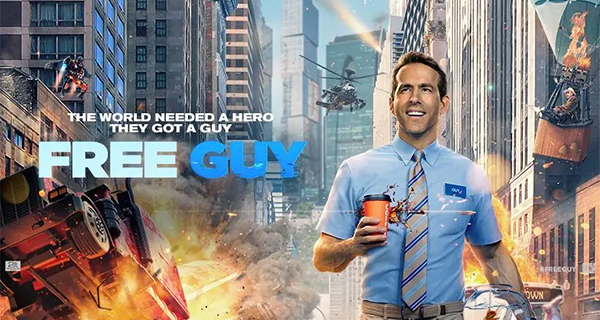
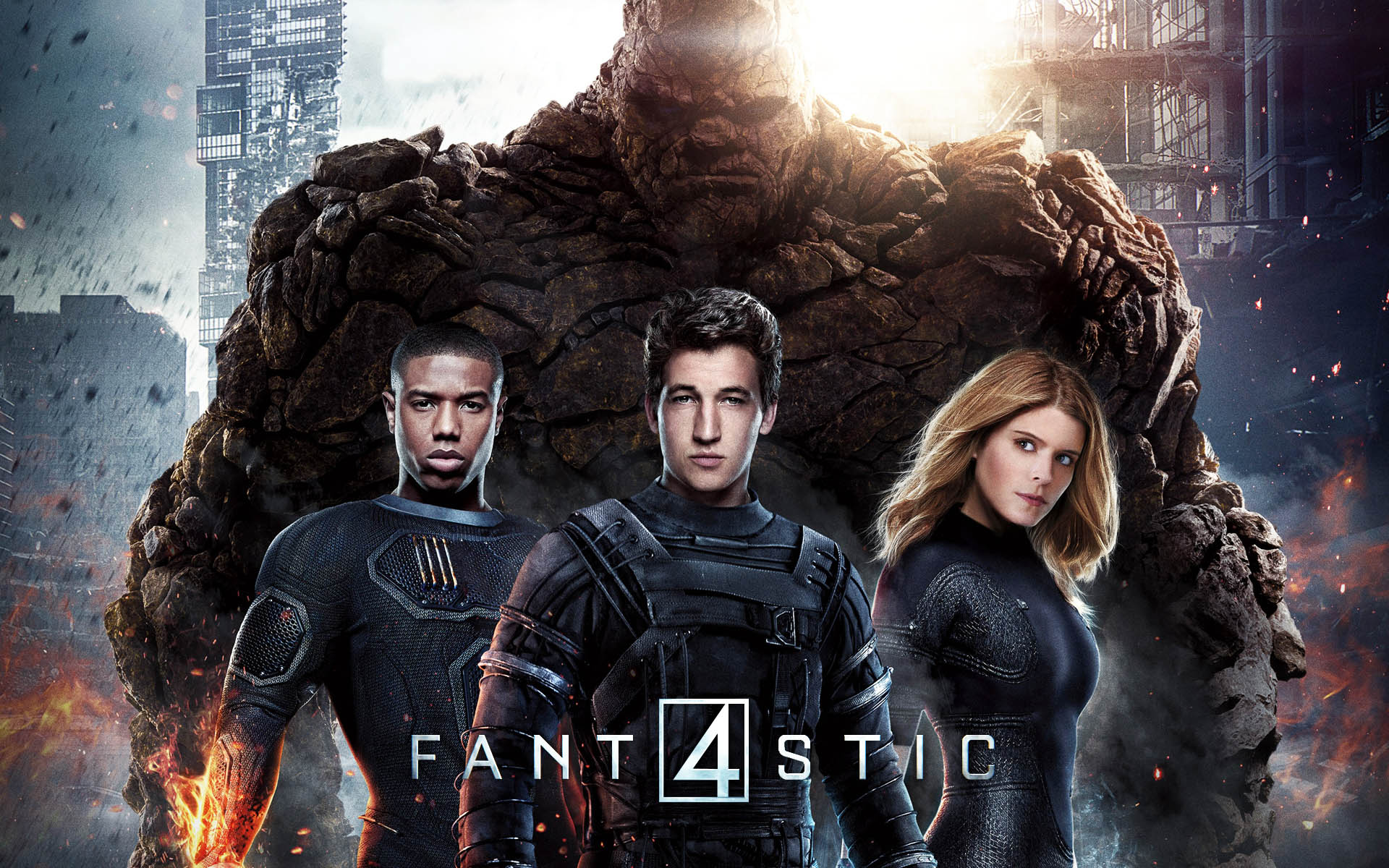
Because I am a Disney+ subscriber and curious about the reported train wreck that was Josh Trank’s 120-million-dollar adaptation of the Fantastic Four I began watching the 2015 film a few nights ago.

Young geniuses as Reed Richards is presented in this version are a thing and can be a compelling way to open a story. The historical drama Hidden Figures starts with a young Katherine Johnson displaying mathematical abilities beyond her grade to establish the character the prodigy she truly was. A similar thing could have been used for the fictional Reed Richards but the filmmakers unable to show the requisite restraint to tell the tale in an unfolding and tantalizing manner instead of displaying knowledge and aptitude beyond his grade young Reed, a pre-pubescent Reed, is actually building teleport devices in his garage. This is far too much far too fast.

In Hidden Figures Katherine’s teacher confronted with the young girl’s fantastic ability recognizes brilliance in her presence and works with Katherine’s parents and church to get the girl the education her mind deserves. Fantastic Four however repeats a worn, tired, and unjust trope when Reed’s teachers is simply incapable of recognizing talent that stands before him and Reed is shuffled into the misunderstood outcast archetype instead of having any actual character.

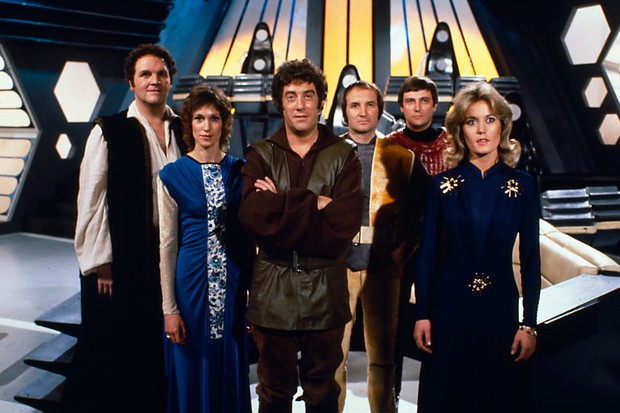
This is repeated in High School and it was at this point that my bed and slumber proved more enticing that a story written by a paint-by-numbers methodology. Instead of returning to this film in following nights I found the comically under-budgeted and scientifically challenged British Sci-Fi series Blake’s 7 far more engaging.

Character wins over spectacle.

Share

Wasting Wesley


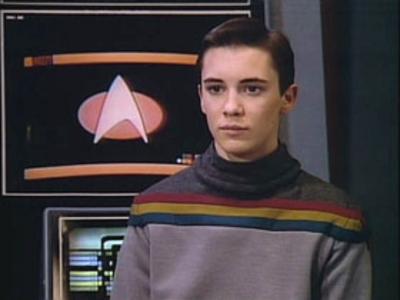
Just a quick note from my writer’s desk on how the production of Star Trek: The Next Generation wasted their opportunity with the character Wesley Crusher. This is not about the use or abuse of the character’s skills and talents used to save the ship, much has been said on that issue and having a ‘tech save’ of any plot is bad writing anyway. No, this about the way the character could have fit into the show as a writing tool that would have be unique.

Wesley was introduced as Dr. Crusher’s son and not as a crew member of the new Enterprise, existing outside of the ship’s chain-of command. However fairly quickly the character was ‘upgraded’ to an acting ensign and from that point one was functionally crew.

This was a mistake.

As a person outside of the command his relationship with everyone else would have been unique. Characters would interact and say things to someone outside of the command that they could never ever speak to someone occupying a place under them in the chain-of-command. This could have been a wonderful tool to explore characters’ inner lives as they open up about themselves in a way that they would not have with a junior ensign. One of the hardest writing tasks is getting a character to reveal their inner truths especially in a military or pseudo-military setting. Instead, the character of Wesley becomes disposable because he doesn’t’ sever any vital plot or story function that couldn’t be performed by someone else.


Share

Blake’s 7


From 1978, one year after the KT Event in science-fiction/Fantasy know as Star Wars, until 1981 the BBC ran a weekly sf adventure program Blake’s 7.

In the distant future, exactly how distant is left quite vague, humanity has spread out across the star and Earth sits atop the corrupt and oppressive Federation. The various planets of the Federation vary wildly from colonies that have fallen into savagery to the technologically advanced drugged and despotic Earth. Blake, after discovering that some of his memories are manufactured, joins with a freedom movement seeking to overthrow the Federation. IT goes badly and after a stint on a prison ship he eventually escapes with other prisoners comes into possession of an advanced alien starship. Now armed with comrades, some of quite questionable loyalty, and the most advanced craft in the galaxy but only this one, he launches a quixotic quest to bring down the tyranny that has its boot on the face of humanity.

Pitched as The Dirty Dozen in space Terry Nation’s Blake’s 7 was a dark and cynical science-fiction series that suffered from chronic budgetary shortfalls, the BBC has given them the budget of the show previously in that time slot a police procedural, along with wildly inconsistent characters and tones, but managed to evoke a unique sensibility that holds a fanbase to this day more than 40 years later. With fewer episodes than the original run of Star Trek, a mere 52 compared to 76, and mired in rights issues that has stymied all attempts at a revival so common to other properties beloved by fans, Blake’s 7 hasn’t even gotten a proper US DVD release. But still, it’s fandom continue watching and re-watching the series adoring its flawed production, it’s surprisingly dark turns, and its chaotic churn of characters and actors. Season, or as the Brits call it Series, 4 ended on a dark a deadly cliffhanger that serves perfectly as a doomed ending to the insane quest for freedom. When other SF properties were leaving the 70s and its cynicism Blake’s 7 embraced a vision of the future that foretold that humanity would remain a flawed, petty, greedy, and occasionally noble species.

Share

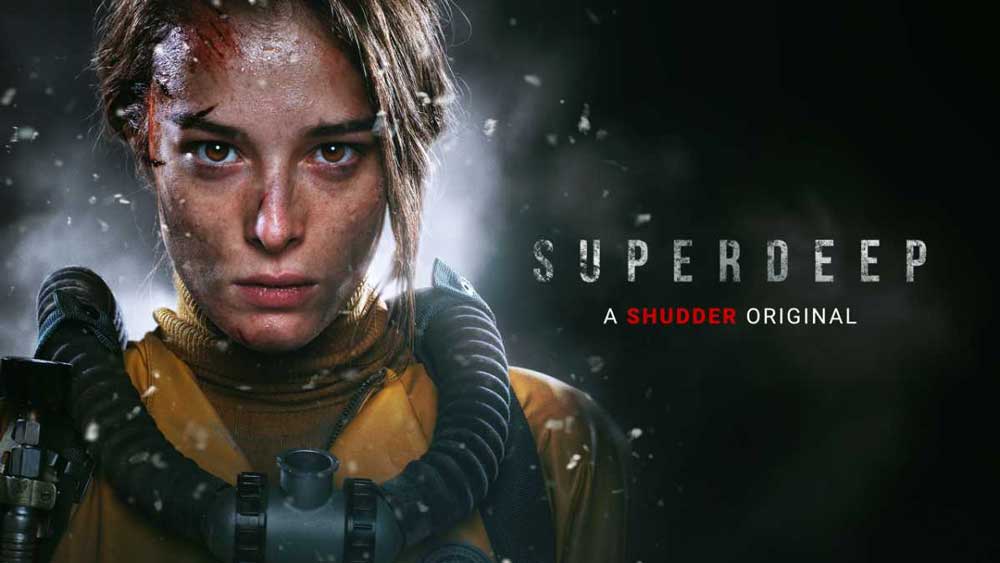
Streaming Review: Superdeep


Cinema from across the Iron Curtain produced a number of fascinating and noteworthy films including not a few deeply serious science-fiction movies some of which became bastardized American version when sold to the west. (I’m looking at you First Spaceship on Venus/The Silent Star.) Horror however was frowned upon as a serious subject and relatively few true horror movies were made with the Kremlin’s approval. With the fall of the Soviet Union and the age of digital effects that has changed and this weekend I watched a recent and decent Russian horror film Superdeep.

Serbian actor Milena Radulovic plays Anya (Presented as Anna in the English dub and subtitling) a soviet era physician haunted by her transgression of her medical ethics at the behest of the Soviet military intelligence. Now, near the collapse of the USSR Military Intelligence has called upon her services again. A secret research facility hidden in the Kola superdeep borehole has gone silent and there are hints that something biological has gone awry. Anya and the officer who pressured her into the ethical lapse are dispatched to investigate, obtain any samples for future military applications, and depart from the facility before the official rescue teams arrive. Once there they find that the lead scientist has been denounced by his lieutenant and all contact has been lost with the lower levels of the facility. Venturing underground they encounter horrors and a threat to not only the USSR but all of humanity.

Superdeep is a decent and solid horror film. The characters are engaging and believable creating enough empathy that their situation generates genuine horror. Radulopvic’s Anya provides the movie’s sole point of view allowing the filmmaker to restrict information to only what Anya see and hears herself escalating the tension of the unknown without cheesy gimmicks to hide information from the audience. Production values are high with the sets and the special effect, both practical and digital, well executed supporting a robust suspension of disbelief. The film’s cinematography is dark, moody, and atmospheric without becoming overly intrusive always managing that balance between what the environment would require versus the emotional drive of the scenes. The film is not particularly gory, but it is visually disturbing with explicit images of bodily disfigurement and horror.

Superdeep’s failings are that more than once during the movie it is nearly impossible to not think of other classic films. It is not the case that Superdeep is a ‘rip-off production’ but rather certain directorial and photographic choices were clearly influenced by films such as Alien. However, this visual rhyming with cinematic classics only harms the film marginally and reduces it merely a solidly enjoyable experience.

Superdeep (English Dub only) is currently streaming on Shudder.

Share

The Body Swap Hypothesis


Exchanging two people’s minds is a fairly common fantasy and sf trope with it propelling storylines in everything from Freaky Friday, Star Trek, and Buffy the Vampire Slayer. As an aside let me state that in my opinion it is fantasy one born out of our misconception that our minds and our bodies are separate and distinct phenomena. Our minds and a sense of awareness emerges from our biology and doesn’t exist independent of it, so it is something that is quite impossible to transplant. But it does make for fun entertainment.

Back in the 90s when I lived with a roommate who was equally into geeky entertainment as I was, I once asked the hypothetical questions if he could switch bodies and live for 24 hours as a woman would he do so? I was quite surprised by the speed and absolute finality with which he answered ‘no.’ I am a vastly curious person and that very much extends to how other experience their lives. I would, presuming an assured return to myself, take the chance without hesitation. I have a difficult time contemplating such a lack of curiosity about such an experience.

I am under no illusion that a brief excursion into someone else’s body for such a short time would provide a total understanding, but I think it would yield some new insights and empathy. It’s quite possible that my roommate rather than lacking curiosity rather feared emasculation. I suppose our cultural misogyny may run so deep as to make even a fantastic hypothetical threatening but if so, it doesn’t appear to have taken that deep of a root with me.

Still, the idea of the body swap is really an invitation to tryand envision life from someone else’s point of view which at its heart is the point of storytelling as well.

Share

Talking About My Novel

Talking About My Novel


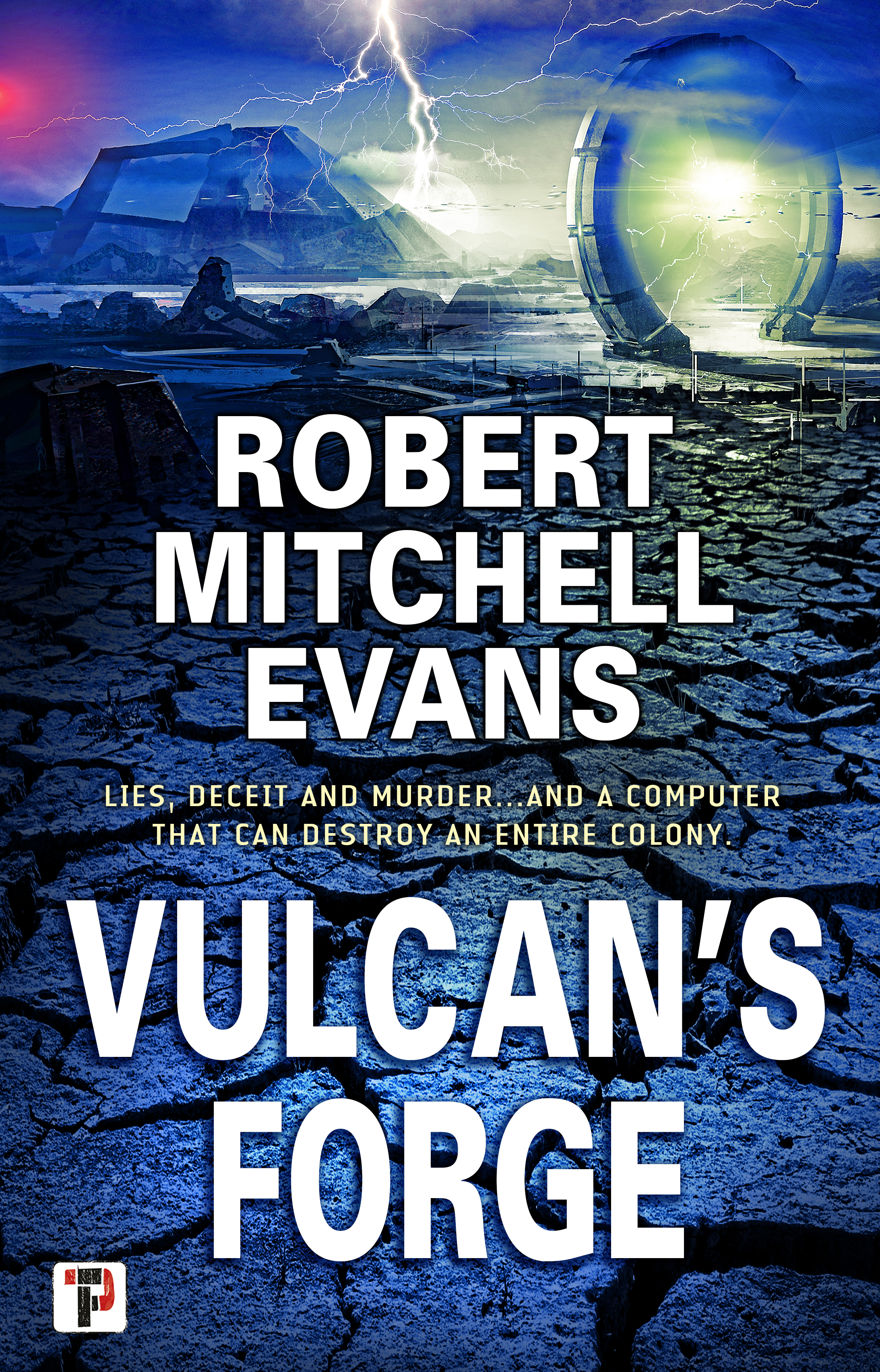
Late March 2020, right as the pandemic strangled the world into a global shutdown, FlameTree Press published my debut science-fiction novel Vulcan’s Forge. It is not a Star trek tie-in novel, though as a fan of the series from the 70s onward I have enjoyed a few, nor is it about a champion racehorse or a communist plot to erupt volcanoes but rather a blend of SF and film noir about stellar colonization and a critique of idealized 50s America.

In the book, following the destruction of the Earth and the inner solar system by a rogue brown dwarf, humanity had colonized the local stars by way of automated slower-than-light ships that constructed the colonial infrastructure and then begat the first generation of colonists from stored eggs and sperm.

On the colony of Nocturnia, which has had no communication with any other successful colony and may be the only one that has survived, the third generation of colonists are just now taking their places in this new society modeled on mid-twentieth century urban Americana. Jason Kessler, the book’s protagonist, helps mold the culture by carefully curated mass media promoting the ideals and morals of this outpost of humanity. The problem for Jason is that he doesn’t fully believe in this family-oriented repressive suffocating society but wants a life free of the obligation to be nothing more than a ‘productive member of society’ and father of a nuclear family. When the seductive, sensuous, and mysterious Pamela Guest sweeps into his life offering him a way to have everything he’s every desired with the ever-present eye of the authorities every knowing he leaps at the possibility and suddenly find himself in tangled in a vast conspiracy that threatens his life and everything he thought was true.

Vulcan’s Forge is fairly well reviewed currently holding a 4.9 out of 5-star rating on Amazon and is currently available in Hardcover, paperback, and eBook from any bookseller.

Share

Streaming Review: Psycho Goreman


Psycho Goreman is horror comedy with the emphasis on comedy.

After a mercifully brief voice over narration informing the audience of an ancient evil that threatened all of existence now entombed on a distant planet Psycho Goreman transitions to Earth the aforementioned ‘distant planet,’ and two children Luke and his younger sister Mimi playing a game of their own invention, Crazy Ball. (Think Calvin Ball but with a more stable rule set.) Luke is unsure of himself and easily bossed around while Mimi is assertive, commanding, and may very well be fully psychopathic. While digging a grave for Luke’s penalty for losing Crazy Ball, the winner can dictate any terms they please for the loser to fulfil, they discover the Gem of that will eventually give Mimi full command and control over the now unearthed evil which the children name Psycho Goreman or PG for short. In a far distant location, the entities that entombed PG become aware of his release and hurry to recapture him setting the stage for the final conflict between this pair of ancient foes that will be dictated by the capricious commands of child.

With a limited budget and merely adequate digital effects director Steven Kostanski who also wrote and produced Psycho Goreman manages to create an entertaining, bloody, and disturbingly funny film centered on a terribly dysfunctional family caught at the center of a crisis of universal proportions. This movie will not be for everyone if the comedic tone is too strange for your tastes, then it is very likely that you will be unable to suspend disbelief for anything that occurs on the screen. This is not a film that strives for any sense of reality rather it swings for the fences and if that results in a homerun or a strike out will vary entirely upon your tastes. Myself, I enjoyed the bonkers approach and felt the film exactly hit its intended mark.

Psycho Goreman is currently streaming on Shudder.

Share

Reading TENET


Using the application ‘Weekend Read’ developed by scriptwriter John August’s company, I am reading Christopher Nolan’s script for last year’s film Tenet.

Tenet was Nolan’s venture in the globe-trotting super spy genre starring John David Washington as the story’s protagonist battling a world threatening conspiracy implemented by a Russian arms dealer played by Kenneth Branagh.

This wouldn’t be a Christopher Nolan movie if time didn’t play a critical aspect in how the story unfolded, in Memento to simulate Leonard’s inability to make new memories Nolan sequenced events backwards and in in The Prestige extensive use of flashback reordered the tale in Tenet time itself is a critical element of the plot. Deploying hand waving science-fiction about ‘reversing entropy’ objects and people are ‘inverted’ and experience time backwards leading to visually stunning and mind-bending sequences of action throughout the film.

But how does this read?

First off Nolan’s decision to leave the character unnamed is much more ‘in your face’ in the script. In a prose story, particularly one recounted in the first person, it’s fairly easy to hide the fact that the viewpoint character is unnamed, script format doesn’t allow for such subtleties hence often and glaringly Washington’s character is ‘The Protagonist.’ And when he refers to himself as the protagonist of the operation this is only heightens the effect that breaks the spell between document and reader.

Secondly the mixing of forward time and reverse time events in the script are no clearer than when first viewed in the film. Text is dreadfully limiting in recounting simultaneous events and doubly so for such events running in opposite directions through time. Where a piece of prose can slow down and provided critical and essential exposition a script just as a film cannot and must delivery that information vis visuals and character dialog.

Tenet’s script perfectly captures the experience of watching Tenet and in that manner is an exceptionally well written scrip and just as with the film it requires repeated readings to fully see all of the intent.

Share

Back From my Time Off


Friday was my birthday and after a year of pandemic restricted travel and not yet ready to travel again I decided to take both Friday and Monday off to celebrate and simply luxuriate in a long weekend. So here are some quick thoughts and reports to bring everyone back up to speed.

Birthday Haul: My lovely sweetie-wife presented me 3 Blu-rays as gifts, The Fog, John Carpenter 1980 horror classic on a Shout Factory special edition, The Invasion the 2007 remake of The Invasion of the Body Snatchers, this time starring Nicole Kidman and Daniel Craig, and The Night of the Big Heat which sounds like a film noir title but is a Hammer-ish Sci-Fi film starring Peter Cushing and Christopher Lee about a far north island on the UK in the dead of winter suffering an extreme heat wave due to an alien invasion.

I had originally planned to have friends over for movies and gaming, but our guest bathroom is currently disassembled due to water damage from the unit above and so the weekend was just me and my sweetie-wife.

However, on Friday I did for the first time in over a year go out to theater. I watched Nobody an action film starring Bob Odenkirk. It was a lot of fun. What could have been tedious was made fun because the film makers understood that humor and a light touch can carry an audience through over-the-top action.

Writing: The Work in Progress novel has been copy-edited and proofed and my SF murder mystery clocks in at 102,000 words, making it longer than my noir Vulcan’s Forge but still trim compared to so many genre novels these days. Now I just need to wait for the feedback from the beta readers to see if it requires any serious surgery.

My mind continues to work on the next book though I am not yet to the outlining stage so writing-wise things are not too bad.

Ta Ta For Now


Share

Star Trek the Noir


I recently re-watched the Original Series episode The Conscience of the King in which Kirk must discover if the leader of a traveling actor troop is in reality a mass murderer who has escape justice.

As indicated by the title taken from Hamlet the scrip has numerous references to the Bard and his works but on this viewing I was taken by just how much the episode leaned into the conventions of film noir.

The story’s spine is a mystery with Kirk playing the role of the detective, searching for clues amongst a forest of lies and deception. He is enamored by a mysterious beauty who ultimately proves to be quite lethal a near perfect femme fatale. The obvious answer to the mystery turns out to be only near correct with a final act twist that reveals a darker and more tragic answer to the series of murders.

In addition to the thematic and plot elements that line up so perfectly with noir that series, though still displaying the bright television set selling colors, Finnerman the director of photography still manages to utilize shadow through the episode giving it a darker image befitting the story.

In my opinion there is no doubt that Star Trek’s The Conscience of the King is film noir.


Share