Category Archives: Movies

When You Stare Into The Art The Art Stares Back Into You

Obviously this post’s title is a play on the famous statement about staring into the void and how that changes you what I am speaking about is not so much about change as revelation.

With the release of Tarantino’s Once Upon a Time In Hollywood his largest box-office opening to date, there have been a slew of reviews with interesting takes on what the themes and cultural significance of this cinematic fairytale. Given the subject matter, 1969, the Manson Murders, the transition from ‘Old Hollywood’ to a new star system, and the failure of the ‘Hippie’ movement as the idealistic 60s gave way to the cynical and dark 70s Once  quickly became a mirror that reflected the philosophies, politics, and morals of those critiquing the film.

It is an interesting and I think often forgotten aspect of critique that what once comments upon, compliments, or derides in any work of art but particularly with narrative pieces, says as much about the reviewer as it does about the art itself.

In my writers circle I often say ‘No honest review can be wrong,’ as a truthful critique, one that if reflected of the person’s sincere thoughts and reactions, paints the art as it impacted and moved, or failed to move, that person.

It has been fascinating watching the political chatterers liberal and conservative react to Once  revealing their internal biases, talking past each other, and illuminating the very real differences between those world-views. It could be an interesting experiment for some writers to write phony reviews in their characters’ voices.

Share

The Strangely Enduring Relevance of Shock Treatment

This week I re-watched 1981’s curious film Shock Treatment. Originally conceived as a sequel to the cult hit The Rocky Horror Picture Show  Shock Treatment  evolved into something darker, deeper, and more serious that that beloved rock musical. On one level the story is a simple straight forward sort of musical faire, Brad and Janet’s marriage is tested by temptation, fame, and manipulation by romantic rival for Janet’s affections until they ultimately triumph and literally ride off into the sunset. yet the film is also a biting commentary on television, the slippery nature of truth, and the power audience surrender to performers and content creators. Shock Treatment  is a deeply symbolic film with an approach that has more in common with David Lynch than most conventional filmmakers and it asks audiences to accept a level of unreality that transcends conventional narrative construction. Released long before the plague that is ‘reality’ programming this film speaks to the inherent deceptive quality of television and the dangers of accepting as ‘real’ anything that is presented in that flicking tube. And even though cathode ray tube and raster scans have vanished from out living rooms the film’s themes resonate stronger then they ever did in 1981.

Corporate control of mass culture, celebrity invasion of politics, and the deadly siren lure of instant fame, dangers we grapple with today are all major elements in Shock Treatment’ssly satire. The sinister similarity between Farley Flavors and Donald Trump feel more real to me than that other cinematic creation his inspired, Back to the Future’s  Biff Tannen. Lies are the beating heart of Shock Treatment,  the lies that seduces us, the lies we tell ourselves, and the lies we endure to simply ‘get along’ and in that theme I can’t help be feel that Shock Treatment’s  cinematic cousin is Craig Mazin’s outstanding series Chernobyl.

Nearly forgotten it is shocking just how relevant Shock Treatment  remains in 2019.

Share

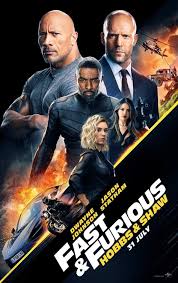
Movie Review: Fast Furious & Presents: Hobbs and Shaw

I have never watched, in whole or in part, any installment in the Fast & Furious franchise, so why did my Sweetie-wife and I go see this spin off from that popular series? The simple answer is we enjoyed the trailer. The joyous, funny, and decidedly over the top tone of the this movie’s preview promised the sort of ‘don’t take this seriously’ fun that can make for great escapist entertainment and that it is exactly what was delivered. We got what was listed on the tin. Now, the best frame of mind to enjoy this movie is not to go in thinking of it as an action film but to rather think of it as a super heromovie. The action, the stunts, the stakes, and the plotting are all much more in line with the lighter comedic styles of many modern comic book movies than anything as mundane as super spy James Bond. Approach Hobbs and Shawfrom that perspective and I think you’ll be ready to appreciate this enterprise.

The set-up of the movie is simple. Hobbs (Dwayne Johnson) an elite member of the Diplomatic Security Service and Shaw (Jason Statham) a outcast outlaw are forced to work together when Shaw’s sister Hattie (Vanessa Kirby) an MI6 operative is framed for stealing a super virus capable of wiping out humanity when in fact she secured the sample to protect it from Brixton (Idris Elba) a cybernetic enhanced mercenary worked for the shadowy organization Eteon which has the goal of saving humanity by eliminating ‘the weak’ and taking control of the planet. On the run and pursued by this ‘black superman’ Hobbs and Shaw must work together and learn the meaning of family.

Directed by David Leitch who also helmed John Wick  and Atomic Blonde this movie is naturally heavy on fights, stunts, and action with an emphasis on comedic turns.  Both of the leads, Johnson and Statham, have shown the comedic chops and timing to carry the movie and joined by Kirby the trio is a powerhouse of charisma that carries the audience over and through the movie’s incredible story and sequences. Personally I am quite happy to see that Kirby is getting a wide variety of roles. She first came to my notice as Princess Margaret in Netflix’s terrific historical drama series The Crown and in everything else I have seen her in she has never disappointed. Idris Elba is much better served by this role than he was in the forgettable Star Trek: Beyond.

Over all if you can suspend disbelief and simply accept the wild premises and action Hobbs and Shaw  is an excellent entry into escapist fun.

Share

Quick Thoughts: The Lion King (2019)

Not a full review but just a few of my impressions about Disney’s remake of the Animated classic.

The technical achievements are mind blowing. It is not a live action movie but a photo-realistic CGI animated film and the photo-realism is spot on. There were very few moments, and those were fleeting, where I felt the computer’s presence but rather this looked, utterly, like a menagerie of African animals acting on the savanna. The lions’ fur during rain was particularly impressive.

The technical artistry was also the feature principal failing. As many reviewers have notes the animals’ feature are so faithfully reproduced that emotional expressiveness is absent. The angled od the head and movement of the ears are the most overt indicators of a character’s emotional state, more than any other animated feature this one relies heavily, too heavily, on the vocal performances. (Which were fine but the lack of emotional eyes damages the film.)

Why of why did they have to screw-up my favorite song?

I adore the original’s rendition of Be Prepared, and while I have never heard Chiwetel Ejiofor sing (One of these days I am going to have to rent Kinky Boots) the spoken and broken cadence of this version of my favorite song grated.

While I am on the subject of the villains, the revising of the plot to elevate the hyenas as more active while devaluing Scar’s agency did not work at all and muddled a perfectly balanced plot into one that while not a mess lacked a strong dramatic though line as in the original.


If you are a fan of the original this movie is not really worth the time.

Share

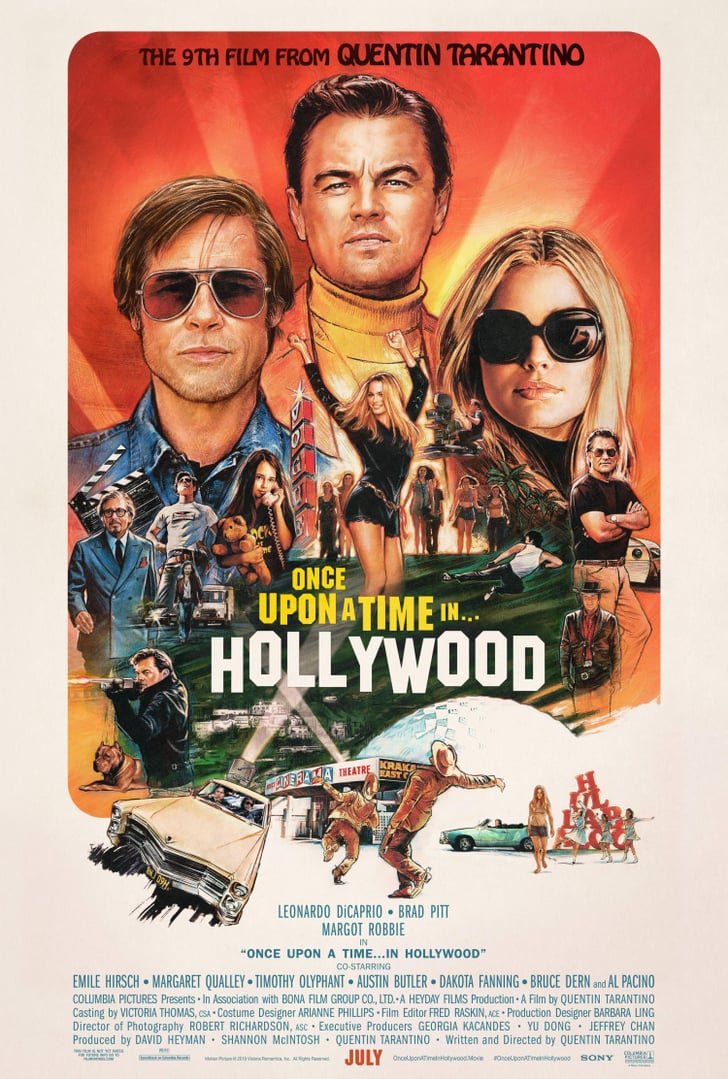
Movie Review: Once Upon a Time in Hollywood …

Quentin Tarantino’s films for me are a hit or miss affair, some I adore, some or passable, and with some my suspension of disbelief is shattered rendering them pointless. Of the nine movies directed, so far, by Tarantino, my favorite three arePulp Fiction, Inglorious Basterds, and now Once Upon A Time in Hollywood ….

Once  is centered on the relationship between Rick Dalton, (Leonardo DiCaprio) a television westerns actor whose career has begun to fade and his Stunt Double/Driver/ and friend Cliff Booth (Brad Pitt.) Set in 1969 a period where the former glory of Hollywood had faded away with the collapse of the studio system in the 1950s and just before the rise of personal filmmaking of the 70s that would usher in the likes of Scorsese, Coppola, Lucas, and Spielberg, With his western series Bounty Law  canceled Rick has turned to guest appearances on other shows, often playing the heavy, as his prospects continue to dry up while Cliff, dogged by an unresolved scandal, finds work as a stuntman difficult to book. In this dying and decaying period with the blush vanishing from the Free Love Hippie movement Rick finds himself suddenly neighbors with Hollywood’s latest Golden Couple, Roman Polanski, still riding high from his smash success Rosemary’s Baby and his actress/wife Sharon Tate. Throughout the film the audience is given three storylines to follow, Rick’s struggle to remain relevant and find his voice again as an artist, Sharon’s satisfaction in his art and at the prospect of becoming a mother, and Cliff’s course crossing paths with the dangerous and murderous Manson Cult that has taken up residence on an abandoned western movie ranch.  The film’s final act deals with the tragic events that for many shattered Hollywood’s illusions of safety and privilege in a rapidly changing culture.
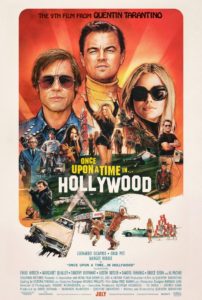
Tarantino has love been hailed and derided for his scripts’ ubiquitous cinematic and pop-cultural references and here with a subject matter firmly set in the middle of that melting pop he does nothing to restrain those impulses. That said it is clear that this reflects a deep and committed love for movies and for this film the references and the nods and the adoration deepens the story’s reality even as the director takes significant liberties with the historical record. Even as the plot drives relentless towards an evening that has become seared in popular consciousness for it’s brutality and its horror Once  never loses sight of the essential humanity of its characters, both fictional and historical. In the end the resolutions is not so much about cults and mad insane violence as it is about the deep emotional bond between two men who have lived entangled in each other’s lives.

This film is not for everyone. For some the long diversions into the minutia of the character’s lives, scenes that simply illustrate their lived experiences without advancing narrative of ticking off plot points may seem to drag and bore but for me I could spend several more hours following Rick and Cliff as they navigate a difficult friendship and the industry’s ever changing structure. Like most Tarantino films when the violence does erupt it is bloody, visceral, graphic, and even somewhat cartoonish, however if your knowledge of the real events on that isolated drive give you hesitation about seeing this movie, I certainly felt that, set your concerns aside. This is a love letter to a lost period, to an art form, and not a celebration, veneration, or even exploitation of Manson and his ‘family.’

 

Share

Terrific Art, Terrible Person

As a consumer what do you do when the artist is a terrible person?

In this day and age when less and less of what was once considered ‘private’ become public and common knowledge more and more anyone who is idealized and lionized is revealed to have not just feet of clay but dark black hearts as well.

I am not speaking of just the abrasive personality, the demanding and tyrannical nature of their relations with coworkers and assistants but deeds that are criminal and often unforgivable. I need not give a detailed listing of the recent and distant scandals that reveals some artists, performers, and creators to be truly reprehensible people.

What should you do?

There are no easy or one-size fits all answers. To each of us lies our individual moral duty and obligations and as shepherds of our own consciences we have to find the answers alone, but I can share some of what guides me and perhaps that might illuminate for myself and other how to approach the difficult and fraught choices.

I have to ask myself does the art endorse, reflect, promote, or otherwise give support to the actions that I found reprehensible?

Kevin Spacey is a talented actor and apparently, yet to be proven in a court of law, a terrible person when it comes his behavior. Does his art endorse the sort of actions he has been credibly accused of? It doesn’t seem so to me.

It is easier separate the artist and the art when the art lies completely apart from the artist’s reprehensible actions, Polanski’s Macbeth is my favorite film adaptation of the classic play and has nothing to do with the man’s criminal actions. I can enjoy the filmmaking, the artistry, and still support the position that he deserves the jail time he escaped.

Share

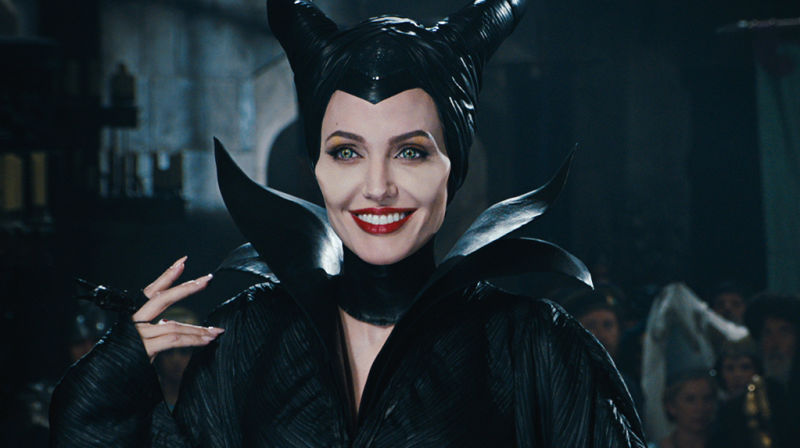
Movie Review: Maleficent

With the trailers for Maleficent: Mistress of Evilplaying in theaters and online prompting some interest from me I decided it was time to see the 2014 feature starring Angelina Jolie.

According to the Wikipedia entry the script for Maleficentwent through 15 drafts and in my opinion it needed 15 more.

The movie is a retelling of Sleeping Beautybut centering the story on the original’s villain, Maleficent. Beginning with a ponderous voiceover narration that suffers from all the worst aspects of prologs the film laboriously goes through the motion of establishing its central characters motivation but devoid of any real characterization. A good half of the movie is spent just establishing elements that have no emotional weight. This is made worse by sub-standard CGI that extends the ‘uncanny valley’ from characters to actual valleys, as the virtual sets never allow a full suspension of disbelief.

Perhaps most damning is that Maleficent herself is a terribly passive character. Yes they give her villainy a reason but she has no goals in the film, there is nothing that she is desperate to achieve and no consequence of failure. By the time the film rolled into its third act I found it impossible to care about the curse, the fairies, or anything at all taking place on the screen. And rather than give us an evil character with understandable motivations and goal Maleficentends with redemption making the transition to the sequel problematic. As with Alien 3you can only get to the sequel by insisting that anyone who did invested emotionally with the previous story were suckers. A sequel should never put the audience in the position of having to discard what they cared for in the previous installments.

Share

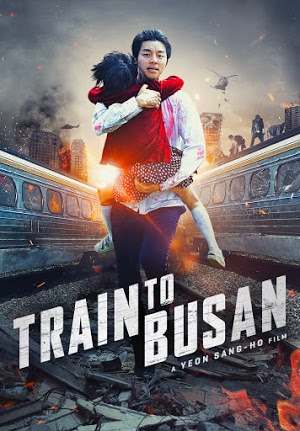
Revisiting: Train to Busan

Last night I completed a two-night re-watch of the South Korean zombie film Train to Busan.I originally reviewed this movie January 2017 when I had the good fortune to see it in a local micro-theater. At that time I gushed over the film and for Christmas my sweetie-wife gifted me with the Blu-ray edition. So, how does it hold up two years later? Have scales fallen from my eyes and have flaws now made themselves suddenly prominent in the bit of cinema?

No.

Off the top of my head and without digging deep into the history of zombie movies I’d place this film within the top three zombie movies of all time. Mind you I am speaking of quality and not importance. Train to Busan ranks along side the 1978 Dawn of the Dead  and 2004’s Shaun of the Dead as zombie movies that transcend genre and move into the realm of art. Where Dawn  using it’s time to slyly comment on consumerist culture and Shaun  uses it’s rom-com format to address life when it is unexamined, Train with its passengers slicing through the various strata of Korean society, comments on the nature of individuals and their relationship to each other, most exemplified by the estrangement between the lead and his daughter, but the theme echoes in interactions throughout the cast with no character, not even the self-serving and villainous business man, lacking in human depth and need for connection with those they love and cherish.

Re-watching the film I am thunder-struck by the performances. Not simply the leads, who are all fantastic, but every small part if played with the life and vitality of a serious performance. Simple expression and single lines of delivery suggest complex interior lives for characters that are never even granted to the honor of being named. Not to be overlooked are the amazing mime performances of the actors portraying the zombies. Twisting and contorting their bodies the actor exude a sense of inhumanness that turns what had become a tired and standard screen monster into something that again can truly terrify.

By the heart wrenching ending of the film I was thoroughly engrossed in the characters fully invested emotionally, Train to Busan  is a fantastic film.

Share

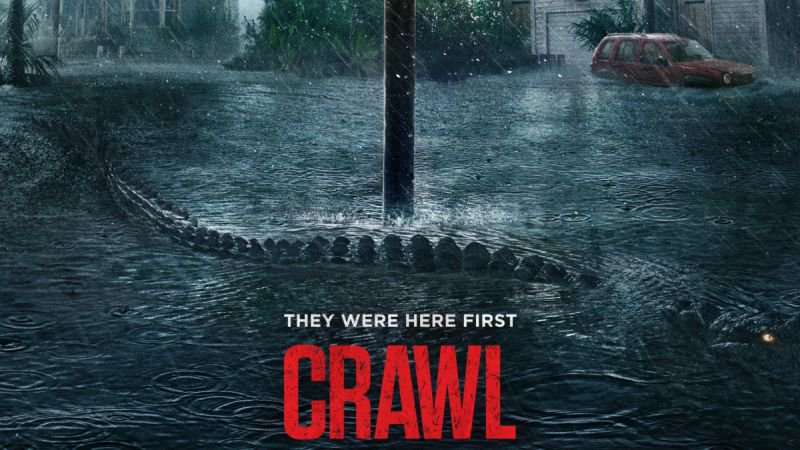
Movie Review: Crawl

There are horror film, monster movies, and creature features with significant overlap between these three sub-genres and this week’s releaseCrawl pretty much falls into the Creature Feature definition.

Set in a fictional Florida town of Coral Lake during a category 5 hurricane, Crawl  is about Haley Keller (Kaya Scodelario) and her father Dave (Barry Pepper) trapped in the crawlspace of their home while being menaced by aggressive alligators. If you have seen the trailers for the film then you have pretty much seen the entire premise and set-up. Clocking in at a slim 86 minutes Crawl  doesn’t waste much time, very quickly delivering it’s central character Haley into the jaws of danger and then escalated the obstacles throughout the movie. Focused on the dangers of drowning and deadly alligators the movie is light on character development, though it has some just enough to hang the barest story upon, and any deeper theme beyond survival is wholly absent from the script. With the exception of a few secondary and utterly disposable characters this movies rest entirely upon Haley and Dave as they struggle to survive.

In a high-concept movie there is usually one ‘gimmie’ that is asked of the audience, one element that if accepted though it flies in the face of reality allows the rest of the story to unfold organically and with suspension of disbelief. In the classic film Jaws  one has to ignore actual shark behavior but beyond that the film proceeds logically. With this film the one gimmie should be the alligator behavior but sadly the writers and directors instead ask the audience to accept impossibility upon impossibility particularly as the movies crashes through its third act action. Detailed and graphic tissue damage that the characters, both Haley and Dave, sustain from attacks are minimized beyond belief for the sake of keeping the characters mobile, active, and capable of impressive physical feats for even uninjured persons. The first time the filmmakers ignored the realistic effect of a compound leg fracture, I simply groaned and accepted it, the second I silently growled in frustration, and by the climax I needed to stifle actual laughter.  In addition to the grossly under-valued physical damage the characters nearly ignore, the third act also suffers from contrived coincidences with valuable and critical equipment literally floating to the characters in their moment of dire need. As an additional note, a category 5 hurricane has sustained winds exceeding 157 miles per hour and there will not be rescue helicopters flights in such conditions.

Overall I found Crawlunworthy of the timer I spent watching it and I took solace in knowing that as part of my weekly three movies from the theater chain’s subscription service it cost me no extra money. For others, with less sensitive suspension of belief, this movie may turn out to be a fun roller coaster ride, an exciting summer popcorn movie, but for me it was not.

Share

Movie Review: Midsommar

Writer/director Ari Aster the creative forced behind last year’s Hereditary  is back with his sophomore feature film project Midsommar. People who are looking for a horror film in the vein of slashers, monsters, and action are likely to be disappointed with Aster’s slow-burn builds, languid deliberate pacing, and long-take, carefully choreographic photography however those who are enamored with psychological and sociological themed horror such as the originalThe Wicker Man  are likely to find something on Midsommarthat will appeal to their tastes,

Midsommar  centers on Dani ( Florence Pugh) and her disintegrating relationship with Christian (Jack Reynor.) Christian is already searching for a way to end the relationship when a familial tragedy shatters Dani leaving her grief stricken and emotionally vulnerable. Six months later Dani and Christian along with their friends Josh (William Jackson Harper) and Mark (Will Poulter) are invited to vacation and enjoy the mid-summer festivities at an isolated commune The Harga in northern Sweden by their exchange student friend Pelle. Once at the Harga subtle cultural conflicts slowly building between the guests, now including a pair of romantically invested UK students, and the residents of the commune. The guests used psychoactive drugs recreationally while the residents consume them for religious purposes, Christian and Mark want to study the commune for their academic advancement, while for the residents their way of life is part of an ancient and sacred tradition, and Mark sees sexual activities as something of pure pleasure the commune considers it more of cycle of life never foregoing the goal of procreation. These conflicts are not expressed in boisterous loud scenes of shouting but rather build layer by layer a growing sense of dread as the two cultures move irreconcilably towards a devastating final reveal. Dani, unlike the others, starts finding a place and a people that see her emotional injury and, though often concerned about the mysterious events that hint at darker motivations and truths, she discovers an acceptance and even a form of healing that Christian has been unable to give. As the film shifts from the second act into the third the plot descends into revelations, betrayals, the final dissolution of Dani and Christian’s relationship and culminates with Dani’s final resolution the more traditional horror film aspects emerge.

With strong echoes of The Wicker Man, which for those of you in San Diego will be playing soon for one day only at the Ken Cinema, Midsommar  is a movie that invites deep consideration and that for many will haunt their thoughts long after the final credits have vanished from the screen. Gorgeously photographed by Pawel Pogorzelski the film manages a continuously building atmosphere of dread and unease in a setting that has no period of true darkness. It is the rare horror film, psychological or otherwise, that attempts much less succeeds at mood building without a heavy reliance on dark deep shadows. The score is a different sort of musical accompaniment and I do not have the required background in knowledge or terminology to adequately explain it but in terms of mood it fit perfectly, enhancing the film’s emotional subtext without telegraphing it in broad blatant techniques. (Though that aspect of my experiences was marred by the deep bass rumblings from the Imax auditorium next tour ours screening Spider-Man: Far From Home.)

The cast is uniformly terrific, playing each character with credible depth and complexity. I want to make a particular note of William Jackson Harper perhaps best known as Chidi on NBC’s hit show The Good Place. Once again Harper is playing a character with a strong academic nature but through the strength of the script and Harper’s with subtle but effective physicality, I never once had any echoes of his role from that show.

Over all I loved the film and it has elevated Aster into a place where I will go see his next film without any other inducements required. Midsommaris a film that is not for everyone, but if you found Hereditary  or The Witchcompelling viewing then you should waste no time in seeing this movie.

Share