Author Archives: Bob Evans

More Movies: Voice from the Stone

Voice from the Stone is a 2017 atmospheric horror film with Games of Thronesstar Emilia Clarke leading the small cast. It centers on Verena (Clarke) a young nurse that lives with families to help psychologically troubled children. She has come to the Rivi family is post war Tuscany to help with Jakob who has not spoken for several months following the death of his mother Malvina. Welcomed to the family by Malvina’s mother Lilia and more coolly by her husband Klaus Verena
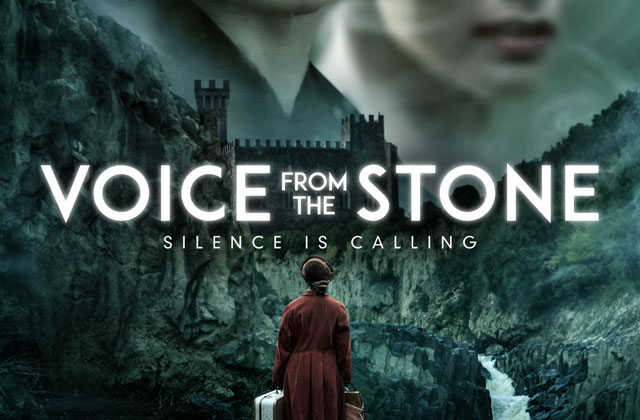
finds Jakob a difficult case and the young boy’s obsessive listening to the stonework of the ancient house intent to hear his mother’s voice from beyond grave layers a sense of insanity onto the boy’s silent condition. Finding herself increasingly attracted, in part due to Lilia’s prompting, to Klaus and with her attempts to help Jakob failing Verena becomes desperate to remain with the family in the isolated mansion.  Eventually twists are revealed and the story lands in a far too easily predicted conclusion.

Despite starring an actor from a global sensation Voice from the Stone received only a limited release in 2017 and was primarily a Video on Demand product. Currently streaming on the horror specialty service Shudder, Voice from the Stone fails to create a sense of building dread and inevitability essential for slow burn atmospheric horror and instead plays as a family drama that only in the final acts makes any move towards the unsettling and horrific. Adapted from an Italian novel I suspect that the source material is very much an interior story driven mostly by the Verena’s thoughts and suppressed emotional reactions and while that can be translated to film it is a particularly difficult task that has foiled more talented filmmakers. About a third of the way into this movie brief running time of 87 minutes I voiced the opinion that this could very well turn about to be quite similar to Henry James’ The Turning of the Screw another horror story that relies heavily on the psychological life of its central character but instead this story does come to a definitive conclusion and not a unsettling ambiguity.

Voice from the Stone failed to fully engage me as a viewer and failed to deliver any revelation that surprised or shocked and instead proceeded in a plodding manner to an ultimately unsatisfying conclusion. It is not a film I can recommend.

 

Share

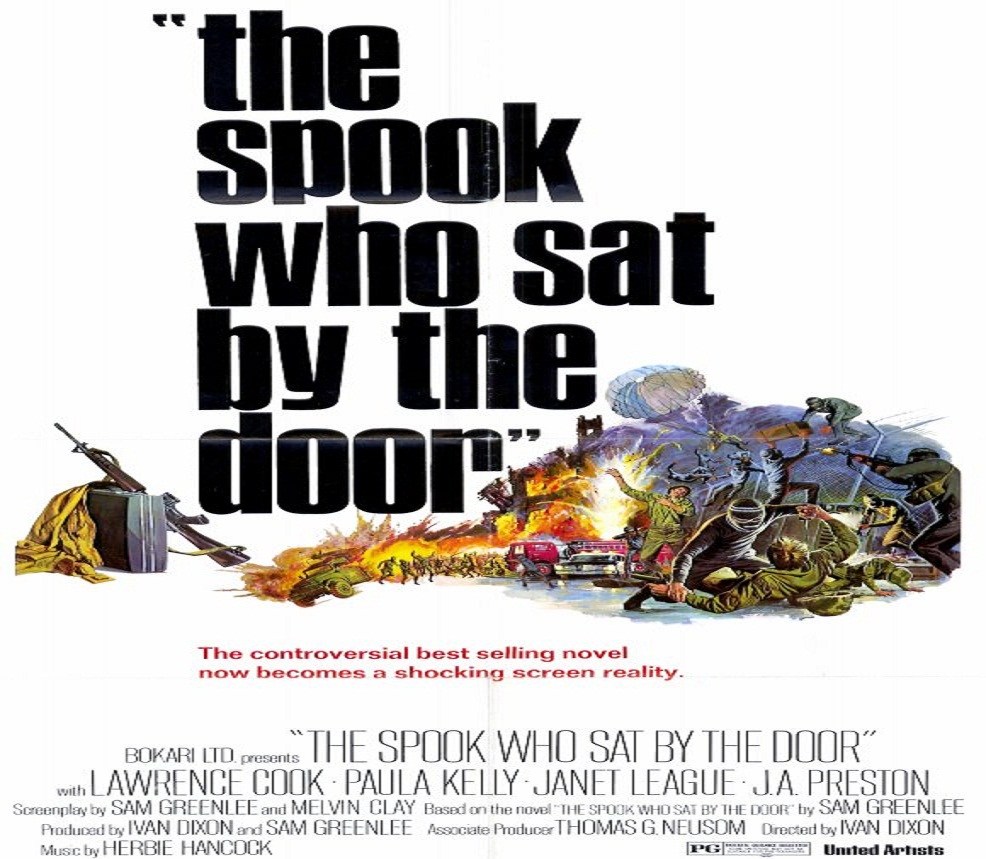
Revisiting: The Spook Who Sat by the Door

Last night I pulled out my DVD and re-watched the 1973 film  The Spook Who Sat by the Door.

The central plot of the film is Dan Freeman becomes the CIA’s first black officer but the processing is in reality nothing more than a stunt to lift a Senator’s sagging re-election prospects. After enduring years of racism and menial assignments Freeman resigns from the Agency and returns as a social worker to his home the mean streets of Chicago. However, Freeman has no intention of being a mere cog in the vast system and subverts his old street gang and utilizing his training from the Agency begins crafting a violent Black Liberation movement. Along the way his relationships with former lovers and close friends are tested by his radicalism and when Freeman’s devotion to his cause comes with a terrible price he doesn’t hesitate to pall in full.

Given the unrest, protests, and injustice currently flowering in our nation this film has been mentioned by several podcasts I listen to prompting me to revisit the movie. Laboring under budget and resource constraints the director, Ivan Dixon best known for his role as an actor in the sit-com Hogan’s Heroes, manages to produce a film that is tight, compelling, and without any fat. Watching the film, it is impossible to determine if the conservative directorial choices area  product of limitations or are an influence from Dixon’s long television career, either way Dixon’s makes the most of limited camera set-up and location to explore the characters and their conflicts. The only major weakness in the script is the late introduction of Freeman’s close friend Dawson, played with screen-grabbing presences by J.A. Preston. Given the emotional weight the character brings to the story and the powerful final scenes the film would have been better served introducing him in the first act along with a little revelation of Freeman’s personal history.

The film, though inducted into the National Film Registry for its cultural and historical importance, is not available on any rental or streaming service and to watch it you much, as I did, buy the DVD.

With the resurgence of racially challenging media in the wake of Get Out’s astounding financial success, there is a new adaptation of the novel in development as a series but it is unknown if this will be executed as a period piece or if the event will be transposed into the current day. I think it should remain a period piece, if for no other reason than as a faithful adaptation of the source material.

I have discovered that there is a documentary about the production of the movie Infiltrating Hollywood: The Making of The Spook Who Sat by the Door, but so far, I have been unable to locate a copy, damn it.

Share

How Harry Potter Undercuts Its Own Message

Let’s get this out of the way right up front, this post is not about Rowling recent and deplorable political/personal/aggrieved writings. On the subject of equality for transgendered people and her stance on transgendered people she is just wrong. As the British would say, ‘Full Stop.’ This about the stated theme of the Potter franchise, a ‘plea for tolerance,’ and how the text of the work itself undermines that goal.
The ideological conflict separating the heroes from the villains in Potter is a properly fascistic mentality that the value of a person is derived from the blood lineage. The villains of the work are obsessed with a purity of blood referring to all wizards with either muggle, i.e. non-wizard parents, or with one of the parents or ancestors that were muggle as ‘mudblood.’ The terminology makes the analog to real world racism evident as it is clearly derived from the slur ‘mud people’ used by white supremist. The very utterance of the word ‘mudblood’ is considered by the wider wizarding world to be offensive. The Death Eater in the franchise stands in very nicely as an analog for the genocidal monstrosity of fascist thinking that places individual human life on a scale of value determine by the accident of their birth. Harry, Dumbledore’s Army, and all the heroic characters of the work stand firmly against this poisonous ideology.
So far so good. The villains believe people’s inherent worth is determine by their ‘blood’ and the heroes stand for equality and intrinsic human value.
Except in the work to be a hero, to be a valued, noble, worthy character you still have to be the right kind of person, you have to be a wizard and that is solely determined by your birth.
Reading the books there are no admirable characters that are not also wizards. The plea for tolerance doesn’t extend to ‘muggles,’ represented by the stupid, greedy, cruel, and fat Dursleys. There are no ‘on screen’ muggles with good character and noble actions.
Yes, the story is centered on the wizarding world, the fight takes place in that setting and the wizard in defeating the Death Eaters are also protecting the muggle world from the genocidal ambitions of the deranged cult but the seven volume series there is room for a few moment where that humanity, nobility, and heroism could have been extended to the non-wizards of the world. With this omission that text makes the same mistake as its villains, though from neglect rather than malice, that value comes from the quality of your blood. Like all ‘Prophesized Ones’ stories the foundation states that to be the hero you have to be born to it but unlike most stories of that trope Potter extends the lineage requirement to all of its heroes.
I am not arguing that the central character or even on of the major recurring heroes needed to be a muggle. That would have never worked in the setting or world-building of the franchise. It is a story about wizards, the wizarding world, and the war that tore it apart. Its central character had to be wizards and a muggle in the center of it would have felt forced and inorganic to the structure, but there is a world of difference between forcing in a character to address this issue and having the sole representation of the muggle be the Dursleys.
I am reminded of the romantic comedy Sleepless in Seattle which suffered a similar failing. Throughout the film a recurring concept is the conflict between guy movies and chick flicks. The Dirty Dozen is used as the platonic ideal of a ‘guy movie’ while An Affair to Remember stands in for ‘chick flicks,’ with the commentary that no man ever really gets it. This is sloppy, stereotypical, and reductive. (Side note: An Affair to Remember was written, produced and Directed by men, so clearly men can ‘get it.’) At the climax of Sleepless Meg Ryan’s character is trying to get into the Empire State building to meet hank’s character and she makes a reference to An Affair to Remember to the guard who is stopping her. He comments it’s his wife’s favorite film and just like that Nora Ephron missed the chance to repudiate the stereotyping of men and women the film had engaged in. Had it been his favorite film the whole concept would have been undercut and the diversity of humanity celebrated.
In the same way Harry Potter didn’t need a main character that was a muggle all it need was when Harry and Company were on the run and hiding in the muggle world from assassins just one muggle that showed bravery and heroism helping Harry and the others to rescue the franchise’s central theme. An easy fix that an editor should have suggested and Rowling should have implemented.

Share

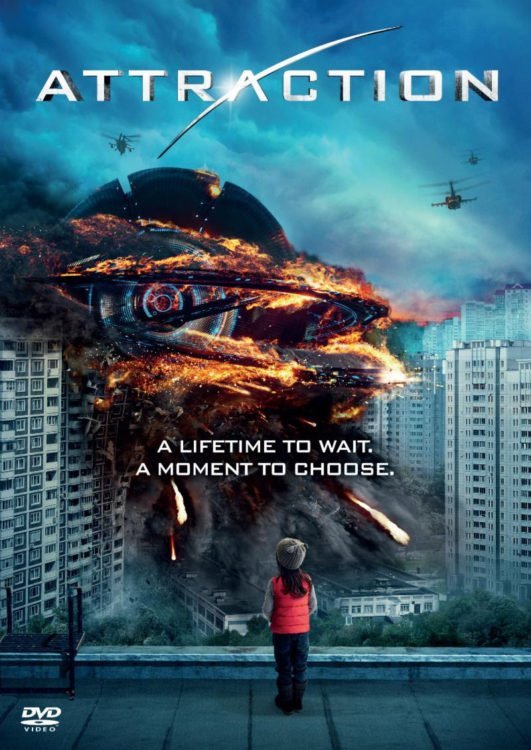
SF Movie: Attraction (2017 – Russian)

After seeing clips of this film on a special effects YouTube program my sweetie-wife and I became interested in seeing Attraction. This was the same show that sparked out interest in the WWII Russian movie T-34 which was silly but fun.

Attraction is about a large alien spacecraft that crashes to Earth causing massive destruction and loss of life in the Chertanovo district of Moscow. The protagonist is Julia daughter of s senior military leader from whom she is estranged over the death of her mother. When Julia’s friend is killed in the alien’s crash landing, she and her boyfriend, along with his street gang, become fixed on the ‘invaders,’ though the aliens have remained unseen and taken no overt hostile actions.

What follows is a decent SF movie that manages to avoid most of the over used tropes while exploring Julia’s relationship with her boyfriend, her father, and herself. The movie at point looks to be retreading the tired excuse that the aliens are ‘here for out water,’ but then manages to subvert that expectation. With decent acting, writing, and impressive special effects Attraction is well worth the two hours of screen time. We watched it in the original Russian language

Share

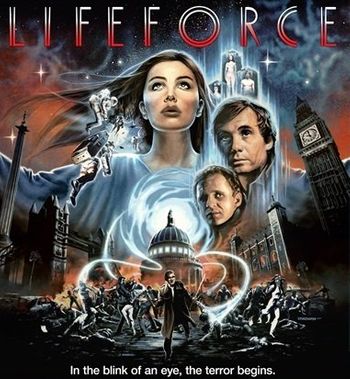
Lifeforce: 35 Years Later and Still a Terrible Movie

Sometimes I will revisit a movie I disliked and check-in if it was the movie that was bad or my take on it. Usually the movie is at fault and Lifeforce, currently streaming on HBO, is no exception.

Released in 1985 and part of Cannon Films’ attempt to expand into big budget cinema Lifeforce, adapted from the novel The Space Vampires, is about a derelict alien spacecraft discovered in the coma of Halley’s Comet by a joint American and European manned space mission. The commander of the mission Col. Tom Carlsen (Steve Railsback), and seriously as a friend of mine once clued me in you can pre-judge a film’s quality by the haircuts of the ‘military’ characters and Carlsen’s is terribly non-regulation. Carlsen and his crew discover three aliens with human forms within the craft and bring back to Earth. Something goes wrong and the European space vessel Churchill arrives in Earth orbit but itself now a derelict. A rescue mission finds everyone aboard dead but the three aliens, still in their suspended animation, unharmed and the aliens are brought down to ground. The aliens are of course not dead and ignite a sweeping plague of energy vampirism, and not the cool kind that you get from Colin Robinson, that threatens humanity.

With a budget of 25 million dollars and box office receipts of under 12 million, which I and two friends were part of, Lifeforce crashed and burned on its release gathering neither critical nor commercial success. In some circles the most memorable aspect of the movie are the numerous exploitive nude scenes by the actress Mathilda May. ( I am pleased to report that this did not derail the young woman’s acting career and still is currently still working with nearly six television and film credits.) Lifeforce is a movie that cannot make up its mind as to what it wants to be. At times it’s a sensual vampirism flick, at other times it’s an invasion of body snatchers paranoia movie and by the end it’s an apocalyptic zombie movie with a tacked on happy ending.

There is scarcely an aspect of this movie that works, not in direction, casting, writing, or production design does this film make any sort of sense. Though I will admit that the end credit score by Henry Mancini is a terrific march.

While Lifeforce has found a following as a cult film it is not something anyone really needs to watch.


Share

Perilous Pedestals

Placing people particularly artists upon pedestals is an action inviting disappointment and hurt. People are flawed and when some are exalted it nearly always turns out in addition to their better natures, they possess darker ones as well. Artistic people are no more immune to this condition than political ones, contemporary or historical.

Roman Polanski is a brilliant filmmaker and apparently a rapist preying upon little girls.

HP Lovecraft blazed a trail into cosmic horror that people still follow today and was a virulent racist and xenophobe.

Joss Whedon championed strong, complex female characters and was a philander and an apparent control freak.

Orson Scott Card created a series that plead for understanding of the other and called for the suppression of the rights of gay people by ‘any means necessary.’

The list, sadly, is nearly endless of artists and creators that wielded considerable talent, adored by many, and then revealed corroded souls. Which brings us to the current participant in this sad parade, J.K Rowling author and creator is the massive franchise Harry Potter and The Quest for More Power.

Rowling’s recent comments, tweets, and postings on her stance attacking the rights people of the transgendered community have provoked pain, suffering, and emotional trauma among not only the target of her tirade but among her devoted supporters many of which have grown to adulthood with her fictional creation Harry Potter.

I believe that the hurt from Rowling’s abhorrent stance is amplified by a couple of factors. One, the sheer scope and penetration of her creation into the popular culture. There is scarcely a corner of our nation or world that has not been touched by Harry Potter and the wizarding world. The sheer number of fans is simply staggering gifted her with tremendous reach and power to influence.

Secondly, people crafted a tremendous mythology around Rowling and her life. The single mom who became a billionaire and then gave away so much money to charity she lost that status. The repeated assertion that the core theme of the work as a plea for understanding and a denunciation of hate. (A theme that, in my opinion, the work does not fully succeed at, but this is not a place for my issues where Harry Potter artistically fell short.)

It is that second factor that I think powers the real hurt felt by the fans. The idolization of Rowling, her morality, and the power of her myth not only lifted the artist onto a pedestal but bathed her fans in a reflected glow of morality. That they shared in her goodness by being such devoted fans so when it turns out that she has darker less admirable beliefs that too feels as though it is reflected on her fan base.

Both glows were illusionary.

Your morality is your own.

Share

This Year is Lost

About 2014 or 2015 after a meeting of our writers group I stood out in the evening chatting with member as our socializing tends to take place after the read and critique sessions when one member advanced the proposition that in American politics it doesn’t matter who you vote for because ‘they’re all the same.’ I strenuously disagreed. While there may be no best candidate on any particular slate there is always a worst one. In 2016 I had no doubts, none whatsoever, that the worst candidate for President of the United States was Donald Trump.

Setting aside his obvious history of racism, sexism, and corruption, and those were all disqualifying qualities, nothing in the man’s life, education, or experience remotely qualified him for the terrible power and responsibility of that office.  No matter the issues and doubts I may have held with Hillary Clinton, Trump’s deficiencies disqualified him from any serious, rational consideration.

The US Government and economy is like a massive ship, possessing nearly inconceivable amounts of momentum and not something that can be quickly turned to a new course. During his administration this worked in Trump’s favor. The steady economic growth from the previous administration continued benefiting the current occupant of the office, and the corrosion from Trump’s corruption ate at the ship’s hull but had not yet caused it to founder.

The novel corona virus and the disease it creates COVID-19 proved to be a crisis far beyond the capabilities of the little man and his limited grasp of reality. His narcissistic ego kept him from recognizing anything other than how his own image was affected and his decidedly limited intellect prevented him from taking the actions might have saved thousands and reflected well on himself.

He wasted the nation’s lockdown, never intended as a cure or the crisis’ resolution, never putting the full force, might, and capability of the Federal government into action and instead cut the various states loose to compete and cut each other’s throat as tens of thousands died. Now, while the rest of the world claws their way back to some sense of normality, albeit with serious programs in place as they deal with fresh outbreaks of this fatal disease, the USA’s health, economy, and respect sinks under the waves.

For the United States 2020 will be a lost year. We aren’t getting back to anything that even approaches normal. Three vaccines candidates are in phase III trials now and if one or more of them succeed we will not have it on hand before 2021.

Great power and responsibility should never be handed to incompetent fools.


Share

Photos by the Water

Yesterday I took the day off from the day-job and spent a little time down at the harbor. Normally one the weekends I’m taking photos at the San Diego Zoo but with the pandemic we haven’t been making our trips there every Sunday. So to get in a little more photography I decided to see what I could shoot from shore.

 This is a replica of the San Salvador the first European Ship to sail into our harbor.


I particularly like this photo of a USCG helo in flight.


Someone left the collection of flowers and I thought they looked fantastic.


The Nautical Museum has added an American Submarine to their collection.


Children played in the Fountain Park.


Share

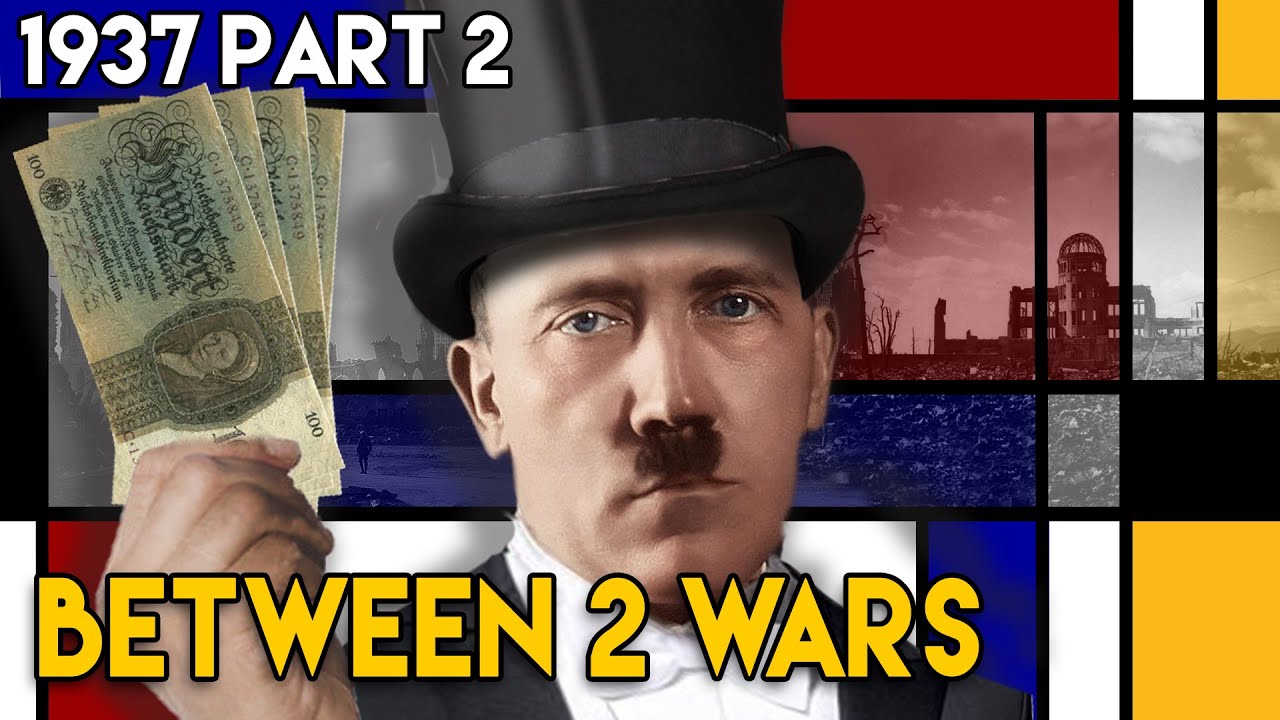
No, The NAZIs Were NOT Racist Commies

Sometime ago a friend sent me a link to a YouTube Video expounding on the tired, worn, and erroneous idea that NAZIs were actually leftwing with the conclusion that they were in the end the same as Communists just also racists.

That video was either deliberately or unintentionally deceptive. It pulled quotes from Mein Kompf out of context, relied heavily on ideology from the Ernst Rohm wing of the NAZI party a wing that was murdered out of existence during the Night of Long Knives and the video begged the question by repeatedly citing a book whose entire focus was that NAZIs were of the left.

There has been considerable effort by some on the right to popularize the idea that Fascism is of the left just as from the 1030s through the 1070s, and perhaps beyond, to portray Stalinism as a thing of the right with terms like ‘Red Facism.’ Both camps are desperately trying to disassociate themselves with their own murderous extremes but this is nothing but spin.

If you want an excellent argument why the NAZIs weren’t Socialists here’s a video for you.


youtube placeholder image

nbsp;

Share

Understanding Your Material

It’s interesting and instructive to compare two bits of film, though one is television, and their approach towards the military and their depictions of military men.

In Them! military characters confront giant ants created by mutation induced from the first atomic explosions. It is simply amazing to see the nuanced actions that are correctly capture in their bearing, their methods, and in their characters. One excellent example is when attacking a nest in the open desert and they are using bazookas as part of their assault. When you load that WWII weapon there is actually a wire lead that goes from the round to a terminal on the firing tube. I know this because I’ve watched training films from the war on how to properly load and fire the weapons. The characters in the movie correctly follow the weapon system’s procedure.

Nearly 50 years later in the iconic television series Buffy The Vampire Slayer the titular character Buffy is working with an elite special forces unit hunting down demons and monster in her hometown. When these best of the best warriors are briefed by a scientist on their next target thy have no questions for her and are silently dedicated to the mission and following orders. Buffy is the outsider and non-conformist with a string of questions and concerns.

This scene entirely misses the boat about what it means to be an elite warrior in U.S. service. These men are smart and those smarts are part of why they are elites. It is simplistic and reductive to think of special forces personnel as silent followers of orders.

The difference between the two productions likely comes down to the fact that in the 1950s nearly everyone knew someone who served and that close association informed the writing and production choices. For Hollywood of the late 90s and early 2000s people will actual services records in the production pipeline are likely to be rare to non-existent. Production companies get their writers and producers and directors from college and industry training with very few coming to film production later in life with the sort of life experiences that could help avoid these sorts of mistakes. It is also unlikely that anyone in the production system knows or knew anyone that served is such a capacity. All of us lead lives that are far too insular. Having veterans among the staff and having veterans review the material to help assure accuracy would be baby steps to getting such characters correct.

And the same is true for characters beyond those with military service. It is true for characters of religion, nationality, or ethnicity.


Representation matters.

Share