Author Archives: Bob Evans

Masks? We Don’t Need No Stinkin’ Masks

As with everything else in the current United States the simple logical and socially responsible act of wearing a mask in public had become a signifier of one’s political and tribal identity. In order loyalty-signal that one if a true and virtuous supporter of the President and all things beloved by Trump a mask in public must be forsworn, save for the township of Santee, CA where a KKK Hood is considered an acceptable substitute. Even in the White House and people who have direct contact with the nation’s chief executive, despite that the wearing of such equipment is about protecting not the wearer of the mask but the people that come into contact with, one does not wear a mask lest you provoke a Trump tantrum.

Of course, it has now turned out that one of the presidential valets who serves Trump his meals did not wear a mask and has now tested positive for the corona virus. Sources describe the president as ‘lava mad.’ I suppose it will be two weeks before we know if Trump has been infected enough to become ill with COVID-19 throwing this country into a political crisis on top of an economic crisis on top of a pandemic crisis.

Seriously, think about Trump falling critically ill. IN theory, on paper there’s no trouble if the president become incapacitated the Vice-President assume the powers of the office and things proceed, but this Administration does not exist in a theoretical ideal state. It is staffed with bootlickers chosen for their personal loyalty to Trump with motivations that do not line up neatly with the political class’s objectives. Our nation’s capital, already a swamp of backstabbing and camera hogging would turn so vicious as to make King’s Landing look like an afternoon volleyball game.

For the GOP, decades of degrading expertise, rejecting objective knowledge, and fomenting grievance politics over rational thought has come home to roost.

Share

Revisiting Previous Works

For various reason I pulled out of duty digital storage a novel that I had written ten years ago back in the distant annals of 2010.

This novel was the first attempt to set a story in the fictional universe where Vulcan’s Forge takes place. In fact, without that previous setting creation I doubt that there would ever have been a Vulcan’s Forge as the setting gave me the answer as to what the McGuffin and core plot elements I had been searching for.

However, that manuscript when presented to the first batch of beta readers fell flat and I determined that the flaws were so deeply seated it would require a complete re-write from the ground up and place it aside.

Thinking it might be worth revisiting that story I loaded the manuscript up on my iPad and began my re-read.

The flaws from 2010 are still there and the book would have to be written over again from page 1 to be salvageable. Moreover, I can see where I rushed through sentences and scenes hastily putting things down without taking the time to let them breathe and create the tone that would have been required to sustain the tale. Still, the core conflict, characters, and plot elements all work. This is a book I can make work and now with a decade’s more experience I can see how to do that.

I am also in the middle of craft a new outline for a new story. The couple of sentence description interested my editor and so I have at least two worthy projects to chase.


Share

Streaming Review: The Girl with All the Gifts

This film has popped up once or twice on my cinematic radar and yet time and again had managed to slip away unseen until this past weekend. I became much more interested in the film after watching the documentary Horror Noir about the intersection of horror media, principally film, and the depictions of black people in media.

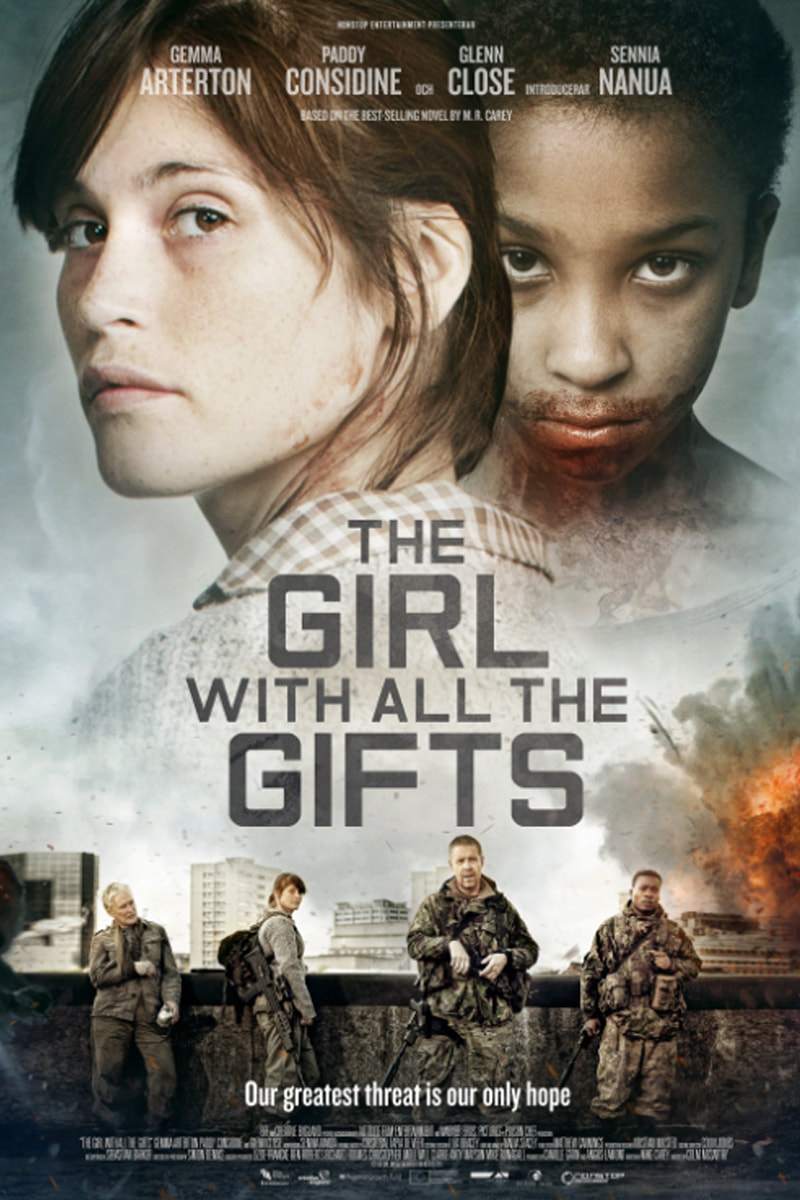
The Girl with All the Gifts is a 2016 post-apocalyptic ‘zombie’ film directed by Colm McCarthy from a screenplay by Mike Carey who also write the original short story and adapted the material into a novel of the same name. Glenn Close stars as Dr Caldwell a medical scientist searching for a vaccine against the fungus that creates the ‘hungries.’ (First rule of up-scale ‘zombie’ movies, never use the word ‘zombie.’) Caldwell works at a remote military installation where a number of children who are infected with the fungus but present as normal children most of the time are studied and dissected in the search for the vaccine. Gemma Arterton plays Helen Justineau a teacher schooling the class of children. Her star pupil is Melanie, played by Sennia Nanua with a skill and competence that promises a bright future as an actor if she chooses to pursue one. Melanie is fantastically bright, charming, inquisitive, and helpful except when she is taken by her feral hunger which can be aroused with a simple smell of human skin. When the base falls to a horde of hungries the three characters along with an Army Sergeant and another solider are forced to flee across territory abandoned to the hungries in an attempt to reach another secure facility near London. Along the way tension erupt between Caldwell need to use Melanie to produce a vaccine and Justineau’s growing affection for the bright friendly girl.

I placed the word ‘zombie’ in quotes not only because the film uses the term hungries but also that these infected are not living dead revenants. In theory these are simply human infect with a parasitic fungus that has usurped control undoubtedly inspired by the spores that does the same to some species of ants. However, in practical considerations the Hungries fall under the ‘fast zombie’ trope and are generally as mindless as previous cinematic generations of the undead. While the film attempts to create a plausible scientific basis for its unending hordes of hungries it is best to place to one side any actual scientific knowledge while watching the feature. Considerations for how quickly a mindless automaton would succumb to hunger and dehydration are typically ignored as are basic tactical operations that would render any well-armed force immune to the horde’s wave attacks. That said this is a really an excellent film that shares a lot of thematic components with Richard Matheson’s I Am Legendnovel. It is currently streaming on Netflix and while violent it does not luxuriate in the gore but rather focuses on idea of identity and character. It is well worth watching.

Share

Columbia Noir: Pushover

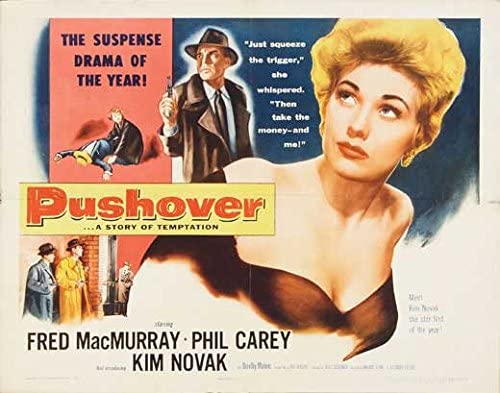
Continuing my exploration of the Criterion Channel’s hosting of a number of noirs from Columbia studios I watched Pushover from 1954. The movie stars Fred McMurray, a decade after his turn as Walter Neff in Double Indemnity, E.G. Marshall, Phil Carey, and introducing Kim Novak. Directed by Richard Quine and with a screenplay by Roy Huggins based upon two different stories. This is not the only time two source materials have been combined into a single screenplay though the best-known example of that process is probably The Towering Infernowhich was adapted from the novels The Glass Inferno and The Tower, this movie is a serviceable noir, better that Drive a Crooked Road but not quite on target.

McMurray plays police detective Paul Sheridan, who along with his partner Rick (Carey) is staking out Lona (Novak) the girlfriend of a man wanted for bank robbery and murder. Paul’s boss stresses that after Lona leads them to their suspect, he is to be taken alive so that he can disclose where hundreds of thousands stolen from the bank has been hidden. Paul become at first infatuated and then emotionally entangled with Lona and eventually hatches a scheme to, using his duty as an excuse, kill her boyfriend, and then take off with her and the stolen loot. Getting to this point in the film takes about half of the 88-minute running time and felt like a tire re-tread of Double Indemnity. Once Paul’s less than brilliant plan goes astray complication upon complication pile on his haphazard improvisations with escape becoming less and less likely.

During the set-up of this movie I was scarcely engaged with this cruder version of Wilder’s far superior film but once Paul’s plan derailed I became more invested. The nature of the plan’s failure was nicely established but without blaring klaxons announcing that establishment and I found it very credible that a person once they crossed the line discovers that were never the nice and good person that they had imagined themselves to have been. Still that didn’t justify the tedious and well-trod first half and aside from Novak most of the cast seemed to be sleepwalking through the establishment. Perhaps what makes Pushover unique as a noir is that Novak’s character is not a femme fatale and generates considerable sympathy because she is not the murderous schemer.


Share

Looking Back on Star Wars

Today, May the 4th, is the date that fans traditionally celebrate the Star Wars saga of movie.

Star Wars was released in 1977 into a cinema environment so different from the current one, COVID-19 issues excluded, that fans today could have a distinctly difficult time envisioning it. When the first film appeared, it was not the standard practice to open in thousands of theaters across the country and now the  world on the same date. Rather movies opened in perhaps a few hundred locations and then the printed moved from city to city making people wait for highly anticipated films. So, it was weeks and weeks after the movie’s premier before I saw Star Wars. I was already a science-fiction fan and thoroughly enjoyed the movie despite it being more akin to fantasy than any sort of SF. Few could have foreseen that this adventure film was going to radically change motion pictures.

1980 brought The Empire Strikes Back and proved that the audience reaction to Star Wars was not a fluke. Despite a darker theme a different director, and lacking a proper ending, the sequel proved as successful of the original and planted the seeds for a fan community with both good and bad actors and rampant plot speculations that we live with today.

Return of the Jedi arrived in 1983 and concluded the central plot of the three films. Though the weakest of the original trilogy with many of the characters reduced to simplistic versions and its climatic final battle a  thinly disguised commentary on the Vietnam war, one that misunderstand how that war was finally resolved, Jedi produced an emotionally satisfying resolution to Luke’s character arc leaving him in a place of emotional maturity and moral soundness.

16 years after the trilogy’s conclusion Lucas returned to theaters with more films set in the Star Wars universe, a set of prequel movies dealing with the backstory of Darth Vader and the disintegration of the Republic into the Galactic Empire with the movies The Phantom Menace, Attack of the Clones, and Revenge of the Sith. These films proved to be a disappointment. Abandoning the earlier, ‘lived in’ art direction from the original trilogy for a polished, metallic, façade that had no life of its own and with characterization reduced to nothing for the sake of plot propulsion. Still a younger generation of fans embraced the new movies and the franchise proved to be economically a powerhouse in two different centuries.

2015, ten years after the conclusion of the prequel trilogy and the sale of the property to Disney Studios, a new slate of Star Wars movies began with The Force Awakens. Set a generation after the original films the movie returned to the space opera roots of the franchise and repeated core plot elements of Star Wars while introducing a new cast. This was followed by the divisive but brilliant The Last Jedi a film that divided the fan base inciting heated, passionate commentary from admirers and critics of the new thematic ground it broke. 2019 saw the end of the Skywalker Saga with the release of The Rise of Skywalker a movie that was more chase and escape that character and theme. Along with the release of two standalone feature films, Rouge One a film that in mood had more to do with the 1970s that the original Star Wars and Solo another backstory and backfill installment the franchise took in more than 10 billion dollars in box office revenue no counting television, specials, shows, and a flood of merchandising but the long last effects of this amazing profitable franchise will not be found in the growing bank accounts or the endless derivative cinematic followers but in the changing technology of film production. Non-linear editing enhanced theatrical sound systems, photorealistic digital effects, and digital projection are just some of the breakthroughs pioneered by Lucas and his companies. No matter the varying quality of the films as cinema Star Wars and all of its spin-off and sequels have created a new and limitless world for all of us.

Share

Classic Noir: Drive a Crooked Road

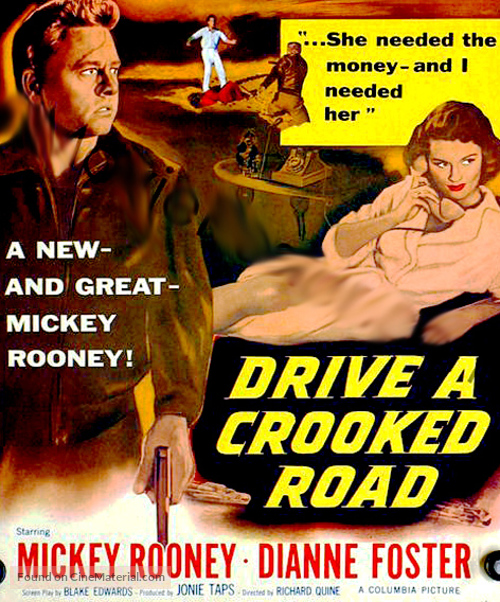
Part of the Columbia Noir series running on the Criterion Channel Drive a Crooked Road stars Mickey Rooney in a dramatic lead along with Kevin McCarthy a couple of years before his encounter with Pod People in Invasion of the Body Snatchers and Diane Foster in the role of the obligatory Femme Fatale.

Rooney plays Eddie Shannon a mechanic and a driver in local car races. After coming in second in a race Steven Norris (McCarthy) and his partner in crime Harold (Jack Kelly) single out Eddie as someone without a family or a girlfriend, perfect for their scheme. Playing upon Eddie’s social awkwardness and self-consciousnesses over his prominently scared face Barbara (Foster) seduces the naïve Eddie emotionally manipulating him so that he will be willing to assist the gang in a daring bank robbery that requires his impressive driving and mechanical skills.

With a brief running time of just 83 minutes Drive a Crooked Road doesn’t have the room to fully explore either that characters or the situation but rather races from plot element to plot element ticking off the elements of a story without ever fully engaging the audience. Directed by Richard Quine from a script by Blake Edwards and Quine this movie presents a serviceable premise that fails to deliver. An overreliance on under cranking the camera, lowering the frame rate artificially acceleration the action on screen, along with an intrusive musical score that doesn’t know when to back off and allow the actors to carry a scene Drive a Crooked Road ends up feeling cheap despite boasting an impressive and skilled cast. While the story is a classic noir set-up and pay off, he did it for the money, he did it for the girl and he didn’t get either the money or the girl, this film spins its wheels without ever reaching a destination.

Share

Other People’s Shoes

Many years ago, I had a roommate who was into geeky things this same way I am. One day, because odd questions are always coming to me such is the mind of a writer, I asked him if he had the chance for 24 hours to have his mind transferred into a woman’s body would he do it?

His answer was a resounding, explicit, and definite NO.

This surprised and shocked me. Given that the question is a fantasy, mind transference is an impossibility not a science-fiction that is possible, I would leap at the chance to, quite literally,  live, briefly, in someone else’s shoes.

I asked this question of several other male friends. (At the time there we no regular women as friends or otherwise in my life. I was working nights at a lab and had zero social life and my circle of even acquaintances had grown quite small.) All them reacted pretty much the same way, not even for a day would they live as another gender.

I think there are two principal drive factors in why they all refused to entertain even in speculation a willingness of cross that boundary.

First is our culture’s pervasive homophobia. The mere thought of having to experience even a slight sexual attraction, without acting upon it in any way, towards men must have seemed frightening.

Second is a recognition, even they were not consciously aware of it, how poorly treated women are in our society.

The idea of living briefly as another gender or race is a question that I ponder from time to time. Myself, I am insatiably curious and I always am wondering what life is like from another perspective. I find it difficult to envision a mindset that rejects that speculation.


Share

Streaming Review: The Grifters

I remember wanting to see the neo-noir back in 1991 when it played at a local art house theater. Somehow, I never made it to the theater and missed the movie entirely.

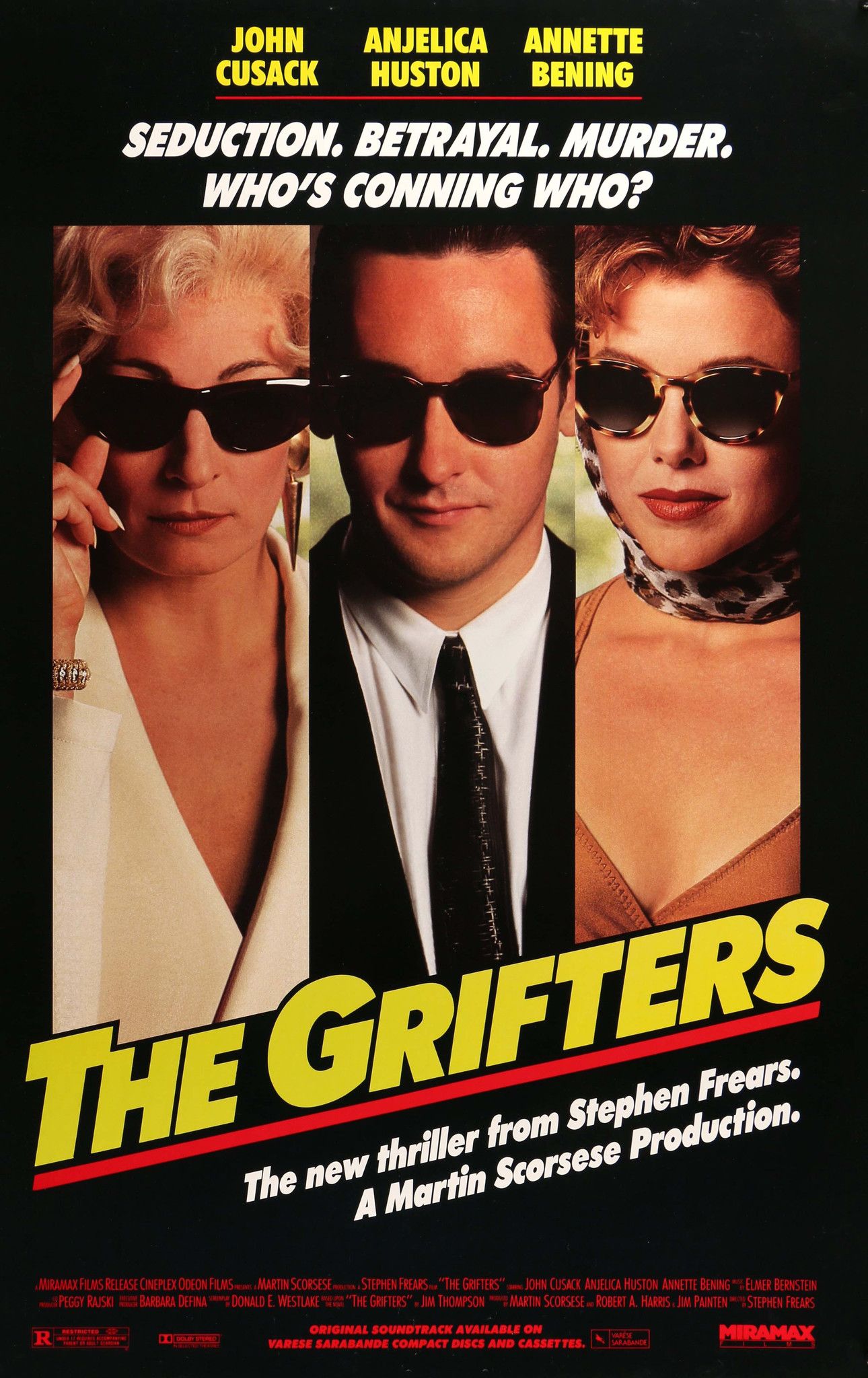
The Grifters, adapted from the novel of the same name, stars John Cusack, Anjelica Huston, and Annette Bening as con artists, i.e. grifters, Roy, Lilly, and Myra respectively . Roy is Lilly’s son but because she was so young when he was born he was passed off as her younger brother for most of his life. Lilly works for a major Maryland mobster, Bobo, traveling to racetracks and placing large bets to reduce the odds for longshot horses and is estranged from Roy. Roy is a short con artist, playing trick on marks that pay off quickly with elaborate set-up allowing him to avoid most form of legal entrapment and enforcement. Myra is a long con artist looking for a new partner and is involved with Roy though at the start of the story neither are aware that they are both grifters. Grievously injured by a mark, Roy lands in the hospital bringing all three of the character together and dynamic of the triangle are established. Lilly wants her son out of the racket and to go ‘straight,’ Myra wants to displace Lilly as a major influence in Roy’s life, and Roy struggles to find a way to satisfy both women while maintaining his independence. Stakes quickly rise and soon it becomes a matter of life and death over Roy’s stash of cash and his relationship with Lilly.

Directed by Stephen Frears and produced by Martin Scorsese The Grifters is a bleak, cynical look at humanity and the self-destructive nature of greed and the need to dominate. I enjoyed the film thought I found the ending less than fully satisfying. While the story and plot are both resolved I tend to prefer for a story to force a character to make a choice, a hard, difficult choice, rather than having an impulsive action produce unintended consequences that resolve the conflicts. This is not the same as a deus ex machina where an unestablished power or character magically removes the troubles but rather in this case a realistic and predictable outcome comes from a moment’s anger rather than a character making the decision to produce that final outcome.

Still, I am glad I watched the film before it finished its run on The Criterion Channel at the end of the month.


Share

A Prolog and Chapter One Are Not Interchangeable

I’ve started reading a new novel, no I am not going to name the book because as this is not a review site I only name titles when I love the work, and I am concerned about how the whole thing has started.

This novel opened with Chapter One and spent about 12,000 words on a set of characters that I realize we are unlikely to ever see again. The event of those pages clearly was important to the plot that unfolds in the rest of the story and set up many crucial details that I can see the author intends to use through the adventure. However, since none of our principal characters are around in these scenes this feel terribly like a prolog to me and not the opening chapter of a story.

I may have spent 12,000 words getting to know characters, understanding their emotional lives, and concerned about the troubles they face, but now all that emotional investment feels wasted.

This is related to the troubles with stories that end with ‘it was all a dream’ an its variations or sequels that undo all the emotional stakes from previous installments. (I’m looking at your Alien 3.)

Ideally when people engage with your fiction, by reading, listening, or viewing, they should become emotionally invested in the characters and the outcomes of their struggles. The resolution of the story and the plot and the return on that investment with catharsis or pathos being the final reward. When it ends as a dream then it’s like that check bounced and we’re left with nothing for the emotional currency we’ve spent. The check has bounced. In the case of Alien 3 after we’ve come to really care about Newt and Hicks in Aliens and desperately wanting for Ripley to save them both the sequel comes along and repossesses out victory making us into suckers for caring.

This novel has pulled me into these characters lives and now has waved a hand and said, ‘Don’t think about them anymore. Here’s new people to get emotional about.’ But I’m now burned and I am more likely to keep my emotional distance wary of the author is going to again steal characters away. Had this been labeled a prolog I would have been emotionally ready to learn things but not become attached. The poor doomed rangers at the start of A Song of Fire and Iceare not our main characters and telling us that it is a prolog allowed us as the readers to learn the vital information their story needed to tell us without playing us for suckers.

Share

Why Doctor Strangelove is a Better Anti-Nuclear Film Than Fail Safe.

Since the early 1950s fear of nuclear conflict has been a major element of both American culture and popular entertainment. Science fiction films such as The Day the Earth Stood Still or The Space Children were Movies with a message warning of the dangers of nuclear war.

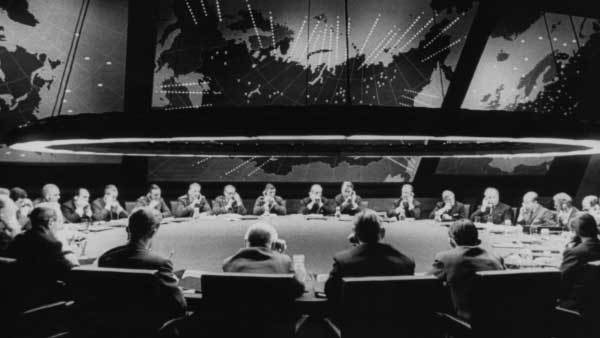
In 1964 two major films from two major film makers directly confronted the issues terrors and apprehensions The American people felt about nuclear Armageddon. The two films were Doctor Strangelove or How I Stopped Worrying and Learned to Love the Bomb and Fail Safe. The two films took radically different approaches to the subject with Doctor Strangelove being a farcical satire and Fail Safe being a bleak dramatic portrayal of an accidental nuclear exchange. Both films are critically well regarded with Doctor Strangelove having achieved a far greater amount of cultural penetration and relevance to this day. It is my contention that Doctor Strangelove is not only financially and critically a more successful film but a film which achieves its goal of delivering an anti-nuclear war message more effectively than the more serious and somber Fail Safe.

Doctor Strangelove directed by Stanley Kubrick from a screenplay by Stanley Kubrick Terry Southern and Peter George adapted from the novel Red Alertby Peter George started out as a dramatic interpretation of the novel But as Kubrick worked on the adaptation he found himself drawn to the absurdist nature of nuclear war and converted the project into a black satirical comedy.

In Doctor Strangelove American General Jack D. Ripper lost in paranoid delusions and obsessed with communist conspiracy theories launches an unauthorized nuclear attack on the Soviet Union by his bomber command. As the only person possessing the three letter prefix code which allows communications with the bombers Riper believes that once the administration understands that there is no hope of recalling the attack that The President and the Chiefs of Staff will follow up with a full scale nuclear attack annihilating the Soviet Union. Coordinating with the Soviets the Americans learned that the Soviet Union has constructed a doomsday weapon and that any nuclear attack upon the Soviet will trigger the weapon and end all life on earth. American military forces seize the base commanded by general Ripper and successfully obtains the three-letter prefix for recalling the bombers but one bomber due to battle damage does not receive the recall order proceeds to its secondary target and drops its nuclear payload. The film ends with a montage of nuclear explosion to Vera Lynn singing We’ll Meet Again. While the movie ends with the loss of all life on the planet it is at heart a comedy with broad over the top characters and absurdist situations drawn to exaggeration.
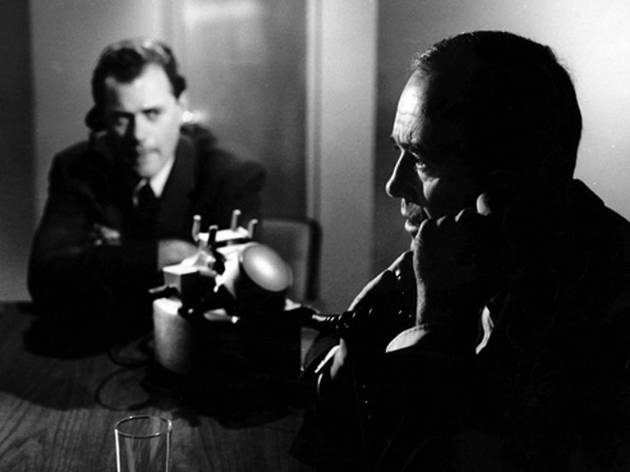
Fail Safe directed by Sidney Lumet written by Walter Bernstein and Peter George based on a novel of the same title by Eugene Burdick and Harvey Wheeler never veers into comedy or absurdity. In fact, throughout the movie’s 112-minute runtime I cannot recall a single scene which lighten the mood or had any comedic effect at all. The entire film is a dramatic intense pressure cooker of a story that never allows the audience a moment of easy breathing.
In Fail Safe American military forces are brought to a state of high alert with nuclear bombers dispatched to their fail-safe points due to a destressed and off-course commercial airliner. Co incidentally during the crisis a Soviet electronic warfare attack on the US strategic command called is a malfunction which sends an erroneous attack message to one bomber group at their fail-safe point. Once the bomber flight flies past their failsafe point their orders are such as to ignore all communications from the ground and continue on their attack. The president the Strategic Air Command coordinating with the Soviet Union are unable to recall the bombers and unable to destroy all of the flight with one bomber surviving to carry out its nuclear attack on Moscow. In order to prevent on all out nuclear exchange between the two countries the president offers up New York City to the Soviets ordering one of his own bombers to destroy the city to restore the balance. The film ends with the president asking the Premier of the Soviet Union, “what do we tell the dead?”

Between the two films Fail Safe on its surface looks to be more realistic, more grounded, more credible, but on any sort of closer inspection it’s clear that there are deep logical flaws in the plotting of Fail Safe that destroys its credibility. In Doctor Strangelove the administration is unable to recall the bombers because they do not have the prefix code for the encryption device that is used on all radio communications between Strategic Air Command and the bombers in the air this is an utterly credible and believable plot element.

In Fail Safe there is no encrypted communication system there is the simplistic order that once the bombers have proceeded past their fail safe point and begin their attack mission they are to ignore all communication from the ground as being potentially deceptive fraudulent forged attempts by the enemy to divert them. For purposes of a plot this sets up the dilemma quite nicely the bombers are on their way to attack Moscow and due to their orders, they cannot be recalled but it is a ridiculous and unrealistic set of orders that any military would ever implement.

During the crisis a presidential advisor advocates to committing to a full nuclear attack on the Soviet Union. His reasoning is that the Soviet communists would surrender rather than be destroyed in the hopes that at some later date they could still achieve worldwide communist revolution and domination. Even if we set aside the idea that the enemy would simply surrender rather than annihilate their opponents his advice is at odds with the premise of how the story works. Once the bombers have flown past their fail safe point they ignore all additional orders you come out divert them to new targets you cannot recall them you cannot declare peace and stop the war even if the Soviets in this story surrendered as the advisor is advocating they would still be destroyed because you cannot stop your bombers. The plot requires that the bomber pilot ignore orders to be recalled setting up an absurd command situation that no military in the world would tolerate. Once this logical fallacy is exposed the film devolves into a didactic moralistic speech.

The best stories have messages, they have themes that are important but when the message overpowers the storytelling when the story must be broken in order to serve the message then it is like a stage magician that has revealed how an illusion is performed all the magic evaporates and nothing is left behind. Doctor Strangelove a film which ends with the destruction of all human life on the planet never fails to entertain and place fair with all the rules of its own fictional setting. In the end it is the film that is remembered for its talent it’s comedy and its message.

Share