Monthly Archives: January 2026

The Hardest Aspect of Writing a Novel

.

Now, this is going to be different for different writers. Some will find the plotting to be the mountain that they must conquer; for others it will be the dialogue, and others constructing the actual sentences, or crafting interesting characters, even just finding the time to get the damned words down on paper or in the processor. I have often said that the hardest part of writing is butt-to-chair, fingers-to-keyboard—actually getting started with that day’s production of prose—and I stand by it. But today I want to talk about not the actual words-in-a-row challenge, but a different challenge: writing with the goal of traditional publication.

It is not the novel manuscript itself. Not to me. Outrageous Fortune clocks in at about 96,000 words, and I produced that volume in about six months. Once I hit the first 6,000 to 7,000 words, the work becomes self-generating, and I almost never had a manuscript die once that threshold was reached.

Ahh, but after that comes the really hard writing: the query letter and the synopsis.

The query letter should ideally be under 300 words; agents are busy and don’t have time for lengthy missives—rambling in your query won’t inspire confidence in your fiction. In that letter you need to give the basics of your work: genre and word count, a paragraph that conveys the story, the character, the conflict, and the theme, along with a closing that details your credits (if any) and why you’re the right person to have written this novel. Remember: you’re doing all this—displaying your voice and uniqueness as a writer—in about 300 words.

The synopsis has the benefit of needing only the story, but it’s still a maddening challenge. Now, in about 400 words, you need to tell the core story of your novel, the characters, the challenges, the themes, and exactly how it all resolves—ideally with some stylistic flourish. My novel required 96,000 words to establish who everyone is and why they act as they do. Hopefully, the characters come across to readers as believable people acting in a manner consistent with their nature. I have managed to produce a synopsis that is under 400 words and I think it’s good, but man, so much of what makes this story work is not in that bit of text.

Will it work? Only the agents can tell you—and waiting for their response is the second hardest thing about writing.

Share

Hoping Insomnia Will Not Disrupt My Weekend Plans Again

.

Last Friday, for reasons I have yet to comprehend, a nasty bout of insomnia struck. I went to bed, lay there with my sleep apnea mask on, and waited for 45 minutes to fall asleep. This is not at all like my normal pattern as I usually am fully asleep within 5 or 10 minutes of lying down. After that three quarters of an hour I rose, switched off the CPAP machine, removed the mask, and shuffled into my living room to watch YouTube videos. This killed another hour and finally I returned to bed and this time slept, but still rising out of that slumber at my appointed time.

I spent the entire Saturday groggy and listless. My plans for the evening were to catch a late showing of No Other Way since my sweetie-wife was uninterested in the film and thus off the board for a Sunday morning matinee.  This did not come to pass as my sheer exhaustion made the idea of a late showing a burden and the prospect of driving after midnight struck me as foolish.

This weekend Send Help opens, and I really hope to see it at a late-night screening on Saturday. Here’s hoping I can sleep in a manner that I am accustomed to.

Share

Pluribus: Season 1 Thoughts and Theories

.

I have finished all the episodes of Pluribus season one and all of the mainline companion podcast episodes and as such I am ready to expound on the series.
Apple TV

First off, I really liked it. Its premise, that a radical infection, induced by an alien signal, unifies nearly all of humanity into a single group consciousness that is compelled as a biological necessity to non-violence and an irrational reverence for life is unique and compelling. That of the dozen or so ‘survivors’, individuals who due to their genetic makeup are immune to the ‘joining’, our protagonist is a person who, at least in her former life, was quite the anti-people person and now finds herself as the agent to save humanity is also very compelling. Carol Stucka, played by Rhea Seehorn, is a different kind of hero and that is welcome. I look forward to season two and what it brings. I have no doubt that show runner and creator Vince Gilligan has an ending in mind, just as he did with Breaking Bad.

So, theories.

I think the Pluribus effect is an alien weapon system that has been targeted on Earth. The signal originated from a stellar system 640 lightyear distant, meaning even if we caught the broadcast just as it started the aliens that transmitted it did so when the Earth was in the year 1386, without the technology to receive much less interpret the alien signal and its recipe for an RNA virus. It was transmitted blindly for whoever and whenever the people of Earth became able to utilize it,

The Pluribus effect is pretty devastating, both in the short term, where nearly a billion people died from the sudden global disruption, to the long-term effects which look to be an extinction level event.

The effect renders the ‘joined’ or the ‘others’ go with whichever term your prefer, pacifistic and compliant to the transformed. They seek to satisfy every desire and whim of the people who are cut off from the group mind, even delivering weapons of mass destruction if that is what they desire. The ‘joined’ seem wholly and utterly incapable of engaging in violence even in self-defense. A planet so infected presents no threats.

The ‘joined’ are also unable, by biological compulsion, to willingly and knowingly take any action to end any life. About halfway through season one we learn that this prohibition extends to plant life as well, rendering the ‘joined’ unable to harvest anything for food. Once the planet’s population has been transformed, their food source is what was harvested and manufactured before the event and the bodily remains of those that have died.

This means extinction.

The planet, post-event, has a store of calories available for consumption and a population consuming those calories without replenishing that store. Consuming the dead only delays the inevitable mass starvation of the population but with a planet untouched and unmarred by warfare. A far better result than even with Neutron bombs if you want nice welcoming planets around but without their pesky inhabitants.

This dire situation is exacerbated by the fact that the ‘joined’ are also compelled to ‘share the gift.’ That is to construct the massive antennae and power-supply to transmit the signal onto new stellar systems dooming other civilizations to the same fate as Earth, With the fantastic resources required for such a project (neatly described in episode one before anything has really transpired), the ‘joined’ population is diverted from working on a technological solution to the caloric conundrum the event has thrust them into.

The final element that leads me to believe that this is a weapon system is the fact that Carol learned that the process of the ‘joining’ is reversible. So, if the originator or an ally of theirs became infected, it could be undone. Safety for the initiator of the infection, death for the infected, that makes for a pretty good weapon.

I will wrap up this post with what looks like an oversight and a scientific error in the series.

As I discussed above, the ‘joined’ seemingly are prohibited from taking any action that would end any life, but they are more than willing to administer antibiotics, the very word means ‘contrary to life’. Apparently, their prohibition doesn’t apply to single cell organisms. I think more likely is that the series writers simply forgot that life goes all the way down to single cells. (A very competent argument can be made it does not extend to viruses.)

The scientific error deals with a major plot element. The ‘joined’ discover that they can tailor the RNA strand to the un-joined, bringing them into the single consciousness but the process requires stem cells from the individual. Carol refuses to give them the consent to collect her stem cells and believes herself to be safe.

Stem cells are cells that can be differentiated into any kind of cell in the body, they can become nerve cells, liver cells, blood cells, from a stem cell you can produce any tissue of the host.

Okay, I can buy needing stem cells, it is a little bit of a stretch but not a terrible one. The ‘joined’ reveal to Carol that they are using her frozen eggs, human eggs not chicken, to create stem cells to bring her into the collective.

Umm, I cannot see any way for that to work.

Human egg cells do not have the entire DNA of their host. They have only half of the chromosomes which will combine with the half of chromosomes provided by the father to create the full set of a new human being. You cannot create a stem cell with only half of the chromosomes required.

But all SF shows have their errors, some more than others, and this one I can look past as I wait for season two.

Share

It Is Here — Now

.

The Science Fiction writer William Gibson is attributed with saying “The future is here now — it’s just not evenly distributed,” referring to the fact that on this planet exist fantastic technologies nearly beyond belief and people who scrape by burning wood as their only fuel source, existing in abject poverty. Well, the same is very true for the United States of America and fascism, the fascism is here it is simply not evenly distributed.

If you are not dark-skinned with an accent, not politically active in a manner disapproved of by the regime, not currently living in a locality flooded with masked armed agents of the state, then you do not feel the presence of the fascism. It is, at best, theoretical to you and at worst invisible. The fascism poisoning our government was not theoretical to Renee Good, it was not invisible to Alex Pretti, it was not something happening elsewhere to the more than 30 persons who have died in ICE custody since this Administration took power. That is compared to the 24 persons who died in similar custody during the previous administration’s entire 4-year term of office.

In addition to these deaths, some of which in my opinion are murders, plain and simple, people have been assaulted for exercising their First Amendment rights, legal residents have been snatched off the street by masked goons with neither uniform nor identification, homes have been violently entered without judicial warrant and some of the highest officials answered these violations of people’s rights with the mocking assertion that Federal Officers engaged in their duties have ‘Absolute Immunity.’

And what of the Gadsden Flag Waving, 2nd Amendment worshiping, radical Constitutionalist who insisted electing Trump was vital to protecting our God-given rights, particularly our 1st Amendment right to free speech?

Well, they’re busy mouthing the regime’s lies, slanders, and character-assassination of the victims, or they have slithered into silence, finding other ‘outrages’ to occupy their keyboard warrior ethos. It turns out they were quite literal with the Gadsden worship, they do not want to be trod upon but ‘go ahead and stomp on those people over there, we never liked ’em.’

Repressive violent suppression of the regime’s enemies spurs no cries of ‘dictatorship!’ in the same manner as expanding healthcare. It exposes a very simple truth.

Not for all of them but for far too many racism trumps the 1st, 2nd, and 4th amendments.

Share

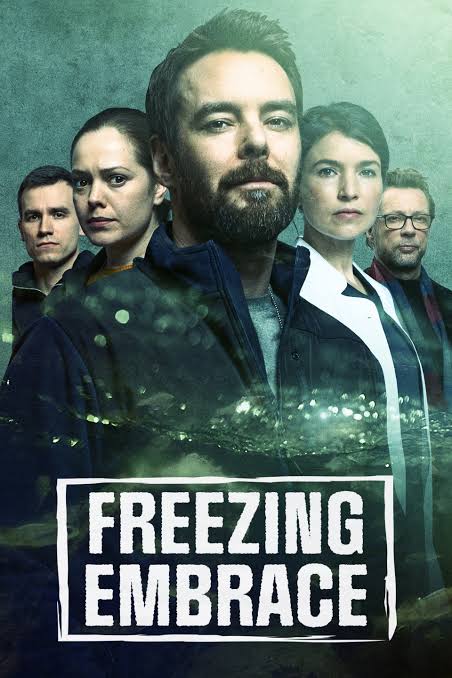
Nordic Noir Review: Freezing Embrace (Hautalehto)

.

Having finished Arctic Circle and Reindeer Mafia my sweetie-wife and I turned to a series new to us on the streaming service MHz Choice, Freezing Embrace (Hautalehto in Finland).

Solar Films

Adapted from a novel by Christian Ronnbacka, Freezing Embrace follows Chief Inspecter Annti Hautalehto (Mikko Leppilampi) as he deals with a number of issues, the finalized divorce from his wife, his police chief’s potential slide into alcoholism, his best friend’s potentially unstable son joining the police force while a serial killer who targets and murders young men by drowning them in the icy river. As bodies pile up, the evidence more and more begins pointing to his best friend’s son, a skilled diver, as the murderer.

While I found Freezing Embrace less engaging than either of the other two series I mentioned at the start of the post, and despite in many ways it being a by-the-numbers drama of serving on a police force, the disrupted personal life, the troublesome superiors, the seemingly willful blindness of the national forces, the characters and performance kept the show from feeling routine. I was particularly impressed by Leppilampi in the series. He had been a supporting player in Arctic Circlewith a very different character and quickly with this series I wholly accepted Antti as a distinct person with nothing that overlapped with the character from the other show.

I did find it amusing that when the entire mystery has been resolved and everything about the murderer’s motivation laid bare that the plot for this season was, in fact, a serious, dramatic rendition of the plot of the original Friday the 13th.

Share

Sometimes You Miss The Obvious

.

I got a little feedback on the opening chapters of my gay, 80s, cinephile, horror novel and it caused me to see something pretty important that I had missed.

The feedback thought that the opening chapter needed a little more of the world and a little more of the character’s interior life. These were both fair critiques. In all honesty, when I wrote the chapter originally, I hadn’t formed a solid conception of the character and just what was going on. After all, this was the first time I had ‘pantsed’ a novel and those elements developed later. While in editing and revision I had taken care of plot details that would pay off later, because the character was now so well defined in my mind, I failed to edit to that image. So, I began revision but not fully rewriting the first chapter, opening up the main character’s thoughts so the reader met him more fully, and adding color and detail to the San Diego of 1984 that would be accurate and informative.

The character is gay, and the mid-80s, while better than the decades before it, still presented a strong homophobic culture which I utilized to reveal character—the ‘Chick Tracts’ left at his theater and other minor elements. Thinking about the Fundamentalist mindset, growing in power at the time as the nation sprinted towards Reagan’s 49-state sweep, and how it felt to be a gay man in that time focused my search for details that both reflected the world and how the character felt about them.

And that is when I realized I had missed something BIG.

The novel covers a period of time from June 1, 1984, through mid-July of that year and somehow, I managed to forget entirely about Pride, the remembrance and celebration of gay culture commemorating the Stonewall Riot with a march and often a lot of partying. Even if nothing takes place at the march and the character is far too entangled with supernatural threats to be partying, Pride is going to be a vital part of the background for those couple of weeks of the novel.

Now I am revising the first third of the novel, adding in the details and color of Pride week and its aftermath, making the novel better.

Share

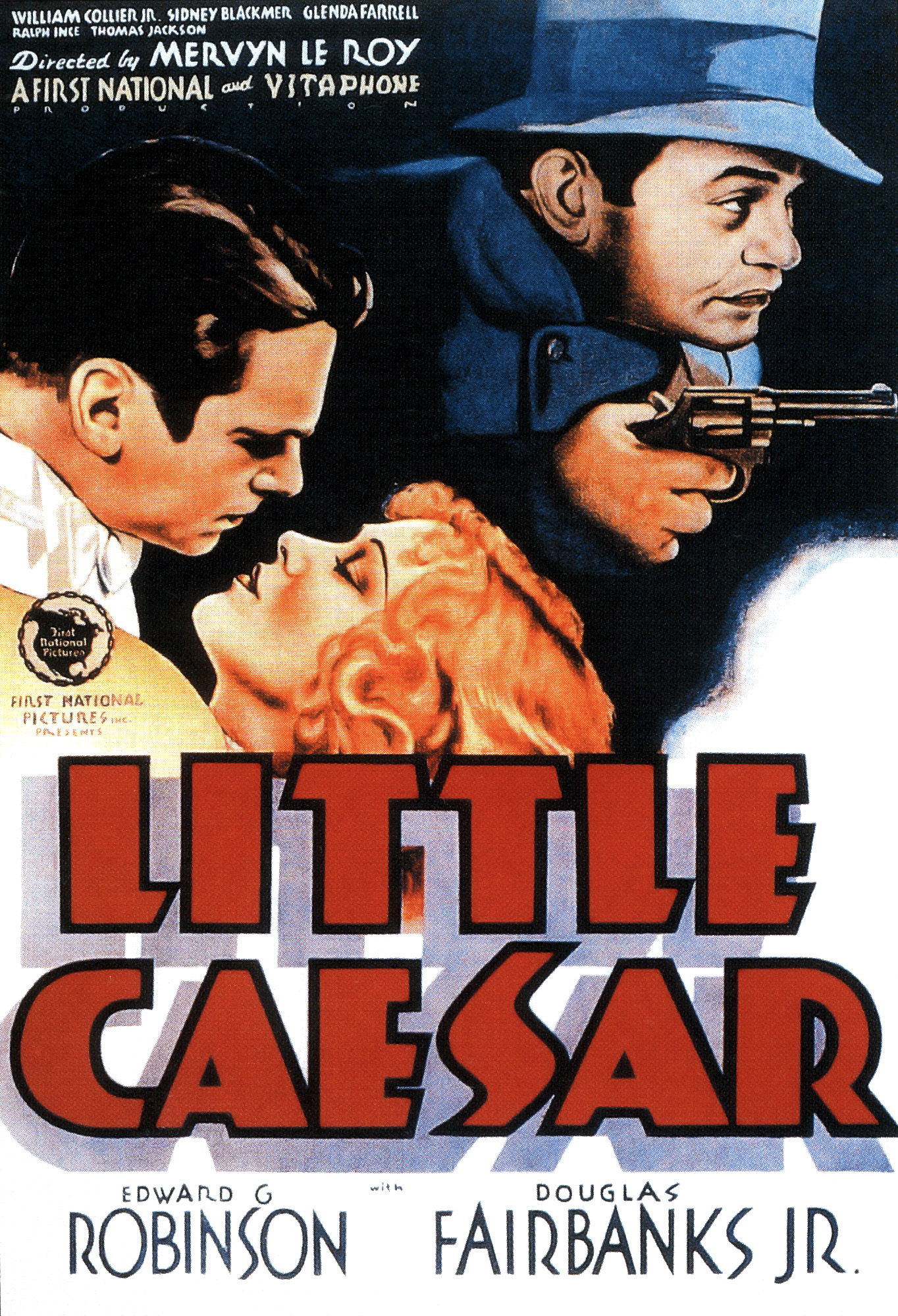
Classic Movie Review: Little Caesar (1931)

.

Last week I watched a YouTuber movie reactor watch Soylent Green for the first time. That film was the very last movie with Edward G. Robinson a film star whose career stretched back to the very start of the sync-sound era of motion pictures. After viewing the reaction, I had a hankering to watch another film with Edward G. Robinson and instead of pulling Double Indemnity from my collection I decided to go with the movie that launched Robinson as a star Little Caesar.

Warner Bros Studios

Released in 1931, Little Caesar is most definitely a pre-code movie. We meet Caesar Enrico ‘Rico’ Bandello (Edward G. Robinson) as he and his buddy Joe (Douglas Fairbanks Jr.) rob a gas station, in the process murdering the attendant. Unlike Joe, Rico has no traces of remorse as they eat supper in an isolated diner following the horrid crime. Ambitious for more than petty robberies, the murder isn’t even on his mind, Rico drags Joe to the ‘big city’ where he quickly joins a mob and begins his meteoric rise (isn’t it ironic that we use ‘meteoric rise’ when meteors are most known for falling) to the top of the city’s organized crime community followed by his equally swift downfall.

Little Caesar is part of the Blu-Ray boxed set The Ultimate Gangster Collection. With its release in 1931, this film is an example of just how quickly Hollywood adopted synchronized sound into their productions. While the quality of the sound still needed improvement, the production capability was there and aside from the occasional use of title cards as deployed in silent movies, Little Caesar looks and sounds very much like the films that would follow for the rest of the decade. As a ‘pre-code’ movie, Little Caesar is a bold tale that follows its lead character as he murders his way to fame and fortune with a downfall that was not engineered by the police forces of the ‘big city’ but rather by betrayal from a friend.

Of course, this was the movie that made a star of Edward G. Robinson, and while he did play gangsters again, most notability in Key Largo, Robinson escaped typecasting and his career stretched from the 1930s into the early 1970s. If you watch classic Looney Tunes cartoons and see Bug Bunny facing off against a gangster, that gangster is a parody of Robinson’s performance in Little Caesar, which set the template for the genre.

At an hour and seventeen minutes, Little Caesar had little time for a ‘realistic’ climb to greatness for Rico and instead swiftly moves the character along, only stopping for an occasional bit of detailed action. Aside from Rico and Joe, the characters are flat, serving more as elements of plot than living breathing people and one should not go into watching this film with modern sensibilities about writing and psychological realism, but one should watch Little Caesar.

Share

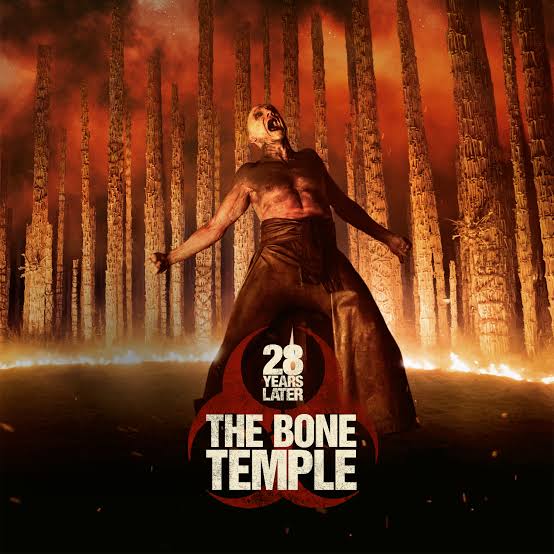
Movie Review: 28 Years Later: The Bone Temple

.

The newest installment in the 28 Days Later, 28 Years Later: The Bone Temple, directed by Nia DeCosta, opened this weekend, and my sweetie-wife and I attended a Sunday matinee.

Bone Temple picks up just a very short time after the ending of the previous franchise entry with that film’s protagonist, 12-year-old Spike, a captive of the ‘Jimmies,’ a tiny, deranged band of sadistic marauders led by Jimmy, a man who survived the outbreak since childhood and now believes himself to be the embodiment of Satan’s will on Earth.

Sony Pictures

In a parallel plotline the movie follows Dr. Ian Kelson, also a character carried over from the previous movie, as he continues his isolated life amid the grand ossuary of towering bone that he constructed to honor the dead. Kelson’s experiments with the infected lead him to a sort of friendship with a massive, infected man. When a member of the Jimmies spies Kelson, dancing with an infected, they mistake him for Satan himself setting the two forces into conflict for the film’s final act.

28 Years Later: The Bone Temple is a fine and perfectly serviceable follow-up to 28 Years Later. It is competently directed by Nia DeCosta and with a script by Alex Garland, the originator of the franchise, that has no serious plot holes, consistent believable characters, along with moments of action, horrific violence, and humor. And yet, for all that the best praise I can give this production is that it is ‘fine.’ Garland, who so often explores large ideas and questions with his writing, think 2024’s Civil War,Ex Machina, or the mind twisting Men, does very little of that with this movie. The deepest theme I can pull out of The Bone Temple is that some people are good and try to be of service to others, some are bad and seek pleasure in the pain that they can inflict on others, and many, if not most, are simply trying to survive a cruel and indifferent world. This is hardly the sort of statement one would expect from the scriptwriter of Annihilation.

As a horror film, whatever that phrase might mean to you, The Bone Temple, for me, does not deliver. I enjoyed the film, but more as a drama and character study than a genre film. Mind you, a genre film can be a great drama and character study while delivering the terror, unease, and apprehension that makes for a great horror film. Midsommar is a terrific example of the film that does that, as does The Haunting (the original not the action movie remake.) The real horror that is presented in The Bone Temple is the horror that people do to each other, that people are the real monsters, but that has been a subtext of the zombie movie since its inception with Night of the Living Dead and this movie breaks no real ground in that regard.

The performances in the film are competent. Alfie Williams (Spike) is given far less to do this time around than in the last movie where his character and his choices drove the narrative. Jack O’Connell (Jimmy) delivers a perfectly by the book portrayal of the sadistic psychopath, but Garland’s script aside from a minor trait of actually believing he is the son of Satan gives Jimmy nothing that steps outside of the well-trod path of the cinematic psychopath. It is in Ralph Fiennes’ (Kelson) portrayal of the kind doctor lost in a mad world that gives the film its depth. It is from Kelson that we see humanity and humor and a truly unforgettable musical video performance.

28 Years Later: The Bone Temple is worth seeing, particularly if you are a fan of Ralph Fiennes, but I doubt that the film will linger long in your memory.

Share

A Fairly Pleasant Week

.

After weeks of working overtime and feeling the crush of massive amounts of work, I decided that my mental health required a break and this week I took off Monday, Tuesday, and Wednesday.

Now, these days were not entirely my own, but what appointments I had were short and not too troublesome. Monday required a visit to the dentist to have an impression made for the crown of my latest tooth implant. Thanks to the wonders of modern science this time I did not have to hold my mouth closed over a bunch of gunk as it hardened. Instead, they scanned the inside of my mouth with a laser-based measuring device and recreated the contours that way. Very cool.

Tuesday, I visited a speech therapist for techniques that might help control and mitigate the persistent cough that has pestered me for two years.

Wednesday, I took my Kia Soul to our local mechanic for a tune-up as the little car is just about to hit 100,000 miles.

At home during those three days I relaxed and worked on my query letter and I think I have had a breakthrough. The roughest parts of the letter, which is ideally kept to a single page of text, is the paragraphs where you actually pitch the novel. Until this breakthrough I had been focused on describing the plots of the novels I pitched, but I think this theme focused approach might work better. Here is the pitch for the current novel Outrageous Fortune.

In San Diego in 1984 Dave Ludendorff lives a charmed life and is a good man. In spite of being a gay teenager in the ’70s he has never been taunted, hounded, or beaten for his orientation. The arthouse theater he inherited, that Dave has made a sanctuary for the queer and the outcast, thrives. Even with the resurgent Moral Majority of Reagan’s America, his life is good, blessed with friends and health.

The facade of Dave’s life crumbles with the discovery of a film depicting his grandfather leading a human sacrifice, a ritual that brought Dave this preternaturally charmed life. Now, with his grandfather’s cult pursuing him and murderous ghosts unleashed, Dave uncovers that everything he understood about his life, and perhaps himself, is a lie. Only by uncovering his family’s buried secrets can he hope to survive.

The truth, however, forces a terrible choice on Dave. He can accept the benefits of that human sacrifice, preserving his charmed life, but with the knowledge that like his grandfather and father before him he is the sort of evil man who profits from the suffering of others. Or he can destroy the cult, naively face the world without supernatural protections, enduring “the slings and arrows of outrageous fortune” and in truth become the good man he always imagined himself to be.

I am going to do a little more work on it and then we’ll see if this draws better results than the previous version.

Last Sunday was a particularly nice day here in San Diego and my sweetie-wife and I made our regular visit to the zoo. Because we are zoo members, we could ignore the nasty new regulations that are charging people for parking at the Zoo and Balboa Park. With the sun out and hardly a cloud in the sky I brought along my camera and snapped a number of pictures. Here are two, the first shows just how damned nice the paths through the zoo were that day and the second of a hippo, in greyscale, looking like something from a horror film.

Share

A Thematic Problem with The Red Shirt Issue

.

Yesterday evening, I came across a post from a friend online that expressed their middling reaction to del Toro’s Frankenstein prompting a return of my own thoughts that del Toro had worked so hard to make his monster sympathetic that no one of consequence died at its hands, a major deviation from the source text.

del Toro’s use of nameless crew to be killed in a thrilling and exciting opening combat scene with an unstoppable monster makes for a great opening to his luscious film but becomes hollow when the rest of the time the monster is presented melodramatically sympathetic and without emotional or ethical flaws. One could be forgiven for forgetting that the movie opened with mass murder. After all, they were literally nobodies.

Now, I have written about this before calling it his ‘Red Shirt’ problem. For those who are unaware, ‘red shirts’ refers to the often unnamed and wholly uncharacterized extras presented as security officers in Star Trek. These day players came onto the scene and in popular (but exaggerated) opinion died in droves.  The essence is still on target, they were essentially nameless characters brought on to dramatize the danger of that episode, a necessary evil of the time as no network program could go about killing its major and central characters. (This was decades before Game of Thrones would make it a drinking game.)

Western literature and oral tradition stretching back into prehistory is corrupted with a nasty little idea, that some people are simply born better than the rest of us. The nobility deserves their castles, their rich food, and the product of our labor, our bodies, and our lives because of the blue blood that courses through their veins. The ‘Chosen One’ narrative so popular in everything from religion to Star Wars is a product of this form of thinking. Luke and Aragon are good people because they were born to it, not from choice, not from making a decision to be good, but by their very blood. The force and the right to rule flows from their heritage and not their choices. We, the non-chosen, need to step aside and let out betters make the choices that will rule our lives. Our duty is to serve and to be thankful.

And here is the poisonous subtext in the ‘red shirt’ problem, it perpetuates this division of people into those worth and deserving of sympathy, consideration, and ultimately power from those lower, nameless people of the great ‘unwashed masses’ whose existence only matters in the moment that it impacts the monied and good-blooded people worthy of names. There are your ‘betters’ to whom you must defer with titles such as my lord, sir, mister — and to whom you must pay your obedience or suffer the lash and then there is everyone else, ‘red shirts’ to be used and discarded either on the battlefield or the factory to advance the lives and lifestyles of their ‘betters.’ The subtext of nameless victims in horror and action movies is that some lives are inherently more valuable than others.

“Red shirts” are not only a lazy and cheap play for a short cut to dramatic stakes, the practice subtly subverts the egalitarian ideals that all lives are valuable regardless of the accident of their birth or their importance to any particular narrative by regulating some characters to nameless and forgettable disposal.

Share