Category Archives: Movies

Movie Review: Hotel Mumbai

Based on the terrorist attacks launched into Mumbai November 2008 Hotel Mumbai, is a taunt, emotionally draining film reliving those attacks from a very personal character oriented point of view. As with any narrative film that is ‘based on real events’ or a ‘true story’ it is important to understand that fiction film is a terrible way to learn anything about history. What really good historical film can do is capture the emotional reality of an event, a place, or a time, allowing audiences to connect as human beings to the people who lived though the depicted events and hopefully come away with a better and more empathic understanding of what those events meant.

With the exception of the Raj Hotel’s chief chef Oberoi, played perfectly by Anupam Kher, the characters of the film are either entirely fictional or loosely combined from multiple sources however the characters themselves were not given and significant ‘Hollywood’ treatment and allowed to exist within a sphere of action that retained a strong sense of reality about them.
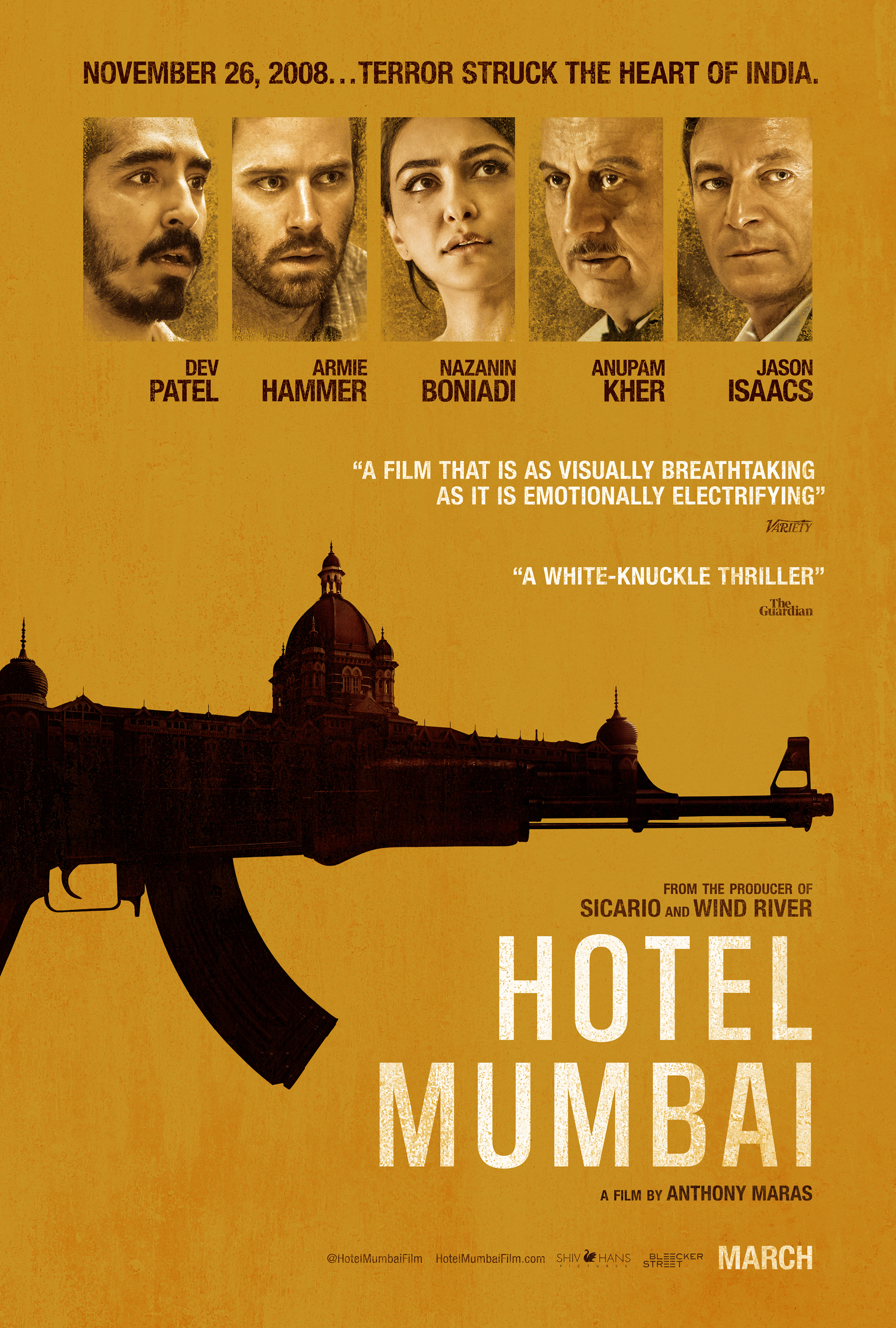
For those unaware of the history on November 26th 2008 a terrorist group, the Lashkar-e-Taiba, launched into Mumbai a series of murderous attacks. Arriving by boat they coordinated across 12 locations attacking crowds and landmarks with gunfire and explosives. The series of attacks lasted three days until November 29th when the last of the terrorists was killed. Killing 166 and wounding over 300 the Mumbai attacks represents one of the worst and most prolonged terrors incident. Lashkar, unlike many other Islamic-inspired terrorists organizations, held the belief that taking ones life by one’s own hands was always sinful but that dying at the action of the enemy was a path to martyrdom. These terrorists never intended to survive their operation and intended to kill as many unarmed, innocent people as possible before being killed by police or military. PBS’s Frontlinehas an excellent documentary from 2015 about the attacks and the critical role one American played in its planning and execution.

We witness the events of Hotel Mumbai  through the eyes of several characters, Arjun, a waiter and devote Sikh played by Dev Patel, The married couple David (Armie Hammer) and Zahra (Nazanin Boniadi) who have arrived at the hotel with their infant son and his nanny (Tilda Cobham-Hervey) and Vasili a rough Russian played by one of my favorite actors Jason Isaacs. This is not a story of unarmed people taking heroic action to overpower armed evil men. It should be said that the violence of the movie is handled quite expertly; never so graphically as to numb the viewers nor so distantly that it ceases to have emotional weight. There are heroes in the story and there is great tragedy but it is not one of thrilling action set pieces but rather horrific encounters with unrestrained hate and violence. The terrorists murdered with remorse and witnessing the recreated events I was moved to hatred of the attackers, terror for the victims, and emotionally wrung out as no one in the film has a cloak of invulnerability provided by neat story arcs and act structures. The film works, it is a powerful piece of art that conveys an emotional truth about these events while staying in some areas of the historical record. For example the movie compresses events down to a single night instead of the protracted siege that took place at the Hotel Raj, but the film’s deviations from the records are not of the sort that would make the project into propaganda or empty honorifics.

I can heartily recommend Hotel Mumbai if you are the sort of person who can endure a film that uncompromising depicts evil and expects a lot emotionally from its audience.

Share

Movie Review: Us

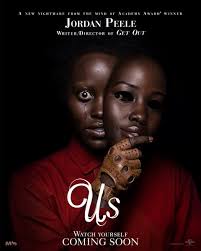
Jordan Peele, the writer, director, and producer of the fantastic film Get Outreturned to theater screens last week with another horror film, Us. Centered on an upper-middle class family during their summer vacation, Us  is a horror film that avoids the cheap and easy gimmicks often employed by lesser films, such as the repetitive ‘jump scare,’ in favor of disturbing images driven by magnificent performances and yet it does not achieve the same heights as get Out  leaving this film as modest enjoyable but subject to several disbelief braking elements.

Led by Lupita Nyong’o as the movie’s central character Adelaide Wilson and supported by Winston Duke playing her husband Gabe, Shahadi Wright Joseph as their eldest daughter Zora and Evan Alex as their youngest Jason the cast is uniformly fantastic. Playing real and relatable characters that draw in the audience’s sympathy their relationship as a family and as individuals powers the emotional heart of this film. Vacationing at Santa Cruz’s boardwalk, in an earlier cinematic decade the site of a vampire infestation in The Lost BoysAdelaide is unnerved by an ominous chain of coincidence echoing her childhood traumatic experiences at the amusement park. Gabe, ignorant of Adelaide’s experiences, insists on visiting the location and as evening falls tensions are running high and Adelaide is fearful of unseen forces when the family is suddenly confronted by doppelgangers of themselves and thrust into a fight for survival.

Much of Us  works beautifully. The characters feel real and their pain and fright are palatable. Lupita anchors the cast’s performances as the emotionally damaged mother giving Winston Duke, perhaps best know for his star making turn in Black Panther  to stretch his comedic chops as a very ‘Dad jokes’ kind of father. Midway though the movie’s second act the story opens up in an unexpected manner raising the stakes and the bring more mystery to the doppelgangers sudden appearance but the third act, while still engaging and superior to many horror films, is hampered by a exposition/info dump that stops the pace cold and pushes too many hurdles for my personal suspension of disbelief. I can’t be specific without venturing deeply into the land of spoilers but I can try to give hypothetical examples of the problems I encountered with the film final reveals.

Imagine a ghost story, going into the film as an audience we are already primed to suspend our disbelief in ghosts. It’s a ‘give’ we are ready to surrender to the filmmaker just from what we have been exposed to in advertising and trailers. Now, as our plucky characters grapple with a vengeful spirit we are suddenly confronted with alien ghost busters who also have been directing human governments and developments since the fall of Rome. This is asking the audience to simultaneously accept too many impossible things and breaks the reality of the story. Us  does not break things as blatantly as my hypothetical scenario but for me the final explanation for the events is far from neat and that I found impossible to accept. The ultimate resolution to Adelaide’s trauma was deep and morally conflicted, I loved that, the grand explanation for the doppelgangers and the wider canvas to story painted starting in the middle of the second act failed for me. Overall Us was an enjoyable film, a cut above most horror movies, though that is a low bar, but not as satisfying as Peele’s masterpiece Get Out.

Share

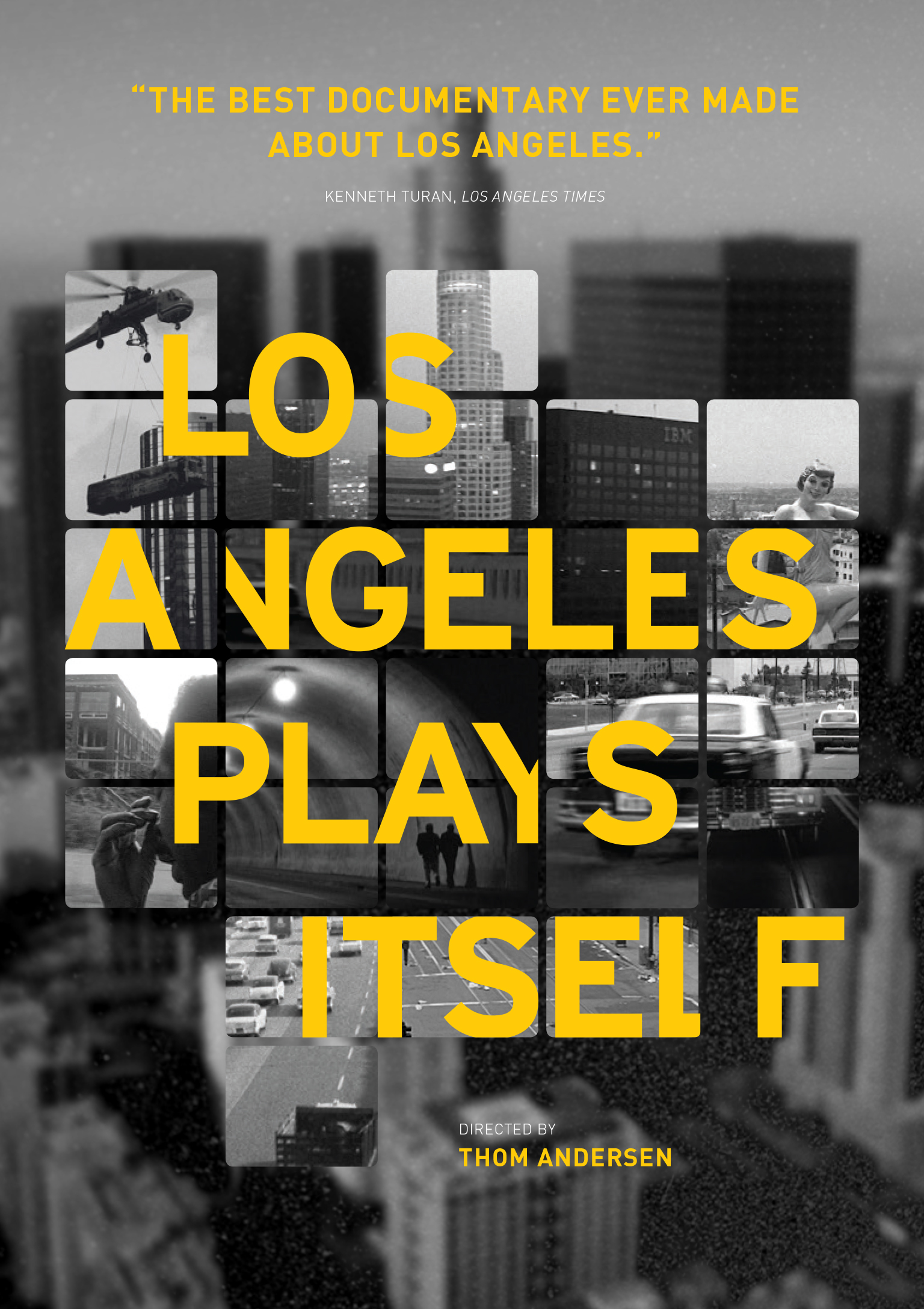
Documentary Review: Los Angeles Plays Itself

Over the weekend on the streaming service Kanopy, in installments, I watched the massive documentary Los Angeles Plays Itself. Released in 2003 and with a running time of nearly three hours (how many documentaries have an intermission?) Los Angeles Plays Itself is a video essay and love letter to the filmmaker Thomas Andersen’s home city.  Utilizing films clips from movies as famous as Chinatown and Sunset Boulevard  but also as obscure as independent art films from marginalized communities and early 70s horror films such as Messiah of Evil  Andersen focuses on the distortion and misrepresentations of his beloved home by the film industry over the decades. The film also carries Andersen’s undisguised feelings about the powers that be in the city and the destruction of local color and communities that the filmmaker mourns in their passing.

One of the amazing things about this film is the sheer size and scope of identifying filming locations from iconic movies throughout the history of cinema. Some are already well know, such as the Bradbury building whose use as a location stretches back to the 40s, but also other mansions and works of architectural art that has severed as the homes of bad guys, corporate raiders, and even as Deckard’s apartment in Blade Runner.

With a sharp eye and sarcastic tone Andersen exposed the illusions of Hollywood and the urban myths about Los Angeles that the movies have spread far and wide. For fans of film this is worth seeing.

Share

Movie Review: I Saw The Light

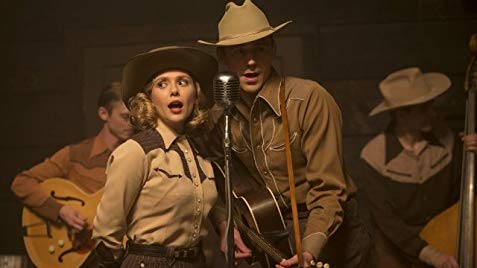
Released in 2015 and starring Tom Hiddleston I Saw the Light is a biopic based on the brief meteoric life of Country singer Hank Williams. Adapting the biography writer and director Marc Abraham has a clear love and passion for the subject matter.

With a recording career that spanned jus six years, Williams blazed a brilliant career that produced 36 hit records and influenced Country/Western for decades after his premature death at 29 from heart disease. The film focuses on his turbulent relations ship with

image copyright Sony Pictures Classics

Audrey Sheppard Williams his first wife and sometimes singing partner (played by Elizabeth Olsen reuniting these two MCU stars), the pressures of his sudden fame, his complicated relationship with his mother, and his battles with alcoholism.

Hiddleston, a native of England, convincingly adopts William’s Alabama accent and singing mannerisms. Unlike many biopics about singers there is no attempt have the star lip sync to the singer’s performances but rather Hiddleston and Abraham work to create the impression of William’s unique style while giving the actor full reign for a performance. Olsen, as Audrey, has a tougher performance to nail down. Audrey’s irritation and eventual divorce from Williams over his infidelity and substance abuse issues is fairly straight forward and even handed but and additional source of friction in their relationship is Audrey’s desire for a singing career of her own and the film portrays her talents as quite lacking and Olsen must perform well enough that you can believe she has the possibility of a career and yet poorly enough that it is also clear she can never achieve her dreams. Frankly this did not work so well for me. It is possible that no one in the writing or production were looking out to make sure her story was faithful to her voice and viewpoint. I do not know enough to have an informed opinion but as for the action I think Olsen held her own against Hiddleston and they had a real on screen chemistry.

Where the film fails and it dos utterly is the lack of a narrative.  Biopics are particularly tough genre to produce. A person life rarely falls neatly into a narrative structure and this is doubly so when the story has to encompass their death. While there are plenty of  interesting characters and scenes a sequence of events is not a story. When the credits rolled on the Blu-ray I could not tell you why this film mattered or what it was trying to say, and you must always have something to say. There needs to be a point as to why were spent two hours caring about these characters and how that reflects on life in general. The film point of view is firmly fixed with Williams but we never come close to understanding the man, his art, or what drove his creativity. Without deeper themes or a character study the film is hollow and I cannot recommend it beyond enjoying Hiddleston’s enthusiastic performance.

Share

Digital Formats Give Movies More Time in Front of Audiences

So, the other day I was scrolling through the offerings at my local AMC theater, considering which movie to use of my reservations for and as I saw a number of films that had but one or two screenings for the entire day I suddenly considered the changing technology and options of film exhibition.

Many moons ago I worked at a local theater as an usher. It was a multiplex and each screen showed the same film throughout the week and, except for the rare double bill, only one film screen in each auditorium. Once a feature no longer commanded enough people in seats to justify the screen space it occupied all week the film was broken down back into its component reels and shipped away. This is very different than today where a film, such asThe Upside  might play for a showing or two during the matinee hours and then a different movie take over the screen for the prime time evening audience and it all comes down to digital technology.

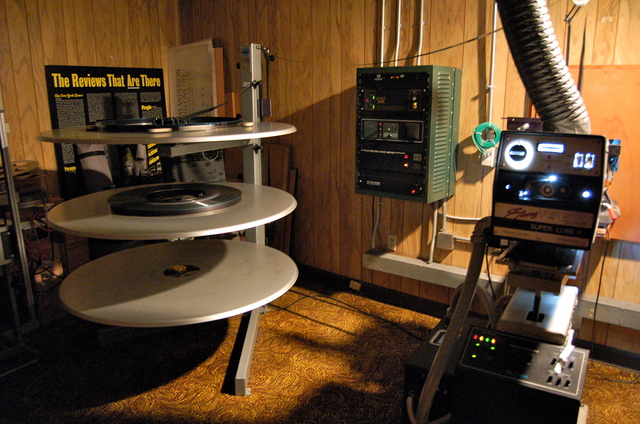
This is the projector and film platter for a traditional projection booth. That massive set of three platters hold the entire film that had been assembled from its individual reels. At the theater where I worked this was done by an assistance manager for an extra $75

http://cinematreasures.org/theaters/5240

Photo Credit Anthony Huneycutt

dollars per week. When Romero’s Day of the Dead  was released my friend, who was one of the assistant managers, assembled the print and we stayed later to ‘test’ it, screening the disappointing film for ourselves. Assembling the print onto the platter was a laborious and time consuming processes which dictated that you did not change out prints often or easily.

Here is the sort of hard drive that modern digital prints are distributed on these days. I took this photo during my tour of Paramount Studios and this has quickly become the standard for motion picture exhibition. It’s a lot cheaper to ship that hard drive than the reels and reels of a lengthy feature film, it involves a lot fewer employee hours to set up and project, and it is free from tampering my mischievous theater owners or employees. (I once worked for a theater manager who privately admitted to ‘editing’

photo credit R.M. Evans

the end of a film and sending it back out for distribution.) These hard drives are not only loaded with the film ‘assembled’ and ready to exhibit but also with a digital count that has been pre-authorized. The theaters can project the feature only as many times as authorized and no more. If a theater wants to hold a film over for more showing they have to contact the studio or distributor to have the hard drive reauthorized. (No more private screens like my friend and I enjoyed.) I suspect that these one a day showing of films that have been in release for months may be the theaters using every authorized screening before returning the drive back to the studio.

There are those who love film and maintain it has a look that digital has not duplicated but the chance for films to find audiences and for people to catch screening of movies that had missed I think is a wonderful thing.

Share

Sexual Assault in Dramatic Narratives

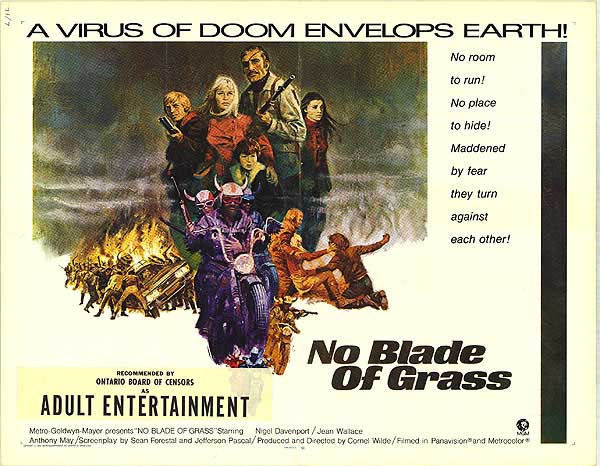
After watching No Blade of Grass I started thinking more about sexual violence in media because this film has a nearly perfect example of a gratuitous rape which serves no purpose in the narrative and I can use that to discuss why sexual violence is so often something that should be removed from a piece.

In the story John Custance, his wife Ann and daughter Mary are waylaid by evil men who knock out John, abduct Ann and Mary and rape them. John and the other in their band of survivors find the men, interrupt the assault, and kill them, Anne killing one herself. Then the band moves on, back on their quest for the safety of the potato far.

A scene in a narrative piece needs to fulfill a function the most common function for a scene include; Advancing the Plot, Revealing Character, Motivating Characters, and World Building/Exposition. It is not only possible but also preferable that a scene performs more than a single function but it should serve at least one of those goals. So let’s look at this sequence and see what functions it may fit into.

1) Advancing the Plot. This attack and its resolution in no way advances the plot. The characters quest remains the same after the incident as before and the attack doesn’t change their approach to their goals. There is no alteration to their methods that later effect their progress. The plot is utterly unaffected.

2) Revealing Character. The Point of View character for this film is John Custance and other characters, particularly given the movie’s brief running time, are scarcely explored at all. The assault reveals nothing new or hidden from the viewers. No unexpected reaction, no dark history revelation.

3) Motivating Characters. This is an old action movie cliché, the hero’s significant other is assaulted by the bad guy or his henchmen and the hero is finally propelled into action and the third act of the movie. It is sexual assault and major trauma reduced to a motivational excuse. In No Blade of Grass  the attack doesn’t even service that purpose. It takes place about the middle of the second act and the attackers end up dead adding no revenge element to the story. It should also be noted that the assault, while it produces some changes in the Ann and Mary, these changes are give only as surface treatment and are principally shown in how they affect their respective romantic partners.

4) World Building and Exposition. I think it is fairly likely that the filmmakers thought that the inclusion of this scene dramatized the cruel and violent world born of this disaster but that is a quite naive viewpoint. Rape is a daily reality. Stranger rape and gang rapes are a reality, one that women are quite aware of. If this is meant as world building then it sadly fails to understand how our world already works.

Major trauma should only be deployed for major story elements. Such real life terrors should never be used as a motivational gimmick to get a hero moving. If you need to rape someone to give the hero motivation, then make it the hero who is assaulted and leave side characters for side quests and lesser elements.

Share

Double Movie Review: No Blade of Grass & Bird Box

This was a pretty good weekend for the number of movies I have watched but sadly not for the number of good movies I have seen.

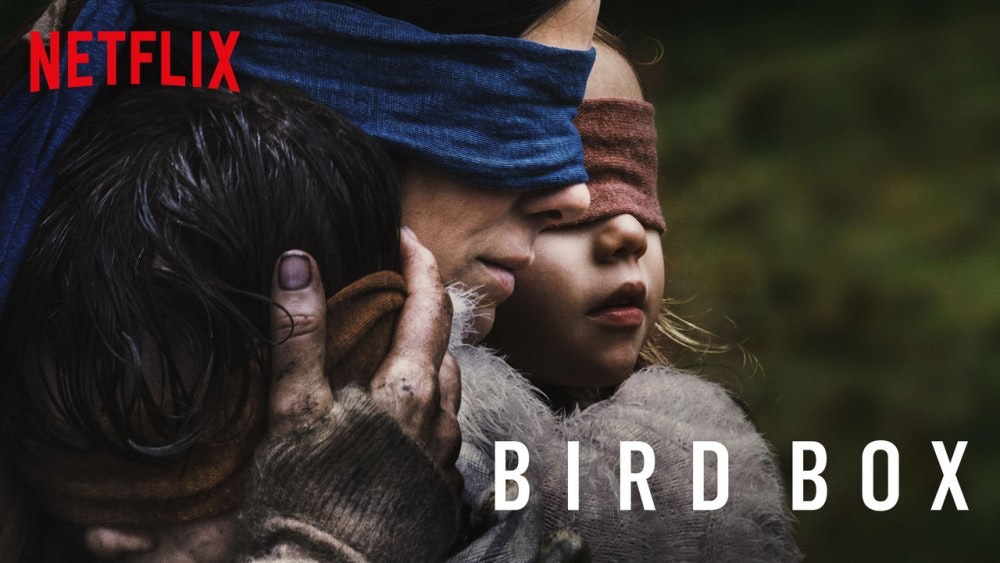
Bird Box   based on a novel. is about a woman, Mallory, played by Sandra Bullock, and two children, Boy and Girl, taking a dangerous river trip while blindfolded in order to avoid seeing a supernatural force that drives people mad, usually into suicidal behavior or depending on plot requirements religious mania to spread the truth of what they have seen coupled with homicidal behavior. Bird Box  operates on the level of plot and really nothing more and even there is fails as it requires suspension of disbelief that I was unable to provide. A person unskilled and blindfolded cannot row a boat for days down a river without ending up on the bank, not to mention running fully blindfolded through heavy growth forest, or accurately wielding shotguns while opposed by multiple attackers. Each of the several characters that begin their siege as the apocalyptic disaster unfolds has a specific plot purpose and once they fill that purpose they die making for route and unimagined writing. Too patly constructed, lacking any characters of depth, and demanding far too much suspension of disbelief Bird Box  fails every test of effective horror.

No Blade of Grass,  also adapted from a novel, is another apocalyptic tale, this one focused on environmental destruction and the attending collapse of society. In the film a virus or blight is spreading around the world that destroys all member of the grass family, that includes, wheat, rice, corn, and other cereal grains, leading to mass starvation and anarchy as the governments of the world prove incapable of meeting the existential threat. The story focuses on the trails of the Custance family who, with advance warning of the government’s plan to seal off London, flee with a friend to the safety of a large potato farm owned by the father’s brother in the north of England. Along the way they surrender civilized norms in their fight for survival becoming hard brutal people until reaching their sanctuary and discovering that their plans are upended forcing them into even more immoral choices.

Released in 1970 No Blade of Grass,  which I first heard about from a fellow panelist as we discussed environmental disaster SF stories, is an ambitious but ultimately flawed production. Partly the film suffers from too much compression in both screen time and the passage of time for the characters. With a scant 136  96 minute, and wasting quite a few of those with set up and exposition, and with a fair number of characters, the movies doesn’t have the running time to build, explore, and transform these character in an meaningful method, leaving the viewer to watch a series of scenes that only nominally follow a sequence but lacking in emotional impact. Further more the character appear to travel for only a few days and in that short time they become murderous and hard, transformations that lack any clear baseline, we hardly get a chance to see who they were before the crisis, and as such reinforce the impression that these were evil people all along. No Blade of Grass  required a more epic format and without it the film falls far short of its intended goals.

Share

Movie Review: Captain Marvel

Yesterday my sweetie-wife and I took a few hours out from Comic Fest, a local Comic/SF convention to catch the latest release from the Marv el Cinematic Universe: Captain Marvel.

I was touched, as I am sure many people were, when the flashing scenes features the heroes of the MCU in the opening logo was replaced with flashbacks to Stan Lee’s numerous cameo throughout the franchises.

Captain Marvel,  the released after the universe shattering events of Avengers: Infinity War  actually takes place in the past, 1995, making it the second movie, following Captain America: The First Avenger,  to establish and/or retcon history in the MCU. Centered on an amnesiac Kree warrior Vers, this movie is about one woman’s journey to discovery not only who and what she is but to firmly plant her flag about the nature of heroism. Chasing about Earth after

Captain Marvel (2019) poster
CR: Marvel Studios

shape-shifting alien Skrulls, Vers, played by the talented and captivating Brie Larson, teams up with SHIELD Agent Nick Fury, played with digital de-aging assistance by the incomparable Samuel L. Jackson, and learns about herself and the slippery nature of truth until she confronts and accepts her place in the larger scheme of things.

In previous posts I have ranked the MCU films into four categories and Captain Marvelfalls firmly into the mid-grade ranking along side with Guardians Vol2, Thor, Thor: the Dark World, Spider-Man: Homecoming, Ant-man  and Iron Man 2. It is a solid movie without major flaws and a talented cast that is engaging and talented but it lacks the breakout qualities that would elevate the film into either the Honorable Mention or Top Tier categories. Well worth a trip to the theater and almost certainly a future addition to my library Captain Marvel  is fun, fast, and not without worthy themes.

The movie is not without flaws, the overall plot is fairly standard for an MCU movie, the action while fine and well performed doesn’t break out into anything noteworthy, and the digital de-aging for Clark Gregg as Coulson, while better than the digit masks for Cushing and Fisher in Rouge One   came off as plastic and nearly plunged me into the uncanny valley. These are the principal reasons why Captain Marvel  landed as a mid-tier Marvel movie and an honorable mention or high in my personal rankings.

Share

The Most Pointless Debates

Any number of debate topics are pointless; the best known among these being anything concerning politics or religion. As an aside let me lay out in my mind the difference between a debate and a discussion. In a debate the goal to is present argument strong enough, well reasoned enough, and supported by enough facts that one party ends up conceding their position to the other while a s discussion is a dialog that does not possess conversion or ‘winning’ as a goal. Today religion and politics are often matters of core identities and people rarely surrender their identity for mere fact and logical construction and so discussion of religion and politics can be illuminating debates on these topics are often nothing more than unmasked futility. I would add to this short list of futile debates and relative merits of various television shows and feature films.

Beyond the traditional divides, Star Trek  vs. Star Wars these debates where someone tried fervently to get someone to admit that a film or series is good or bad, depending on the debater’s point of view, are sound and fury signifying nothing. Art is not objective, it is inherently subjective and those pieces that speak to us or do not speak to us do so on levels that are effective by our known reason and our, often unknown, biases. It is possible to discuss why a film works or what made it so appealing to you, but climbing the mountain to getting someone who hates a movie to flip and love it is a fool’s errand. This is a debate I have witnessed over and over again. There have been films I loathed and friends have tried to convince me we worthy of love and there have been film I loved that friends have to get me to dismiss as garbage. It doesn’t happen, the heart wants what the heart wants.

Lately, as these debates have moved on line, the futility of these debates has grown with their number. I have watched as member of communities engaged in vicious and utterly meaningless debates over recent genre films. Often these debates are deeply heated because the movies themselves have become stand in for political positions and as such tokens of political identity and to love or hate a movie becomes inescapably bound up with one core sense of self. The participants in these debates rarely are aware that they are in fact debating matters of personal identity and descend into hateful attacks as the personal stakes continually rise.

I do not participate in these on line debates. I am more than happy to discuss movies, I adore movies, but I will never try to convince you that need to think of any film the same way I do.

My god if everyone did that film would be boring.

Share

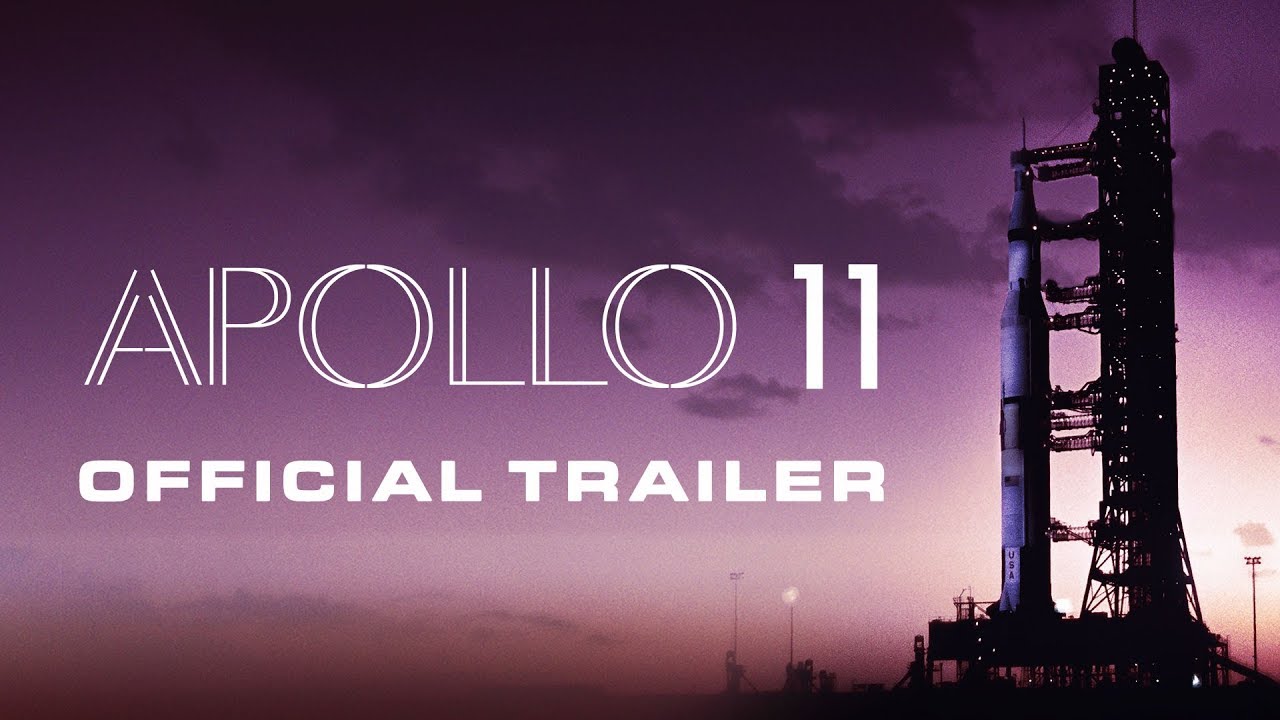
Movie Review: Apollo 11 (2019)

This year is the 50th anniversary of Apollo 11’s flight, landing, and return from the moon. In celebration and in partnership with NASA a new documentary is currently playing in theaters nationwide.

Apollo 11, using footage that has never before been exhibited, chronicles the historic voyage to our nearest celestial neighbor. Omitting present day narration and interviews the film utilizes 65mm footage shot by MGM Studios for a proposed film that was never realized, 35 and 16 mm footage shot by NASA and the Apollo 11 astronauts respectively, and original audio recoding for Mission Control, Apollo 11 transmissions, and national news coverage, to create the sensation of witnessing the fantastic venture. Aside from digital process in the film restoration and brilliant on-screen titling, the only modern feature of the documentary is the music, while created on period electronics is all original composition.

I am a space nerd. I was eight when Armstrong and Aldrin walked the surface of the moon as Collins orbited overhead.  I could not begin to count the number of documentaries about the space race, Apollo, and the planets I have watched and this one is the most impact, the most emotional, and the most thrilling. Seeing this massive endeavor on an Imax screen with belly rumbling bass was an unmatched experience. Sadly if you want to see it in Imax also you will need to hurry. It plays in these large format theaters this week only and will be replace by the MCU’s next entry, Captain Marvel.

This movie is fantastic and the landing sequence surprisingly suspenseful for an event that not only happened in out lifetimes but that we witnessed live.

Share