Category Archives: Movies

A Prolog and Chapter One Are Not Interchangeable

I’ve started reading a new novel, no I am not going to name the book because as this is not a review site I only name titles when I love the work, and I am concerned about how the whole thing has started.

This novel opened with Chapter One and spent about 12,000 words on a set of characters that I realize we are unlikely to ever see again. The event of those pages clearly was important to the plot that unfolds in the rest of the story and set up many crucial details that I can see the author intends to use through the adventure. However, since none of our principal characters are around in these scenes this feel terribly like a prolog to me and not the opening chapter of a story.

I may have spent 12,000 words getting to know characters, understanding their emotional lives, and concerned about the troubles they face, but now all that emotional investment feels wasted.

This is related to the troubles with stories that end with ‘it was all a dream’ an its variations or sequels that undo all the emotional stakes from previous installments. (I’m looking at your Alien 3.)

Ideally when people engage with your fiction, by reading, listening, or viewing, they should become emotionally invested in the characters and the outcomes of their struggles. The resolution of the story and the plot and the return on that investment with catharsis or pathos being the final reward. When it ends as a dream then it’s like that check bounced and we’re left with nothing for the emotional currency we’ve spent. The check has bounced. In the case of Alien 3 after we’ve come to really care about Newt and Hicks in Aliens and desperately wanting for Ripley to save them both the sequel comes along and repossesses out victory making us into suckers for caring.

This novel has pulled me into these characters lives and now has waved a hand and said, ‘Don’t think about them anymore. Here’s new people to get emotional about.’ But I’m now burned and I am more likely to keep my emotional distance wary of the author is going to again steal characters away. Had this been labeled a prolog I would have been emotionally ready to learn things but not become attached. The poor doomed rangers at the start of A Song of Fire and Iceare not our main characters and telling us that it is a prolog allowed us as the readers to learn the vital information their story needed to tell us without playing us for suckers.

Share

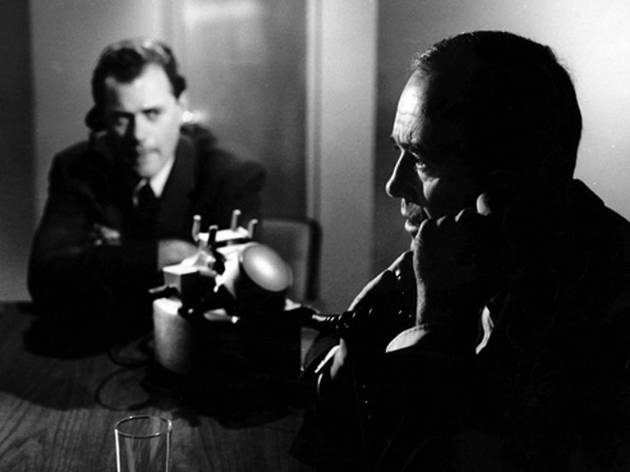
Why Doctor Strangelove is a Better Anti-Nuclear Film Than Fail Safe.

Since the early 1950s fear of nuclear conflict has been a major element of both American culture and popular entertainment. Science fiction films such as The Day the Earth Stood Still or The Space Children were Movies with a message warning of the dangers of nuclear war.

In 1964 two major films from two major film makers directly confronted the issues terrors and apprehensions The American people felt about nuclear Armageddon. The two films were Doctor Strangelove or How I Stopped Worrying and Learned to Love the Bomb and Fail Safe. The two films took radically different approaches to the subject with Doctor Strangelove being a farcical satire and Fail Safe being a bleak dramatic portrayal of an accidental nuclear exchange. Both films are critically well regarded with Doctor Strangelove having achieved a far greater amount of cultural penetration and relevance to this day. It is my contention that Doctor Strangelove is not only financially and critically a more successful film but a film which achieves its goal of delivering an anti-nuclear war message more effectively than the more serious and somber Fail Safe.

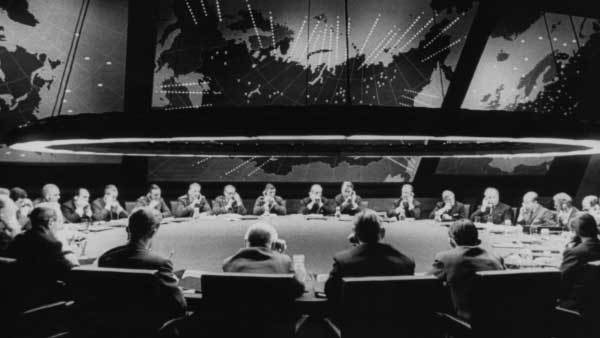
Doctor Strangelove directed by Stanley Kubrick from a screenplay by Stanley Kubrick Terry Southern and Peter George adapted from the novel Red Alertby Peter George started out as a dramatic interpretation of the novel But as Kubrick worked on the adaptation he found himself drawn to the absurdist nature of nuclear war and converted the project into a black satirical comedy.

In Doctor Strangelove American General Jack D. Ripper lost in paranoid delusions and obsessed with communist conspiracy theories launches an unauthorized nuclear attack on the Soviet Union by his bomber command. As the only person possessing the three letter prefix code which allows communications with the bombers Riper believes that once the administration understands that there is no hope of recalling the attack that The President and the Chiefs of Staff will follow up with a full scale nuclear attack annihilating the Soviet Union. Coordinating with the Soviets the Americans learned that the Soviet Union has constructed a doomsday weapon and that any nuclear attack upon the Soviet will trigger the weapon and end all life on earth. American military forces seize the base commanded by general Ripper and successfully obtains the three-letter prefix for recalling the bombers but one bomber due to battle damage does not receive the recall order proceeds to its secondary target and drops its nuclear payload. The film ends with a montage of nuclear explosion to Vera Lynn singing We’ll Meet Again. While the movie ends with the loss of all life on the planet it is at heart a comedy with broad over the top characters and absurdist situations drawn to exaggeration.
Fail Safe directed by Sidney Lumet written by Walter Bernstein and Peter George based on a novel of the same title by Eugene Burdick and Harvey Wheeler never veers into comedy or absurdity. In fact, throughout the movie’s 112-minute runtime I cannot recall a single scene which lighten the mood or had any comedic effect at all. The entire film is a dramatic intense pressure cooker of a story that never allows the audience a moment of easy breathing.
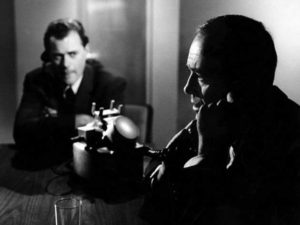
In Fail Safe American military forces are brought to a state of high alert with nuclear bombers dispatched to their fail-safe points due to a destressed and off-course commercial airliner. Co incidentally during the crisis a Soviet electronic warfare attack on the US strategic command called is a malfunction which sends an erroneous attack message to one bomber group at their fail-safe point. Once the bomber flight flies past their failsafe point their orders are such as to ignore all communications from the ground and continue on their attack. The president the Strategic Air Command coordinating with the Soviet Union are unable to recall the bombers and unable to destroy all of the flight with one bomber surviving to carry out its nuclear attack on Moscow. In order to prevent on all out nuclear exchange between the two countries the president offers up New York City to the Soviets ordering one of his own bombers to destroy the city to restore the balance. The film ends with the president asking the Premier of the Soviet Union, “what do we tell the dead?”

Between the two films Fail Safe on its surface looks to be more realistic, more grounded, more credible, but on any sort of closer inspection it’s clear that there are deep logical flaws in the plotting of Fail Safe that destroys its credibility. In Doctor Strangelove the administration is unable to recall the bombers because they do not have the prefix code for the encryption device that is used on all radio communications between Strategic Air Command and the bombers in the air this is an utterly credible and believable plot element.

In Fail Safe there is no encrypted communication system there is the simplistic order that once the bombers have proceeded past their fail safe point and begin their attack mission they are to ignore all communication from the ground as being potentially deceptive fraudulent forged attempts by the enemy to divert them. For purposes of a plot this sets up the dilemma quite nicely the bombers are on their way to attack Moscow and due to their orders, they cannot be recalled but it is a ridiculous and unrealistic set of orders that any military would ever implement.

During the crisis a presidential advisor advocates to committing to a full nuclear attack on the Soviet Union. His reasoning is that the Soviet communists would surrender rather than be destroyed in the hopes that at some later date they could still achieve worldwide communist revolution and domination. Even if we set aside the idea that the enemy would simply surrender rather than annihilate their opponents his advice is at odds with the premise of how the story works. Once the bombers have flown past their fail safe point they ignore all additional orders you come out divert them to new targets you cannot recall them you cannot declare peace and stop the war even if the Soviets in this story surrendered as the advisor is advocating they would still be destroyed because you cannot stop your bombers. The plot requires that the bomber pilot ignore orders to be recalled setting up an absurd command situation that no military in the world would tolerate. Once this logical fallacy is exposed the film devolves into a didactic moralistic speech.

The best stories have messages, they have themes that are important but when the message overpowers the storytelling when the story must be broken in order to serve the message then it is like a stage magician that has revealed how an illusion is performed all the magic evaporates and nothing is left behind. Doctor Strangelove a film which ends with the destruction of all human life on the planet never fails to entertain and place fair with all the rules of its own fictional setting. In the end it is the film that is remembered for its talent it’s comedy and its message.

Share

Quick Hit

Automobile emergencies have stolen some of my morning posting time away from me so today’s posting will be brief.

I have decided as an experiment and practice to do something I have not done in quite a while, write a screenplay.

I used to primarily think of myself as a screenplay writer. Films are a passion of mine and if you have read Vulcan’s Forge you can see that passion represented in the plotting of the novel. While I haven’t sold a screenplay, I have written and co-written a few and I find the form to fun to work with. For the last several months I have been listening to the podcast Scriptnotes and I am exciting to incorporate some of the things I have learned about screen writing.

So, this week I started a screenplay with no intention of selling it. To keep from spinning wheels, I decided that the best form of this experiment is to adapt my novel Vulcan’s Forge. It should be fun.

Share

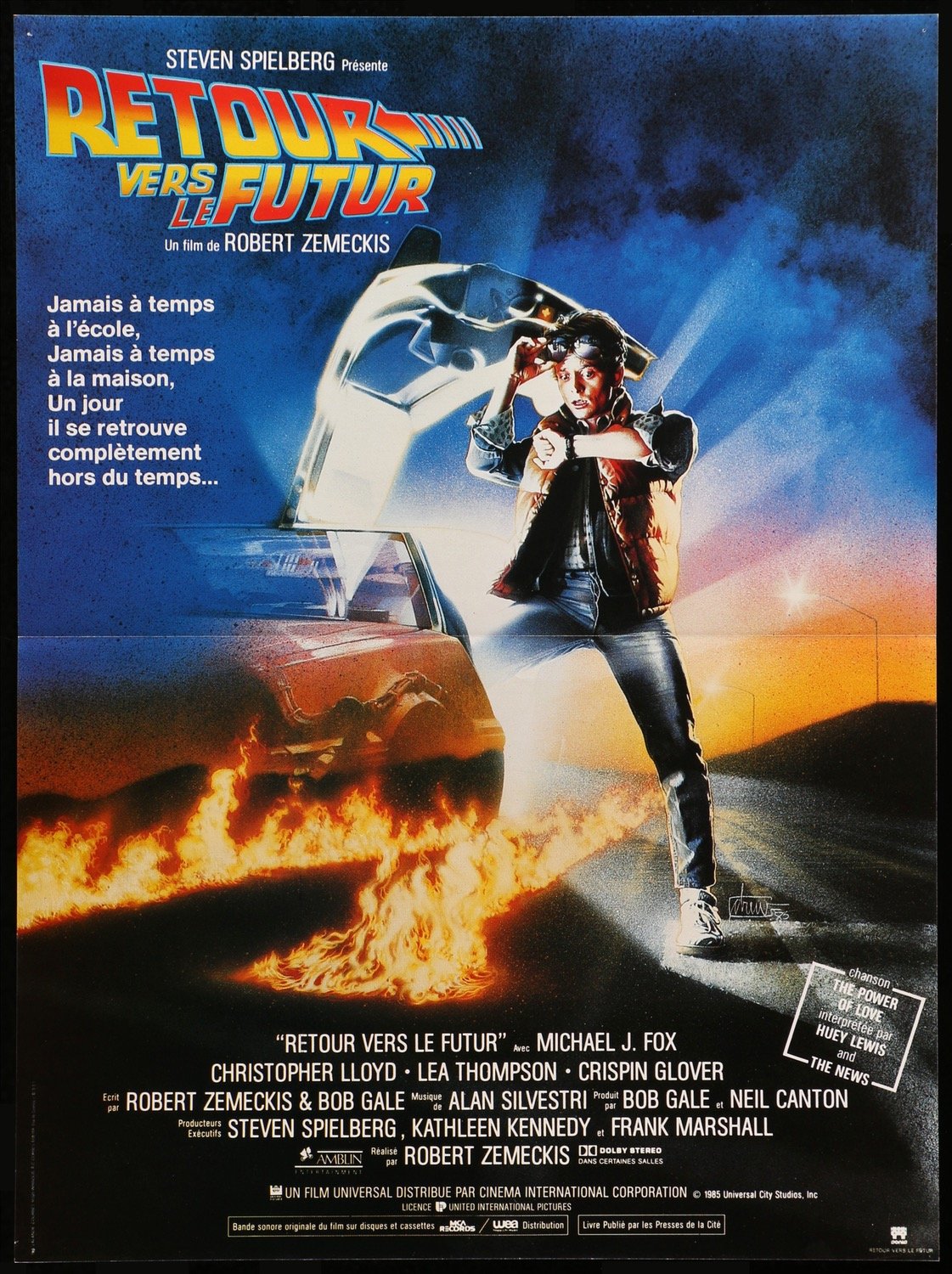
Sunday Night Movie: Back to the Future

1985 was a very different time and the middle of a decade of film that reverberates to this day. So many geek favorite films and franchises were completed, started, or concluded during the 80s and one of the most beloved and important was Back to the Future, the third collaboration between Steven Spielberg, already a powerhouse of genre cinema, and Robert Zemeckis. Friends for year previously their earlier two joint projects, Used Cars directed by Zemeckis and starring Kurt Russell and 1941 co-written by Zemeckis but directed by Spielberg, had performed poorly at the box office leading Zemeckis to fear that another failure would endanger their friendship. Back to the Future dominated the summer’s box office propelling Zemeckis’ career to new heights and launching a trilogy of films with groundbreaking special effects.

Marty McFly (Michael J Fox) is a teenager struggling with his own self-doubts and a family whose prospects are dim. His mother Loraine (Lea Thompson) is lost in an alcoholic fog, his father George (Crispin Glover) is bullied by a co-worker and unable to assert himself, and Marty fears failure so much he is unwilling to really try. Marty’s strange but touching friendship with the town’s eccentric inventor Doc Brown (Christopher Lloyd) leads him to be involved with Brown’s time machine invention and eventually trapped back in the hazy and distant past of 1955 where Marty inadvertently disrupts historical events threatening his own existence.

Budgeted at 19 million dollars and becoming the most successful film of 1985 with a box office take of 381 million Back to the Future was a monster of a movie. In addition to Zemeckis the film helped, along with another summer movie Teen Wolf, make a star out of Michael J Fox and favored a powerful symphonic score by Alan Silvestri over the decade’s trend of using pop songs in a music video style, usually in montages. While the movie had a few popular songs and they featured heavily on the soundtrack album the film itself leaned heavily in a more traditional manner on underscoring and the symphonic sound that had returned in the 70s with prominence of John Williams’ work on Jaws and Star Wars.

While Back to the Future is a prime example of an 80s whimsical movie, heavy on fun and never in danger of taking itself too seriously with a heavy political message it is no without its own darker undertones. When we meet Loraine in 1985 she’s a woman that seems withdrawn and fearful of life a fear she is passing down to her children, but Loraine of 1955 is outgoing, confident, and unafraid of life. There is no doubt that Lorain of 1985 is a survivor of untreated trauma and while that exact nature of that trauma is never directly revealed the unsettling and threatening relationship between Loraine and George’s bully Biff, played brilliantly by Thomas F Wilson who would steal scenes with his range in the next two sequels, hints that an unspoken sexual assault hides in the unexplored familial history.

Back to the Future is a movie that plays as well in 2020 as it did in 1985 and well worth any re-watching during these dark and frightening times.

Share

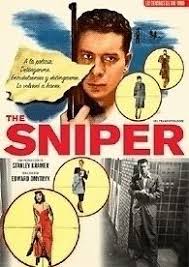
Noir Review: The Sniper

Recently a friend and I watched The Sniper as part of The Criterion Channel’s March programing of Columbia Noir. This movie, released in 1952, is shockingly relevant today and presents a story and complexity about its central character well ahead of its time.

Directed by Edward Dmytryk, who also gave us one of my favorite films The Caine Mutiny, and written by Harry Brown, The Sniper is focused on Edward Miller a troubled young man recently released from prison. Miller struggles against a deep-seated hatred of women and after a couple of attempts to get help fail and he is romantically rejected Miller loses control and begins a murderous spree as a sniper killing dark haired women. The police led by Lieutenant Frank Kafka and his partner Joe Ferris are nearly helpless to catch Miller. Stuck in a mindset that looks for motive their focus on peeping toms and men with a history of sexual assault their investigation gets nowhere until the department’s psychologist Dr. Kent, redirects their attention by use of what would eventually become psychological profiling. In a final inversion of classic film tropes, the ending doesn’t rely upon exciting gunplay but instead leaves the viewer with a haunting image of a man in pain.

When we decided to watch The Sniper with its subject matter of random murder we expected a film that leaned heavily towards the exploitive but instead we were treated to a thoughtful, though occasionally didactic, and serious treatment of the problems American society has, then and now, in dealing with psychological trauma and the use of a prison system in lieu of hospitals. Aside from one scene where the plot is brought to a full stop to allow for speechmaking by the filmmakers The Sniper does an excellent job of presenting its themes within the context of a compelling narrative. This one is well worth seeking out and watching.


Share

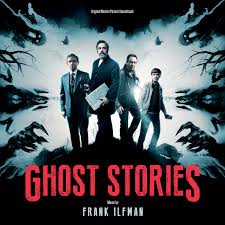
Sunday Night Movie: Ghost Stories (2018)

Two years ago the British anthology horror film Ghost Stories was released to a limited run the States; a run that my sweetie-wife and I missed. The movie is currently on the streaming service Hulu and last night we gave the horror film a spin.

Written and Directed by Andy Nyman & Jeremy Dyson with Dyson also playing the lead character Phillip Goodman the film is an adaptation of their stage play about Professor Goodman’s investigation of three paranormal events as he tried to debunk them into rationality.

You would not know that this is an adaptation from a live theater event. Nyman and Dyson have done a terrific job of translating the material for the visual media of film. The movie is filled with delicious and unsettling imagery and many segments build suspense masterfully. The framing device of Goodman’s post event investigation is tried and true cinematic method of linking what would normally be three unrelated narratives. In Ghost Stories though it turns out that the three stories are not unrelated but rather share a central narrative that is an outgrowth of Goodman’s own issues, guilt, and motivation.

Sadly, that is where Ghost Stories fails me. While there are others that count this as their favorite horror film of 2018 (or 2017 if you are looking at UK release dates) it falls apart at the ending. Endings are a critical time for all narratives, it is where the point and meaning if the story comes into clarity and conflicting themes are finally resolved. Nyman and Dyson do that but in such a manner that I found it frustrating and wholly unsatisfying. To reveal this exact shape of this failure would require venturing heavily into spoiler territory but I will say that my sweetie-wife predicted the ending a good ten minutes before it resolved. Naturally your mileage may vary on how well the ending does or does not work for you but for me it ruined what had been a very enjoyable ride with a destination that was a thrilling and exciting as depilated bus terminal.

Share

Everything Old is New Again

Back in the golden age of Hollywood the movie studios owned the entire economic chain of a film. An MGM movie would be conceived, written, produced, shot, and edited on studio property and then the film would be shown to the paying public at an MGM theater with all the proceeds going back to MGM and this was true for all the major studios. Minor studios and independent production companies had a devil of time getting their product to the public because even if there were independent theaters the studios used their enormous leverage to lock up the auditoriums for their own product. You want the next hit movie from 20thCentury Fox? Well then you have to take all Fox films including the lower half of their double bills know as ‘B’ features. This came to an end with the Paramount Decree in 1948 when using its anti-trust powers, the US Government forced the studios to sell off their exhibition businesses. In November of 2019 the Department of Justice announced it was withdrawing from the Paramount Consent Decree.

AMC Theaters is the largest movie theater chain in the world with more than 8200 screens in the United States alone. March 17th, 2020 AMC closed all of its theaters due to the continuing COVID-19 pandemic. April 2nd the Hollywood Reporter posted that the credit rating for AMC theaters had been downgraded amid concerns that it was unable to withstand the financial shock of the crisis and the closing of all theaters.

It is a truth universally acknowledged that Disney doesn’t like anyone getting a cut of their cash.

I suspect that given that AMC was not in the best financial shape before the pandemic killed the summer released schedule and with the DOJ withdrawing from the Paramount Consent Decree that they will swoop in with their vast economic might and buy AMC theaters from the Chinese company that currently holds majority control. They probably will not lock out films from other production companies, after all why not get their beaks wet by tasting the profits from Universal and their other competitors?

I don’t know what final form the exhibition business will take but I do know it is going to change.

Share

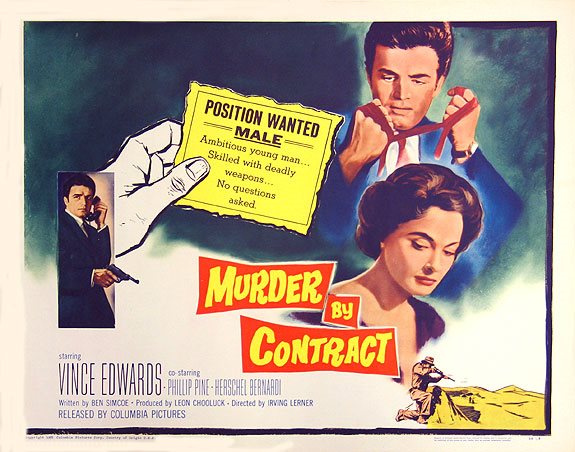
Sunday Night Movie: Murder by Contract

Apparently, the Criterion Channel recently dropped a bunch of noir films into their streaming service. Yesterday as I browsed the ‘recently added’ queue I stumbled across noir after noir and the titles were unknown to me. Under the limitations of a time and temperament I selected Murder by Contract as the one to watch Sunday night.

Hailing from 1958 Murder by Contract is a low budget quickly produced film noir centered on Claude and man with large dreams and no empathy. Claude leaves the respectable life of an upright citizen and becomes an assassin for the mob in order to secure the funds for his dream home. Curious for a character of this type and profession Claude rejects firearms for most of his contracts and quickly establishes himself as a killer of unusual competence. The mob sends Claude out west to Los Angeles where he meets up with two local hoods, George and Marc, for the most challenging assignment of his cruel career where nothing goes as anyone planned.

Though the word is never used in the film Claude is presented as a sociopath. He professes to have taught himself to have no feeling but it is more likely that this is a justification for the character than an actual achievement. His intellect and cool demeanor carry him through most of his assignments unperturbed but as this final contract goes awry the illusion of his self-control crumbles.

Shot in seven days Murder by Contract presents the material in a spare and unadorned style. Aside from Vince Edwards as Claude who would later go on to portray Doctor Ben Casey from 1961 thru 1966, the aspect of casting that leapt out to me was that four future Star Trek (the original series) guest actors also appeared in the crime drama, Phillip Pine, who played the genocidal Colonel Green in the episode The Savage Curtain, is the hoodlum Marc, Kathie Brown plays a secretary who moonlights as an escort and she appeared in the episode Wink of an Eye as Deela one of Kirk’s alien romantic conquests, Joseph Mell who plays Harry also was in the pilot for Star Trek as a trader from Earth who sparks Pike’s interest in the Orion slave woman, and finally David Roberts as a Hall of records clerk but got a promotion to doctor for the episode The Empath.

While lacking the depth of characterization found in classic noir such as Double Indemnity and with a jazz inspired soundtrack that bordered on irritating, Murder by Contract still proves to be an interesting entry in the sub-genre from the end of its classical period.

Share

Train to Busan Presents: Peninsula

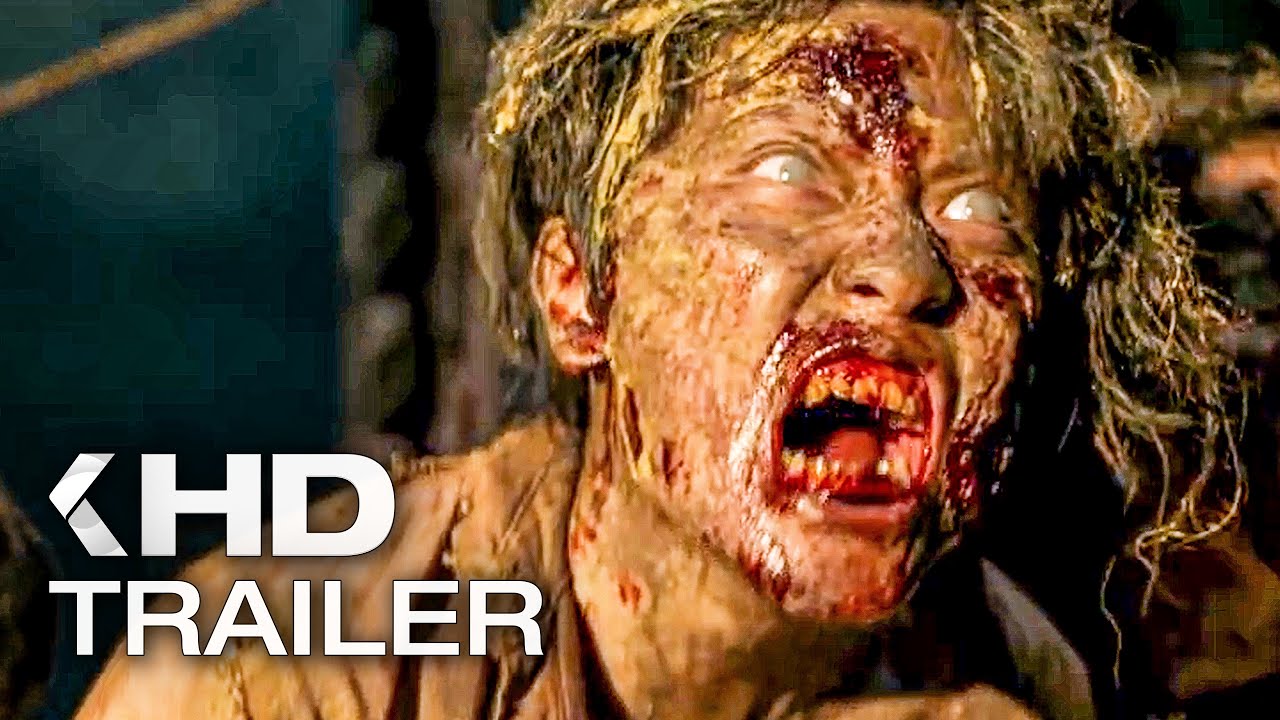
Four years ago, I took a chance, and convinced a friend of mine to also roll the dice and went to see this South Korean zombie movie Train to Busan. It turned out to be the best zombie movie I have ever seen, beating out 1979s Dawn of the Dead by the slimmest of margins. Dawn is the classic film that launched the zombie apocalypse genre and is a terribly on-point satire of American consumerism, however Train has a best set of characters and story, but not by much.

Last weekend I watched the anime prequel to Train to Busan, Seoul Station. Not as groundbreaking or as tight at Train it still maintained a high level of quality and made for an excellent companion piece to the first movie.

Now we are finally getting the sequel to Train to Busan with the lengthy title; Train to Busan Presents: Peninsula.

Set in the years following the outbreak of the fast zombie plague Peninsulatakes place in a Korea that has become an apocalyptic nightmare. Directed and co-written by Yeon Sang-ho, who directed the original, Peninsula looks to widen toe scope away from the claustrophobic setting of Train into a wider dysfunctional world.

The truth of the matter is that most of the time sequels are a disappointment but I have my hopes and in these dark times we all need hope.

Peninsula is set for release this year, 2020, and is likely to be available as a Video on Demand rental.

youtube placeholder image

Share

2 Days Until Release and Satanic Panic

My science-fiction noir mash-up of a novel Vulcan’s Forge will be published the day after tomorrow. I will be taking Thursday off from work to spend time online interacting and promoting the book.

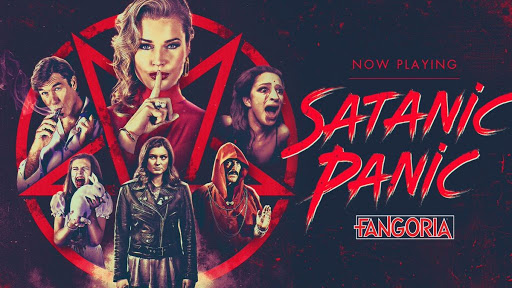
Sunday Night after a year of waiting my sweetie-wife and I finally got to see the horror comedy Satanic Panic on the streaming services Shudder.

I first heard about Satanic Panic last year when it played the opening night at 2019’s Horrible Imaginings Film Festival but due that night being a holiday and my low seniority at my day job I was unable to get the day of and drive to Orange county. I made the rest of the festival, saw great films, made new friends, but I also regretted I could not see the opening night feature. Last week the movie came to Shudder and it was our weekend movie.

Satanic Panic, directed by Chelsea Stardust and written by Grady Hendrix is about Sam, a young woman who has taken a job as a pizza delivery person working for sub-minimum wages and tips. Taking a delivery to the wealthy side of town instead of a generous tip Sam finds herself captive to a satanic cult with plans for a human sacrifice. With over the top gore and broad characters Satanic Panic is a satire in the manner that The Hunt failed to be with a point of view and something to say about class divides in America.

Not for the squeamish and while avoiding the Lucio Fulci perchance for things going into people’s eyes, though not by much, Satanic Panic is not for everyone but those who enjoy practical gore effects with social commentary this film should find its mark.


Share