Category Archives: Movies

Silly Foreign Fun: T-34

A few of weeks ago I was watching one of my favorite YouTube shows where visual effects artists watch, react, and critique visual effects from various films and television shows. During that episode that had a couple of sequences from recent Russian films one of which was T-34 a World War II story about a Russian tank crew.

The story takes place in two period, the first during the German invasion of the Soviet Union as the NAZI forces approach Moscow when our lead character Ivushkin is part of a desperate effort to blunt the threat to his county. The second and majority of the film take place four years later when Ivushkin and others escape a POW/Concentration camp, thing seem a little mixed up in the movie but it is not one you’d watch for any form of historical accuracy, with a repaired T-34 tank and half a dozen rounds of ammunition making a desperate drive for freedom.

Sadly, the edition available on Amazon Prime is dubbed and there is no Russian language version for streaming. While the voice actors did what they could I and my sweetie-wife prefer subtitled movies to dubbed ones. She likes listening to the foreign languages and I find that the vocal performances tend to be better.

There are quite a few technical errors in the movie but this is not the sort of story where you want gritty, depressing realism. It is a story of heroism against an evil foe. (Set aside that the Soviet unions murdered millions this is their mythology and everyone is the hero of their own myths.) The use of elaborate visual effects through the tank battle sequences that follow fired rounds in exaggerated slow motions provided a lot of engaging moments.

The film was a smashing success at the Russian box office and it is easy to see why. The stars are engaging, the story never really pauses, and it celebrates a heroism that everyone can imagine. This is a perfect streaming choice of a Saturday matinee.

 

Share

Retro Movie: Ms .45

Released in 1981, and I watched this film on its initial released, Ms .45is an exploitation film that is charitably about sexism in society and more accurately an excuse to watch for nearly an hour and a half of a young woman taking revenge with the aid of a semi-automatic pistol. Be warned, spoilers for the entire film abound ahead.

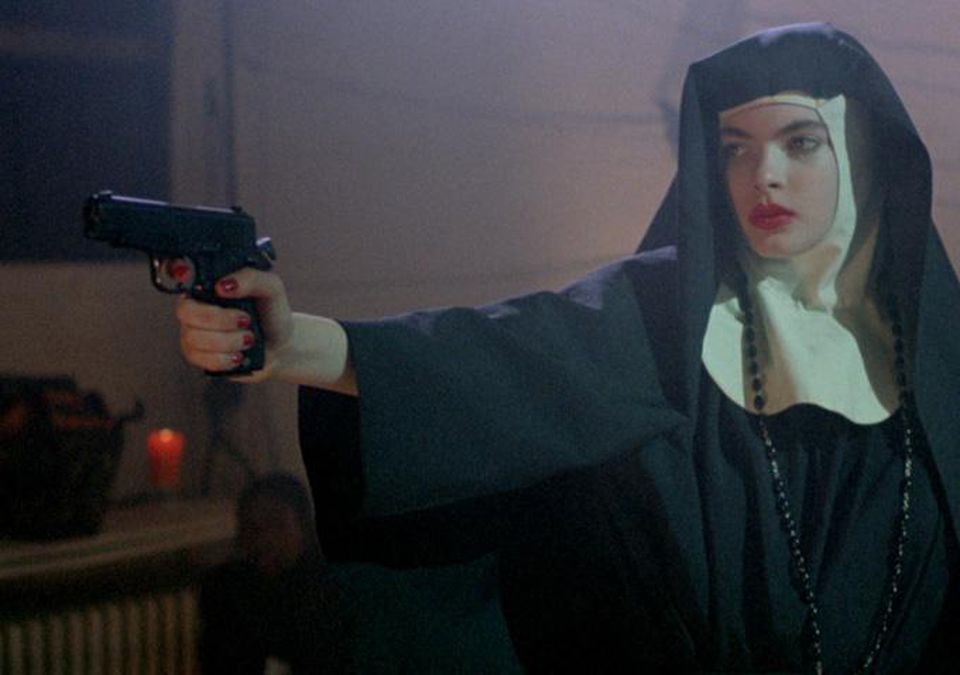
Thana, played by the tragically doomed Zoe Tamerlis, is young woman, mute, who works as a seamstress in the New York City’s garment district. On her way home from work she is attacked and raped in an alley, then when she gets to her apartment, she interrupts a burglar armed with a .45 caliber pistol, who also rapes her. During the assault Thana fights off her attacker and kills him. With her sanity snapped by the violations Thana dismembers her attacker’s corpse and takes his pistol. The rest of the film is following Thana around as she disposes of body parts by leaving them in various trash bins or grinding them into dog food and shooting dead men who attack her, frighten her, or make sexual advances towards her. The film culminated in a costume party thrown by her employer where Thana attends dressed as a nun and after her boss makes a sexual advance, proceeds to shoot every male in at the celebration, though momentarily confused by the man who had cross-dressed as a bride for his costume. The final scenes of Ms .45 has a wildly different context today with mass shootings now ubiquitous compared to 1981 when there were still rather rare.

Ms .45 was written and directed by Abel Ferrara and had I realized eleven years later that he also wrote and directed Bad Lieutenant I would have dissuaded by friend from selected that film as the one we were going to see. The film while attempting to have a thematic point about sexism and the treatment of women in American society lingers on the violence presented following the footsteps of other exploitation movies about crime and revenge that populated theaters of the 1970s and 1980s. Thana’s marksmanship with her pistol is never explained falling into one of Hollywood’s most beloved firearms tropes, precision shooting is easy.

On its release the film received terrible reviews but has become something of a cult favorite and has even had a high definition released of a restored print from the original negative.

Zoe Tamerlis as Thana is really quite good. Bereft of dialog and voice she fully conveys Thana’s inner life with her large and expressive eyes. Sadly, she was devoted to recreational drug use and died from it at the age of 37.

For people who enjoy the trashy sub-genre of rape and revenge films Ms .45may possibly fit your tastes but I was not moved by this movie in 1981 nor in 2020.


Share

Weekend Movie: An American Werewolf in London

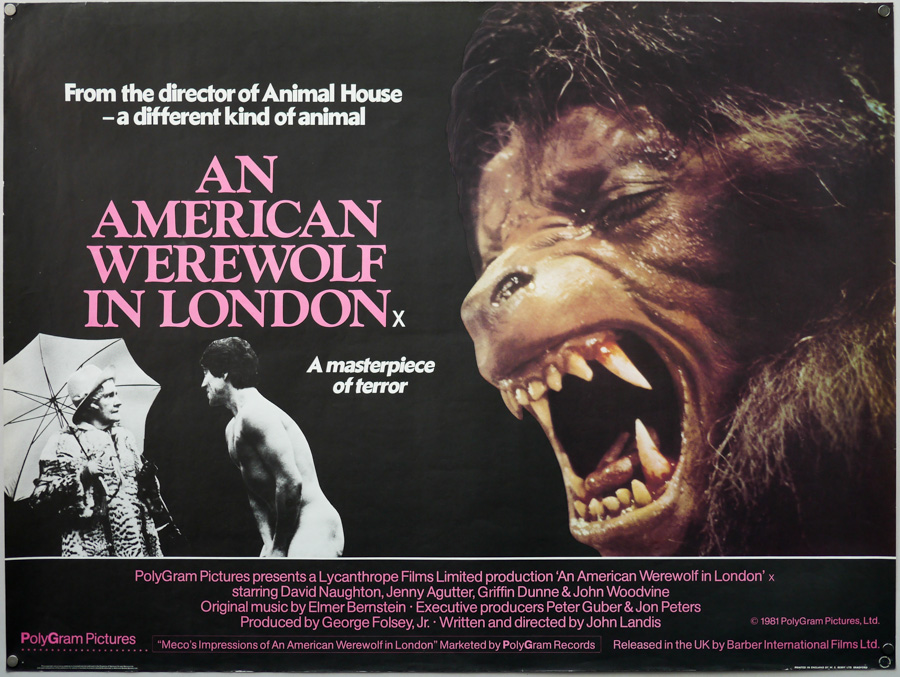
This past Saturday and friend and I re-watched An American Werewolf in London, John Landis’s 1981 groundbreaking and genre defining monster movie. It had been decades since I last watched the movie but my memory was one of it being an entertaining but flawed film and my experience this weekend confirmed that.

The story concerns David and Jack two Americans on a backpacking trip and their encounter in the north of England with a werewolf that leaves one dead and the other cursed with lycanthropy. There is a tragic romantic sub-plot with a nurse, Alex, played by genre favorite Jenny Agutter and a massive climatic sequence of the werewolf rampaging through central London to complete the movie.

An American Werewolf in London is a film that has left its mark on the horror genre and specifically on how people have dealt with and described werewolves and their transformations ever since. Both this movie and The Howling, released earlier in 1981, presented the first on-screen transformation that were not simply variations of the lap-dissolves used in previous werewolf films all the back to Universal’s The Wolf-Man in 1941. Both Rick Baker who did the special make-up effects in An American Werewolf in London and Rob Bottin for The Howlingprogressed to careers that pushed the boundaries of practical effects until the advent of digital visual effects.

An American Werewolf in London also presented the transformation from human to wolf as something terribly painful and motif that with its overuse has since become a cliché.

With a running time of 97 minutes the movie is by far too brief, and simultaneously feels leisurely in its developing romance and rushed in its head-long drive to get to the next supernatural sequence. This blinding speed short-cuts characters and their development for the sake of plot and exposition and contributes the film’s finale feeling abrupt. I distinctly remember sitting in the theater during its initial run feeling like the it needed to be more, that it was unfinished, as the credit’s scrolled across the screen.

Share

Why Love Some Bad Movies and Not Others?

Recently I re-watched on HBO, though I own the Blu-ray, 1980’s Xanadu. This film along with Can’t stop the Music is credited with the inspiration that created The Golden Razzie award for bad cinema. Now I can both recognize that Xanadu is in many ways a terrible film, miscast, no character arc, very nearly plotless, but it is also a film that is near and dear to my heart. It is a romantic film centered on dreams and the message that dream don’t die we kill them. And what Xanadu is to me other bad movies are to other people, but it’s the rare bad film that really generates this sort of feeling.

Star Trek: Insurrection is a terrible film that is also essential a romantic film, not in terms of Eros but in rather prioritizing inner emotional life over reason, with a central message but that movie is a tedious bore and its message if examined closely is one that advocate murdering those who do not think as you do.

There lies the answer to the conundrum, it is in the emotional resonance that a bad movie can rise to something special. There are those for whom Star Trek: Insurrection is a beloved film, no doubt due to deep emotional connection to the characters of the cast. (I’m an old fart and more emotionally tied to the original series than and subsequent entry.) So, while Xanadu is mostly a string of expository scenes linking musical numbers it is in my own heart that its emotions truly lie. I love the film not because of what it is but because of who I am.


Share

Coded versus Interpreted

I have been watching some documentaries about films and film makers, including some of the better Cinema youtubers. (Really, that makes them sound related to potatoes.) One thing I kind of struggle and rebel against is the idea that something is ‘coded’ into a film when there is no documented evidence of the filmmaker’s intent.

Coded has the clear implication that something was done with intent. In Robocop the Christ imagery, though in my opinion it is highly misplaced, is there by intent. Paul Verhoeven deliberately created that imagery for his own artistic purpose. It is coded. However, I can find no evidence supporting my interpretation that the corporate executives enjoying Robocop food paste that ‘tastes like baby food,’ is a deliberate symbolism that they are children playing with things that have moral implication that they do not understand.

Perhaps the best example of coded versus interpreted comes from John Carpenter’s They Live. From interviews and on-line debates, plus anyone with even a passing knowledge of Carpenter’s political philosophy, it’s clear that the aliens in that film and their objectives are a stand in for Conservatism and particularly Reaganism. Neo-Nazis interpreted the aliens to be coded as Jewish and have embraced the film as something delivery their kind of message.

Another example is Disney’s The Lion King. One interpretation is that the film contains a message about environmentalism and the great circle of life, but it can also be seen as an argument for conservative social Darwinism because the entire system collapses when Scar brings the ‘takers’ in has them live off the ‘makers.’ I do not think that is what the filmmakers intended but I can and has been read in that manner.

There are times when the message is clear, there is no coding in Birth of a Nation, the message is plainly racist and it is meant to be, but I would be wary of seeing intent where there is possibly only interpretation.


Share

A Virtual Film Festival

For the past several years one of my favorite things has been the Horrible Imaginings film festival. In 2018 the festival moved the Museum of Photographic Arts in San Diego to the Frieda Cinema in Orange county, about a 90-minute drive from my home. However, an all-day and deep into the night festival or short and feature length horror films is well worth the drive and so I still attend. Indeed, I have discovered some of my favorite horror film at the festival including Alena a ghost story set in an all-girl Swedish school.

Last year Festival Director Miguel Rodriguez started a new element with Campfire Tales where one evening per quarter the Frieda cinema and Horrible Imaginings would host three or so hours of horror shorts. While the evenings sounded fun and interesting, I couldn’t quite justify driving for three hours and eliminating an evening with my sweetie-wife, for essentially one long films worth of entertainment and so I haven’t attended any of the campfire tales events.

This year COVID-19 changed that. Because in person events were still banned Miguel moved the festival on-line and after paying a very reasonable admission donation, I was able to watch the offerings at this quarter’s Campfire Tales. Better yet I watched them on my schedule, after an evening of board and card games with my sweetie-wife and a couple of friends. From 9 p.m. until nearly midnight a friend and I watched the short horror films and had a truly wonderful time.

I hope, even though it goes against my own interests, that Miguel can soon get back to the in-person screenings he adores and hosts so very ably but I can’t deny how much fun it was to take part in a cycle of ghost, monster, and psychological horror films.


Share

A Most Challenging Giallo

Giallo is Italian for ‘yellow’ and refers to the bright yellow covers for books that dealt with lurid criminal plots, sort of the Italian answer to pulps but with far less content moderation. As these books were adapted into films the term carried over and Giallo is a sub-genre of Italian cinema dealing with lurid, sexual, and criminal themes.

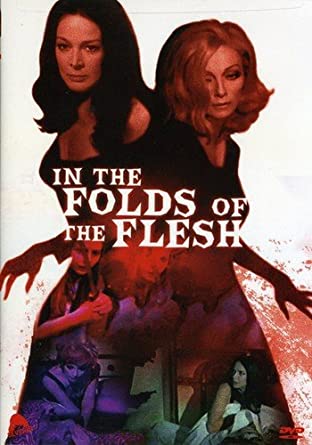
This week my sweetie-wife and I watched a 1970 Italian/Spanish GialloIn the Folds of the Flesh.’ This was a very challenging movie to view. With a scant running time of a mere 88 minutes In the Folds tries to pack in a number or reveals, reversals, and shocking twists that would be more suitable for a couple of seasons of any daytime soap opera. In short, the story is about Lucille the much younger couple Colin and Falaise dealing with Falaise’s uncontrollable urges to murder any man who is sexually forward with her. Ladled onto this are plot elements of incest, mafia revenge murders, deeply undercover police investigations, and even exploitive flashbacks to Nazi death camps bonus gratuitous nudity.

The camera work seems to have been performed by a spastic chimpanzee with sudden and unmotivated crash zooms, indecipherable close-ups, and rapid circling pans that induce motion sickness. While the editing is reminiscent of a goldfish on acid with unestablished leaps in time and place that are terrible disorienting.

There are quite a few Giallos that I have thoroughly enjoyed since I discovered the genre a few years ago but In the Folds of the Flesh is not one of them and I cannot recommend this movie to anyone who is not currently dosing with hallucinogens.

Share

Streaming Horror: Scream, Blacula, Scream

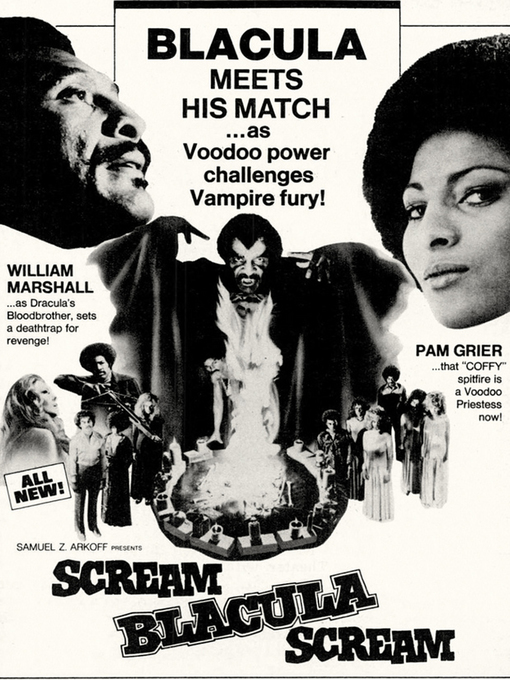
The past several nights I watched the 1973 blaxploitation horror film Scream, Blacula, Scream. A sequel the previous year’s movie Blacula about an old-world African vampire played by the incomparable William Marshall, and depending on how geeky you are you may know him best from the Star Trek (Original Series) episode The Ultimate Computer as Daystrom the inventor of the M-5 computer, that arrives in an American urban center instigating a plague of vampirism before meeting his end at the hero’s hand.

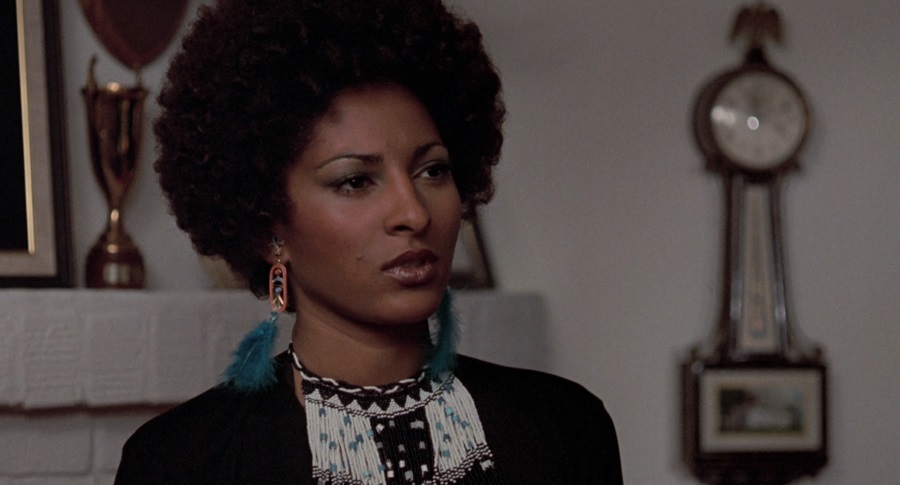
Scream, Blacula, Scream, starts with a Voodoo congregation in turmoil as their high priestess passes without naming her successor and two devotees contend for her title, Willis, the self-important son of the priestess, and Lisa, played by Pam Grier, who is more popular with the congregation. Willis, unable to endure his rejection invokes dark magics and unwittingly reanimated Blacula initiating a new cycle of vampirism.

Not as sharp or as on point as its predecessor this film in many respects moves too quickly. Lisa’s lover, Justin, a police detective moves from skeptic to vampire hunter with too much ease and the political among the congregation was brushed aside far too quickly for something that had been introduced with the elements of a major plot development.

That said, I enjoyed this movie. Marshall’s command of every scene in which he appears is unquestioned and he brings a tragic dignity to his African prince that was cursed for confronting the slave trade. Pam Grier, one of the stars to emerge from the blaxploitation cycle, isn’t given a lot of the stuff to do as an actress but she takes this meager meal and gives us a banquet of a performance.

Side comment; while watching this film I realized that Pam Grier is a nearly perfect image for the character Sakita Bergen in my military sf series I am

American International Picture

writing. I shall have to keep that in mind.

In the end this movie suffers from being rushed to screen and doesn’t compare favorably to its progenitor piece but it is still worth at least one viewing.

Share

Columbia Noir: Human Desire

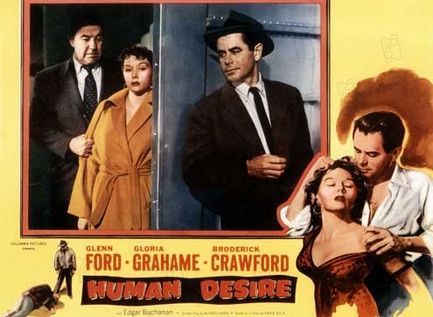
This weekend I continued my exploration of the Criterion Channel’s collection Columbia Noir with Human Desire.

Human Desire is the story of Jeff Warren (Glenn Ford), recently returned home from the Korean War and now resuming his job as a locomotive engineer. In his absence the Assistant Yard Supervisor Buckley, (Broderick Crawford) has married a much younger woman Vicki, (Gloria Grahame.) Before long there is jealousy, robbery, and murder the staples of American Noir. This is very much like the descriptionprovided by the Criterion Channel and it is in my opinion

dŽsirs humains
human desire
1954
rŽal : Fritz Lang
Broderick Crawford
Gloria Grahame
Glen Ford
Collection Christophel

quite misleading and capture where I think the film took its initial and consequential misstep. The entire movie is told from Jeff’s point of view treating the unfolding events as principally his story and it really isn’t his at all. The story should have been written and presented from Vicki’s point of view. When Buckley, a brute and intellectually challenged man, is fired from his position it falls to Vicki to win him his job back but in doing so triggers his violent jealousy launch a series of events that will entangle Buckley, Vicki, and Jeff in robbery and murder as she desperately tries to survive.

Despite its erroneous point of view Human Desire is a film worth watching. Glenn Ford plays the sort of role that he is best known for the fundamentally decent man though in keep with noir’s traditions he has a difficult time resisting temptation. Broderick Crawford as Buckley convincingly gives us both a man who is dangerous and unpredictable but also deeply flawed and trapped by his own self-doubted that is amplified by his alcoholism, but the real star of this film is the luminous Gloria Grahame. Grahame’s realistic portrayal of a woman desperate to escape her circumstances using the means and methods at her disposal without sliding across into evil is a wonder to behold.  Grahame appeared in many great noirs and died too young at 57 but her star continues to shine bright through her performances such as this one. Direct by Fritz Lang is a competent film though a number of plot threads were either never completed or are used simply as audience misdirection. Particular attention in the story is paid to a distinctive watch and yet that element never closes back to a resolution.

Overall, I enjoyed watching Human Desire but I have no desire to add it permanently to my library.

Share

Italian Genre Cinema, Home Edition: Caliber 9

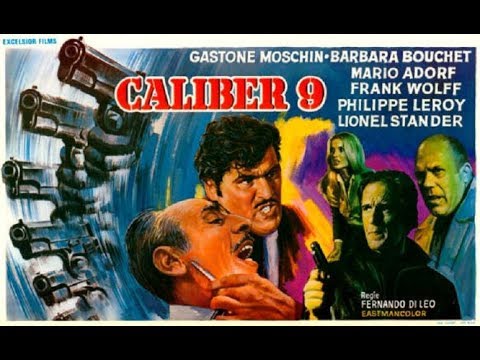
The COVID-19 crisis among other things stopped could the Film Geeks San Diego’s year-long presentation of Italian Genre Films that my sweetie-wife and I were enjoying so much. So, while we wait for the crisis to pass, we have been scrounging streaming services for gems of Italian Genre movie from the 70s and earlier. Last night we watched Caliber 9 1972.

I would classify Caliber 9 as an Italian neo-noir. It stars Gastone Moschin as Ugo Piazza a small time mobbed up crook just released from three years in prison. Unfortunately for Ugo both the police and the local crime boss, Mikado, believe that Ugo took part in the theft of 300 hundred thousand American dollars from the mob and that he has the money stashed away. Even Ugo’s girlfriend Nelly, played by Barbara Bouchet, thinks he stole the cash. When Mikado puts a particularly brute thug Rocco on point for finding out where Ugo has hidden the loot, thing begin to spiral out of control leading to murder and Ugo’s quest for revenge.

While the quality of these 70s era Italian exploitative movie can vary a great deal I thoroughly enjoyed Caliber 9. This film has a gritty, realism to it that helped sell the story to betrayal, greed, and fractured loyalties. It is not surprising that there is a re-make currently in post-production slated for a release this year, but between the trouble with foreign producers finding American distribution and the pandemic who knows if we’ll get a chance to see that in theaters at all. It’s a nice tip of the hat to the original that Barbara Bouchet will be appearing in the remake.

Caliber 9 is currently streaming on Amazon as one of the movies available to Prime Members.

Share