Category Archives: Movies

Review: Mildred Pierce (1945)

The Criterion Channel has a collection of Joan Crawford films and I decided to give Mildred Pierce, adapted from a James M. Cain novel, a spin.

Crawford plays Pierce, a role which won her an Oscar, a middle-class woman who’s forced to survive and flourish after her husband leaves her stranding her with two daughters to raise, one, Veda, with expensive tastes and a growing sense of snobbery. Navigating lecherous men, back-stabbing business deals, heartbreak, and the growing gulf between herself and Veda’s increasing obsession with money and status Mildred also find friendship, loyalty and a strong sense of self as she carves out success founding a small chain of restaurants.
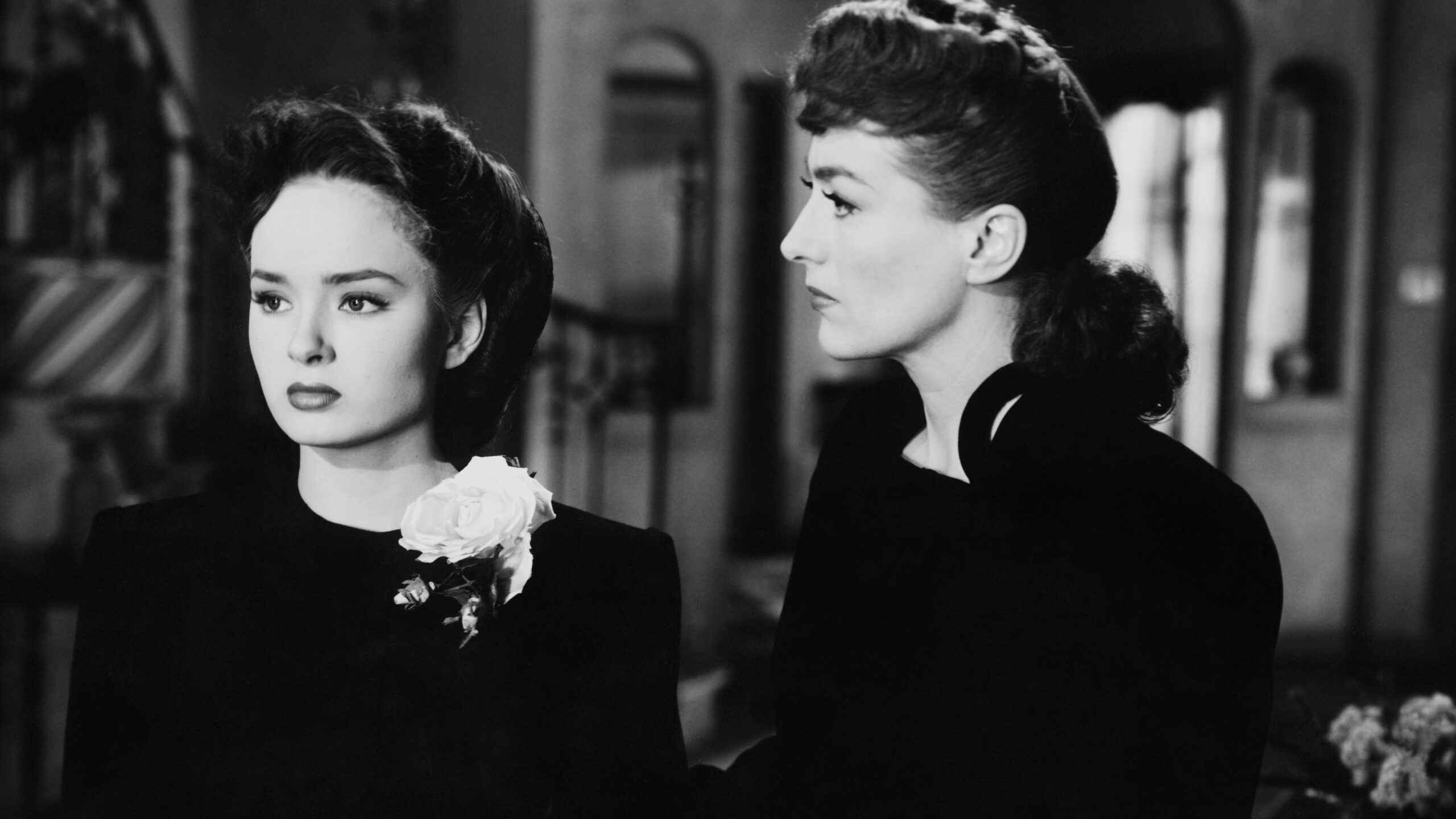
Unlike the novel the film centers around a murder investigation hen Mildred’s second husband is shot dead at his beach house, providing a flashback framing device for the film’s script. This adaptation also eliminated several sub-plots from Cain’s novel due to the restrictive production code enforce on all Hollywood productions at the time.

Crawford delivers a compelling and powerful performance. I was pleasantly surprised to find Eve Arden, whom I had primarily known for her much later career work in the 70s, here as Mildred’s sharp toothed friend. Arden displays a talent for delivering a cutting the remark that would serve her well throughout her career.

Directed by Michal Curtiz the film is competently produced and never lacks for pacing or a strong sense of style despite being hampered with an overly melodramatic scrip and more than a few dry performances in addition to the, even for the period, overly racist caricature of Mildred’s servant girl Lottie, played by Gone with the Wind’s Butterfly McQueen.

While the tacked-on murder plot adds a criminal element Mildred Pierceunlike some of Cain’s other works can only be considered noir adjacent and not noir itself.

HBO has produced a limited series adaptation of the novel which hewed much closer to the original story and not shying away from elements of infidelity and incest.

Share

November’s Italian Genre: The Bird with the Crystal Plumage

Due to me running late and a minor migraine this will have to be quick.

Sunday my sweetie-wife and I watched, via Sd Film Geeks’ monthly festival of Italian Genre Cinema, The Bird with the Crystal Plumage one of the films, along with Blood and Black Lace that established and defined the giallo genre of movies that focused on lurid tales of sex and violence.

The film centers on Sam Dalmas an American author on an extended vacation in Italy. On the eve of his return to America Sam witnesses an attempted murder of a woman in an art gallery. Due to his intervention the woman survives, and Sam becomes part of the police’s hunt for the maniac who has already killed three times. Sam investigates on his own, but with surprising police assistance and acceptance, drawing the killer’s attention and becoming a target himself endangering his own life and that of his live-in girlfriend. Eventually the killer is discovered with the genre appropriate twists and order is restored.

This film was fun to watch. The twists in the plot and the eventual revelations are mor logical than last month The Strange Vice of Mrs. Wardh, though as with all Giallo it is important to approach the film with prodigious suspension of disbelief. Luckily this edition was subtitled and not dubbed, preserving the actors’ portrayals and enhancing the experience/ The cinematography is lush and colorful displaying the tastes that would become the signature of director Dario Argento. As a cherry on top my sweetie-wife also spotted a connection to Star Trek the Original Series. So, if you get a chance to stream this one, do so.


Share

The Problem with Frankenstein Films

Being a universally beloved and known property that exits in the Public Domain there is rarely a shortage of adaptations, reinterpretations, and extension of Mary Shelly’s Frankenstein.

The last really big elaborate adaptation came from producer Francis Ford Coppola and director/star Kenneth Branagh with 1994’s Mary Shelly’s Frankenstein. I remember seeing this one in the theater and being, well, underwhelmed.

It has a fantastic cast, Branagh as Frankenstein, Robert De Niro as the Monster, Helena Bonham Carter as Elizabeth and a slew of other great actors of the period, but that couldn’t put the film over the top leaving it as just a couple of hours of entertainment.

I think there’s an element that James Whale and the four writers of the 1931 Universal classic Frankenstein got correct that many later editions failed at and that is getting straight to the point of the story.

The 1931 film opens with Frankenstein’s fiancé concerned because she hasn’t seen her love in sometime. After collecting a mutual friend and an old instructor they head to his lab and barge in on the night of creation. Bam! We’re off and running.

1994’s adaptation returns to the novel’s framing device of an arctic explorer coming across Frankenstein, near death, and hear the tale told as flashback. (A flashback that violates Point of View with Frankenstein recounting details of scenes he never witnessed, but the novel does this as well.) We sit though extended sequences of Frankenstein’s life, his loves, his slowly building obsessions until finally we get to him creating life.

The truth of the matter is we don’t care about the backstory. It holds no suspense. Ask nearly anyone what happens in Frankenstein and they’ll tell you a scientist makes a living monster from dead body parts. This exploration of growing obsession is pointless. We know where he ends up, we know what he is going to do, and unless you have invented a unique take wholly divorced from the source material, you’re just boring us while we wait for the subject matter that brought us to the theater.


Share

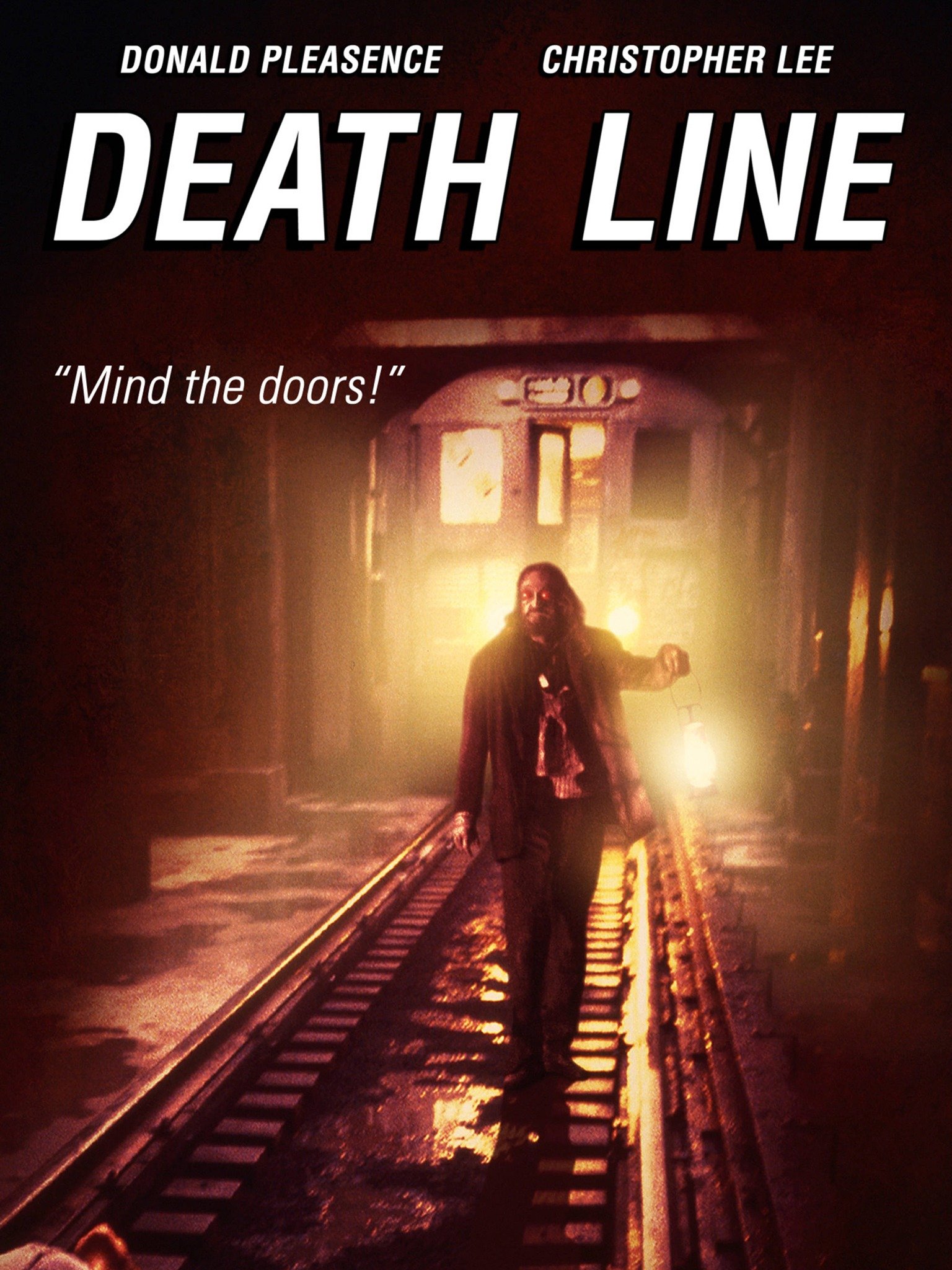
Seasonal Review: Death Line

Death Line (AKA Raw Meat) is a 1972 British thriller/horror film starring Donald Pleasance with a cameo from Christopher Lee and directed by Gary Sherman.

When an important member of the Ministry of Defense vanishes from a tube Station Inspector Calhoun (Pleasance) starts investigation discovering that the station in question has a history of missing persons. More people go missing and one turns up murdered after being impaled by a broom handle. With the assistance of a college couple the mystery is eventually solved and the threat ended.

Death Line is a slow film taking its time to unwind and even at an hour and half it feels a bit long and padded. The concept when revealed is better suited to an hour-long anthology than a full feature film. There is one very impressive single-take tracking shot but overall the film suffers from too slow of a pace.

Pleasance has been noted for giving one of his most eccentric performances and that is well deserved. He doesn’t chew the scenery, but the Calhoun’s characterization is quite unlike the sort of the role one would associate with Pleasance.

Death Line is currently streaming on the Criterion Channel as part of the collection 70s Horror.

Share

Quick Hits

Suffering a little headache so just a few quick observations and notes this morning.

My Work in Progress novel is coming along nicely, 11,000 words on the rough draft and exploring/discovering aspect of the story within the confines of the outline has been going well.

I have been re-watching Downfall about the final days in Hitler bunker as the Soviets take Berlin and frankly it feels like I am spying on Trump Campaign Headquarters with true Believers unable to accept reality, bootlickers scrambling to save themselves, and rank and file only just realizing that they have been led by a madman to their doom.

Did not watch the Presidential debates. Any event, however unimaginable, that would dissuade me from voting against Trump will be far larger than any verbal contest.

Going to spend at least some time this weekend with a virtual convention.

Have fun everyone.

Share

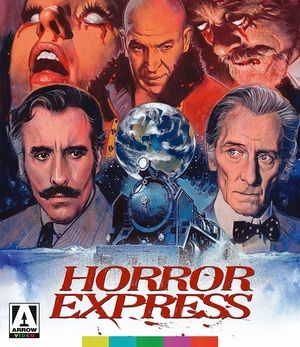
A Seasonal Viewing: Horror Express

This week my sweetie-wife and I re-watched 1972’s Horror Express starring those icons of horror film Christopher Lee and Peter Cushing with an additional appearance by America’s favorite lollipop loving detective Telly Savalas as Captain Kazan.

In 1906 Alexander Saxon (Lee) boards the trans-Siberian express heading West with a secret and astounding scientific discovery he found in remote Asia. Also aboard the train is Dr Wells (Cushing) a rival English scientist though not a villainous one, a Polish Count and his wife along with their mad priest very much in the style of Rasputin and an assortment of other curious and dubious characters. Even before the train departs the station a thief attempting to breaking Saxon’s secretive crate mysteriously dies with his eyes suddenly turned an opaque white. En route more terrifying deaths occur turning the passenger cars in a slaughterhouse. Really, for Lee and Cushing movie from the early 70s this movie has an astoundingly high body count. The express stops briefly to board Captain Kazan and his men apparently dispatched on orders from Moscow to deal, ineffectually, with the crisis.

In genre story construction a general rule, particularly in film, if that you ask the audience to accept only one truly fantastic thing in your story. The filmmakers of Horror Express have utterly no regard for this concept. Among the out of the world elements pushed into the plot are, beings frozen in ice reanimating after millions of years, alien visitations, the telepath absorption of someone entire mind, and mind transference. Despite the ‘junk drawer’ approach to genre story Horror Express is a fun watch. Lee and Cushing are great together and unlike many films where they share billing the movie centers on their relationship rather than using the actors as mere advertising props. Savalas revels in playing the cruel Cossack sent to sort thing out and the cast in general are quite enjoyable.

Horror Express is currently available as a VOD rental from Amazon for the princely sum of 99 cents.

Share

Captain America and Magneto: Marvel’s Original Anti-Fascists

It is interesting to contrast Marvel’s best-known Anti-Fascists, one nearly the Platonic Ideal of a modern comic book hero, Captain America, the other a genocidal villain driven by trauma and terror, Magnet. Both gained their anti-fascism during fascism’s original run, World War II but reacted in diametrically different manners. In discussing these two characters I will be referring to their cinematic presentations, Caps’ from the very successful Marvel Cinematic Universe and Magento from Fox’s more erratic X-Men franchise and associated films.

Steve Rogers was an underweight, under-sized, unhealthy man when American entered the war but driven by his intense sense of justice he desperately wanted to serve in the US Armed Forces despite being categorized as ‘4-F.’ After coming to the attention of Dr. Erskine Rogers was recruited into an experimental program to enhance human ability and attempt to create a ‘Super Solider.’ It’s important to note that in his interview with Erskine when asked if he ‘wanted to kill Nazis’ Rogers replied that he didn’t want to kill anyone but that he doesn’t like bullies. With an ideology that was already solidly anti-fascist Rogers also already possessed his most heroic qualities. The Super Soldier Serum may have granted him transhuman capabilities, but it was his moral code that defines his anti-fascism and also governed it limits.

Erik Lehnsherr a Polish Jew who would eventually take up the alias Magento was subjected to the horrors the Holocaust by Germany’s genocidal Nazi regime and while his mutant ability to manipulate all forms of metal was already present its development and his control were insufficient to protect either himself or his parents. Surviving the mass murder of Jews only because the attention of Dr. Klaus Schmidt aka Sabastian Shaw, Erik comes to his anti-fascism as a reaction to the brutal treatment of himself, his family, and his fellow Jews rather than from an innate moral code, despite as a younger man being a man of faith. Following World War II Erik adapts a personal mission as a NAZI hunter particularly interested in finding and taking revenge on Dr Schmidt. After successfully preventing nuclear war in an alternate history version of the Cuban Missile Crisis and targeting for destruction by the government that fear his and other mutant’s powers Erik adapts the name Magneto and identifies more as a mutant than with his Jewish ancestry. Taking the lesson he learned at the hands of Nazi brutality that humanity’s prejudice will lead it to always destroy those who are different he makes mutant survival and dominance his objective. Eventually Magneto attempts a massive attack to transform many of the world’s leaders into mutant regardless of the danger and death his machine will unleash because his objectives have transformed in obsessions.

Here we can compared critical moments between the two characters and how character plays into the importance of these moments.

Rogers, still a scrawny specimen without the benefits of Erskine’s serum, is suddenly confronted with a grenade during training, unaware that is a practice dummy round and while the rest of the trainees run for safety, he throws himself on the device attempting to shield everyone from the blast. He understands on an intuitive level self-sacrifice.

Magento’s mutant creation machine requires his unique abilities as a power source and the power levels needed are likely to kill him. Rather than subject himself to that risk and danger he kidnaps a teenage girl with the ability to steal his power and forces her to bear that risk. Erik’s terror and trauma has transformed him into his own version of fascism sacrificing others for his own goals.

And therein is the critical difference between the character and the moral difference in ways to combat fascism. You cannot adopt fascist ways without becoming a fascist yourself. It is noble to offer yourself up for the cause it is evil to offer up others.

Share

The Importance of Good Cinematography

I have a bit of a time crunch this morning so this will simply be a quick observation.

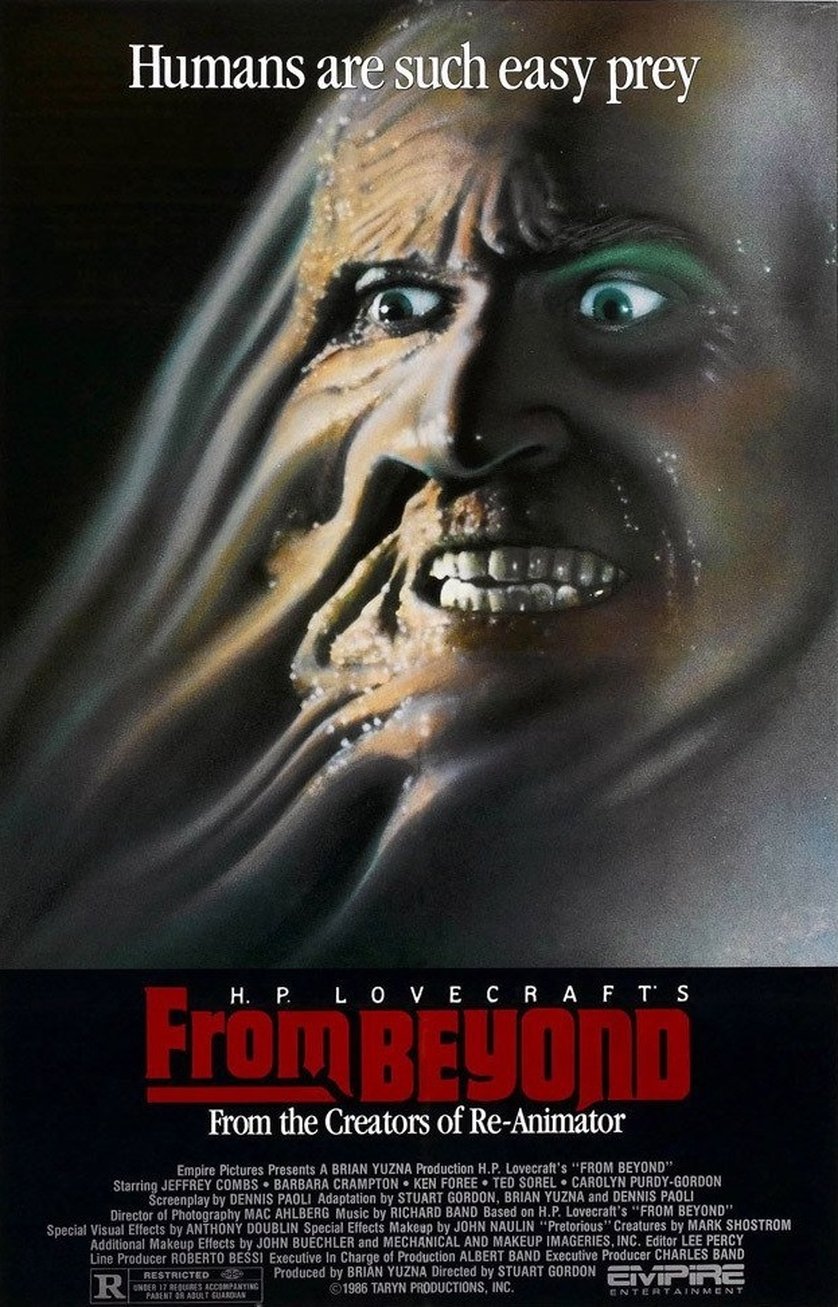
During the week I started a re-watch of From Beyond the second H.P. Lovecraft adaptation from Stuart Gordon following his version of Reanimator with returning cast member Barbara Crampton and Jeffrey Combs.

While the script is far from stellar it was perfectly serviceable, at least at the start before it veered into distinctly non-Lovecraftian area of BDSM and sexuality but right from the start the film is undercut and severely damaged by its cinematography.

The scenes are well lit, and everything is clear and shop from the foreground to the background and that is the trouble. Now I do not know if this was because of some budget restraints, directorial edict or simply a stylistic choice by DOP Mac Ahlberg but it doesn’t work.

Even when the characters are supposedly in a darkened space and using flashlights the scenes are well-lit and everything is perfectly visible. There is no use of shadow and darkness of create danger and mystery in the character’s space a serious failing for any horror film. There is nice work when the ‘resonator’ is engaged and the scenes become bathed in lavender and purple as the other-worldly dimension intrudes into our own, but had the other scenes been lit more realistically, with more care to the light and shadow then the drastic change during the inter-dimensional events would have been more effective.


Share

Stop It with The Pan and Scan

Last night my Sweetie-Wife and I decided to watch a streaming film. The first couple of movies she selected from Amazon’s steaming library, we were going to Amazon because their catalog of foreign specialty films seems the best, were unsuitable because they were not available via our Prime memberships and in addition to a rental fee were sourced from 16mm prints. I am never going to pay a rental fee for a low-quality dupe from 16mm.

She advanced that she wanted to see a spaghetti western preferably one with Klaus Kinski a quick search turned up I am Sartana … Your Angel of Death. Okay we gave that one a try.

It didn’t look right.

The original aspect ratio was 2.35 to 1 but that was not the presentation Amazon offered up. In addition, the director or director of photography adored shooting through along zoom lens which magnified camera shake which was additionally magnified by the Pan and Scan alteration. On top of that fast camera movement and frequent transitions to ‘Dutch Angles’ made the experience not simply unappealing but actually headache inducing.

We switched over to Django Defies Sartana which is presented in its original aspect ratio, 1.85 to 1, and taken from a much better source.

In these days of high definition wide screen televisions there is no call for Pan and Scan at all and it should be eliminated.

Share

Blu-Ray Review: The White Reindeer


A few weeks ago as my sweetie-wife and I relaxed watching Travel Man, an amusing show that spends 48 hours in various cities and well worth a watch on Hulu, I came across a tweet suggesting that people need to watch this older Finnish film about a woman that becomes a were-reindeer luring men to deaths. I shared the information with my sweetie-wife who instantly wanted to see it. (She has a love of things Finnish.) Searching failed to find any site hosting The White Reindeer for streaming and because my own curiosity grew quite elevated and I ordered a Blu-ray of the film from Germany. (It’s a joy owning a region free Blu-ray player and being able to view discs from literally anywhere in the world.)

Several weeks later The White Reindeer arrived in our mailbox.

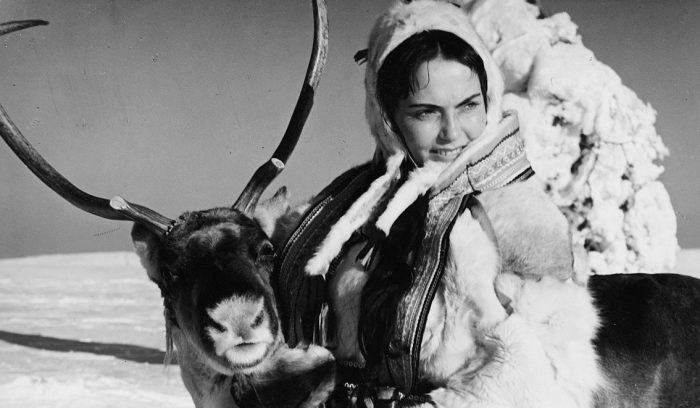
With a running time just over an hour The White Reindeer fits nicely into the sort of time slot that from the period would have been a ‘B’ picture but its quality is in no way associated with that ter. Starring and co-written by Mirjami Kuosmanen The White Reindeer’s protagonist is Pirita a young woman who find her newly married life to reindeer hunter Aslak more dull than she had expected as he is required to spend significant time on distant expeditions. In desperation she turns to a local wizard for magical help to make her irresistible but due to either the unusual nature of her birth or the malicious actions of the stone god that grants the power Pirita becomes a shapeshifter transforming in a rare white reindeer that no hunter can resist chasing to their doom.

The director Erik Blomberg avoids the typical transformation effects of the age and instead of lapse dissolves uses clever edits and cuts to suggest the change and promotes the fantastic feel of the film far better than if we had watched Pirita become the reindeer.

The White Reindeer won Best Fairy tale Film at the 1953 Cannes Film Festival the Golden Globe for Best Foreign Film in 1956.

More closely related to horror cinema that fantasy with clear mirroring of Universal’s The Wolf-Man without being derivative The White Reindeer is essential viewing for lovers of international horror films.

Share