Category Archives: Movies

The Godfather Coda: Completing the Saga


I own a Blu-ray of The Godfather and I have watched The Godfather: Part II several times but it wasn’t until last week that I finally sat down and over several installments, the same process I am employing for Zack Snyder’s Justice League, that I watched The Godfather Coda: The Death of Michael Corleone.

1972’s The Godfather is a classic of cinema, a triumph of filmmaking in the face of overwhelming adversity with lasting cultural impact as the film’s 50th anniversary approaches. The sequel deepened our understanding of the Corleone family, its history, and the ruthlessness required to sit atop a vast criminal empire as it corrupts the culture around it and the people inside it.

The Godfather Coda in comparison is a film that feels small. Cleverly staged mass assassinations of crime family bosses are far from new within this franchise and fail invoke much in the way of emotion or stakes. The plot involving Michael Corleone’s quest to absolve his murderous sins by going legitimate through corrupt deals with equally corrupt Roman Catholic officials seems perfunctory and with any real character weight. Familial conflicts, Michael’s son wanting a career in the arts, his illegitimate nephew affair with Michael’s daughter, and his strained relationship with his separated wife Kay, possess the requisite story beats but are executed in an unimaginative manner that any Lifetime movie would exceed. While lengthy in running time the film sprints to its conclusion cramming the death of a pope, the election of a new one and that pope’s assassination all into the story’s final act. Characters act in a manner more suited to movies that any reflection of reality perhaps best example by the assassins sent to kill Michael’s nephew who take the nephew’s current sexual partner hostage for no reason other than to present a ‘more dramatic’ scene when ruthless killers would have simply murdered her silently and then proceeded with their plan. This is mast worse by the fact that the character served no story purpose after that scene only heightening the contradiction of the scene.
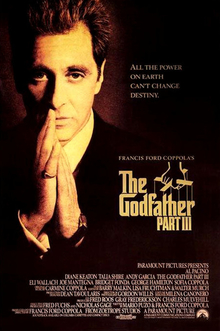
Sofia Coppola has earned rave praise for her skills as a filmmaker in her own right. I have seen Lost in Translation it is unquestionable that she has learned much from her father and is a very talented director. As an actress she leaves much to be desired. She had no chemistry with her romantic lead and presented no interior life from her character Mary Corleone. Her character sits at the story’s emotional center exerting a gravity that bends the fates of everyone around her and this casting seriously damaged the film.

For me The Godfather Saga ends with Part II.

Share

The Big Combo: Fante’s and Mingo’s Liminal Relationship


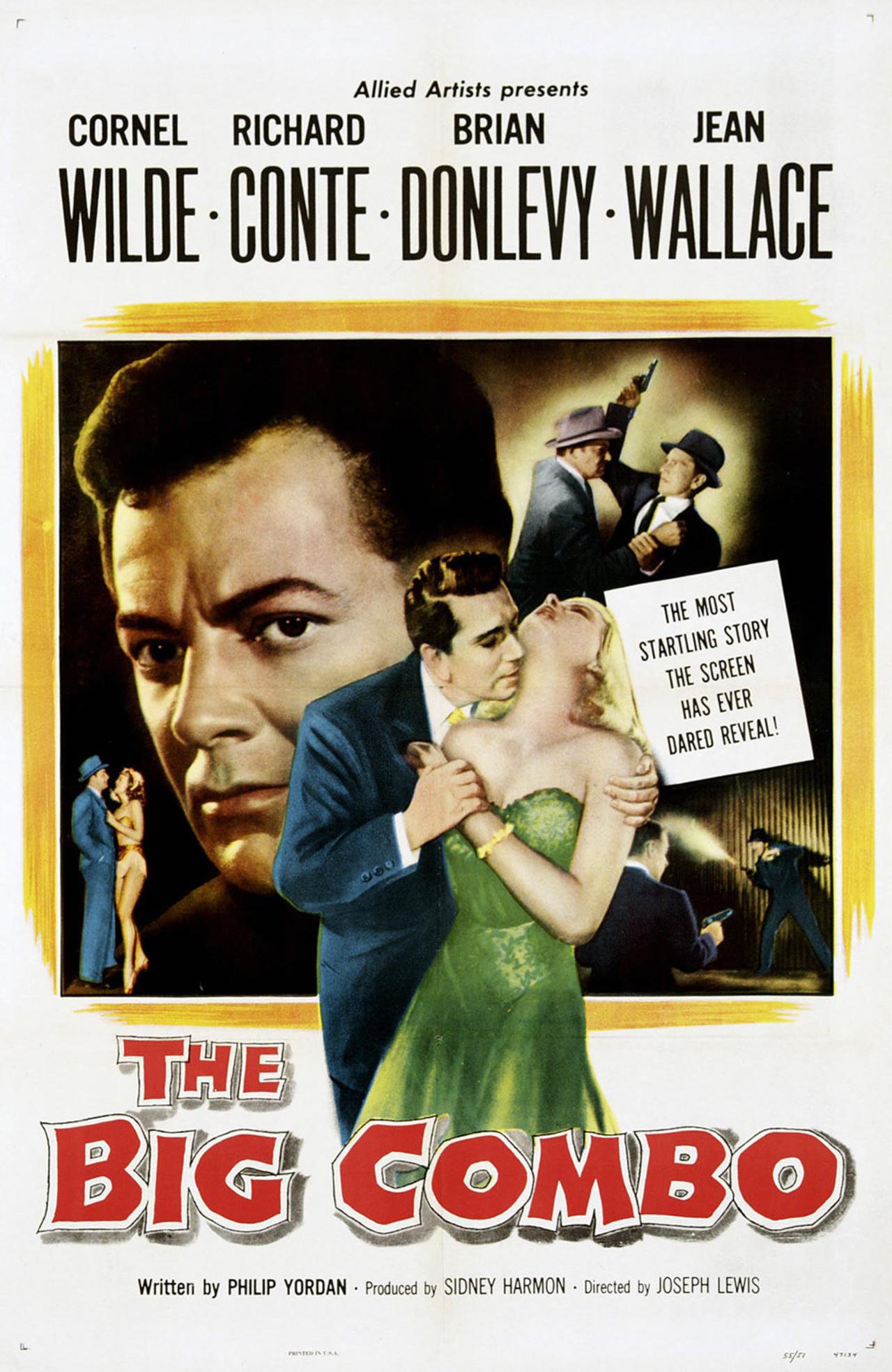
Saturday night a friend and I watched the 1955 noir film The Big Combo. The film stars Cornel Wilde as Police Lieutenant Diamond who is obsessed with charging and jailing a local organized crime boss, Mr. Brown, played by Richard Conte while having unrequited love for Brown’s mistress Susan Lowell. Combo in the title is a shortening of Combination one of many names assigned to organized along with Commission, and such, when for whatever reasons the title ‘mafia’ is avoided.

The film’s limited budget gives it a decidedly B picture feel and the dialog from time to time to too on-point with characters delivering clumsy exposition, but the twisty narrative delivers nicely with the final reveals of the plot playing out well.

This is a movie where the supporting cast have the most memorable characters and performances. John Hoyt, perhaps best remembered as the Enterprise’s original doctor in Star trek’s first Pilot The Cage, has but a single scene as a retired Swedish Sea Captain but fills his few moments on screen with life and vitality.

However, the support characters that fascinate me the most in The Big Combo are a pair of hitmen, Fante and Mingo, playing to perfection by Lee Van Cleef and Earl Holliman respectively. The pair are inseparable, traveling together, eating together, and sharing a tiny apartment. Fante is the judicious, calculating and older member of the duo while Mingo’s character is brash, juvenile and more likely to react without considering the consequences.

While the characters are never ‘coded’ as gay by any of the usual traits used by cinema of the period, no lisps, no perchance for extravagance, no perfumed cards or elaborately stylish outfits, the pair’s relationship can clearly and be easily interpreted as a close, bonded pair or lovers. This is even more evident when Fante’s leaves Mingo utterly shattered emotionally so much so that all traces of criminal loyalty vanish. Never is there an overt action that would support the interpretation of the characters as gay but neither are there any of the easily dropped clues such as ogling women or discussing girlfriends and dolls that would have countered such a conclusion. Fante and Mingo live in the liminal space between what is suspected and what is confirmed, shadowy, hidden, a perfect film noir relationship.

Share

Incomplete Observations on Vampyres (1974)


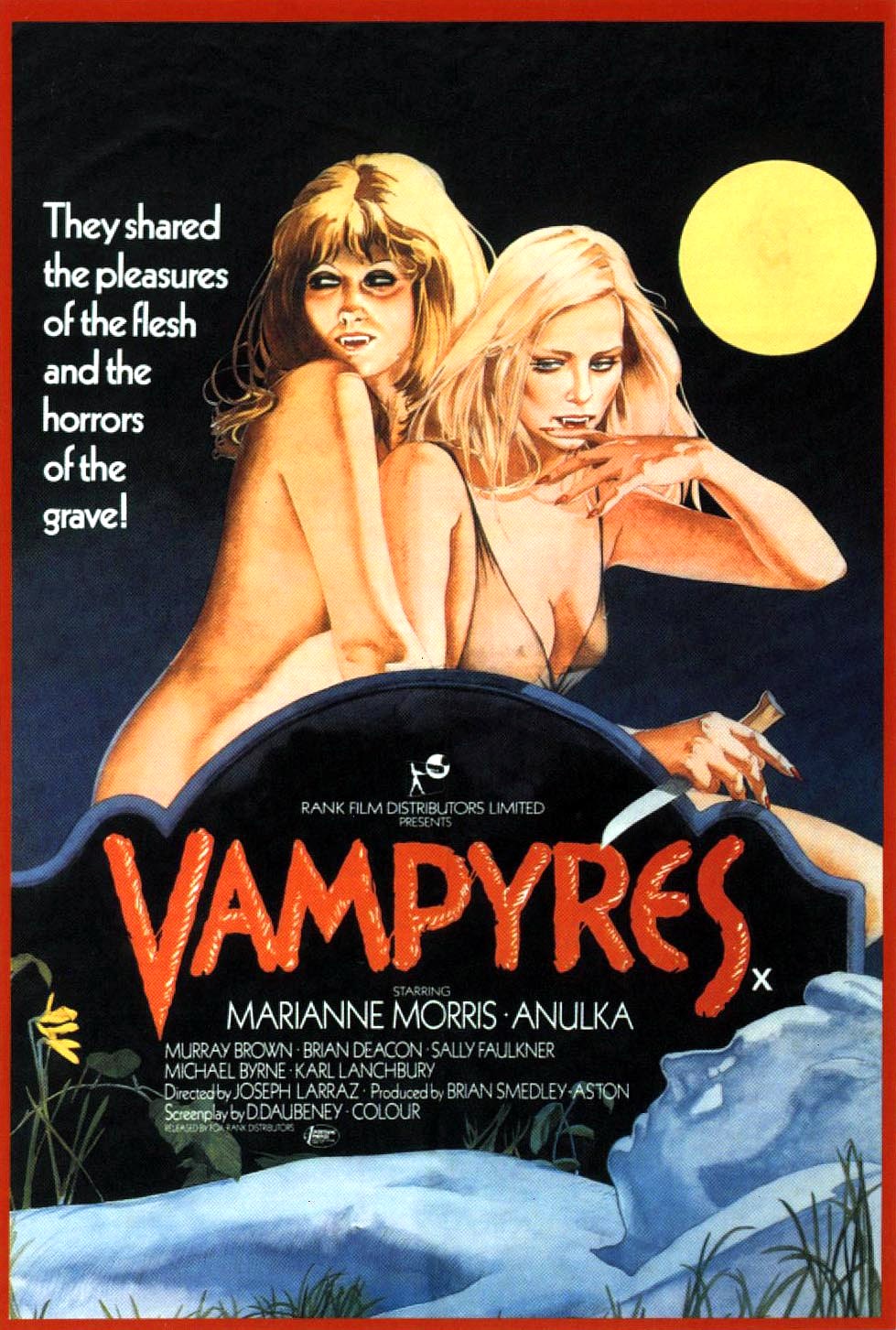
Among the curated horror movies currently available on SHUDDER is the mid-70s ‘erotic’ (read, naked women) horror flick Vampyres.

Hailing from the UK, Vampyres centers on a pair of lesbian vampires living in a dilapidated country manor, the same used for the exterior shots of The Rocky Horror Picture Show and many Hammer productions, where, with carnal seduction, they lure unsuspecting victims.

One weeknight after I have finished my writing for the evening, I usually like to relax by watching videos before bed and I have watched at least the first act of Vampyres and witnessed perhaps the worst serious sex scene committed to celluloid. I literally laughed out loud when the couple began ‘making out’ because it looked so clumsy, so fumbling that I was immediately remined of the comedic version of the scene in Syfy’s series Resident Alien, and yet this was supposed to be titillating rather than laughable.

What is crystal clear is that the film has no characters. Oh, actors come in, deliver lines, and fumble at each other nude bodies, they do not portray any sort of actual person. “Ted” in the first act picks up one of the vampires, Fran, while she pretends to be hitchhiking. We are supposed to believe that she seduces him but without any convincing dialog it’s just two people who decide to go to her house and screw. Ted has no motivation beyond his supposed attraction to Fran. He wasn’t coming from anywhere, or going to any place on his drive, he exists only to have scenes with a vampire. Scene after scene is devoid of any motivation on the character’s part. People do things to achieve goal that serve their needs the exterior reflecting the interior here they just get wine glasses, drink, and screw without anything beyond the walls of the set existing.

I can see why I have never heard of this movie.


Share

A Harebrained Film: Night of the Lepus


A dozen years after the release of her cinematically legendary showers sequence and eight years before she would appear with her daughter Jamie Lee Curtis in John Carpenter’s

CREATOR: gd-jpeg v1.0 (using IJG JPEG v62), quality = 85

atmospheric horror film The Fog, Janet Leigh, along with DeForest Kelley three years after Star Trek grounded, starred in a most unusual SF horror movie 1972’s Night of the Lepus.

Adapted from the satirical SF novel The Year of the Angry Rabbit by Russell Braddon, NOTL’s central conceit is the Arizona countryside suffering nocturnal assaults from mutated giant rabbits.

The film attempts and fails to build credibility for its premise by opening with a faux newscaster intoning seriously about rabbits upsetting the delicate ecological balance in Australia after their introduction to that continent. From there the story moves to Arizona where rancher Hillman is dealing with a rabbit infestation of his own. Rather than deploy harsh poisons to deal with the pests his friend Clark (DeForest Kelley) at the university puts him in contact with a husband/wife team of scientists Roy and Gerry Bennett (Gerry Bennett played by Janet Leigh.) The pair decide that using hormones to make ‘boy rabbits act more like girl rabbits’ is the solution to Hillman’s troubles and begin experimentation on rabbits captured from the ranch. The filmmakers use the Bennett’s young daughter both as clumsy exposition, ‘Mommy what is a control group?’ and the method by which a rabbit already mutated by the artificial is released into the wild to infect the ranch’s rouge population. And yes, the film tries to force the idea that hormonally changing one rabbit somehow infects other without the use of a bacteria or virus. Despite the EPA having been established two years earlier the scientific pair also have no hesitation in developing and deploying an unknown effect into the ecology without significant testing as their timeline from concept to eradication was mere weeks.

The greatest hurdle the filmmakers failed to clear isn’t the lack of character arcs or scientific illiteracy but rather no amount of slow-motion photography on miniature sets and even with fake blood smeared on their snouts, rabbits cannot look credibly frightening. Rabbits as a violent lethal threat belongs solely to the domain of British farce and not in the dying giant animal genre.

I found Night of the Lepus streaming for free on a Roku channel, but they interrupted the movie every ten minutes for a block of five commercials. even minus those interruptions except for comedic entertainment I could not recommend this strange unique movie.


Share

Horror Review: Thirst (1979)


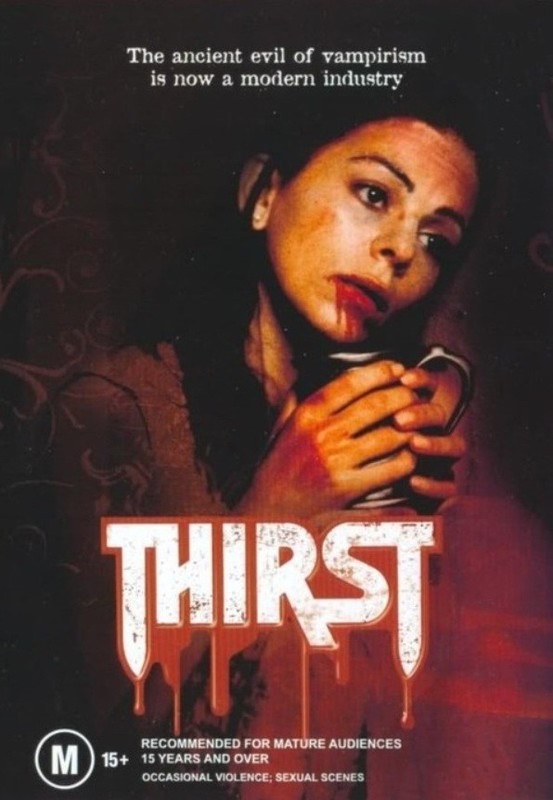
As part of the Ozploitation cycle of cinema 1979’s Thirst is low on budget but big on concept.

The film centers on Kate Davis (Chantal Contouri) a successful businesswoman about of take a several week vacation but instead is kidnapped by a mysterious cult-like organization, The Brotherhood, taking advantage of her expected absence to indoctrinate her into their lifestyle of modern vampirism.

The Brotherhood is riven by factions, all who wants Kate to fully embrace their lifestyles, but who differ in what methods that consider acceptable with Dr. Fraser (David Hemmings) more reverential of Kate’s ancestry while Dr Gauss (Henry Silva) and others are willing to using dangerous conditioning methods even if Kate’s sanity shatters.

Directed by Rod Hardy and photographed by Vince Morton Thirstis competently made and achieves quite a bit on tis limited budgets. It never answers the question of The Brotherhood are gaining actual benefits from their dietary choices or if they are simply mad as such considerations are actual incidental to the thrust of the story and Kate’s struggle to retain her agency and identity. It is a pleasure that unlike several other films of the cycle there was no attempt to disguise the characters or the setting as American but instead the film is presented as natively Australian.

With an extended dream/nightmare sequence dominating the film’s second act Thirst is not a horror movie that relies upon ‘kills’ or ‘jump scare’ to provoke a reaction from its audience. Its sedate pace and its emphasis psychological threats over physical ones means it is not a film for everyone but its thematic treatment of industrialization and the wealthy literally cannibalizing the lower classes make this a very interesting movie that will have strong appeal to some.

Share

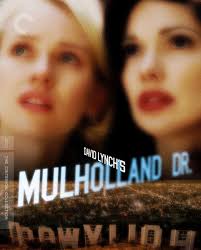
Mulholland Dr and Narrative Logic


I have now added to my ever-growing Blu-ray and DVD collection David Lynch’s 2001 protean production Mulholland Dr and it has been considering the nature of logical order in film and fiction.

Fiction generally behaves in accordance with its own internal and decipherable narrative logic that allows the reader or audience to suspend disbelief and accept the characters and events are credible representations of some reality. This spans the gauntlet from grounded ‘realistic’ dramas such as The Remains of the Day to fantastic and physics defying spectacles like Avengers: Endgame. The cause-and-effect logic of the story dictates the progression of the characters actions, emotions, and growth with a clear and understanding relationship between event and outcome.

Mulholland Dr abandons all sense of narrative logic in favor of dream logic. The audience is denied a firm, clear, foundation of logical rules by which the film operates leaving them swept by the currents of imagery, raw emotion, and sound into a whirlpool that each individual is solely responsible for interpreting. The film is most often compared directly to a dream where major events and sequences have only the barest of connecting narratives flowing freely from one to another with a logic that feels present but is forever just beyond discovery.

I cannot tell you what Mulholland Dr is about. I cannot give to you a definitive interpretation on what maybe reality and what may be dream if such a distinction even exists within its narrative. It is like Kubrick’s 2001: A Space Odyssey but with is cold clinical style replaced by one that is unsettling, disturbing, and even horrifying.

I have seen this film called the best horror movie of the early 2000s and it is hard to argue with that assessment. Horror works best when not only the characters but the audience is forced to face threatening events that defy understanding. The dead do not rise and feed upon the living, magical beasts do not prowl the night, and science has not produced monstrosities savaging the countryside. But eventually in horror films and fiction the new rules are discovered, the vampire must rest on earth from its grave, the uncompleted tasked finished so the spirits my rest, the nature of the beast is understood and through that defeated returning the world to an order that again rational. Mulholland Drnever resolves its internal logical, the world unbalanced is never again rational, and the unsettled horror of a cold uncaring universe that beyond understanding remains, haunting the audience far beyond the film’s 146-minute running time.

I do not pretend to understand Lynch’s vision but I do feel it and that I think that was his intent all along.

Share

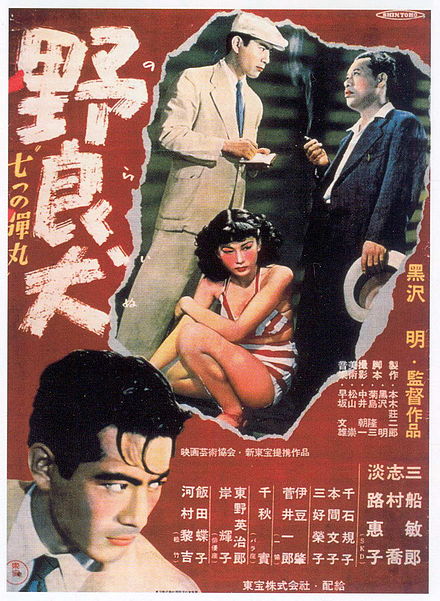
Streaming Review: Stray Dog – A Study in Guilt


Starring a young 29- year-old Toshiro Mifune Stray Dog is a 1949 Japanese noir that has its recurring themes guilt and the pressures of societal decay on people without resources.

Rookie homicide detective Murakami tired and suffering from an oppressive heatwave blanketing the city has his pocket picked but instead of taking his wallet the thief makes off with Murakami’s police issues Colt pistol. Murakami dutifully reports the theft already quite guilty about his negligence certain that this will get him booted from the force into a city that has few opportunities as the nation crawls out of the destruction, physical and emotional, of the war.

Partnered with veteran policeman Sato (Takashi Shimura) the pair begin following leads to identify the thief and recover the stolen gun. The hunt leads them down a trail of petty crimes growing more serious and more dangerous as they penetrate the underbelly of the city’s criminal element. With each crime the pistol is tied to Murakami’s guilt grows as he takes on more and more responsibility for its abuse by the criminals. Simultaneously he develops an empathy for many of the people he encounters, people for whom the harsh realities of the nation have trapped in lives of desperation and shattered illusions.

An early film by renowned director Akira Kurosawa Stray Dog has clear inspirations from the American genre of film noir while still presenting the themes and imagery that is iconic to Kurosawa’s film legacy. Mifune here presents a different sort of character than the gruff and imposing types he would often be associated with later in his equally impressive career. Murakami is a sensitive man and it’s said many time in the film perhaps too sensitive for policework but it is this quality and Mifune’s excellent portrayal of it that provides the bridge that allows the audience to see the crushed humanity in the city’s underworld.

Stray Dog is an excellent example of the universality of noirand that the human conditions it comments upon are universal rather than national and I can heartily recommend watching it.

Stray Dog is currently streaming on The Criterion Channel.

Share

Pedestals Are for Things Not People


With the flood of new support for Charisma Carpenter and Ray Fisher as they recount abusive and toxic environments on sets under the control of Joss Whedon it is important to remember that any artistic creator no matter how beloved their work are fallible flawed messy human beings not statuary icons of platonic virtue.

One can adore an artist’s work such as Buffy The Vampire Slayer, Harry Potter, or Chinatown and still recognized and condemn the creator for their actions or unjust philosophies.

It is equally justifiable to refuse to engage with their art if the offense is beyond a pale you can accept. That is a line that each person must determine for themselves.

Wherever you draw your personal line of embargo it is important long before that moment before the horrible revelations come to light that you do not place these people on the pedestals of adoration, that is where the art belongs, but always remind yourself that no matter the touching nature of their creations they people and that  good art can come from bad people.

Share

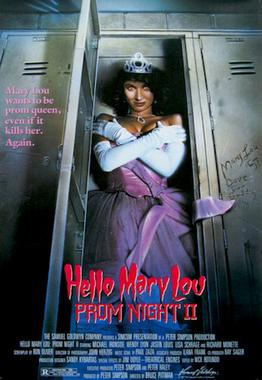
Not Worth Your Time: Hello Mary Lou; Prom Night 2


The 80s were a good time and a bad time for horror films. The monumental success in the late 70s of Halloween inspired innumerable low budget film makers and studios that a cheap slasher was the sure path to box office riches producing a crop of under-funded knockoffs that possessed none of the style of the films they were following. 1980 brought the rip-off production Prom Nightwhich had the benefit of starring Jamie Lee Curtis who had starred Halloween but other than that had precious little to offer.

Six years later a wholly different production under the title The Haunting of Hamilton High retooled and retitled itself in Hello Mary Lou; Prom Night 2 a story without any connection to the first Prom Night save that take place in the same high school. Both films are Canadian productions that attempt to present their locals as standard Americana but I could swear that in Prom Night 2 when money is flashed it has a clearly Canadian appearance.

The plot of Prom Night 2 is fairly straight forward, Mary Lou Maloney, an enthusiastic sinner of a high school girl, is killed in an accident on Prom night 1957 before she can be crown as prom queen and 30 years later her vengeful and still sinful spirit descends on the high school thirsting for sex, violence, and her crown.

This is film is a mess.

It rips off so many themes and shots and concepts from other movies that there is scarcely anything in it which it can claim as its own. Trying to merge ideas from The Exorcist, Carrie, and Nightmare on Elm Street proved to be a fool’s errand and aside from Lisa Schrage as Mary Lou and perhaps Michael Ironside there is little to praise in the acting presented to us. The lines are delivered without conviction or credibility while being shot in a flat over-lit video style. There is nothing to recommend this film and its gratuitous use of female nudity reveals not only the actresses but the production desperate attempt to drawn in an audience as low class as the production itself.

Hello Mary Lou; Prom Night 2 is currently streaming on Shudder.

Share

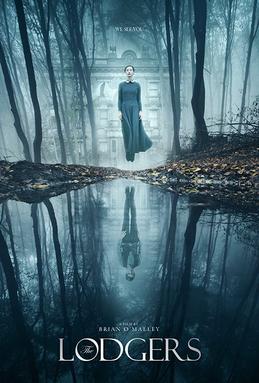
Streaming Review: The Lodgers


With Saint Patrick’s Day fast approaching I was in the mood for some Irish themed horror and something a little more authentic that any film of the Leprechaun franchise. Sunday night I treated myself the 2017’s Irish Gothic horror The Lodgers.

Set in the Irish countryside following World War I the story centers on fraternal twins Rachel and Edward who live in an isolated and decaying manor trapped by a family superstition or curse that compels them to always be in their beds by midnight, never admit a stranger to the home, and never abandon one another. The film opens on their 18th birthday and an unrevealed expectation that is linked to their coming of age. Into this creepy atmospheric situation comes Sean recently returned home from the war facing the dual challenges of having lost a leg and being seen as a traitor for her service to the hated English. Rachel’s blossoming sexual desires, Edward’s terror of leaving the house day or night, the family’s non-existent finances, and Sean’s attraction to Rachel combine for an explosive mixture that threatens the twins with the exposure of their actual natures.

There are many styles of horror films, rampaging monsters, murderous masked killers, and the slow burn mood piece of which The Lodgers falls neatly into. The film is not one with an exaggerated body county and the effects are there to create unsettling imagery rather than memorable kills. It is a film that unwinds with its characters and as each secret is pulled unwillingly from them. Directed by Brian O’Malley The Lodgers takes it’s time in revealing its truths trusting that the audience will be intrigued by the mystery and the dreamlike haunting imagery beautifully photographed by cinematographer Richard Kendrick. The performances by Charlotte Vega and Bill Milner are suitably internalized, matching the gothic nature of the story’s themes of isolation, both physical and social, and repressed nature of the characters.

With a brief running time of 92 minutes The Lodgers does not overstay its welcome nor needlessly meander but rather tells its tale with clean plotting that doesn’t disrupt its sedate pacing. While some reviewers have complained that the films has few ‘scares’ I enjoy a film that expects moods to carry more than a suddenly startling image or sound.

The Lodgers is not for everyone. If your tastes in horror expects more excitement than slow tension it is likely not to your taste but for people who enjoyed Robert Wise’s The Haunting this may be more to their liking.

Update: The Lodger is currently streaming on Amazon Prime Video.

Share