Category Archives: Horror

A Most Unique Adaptation

.

In the 1930s, the major studios of Hollywood each had a ‘brand’ of movies that they were best known for: MGM for glitzy, polished, and extravagant films; Paramount for movies with an air of European artistry; Warner Brothers for gritty, ripped-from-the-headlines stories; and Universal, of course, was the House of Horror and the Universal Monsters.

Warner Brothers Studios

Because Universal’s best-known and best-at-filling-theaters monsters were adaptations of classic novels that were in the public domain, they could not keep Dracula and Frankenstein all to themselves. As such, there have been nearly countless remakes and adaptations of the novels, often taking the course of making Dracula a love story stretching across centuries (an aspect not found in the source material) and, with Frankenstein, making the creature more and more sympathetic (an element found in the novel) until it was elevated to heroic status.

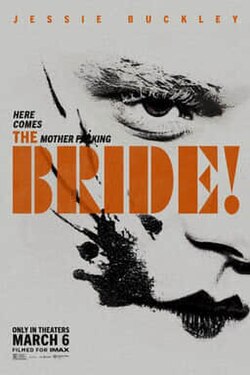
Next spring, writer/director Maggie Gyllenhaal will give us perhaps the most unique adaptation of a classic Universal Monster with her feature film The Bride!

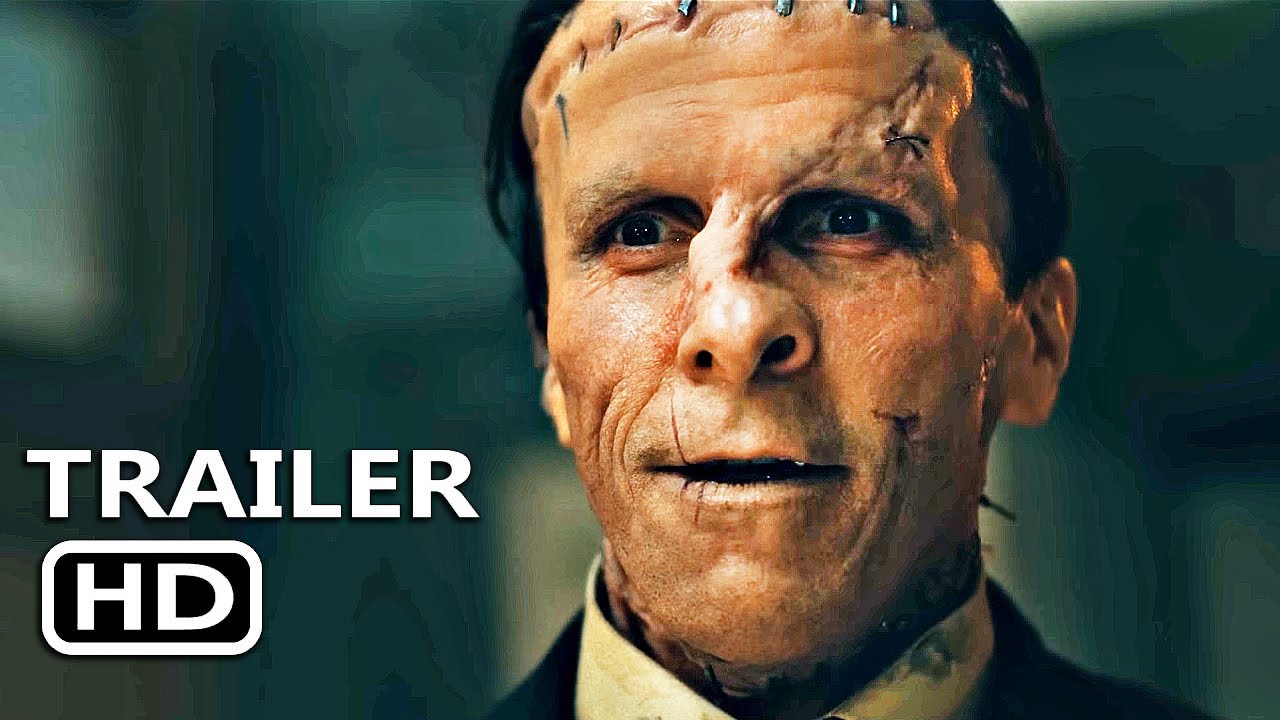
Starring Christian Bale as the Creature and Jessie Buckley as The Bride, Gyllenhaal reimagines the Frankenstein myth. It may have started as a novel, but I feel Mary Shelley’s tale has evolved into myth, as something that might have come out of Warner Brothers’ studios in the late 1930s: a prohibition-era gangster movie.

This take is so wild, so out of the box, that I think I may have no choice but to see it in the theater, giving it my attention as a reward for its sheer audacity.


youtube placeholder image

Share

Secret Morgue 6: 666 Satanic Panic

Film Geeks SD

.

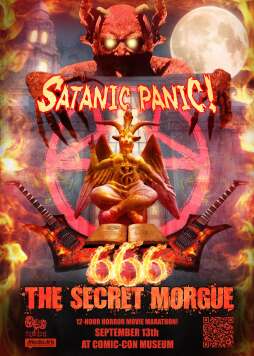
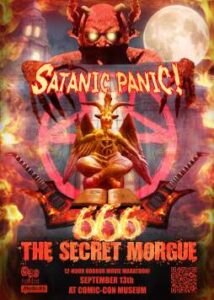
Saturday September 13 saw the sixth Secret Morgue movie festival, a marathon of 6 theme-linked horror films screened all day and into the late night at the Comic-Con Museum in Balboa Park by San Diego Film Geeks. Being the 6th the theme was announced to be ‘satanic panic.’ I have attended 4 previous regular Secret Morgue screenings and one special two years ago with a unifying theme of witches and witchcraft, loving and enjoying each marathon.


Contempo III Productions


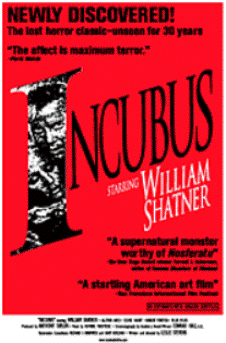
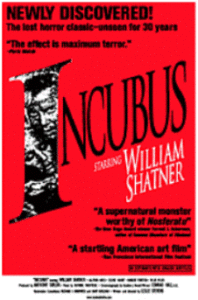
The first feature was the only film I had already seen, 1966’s Incubus. Performed entirely in the constructed language of Esperanto, the film stars William Shatner just before he began his work on Star Trek. The plot revolves around a collection of demons who lure corrupted and evil people to their doom and damnation, but one Kia longs to bring a good person, a hero, to hell and sets her sights on Marc (William Shatner), igniting a battle of wills and temptations for Marc’s soul. I liked this film and enjoyed watching it again after so many years.


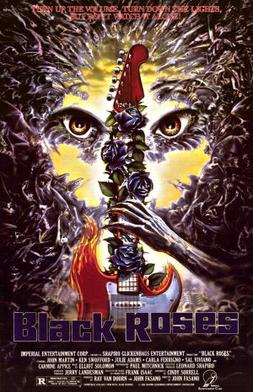
Shaprio-Glickenhouse Productions

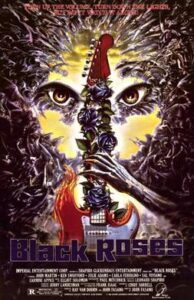
Black Roses (1988), a limited budget movie produced in Canada, followed as the second feature. A satanic heavy metal group making their first non-studio performance has come to the quite small town of Mill Basin. The kids are drawn to the group, while the parents fear the music and musicians. The twist is the group truly are agents of Satan and converts the teenagers to corruption and evil with only an ineffectual English teacher opposing them. I honestly could not determine if Black Roses had been intended as comedy or was actually that badly made.


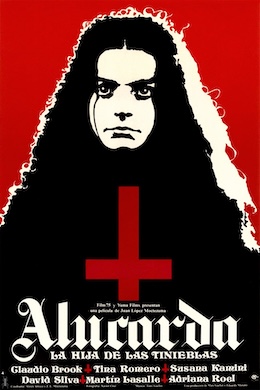
Yuma FIlma 75

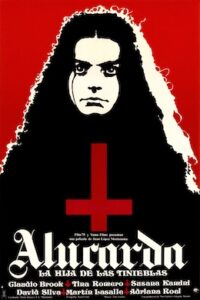
Things improved with the 3rd feature, Alucarda, a Mexican film from 1977. The filmmaker’s daughter was present to introduce the film and speak briefly about her father.

Censored in Mexico, Alucarda is a very loose adaptation of the 1872 novel Carmilla. Justine, a teenage girl recently orphaned, has come to live in a convent and quickly becomes fast friends with Alucarda. The girls are accosted by stereotypical ‘Gypsies’ and soon fall under dark Satanic influences bringing terror and death to the convent.



Universal Studios

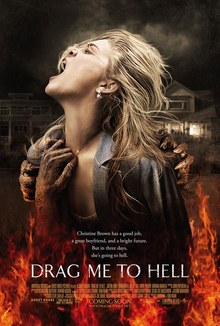
The 4th film was one I hadn’t seen but had wanted to for some time: Sam Raimi’s Drag me to Hell, long heralded as the director’s return to horror after his foray into superhero movies with the original Spider-Man trilogy. The audience was treated to a special video introduction by Sam Raimi and his brother Ivan who had together co-written the script.

Loan officer Christine Brown, trying to prove herself ‘tough enough’ for an important promotion and chafing from her simple rural roots, denies a woman a third extension on her mortgage and in the following altercation, the woman, again a film stereotype of a ‘gypsy’ takes deep offense. She lays a curse on Christine, proclaiming soon it will be Christine who comes to beg. Christine now suffers a ticking clock to find a method to escape the curse before a demon arises and literally drags her to hell.
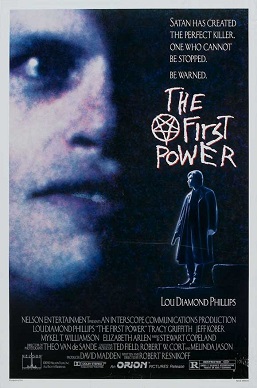
Orion Pictures

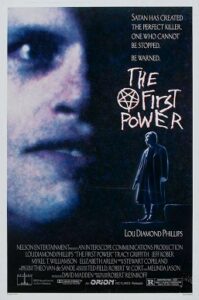
After a dinner break of pizza, we returned for the fifth movie 1990’s Satanically-powered serial killer movie The First Power. I can’t decide which was the greater ignorance displayed by the filmmakers, their understanding of the American criminal justice system or their comprehension of Christian theology.

Detective Russell Logan (Lou Diamond Phillips) receives tips and guidance from an anonymous psychic Tess (Tracye Griffith) leading to the capture of a notorious active serial killer but as a price for her assistance, she extracts a promise from Logan that the killer will not be subjected to the death penalty. (A decision that is not in the hands of any police detective.) The killer is executed and resurrects as a body possession spirit leading Logan and Tess on a chase for an immortal serial killer wielding the first power, Resurrection.
Generation International Pictures

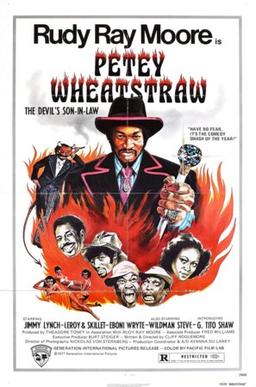
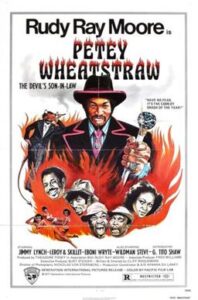
The festival ended with a screening of a blaxploitation film, Petey Wheatstraw: The Devil’s Sun-in-Law.

Released in 1977, Petey Wheatstraw is a movie of its time, place, and unique production. A true ‘blaxploitation’ movie, it was created, produced and performed by black actors and creatives, telling jokes that were tasteless at the time and today no white production could even begin to approach. It’s a common sentiment that Blazing Saddles couldn’t be made today but trust me when I say that Saddles doesn’t come close to the boundary-breaking tone of Petey Wheatstraw.

Petey, (Rudy Ray Moore) after being brought to life by Lucifer following being gunned down at a funeral by rivals is empowered to seek revenge provided he marries Lucifer’s daughter, a woman of unspeakable ugliness.

I cannot speak fully to this feature. The hour had drawn late, and my vitality flagged, and I have limited tolerance for literal scatological humor. I can say that this was intended to be funny, unlike Black Roses, and before I left, I had laughed, heartily, several times. Petey Wheatstraw is streaming, and I may still finish the movie.

That was the Secret Morgue for 2025, and I can hardly wait for the next one.

Share

del Toro and Frankenstein

.

Netflix

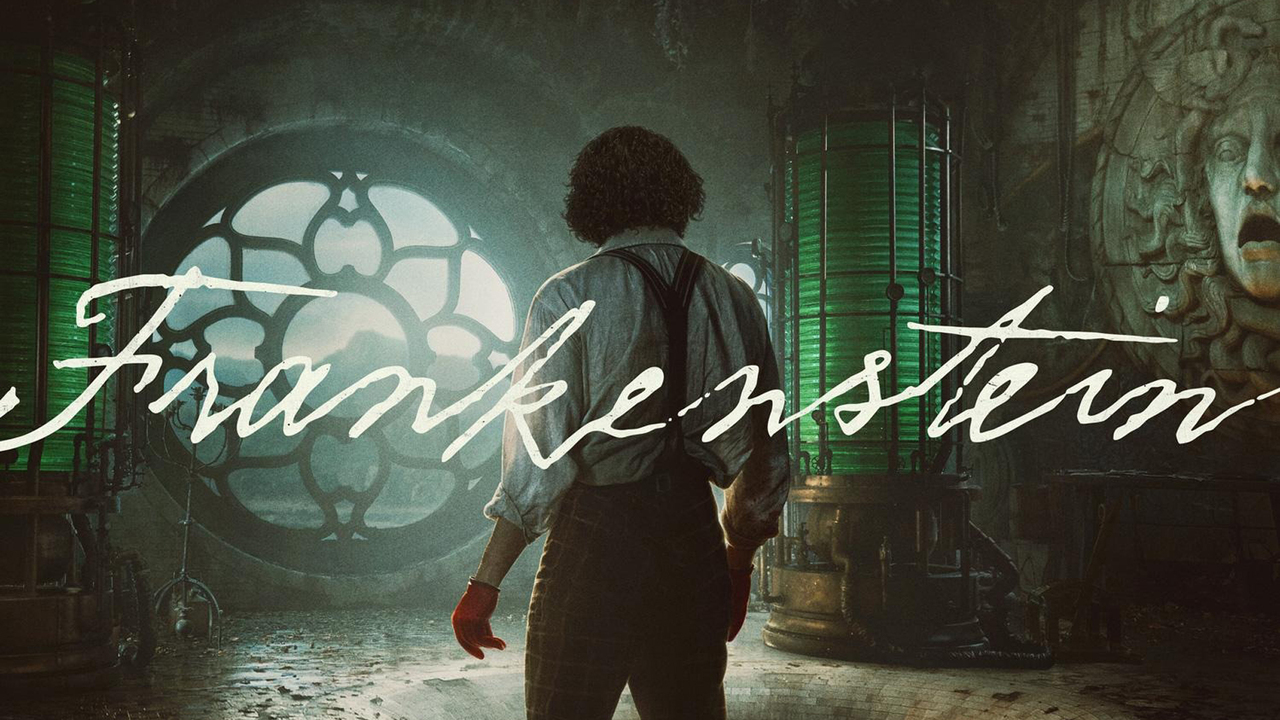
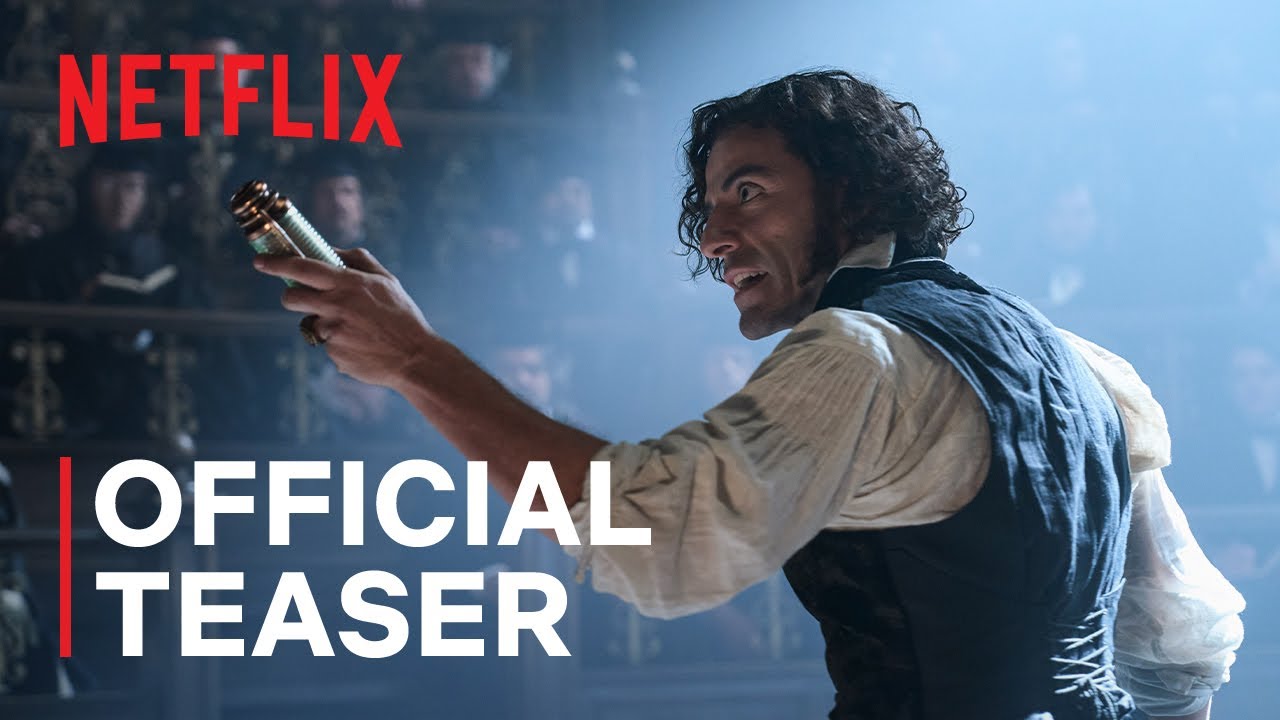
At the Venice Film Festival Guillermo del Toro premiered his latest film Frankenstein adapted from the classic early 19th century novel by Mary Shelley. One published review of the feature criticizes it for presenting Frankenstein’s creation as too sympathetic leaving Victor Frankenstein (Oscar Isaac) as the real villain of the work. There has been quite a bit of pushback from various sections online to this interpretation by the critic declaring loudly and in no uncertain terms that this is in fact the theme of Shelley’s novel.

Now, anyone who has seen much of del Toro’s fantastic work should be far from surprised that in any ‘monster’ movie that his sympathies lie with the monsters. This has been del Toro’s theme in most of his films including his Oscar-winning The Shape of Water. It is who the man and who the artist is.

I would wager dollars to donuts that in this adaptation of the novel some things are going to be changed to keep the sympathy with the creature and one of those elements is the murder of William, Victor Frankenstein’s younger brother, The creature then frames the family’s nurse, Justine, for killing William, leading to her lynching at the hands of an outraged mob.

In the film Doctor Sleep, the character of Rose the Hat, played to terrifying perfection by Rebecca Ferguson, tortures and murders a young boy to enhance the psychic energies she and her ‘family’ require. No one held Rose in any sympathy nor should they even though her motivations, survival, are more excusable than the creature’s, which were simply anger and vengeance. The audience, if forced to witness a child’s murder, on screen, will abandon all sympathy for the creature and his emotional trauma at being abandoned. If this event is in this adaptation, then it will take place suitably offscreen and as such will not really be real in the emotional context of the audience.

Here is where I tend to part ways with many people’s interpretation and sympathy for Frankenstein’s creation. Yes, being abandoned as essentially a child by his creator, his father, is a terrible thing to endure. Being shunned for one’s physical appearance is something that creates deep and terrible emotional scars. For that there are countless people already deserving of our sympathy because they have not turned that pain into murderous rage.

Some do.

Some people feel so isolated, hurt, tormented, and rejected by the people and society around them that they become vessels of pure, unrestrained rage. Sadly, it is not uncommon for these hurt and tormented souls to murder by the score. Like the creature they feel ‘justified’ in their acts of violence against those that they have rightly or wrongly concluded are the cause of their misery.

Tremendous emotional injury and hurt are never an excuse for wanton murder and violence, not in the real world and not in fiction. I can have no sympathy for the creature because it is intelligent enough and self-aware enough to know not only what it does but why it does it and yet it still chooses to murder.

Share

Movie Review: Weapons

.

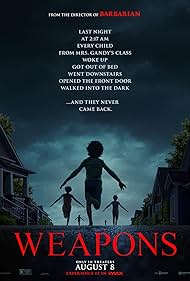
From writer/Director Zack Cregger, the man responsible for the highly praised horror film Barbarian, comes his latest horror film Weapons.

Now, while Barbarian was indeed highly praised within the horror and critical community, it was a movie that for me fell apart in the final act and for which I did not care. As such, when the marketing for Weapons touted Cregger’s writing and direction, it provoked very little for me to make the excursion to see this in the theater. However, as word of mouth grew and the film proved to have ‘legs’ at the box office, my curiosity became activated and Friday evening I went to see it.

Warner Bros Studios

Weapons is the mystery of Justine Grady’s (Julia Garner) 3rd grade class that, with the exception of a single student, Alex (Cary Christopher), rose from their beds in the middle of the night, running off into the dark vanishing without a trace. When the police investigation fails to produce answers, much of the town, including Archer Graf (Josh Brolin), father of one of the missing children, turn on Justine as it was her class and only her class that suffered the strange and traumatic event.

Justine is not a classically ‘likable’ protagonist, with a somewhat dodgy past and an issue with alcohol, she makes an easy target for the terrified and enraged community and a particular target of Archer, certain that Justine knows more than she is saying.

Weapons is presented in a chapter format, with the different sections of the film told with a focus on and from the point of view of various characters in the community, not all of whom were directly affected by the mass disappearance. Some subplots remain distinct and unconnected to the story’s central mystery, adding color and understanding of the characters. The chapters also present events in not wholly chronological order, so something strange, frightening, and mysterious becomes understandable when viewed from another character’s experiences.

Unlike Barbarian, I found Weapons a thoroughly engaging piece of cinema. The mystery’s resolution suffered none of the suspension of disbelief shattering action that plagued Cregger’s previous movie. The only weakness of the film is in the middle section where a couple of ‘jump scares’ seem to exist with the only purpose being to remind you that you are indeed watching a horror film and not trusting that the situation and characters are enough to keep your interest high.

Weapons works as a study of characters under stress and trauma and as a horror mystery that resolves nicely and neatly without loose ends of action too unbelievable to sustain. If horror films are your jam, it is well worth a trip to the theater.

Share

Movie Review: Magic (1978)

.

For many people, the astounding acting skills of Anthony Hopkins exploded into their perceptions, despite decades of on-screen performances, with his Oscar-winning turn in 1991’s The Silence of the Lambs. That is not the case with me. I was wowed by his portrayal of William Bligh in 1984’s The Bounty, but I first experienced Hopkins in 1978’s Magic.

20th Century Fox

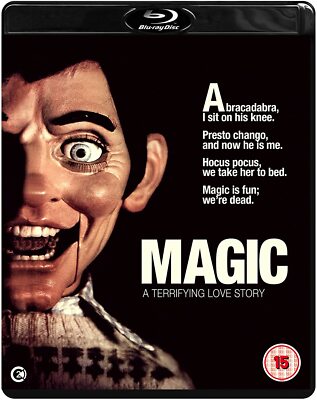
Adapted by legendary screenwriter William Goldman from his novel of the same title and directed by legendary actor and director Richard Attenborough, Magic is a psychological horror film centered on Corky Williams (Hopkins), a stage magician who utilizes a ventriloquist’s dummy, ‘Fats’ (also voiced by Hopkins), as part of his performance. When his agent Ben Greene (Burgess Meredith) informs Corky that a medical exam is required for his upcoming television network special, Corky flees the city for the isolated Catskills town of his childhood, reconnecting with his high school crush Peggy Ann Snow (Ann-Margret). But ‘Fats’ may have other ideas about what is best for Corky.

The trailers and commercials for Magic hinted at possible supernatural causes for the film’s horror, and Attenborough used a deft and light directorial touch to keep things off balance concerning ‘Fats.’ But this story and movie is essentially a horror of the human mind and how it betrays itself when faced with crushing psychological trauma and an inability to escape it.

With limited settings and cast, Magic is a film that could have been produced for television, but Goldman as writer, Attenborough as director, and cinematographer Victor Kemper use the limitation to create an atmosphere of dread and claustrophobia even in the open woods of the Catskills.

I was seventeen when I walked to the local twin theater to see Magic, and the film has stuck with me over the decades. Unnerving and powerful in its use of what would become known as ‘the uncanny valley,’ Magic is a prime example that horror is not always found in ghouls, ghosts, and vampires but sometimes within the tortured soul of the outcast.

Share

Halfway There

.

Friday, I passed 45 thousand words on my gay, cinephile, ’80s, horror novel set in the lovely city I call home, San Diego.

This has been and continues to be quite a different adventure in writing from what I have experienced with any of my previous novels. As I have mentioned in other posts, this one is being written without an outline, without a predetermined list of characters, with a terribly vague sense of how the five-act structure will work, and with only the concept of the darkest magic operating through old and dangerous nitrate motion picture film stock.

I am reaching sections of the novel where I must make definitive choices about some of the elements that have only been hinted at in the text as the characters’ investigation will begin uncovering some of the mysteries at work around them.

Because at heart this is actually a ghost story, with the ghost given ‘life’ by the old film stock, it is also essentially a mystery. Nearly all ghost stories are mysteries, often with some old and buried evil to be uncovered in order to clear the spirits’ torment and allow them to progress to whatever lies beyond life and death.

Ghost stories have always been my favorite genre of horror, and I cannot honestly say why. It is not because I was touched by death at an early age. Well before my father’s passing, I had books of ghost stories for children. One branded to Alfred Hitchcock and another of ‘Tar heel’ ghosts, Tar heel being the state nickname for North Carolina, the state of my childhood home. So, the fascination with ghosts has seemingly always been there, but I have written very few ghost stories. This untitled novel is the longest and most complex attempt at the sub-genre.

When it is completed, I will need a couple of sensitivity readers to make sure I have approached the lives of gay men in San Diego with respect and not stereotyping, but I feel I have made a good effort on that front.

Share

Twin Peaks: The Entire Shebang

A year ago, Mike Muncer, podcaster behind the excellent Evolution of Horror series launched a new show The Detective & The Log Lady, a Twin Peaks rewatch podcast. I decided to rewatch the series along with episodes of the podcast and my sweetie-wife came along for the ride as well.

This past Sunday we completed the voyage watching part 18 of the Twin Peaks‘ third season, also known as Twin Peaks: The Return which aired on the Showtime premium cable channel in 2017.

ABC Television

It has been quite a ride. I have not rewatched the original series in decades, watched the prequel film Fire Walk With Me only once in the theaters and retained very little of it, and did not even know of the existence of Twin Peaks: The Missing Pieces, a feature film length collection of deleted scenes from the prequel film. Watching it all week in, week out for a year, keeping the characters and story elements fresh in my mind as I experience the 27-year journey was an entertainment journey unlike anything I had experienced.

Twin Peaks when it aired in 1990 on ABC became a national and cultural phenomenon but the second season, adrift after the creators stepped back because the networked forced them to reveal the solution to mysteries they preferred not to, lost that grip on the nation’s imagination and the series ended on a cliffhanger that would not be resolved until 2017.

Freed from network constraints and interference the series’ third and final season presented almost nothing that the fan base demanded, instead diving deep into the abstract dream-logic that so defines the work of director and co-writer David Lynch. The entire series defies easy explanation or interpretation. Is it about the evil and corruption that lies just under the surface of American life? Is it about trans-dimension beings waging a war for humanity with entities such as ‘Bob’ and ‘The Fireman’? It is merely a strange dream held by television characters where some of them are actually aware of their nature as fictional constructs?

Arguments can be made for any and all of these premises, often with all of them playing a part in interpreting the program.

What is undeniable is that Twin Peaks had a massive impact on television going forward from the 1990s. Not only did programming become more experimental in their plots and conceptions but Lynch and co-creator Mark Frost showed that it was possible to bring feature film cinema quality to television, paving the way for today’s prestige TV.

I may not understand it all, but I admire it all just the same.

Share

M3GAN 2.0

.

I cannot recall ever being this uninterested in the sequel to a film I enjoyed as I am with M3GAN 2.0.

2022’s M3GAN was not in any way a classic of cinema. The premise was quite simple,  Gemma ( Allison Williams) a designer of advanced robotic toys following a tragic accident, becomes the guardian of her niece. Unsuited to the sudden role of substitute mother Gemma effectively turns the task over to her newly created and quite untested android M3GAN, which, taking its instructions far too literally, ends up becoming a murderous machine.

M3GAN leaned heavily into camp with occasional forays into violence that for the theatrical cut were toned down and not explicitly graphic. The resulting movie was one that was fun, did not take itself too seriously, and provided a brief, in not predictable, period of escape from the dreary world of 2022. The fact that the movie grossed more than 10 times its modest budget, and that the script deliberately left this door open, doomed the cinema landscape to a sequel.

Now, three years later, that sequel has arrived and the lackluster, paint by the numbers approach devoid of camp nature makes it one of the least interesting trailers I have seen in quite a while.

As has happened with previous horror franchises, M3GAN the character has developed a fanbase not unlike Michael from Halloween, Jason from Friday the 13th, and Freddy, from A Nightmare on Elm Street. The monsters have become the heroes and M3GAN now follows that dull and trite path as a new evil artificial intelligence arrives and, in one of the least surprising concepts, only M3GAN can counter it. Of course, if she is to be more of a protagonist then M3GAN required an upgrade that transformed her from a little girl to something with a disturbing amount of sexuality.

This is a horror movie that not only will I miss its theatrical run, I shall also miss its video on demand release, and its streaming debut.

youtube placeholder image

Share

Christmas in June: The Ice House

.

During the 1970s the BBC ran a series A Ghost Story for Christmas where short horror films, often but not always focused on ghost and spirits were aired during the holidays. The series was revived decades later. Last night my sweetie-wife and I watched the final episode of the original 70s run, The Ice House.

BBC

Paul, (John Stride) emotionally vulnerable following his divorce, has checked into a health spa and retreat in the English countryside. The facility, owned and operated by Clovis (Geoffrey Burridge) and Jessica (Elizabeth Romily), brother and sister who radiate not only an unnatural relationship with each other but a deeply uncanny intimidating presence. The pair show Paul the establishment’s ice house, a structure that predates modern conveniences, and the strange flowering vine that grows on it. The vine releases a strangely intoxicating scent and blooms with red and white flowers, colors mirrored by the siblings. Repeatedly Paul is drawn to the building until he discovers the unnatural nature of Clovis and Jessica.

Given the budgetary and public broadcast standards of the time A Ghost Story for Christmascould never delve into explicit and transgressive horror but instead relied upon mood and suggestion of things unseen to convey its payload. In some cases, this produced dull and lifeless pieces that are best used to cure insomnia and at other times disturbing stories that echoed in one’s mind well after the credits had run.

While it is not generally well reviewed, I found The Ice House to be effective in delivering a short story vibe with atmosphere and dread. Burridge and Romilly perform admirably, always oozing with threat and malice while delivering dialog that is quite the opposite. The characters are as cold to the suffering and deaths of other people as the materials stored in the titular building. It is sad that Romilly’s career never found the stardom that I think this performance promised, she possesses a mere 12 IMDB credits and it is tragic that AIDS robbed us of Burridge. The Ice House is a credit to both of them and their talents.

Share

Why did John Carpenter’s ‘The Thing’ fail at the Box Office?

.

June 25th, 1982, witnessed the release of The Thing a remake by horror icon John Carpenter of the classic Sci-Fi film The Thing from Another World, both inspired and adapted from the short story Who Goes There by famed writer and editor John W. Campbell Jr. Despite Carpenter’s successful track record of feature films such as Halloween, Escape from New York, and The Fog this movie crashed at the box office, making less than 20 million on a 15 million estimated budget, considering prints and advertising that a movie that lost money. Reportedly Carpenter for decades felt bitter about the movie terrible run even after the film became a classic beloved by millions and considered a masterpiece of modern horror.

1982 was far from a year of depressed box office receipts. Many films scored enormous financial successes that year including such genre fare as Star Trek II: The Wrath of Kahn, Poltergeist, and E.T. The Extra-Terrestrial but along with The Thing another movie that is now considered extraordinary died at with audiences in 1982 Blade Runner.

Blade Runner, I believe, suffered from both studio interference and audience expectations causing its failure to find the success it would eventually discover once alternate edits became widely available, but The Thing is a different story. That film has not been re-tooled, edited, or significantly altered from its original theatrical release. The version hailed as a masterpiece is the same one I watched in 1982.

The film did not change, the culture around it did. The decade prior to The Thing’s release was one of deep cynicism and anti-heroes. The 1970s brought forth films about failure, systems crushing heroes and the futility of trying. Even when heroes won victory it often came at great costs or produced pyric wins. By 1982 this cultural mood had been swept away with ‘morning in America’ and a renewed sense of manifest destinty. Following that massive success of Star Wars and its first sequel The Empire Strikes Back the cultural zeitgeist was one that demanded happy endings, clearly defined heroes and villains, and unbounded optimism. The Thing stood not only in contrast but stark opposition to all of that. It’s heroes were deeply flawed the mood darkly cynical and the ending so ambiguous as to provide no sense of closure for any audience.

We can never know for sure, but I believe if The Thing had been released in 1976 it would have found an audience on that release but for 1982 it simply marched to a beat so different that few could actually hear it.

Share