Category Archives: History

Streaming Review: The Unknown Soldier

Over the past two nights, my sweetie-wife and me watched the Finnish film The Unknown Soldier  a three-hour epic that follows the operations of a machine gun company from the start to the end to The Continuation War. That was, started in 1941 with Finland invading the Soviet Union in hope of regaining territory lost in 1939’s Winter War when the Soviets invaded Finland. Allied with Nazi Germany the Fins expected a collapse of the communist state and for a ‘greater Finland’ to emerge; history of course tells us that did not come to pass.

The film boasts a large cast of characters as we meet the machine gun company just as they have finished their training and the invasion of the USSR has commenced. Released in 2017 The Unknown Soldier  does not glorify warfare but presents it in a stark unforgiving manner in which death is sudden, violent, and often unexpected. While the characters are devoted to their nation, filled with pride and patriotism, the script never devolves into jingoism and hero worship and instead focuses on the day-to-day reality of warfare in a small unit. Early victories buoy the characters’ moods but do not last as the invasion at first falters, stagnates, and eventually collapses into retreat and route. On the directorial front I particularly liked that Aku Louhimies maintained a line of direction for the invasion itself with motion from left to right indicating Eastward and into the Soviet Union and right to left indicating westward and retreat; fast shots of the company marching quickly established the current state of the war. The filmmakers avoided easy clichés for the characters and kept them complex with something difficult and contradictory motivations; they never ceased to be people  first and soldiers second.
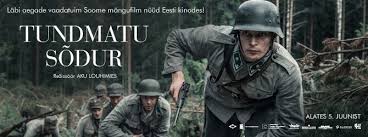
The Unknown Soldier is currently available for rent as a streamed film on Amazon.

Share

Foreign Movie Review: Salyut-7

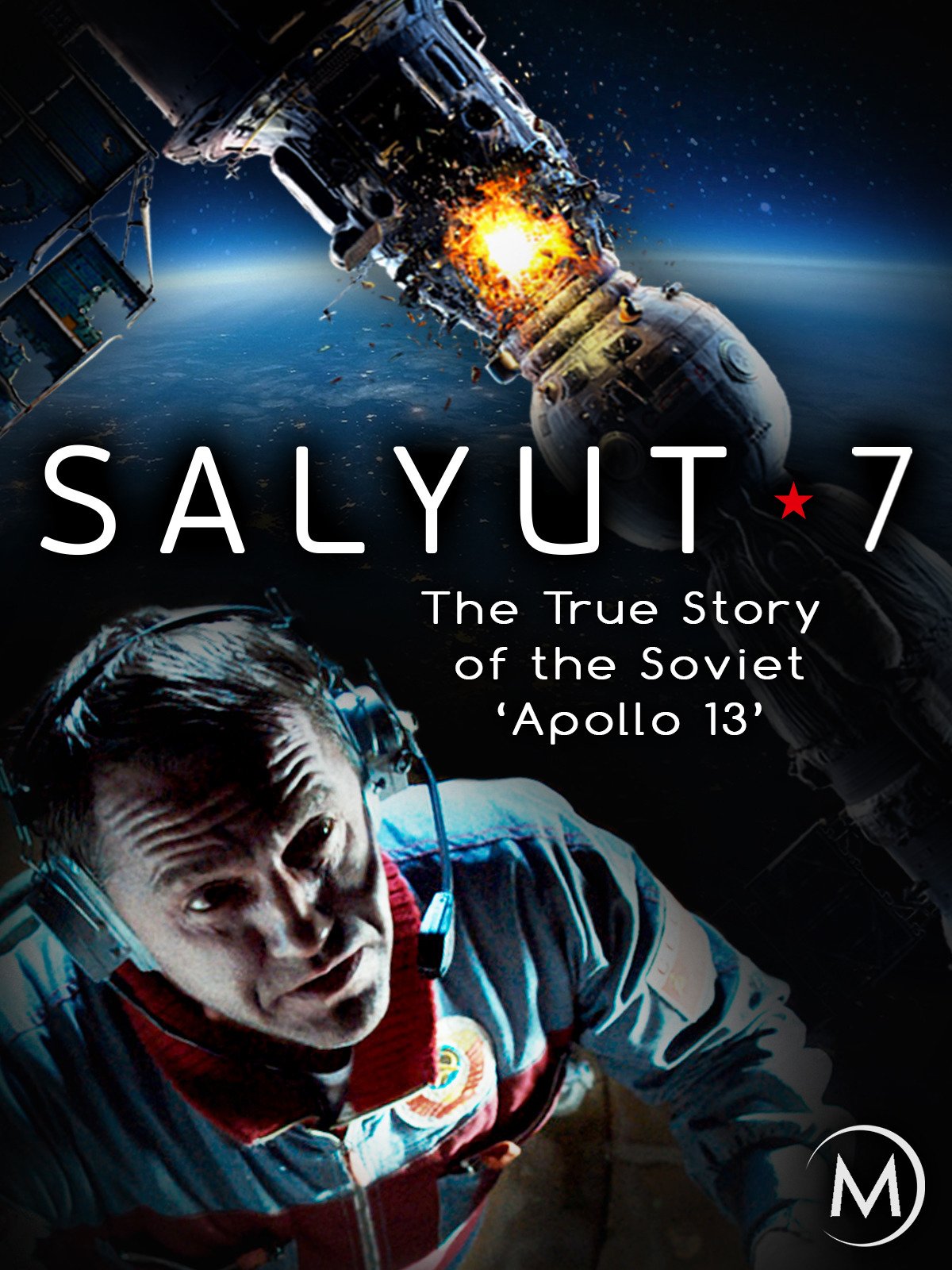
Inspired by the Soviet Mission to save their crippled space station the film Salyut 7is a fictionalized drama in low Earth orbit.

Vladimir Fyodorov is a Soviet Cosmonaut grounded after reporting having seen ‘angels’ in orbit during a life-threatening emergency. His wife and daughter are relieved that Vladimir will no longer be risking his life in dangerous space missions. Everything is upturned when the space station Salyut 7 that was un-crewed and flying on automatic suddenly loses all power and is rendered dead in orbit. Fearful that either the Americans may steal the station by way of a shuttle mission or that the station in an uncontrolled re-entry posses a hazard the Soviet’s decide to launch a mission to repair the station. After all other cosmonauts fail to dock with tumbling station in simulation it is decided to reactive Vladimir and along with an engineer is sent to Salyut 7. Once there they face numerous challenges both technical and personal as they struggle to rescue the station, Soviet prestige, and their very lives in a desperate bid to save the station.

With only a few technical errors, Salyut 7 is a gorgeous film utilizing the very best special effects to recreate the sensation of flying 200 miles above the Earth at 17,000 miles per hour.  In the interests of narrative and drama, the story deviates significantly from the historical record and should be best viewed as a work of fiction rather than a view of actual events. The acting is very good, the drama is tight and the characters believable and relatable. Currently available on Amazon Prime in Russian with English subtitles Salyut 7 is worth the time for anyone who enjoys a heavy dose of technical realism in their space films/


Share

Are they Alternative Histories?

The following post has spoilers for Inglorious Basterds and Once Upon a Time in Hollywood so proceed at your own discretion.


In the film Inglorious Basterds the heroes in a bloody and suicidal action murder the inner circle of the Nazi party including Hitler himself, presumably bring World War II to a premature close while in the current movie Once Upon a Time in Hollywood the cult followers of Charles Manson instead of murdering Sharon Tate and her houseguests attack her neighbors presumably launching Hollywood into a utterly novel sociological path.

Are these films with their fantastic premises and fairy tale ending popular examples of Alternative History fiction? Alternative History is that genre of speculative fiction which imagines how the world might have been different had history taken a different track than the one we know. For example what if the USA had lost its war of independence, or if WWI had not started? Harry Turtledove is today’s best practitioner of this art.

One the face of it this answer seems obvious, both of Tarantino’s film wildly diverge from actual history making those cinematic excursions truly an alternative to our own. However I think it require more than that. After Braveheart has loads of things wildly different from actual history and yet I have not heard anyone argue that it is an ‘alternative history.’

I believe an essential component of alternative history is an examination of what those differences mean to our understanding of the world. It is an examination of the consequencesof the change not just the change itself. In both films the story ends with the change, we never see what that means for the wider world. How does Hitler dying in 1944 change the Cold War, with Tate’s brutal murder how does film making change? We have no answer from the filmmaker, not even the hint of one. These are fairy tales, not alternative histories.

Share

D-Day

1944, June 6th, the massive invasion of fortress Europe, with the intent to defeat, depose, and destroy the Nazi war-machine lands on the north coast of France. A military operation massive in its scale, scope, and objectives it represented the culmination of untold countless hours of labor, training, and deception and still it possessed the risk of utter failure. The harrowing assault on the beaches is something that boggles the imagination and cost many lives in the idea that people should be free. We should always remember the bravery, the almost unimaginable courage of the men who stormed that beach.

We need to also remember that our own house was far from in order during that time. We fought for freedom, yet regularly denied it based up the concentration of a chemical in a person’s skin, or because of their myths where not our myths. Our failing in the past does not and never has discredited our ideals but rather we must learn from those failings, strive to achieve our true ideals, never fail to show the courage those ideal require.

Share