Author Archives: Bob Evans

A Party Without Solutions

I try to consume political media from a wide variety of sources, including news and opinion journalists. To me it is a firm truism that no person, party, or faction has a complete truth and as such I am always looking for new points of view, new ideas and solutions to the problems and challenges facing out nation and our world.

Finding liberal or progressive writers, commenters, and podcasters with proposed solutions is scarcely any trouble at all but the converse is not true for conservative thought. When I read or listen to conservative writers and podcasters it very quickly becomes evident that there is a real dearth proposed solutions. This is not to say that there aren’t things that the GOP and conservatives want to enact or achieve but it seems to me that everything on that list, be it ‘constitutional carry,’ tax reductions, or a lax regulatory structure, is something that they desire regardless of any current condition.

Instead when I read or tune into conservative media it is often about their state of  ‘siege.’ It’s endless vitriol, attacks, and frankly whining about the unfairness of the culture, exaggerated and imaginary dangers of ‘SJWs’ eradicating Christian culture, or pitiful attempts to re-play the cold war and depict every progressive proposal as the rebirth of Stalinism.

As a country, a society, and as a species we face serious challenges, stagnating wages, crumbling infrastructures, racial strife, rising authoritarianism, spreading mass murder, and climate change and yet one half the American political system offers nothing but platitudes.

This is terrible time and I fear it could become much worse before it gets better.

Share

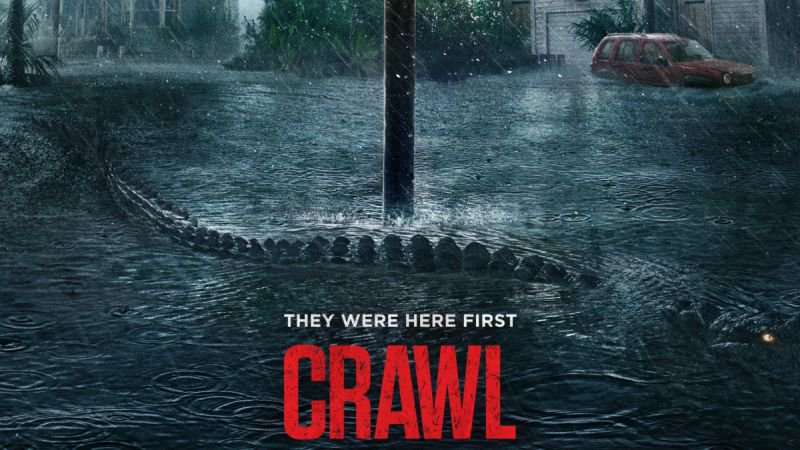
Movie Review: Crawl

There are horror film, monster movies, and creature features with significant overlap between these three sub-genres and this week’s releaseCrawl pretty much falls into the Creature Feature definition.

Set in a fictional Florida town of Coral Lake during a category 5 hurricane, Crawl  is about Haley Keller (Kaya Scodelario) and her father Dave (Barry Pepper) trapped in the crawlspace of their home while being menaced by aggressive alligators. If you have seen the trailers for the film then you have pretty much seen the entire premise and set-up. Clocking in at a slim 86 minutes Crawl  doesn’t waste much time, very quickly delivering it’s central character Haley into the jaws of danger and then escalated the obstacles throughout the movie. Focused on the dangers of drowning and deadly alligators the movie is light on character development, though it has some just enough to hang the barest story upon, and any deeper theme beyond survival is wholly absent from the script. With the exception of a few secondary and utterly disposable characters this movies rest entirely upon Haley and Dave as they struggle to survive.

In a high-concept movie there is usually one ‘gimmie’ that is asked of the audience, one element that if accepted though it flies in the face of reality allows the rest of the story to unfold organically and with suspension of disbelief. In the classic film Jaws  one has to ignore actual shark behavior but beyond that the film proceeds logically. With this film the one gimmie should be the alligator behavior but sadly the writers and directors instead ask the audience to accept impossibility upon impossibility particularly as the movies crashes through its third act action. Detailed and graphic tissue damage that the characters, both Haley and Dave, sustain from attacks are minimized beyond belief for the sake of keeping the characters mobile, active, and capable of impressive physical feats for even uninjured persons. The first time the filmmakers ignored the realistic effect of a compound leg fracture, I simply groaned and accepted it, the second I silently growled in frustration, and by the climax I needed to stifle actual laughter.  In addition to the grossly under-valued physical damage the characters nearly ignore, the third act also suffers from contrived coincidences with valuable and critical equipment literally floating to the characters in their moment of dire need. As an additional note, a category 5 hurricane has sustained winds exceeding 157 miles per hour and there will not be rescue helicopters flights in such conditions.

Overall I found Crawlunworthy of the timer I spent watching it and I took solace in knowing that as part of my weekly three movies from the theater chain’s subscription service it cost me no extra money. For others, with less sensitive suspension of belief, this movie may turn out to be a fun roller coaster ride, an exciting summer popcorn movie, but for me it was not.

Share

Frameworks for Fiction

In my opinion there are two critical frameworks for constructing fiction in a western tradition, on deals with the plotting and the other with the story but ideally they are used in a complementary fashion.

The plot is a simple ‘If … Then’ construction focused on the character’s objective, the IF portion of the statement is the goal the character must achieve and the THEN is the consequence of failure of success.

A simple example”

IF I do not make it to work on time, THEN I will get fired.

Knowing just this must a writer could craft a story about the troubles for getting to work. If the obstacles in the characters are too easily overcome then the story will lack tension, while if the consequence of failure is too slight then story will feel pointless. IF I am late to work THEN I will not get any of the donuts is a conflict but scarcely one that people will invest much time or emotion into. The relationship between then objective and the cost of failure is the heart of tension and reader engagement. This framework applies to the larger story and to individual scenes and when you’re thinking about larger works like novels it is important to not backslide from serious consequences to lesser ones. If an individual scene has a slight consequence compared to others that have come before it then it is vitally important that a larger goal with a more serious consequence remain unresolved.

Story is about change and can be reduced to the concept ‘I was/believed X and now I am or believe Y.’

The essence of a powerful story is that the reader can identify with the character’s transformation. This works in the positive mold as character grow and become better person, or in the negative when characters are consumed by their baser nature. What is important that that the character is not the same at the end of their journey as they were at the start.

Share

Thoughts on Religious Liberty

I am a big proponent of individual liberty. We have but one life here in the vast cold and unsympathetic universe and absent harm to other we should be free to live our short allotment of years as we see fit this included adhering to whatever spiritual or religious standard that we might adopt to give our years some sort of meaning.

Recently I listened to an edition of the podcast The Ezra Klein Showand his guest was conservative columnist and critic of popular culture Rod Dreher  If you know anything of Dreher’s writings and work then you know that one of his major themes and one he returned to quite often is that religious liberty, particularly for socially conservative Christians, is under assault with a coming Orwellian nightmare that promises to crush all dissent from the majority opinion. His opinion, if I hear and read it correctly, is that the ‘Culture War’ has already been lost and that protecting the rights of Christians as a beleaguered group under assault from a majority intent on eradicating that Christian thought is an essential role for government.  Well know cases that need protection or are examples of this crushing mindset include the bakeries that refuse to created wedding cakes for same-sex couples, pharmacies that refuse to dispense medications for some purposes, schools that are citizen for terminating the employment because of an employee’s private life, employers demanding exceptions to insurance regulations, and hospitals the refuse to allow certain medical procedures. In Dreher’s opinion each of these cases has at its core a deeply held, critically important test of religious conviction and a state that seems determined to crush religious beliefs where it conflicts with the greater culture. (There is an argument to be made that this religious belief defense is nothing but a cover shielding a deeper and hostile bigotry but true or not that is not thee point I am discussing today.)

A critical element common to all of these cases, and an aspect that I think is far more important, is that in none of these examples are we witnessing the convictions of religious individuals. Each and every one of these cases is an organization, a fictitious person, and often a licensed non-profit, insisting that the rules that apply to other corporations and company do not apply. It is important to note that the creation and protections of fictitious persons, companies, and non-profits, are an act of the state. It is a set of laws created outside of any religious sphere crafted with a secular intent for a secular purpose.  These laws, regulations, and structures in the commercial and profit driven world exist to help shield the assets of entrepreneurs to foster economic growth and stability. They, in effect, say, you John Smith, can create a business and we will treat that business as a person, it’s taxes will be separate from yours, it’s liabilities will be separate from yours, and it’s action will be separate from yours but under Dreher’s argument the companies get all these benefits granted by the culture and the law while also claiming a special protection based upon the creed of it’s owners, despite that business being a separate entity.

Moving into the issue concerning non-profits this becomes even more egregious. Non-Profits are specially licensed and sanctioned to serve a public good, receiving carved out protections backed by the secular state because their mission is defined as something that is intended to benefit society as a whole and not a particular isolated segment or population. It is a perversion of that intent to allow non-profits to discriminate. In South Caroline the governor has petitioned and received a federal waiver that permits a federally funded Christian foster agency to not only refuse to place children with same-sex couples for adoption but also allowing the agency to refuse to place children with Jewish homes because that is a ‘violation’ of their Christian beliefs.

Individuals have the freedom to believe what they wish, but not legal and financial support from secular society.

Share

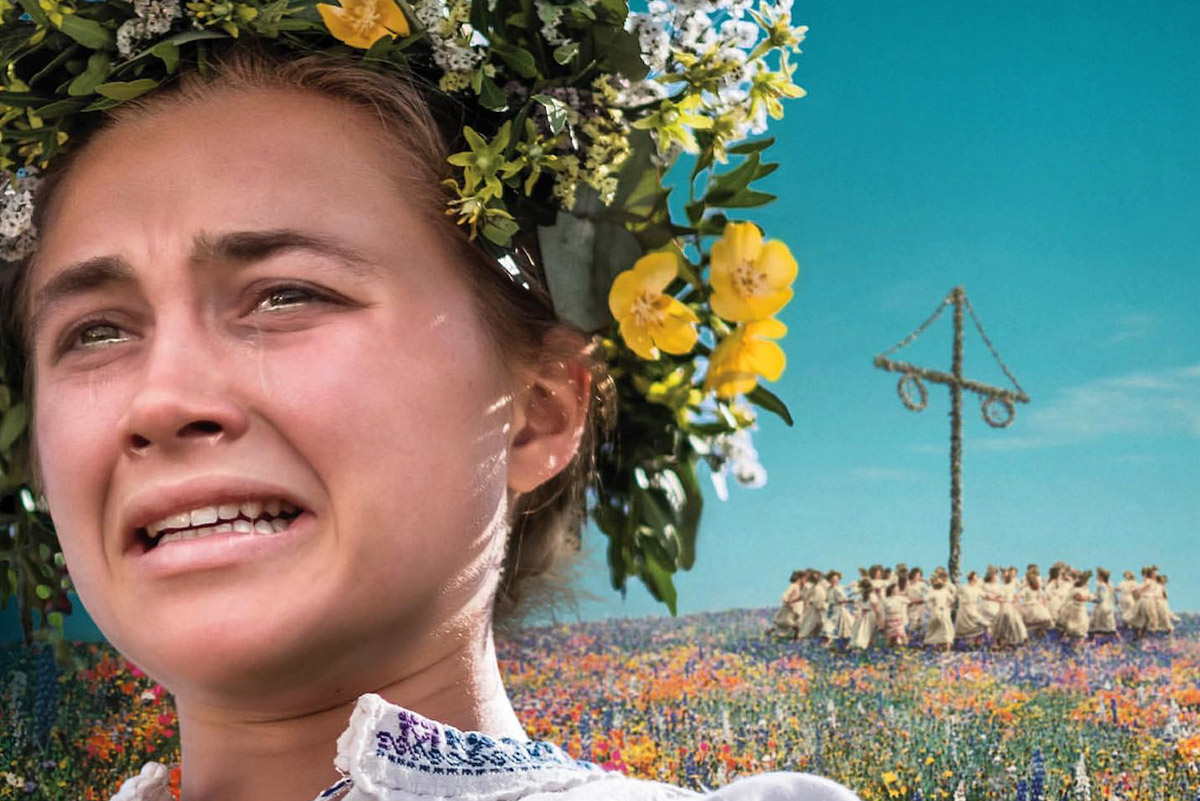
Movie Review: Midsommar

Writer/director Ari Aster the creative forced behind last year’s Hereditary  is back with his sophomore feature film project Midsommar. People who are looking for a horror film in the vein of slashers, monsters, and action are likely to be disappointed with Aster’s slow-burn builds, languid deliberate pacing, and long-take, carefully choreographic photography however those who are enamored with psychological and sociological themed horror such as the originalThe Wicker Man  are likely to find something on Midsommarthat will appeal to their tastes,

Midsommar  centers on Dani ( Florence Pugh) and her disintegrating relationship with Christian (Jack Reynor.) Christian is already searching for a way to end the relationship when a familial tragedy shatters Dani leaving her grief stricken and emotionally vulnerable. Six months later Dani and Christian along with their friends Josh (William Jackson Harper) and Mark (Will Poulter) are invited to vacation and enjoy the mid-summer festivities at an isolated commune The Harga in northern Sweden by their exchange student friend Pelle. Once at the Harga subtle cultural conflicts slowly building between the guests, now including a pair of romantically invested UK students, and the residents of the commune. The guests used psychoactive drugs recreationally while the residents consume them for religious purposes, Christian and Mark want to study the commune for their academic advancement, while for the residents their way of life is part of an ancient and sacred tradition, and Mark sees sexual activities as something of pure pleasure the commune considers it more of cycle of life never foregoing the goal of procreation. These conflicts are not expressed in boisterous loud scenes of shouting but rather build layer by layer a growing sense of dread as the two cultures move irreconcilably towards a devastating final reveal. Dani, unlike the others, starts finding a place and a people that see her emotional injury and, though often concerned about the mysterious events that hint at darker motivations and truths, she discovers an acceptance and even a form of healing that Christian has been unable to give. As the film shifts from the second act into the third the plot descends into revelations, betrayals, the final dissolution of Dani and Christian’s relationship and culminates with Dani’s final resolution the more traditional horror film aspects emerge.

With strong echoes of The Wicker Man, which for those of you in San Diego will be playing soon for one day only at the Ken Cinema, Midsommar  is a movie that invites deep consideration and that for many will haunt their thoughts long after the final credits have vanished from the screen. Gorgeously photographed by Pawel Pogorzelski the film manages a continuously building atmosphere of dread and unease in a setting that has no period of true darkness. It is the rare horror film, psychological or otherwise, that attempts much less succeeds at mood building without a heavy reliance on dark deep shadows. The score is a different sort of musical accompaniment and I do not have the required background in knowledge or terminology to adequately explain it but in terms of mood it fit perfectly, enhancing the film’s emotional subtext without telegraphing it in broad blatant techniques. (Though that aspect of my experiences was marred by the deep bass rumblings from the Imax auditorium next tour ours screening Spider-Man: Far From Home.)

The cast is uniformly terrific, playing each character with credible depth and complexity. I want to make a particular note of William Jackson Harper perhaps best known as Chidi on NBC’s hit show The Good Place. Once again Harper is playing a character with a strong academic nature but through the strength of the script and Harper’s with subtle but effective physicality, I never once had any echoes of his role from that show.

Over all I loved the film and it has elevated Aster into a place where I will go see his next film without any other inducements required. Midsommaris a film that is not for everyone, but if you found Hereditary  or The Witchcompelling viewing then you should waste no time in seeing this movie.

Share

Movie Review: Spider-Man: Far From Home

The first post-Avengers: Endgame  Marvel Cinematic Universe movie Spider-Man: Far From Home  opened this weekend and reviewing it will requires spoilers for Endgame,  though I will refrain from spoilers for Far From Home  as much as possible.

Set five years after the events in Infinity War  and shortly after the return of the ‘snapped’ and after Iron Man’s sacrifice ending Thanos’ threat Far From Home opens with Peter Parker trying to resume his abnormal life as a high school student, he and all his emotionally relevant friends lost five years due to the Snapture (thanks to NPR’s Glen Weldon), while trying to cope with the loss of Tony Stark.

A new threat appears on S.H.I.E.L.D.’s radar when monstrous forces called elementals begin appearing around the world and the sole survivor from a parallel universe Quentin beck where these forces destroyed the Earth is recruited to save this version of Earth. With the major former Avengers either dead, aged out, crippled, or unavailable, Nick Fury of S.H.I.E.L.D. conscripts Peter Parker to help Beck save the world.

Peter wants nothing more than to leave the world saving to others, enjoy his high school class’ European Vacation, and possibly get closer to his crush Mary Jane Watson, but the continuing and escalating threat upset Peter’s plans and being the heir apparent to Stark’s mantle carries with it a level of guilt and responsibility that test’s Peter’s character.

Spider-Man: Far From Home  has exciting action set pieces, fine acting, deft, quirky, and often funny dialog but it lacks a strong story leaving it in the midlist of MCU movies. Unlike the last outing for Spider-Man where a padded plot dragged down the pacing this time the flaw is the central conceit of Peter’s motivation as character. As a protagonist Peter is simply far too passive.

In the Western tradition stories are constructed around a protagonist who desires a goal, something the protagonist much work to achieve, and the obstacles that the character most circumvent, defeat, or overcome to achieve their objectives. What your character wants and why they cannot simply have it is the core of a story’s plot. In this movie Peter wants to be left alone. He wants to go his vacation, not be ‘Spider-Man,’ and explore his relationship with M.J. Peter’s objective is not to do the thing the audience is here to see him do and as such the plot must repeatedly intervene and force Peter back onto the track that leads to dashing heroics and exciting action. In short he is pushed and pulled by the plot rather than driving the plot himself with his actins, choices, and needs for an objective. When the script makes the turn from Act 2 to Act 3 it finally creates enough pressure that Peter can no longer hide from his responsibilities and his objectives changes and for the final act he is driving the story, but this transformation comes too late to prevent the majority of the movie from being subjected to rudderless piloting.

How much this passive protagonist bothers someone will be a matter of individual taste. As I have mentioned this time the film’s running time doesn’t feel padded and each action set piece has a strong narrative purpose. There are plenty of humor and character moments to carry a viewer along but for me the lack of a plot driven by Peter’s needs drags the final product down into the mid-tier range of MCU movies.

Share

Election Concerns

I am very concerned about the 2020 election cycle.

In addition to the on going interference from Russia there is little reason to suspect that other hostile foreign powers will not try to also influence the election. The Administration has made it clear that it intends to do as little as possible on the issue and there are a number of the countries that would seek the advantages of influencing the contests, and not just the presidency. While the 438 individual elections of the House of Representatives is a logistical challenge it would probably be more advantageous of a foreign power to try and effect the balance of powers in the Senate. Given the nature of our system and of the Senate there’s a lot of bang for the buck in influencing those elections.

Beyond interference there is also the very real possibility that we could have an election where the results are outright rejected by one of the parties, and of course I mean Trump. It is not the man’s nature to ever admit a loss, or a failing, or a failure.

Trump made no bones at all before Election Day in 2016 that he would consider a loss to be the result of a ‘rigged’ election. It is one thing for a candidate who had not got their hands on the lever of government to reject a result, but it is quite another thing to possibly have a president refuse to accept defeat in an election. The 2016 contest was decided by a handful of votes in just a few states and even then Trump refused to accept the actual numbers, insisting that his 3 million popular vote floss was a result of fraud, what may he do if this time it is a few thousand votes in a few states that elects his opponent?

I really doubt he would meekly accept the loss and leave, as he should.

What happens in that constitutional crisis, a type we in this country have never experienced? In confronting Trump core supporters the Republican Party have shown all the spine of amoeba. In such a hypothetical I have grave concerns about their ability to due their duty.

Share

Down to the Wire

As many of you know I enter regularly in the Writers of the Future Contest. Winning the contest has launched quite a few careers in the SF and Fantasy genres but for me the biggest prize isn’t the money, or the entry on my CV but rather the weeklong seminar that the winners attended that is led by one of my favorite writers, Tim Powers.

The contest is open to authors who do not have profession grade publication credits and after checking with the contest administrator I confirmed that I remain eligible until Flame Tree Press publishes my novel. Given that it is my plan to enter every quarter that I remain eligible.

And this quarter has turned into a bit of race.

Every short story I started this quarter has sputtered and died in the middle and with the deadline for entering this Sunday evening I truly thought I was going to have to skip this submission.

And then an idea came together as I as falling asleep last Sunday. It’s all there, a strong narrative, an SF idea, and a character with a terrible choice before them.

I am nearly done with the first draft and I think I can complete it today, which leaves just Saturday and Sunday for polish and edits.

It’s a race.

Share

Further Thoughts on Aladdin 2019

So my mind keeps circling this year’s release of Disney’s Live-Action version of Aladdin.It feels to me that the movie just didn’t quite work and as a writer I want to dissect the corpse and find out why. I may not have found the primary cause but I think at the very least I diagnosed a serious complication and contributing factor.

In the 1992 release the character of Jasmine, Aladdin’s love interest, is principally a human McGuffin. The set-up of the story is that Jasmine, by law, must marry before she turns sixteen, as the only offspring of the ruling Sultan, Jasmine becomes the route to power. Her husband will rule and Jafar, the scheming adviser/sorcerer, wants to marry her for that power while Aladdin, the good hearted ‘diamond in the rough’ wants to marry her for love and thus will wield that power more justly. Jasmine simply wants to choose for herself and not be ordered to marry someone she doesn’t love. Jafar and Aladdin have opposed goals, only one can achieve their desired end and as such the plot has conflict between its two poles of good and evil. Jasmine has no song in the 1992 version because there is very little she is trying to achieve and very little character beneath her surface motivations.

The 2019 release of the story has made critical changes to the plot. Jasmine is no longer forced to marry on any timeline, removing the ticking clock that helped drive the earlier version. Jafar, with somewhat deeper motivations, has plots to seize power without the requirements of a royal marriage, which removes the conflicting goal between him and Aladdin. The two characters are no long directly opposed ceasing to be well-defined protagonist and antagonist.

Complicating matter from a structural standpoint Jasmine has now been given her own goals and motivations and a song. She is presented as smart, capable, and with a burning desire to serve her people as a leader, but thwarted in this because of her sex. She wants the throne not for vain glory or to make the Kingdom a great power but because she wants what is best for the populace, placing her in direct conflict with Jafar. It terms of the plot Jasmine and Jafar are now our respective protagonist and antagonist.

This would be perfectly fine if  the script had been re-written with the dynamic had formed the spine of the story but the movie insists that Aladdin is the hero, he is the protagonist in a story in which his stakes are secondary when compared to other characters.

Look at the stakes for each character.

Jafar, failure means loss of position, imprisonment, or death because if you move against the Sultan and fail it will end badly.

Jasmine, failure means the people loss her leadership, her empathy, and she is consigned to a lifetime of watching an evil man ground the populace in the war plans.

Aladdin, failure means he continues his life of poverty. Aladdin’s stakes are improvement of his life or stasis; he stays where he is. No ticking clock, no disaster befalls him, not the sort of things the Jasmine and Jafar are facing.

To fix this they needed to either give Aladdin stakes that mattered as much as Jasmine’s or Jafar’s or they need to re-conceive the story with Jasmine as the lead, the protagonist, the hero.

Share