Author Archives: Bob Evans

The First Negative Review Has Arrived

Wednesday evening just before I slipped off to bed, I got a Google alert of a new review of Vulcan’s Forge. Yes, I have an alert set up over at Google to keep me informed of when people post things about my debut novel. The review came from a person in the United Kingdom which makes sense as the publisher is a UK entity.

It was my first unqualified negative review.

I say ‘negative’ and not ‘bad’ because I do not want there to be the slightest suggestion that I imply that the review itself is poor. As I have said often in my writers group meetings no honest critique or review can be wrong. It is how that person reacted to that piece on that day. It is the underlying assumption upon which is build the critique phrase ‘Your mileage may vary.’ What is wonderful for one person is terrible to another.

How did I react to my first truly ‘I did not like this book’ review?

Shrug.

It is part of the gig. Now, I am not suggesting that anyone else is wrong is they feeling more strongly when that get a negative review. Authors are people and people differ wildly but for me I can accept that someone really did not like by work and not feel any real emotional distress. If fact I read the review and then went off to bed and slept quite well.

If it didn’t matter to me then why did I read the review? why seek them out?

Well, taking criticism is a skill and it requires practice. It’s good to get hit and learnt that you do survive it.

I’m also curious. It is fascinating to see the wildly different interpretations people have about the work. This applies to positive reviews as well as negative ones. Everyone bring their own lenses to their reading and so the exact same text will never be interpreted the same way by any two people. I love seeing the various internal codebooks through which this is deciphered. (Of course, I bring my own to the reading of these reviews and not matter how diligently I try I can never fully escape them, but still I do try.)

Perhaps for other it is very good advice to never read reviews but for me it is a fascinating glimpse into the inner working of another person’s mind.


Share

Accessible Science Fiction

From Hugo Gernsback in the mid 1920s to today modern science-fiction has grown encompassing a number of fields, styles, and literary approaches that in some case are rather inaccessible to readers who are not extensively read in the genre. This is not necessarily a bad thing. The field, any field, grows at the bleeding vanguard edges not in the safety and comfort of what has been well established and explored. Stories that challenge notions about reality itself and what it means to be human are exciting frontiers for SF and we need them to expand our horizons.

Science Fiction also needs new blood, new readers and we can rarely entice them into the genre if the only selection available require a deep experience in the field. There must also be science-fiction stories that are inviting to new readers. Stories that people without experience in the genre can relate to and enjoy.

One of the persons who read my novel Vulcan’s Forge wrote me to share that she rarely reads SF. It is not her genre but she thoroughly enjoyed by book and found it difficult to put down. As an author that of course is very pleasing to hear but it has also made me realize that I want to write accessible science-fiction. I know my limitations both in imagination and in literary devices means I would do poorly trying to be the vanguard of the genre. There are many authors I admire and enjoy who are so much better at it that myself that I can leave that area of the genre to them. I’d be happy to be the sort of writer that can invite and introduce new people to this style of literature that I adore.

Share

Not in Gear

My brain is not in gear this morning. Not burning essays or posts to give to you so I am going to share a photo I took. My skills as a photographer are not great but it’s a pastime I enjoy.

This is a serval cat and I’m rather proud of how this shot came out.

Share

Quick Hit

Automobile emergencies have stolen some of my morning posting time away from me so today’s posting will be brief.

I have decided as an experiment and practice to do something I have not done in quite a while, write a screenplay.

I used to primarily think of myself as a screenplay writer. Films are a passion of mine and if you have read Vulcan’s Forge you can see that passion represented in the plotting of the novel. While I haven’t sold a screenplay, I have written and co-written a few and I find the form to fun to work with. For the last several months I have been listening to the podcast Scriptnotes and I am exciting to incorporate some of the things I have learned about screen writing.

So, this week I started a screenplay with no intention of selling it. To keep from spinning wheels, I decided that the best form of this experiment is to adapt my novel Vulcan’s Forge. It should be fun.

Share

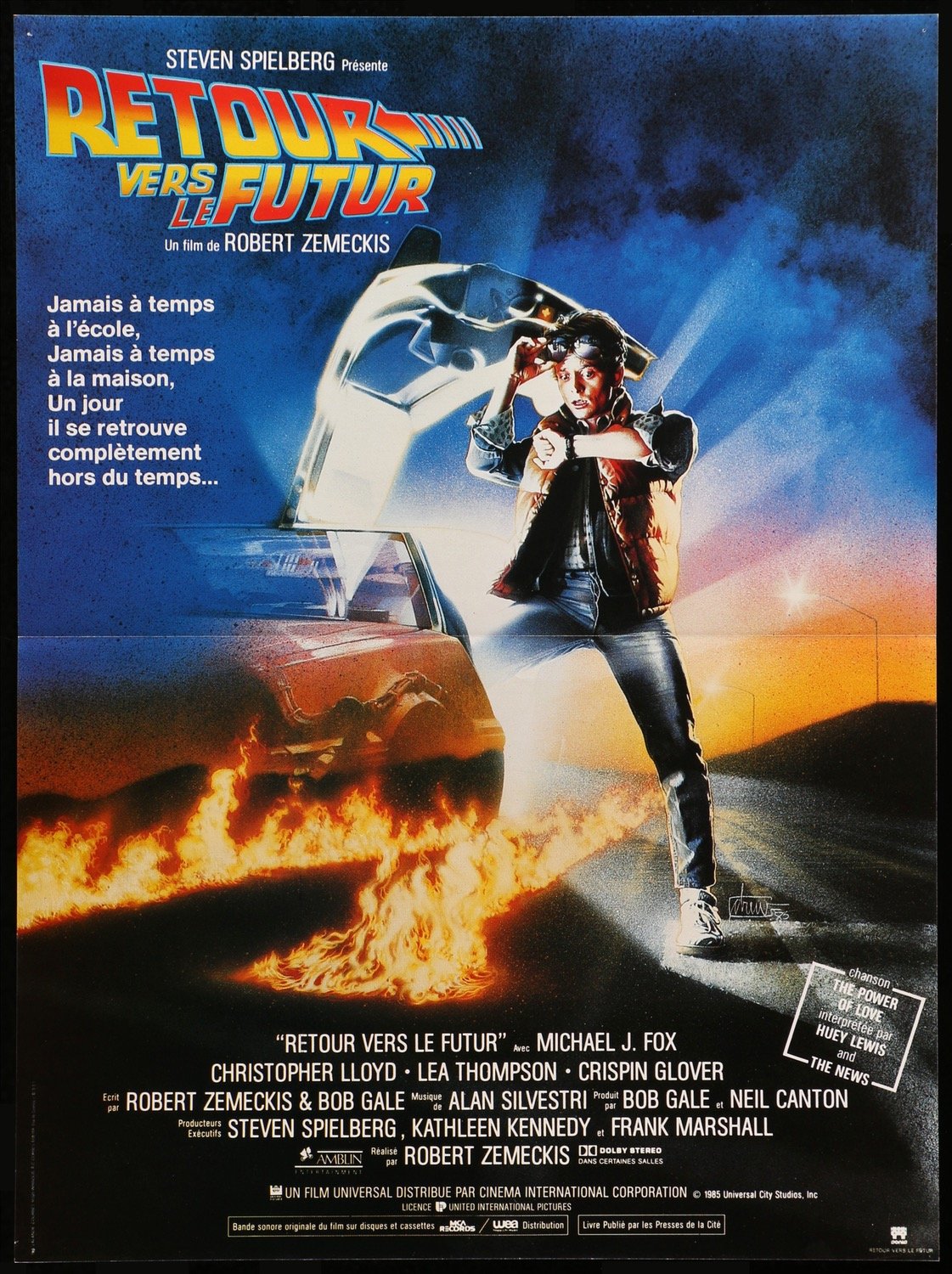
Sunday Night Movie: Back to the Future

1985 was a very different time and the middle of a decade of film that reverberates to this day. So many geek favorite films and franchises were completed, started, or concluded during the 80s and one of the most beloved and important was Back to the Future, the third collaboration between Steven Spielberg, already a powerhouse of genre cinema, and Robert Zemeckis. Friends for year previously their earlier two joint projects, Used Cars directed by Zemeckis and starring Kurt Russell and 1941 co-written by Zemeckis but directed by Spielberg, had performed poorly at the box office leading Zemeckis to fear that another failure would endanger their friendship. Back to the Future dominated the summer’s box office propelling Zemeckis’ career to new heights and launching a trilogy of films with groundbreaking special effects.

Marty McFly (Michael J Fox) is a teenager struggling with his own self-doubts and a family whose prospects are dim. His mother Loraine (Lea Thompson) is lost in an alcoholic fog, his father George (Crispin Glover) is bullied by a co-worker and unable to assert himself, and Marty fears failure so much he is unwilling to really try. Marty’s strange but touching friendship with the town’s eccentric inventor Doc Brown (Christopher Lloyd) leads him to be involved with Brown’s time machine invention and eventually trapped back in the hazy and distant past of 1955 where Marty inadvertently disrupts historical events threatening his own existence.

Budgeted at 19 million dollars and becoming the most successful film of 1985 with a box office take of 381 million Back to the Future was a monster of a movie. In addition to Zemeckis the film helped, along with another summer movie Teen Wolf, make a star out of Michael J Fox and favored a powerful symphonic score by Alan Silvestri over the decade’s trend of using pop songs in a music video style, usually in montages. While the movie had a few popular songs and they featured heavily on the soundtrack album the film itself leaned heavily in a more traditional manner on underscoring and the symphonic sound that had returned in the 70s with prominence of John Williams’ work on Jaws and Star Wars.

While Back to the Future is a prime example of an 80s whimsical movie, heavy on fun and never in danger of taking itself too seriously with a heavy political message it is no without its own darker undertones. When we meet Loraine in 1985 she’s a woman that seems withdrawn and fearful of life a fear she is passing down to her children, but Loraine of 1955 is outgoing, confident, and unafraid of life. There is no doubt that Lorain of 1985 is a survivor of untreated trauma and while that exact nature of that trauma is never directly revealed the unsettling and threatening relationship between Loraine and George’s bully Biff, played brilliantly by Thomas F Wilson who would steal scenes with his range in the next two sequels, hints that an unspoken sexual assault hides in the unexplored familial history.

Back to the Future is a movie that plays as well in 2020 as it did in 1985 and well worth any re-watching during these dark and frightening times.

Share

The Weird Ways I Dream

With the recent passing of actor Brian Dennehy, I got to thinking about the weird way I sometimes dream. Don’t worry those two disparate concepts do eventually tie together.

People when they are asleep dream in sorts of manners. My sister has told me that her dreams are in black and white and only in two dimensions like something from an old television show. Personally, I dream in full color three-dimensional glory in absolute fidelity. In fact, when I awaken from a dream there may be several moments when I have to sort out what is reality and what was dream. We’re not talking delusional things like nightmarish monster and the like but if I dreamt of eating an apple then I will wake up with the taste still lingering in my mouth and I have to take note that I was not actually having one. But full realism is not where I find that my dreams are the oddest.

Sometimes I dream movies.

I don’t mean that I dream about movies, though that has happened but rather my dreams become films. Occasionally I will be in one of the film dreams as a character but there have also been instances where I never appear in the story at all and I’m observing it like any other movie.

Dennehy appeared in one of my nightmares. This is one of those movie dreams where I watched and did not find myself inside of it as a doomed character. Dennehy, Anthony Perkins (of Psycho, though he had already passed when I had this nightmare) and a woman whom I did not recognize take a small boat into icy waters to retrieve cannisters of toxic waste that they had illegally dumped. They have to move the barrels before authorities discover the crime. The woman really really hates Dennehy’s character but the backstory reasons are never revealed. Diving for the waste they are attacked by eel-like monsters. Perkins is killed and the two survivors end up stranded on a rock jutting from the sea trapped by the eel/monsters.

I used the nightmare as inspiration for a short story “Araceli” that appeared in my collection Horseshoes and Hand Grenades: Tales of Technology and Terror. I have always felt that nightmares are gifts for my creativity.


Share

Post Release Thoughts

So, it hasn’t quite been a month, ten more days for that mark on the calendar, since my first novel Vulcan’s Forge has been published and I have a few reactions to the whole process.

Naturally I was a little bummed that the sole event tied to its release a signing at Mysterious Galaxy was canceled due to the stay at home order issued here in California just seven days before the book’s release but I’m happy our governor took the action as our state is weathering the crisis better than nearly any other.

Amazon seems to be utterly unreliable as a source of sales information. Though I know for certain books were sold via Amazon directly and more from other sources neither Amazon nor Bookscan is reporting that information so I have no idea how well or poorly the sales numbers are.

The Blog Tour where a different book blogger reviewed the book each day of its release week was quite enjoyable. All of them gave the book varying levels of positive reviews which is nicely gratifying for a novel that I wrote entirely to my own personal tastes.

Speaking of reviews a few have popped up on Amazon that are not from the blog tour and reading those has been informative. It’s quite interesting to see the various lenses and filters people bring to the process. All of the reviews have been positive, 4 and 5 stars so far, but eventually it will land in the hands of someone who hates it.

Overall especially dealing with this pandemic I have been very happy with the novel’s debut.

Share

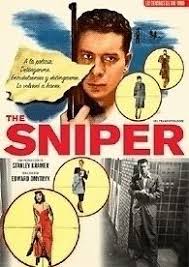
Noir Review: The Sniper

Recently a friend and I watched The Sniper as part of The Criterion Channel’s March programing of Columbia Noir. This movie, released in 1952, is shockingly relevant today and presents a story and complexity about its central character well ahead of its time.

Directed by Edward Dmytryk, who also gave us one of my favorite films The Caine Mutiny, and written by Harry Brown, The Sniper is focused on Edward Miller a troubled young man recently released from prison. Miller struggles against a deep-seated hatred of women and after a couple of attempts to get help fail and he is romantically rejected Miller loses control and begins a murderous spree as a sniper killing dark haired women. The police led by Lieutenant Frank Kafka and his partner Joe Ferris are nearly helpless to catch Miller. Stuck in a mindset that looks for motive their focus on peeping toms and men with a history of sexual assault their investigation gets nowhere until the department’s psychologist Dr. Kent, redirects their attention by use of what would eventually become psychological profiling. In a final inversion of classic film tropes, the ending doesn’t rely upon exciting gunplay but instead leaves the viewer with a haunting image of a man in pain.

When we decided to watch The Sniper with its subject matter of random murder we expected a film that leaned heavily towards the exploitive but instead we were treated to a thoughtful, though occasionally didactic, and serious treatment of the problems American society has, then and now, in dealing with psychological trauma and the use of a prison system in lieu of hospitals. Aside from one scene where the plot is brought to a full stop to allow for speechmaking by the filmmakers The Sniper does an excellent job of presenting its themes within the context of a compelling narrative. This one is well worth seeking out and watching.


Share

2016 versus 2020

Barring extraordinary circumstances, and really how likely is that (*cough cough*) we have our contenders for the 2020 United States presidential contest this fall, Trump and Biden. As we look forward to the elect it is instructive to look back at the last cycle and consider some of the things that worked in Trump’s favor in that election and ask how they may have changed for this one.

First off, Biden is not Hillary Clinton. For whatever reason and however large a part misogyny may have played a part in it, Hillary Clinton carried 30 years of vicious political baggage going into that November. Clinton’s candidacy provoked intense reactions that appear to be absent, fairly or unfairly, with Biden. I am not diagnosing why, only observing the effect. Biden is not attempting to counter such levels of visceral hate robbing Trump of that advantage.

In 2016 for those inclined to be charitable Trump was an unknown. There existed in the air the expectation that the immense responsibilities of the office could not leave any person unchanged and that would lead to Trump becoming ‘presidential.’ I think that there was also an attitude that disregarded all of the troubles reporting on trump, his behavior, his disregard for the truth, as simply part of politics and thus turned such things into a non-factor. After a term as president, Trump character is fully revealed and his approval number show that he’s had a difficult time convincing anyone beyond his base of his worthiness.

Perhaps the most important difference between the 2016 and 2020 elections is that it is no longer considered an impossibility that Trump can win.

Five Thirty-Eight on the eve of the election gave the odds of a Trump victory as 1 in 3 and they were roundly mocked for that assessment as so many thought it was by far too generous to Trump.

The L.A. Times predicted an electoral college victory for Clinton of 332 to 206.

Fox News favored Clinton in the E.C. with 274 to 215.

The Associated Press had her at 274 to 190.

The accepted consensus view was that the election was a mere formality to Clinton claiming the presidency and that the evening would prove to be terrible dull of political watchers.

What happened was that by a margin of about 70,000 votes in three states Clinton lost the electoral college. How many people stayed home because they ‘knew’ the outcome? How many people didn’t bother to vote because they ‘knew’ that there was no need to stop Trump because he had already lost? If you ‘know’ that the lying, racist, fool can’t win there’s no need to put yourself through the psychological trauma of ‘holding your nose’ and voting for someone you dislike. It doesn’t matter.

But of course, it did matter.

Share

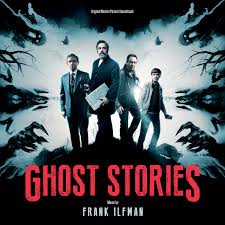
Sunday Night Movie: Ghost Stories (2018)

Two years ago the British anthology horror film Ghost Stories was released to a limited run the States; a run that my sweetie-wife and I missed. The movie is currently on the streaming service Hulu and last night we gave the horror film a spin.

Written and Directed by Andy Nyman & Jeremy Dyson with Dyson also playing the lead character Phillip Goodman the film is an adaptation of their stage play about Professor Goodman’s investigation of three paranormal events as he tried to debunk them into rationality.

You would not know that this is an adaptation from a live theater event. Nyman and Dyson have done a terrific job of translating the material for the visual media of film. The movie is filled with delicious and unsettling imagery and many segments build suspense masterfully. The framing device of Goodman’s post event investigation is tried and true cinematic method of linking what would normally be three unrelated narratives. In Ghost Stories though it turns out that the three stories are not unrelated but rather share a central narrative that is an outgrowth of Goodman’s own issues, guilt, and motivation.

Sadly, that is where Ghost Stories fails me. While there are others that count this as their favorite horror film of 2018 (or 2017 if you are looking at UK release dates) it falls apart at the ending. Endings are a critical time for all narratives, it is where the point and meaning if the story comes into clarity and conflicting themes are finally resolved. Nyman and Dyson do that but in such a manner that I found it frustrating and wholly unsatisfying. To reveal this exact shape of this failure would require venturing heavily into spoiler territory but I will say that my sweetie-wife predicted the ending a good ten minutes before it resolved. Naturally your mileage may vary on how well the ending does or does not work for you but for me it ruined what had been a very enjoyable ride with a destination that was a thrilling and exciting as depilated bus terminal.

Share