.
It is a commonly held assumption that a movie adaptation is always inferior to the novel from which it was adapted. Setting aside the rather obvious and massively important aspect that these are radically different media with very different needs to serve to be successful, there are still plenty of examples where in a direct comparison the film version is superior to the prose. Now, ‘superior’ this matter is entirely a matter of personal preference and not an objective one, but here are a few examples of adaptation that in my opinion were better on the screen than on the page.
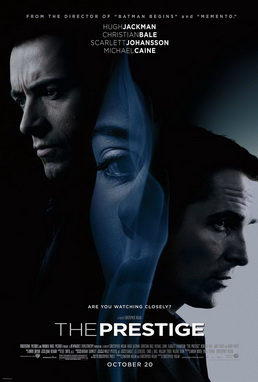
Warner Brothers
The Prestige – Adapted by Christopher and Jonathan Nolan from the science fiction novel of the same name by Christopher Priest. The Nolans dropped entirely the framing story set decades after the death of the feuding magicians, the concept of ghosts created by strange quantum mechanical devices, and, in perhaps the best move of all, even the inciting incident that ignited the war between the performers. With a cleaner plot line, only one fantastic bit to suspend disbelief, and a much more powerful reason for the two to bitterly hate each other, the Nolans crafted a deeply powerful story about blinding obsession.
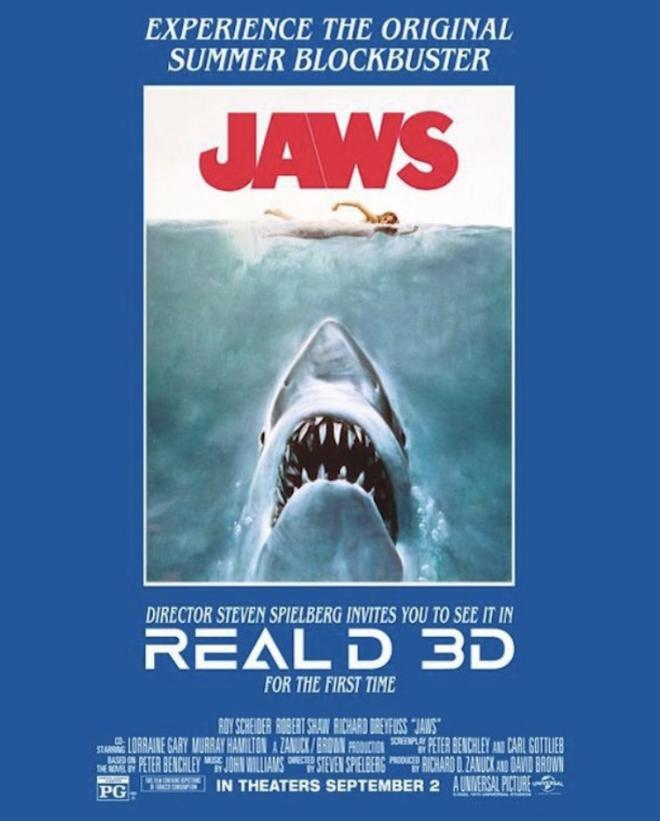
Universal Studios
Jaws – Adapted from the novel by Peter Benchley by a school of screen scribes that included Benchley, the film which birthed the modern blockbuster, is the straightforward tale of a New England seasonal community that becomes the hunting ground for a massive great white shark. The film deleted all of the novel’s melodramatic cliches, the police chief’s unhappy marriage, his wife’s age-driven insecurity and infidelity, Hooper’s own issues being the little brother to an athlete, and even a mafia sub-plot that drives the mayor’s insistence that the lethal beaches remain open. Instead, the film is very simple and direct, subtracting nearly everything that distracts from the story of a dangerous monster shark but adding depth to Quint’s character by gifting him the USS Indianapolis backstory. Perhaps someday, in their quest to keep the franchise alive, Universal will produce a prestige limited series more faithful to the novel and find the results disappointing.
The Hunt for Red October – Adapted from Tom Clancy’s first published novel, the story of a technologically advanced Soviet submarine being stolen and gifted to the Americans by its defecting officers was adapted to the screen principally by Larry Ferguson, and Donald E. Stewart with additional work by John Milius, launching a franchise that encompasses feature films and television series that continue to this day. Clancy’s novel struck me as overly jingoistic with the American forces hardly even capable of putting a foot wrong and even their reservists out flying the Soviet’s lead air combatants. Stripping away the ‘America can do no wrong’ attitude of the book for a more balanced presentation. Removing Ramius’s ‘denied Christianity’ sub-plot from his motivation streamlined the story and left the audience with something more accessible and which required a much lower level of suspension of disbelief.
Novels and movies are very different media with very different challenges, and it is best if when you go to see an adaptation that you set aside the expectations that grew in your mind from the book and let the film be what it is. It may be better, it may be worse, but what it is is its own thing: accept it as that.
