My Favorite and Least Favorite Horror Genres


My earliest memories are of horror film playing at a drive-in theater. Fragments of the film, vivid color, brains in jars, stay with me to this day so many decades later. It is not surprising I grew up with a taste for horror movies. Over the long years those tastes focused and resolved into my best-loved types of horror cinema.

Ghost stories are without a doubt the horror I love best. I can’t explain why this genre appeals so strongly to me but from classic cinema and literature such as The Haunting/The Haunting of Hill House to more recent fare like The Night House, or Last Night in Soho, ghosts have fascinated and occasionally terrified me. Ghosts hold no terror for me in reality. I do not believe in ghosts and spirits. Life is a bio-chemical reaction and once the reaction stops, we are gone from this Earth. The emergent properties from out brain that we call ourselves vanishes with the cessation of life. But despite this firm, mechanistic view of reality and life, it is the ghost story that fascinates and compels me.

At the other end of my horror preferences lies the genre of Slashers.

What makes it strange that slashers so often are uninteresting or laughable to me is that they bear a close evolutionary relation to a genre I do very much care for the giallo. What differentiates the giallo from the slasher, at least to me, is that the Italian films are more centered on the mystery, the macabre, and flamboyant cinematic style while the latter is more focused on the kills, the more gruesome and outlandish the better. This is not to denigrate or belittle those who love, adore, and flock to the slasher movies. The beauty of the arts is in their diversity. We should always love what we love with shame or apology.

It is my apathy towards slashers that made films such as X difficult for me to suspend that vital disbelief that transforms a movie from something you watch to something you experience.

Each of us has the stories and genres to speak to something deep inside each of us and it the artists that bring us these fantastic fantasies I am continually in awe of.

Share

ANOTHER CLICHE I DISLIKE


Twice in the space of a week I have been subjected to films that used the cliche ‘the character was psychotic’ and none of the dramatic events actually transpired.

(Spoilers for a 48-year-old film.) In 1975’s Footprints on the Moon, a woman discovers that she cannot remember the previous several days while also being terrified by a recurrent dream about a sadistic doctor torturing astronauts on the moon. She investigates clues as to where she had been during her amnesiac hours with the movie’s final reveal being that she was insane and all of it had been the product of a psychotic break.

The other film I shall not mention by title as it is much more recent and still playing exclusively on a streaming service. However, it lands with the same climax, a woman, after trauma from her past resurfaces and disrupts her perfect life, attempts to deal with the man who cause the trauma but none of it was real, and the entire film had been her break with reality.

When a movie utilizes the “Our protagonist is insane and all the fantastic events were hallucinations” trope this is little more than a dressed up, fancier edition of ‘it was all a dream.’

Like dream narratives psychotic break twists are infuriating. Throughout the story I may have invested serious emotional weight to the character’s issue, objectives, and challenges only to discover that I have been a sucker. None of it mattered, none it had any real consequence. Success and failure held the same values because reality did not apply. The ‘mystery’ Alice is attempting to solve in Footprints on the Moon has not weight because at the story’s start and its conclusion nothing has changed. She began the tale insane and ended it equally mad.

Shutter Island (2010) plays close to this cliche but the events on the screen are reality it is their interpretation that is subject to the protagonist’s delusions. When the story resolves there has been actual character growth and change making the tale have meaning rather than attempting a ‘gotcha’ with a twist.

There is the crux of the matter for me with this cliche. It renders everything meaningless without the weight of dramatic change.

Share

What I Want From Horror Films


In a word the answer is unsettled. I want well after the film has ended and I have either returned home or switched off the television to still be thinking about and uneasy with what was presented to me.

This is part of the reason why slashers, Halloween, Friday the 13th, and the like do very little for me. I am not principally interested ‘the kills’ and jump scares are only startling in the moment lacking in any lasting emotional weight. A good jump scare can add spice to a movie, but most are predictable, telegraphing their arrival well before the moment of sudden movement accompanied by a loud discharge on the soundtrack.

A monster movie can be better than a slasher, particularly when the monster has a symbolic role, such as ‘The Nothing’ in The Night House or The Babadook, each a representation of the horror of grief without losing the requirements of good story and tension needed for an excellent horror film.

But like jump scares, metaphor can be over employed yielding a less coherent experience that is more confounding than unsettling. Alex Garland’s Men is like this for me. Clearly Garland is tilling the fields of grief and regret with a plow of generalized gendered threat that is common to women’s experience in the real world. However, by the film’s end it is impossible to know what was diegetic, that is to say real within the fictional setting, and what was cinematic metaphoric convention for the audience’s consumption. Rory Kinnear portrayed every male role in the film except for Harper’s deceased spouse. Now, as a metaphor intended for the audience that’s fine and dandy. We understand why harper takes no notice that every man she meets in the village wears the same face, because only we are seeing that repeated appearance. But, in the film’s final sequence when her friend Riley arrives, the detritus of the previous night’s horrific events is strewn about indicating that this was not a symbolism of Harper’s trauma but diegetic reality. If that’s the case, then why did Harper not react to all the men being physically the same? It’s a circle I can’t seem to square. Men has many a scene, shot, and sequence that is vastly unsettling, but the interpretation is so difficult that I find the film impossible to enjoy. half-way to Lynch leaves me stranded.

I recognize that I am ‘tough room.’ There are many recent horror films that have been enthusiastically embraced by the community that failed for me but luckily the genre is wide and deep enough that there are plenty of films for all of us.

Share

A Re-interpretation of Signs (2002)


This essay is laden with spoilers.

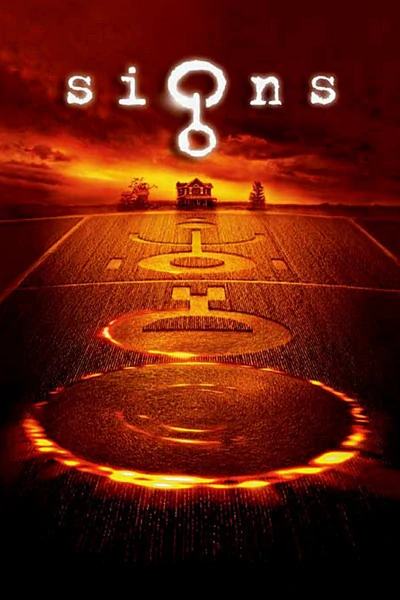
Signs, the third feature film from M. Night Shyamalan, released in 2002 has widely been interpreted as a science-fiction film concerning an alien invasion. While the ‘invasion’ takes place globally the film remains fixed on a single Pennsylvanian farm family head by Graham Hess (Mel Gibson) a former priest who has lost his faith following the traffic accident death of his wife. Throughout the story is peppered with disconnected actions and random quirks of characters, the wife’s dying words seemingly referring to a baseball game, the youngest daughter’s habit of abandoning half full glasses of water, the older boy’s asthma, but by the end of the film each item is precisely placed to ensure the family’s survival. The accumulation of these ‘random’ events restores Graham’s faith in religion and that ‘everything happens for a reason.’

The film, while successful upon release with a US domestic box office total of more than 200 million dollars, was criticized for the unlikely occurrence that a spacefaring race would ‘invade’ Earth when half a tumbler of water was more than enough to cause them serious physical damage.

As science-fiction the film makes no sense. Presuming some form of life may exist without liquid water the nature of that life would be so radically different from terrestrial life as to render our entire environment lethal to them. To walk upon the Earth without benefit of protective gear would be like a person walking on a planet with acid hanging in the air. Let’s not talk about the absurdity of ‘crop circles’ as a method of navigation to a race capable of crossing the nearly unimageable distance between stars. Patterns in local crops are visible to only a few hundred or thousand kilometers,

Additionally, the concept that ‘everything happened for a reason’ is wholly incompatible with a universe governed by blind physical laws devoid of a creator or guiding intelligence. Science-Fiction is a rationalist medium and requires that the fantastic be ‘explained’ by natural law and physical processes. That is not to say that SF is incompatible with horror, author Gregory Benford in his short story A Dance to Strange Music crafter a terrifying tale of planetary exploration with disturbing imagery and events that were fully explained by physical laws but remained terrifying.

Signs makes no attempt to justify how all these little random things existed to save the Hess household other than that ‘they were there for a reason.’ Simply put, the story does not work as science-fiction.

But what if it is not science-fiction? What if Signs belongs to another genre of horror?

Consider, we never actually saw the ‘starships’ that brought the ‘aliens’ to Earth. Why do we ‘know’ that they are actually aliens? They never stopped to announce such a thing to us, never proclaimed that they originated from the star system we call Zeta Reticuli. (Bonus points for spotting that SF Horror reference.)

What if Signs is a better fit for an Occult Horror movie than a science-fiction one? So much that is incompatible with science-fiction works if we consider everything to be occult driven.

Not aliens, but demons.

Strange glyphs and symbols are traditionally part of the occult.

 Water makes much more sense against supernatural creature than naturally evolved organisms.

And of course, then there is a ‘purpose’ to life, existence, and all the ‘random’ things and quirks are part of the grand plan.

Signs is much more akin to The Exorcist, a priest with shattered faith finds it again when confront by a demon, than War of the Worlds.

Nothing in the record supports that writer/director Shyamalan intended such an interpretation so call this my personal head cannon, but it resolves all the films issues without contradicting anything on the screen.

Share

Objective Achieved: Enys Men


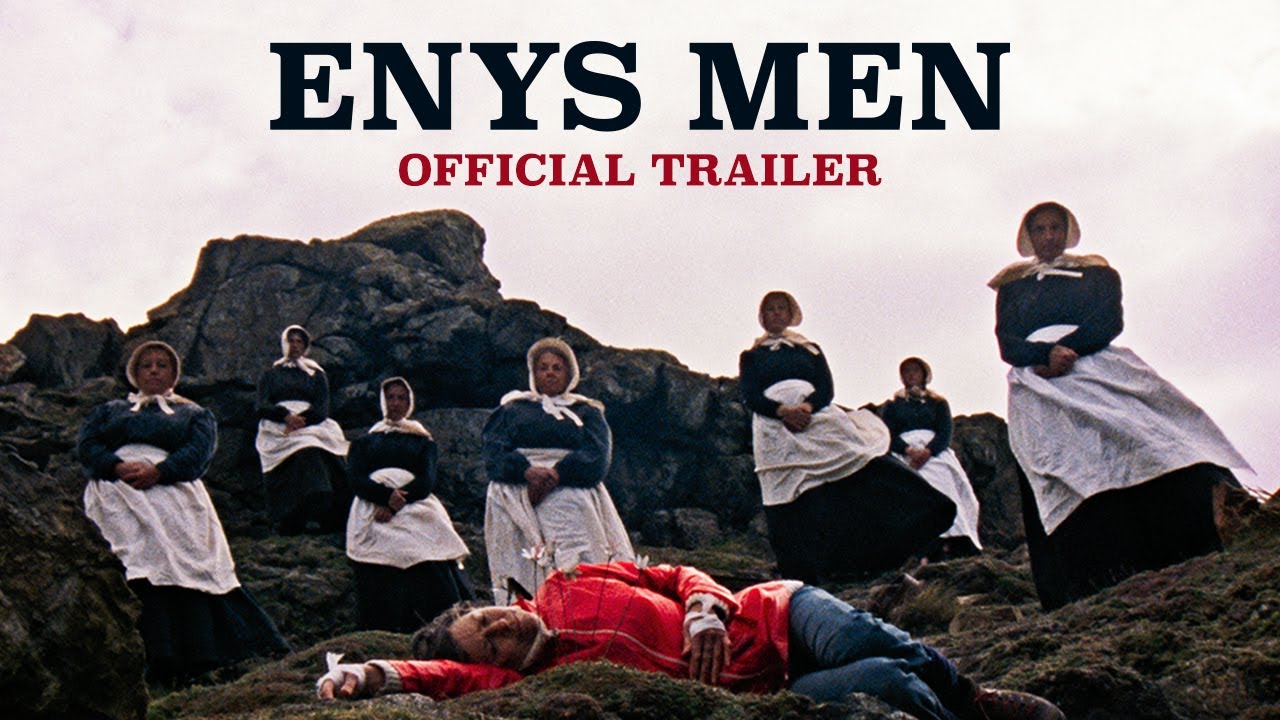
Writer/Director Mark Jenkin in a recent interview stated that one of his goals with his new atmospheric folk horror film Enys Men (the second word is pronounced like ‘main.) is to replicate the look of a low budgeted film from the 1970s.

He has nailed that objective to perfection.

Everything in the trailer, with the exception of the helicopter, looks period perfect. The film stock, the lenses, the aspect ratio, and even the composition of the frames all look spot on for a low budget horror movie of say 1972 or 73.

Take a look yourself. This is one film I will be catching the moment I can.

youtube placeholder image

Share

Why Naming Characters in Vulcan’s Forge Proved Challenging


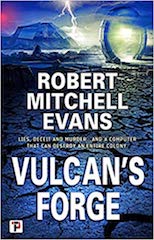
For me coming up with the names for characters in my fiction is always something to bedevils me, but with Vulcan’s Forge I faced a new wrinkle in that challenge.

The background to the novel is that in the later 21st to early 22nd century it weas discovered that a brown dwarf, the burnt-out husk of star, would pass through the inner solar system disrupting all the planets and ejecting Earth into interstellar space.

To survive humanity constructed automated Artificial Intelligence controlled Arks to established new populations on distant worlds. Taking centuries to reach their destinations and without the

Flame Tree Publishing

technical capability to sustain crew no persons were actually aboard these Arks. By way of sperm, eggs, and artificial wombs, the colonists of the new worlds would be born once the A.I.s had established the settlements and the required infrastructure.

These Ark were not terribly expensive to construct or launch with each costing the equivalent of about half a billion dollars today. This provided the opportunity for all sorts of smaller social units and sub-cultures to launch their own Ark, programming the Artificial Intelligences to raise the future humans in a manner to propagate their own cultural values.

Vulcan’s Forge takes place on the colony of Nocturnia, with a cultural directive that idolizes mid-twentieth century urban Americana. The people who commissioned Nocturnia’s founding Ark, as is so often the case with people viewing history through the distorting lens of nostalgia, ignored the racism of that time and the colony was founded with the ethnic/genetic heritage of the United States of the early 22nd century.

With a population whose genetic heritage reflects the vast and diverse population of the United States, and the archived records of that population, the colony’s founding A.I.s could name members of the initial generation anything at all. However, unless every egg and sperm were labeled with the ethnic/genetic background of their donors, something the commissioners of the Ark would not have done, then the link between ethnic heritage and naming conventions is shattered. Each and every person in the initial generation and the ones that followed could have a name from any of the group and cultures of the United States.

Vulcan’s Forge is a science-fiction noir and with its strong element of mystery, with the exception of the prolog, the story is presented as a first-person narrative from the protagonist, Jason Kessler’s point of view. Dissociating name from the ethnic/culture histories combined with a point-of-view nearly ignorant of that created quite a challenge. For example, Jason’s fiancé Seiko, her given name is Japanese but her ethnic heritage is Latin. Jason can’t comment on it directly in the narrative because this mismatch in his mind simply doesn’t exist. All 3 million people in Nocturnia have names that for Jason has no real sense of history. This is all well and good for Jason but what about the reader holding the book? How could I as the author makes sure that they weren’t picturing a someone of east Asian ancestry every time a scene included Seiko?

It helped that films and their use a method of culture transmission played a central element to Vulcan’s Forge. Jason’s love of cinema allowed me to refer to famous movie characters in reference to the people of his life. That’s the route I took and I hope that my readers weren’t too confused by Nocturnia’s unique naming convention.

As a traditionally published novel Vulcan’s Forge can be ordered from wherever books are sold. I am including links to San Diego premier specialty bookstore Mysterious Galaxy along with links to Amazon.

Mysterious Galaxy Paperback

Mysterious Galaxy eBook

Amazon Paperback

Amazon eBook


Share

The World Building Has Started


After the holiday break — which wasn’t a real break as there was a lot of overtime at the day job — I have begun the rough ideas on paper stage for my next novel.

While I have an idea for the characters and the central plot and story there are a lot of details yet to work out. For me that starts with the world building.

I know some of the outlines of the world that this story has to take place in. The plot dictates elements of the worlds. You can never have Alien happen in a world of happy socialism, so to get to Alien you must have a world with greedy corporations.

Given that the working title for the next novel is Company Town: Mars that means the world building has to include a lot of capitalism and all that entails. It’s set about 120 years in the future and will be mostly a sociological science-fiction tale about the system to hem, corral, and define our actions.

What is fun in this phase is discovering the new aspect of the universe as they appear in my little noggin. The very act of making the notes open new idea and expands into constructions I hadn’t considered before putting words to documents.

I am thinking that this book will take place in a world where divergent political pressures have shattered the United States and the grand Union has failed. While I expect none of the story will actually take place on Earth much less in the United States the background is essential to creating the fictional present.

I don’t know how others feel about the world building but for me it is one of the more fun aspects of writing.

Share

A Study of the Toxic Fanboy: Tyler in The Menu

Searchlight Pictures


The following essay includes plot details including the major twist in Mark Mylod’s feature film The Menu.


The Menu has been principally viewed as a class focused social satire with strong elements of horror. Even the characters, such as Chef Slowik (Ralph Fiennes) refer to each other by class distinction, ‘Givers’ and ‘Takers.’ Slowik bemoans the fact that his artistry has reached a price point where the only people with the means to experience it are constitutionally incapable of enjoying it as they are never satisfied. The ultra-wealthy consume mindlessly, the act of consumption becoming merely a peacocking display utterly devoid of enjoyment, meaning, or even memorable. One set of characters are revealed to have spent nearly 28,000 dollars experiencing Chef’s artistry and yet fail to recall a single clear instance of it.

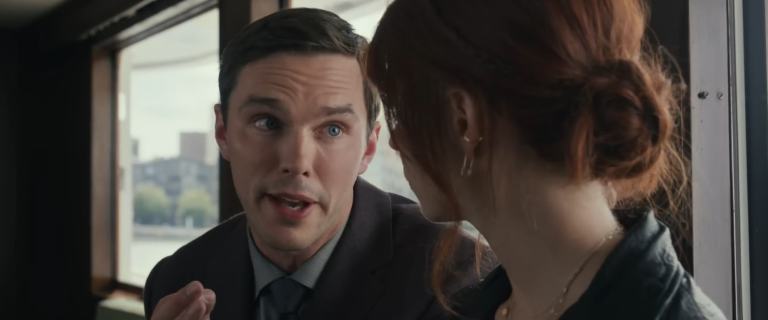
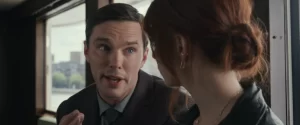
Beyond the social economic class divide between the service industry artists of Chef, his staff, and wealth patrons The Menu also holds sharp biting commentary of the Uber-Fan, represented by Tyle (Nicholas Hoult.)

While Tyler is in fact a member of the wealth class, he mentions the price of the exclusive dinner, $1250 per person, without even the slightest hesitation or hint of trouble at this extravagance. It is also clear that Tyler is well off since he can hire an expensive escort for an evening date. That said Tyler is not here because he is wealthy, ruined Chef’s day off with a pitiful performance, or has failed to appreciate the artistry, but rather he is precisely for because his slavish adoration of Chef and his ‘experience’ is an example of the taxic fan that disgraces the art for both the artist and consumer.

Tyler, like a devoted franchise fa who can quote every obscure fact of legendary lore, has buried himself in the minutia of technique but without any understanding or comprehension of art’s meaning. While horrors unfold around him, dismemberment and suicide, Tyler is lost in the taste and texture of the menu’s courses.

Desperate for validation and as a vainglorious showboat Tyler takes every opportunity to demonstrate his deep knowledge or culinary tools and techniques while simultaneously snubbing and disparaging his companion for her own tastes and interests. He berates ‘Margot’ (Anya Taylor-Joy) for ruining her palate with cigarette smoke and demeans her intelligence when it comes to Chef’s final thematic point. “You won’t figure it out until the end.”

Later it is revealed that not only it was Chef’s intent that the culmination of the evening was that everyone was doomed to die but that Tyler was already fully aware of this. Tyler, utterly obsessed with experiencing Chef Slowik’s extraordinary talents, is willing to die for a single evening meal at the exclusive restaurant. Even more horrifying Tyler engaged a professional escort, ‘Margot’, when his original date broke up with him. Tyler held everyone else in contempt, holding himself above and apart from the rabble due to his deep knowledge and understanding to the culinary arts.

However, he was blind to Chef’s disdain for him. Tyler’s obsession is not the honor that Chef wants for his skill. Slowik hates Tyler for his pathetic, fawning, idolization and it was not enough for Chef that Tyler die along with himself, the staff, and the other diners, but Tyler’s humiliation was required.

Turning into the film third act, Chef Slowik pulls Tyler from his seat and, after dressing him as a chef, brings him into the kitchen to display his own culinary talents.

Of which Tyler has none.

Like so many dedicate, noisy, bossy, and opinionated fanboys Tyler when faced with creating a work in the art he knows so well fails miserably producing the supplemental course labeled Tyler’s Bullshit. For all his posturing, pronouncements, and peacocking Tyler is revealed an empty vessel with nothing of his own to contribute.

Chef words, unheard by the audience, destroys what little remained of Tyler and prompting Tyler’s suicide.  The obsessive fan, and it is wise to remember that the word ‘fan’ is derived from ‘fanatic,’ corrupt the art that they profess to love. They have replaced understanding with minutia, promoting with gatekeeping, and empathy with arrogance.

Real art and real appreciation require humility as well talent and understanding.

Share