Category Archives: writing

Opening a Story

Sorry I have been away from my blog but last week I managed to injure my lower back and that pulled muscle made it fairly painful to sit at my work desk. I am recovered enough to return to my desk, both here at home and at my day job.

Last night I attended the twice monthly meeting of the Mysterious Galaxy Writers Group and some of the feedback and discussion has gotten my mind churning on the elements needed to successfully open a story.

Of course, you want something dramatic, something interesting capturing the reader’s interest and imagination. I have also long maintained that the opening scene must be one of conflict, presenting a character with an objective and something that stand between the character achieving that goal. There an often used example of starting off wrong by stating in combat that because we do not yet know who the characters are and what motivates them it is difficult to have emotional investment in battle right from the start. This correct more often than it is wrong, but skillful deployment of character beats can allow a combat focused opening as well.

What I have been thinking and pondering since last night is the importance of the nature of the conflict that you opens the story. It seems rather obvious but sometime the most important elements are only obvious when seen in retrospect. The exact conflict that opens the story informs the reader about the nature of the character and situation. It lays down a lot of foundation for the tone and style of the story that will follow. Why this character is facing this particular challenge and that choices that are forced upon them to resolve it informs the reader who the character is and the nature of their personality.

The challenge doesn’t have to be the central challenge of the story or novel, but it should be there is give us these vital insights.

Consider a character who needs to get to work but whose car is out of gas. Already we know that this character has financial troubles, has work troubles, and is teetering on the edge. A person secure in their finances can easily maintain their vehicle, and someone doing well at their job can afford a single tardy or missed day. So that little conflict has already shared a lot of information. If the character resolves this issue by stealing money from their roommate’s wallet that’s one sort of person if they wake up hours early to walk three miles to get to work on time that a different moral character and either choice gives the reader a taste of who this person is.

When opening a story you have a very special window for establishing tone and character, make the most of it.


Share

Knowing What You Write

There’s an adage in writing that goes “Write what you know,” but I think it should more properly be phrased as ‘Know what you write.’ It isn’t about sticking to things you already know but knowing and understanding your subject well enough to write honestly.

One of the short films at this year’s Horrible Imaginings Festival brought this home to me.

In the film Vicious a family of urbanites are in the lonely rural south when they become guests of an odd local family that invites them for dinner. The film starts off looking as though it is going to be a rather bog standard ‘folk horror’ about the strange and scary people found in the countryside but the filmmakers invert the paradigm and end of a rather different note.

What might have been a fun reversal of a trope felt flat and inauthentic because the filmmakers did not know what they wrote. When visiting a culture not your own it is important to get people who are deeply familiar with it to help you in avoiding simple mistakes.  Here are two of the most glaring examples from the film where inaccuracies damaged my enjoyment.

First off, in the south you do not have dinner outdoors shortly after dusk. Californians might think of this time as pleasant, the cooling air, the breeze heading towards the sea, but California is dry and the south is wet and filled with mosquitos. A table outside is setting a table for those biting insects.

Second, if a Southern family invites another for supper, particularly is this Southern family has a large lovely brick home, the meal they set out will not be a plate of beans and nothing more. Southern culture is a very food centric one and the offerings would have been numerous both as a matter of hospitality and of pride.

These may feel like small errors but they destroy the credibility of the film, yanking audience member who see them out of the tale and shattering the illusion. It is always vitally important to ‘Write What You Know.”

Share

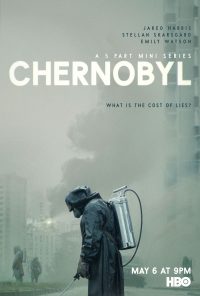
Reading HBO’s Chernobyl

Unless you have been under a rock hiding from the insanity of today’s world, and honestly who could blame you, you have probably heard of HBO’s fantastic mini-series Chernobyl  chronicling the infamous Soviet nuclear disaster. Show runner and writer Craig Mazin, best know for films such as The Hangover 2,  delivered an amazing, frightening, and moving depiction of the terrifying and heroic events surrounding the 1986 event.

Mazin also co hosts with fellow screen scribe John August the podcast Scriptnotes  where the pair, along with occasional guests, discuss screenwriting from both a creative and a business practical viewpoint.  As part of their mission to help screenwriters Mazin has published all five scripts for Chernobyl  and I have spent the last two days lost in a wonderful reading experience.

I have read a number of scripts for both television and feature films and I have to say that Mazin has really opened my eyes to ways this particular art form can be expressed. His approach is a close subjective style with elements that I have not seen often in screenplays. The narrative elements of the script contain descriptions that are purely internal to the character. It’s a guide to the reader, the director, and the actor how a scene needs to be played. I have to say that these scripts are a good reading experience one that is as enjoyable as any well-crafted short story or novel. Not only has it made me appreciate the craft more, but also it has enhanced my respect for the series as a whole and ignited a desire to re-watch the entire run.

The scripts are available for free downloading at John August’s website.


Share

Every Book Is Different

As I embark on the start of writing another novel it has struck me as curious that each of the books I have written ahs taken a different path in the pre-writing work.

Now, there are, of course, a lot of similarities, after all I am the author of each of these works and while I evolve and change those changes are not so radical as to turn me from a plotter to a pantser. However there are significant changes to my approach with each and every book. The quest for ‘The Way’ to write a novel never truly finds a whole and unifying answer.

Outline vary a great deal from fairly simple and straight forward affairs of just a few pages to the monster outline that reached 87 double spaced pages which detailed nearly every single scene in the work. I like using act structure to plan and plot my narrative but that too changes from book to book, with some using a three-act format such as you might see in a typical movie to more recently a five-act structure inspired by the plays of William Shakespeare. Often my act structure is nothing more than the key events that define the changing of an act, but I have also crafted spreadsheet tracking each character through the acts showing their relations to not only the changing of the acts but to each other as they approach these key story beats.

Often I will amass a list of characters as I compose an outline, with new characters created and added to my list as I discover them in the process and even that changes. For my most recent work, which isn’t yet to the outlining stage, I ended up creating a visual map of the characters, color-coded for if they were primarily associated with a protagonists or an antagonist and with lines connecting the character that had significant relationships to each other. This exposed a hole in the narrative that required a character that connected to several of my major characters and straddled the divided between protagonists and antagonist.

This all makes a weird kind of sense to me. Each novel is unique, with its own set of characters, themes, and events, and that fact that each requires a unique approach should not be that surprising.

Share

One Year Without an Agent

It was a little more than a year ago when my literary agency made it official and dropped me from their list.

I won’t lie, that hurt.

I won’t lie, I saw it coming. Emails went unanswered manuscripts went unread and in general I seemed to be more and more of an afterthought so the eventual move was hardly surprising. I am not naming names and I am not here to trash talk anyone or make a big public angry rant. The Author/Agent relations is a relation and now all of them work out, people have the be compatible just as with romantic entanglements there comes a time when it is better to walk away than to stay in one that is unhealthy and counter-productive. For those who are still with that agent and that agency I wish you all the best.

So, what has happened to me in the intervening twelve months?

I mentioned that ‘manuscripts went unread’ well that referred to a strange little novel I wrote where I combined Science-Fiction with Film Noir. I am certainly not the first person to that, there a plenty of novels exploring that blending of genres but what is different in mine are the exact sub-genres I braided together. Noir has two major branches, the ‘Hard Boiled’ school of police and private detectives and the ‘dark underbelly’ of society. That second branch is represented by works such as ‘Double Indemnity’ and ‘The Postman Always Rings Twice’ and it is the flavor I wanted to work with, merging it with colonial science-fiction about humanity as it struggles to survive on alien worlds.

I took that SF/Noir manuscript that had languished unread and found a publisher that produced books of both SF and crime narrative and submitted it. The book sold. First time, first publisher I submitted it to. I just completed the edits to the manuscript and my editor has submitted to the house’s production department. Vulcan’s Forge is expected to hit the shelves next March.

The manuscript that started the relationship with my former agent is showing promise as well. A major house that specializes in military SF, which is what that manuscript is, just alerted me that the work had been pulled of ‘closer examination.’ Of course they may still pass on the book but it’s more activity that it had been getting.

On the short story front I made it to ‘Finalist’ for the Writers of the Future Contest. That’s in the top eight slots out of thousands that had entered. I did not win, but it felt good that my odd little AI/Ghost story made it so far.

The point of all this?

If you’re queries are bouncing off agencies, do not despair. There are more paths in that just that one. Keep writing, keep plugging, and remember never ever self-reject

Share

Are they Alternative Histories?

The following post has spoilers for Inglorious Basterds and Once Upon a Time in Hollywood so proceed at your own discretion.


In the film Inglorious Basterds the heroes in a bloody and suicidal action murder the inner circle of the Nazi party including Hitler himself, presumably bring World War II to a premature close while in the current movie Once Upon a Time in Hollywood the cult followers of Charles Manson instead of murdering Sharon Tate and her houseguests attack her neighbors presumably launching Hollywood into a utterly novel sociological path.

Are these films with their fantastic premises and fairy tale ending popular examples of Alternative History fiction? Alternative History is that genre of speculative fiction which imagines how the world might have been different had history taken a different track than the one we know. For example what if the USA had lost its war of independence, or if WWI had not started? Harry Turtledove is today’s best practitioner of this art.

One the face of it this answer seems obvious, both of Tarantino’s film wildly diverge from actual history making those cinematic excursions truly an alternative to our own. However I think it require more than that. After Braveheart has loads of things wildly different from actual history and yet I have not heard anyone argue that it is an ‘alternative history.’

I believe an essential component of alternative history is an examination of what those differences mean to our understanding of the world. It is an examination of the consequencesof the change not just the change itself. In both films the story ends with the change, we never see what that means for the wider world. How does Hitler dying in 1944 change the Cold War, with Tate’s brutal murder how does film making change? We have no answer from the filmmaker, not even the hint of one. These are fairy tales, not alternative histories.

Share

When You Stare Into The Art The Art Stares Back Into You

Obviously this post’s title is a play on the famous statement about staring into the void and how that changes you what I am speaking about is not so much about change as revelation.

With the release of Tarantino’s Once Upon a Time In Hollywood his largest box-office opening to date, there have been a slew of reviews with interesting takes on what the themes and cultural significance of this cinematic fairytale. Given the subject matter, 1969, the Manson Murders, the transition from ‘Old Hollywood’ to a new star system, and the failure of the ‘Hippie’ movement as the idealistic 60s gave way to the cynical and dark 70s Once  quickly became a mirror that reflected the philosophies, politics, and morals of those critiquing the film.

It is an interesting and I think often forgotten aspect of critique that what once comments upon, compliments, or derides in any work of art but particularly with narrative pieces, says as much about the reviewer as it does about the art itself.

In my writers circle I often say ‘No honest review can be wrong,’ as a truthful critique, one that if reflected of the person’s sincere thoughts and reactions, paints the art as it impacted and moved, or failed to move, that person.

It has been fascinating watching the political chatterers liberal and conservative react to Once  revealing their internal biases, talking past each other, and illuminating the very real differences between those world-views. It could be an interesting experiment for some writers to write phony reviews in their characters’ voices.

Share

Story Construction in Two Rules

There are a lot of factors in good stories and good writing so it goes without saying that you need more than two ‘rules’ but I do think that keeping this pair of elements in mind you will be well set on a path for making tighter stronger stories.

Rule 1: The character must want something that is difficult to obtain.

This is the rule that will drive the plot. What the character wants can change as the plot evolve and situations force the character onto new paths, but there must be something that the characters wants so badly that it becomes a need.

Rule 2: The character wants the wrong thing.

This is the rule that drives the character arc, the emotional heart of the transformation that will force the character into new growth or their final destruction. What I mean by ‘the wrong thing’ is that the character at the start of the story has a worldview that is going to be challenged and found false or wanting and by the end of the story the character will have transformed by taking on a new world view. What the character wanted at the start of the story is driven by that old worldview and what they achieve at the end is a synthesis of their growth and new worldview at the story’s end.

Share

A Strange Dry Period

When it comes to my writing productivity this year has been curious. Earlier I sold my first novel to Flame Tree Press and that was exciting, thrilling, and informative. I look forward to the stages and processes yet to come, the cover reveals, and ultimately the book’s release early next year.

Now, you would think having achieved something that has been long sought after, fought for, and dreamt about would be a vitalizing incident spurring an explosion of creativity and output but it’s been rather the opposite. Every short story I attempted for months following the contract stalled and crashed. It seemed that I could start a story but following through to completion seemed impossible.

Last moth as we hurtled towards the deadline for the quarter for the Writers of the Future contest, something I will remain eligible to enter and win until early next year when the novel is published, it seemed I was going to have to skip entering as none of those accursed shorts would land instead of crashing. Then, with less than six days before the deadline a new idea burst in my skull. At first I had thought to rewrite an idea from many years ago but sudden inspiration transformed it into a new concept with wholly new themes. A furious several days passed and the story, this time, behaved, coming to a dark and hopefully satisfying conclusion.

Since that submission my creative energies have been growing and I have begun work on a new novel, tacking for the first time in a novel length work an alien as a central character. It would seem that the strange and mystifying dry period that followed signing the contract has ended.

Share

Terrific Art, Terrible Person

As a consumer what do you do when the artist is a terrible person?

In this day and age when less and less of what was once considered ‘private’ become public and common knowledge more and more anyone who is idealized and lionized is revealed to have not just feet of clay but dark black hearts as well.

I am not speaking of just the abrasive personality, the demanding and tyrannical nature of their relations with coworkers and assistants but deeds that are criminal and often unforgivable. I need not give a detailed listing of the recent and distant scandals that reveals some artists, performers, and creators to be truly reprehensible people.

What should you do?

There are no easy or one-size fits all answers. To each of us lies our individual moral duty and obligations and as shepherds of our own consciences we have to find the answers alone, but I can share some of what guides me and perhaps that might illuminate for myself and other how to approach the difficult and fraught choices.

I have to ask myself does the art endorse, reflect, promote, or otherwise give support to the actions that I found reprehensible?

Kevin Spacey is a talented actor and apparently, yet to be proven in a court of law, a terrible person when it comes his behavior. Does his art endorse the sort of actions he has been credibly accused of? It doesn’t seem so to me.

It is easier separate the artist and the art when the art lies completely apart from the artist’s reprehensible actions, Polanski’s Macbeth is my favorite film adaptation of the classic play and has nothing to do with the man’s criminal actions. I can enjoy the filmmaking, the artistry, and still support the position that he deserves the jail time he escaped.

Share