Category Archives: writing

Joy in Creation

I have started the process of working out the details for my next novel. Now I had previously worked out a novel and its synopsis before, submitted it to my editor and after a very friendly discussion about it themes and ending, we came to the conclusion that it was not a novel for that press. I could have moved on to writing it, it’s a dark cynical story that is kin of adjacent to cosmic horror without being a horror novel but I decided to follow a new idea that had recently arrived in my brain and would be a perfect fit for the press.

So yesterday I began the note process where I do the majority of my world building. This is sort of like explain on paper to myself how the world works and how the characters interact with the world and its social structures. It’s me telling myself the background of the story without getting into the plot details. I have a clear understanding of the sweeping outline of the plot, I know the story’s central mystery, the protagonist, and the resolution, but within those grand sweeps are nearly countless details and tones that I have to nail down before I can outline the actual story.

What’s a joy is that the worldbuilding solves plot problems before I even get to the outline. This new novel will take place on a ‘generation ship,’ one that travels slower than light and generations of people are born, live, and die on the ship before it reaches its colonization target. How do you organize people as a society that both meets the needs of a ship, with a rigid command and control structure and meets the needs of a free people living their lives in a vast spinning cylinder? How do you direct populations to prevent any sub-group from becoming a dead end genetically preserving both diversity in the gene pool and freedom for the population? Answering those question not only helped me make, at least in my mind, a more credible world but also gave concrete solutions to plot problem I had already seen but not yet answered.

This is the fun puzzle solving stage of creation. There will be more challenges to overcome and new puzzles to solve but right now it is mostly slotting the framing pieces into place.

Share

YouTube Discovery

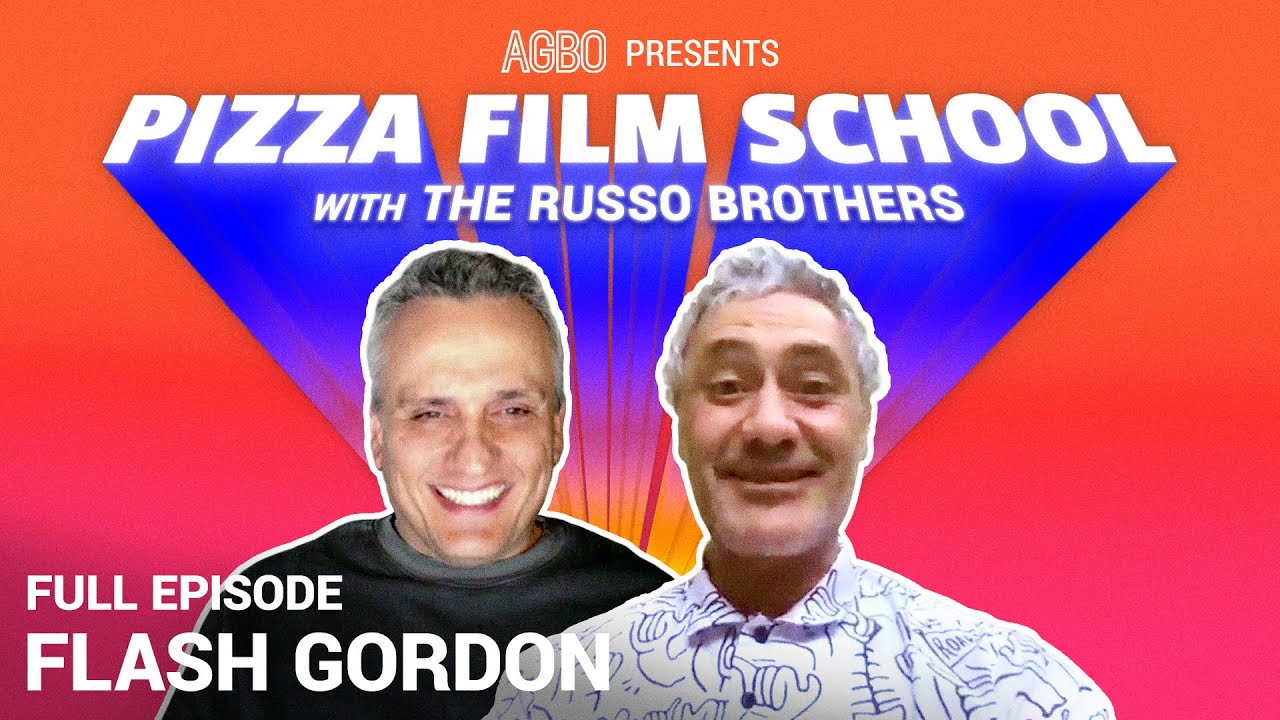
So, with movie theaters closed along with everything else I have been spending quite a bit of time streaming various channels on YouTube. In addition to my history and technology viewing there’s a lot of cinema YouTube and the algorithm recently suggested something that turned out to be quite interesting, The Russo’s Pizza Film School.

The Russo Brothers, Joe and Anthony, are responsible for my favorite Marvel Cinematic Universe films, The Winter Soldier, Civil War, Infinity War, and End Game. During this enforced lockdown they have been holding a virtual film school, focused on screenplay and structure, exploring films that influence their tastes and craft. The films are a diverse lot ranging from Blue Velvet and No Country for Old Men to genre and cult favorites such as The Evil Dead and 1980’s Flash Gordon.

They also bring on guests to help them discuss the movies ranging from film critics to actors and directors. It’s named the Pizza Film School because they suggest ordering a pie from a local shop, to support small local businesses, and enjoying a slice or two as they explore what makes these films tick and work.

If you have an interest in story structure and how these films influenced a pair of truly talented film makers check out the Pizza Film School, I’ll link to the Flash Gordon episode as a starter. The episodes mostly run about an hour long, mostly.

youtube placeholder image

Share

Moments of Transition

I think that some of the most vital moments in a story, and it doesn’t matter if that story is told through a visual medium such a feature film or a narrative medium such as novel, are those moment when the character crosses a transformational threshold and enters a new phase of their journey of change.

The best stories are stories about a character’s change where at the end of the tale the character makes choices that would have been beyond them at the start. But along the way to those ultimate transformations the characters cross smaller thresholds that build upon one another until the full transformation takes place and those smaller moments of change are often powerful moments in the story. Here are just a few examples from popular films, and I am going to use older movies because it does dip into spoiler territory.

Jaws

Chief Brody’s transformation from a man who fears water to a man able to venture comfortably forth on the sea is clear but a vital moment of change comes at the hand of Mrs. Kintner. The fishermen have brought in their tiger shark and everyone is celebrating the end of the threat. The moods crashes when Mrs. Kintner slaps Brody because her son is dead, he knew the beaches were unsafe and left them open anyway. It’s a powerful emotional scene and Brody after it cannot go back to who he was before her accusation. It is crossing this threshold that propels him to do a ‘half-assed autopsy on a fish’ and make his first foray onto the ocean and stiffens his spine in encounters with the Mayor. Mrs. Kintner literal slaps his character onto a new path.

Alien

Alien is a tricky beast. The film’s opening acts it hides the identity of the main character. Ellen Ripley, and she didn’t get a first name until the sequel Aliens, a first presents as a person who avoids direct conflict and dangers. She doesn’t volunteer as part of the expedition to investigate the signal, and she’s evasive with Parker and Brett over the bonus situation. Ripley’s first moment of transformation occurs when Dallas and Lambert return with the stricken and ridden Kane. She makes the hard call and denies them access to the ship, almost certainly dooming Kane to death. This is a threshold the character had avoided but faced with an unknown danger she steps across it and after Ash violates the quarantine she is more willing to confront other characters over their misdeeds and actions. The sequence at the airlock is not only vital to the plot, getting the alien aboard the ship, but vital to Ripley’s character development.

When you are craft the important moments of your story look to the one-way door of transformation it is vital to your character.

Share

It is Okay to be Non-Productive

Perhaps this post is for myself more than it is for others but it is okay to be stalled and uncreative during this crisis.

A lot of people have been facing forced idle time as the pandemic shuttered their businesses, their schools, and their recreation and for the creative among them there has been a sense that this time at home should have been a time of productive expression.

That feeling is a false one and ignore a critical component of the creative processes, the artists mental health and well-being.

These are incredibly stressful times. A lethal disease is sweeping the world and if you live the United States of America the situation is made worse by Federally led bungling incompetence. Too many of us are vulnerable to the virus, too many of us have preexisting conditions to ignorantly approach this disease with careless caution and too many of us have already watched loved one die. This is not an environment for fruitful speculation and creativity.

If you are finding your creativity, that is good. Heaven knows that some of the inspiring, emotional, and comedic creations have helped many through these dark trials but that sort of creativity under pressure is an except not the norm.

My productivity as a writer has been nearly zero, and my day to day life has remained mostly unchanged. I have a day job that I still leave home to work so stifling cabin fever has not been one of my issues. But I have loved ones in this disease’s path and one who has been taken far too soon. I’ve found, aside from some large-scale plot concepts and one of those I really love, I haven’t been able to write and that’s okay.

It’s okay that much of my free time has been with movies, sessions of Call of Duty WWII, and puzzling out spreadsheet to making running my Space Opera RPG easier.

Be good to yourself and know that these times will pass.

Share

Quick Hits for July 23rd

No long form essay today just a few quick thoughts to kick off the morning.


Ladyhawke this film from 1985 doesn’t get the love that it deserves. A romantic fantasy directed by Richard Donner and starring Mathew Broderick, Rutger Hauer, and Michelle Pfeiffer this movie has it all, action, comedy, romance, and one of the best magical curses ever devised and yet it doesn’t get a tenth of the fan love and devotion as The Princess Bride. Both movies deserve to be in the Fan Cannon.


The year 2020 sucks. Not a new or shocking revelation but one I think constantly. I never expected that the year I debuted as a published novelist would be so terrible.


It’s hard getting people to leave reviews on Amazon. Please if you’ve read Vulcan’s Forge leave a review even if it is one star and you hated the book. Though of course I pleased that so far people seem to really like it and got what I was shooting for. Reviews raise visibility on the shopping sites and all of this year’s debut authors need the help.


Though it doesn’t look like I will return in in-person role play gaming before next year I have been hard at work on my Space Opera Campaign. I’ve been spending weekends working on Excel spreadsheet to do the tedious calculations that slow down the flow of play and last night I had an epiphany for solving a calculation that has been bugging me.


Share

Intertextuality and Vulcan’s Forge

Last night I watched a video essay on YouTube that argued the central flaw of most of Disney’s newer slates of film came down to a misuse of intertextuality. Intertextuality is when the text of one work impacted by the text of a previous work. It can be used as a powerful tool to explore themes and idea raised by the original work either in that work’s own text or as interpreted by the new text. An ideal example would be Tom Stoddard’s play Rosencrantz & Guildenstern Are Dead which follows as its central character Rosencrantz & Guildenstern two minor characters from Hamlet and uses that conceit to explore concept of narrative and fiction.

The essay argued that lazy utilization of intertextuality in the Disney live action remakes and the extended Star Wars trilogy resulted in a cheap ‘fan service’ rather than using the references to earlier works to comment either those previous pieces or to deepen the content of the new ones. The exception for Disney being the Marvel Cinematic Universe which stretching across more than 20 films and ten years is a grand experiment in intertextuality and uses those connections to paint deeper, richer, and more engaging emotional lives for its characters.

This leads me to think about my own debut novel Vulcan’s Forge. I shall avoid spoilers for the plot of that story but I will touch on how it itself is a work of intertextuality.

The protagonist of Vulcan’s Forge is Jason Kessler and on the colony of Nocturnia his job is to use mass media, principally film, to create, sustain, and reinforce the colony’s culture derived from mid-twentieth century Americana. To promote an idealized version of that culture, which honestly is more mythology than history, some films are elevated in their importance while others are banned as ‘corrupting.’ Jason, an ill fit for this suffocating version of American culture, is dismissive of some films and longs for the forbidden fruit.

Ideally, and only someone who has read the novel and also is unaware of the films it references can answer if I succeeded, the story can be read and enjoyed without understanding the film references but on an intertextual level the movies that Jason derides and the ones he adores informs the readers of the nature of Jason’s character.

Hopefully my use of intertextuality expands and deepens Vulcan’s Forge but even if I missed the mark making all of those film references was damn fun.

Share

Perilous Pedestals

Placing people particularly artists upon pedestals is an action inviting disappointment and hurt. People are flawed and when some are exalted it nearly always turns out in addition to their better natures, they possess darker ones as well. Artistic people are no more immune to this condition than political ones, contemporary or historical.

Roman Polanski is a brilliant filmmaker and apparently a rapist preying upon little girls.

HP Lovecraft blazed a trail into cosmic horror that people still follow today and was a virulent racist and xenophobe.

Joss Whedon championed strong, complex female characters and was a philander and an apparent control freak.

Orson Scott Card created a series that plead for understanding of the other and called for the suppression of the rights of gay people by ‘any means necessary.’

The list, sadly, is nearly endless of artists and creators that wielded considerable talent, adored by many, and then revealed corroded souls. Which brings us to the current participant in this sad parade, J.K Rowling author and creator is the massive franchise Harry Potter and The Quest for More Power.

Rowling’s recent comments, tweets, and postings on her stance attacking the rights people of the transgendered community have provoked pain, suffering, and emotional trauma among not only the target of her tirade but among her devoted supporters many of which have grown to adulthood with her fictional creation Harry Potter.

I believe that the hurt from Rowling’s abhorrent stance is amplified by a couple of factors. One, the sheer scope and penetration of her creation into the popular culture. There is scarcely a corner of our nation or world that has not been touched by Harry Potter and the wizarding world. The sheer number of fans is simply staggering gifted her with tremendous reach and power to influence.

Secondly, people crafted a tremendous mythology around Rowling and her life. The single mom who became a billionaire and then gave away so much money to charity she lost that status. The repeated assertion that the core theme of the work as a plea for understanding and a denunciation of hate. (A theme that, in my opinion, the work does not fully succeed at, but this is not a place for my issues where Harry Potter artistically fell short.)

It is that second factor that I think powers the real hurt felt by the fans. The idolization of Rowling, her morality, and the power of her myth not only lifted the artist onto a pedestal but bathed her fans in a reflected glow of morality. That they shared in her goodness by being such devoted fans so when it turns out that she has darker less admirable beliefs that too feels as though it is reflected on her fan base.

Both glows were illusionary.

Your morality is your own.

Share

Understanding Your Material

It’s interesting and instructive to compare two bits of film, though one is television, and their approach towards the military and their depictions of military men.

In Them! military characters confront giant ants created by mutation induced from the first atomic explosions. It is simply amazing to see the nuanced actions that are correctly capture in their bearing, their methods, and in their characters. One excellent example is when attacking a nest in the open desert and they are using bazookas as part of their assault. When you load that WWII weapon there is actually a wire lead that goes from the round to a terminal on the firing tube. I know this because I’ve watched training films from the war on how to properly load and fire the weapons. The characters in the movie correctly follow the weapon system’s procedure.

Nearly 50 years later in the iconic television series Buffy The Vampire Slayer the titular character Buffy is working with an elite special forces unit hunting down demons and monster in her hometown. When these best of the best warriors are briefed by a scientist on their next target thy have no questions for her and are silently dedicated to the mission and following orders. Buffy is the outsider and non-conformist with a string of questions and concerns.

This scene entirely misses the boat about what it means to be an elite warrior in U.S. service. These men are smart and those smarts are part of why they are elites. It is simplistic and reductive to think of special forces personnel as silent followers of orders.

The difference between the two productions likely comes down to the fact that in the 1950s nearly everyone knew someone who served and that close association informed the writing and production choices. For Hollywood of the late 90s and early 2000s people will actual services records in the production pipeline are likely to be rare to non-existent. Production companies get their writers and producers and directors from college and industry training with very few coming to film production later in life with the sort of life experiences that could help avoid these sorts of mistakes. It is also unlikely that anyone in the production system knows or knew anyone that served is such a capacity. All of us lead lives that are far too insular. Having veterans among the staff and having veterans review the material to help assure accuracy would be baby steps to getting such characters correct.

And the same is true for characters beyond those with military service. It is true for characters of religion, nationality, or ethnicity.


Representation matters.

Share

Quick Hits

I’ve started outlining a new novel proposal. I have already stepped through the five acts and bullet pointed all the major beats, Now it is time to produce a prose document synopsizing the story and show that to my editor. It’s another dark cynical SF story.

Also, I am working my way, finally, through Netflix’s Marvel Limited series The Defenders but so far, and I have watched six out of eight episodes, I am far from impressed. The writing on this one fails to lock into the voice for the various characters and they instead feel like that they have the shape of the personalities but lack the depth. There has been a tendency, possibly created by time pressures, to go for the most obvious plot turn or bit of dialog. Several times I have mentally delivered the upcoming dialog before the character on screen actually utters it.

San Diego has recieve3d the go ahead from the State Government to move forward into loosening social distancing restrictions and Saturday I will be at Mysterious Galaxy Bookstore to sign stock of my novel Vulcan’s Forge.


Share

Things Named Vulcan’s Forge

I titled my novel Vulcan’s Forge as a reference to the Roman god of fire and smithy because the McGuffin at the center of the sf/noir was capable of producing effects well beyond the character’s normal access. Of Course, I was aware that Star Trek had popularized Vulcan as an association with its particular alien species. In fact, I had expected that there might have been a push from the publishing house to re-title the novel and that would have been fine with me, I am generally not precious about my titles.

The book sailed through the editing and publication process without any ever suggesting or hinting that an alternative title should be explored and now I am discovering all the other things that are called Vulcan’s Forge.

Vulcan’s Forge 1998 a techno-thriller, that’s when you don’t want to be marketed as present day science-fiction a category invented by The Hunt of Red October, by Jack Du Brul.

Vulcan’s Forge a 1997 Star trek­ tie-in novel set a year after the events in the movie Star Trek: Generations.

Vulcan’s Forge a custom Jewelers located in Kansas City Missouri.

Vulcan’s Forge a thoroughbred racehorse from the 1940s.


Share