Category Archives: Movies

More Thoughts on Noir

Recently I have been re-reading my SF/Noir novel Vulcan’s Forge  in anticipation of editor’s notes as we proceed towards our early 2020 publication date and, along with watching classic noirson streaming while reading some of the classic works in their original forms, I have been thinking about the nature of the genre and what really makes up this beloved form.

In previous posts I have discussed how one of the principal driving factor of noiris to me is how characters are consumed by their appetites and I still hold that this is an essential elements in noir  fiction, be it film or literature, but I am now thinking there is an additional element, beyond the stylized ones, that feels central to the genre and that is the conflict between the character and their culture.

In noir  fiction characters are often immoral and that immorality is judged against the larger culture that character comes from.  Murder, theft, and unsanctioned sexual activity are the hallmarks of noir  movies and from the classic period running through the 1940s and 1950s acting on these desires places a person firmly beyond the boundaries of ‘polite society.’ Even when the heroes of noir fiction aren’t murderous insurance salesmen but rather the hard-bitten border-line alcoholic private detective they still transgress far beyond anything accept my society at large. Sam Spade before being entangled in a hunt for the ‘black bird’ and temptation of great wealth it represents is betraying both his partner and societies morals by his affair with Archer’s wife. Time and time again the main characters in noir  reject society’s conformity, sometimes they do so with an internal code such as Spade or Jeff Bailey in Out of the Past  or in other instances they simply violate society’s rules out of greed and lust such as Walter Neff in Double Indemnity.

All of this prompts the idea, that I am sure is far from original with myself, that a close reading of noir, either in a film or prose piece, can also been seen as a commentary on the society surrounding those characters. This is doubly so when the noiris combine with another genre such as fantasy or science fiction where the society is likely to be as fictional as the protagonists leveling an additional responsibility on the creator to be detailed and thoughtful about their narrative and what it says about human nature both at the individual and societal levels.

Share

And Now My Birthday Has Ended

Yesterday was the anniversary of my birth. I started the day by driving to court and reporting for jury duty. I have often been summoned to jury duty but I have never served. As a writer I think it would be good and as a citizen I think it is my duty to do such service but alas it seems for the most part lawyers do not like the look of me. Yesterday it was not the lawyers but rather the lack of courtrooms. There was but one available for trail and so after they called a single jury pool away the rest of us were dismissed. Because so much of the day remained the rule for my day-job compelled me to report to work. So my birthday was split between a jury lounge and my cubical, surprisingly this was not the dullest birthday I have experienced.

In 1981 I was enlisted in the United States Navy and served my one and only Western Pacific Deployment, or WestPac. On my birthday we were no floating about the middle of the ocean, no for that special day we had found a spot even more boring than endless sea, Diego Garcia.

Diego Garcia is a tiny atoll in the middle of the Indian Ocean. Its strategic location makes it perfect as a base for long rang aircraft and there is a tiny tiny US Naval station there. Personnel who volunteer for duty at Diego Garcia, at least when I was in the service, have that duty count as sea duty, and one year is credited as two. You see, unlike other Naval Stations around the world, there is nothing at Diego Garcia. No native population, no city or town, just the military men and women on a sliver of land with a lagoon that often hosts sharks. Going ashore there, and even with nothing you still go ashore when you can, I watched a shark come out of the water to get a flying fish. The big entertainment on my birthday there was sitting on a beach watching my friend Dean Amick, and it was his birthday as well, struggle trying to work out how to split a coconut open. Ahh, good times.

So you see yesterday, in comparison, wasn’t bad at all. Not to mention I now have a nifty blu-ray stuffed with bonus material for the British horror film, Night of the Demon, one of the many films referenced in the opening song to The Rocky Horror Picture Show.


Share

Avengers: Endgame – The Second Viewing

Because I had a routine eye exam slated for Tuesday it made sense to take a day off from the day-job and that allowed me to go se a later night showing of Avengers: Endgame.

The movie works just as well on a second viewing as it did on my first. Though I did have a free large soda and popcorn, due to this being my birthday month and that’s an additional perk from the AMC A-List subscription, I still did not leave the sheening for a restroom break.

The timing of the screenings Monday night meant I attended a 3-D showing of the movie. While the 3-d effect was for the most part well done it was not effective. The Russo brothers shot the film for 2D and nothing in the framing or shot set-ups made the 3D effect any more important to the narrative. As it was shot on 2D that also means that the 3D version is a retro scan created by digital means and while it did not suffer from the sort of glaring errors other movies had presented, yes I am looking at you Clash of the Titans where an actors hair was in a different focal plane than the actor, not all of the 3D shot in Endgamewere flawless. In a number of shots actors in deeper focal planes looked as though they had been composted into the scene. There is absolutely no need to see this film in 3D.

Overall though I had a great time, even if I did get back home around one a.m.

Share

Sunday Shudder: The Car

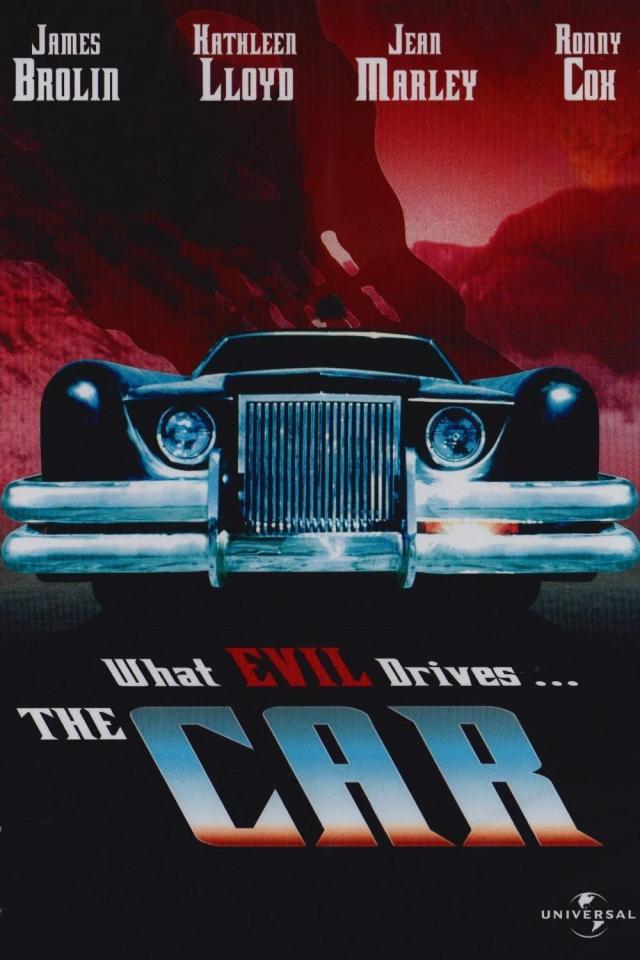
For my Sunday night movie I decided to take a chance on one of those bizarro horror movies from the 1970s, The Car.Now if you did not know the 1970s were a very odd time for Hollywood and the global film industry. Between the collapse of the classic studios system but before the rise of the mega-corporation analytic and franchise driven system of today there existed a brief window where personal auteur driven films were produced such classics as American Graffiti, The God Father,and Taxi Driver  all hail from this unique era of motion picture production. After the success of Rosemary’s Babyand The Exorcist  the public also seemed tohave developed a taste for demon and evil oriented horror. So in 1977, the same year as Star Warsand two years following Jaws, the film that created the summer blockbuster, Americans were treated to the unique cinematic experience that is The Car.

Set in a remote small town/county in Utah The Caris the story of Wade, a sheriff’s deputy, divorced dad, and general all around good guy dealing with the mysterious murderous motorcar rampaging along the deserted desert roadways. The car, a black two door without any branding, no doubt no automobile manufacturer wished to be associated with such implied carnage, spends the moving mowing down random cyclists, hitchhikers, and lawmen. The film has a number of subplots, Luke the deputy with a drinking problem, Amos the despised abusive husband and general contractor, the old flame relationship between the county sheriff and Amos’ suffering spouse, but none of these are brought to any sort of resolution and as ‘color’ they fail to bring the story any sense of verisimilitude. The car itself looks fantastic, its lack of trademarks or hood emblems, along with the missing door handled gives it a sinister outline that suggests something not crafted by nor intended for human hands. The sequences of roadway violence of tame, even by the standard of late 70s film production and so the film is almost entirely bloodless, perhaps a major detraction to todays audiences. The cast gamely tried to play the scenes and the outlandish plot straight but hampered by a script that is neither bad enough to be enjoyable as a guilty pleasure not skilled enough to generate characters of depth the movie languishes in the mediocre middle ground that will reduced in audience’s memories to a few scenes and set-piece gags.

Most horror films fall into one of two broad categories, an evil with agency and therefore motivation, goals that the evil needs to achieve and ones where the evil represents a random, chaotic, and ultimately nihilistic universe. The Car  could not settle on either and thematically ended up as a muddled mess. The demonic car possessed enough agency to hold grudges and make plans, and yet there was no goal, no explanation for why this evil emerged on this rural community.

Over all the film was perfectly fine for a late Sunday night movie but not worthy of repeat viewings.

Share

Stupidity at WinterFell

Do Not Read if you haven’t seen episode 3, The Long Night, from season 8 of Game of Thrones.

The big battle for Winterfell between the living and the dead is over and all I can say is that on both side the commanders had no clue how to deploy and utilize their forces and the results are purely the invention of writers with no appreciation for military science. The episode had lots and lots of lovely actions, character scenes, and moments meant to inspire but the grad shape of things were horrid and damaging to any conception of our heroes as capable leaders.

The Dothraki are light cavalry and not the sort o force you send headlong into an enemy formation. (That would be heavy cavalry, you know knight in shinning armor and so on.) Their slaughter was wasteful and could only be ordered by a leader who cared nothing for the lives under their command. Positioning a massive infantry force *outside* of the castles walls to meet a much larger force is foolish, almost but not quite, as stupid as sending your light cavalry in a frontal assault. The whole point of the fortification is that you stay behind the high walls and rain death down on those poor bastards who have to climb them to get to you, particularly if you are outnumbered. If you have something in your possession that the enemy needs to claim victory, a crown, a location, a young man who speaks in mysterious phrases, you do not place your most powerful forces distant from the enemy’s objective. At night. With no method of communication between the prize and those forces.

So how should have the defenders of WinterFell have set out their battle plans?

One: The trenches of fire was a great idea, more of those so you can create ‘kill boxes’ to trap enemy forces that can be burned down by dragons or catapult fire. Concentric rings surrounding Winterfell that would break up the enemy forces. All infantry should be inside the castle defending it from the walls keeping the dead out. It helps that the dead do no have siege engines and towers. The Dothraki out on the wings of the battlefield, armed with dragon-glass arrows. Not to attack the main body of the enemy forces, but to exploit with their fast movement any opportunity to take enemy sub-commanders, the white walkers, and neutralize much larger factions of the dead that way. The two dragons stay close to Winterfell and victory conditions, Bran. They supply close air support burning the army of the dead as the fire trenches trap them. They stay together so that if countered by the enemy dragon they have a 2 to 1 advantage.

So how would all this go wrong for the heroes creating a mood that they are going to lose?

First off the fire trenches have a more limited utility, as the dead are willing to create those corpse bridges allowing more of the enemy to reach the walls. Next, the Night King uses his air power to strafe the battlements, forcing the two dragons riders near Bran to abandon their positions, opening Bran for assault by white walkers. Once the Night King has drawn off the dragon riders and sent the best warrior scrambling for the Gods Wood to defend Bran he circles back and uses his air power to lift and drop troops behind the wall. They’re dead can be deployed in a manner no living person can use. Just drop from as you swoop over the interior court. The white walkers ‘retreat’ from Bran, drawing out fighters armed with the magic steel that can kill them leaving bran with only a token defending force. Air combat can give you the same results of separating the dragon riders as the episode did. Now the night king uses his dragon to breach the walls, as he did The Wall, sending massive forces into Winterfell. Jon is forced to defend the interior court, seeking the night king, but get bottled up by forces there, leaving the night king free to move against Bran leaving our favorite girl to win the day.

See, it didn’t have to be stupid.

Share

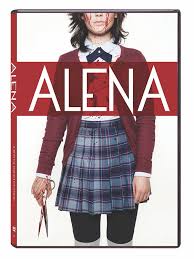
Shudder Review: Alena

Recently when I discovered the movie available on Shudder I re-watched with a friend of mine this marvelous Swedish ghost story. I encountered this movie the first time I attended the Horrible Imaginings Film Festival and it blew me away as the best film of that year. It was presented as part of the LGQT block of films. Repeated viewings have not dimmed my appreciation of it’s characters, story, or production.

Adapted from a Swedish graphic novel of the same title Alena is the story of a teenaged girl, Alena, when she transfers from a public school with a poor reputation to an elite all-girl private school. Immediately classed as a social outcast by Filippa and her closed

clique of popular girls but befriended, and more, by iconoclast Fabienne Alena desperately tried to fit in and find a life for herself at the school and on its lacrosse team. Though not a student at the school Alena is also close with Josefin, a close friend from her life on the wrong side of the tracks. Filippa, who still carries a torch for Fabienne, orchestrates severe harassment against Alena prompting the film’s transition from high school drama to horror culminating in Alena confronting her past and the truth she has fled from.

Stylish, atmospheric, and moody, Alena  is a movie that knows the power of suggestion, the impact of the unseen, and also when to bring out the blood shocking and horrifying the viewing with its brutal and sudden appearance. The violence, both physical and sexual, are handled well enough that this move never slips over into exploitation or titillation keeping its viewpoint firmly grounded the reality of the characters and their lives despite ultimately being a story of the supernatural. While the ghost in this movie exists and have direct influence on characters and events it also stands in as a metaphor for the pasts we try to bury, for the responsibilities we attempt to deny, and the harm we carry forward with us from out past traumas. Alena’s biggest flaws is that there are times here and there that the subtitling, this film’s dialog is entirely in Swedish, is occasionally off and needed at least one more pass from a native English speaker. That said this is a movie I highly recommend, and it is currently available on Shudder and Amazon Prime video.v

Share

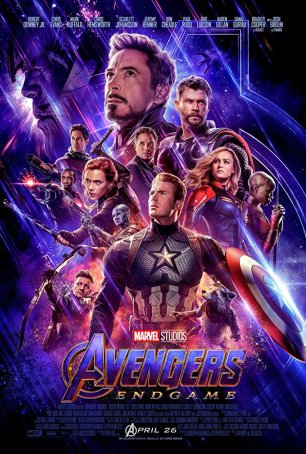
Movie Review: Avengers: Endgame

This review will be spoiler free using only information that viewers of previous Marvel Cinematic Universe films, particularly Avengers: Infinity War  are aware of.

When I reviewed Infinity War  I said that I had to withhold final judgment on that film as it presented only the first half of a story and it would not be until the next film presented a conclusion that I could have an informed opinion about its artistic merits. Taken together the two movies give us a five hour plus ending chapter for the first decade of the gran experiment, the MCU, that started with Iron Man   and surprisingly it pays off.

Endgame  opens shortly after the Avengers shattering defeat at the fingers of Thanos that resulted in the sudden obliteration of half of all life in the universe. Faced with their failure and wracked with the guilt both as heroes who were unable to stop the mass slaughter and as survivors the Avengers and the other surviving superheroes deal with, and in some cases in manners that are quite unhealthy, the various phases, stages, and, manifestations of grief. Eventually a plan is hatched and the second act of the film launches out beloved characters into action that is meaningful to each character on a personal level, advances their goal of trying to salvage something from the wreckage of the universe, and pays services to nearly every previous movie in this amazing franchise. This complicated, and at times emotionally devastating act takes it time deepening character and giving us even more to grieve and to love in their journeys before opening on a third act and massive set piece battle — it is not a spoiler to say that a *superhero* film ends with a third act battle — that dwarfs anything achieved by any MCU feature. Endgame   concludes with denouement that provides closure on the storyline that require it and revealing the path forward for the massive cinematic juggernaut.

Leading up to the film’s release much ink and discussion revolved around the feature’s three hour running time but in my opinion the writers and directors earned their massive size. Endgame  does not suffer from bloat, it juggles a dizzying number of plot lines each with several characters to manage and that’s before you reach the third act that features the intersection and conclusion of all those narrative arcs and plots. A massive project unlikely to be equaled for another decade Avengers: Endgame  delivers the good to a fan base that Marvel Studios have been building ever since that rolled the dice on a B-level hero with an actor that many had thought had ruined his career to create not only a wildly successful franchise but a culture defining series of stories and characters that will be with us and inspire us for decades to come. If you are fan of this experiment in long form saga storytelling that Marvel has given us do not miss Endgame, this is not one to wait for home video.

Share

Nailing the Ending

For me endings are where the meaning and themes of the story come together into a synergistic whole. The point if the story, be it a film or prose, usually lies in how that tale concludes and this places an especially important weight on getting your endings correct.

Here I am not talking about how the plot resolves, but rather the character beat that wraps up the transformation, for good or for ill, that was the protagonist’s journey.

In 1987’s Robocop  the film originally ended with one final news break segment that let the audience know that Murphy’s partner, Lewis, not only survived the film but had not been transform into a cyborg as Murphy had but once the filmmakers watched the final confrontation and it’s final line ‘Murphy’ they knew that beat ended the movie, there was no story after he reclaimed his humanity.

2008’s Iron Man  went through a similar edit. The script ended with Tony Stark coming home and having his meeting with Nick Fury and the hint of further adventures to come with ‘the Avengers’ imitative. However just as with Robocop  the director found that his story had ended with the line ‘I am Iron Man.’ Unlike Robocop  Iron Mancarried the weight of teasing the wider Marvel Cinematic Universe and the Nick Fury scene could not be discarded and the Marvel Post Credit Sequence tradition was born. Marvel did not invent this, before Iron Mancame along these were called buttons and the occasional film make tossed them in a treat for audiences that sat through the entire end credit sequence. (Pirates of the Caribbean: Curse of the Black Pearlhad on with the monkey Jack grabbing a curse coin.)

I know that when I was editing my novel that comes out next year I discovered that I had done a similar thing. From the start I had a particular line that I wanted to end the book on and yet as I edited I discovered my story ended half a page ahead of my beautiful sentence. I killed my darling and the book ends where it needs to, or at least how it looks to me.

It is reported that Avengers: Endgame has no post credit sequence because the movie acts as the thematic end for the current cycle of the MCU films. I will see Endgame  this Sunday morning, the traditional times that my sweetie-wife and I go together to the movies, and I hope hoping that not only do they give me a satisfying ending to the Infinity War saga but also to the unique 22 film experiment that is the birth of the MCU.

Share

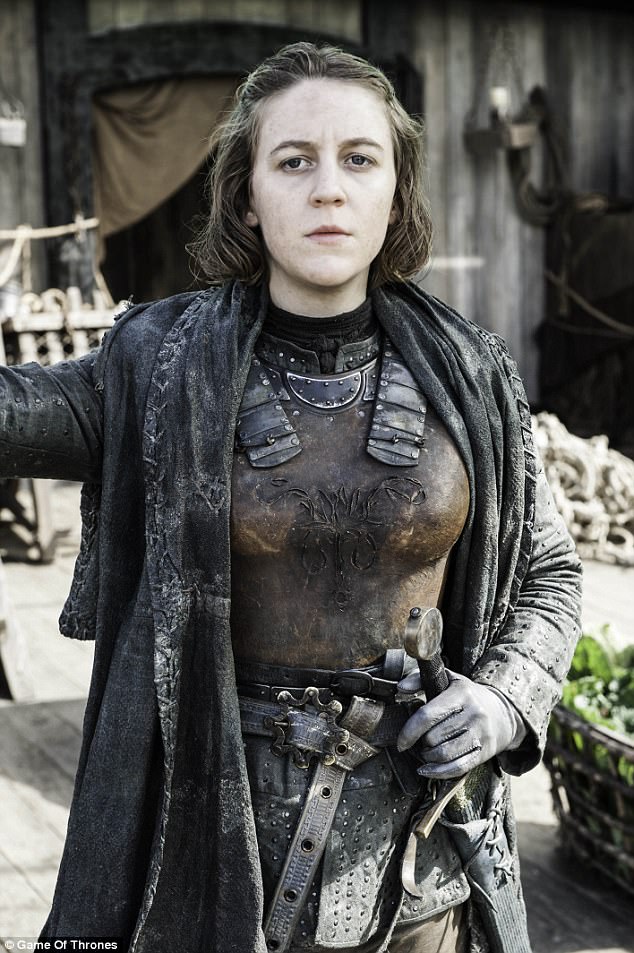
The, as of yet, Unrealized Full Potential of Gemma Whelan

Photo credit HBO

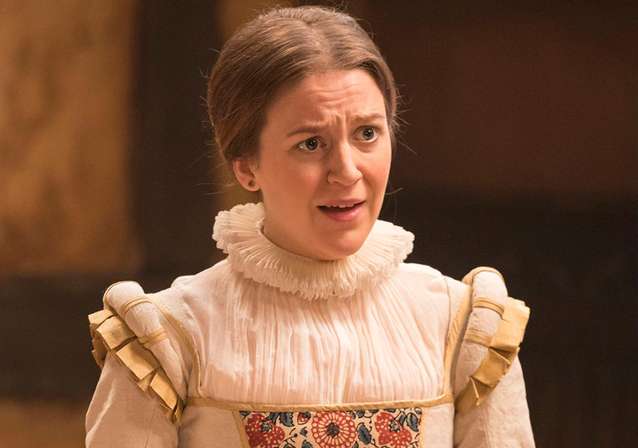
Photo Credit: The Independent

Gemma Whelan is not a name that sparks anywhere near universal recognition. If you know this actress it is almost certainly because of her terrific performance as the unstoppable and steadfast Yara
Greyjoy in HBO’s Game of Thrones,  but her talents run further afield than the tough and dramatic Queen of the Iron Islands.

Photo Credit BBC

About a year ago my sweetie-wife and I began watching a British comedy program Upstart Crow a sit-com that centers on a highly fictionalize version of William Shakespeare’s life. (Though it has enough crosses with reality that it brings forward a number of interesting takes on other historical characters including a fabulous version of Christopher Marlowe.) Gemma Whelan plays Kate the daughter of the landlady who rents Will his London’s residence. Book-smart, inquisitive, and deeply compassionate, whose utmost desire if to be an actress, illegal for women in Elizabethan England, Kate is about as far from Yara as two character can possibly be. I admit that when Gemma first appeared in the Upstart Crow  I did not recognize her as the same actress as the hard Greyjoy but my sweetie-wife did. Gemma’s comedic talent and timing is impeccable often stealing scenes away from much more established comedian/actors. I do hope that the massive global success of HOB’s series launches this talented actor on a flight path for fame and endless interesting roles.

Share

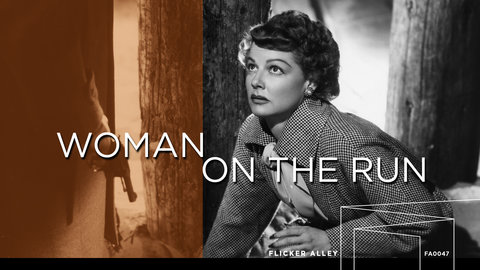
Classic Noir Review: Woman on the Run (1950)

Sunday night after a hectic, busy, and fun-filled weekend playing games at Kingdom-Con I relaxed by watching Woman on the Run  a film noir  currently streaming on the service Kanopy. This is a film I had never heard of and pretty much decided to give it a go on a whim.

Ann Sheridan plays Eleanor Johnson and her husband Frank, while waling the dog late in the night, becomes witness to a mob murder of a witness and informant. Frank, a target for the killer because he can identify him, and because the police proved incapable of protecting the murder victim, is unwilling to trust his life to the police, takes to the streets of San Francisco hiding from both the authorities and the killer. Though their marriage is failing Eleanor starts hunting for Frank with the police and the killer dogging her heels aided only by Legget, a nosey yellow journalism reporting looking for a scandalous story. As Eleanor sifts through the clues of her husband’s life trying to work out where he might be hiding she discovers that their marriage is not what she had assumed it to be.

Woman on the Run,  though she is more hunting than running, is a terrific, taunt, thriller with a second act twist that puts the entire second half of the film onto a roller coaster of suspense. The real star of the movie is the sharp dialog that is filled with character and style. Carried principally by Ann Sheridan and Dennis O’Keefe as Legget, the film has more character development and transformation than many movie today and while it suffers from some ham-handed medical fantasy issues to create an additional sub-plot the main story holds together and is populated with colorful memorable characters. (I was quite pleased that the producers and director avoided ‘yellow face’ for the few Asian speaking parts.) The climatic ending is truly engaging and had me, late Sunday after a packed weekend, night fully awake and involved.

Apparently this film at one time had been thought to have been lost but now thanks to the Noir Foundation it has been restored, though at one point a still is used for a reaction shot, and I can heartily recommend this movie to anyone who is a fan of this classic genre.


Share