Category Archives: Movies

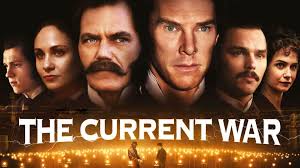
Movie Review: The Current War

Completed in 2017 and released only just now due to the break up of the Weinstein Company The Current War  is the story of Thomas Edison and George Westinghouse as they battled to set the standards for electric power and distribution in the United States and the wider world.

Benedict Cumber batch plays Thomas Edison, the proponent of Direct Current (DC) power. DC flows in a single direction and is simple, and at the time was the only current that could be used to drive motors and industrialization Industrialist George Westinghouse, played by Michael Shannon in a role where he not an over bearing villain, supports Alternating Current (AC), where the direction of election flow reverses many times per second. AC power could be produced much cheaper and with clever manipulation transmitted over vastly greater distances that DC which dissipates into nothing after barely more than a mile, but when Westinghouse is advocating for his system there were no motors that could run using the AC standard. Each man is presented favorably with neither placed into the role of ‘villain.’ Benedict’s Edison is a family man, devoted to his wife and children, and a person who refuse to use his genius, name, or vast intellectual resources to create engine of war and destruction; he consider the killing of humans abhorrent. Shannon’s Westinghouse is also a man devoted to his wife, treats her as partner in his enterprise, and also sees himself serving a public good. Edison is supported by his aide and confidant Samuel Insull (Tom Holland) while Westinghouse’s mirror support character is Franklin Pope (Stanley Townsend) the engineer that Westinghouse has charged with inventing an AC motor.
Into the violate conflict of towering intellects and ego arrives a Serbian immigrant, Nikola Tesla (Nicholas Hoult.) Titles identified Edison as an ‘Inventor’ and Westinghouse as an ‘Industrialist’ but Tesla is labeled ‘Futurist,’ a word that would not be applied to technology until the 1920s. Tesla, always more concerned with what is possible than what is personally profitable, a visionary man with unprecedented gifts for engineering and technology claims to have solved the AC motor design.

The war to determine the electric standard is fought city by city, as some adopt Edison’s vision and other Westinghouse’s and the most vicious fighting take place on the front pages of the newspapers as propaganda replaces reason.

The film is generally well made, the scenes are tight, the performances stellar and yet the over all effect is only adequate.  Key moments in the historical record are omitted, such as Tesla surrendering his patents for the AC motor, ensuring that AC becomes the standard but costing himself an uncountable fortune, and set ups in the film are never paid off. The most frustrating of these is centered on the AC motor. Pope has a sewing machine connected to his AC motor and the needles does not move, Westinghouse implores that Pope must solves the problem and move the needle, but yet when the AC motor is invented there is no scene of the sewing machine in action. This is the sort of visual pay off moment that not only provided the audience with critical and visual understanding of the engineering but also can be used as an emotional beat for the characters. Not having such a moment dramatically undercuts the entire arc of the war.

Despite this The Current War  is worth seeing, it is competent film with an amazing cast.

Share

Movie Review: The Lighthouse

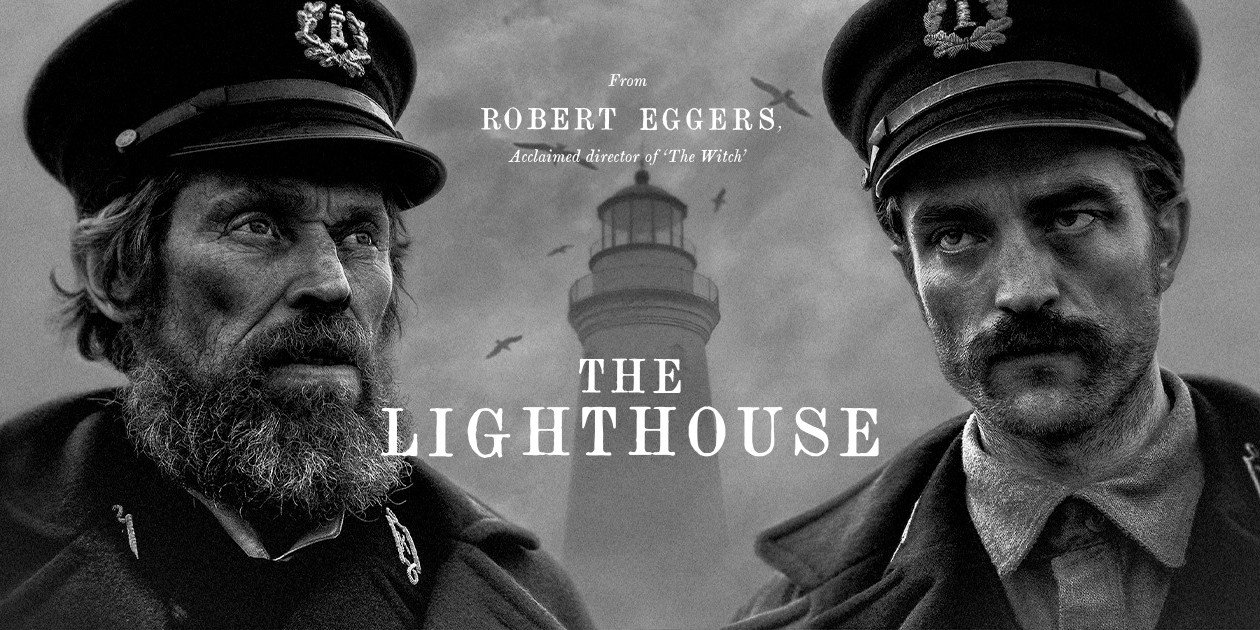
Robert Eggers, the writer and director of 2015’s Puritan nightmare The Witch,  is back with another historic tale of terror.  The Lighthouse set in the 1890’s, is a film about two men on a desolate and distance rock of an island stationed as lighthouse keepers. Willem Defoe plays Thomas Wake, the senior lighthouse keep, a sea dog retired by injury but for whom the love of the sea has never subsided. Robert Patterson plays Ephraim Winslow, the young and junior man learning the trade and subject to Wake’s order and whim.

Filmed in stark black-and-white, it’s been reported that the film stock had to be manufactured in order for the camera to roll on this production, and with a tight compressed aspect ratio  The Lighthouse  is a confined claustrophobic movie with a stark spare setting contrasted with expansive performances by both Defoe and Patterson the threaten to shatter the frame. The photography is deliberately disorienting as sea, fog, and land blend in endless greys heightening the sense that the rest of the world as vanished over the horizon and that for these men there is nothing but the grueling work, their own clashes of personality, and the ever encroaching madness. The combination of Egger’s passion for historical detail, the bleak black and white cinematography, along with the ever present fog horn create a verisimilitude that absorbs the audience into the film’s reality.

Hallucinatory and with an unreliable narrator The Lighthouse  is not standard mass-market movie making. People who are expecting kills, jump scares, and a spot of violence every ten minutes are sailing for disappointment with this film. Closer in kin to David Lynch or Cronenberg’s Videodrome, The Lighthouse is a tale of madness and isolation that is powered by the stellar performances trapped with its close quarters. Much like Egger’s previous film The Witch  this movie is not easily accessible and is likely to spark a sharp divide between its critical reception and general audience reactions. Though not as symbolic as Lynch, Egger’s film requires active interpretation by the audience with scene after scene that depicts the tenuous grasp of sanity and its loss as the isolation breaks each man in his own manner. Personally I was more thrilled with The Witch on my first viewing but now even eight hours later I find the sounds and images of The Lighthouseto be haunting my thoughts and provoking deeper contemplation. It is a film that cannot be fully assessed with a single viewing and mark’s Eggers as a talent of bold cinema that is willing to color well outside of the lines.

Share

It! The Terror From Beyond Space

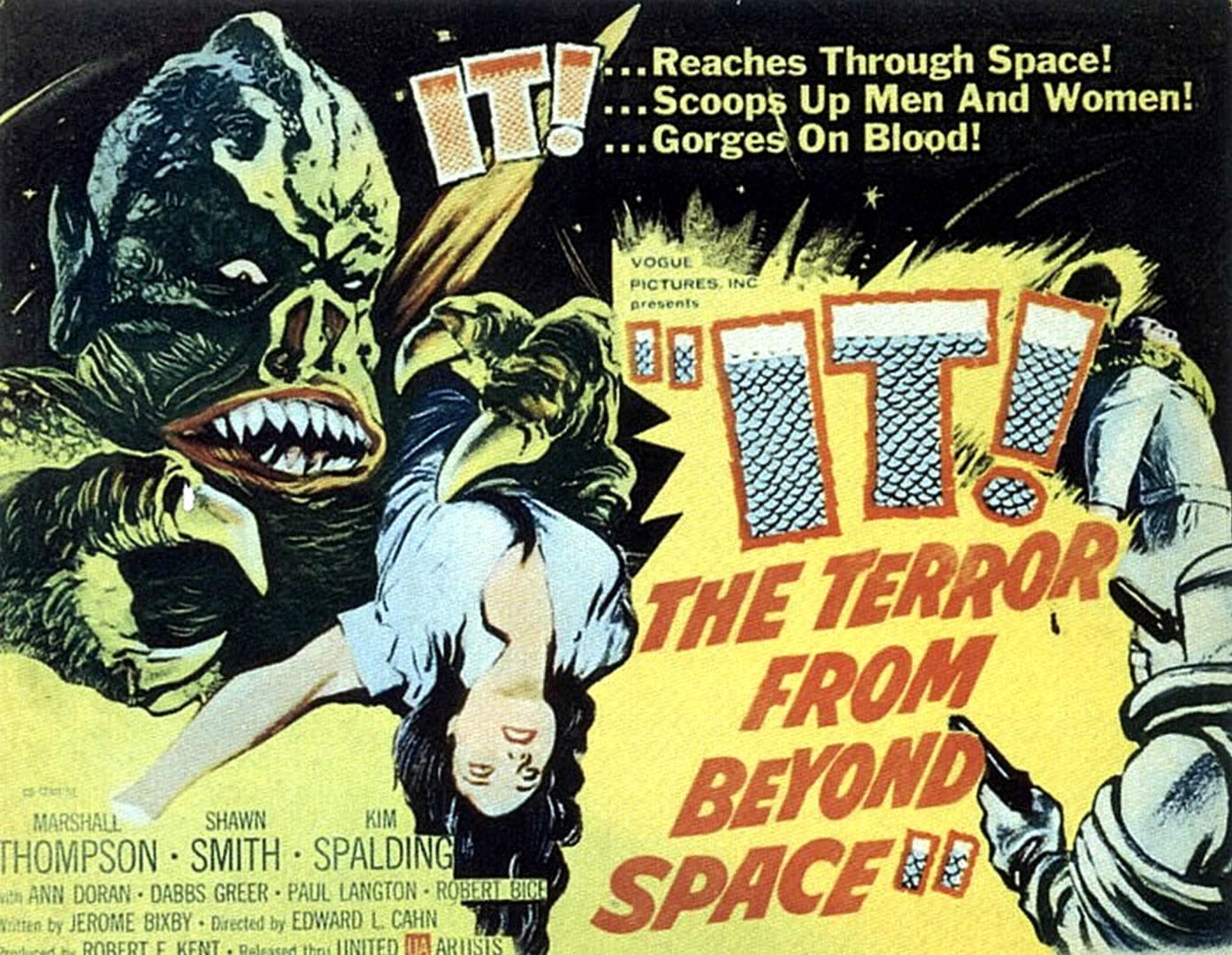
Continuing my run of films best suited for the month of October last night, after a very frustrating day dealing with AT&T technical support, I watched 1958’s It! The Terror From Beyond Space. This movie along with Planet of the Vampires,  in which no vampires appear, is one of the direct predecessors to 1979’s amazing and classic film Alien. Written by Jerome Bixby It! Pits the crew of a spaceship against a deadly and unstoppable monstrous alien that has stowed away aboard their rocket.

The first Mars expedition has ended in disaster with all communication lost after the ship reached Mars. The film opens with a voice over explaining that the second expedition has rescued the narrator, the sole survivor of the doomed first, and is taking him back to Earth to face trial for the murder of he fellow crew in a bid to survive the harsh and unforgiving Martian environment. It’s not long before the alien stow away make itself known and the crew begin their retreat deck by deck from its lethal assaults. This exploration/rescue mission is stocked with cases of grenades, endless 45 semi-automatic pistols, home made gas bombs, and even a bazooka that is fired off in the cramp confines of the bridge but nothing stops or even hampers the creature’s attacks.  Two of the ten cast members are women but even for 1958 this movie is out right sexist with the ladies forced to serve dinner and coffee while providing only the barest of plot of character motivations, and with the younger, of course, thrust into a needless love triangle because that’s why females characters exist in movies.

Despite its cheesiness It! Manages to score what might be a few important moments in cinema history. Between stolen model designs and sequences the climax of the film may very well represent the first cinematic explosive decompression. The basic set up was one of the films that inspired Dan O’Bannon when he started out crafting the script to Alien and that lineage is stark and clear. Without this mostly forgettable film we would have never been introduced to Ellen Ripley.


Share

The Spanish Language Dracula

The twin monster hits Frankenstein  and Dracula  made Universal Studios the home of horror in the 1930 thru the 1950s and stars of Boris Karloff and Bella Lugosi but a lesser know film of that same year that is worth viewing is the Spanish Language version of Universal’s Dracula.

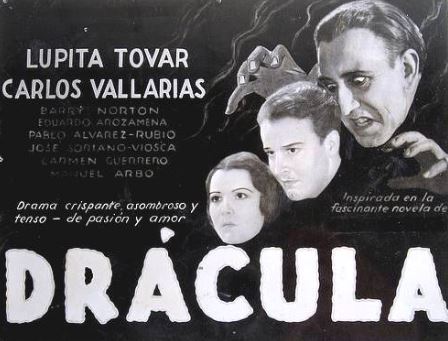
While the principal cast and crew came in during the day and filmed the now classic 1931 Dracula during the evening hours an entirely different crew and cast, using the same set and script, albeit in Spanish, filmed a version for the Spanish language world. This version is often included as bonus content on Blu-rays and better collections featuring the Lugosi Dracula. Considered lost until the 1970’s when a print was discovered and fully restored.

With more daring costuming and a more sensual atmosphere this edition has fans around the world. It is interesting to compare the leads in each film. Lugosi, of course became a star, though of course his terrible drug addiction, first caused for pain treatment for wound he suffered in World War I, severely damaged his career and outside of the Spanish film world Carlos Villarias is virtually unknown. An interesting element to Villarias’ performance is that it strikes dramatically different tones as the characters shifts between charming and vampiric. When he is suave and sophisticated Villarias’ performance strikes me as superior to Lugosi’s, effortless carrying off the easy confidence and command of a person infused with his or her own sense of nobility. However when the blood lust and thirst takes the character Villarias’ performance becomes so overly expressed with his eyes bulging wide and his face contorting into strange expressions that the performance becomes comic and far inferior to Lugosi’s classic composure.


Share

Streaming Review: Revenge

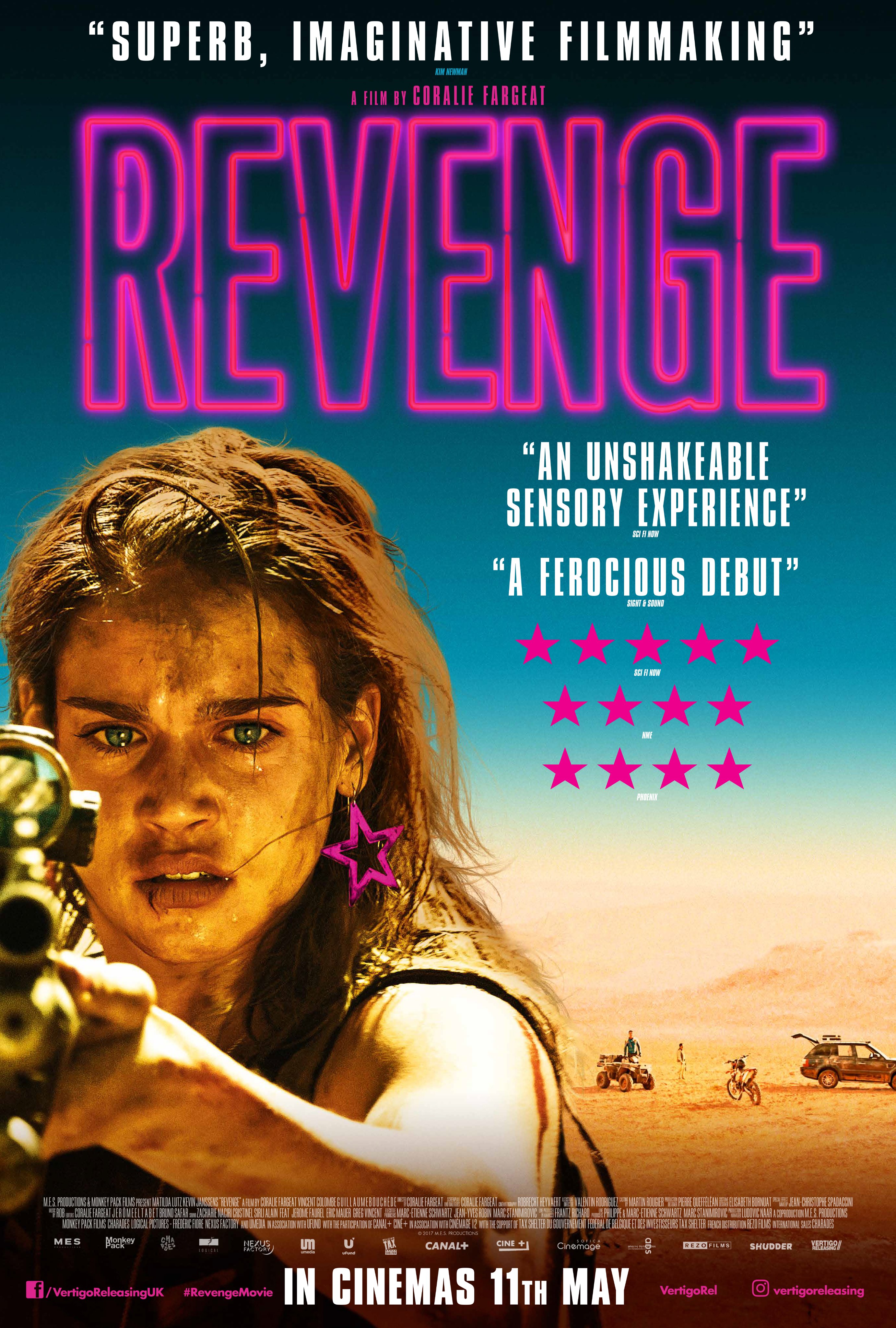
Released in 2017 Revenge  is a French movie about Jen (Matilda Lutz) her rich married boyfriend Richard (Kevin Janssens) and his pair of hunter pals Stan and Dimitri. Jen has flown with Richard to his isolated landed estate in the desert for a weekend affair but their assignation is interrupted by the early arrival of Stan and Dimitri who are to accompany Richard on a hunting trip. After an evening of music, dancing, and drink, Richard departs for business and while left alone Jen is raped by Stan and Dimitri does nothing to stop the assault. Richard attempts to buy Jen’s silence with a check but things spiral out of control until it becomes a fight for survival and revenge with Jen pitted against the three men.

Over all I found Revenge  to have not lived up to its hype. I remember hearing about from corners of my film community and it even played at a local micro-theater but I never got the chance to see it until watching it in Shudder. Despite being directed by a woman, Coralie Fargeat, the staging, costuming, and framing of Matilda Lutz struck me as overly objectifying. I never fully engaged empathically with Jen, her terrible plight, or her struggle and I think that comes down to two major factors. The first is the leering nature of the photography it seemed to constantly present Jen only something of a sexual desire keeping me at a distance from her as a character. The second major reason for my emotional disconnection is my shattering of disbelief when presented with unreal and impossible physical damage that characters not only survive and but remain fighting functional. It would appear that the scriptwriter has never been exposed to the concept of internal bleeding or exactly why you can’t run with your major abdominal muscles torn or ruptured.

My viewing coming quickly after another recent film on Shudder  about a young woman who has to survive after a terrible assault I could not help but compare this with The Corpse of Anna Fritz. Anna Fritz  while produced on a much smaller budget and with far fewer sequences of action, was a film where I never lost a tense and fearful emotional connection with the character of Anna. Watching Revenge  I was mostly bored but during Anna Fritz I was engaged and concerned, desperately hoping for Ann to escape this unjust and unfair situation. There is far more nudity in Anna Fritz  and yet it is presented in a manner that did not feel leering or objectifying but rather exposed and terrifying.

I cannot recommend Revenge and if you have Shudder  go with Anna Fritz  instead.

Share

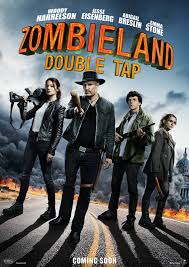
Movie Review: Zombieland : Double Tap

Man, I loved Zombieland  and the best thing I can say about Double Tap  is that I’m happy to see the original cast back but the bets bits are all in the trailer.

The original film was a charming, funny, and ultimately touching movie about the power of found family. The sequel is a collection of gags strung together with barest of plots and utterly devoid and any real story.

It’s been ten years since the Zombie Apocalypse and our heroes have taken up a stable residence but haven’t changed or grown much as characters, When Little Rock, in the original film the characters avoid the painful memories of their previous lives referred to themselves by significant destination and not their names, who has now become a young woman and is feeling the isolation of no romantic companion ship and her sister Wichita, feeling strangely stifled in her relationship with Columbus, suddenly leave, Columbus and Tallahassee are forced out of their routine and embark on an odyssey. They face many new dangers and meet many new characters before the entire family emotionally returns back to where they had started.

Characters in good fiction have needs and wants, and note that those are usually not the same thing, a character may want something but need something that is the opposite to complete their emotional arc. The characters of Double Tap  have wants but few needs of any kind and what they do want is the most plot driven of objectives. While the film is populated with talented actors who can turn a fine comedic performance the lack of an emotional story that is compelling ultimately make the movie hollow and empty. There are gags, and many of them are on display in the trailer, but there is no theme. The film is in the end not about anything at all. The script feels like one that has had many comedic hands working the sequences and the jokes are decent, but without a compelling story none of it really matters. If during the running of your film I am thinking to myself just how lovely Emma Stone’s eye are then you have lost me because I simply do not care what happens on the scree.

I cannot recommend Double Tap  and your time would be better spent putting in the Blu-ray and watch Zombieland  again.

Share

Midsommar: The Director Cut

While I saw the theatrical cut of this year’s Midsommar  twice during its release I unfortunately missed the brief run of the film’s director’s cut. At nearly three hours and combined with it quite limited time in theaters I simply never managed to clear my schedule enough to make room for the feature. Now it has been released on home video, the longer cut available exclusively from Apple, and I can give my opinion on it versus the original version.

Director’s cuts of things are not always a blessing. The example that best comes to mind at this moment is the musical Little Shop of Horrors. The director’s cut has an extended sequence at the end where the plants have grown to monstrous size and are kaiju  stomping about the world’s cities eliminating humanity. However by this point ALL of the major characters are dead and there is no emotional tie for the audience making for a dull, plodding, and ultimately boring end to the movie/ The theatrical version is far superior.

Gladly this is not the case with Midsommar. Writer/Director Ari Aster has mostly expanded scenes in this version, carrying various sequences a bit further and greatly expanding the depth of his characters and illuminating more of their natures. There is one wholly new sequence, another ritual by the Swedish cult that follows in the evening of the day after the visitors have witnessed the horrifying attestupa. This evening sequence along with a further dissolution of Dani and Christian’s relationship further isolates the non-cult members and gives Dani’s character a moment to shine as the brightest among the visitors.

Midsommar’s  director’s cut is a deep careful exploration of the themes and wholly satisfying. I can say without reservation that it is my deeply preferred version of Aster’s vision.


Share

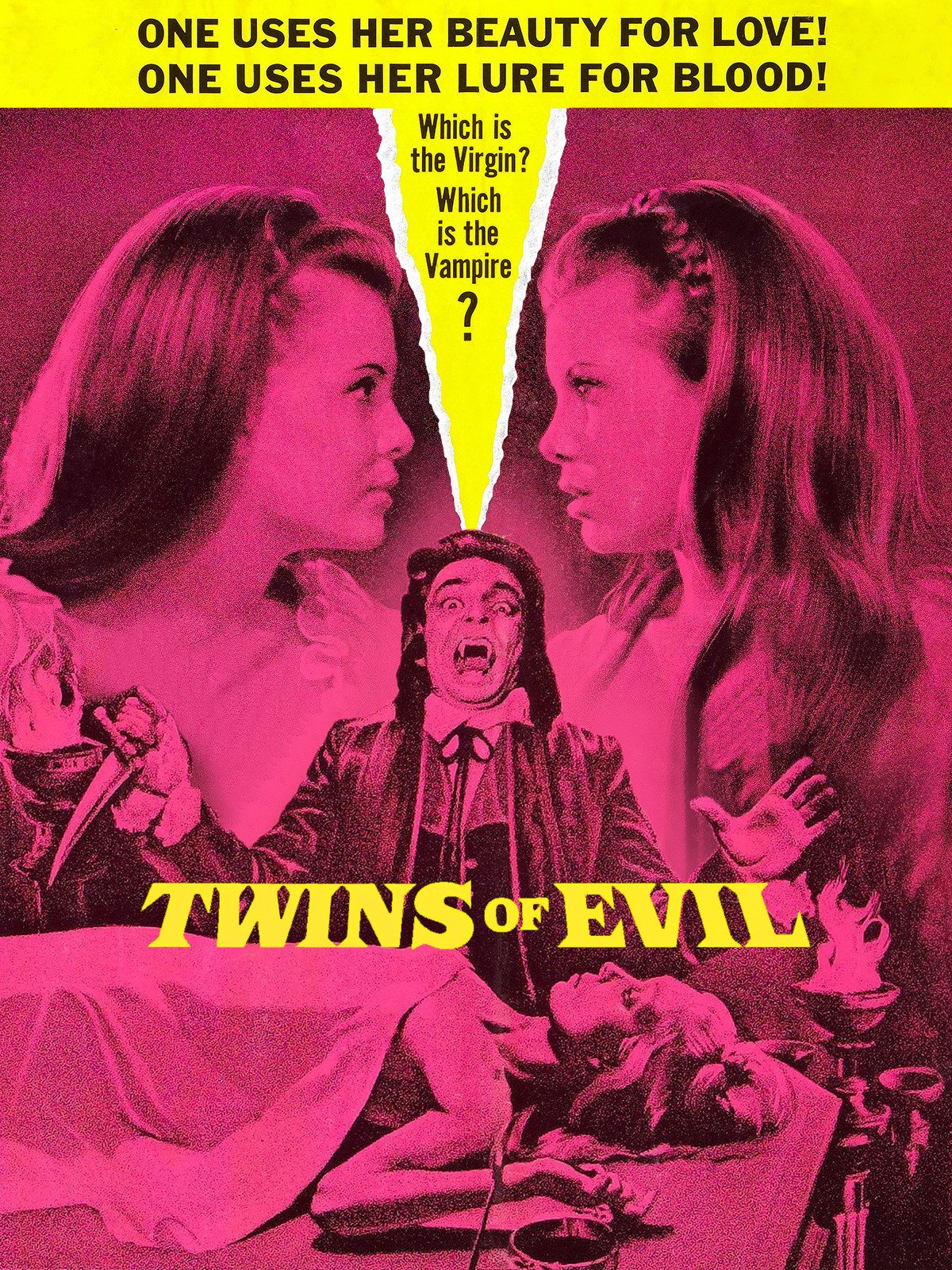
Streaming Review: Twins of Evil (1971)

One of the things that my sweetie-wife and I enjoy is British horror films, particularly of the Hammer variety and Shudder has a few offerings in that vein including the later period Hammer movie Twins of Evil.

Hammer horror films, iconic color movie that made stars out of Peter Cushing and Christopher Lee started in 1958, though the studio had been well established before that, and pretty much ended production with To The Devil A Daughter  in 1976 so Twins of Evil  represents the dying gasps of the once great horror house.

The movie stars Mary and Madeleine Collinson as twin sister Frieda and Maria, recently orphaned and now sent from their home in Vienna to live with their stern Uncle Gustav (Peter Cushing), a devote man who  leads The Brotherhood a collection of men that hunts and burns suspected witches attempting to purge the area of a festering evil. The two sisters chafe under their unyielding uncle and each becomes enamored with local men, Maria with the rationally minded and atheistic Teacher Anton and Frieda with the decadent Count Karnstein, who, under the protection of the Emperor, publicly flaunts his wickedness.

Cushing is his usual professional and talent self, convincingly playing a man so devoted to his singular vision of virtue that he is untroubled by the frequent execution of young women without even the flimsiest evidence of witchcraft. The rest of the cast vary from competent working actors to Damien Thomas chewing the scenery as Karnstein and ended on the Collinson twins who were most likely cast by Hammer to take advantage of the status of Playboy  centerfolds.

The pacing of the movie is off, starting, despite the repeated instance of women being burned at the stake, out quite slow but once the film reaches the second half and vampirism appears in the plot the film moves quite deftly towards its somewhat uneven conclusion.

Production is overall well done with interesting set and well designed costuming but the movie does suffer from some of the worst day for night shots every committed to film. Lengthy forest sequences set in the dead of night are clearly shot in bright sunlight with the characters appearing quite ridiculous as they hold up their torches for illumination.

With some violence, an explicit beheading, and brief nudity this movie will not be to everyone’s taste but I appreciate that Shudder  presented the feature unedited. Twins of Evil  is far from Hammer’s best horror film but it also far from their worst and there are worst ways to spend 90 minutes.

Share

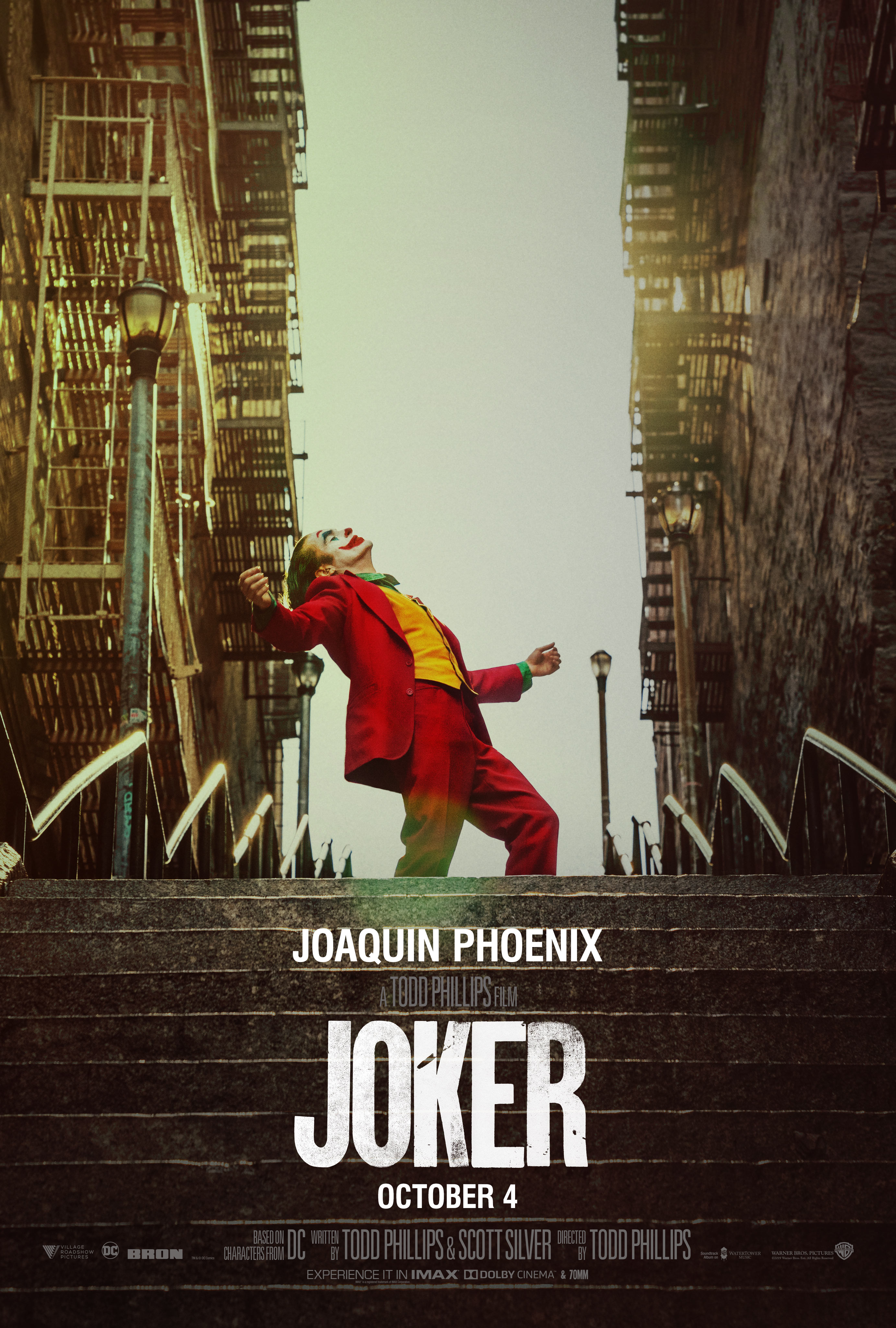
Movie Review: Joker

There has been a lot of buzz surrounding the film Joker, there has been talk of awards and Oscars, there has been praise and adoration as well as criticism and sharp commented dislikes. With an open and mind and trying to set aside all expectations and since I had today off from the day-job I attended a late screening.

Joker  is a possible origin story for the iconic nemesis of that caped crusader Batman. I say possible because the cannon for the comic book character stretches back many decades and as with all comic book histories that ancient it is filled with revisions, reboots, and flat out contradictions in the character’s backstory.

Joaquin Phoenix plays Arthur Fleck a troubled young man living with his mother in the decaying crime infested city of Gotham during the turbulent 1980s. Arthur makes his living as a clown, working promoting dying businesses as they hoist one final sale and providing mediocre entertainment to children in hospitals. Suffering from an unnamed neurological disorder that causes uncontrollable fits of laughter whenever Arthur is emotionally stressed Arthur dreams of success as a comic, living out detailed delusions of what he life might be as his mother sends endless letters to Thomas Wayne lost in her own delusions. As economic, physical, and mental stress takes their toll of Arthur his losses the frail support network he barely possesses and soon confronts terrible truths about himself and truth of his life. Caught between fantasy and reality and unable to tell the two apart he loses his identity and discovers a new one.

My opinion on this film is somewhere between the two extremes that are common on the Internet; the film is interesting and had a decidedly pointed theme it is trying to express. This film is a commentary on the result of a society that ignores the under-privileged, the unreal world of the wealthy and the pressures that explode from that dangerous combination. Yet this film is also flawed. Nearly all of the film is from Arthur’s point of view and that is on point, it is his story we are experiencing, and yet there are sequences where the story steps away from Arthur solely for the purpose and nudging the audience in the side with reminders that this take place in DC’s continuity. These excursion weaken the story, undercut the theme and serve no purpose but fan service. This film also felt like it didn’t quite know how it wanted to end. Twice before it actually ended the director services up visions that would have made for a powerful final image, only to continue the film with unrequired wrap-up.

Some of the criticism I have read and heard about this film I think say more about the critics than the film. Much like Star Wars: The Last Jedi  it seems a number of people came into their screenings with preconceived notions of the film and its subject matter and those pre-judgments formed the core of their critique, however unlike The Last Jedi  these critics hail from the liberal side of the political spectrum and betray their biases just as much of the right’s criticism betrayed theirs.

Over all this film was well made and interesting, a little editing would improve it punch, but it achieves neither the heights or the lows so many are ascribing to it.


Share

Does Gemini Man Herald the End of Acting?

In a recent article over at VOX an author expressed the fear that the near perfect digital recreation of an actor’s younger version is merely the camel’s nose in the tent that will lead to the replacement of actors with entirely digital creations. This is not a new concern and formed the one central question in Connie Willis’ novel Remake and then as now I do not foresee that as a concern for the near future.

Acting is not just walking from mark to mark and parroting the words from the script. If it were there would be a far large number of great actors entertaining us and it would not b so plainly evident when a talented actor was simply ‘phoning in’ their performance. Acting is an art and like all art is requires a conscious creative act. There are numerous choices an actor makes in their performance that go far beyond simply repeating the words.  There will not fully digital actors entire there are self-aware computers capable of making those emotional choices.

A second often expressed fear is that there will be endless films using recreations of stars that have passed and while there will the occasional use of a dead actor to recreate a famous role, for example Peter Cushing’s double in Rogue One: A Star Wars Story  it will never become a vehicle for a star powered film. Firstly there is still the creative aspect that will fail to double the original actor’s unique vision but more importantly is that younger generations will never simply adopt their parent’s stars. Even an eternally young John Wayne would not have continued to be the massive star of his earlier days as the country and culture changed around him.

Change is coming but actors are not about be wholly replaced by bits and bytes.

Share