Category Archives: Horror

November’s Italian Genre: The Bird with the Crystal Plumage

Due to me running late and a minor migraine this will have to be quick.

Sunday my sweetie-wife and I watched, via Sd Film Geeks’ monthly festival of Italian Genre Cinema, The Bird with the Crystal Plumage one of the films, along with Blood and Black Lace that established and defined the giallo genre of movies that focused on lurid tales of sex and violence.

The film centers on Sam Dalmas an American author on an extended vacation in Italy. On the eve of his return to America Sam witnesses an attempted murder of a woman in an art gallery. Due to his intervention the woman survives, and Sam becomes part of the police’s hunt for the maniac who has already killed three times. Sam investigates on his own, but with surprising police assistance and acceptance, drawing the killer’s attention and becoming a target himself endangering his own life and that of his live-in girlfriend. Eventually the killer is discovered with the genre appropriate twists and order is restored.

This film was fun to watch. The twists in the plot and the eventual revelations are mor logical than last month The Strange Vice of Mrs. Wardh, though as with all Giallo it is important to approach the film with prodigious suspension of disbelief. Luckily this edition was subtitled and not dubbed, preserving the actors’ portrayals and enhancing the experience/ The cinematography is lush and colorful displaying the tastes that would become the signature of director Dario Argento. As a cherry on top my sweetie-wife also spotted a connection to Star Trek the Original Series. So, if you get a chance to stream this one, do so.


Share

The Problem with Frankenstein Films

Being a universally beloved and known property that exits in the Public Domain there is rarely a shortage of adaptations, reinterpretations, and extension of Mary Shelly’s Frankenstein.

The last really big elaborate adaptation came from producer Francis Ford Coppola and director/star Kenneth Branagh with 1994’s Mary Shelly’s Frankenstein. I remember seeing this one in the theater and being, well, underwhelmed.

It has a fantastic cast, Branagh as Frankenstein, Robert De Niro as the Monster, Helena Bonham Carter as Elizabeth and a slew of other great actors of the period, but that couldn’t put the film over the top leaving it as just a couple of hours of entertainment.

I think there’s an element that James Whale and the four writers of the 1931 Universal classic Frankenstein got correct that many later editions failed at and that is getting straight to the point of the story.

The 1931 film opens with Frankenstein’s fiancé concerned because she hasn’t seen her love in sometime. After collecting a mutual friend and an old instructor they head to his lab and barge in on the night of creation. Bam! We’re off and running.

1994’s adaptation returns to the novel’s framing device of an arctic explorer coming across Frankenstein, near death, and hear the tale told as flashback. (A flashback that violates Point of View with Frankenstein recounting details of scenes he never witnessed, but the novel does this as well.) We sit though extended sequences of Frankenstein’s life, his loves, his slowly building obsessions until finally we get to him creating life.

The truth of the matter is we don’t care about the backstory. It holds no suspense. Ask nearly anyone what happens in Frankenstein and they’ll tell you a scientist makes a living monster from dead body parts. This exploration of growing obsession is pointless. We know where he ends up, we know what he is going to do, and unless you have invented a unique take wholly divorced from the source material, you’re just boring us while we wait for the subject matter that brought us to the theater.


Share

Quick Thoughts on Lovecraft Country

I have completed HBO’s adaptation of the Lovecraft Country set during Jim Crow America as a Black family fights for survival in a world that in addition to racism contains magic and monsters.

Overall, I rate Lovecraft Country as Good but not Great and I know that puts me at odds with a number of my fellow genre fans. That’s okay, art is subjective and as I often say in my writer’s group meetings, ‘Your mileage may vary.’

The performances are stellar, the production is fantastic, and the writing of each episode overall is excellent so what doesn’t work for me are issues that may not matter to someone else.

For me the narrative momentum drifted in the middle of the story giving it some second act issues which gave some of the middle episodes the same overall feeling of a classic Doctor Who escape, run around, and get caught again episode. Information was gleaned, some characters issues advanced, but the plot remained stuck in place.

I never understood why Christina invoked a convoluted plan that involved bequeathing a fake inheritance to Leticia to maneuver her into buying the old home instead of just going there directly to recover the orrery.

At times thematically it felt a bit heavy handed.

For something invoking the concepts of Lovecraft’s work the absence of cosmic horror is startling.

It was good and should be watched but for my money I think HBO’s sequel/extension of the graphic novel Watchmen is a better series.

Share

Seasonal Review: Death Line

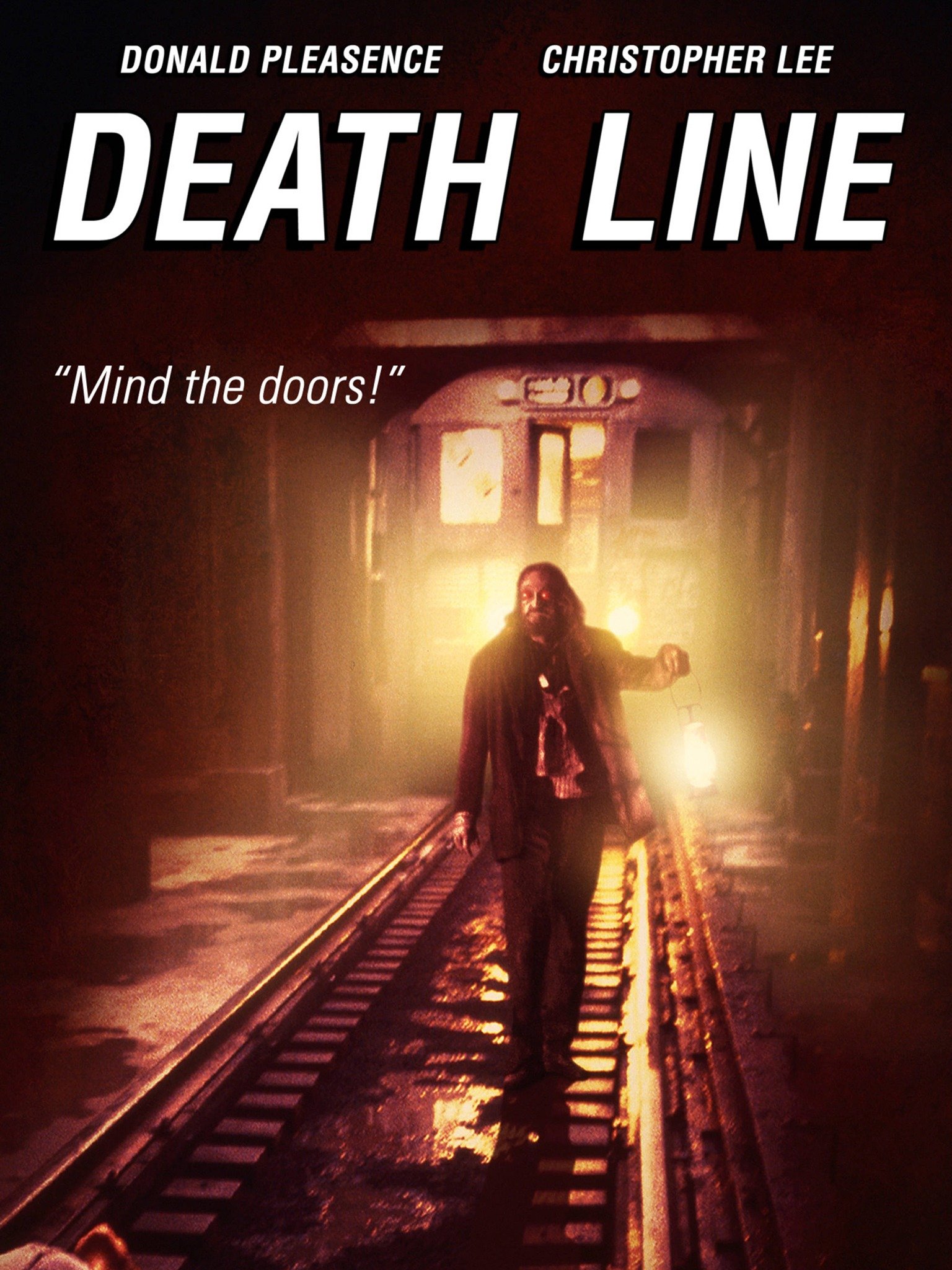
Death Line (AKA Raw Meat) is a 1972 British thriller/horror film starring Donald Pleasance with a cameo from Christopher Lee and directed by Gary Sherman.

When an important member of the Ministry of Defense vanishes from a tube Station Inspector Calhoun (Pleasance) starts investigation discovering that the station in question has a history of missing persons. More people go missing and one turns up murdered after being impaled by a broom handle. With the assistance of a college couple the mystery is eventually solved and the threat ended.

Death Line is a slow film taking its time to unwind and even at an hour and half it feels a bit long and padded. The concept when revealed is better suited to an hour-long anthology than a full feature film. There is one very impressive single-take tracking shot but overall the film suffers from too slow of a pace.

Pleasance has been noted for giving one of his most eccentric performances and that is well deserved. He doesn’t chew the scenery, but the Calhoun’s characterization is quite unlike the sort of the role one would associate with Pleasance.

Death Line is currently streaming on the Criterion Channel as part of the collection 70s Horror.

Share

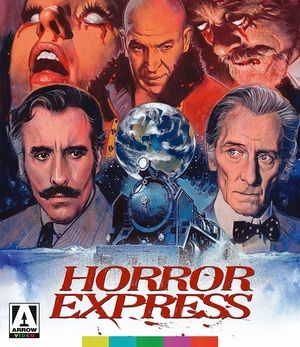
A Seasonal Viewing: Horror Express

This week my sweetie-wife and I re-watched 1972’s Horror Express starring those icons of horror film Christopher Lee and Peter Cushing with an additional appearance by America’s favorite lollipop loving detective Telly Savalas as Captain Kazan.

In 1906 Alexander Saxon (Lee) boards the trans-Siberian express heading West with a secret and astounding scientific discovery he found in remote Asia. Also aboard the train is Dr Wells (Cushing) a rival English scientist though not a villainous one, a Polish Count and his wife along with their mad priest very much in the style of Rasputin and an assortment of other curious and dubious characters. Even before the train departs the station a thief attempting to breaking Saxon’s secretive crate mysteriously dies with his eyes suddenly turned an opaque white. En route more terrifying deaths occur turning the passenger cars in a slaughterhouse. Really, for Lee and Cushing movie from the early 70s this movie has an astoundingly high body count. The express stops briefly to board Captain Kazan and his men apparently dispatched on orders from Moscow to deal, ineffectually, with the crisis.

In genre story construction a general rule, particularly in film, if that you ask the audience to accept only one truly fantastic thing in your story. The filmmakers of Horror Express have utterly no regard for this concept. Among the out of the world elements pushed into the plot are, beings frozen in ice reanimating after millions of years, alien visitations, the telepath absorption of someone entire mind, and mind transference. Despite the ‘junk drawer’ approach to genre story Horror Express is a fun watch. Lee and Cushing are great together and unlike many films where they share billing the movie centers on their relationship rather than using the actors as mere advertising props. Savalas revels in playing the cruel Cossack sent to sort thing out and the cast in general are quite enjoyable.

Horror Express is currently available as a VOD rental from Amazon for the princely sum of 99 cents.

Share

The Importance of Good Cinematography

I have a bit of a time crunch this morning so this will simply be a quick observation.

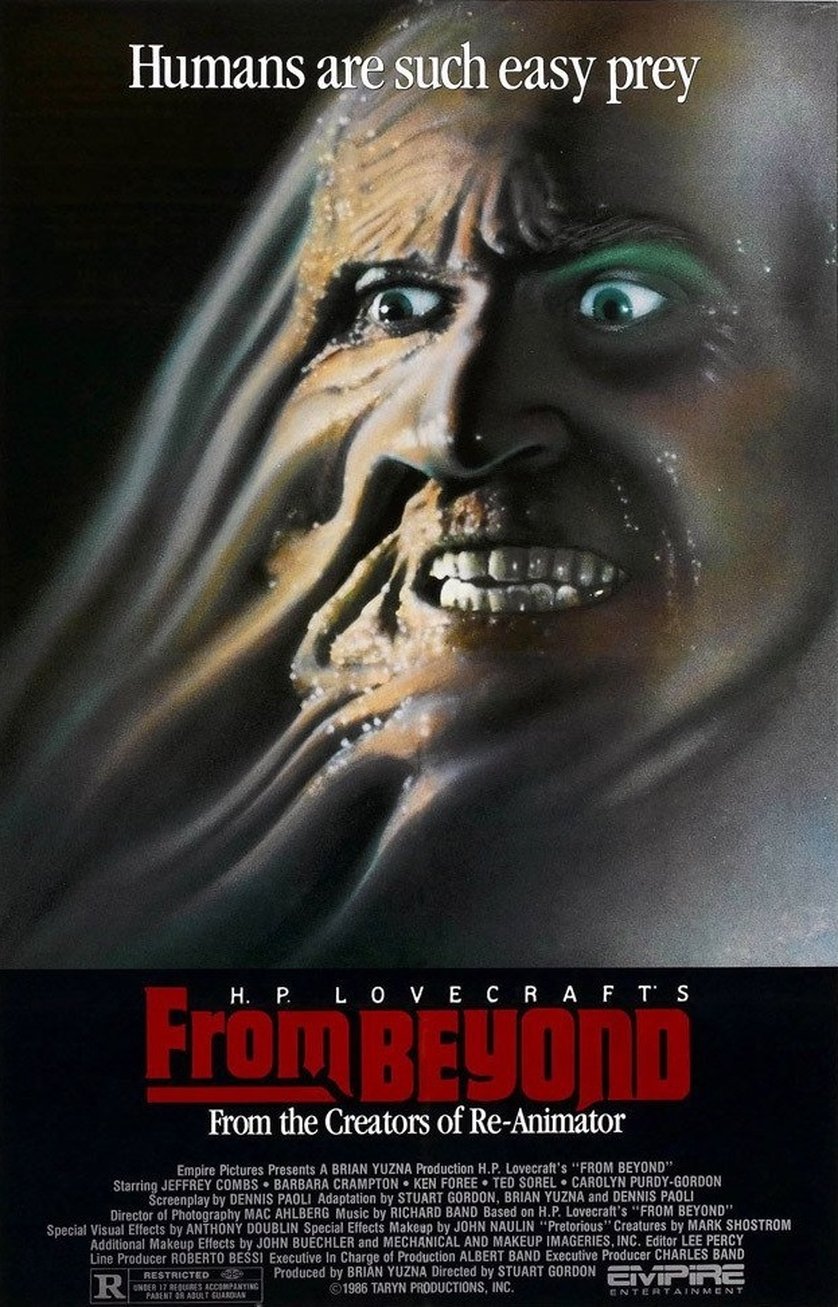
During the week I started a re-watch of From Beyond the second H.P. Lovecraft adaptation from Stuart Gordon following his version of Reanimator with returning cast member Barbara Crampton and Jeffrey Combs.

While the script is far from stellar it was perfectly serviceable, at least at the start before it veered into distinctly non-Lovecraftian area of BDSM and sexuality but right from the start the film is undercut and severely damaged by its cinematography.

The scenes are well lit, and everything is clear and shop from the foreground to the background and that is the trouble. Now I do not know if this was because of some budget restraints, directorial edict or simply a stylistic choice by DOP Mac Ahlberg but it doesn’t work.

Even when the characters are supposedly in a darkened space and using flashlights the scenes are well-lit and everything is perfectly visible. There is no use of shadow and darkness of create danger and mystery in the character’s space a serious failing for any horror film. There is nice work when the ‘resonator’ is engaged and the scenes become bathed in lavender and purple as the other-worldly dimension intrudes into our own, but had the other scenes been lit more realistically, with more care to the light and shadow then the drastic change during the inter-dimensional events would have been more effective.


Share

Novel Nordic Noirs

For some time my sweetie-wife and I have been enjoying murder shows from the far north of Europe. Recently we have added two more programs to our rotation of after dinner entertainment.

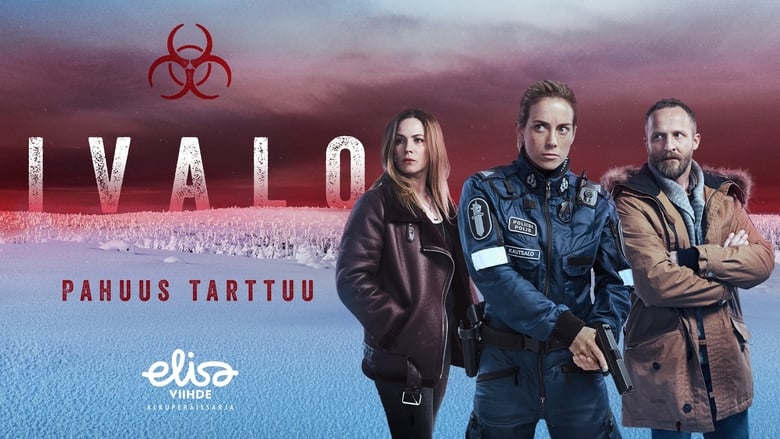
Arctic Circle is a show set in the Lapland region of Finland. This is the part of the world where you get reindeer and lots and lots of snow. It is also the area of Finland that seems to analogous to American’s relationship with Appalachia, rustic and suspicious of outsiders and with a dose of religious fundamentalism. The show follows Nina a local cop who usually is dealing with drunks and poachers now entangled in a case involving cross border human trafficking, the Russian Mafia, and a novel and deadly virus while dealing with the issues of a single mother  with a special needs daughter and a growing affair with a foreign scientist.

The show is well produced, well acted, and is thoroughly engaging.

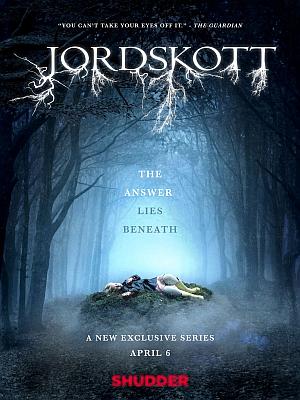
The second program is Jordskott a police thriller with horror overtones. Produced and set in Sweden, though it features the lead from the Finnish serries Bordertown now playing a heavy, this show centers on Eva a police detective who has returned home after the death of her father and the unresolved disappearance of her young daughter seven years earlier. Atmospheric and moody Jordskott, which translates roughly in Soil Shot, unfolds at tits own pace with just enough mystery and strange reveals the keep the viewer engaged.

Arctic Circle is currently streaming on the Roku Channel Topic and Jordskott is a Shudder exclusive.

Share

Lovecraft Country Impressions After 7 Episodes

Lovecraft Country is an HBO limited series adapted from the novel of the same name written by Matt Ruff and centers on a group of Black characters dealing with magic, monsters, and racism during Jim Crow America. Mild spoilers ahead.

The story’s protagonist is Atticus ‘Tic’ Freeman, a Korean War veteran, genre fiction enthusiast, and a descendant of the founding member of cult order.

I have now watched seven episode of Lovecraft Country and my feelings are hopeful but with a dash of apprehension.

The characters are well drawn with complex backstories and vibrant inner lives that all the actors of the series portray beautifully. The drama and dynamics are grounded in a realistic approach with the various character struggling with lingering abuse, trauma, and trust issues while still possessing aspirational motivations that speak to a high nature within them. In the face of a racist, unjust, and oppressive system that surrounds them they maintain, for the most part, their own dignity.

The fantastical elements, monsters and magic, are handled quite adeptly with fresh shocks and turns that has prevented the genre elements from becoming stale even seven hours into the story.

My apprehensions arise from concerns of the course of the narrative and the coming conclusion and break down into two major categories.

First; The lack of direct objectives for the protagonists. Tic, for most of the series now, has been searching for and attempting to decipher pages from a magical text with the goal of protecting his family. But it is not clear exactly what he is protecting them from. While there are evil supernatural forces, and one such force attempted to use Tic as part of a dangerous ritual, the surviving members of the cults do not appear to offer a direct and specific threat to Tic. It is not clear what will happen if Tic fails in obtaining ‘protection’ or what will happen if the surviving cultists are unopposed. This would be fine if we were only 1/3 of the way into the story but at 2/3 we need to have a clear appreciation of the stakes.

While the character drama is proceeding nicely, and the characters are being tested on their inner natures and being forced to change and grow that is sufficient for dramatic fiction but lacking for genre stories. Genre is more plot dependent; we need more than Luke Skywalker gaining maturity we need the defeat of the Death Star as well.

My Second apprehension centers on the thematic elements of the story and specifically with the racism of Jim Crow America. It is good to tell this story set in the Jim Crow period. It is a dark disgusting chapter of American History too often swept aside in popular entertainment. My issues do not arise from setting here and being direct in depicting the overt racism, but I fear the series is setting itself up for an unsatisfactory conclusion.

We know that Jim Crow will not end until the middle of the next decade and that systemic racism will persist after its legal abolition. making it a central thematic conflict in the show without a fictionalized character to stand in for it means that the characters no matter their eventually outcome with the cultists will lose in the greater cultural conflict. This is where having a character stand in for the wider culture is a useful device. A white racist character that comes to see the evil and ignorance of their racism can be used to suggest that cultural change and growth is possible and hinting that victory of those evil forces is possible even if your story ends within racist times but Lovecraft Country has no recurring major racist characters to suggest such a growth is possible. Because the racist characters come and go as part of the universal background the background becomes unchanging and unchangeable.

Perhaps that is the thematic intent of the show’s creators but it is very difficult to make failure and futility into satisfying ends for stories.

Share

The Exorcist is a Very 70s Novel

I just finished re-reading William Peter Blatty’s novel The Exorcist. The story by now is familiar to nearly everyone interested in horror fiction. Young Regan McNeil is possessed by the spirit of demon and her fiercely atheist mother Chris McNeil after exhausting everything the worlds of science and medicine have to offer calls upon a Jesuit priest suffering a crisis of faith Father Karras and an aged but experienced exorcist Father Merrin to save her daughter.

Published in 1971 The Exorcist displays some interesting hallmarks of that period in its construction. Now, I am not referring to disco music or leisure suits but rather the way extra-sensory perceptions and abilities had been absorbed into the public consciousness.

What started in science-fiction print media and had grown throughout the 50s and 60s, telepathy, prescience, and telekinesis became accepted wisdom, along with pyramid power and ancient astronauts.

What does this have to do with a novel about the demon Pazuzu possessing the body of 12-year old Regan McNeil?

Before Karras can appeal to his Bishop for permission to perform the ritual of exorcism he must first eliminate the possibility that the phenomena associated with Regan are natural and explainable by the science at the time. This includes the shaking of her bed, objects flying about her room, and Regan possessing knowledge of events and languages unknown to her.

As Karras grapples with the enormity of the possibility of an actual possession his faith, already shaken, is undermined by the explanation that all the strange events may be caused by telepathy and telekinesis. This is not a by-product of Karras being a person who is weak in his scientific knowledge or understanding, he is a trained and respected psychiatrist. The novel, though published in the early 70s, is so infused with the popular wisdom at the time, that this priest of science considers telekinesis are rational and scientific justification for observed events.

I was a teenager in the late 70s and re-reading the novel for the first time in many decades it is a strange deja vu sensation to be brought back to that unique period in American Culture.

Share

Blu-Ray Review: The White Reindeer


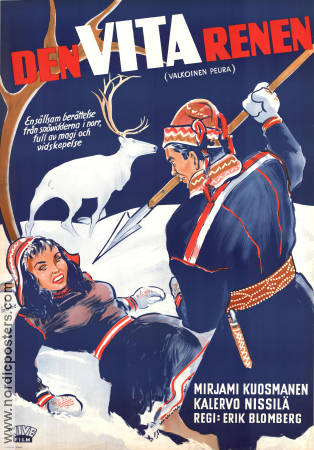
A few weeks ago as my sweetie-wife and I relaxed watching Travel Man, an amusing show that spends 48 hours in various cities and well worth a watch on Hulu, I came across a tweet suggesting that people need to watch this older Finnish film about a woman that becomes a were-reindeer luring men to deaths. I shared the information with my sweetie-wife who instantly wanted to see it. (She has a love of things Finnish.) Searching failed to find any site hosting The White Reindeer for streaming and because my own curiosity grew quite elevated and I ordered a Blu-ray of the film from Germany. (It’s a joy owning a region free Blu-ray player and being able to view discs from literally anywhere in the world.)

Several weeks later The White Reindeer arrived in our mailbox.

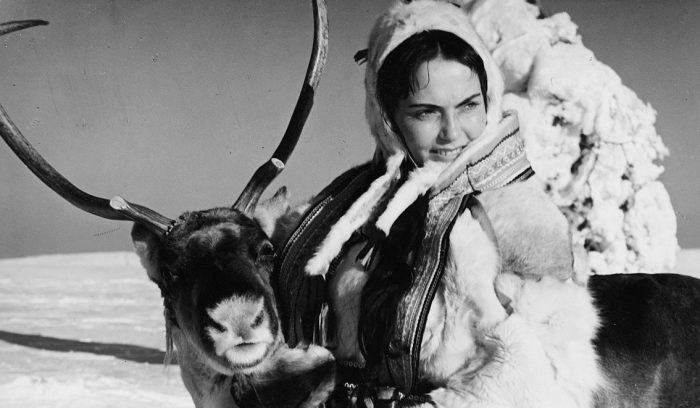
With a running time just over an hour The White Reindeer fits nicely into the sort of time slot that from the period would have been a ‘B’ picture but its quality is in no way associated with that ter. Starring and co-written by Mirjami Kuosmanen The White Reindeer’s protagonist is Pirita a young woman who find her newly married life to reindeer hunter Aslak more dull than she had expected as he is required to spend significant time on distant expeditions. In desperation she turns to a local wizard for magical help to make her irresistible but due to either the unusual nature of her birth or the malicious actions of the stone god that grants the power Pirita becomes a shapeshifter transforming in a rare white reindeer that no hunter can resist chasing to their doom.

The director Erik Blomberg avoids the typical transformation effects of the age and instead of lapse dissolves uses clever edits and cuts to suggest the change and promotes the fantastic feel of the film far better than if we had watched Pirita become the reindeer.

The White Reindeer won Best Fairy tale Film at the 1953 Cannes Film Festival the Golden Globe for Best Foreign Film in 1956.

More closely related to horror cinema that fantasy with clear mirroring of Universal’s The Wolf-Man without being derivative The White Reindeer is essential viewing for lovers of international horror films.

Share