
Tag Archives: Movies

Movie Review: Kingsman: The Secret Service

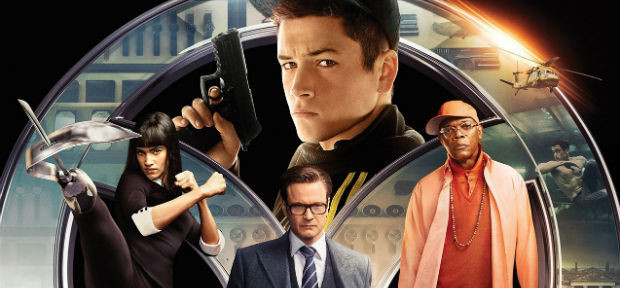
kingsman-the-secret-service-is-like-honey-whiskey-it-s-sweet-and-fun-but-packs-quite-a-punch-6e0f94ae-b350-452d-a8d7-daef70bd5f15So Monday morning after I had – mostly – recovered from the weekend writers conference, my sweetie-wife and I attended a matinee showing of the new Colin Firth film, Kingsman: The Secret Service.

The premise of this romp is that after the Great War (WW I for those not historically inclined) a group of British aristocrats formed an independent secret service to keep the peace and protect the world. (hmm I think history has already pronounced that they failed, but this film is far too light in tone to address such matters.) The members all have code-name taken from England’s greatest myth, yeah that Arthurian one they nicked from the French. Anyway Galahad –Firth- after botching a mission and costing the life of a teammate many years later recruits the dead man’s son into the service.

This introduces the first of many logical inconsistencies in the story. Our hero is lower class, a punk, but if all the Kingsmen are from the highest levels of British society how did this come about? Never mind, skip over it.

So there’s two plots going on. One is the kid going into training and competition for the single slot open in the organization. The second is Galahad casing down leads into mysterious kidnappings where the victims remain free and more Kingsmen have been killed.

Samuel L Jackson, adding an unusual lisp to his voice, plays the Jeff Bezos-like maniacal villain, bent on a world killing and world saving plan. (In a bit you can think he’s like Hugo Drax from Moonraker.) Naturally the mentor is removed from the story and the kid has to step up and prove his worth.

This film has serious tonal issues, light and funny one moment, too serious the next, and it can’t make up its mind if it going to be graphic or silly. The ending has a quite problematic issue with sexual blackmail of a kidnap victim by the hero. It’s across the line and in direct violation to the ‘gentleman’ spy tone for the rest of the heroes.

I would not waste money on a theatrical screening, but some might enjoy it when it eventually becomes available for streaming.

Share

Thoughts on Chinatown

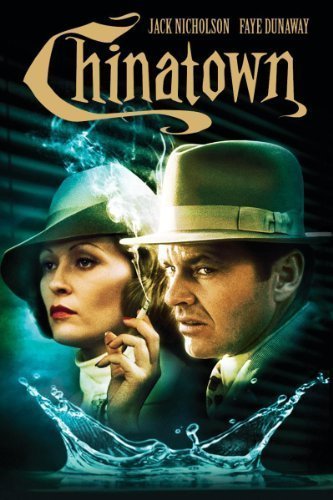
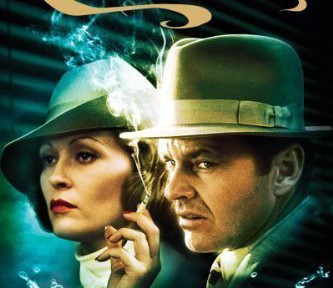
chinatownI came to film noir rather late in life, but it is style of cinema that I thoroughly enjoy. Having joined the party late there are plenty of classic noir and neo-noir films that I have yet to see, chief amongst these is the 1974 classic neo-noir Chinatown.

Before I dive into my first screening of the bit of film history, let me take a few lines to address the horrid, diseased elephant in the room, Roman Polanski. Given the crimes he is accused of, his behavior over the years, and the generally likelihood of his guilt, I can come to no other conclusion that he is a reprehensible human being. I would not socially associate with the man and firmly believe that he appears unrepentant for his assault. All that said, I can separate the artist from the art. If you have a different moral stand on the issue I can respect that. It is a line each of must draw and live with.

Chinatown is a dark cynical film set in Los Angeles in the late 1930’s as the town is becoming a city and the water wars are raging between urban needs and rural ones. Jack Nicholson plays Jake Gittes a private detective whose meat and potatoes is catching unfaithful spouses. Jake’s life starts to unwind when he unwittingly assist in the public disgracing of an important city official. With his reputation and livelihood at stake, Jake begins digging into a twisted case of murder, deceit, and sexual perversion.

This film is a quintessential example of both 70’s cinema esthetics and Polanski’s. It is a bitter dark and cynical story with major themes of corruption and futility. One does not simply walk into Mordor and one does not simply expect a happy ending from a Polanski movie. All through the 1970s films became progressively darker, reflecting a world where few expected dawn, but only an everlasting midnight of the soul. Chinatown, though a period film, perfect capture the mood of the 70s. It is a masterwork of a film and getting to see it on the big screen as my first viewing was a treat. I doubt I will add it to my personal collection. While dark movies and film noir do appeal to me, this movie’s sense of futility carried almost to sense of destiny, is not something to strikes a resonant cord in my own emotional matrix. If you have not seen it, do so.

Share

Stupid Movie is Stupid

So this past weekend I ended up watching a fairly stupid film with a friend of mine. After watching a documentary on Australian Exploitation movies, I had started seeing how many of these I could get from Netflix or streaming services. (Answer: very few.) However, I did disover a listing for an odd 70’s genre movie called Chosen Survivors.

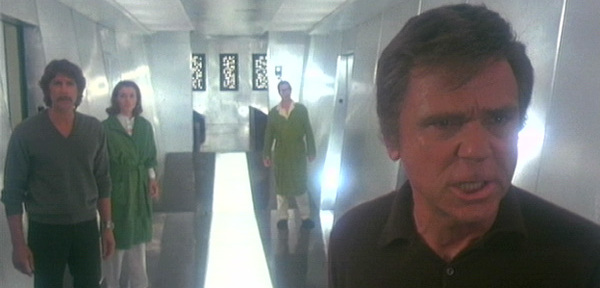
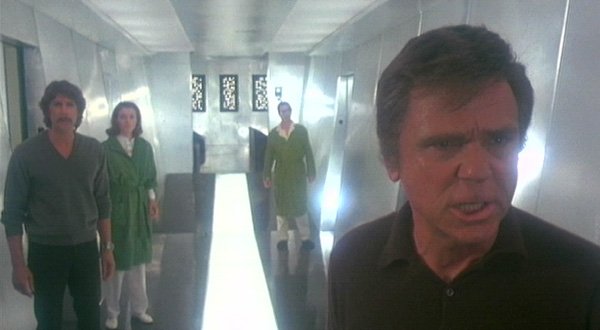
chosensurv4Ten people, selected by computer, are nabbed by the government and shoved into a shelter 1700 feet underground to survive the global thermonuclear war and restated humanity afterward. Sadly due to an oversight, the caverns that were selected as the receptacle for the shelter is infested with hungry, aggressive, vampire bats. Trapped, the survivors must find a way to contend with the threat.

Now, this looked to be bad. I had never heard of this movie, and I was under no illusions when I had Netflix ship it to me. Sometimes bad movies are their own entertainment.

What did surprise me was the amount of talent in the film. Jackie Cooper, Bradford Dillman, Richard Jaeckel, Diana Muldaur, Barbara Babcock, (that’s two from Start Trek’ TOS) combined with the others for a total count of more than 700 acting credits according to IMDB.

In theory the people were picked for their essential skills and breedability , but the selection clearly makes a hash of that straight away. A wall Street financial guy? (Cooper) a Congresswoman (Muldaur) a novelist? No one would make-up their post-apocalypse survival team from such characters.

So they get nabbed (off screen to save budget) drugged (to save them from the shock and horror of the world’s ending), shoved into an elevator and dropped 1700 feet into a gleaming stainless steel complex. Almost at once the threat appears when the bats manage a bit of birdy-horror by killing all the parakeets in a cage. (It is never explained how the bats got into or out of the birds’ cage.)

Five men and five women they natural pair off into couples except for a few. They squabble and yell exposition at each other, fight over who’s in charge, with Cooper’s character insisting the thing stink of a set up. They make poor choices in dealing with the bat threat and things get worse.

Cooper’s character shows tremendous constitution by finishing off a battle of hard liquor, going around in a drunken rant yelling and insulting everyone, before ending up in Barbara Babcock’s room because he wants to ‘talk’ to her. Yes, you can see where this is going. He attacks her, she can’t fight him off, and in that strange view found only in really bad writing, goes from fighting the rape to participating. This is horrid enough writing, but it’s compounded by the rest of the movie where it has absolutely no effect upon the plot what so ever. You could literally snip out the scene and the film will be unchanged. No one line of dialog would sound out place. It is a small grace that it is shot without nudity and not in a titillating manner.

Sobering up, Cooper’s character then proceeds to destroy the ‘alarm’ that they have rigged to warn about bats, and open up a nice wide passage letting in lots and lots of the flying blood-suckers.

This is too much for Bradford Dillman’s character, whose confesses that he works for the government and that there has been no thermonuclear war, that this was a proof of concept experiment for the shelter program. (Can’t wait for the congresscritter to get back to her job after that.) He tried and fails to signal for an emergency extraction, leaving it to the athlete to climb the 1700 foot elevator shaft and signal for help.

He makes the climbs but the bats kill him after he completes his mission, the bats get into the shelter a couple more die, and then the air force shows up and rescues everyone.

Personally I had hoped that the end of the movie would be that during the week that they were trapped the war had broken out, but no, the final scenes are the character being flown away by the Air Force.

Stupid movie is stupid.

Share

The Two Most Influential Science-Fiction Films of the 1980s

So here am back at my irregular series on the most influential SF films, by decade. The 1980s are a particularly target rich environment for discussing SF and genre movies. After the explosive popularity of Star Wars in the 70’s, a popularity that followed through into the 80s with The Empire Strikes Back and The Return Of The Jedi, studios turned to genre film as the path to the next mega-blockbuster. The decade so film that had big budgets with full studio backing, and small Indy movies that challenged the big boys at the box-office. So picking just two and the most influential is a daunting task.

Neither film that I selected were major hits at the box office, but their impacts far out reached the lack luster initial performances.

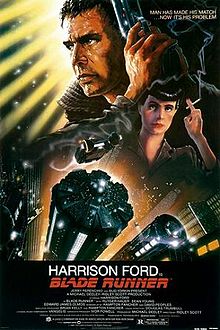
220px-Blade_Runner_posterBlade Runner (1982): A dark, film noir SF movie from master filmmaker Ridley Scott, Blade is a rather loose adaptation of Philip K. Dick’s stranger and thought provoking novel, Do Androids Dream of electric Sheep? The film cratered at the box office, when audiences were in the mood for light escapist fare, and had already been conditioned to accept Harrison Ford as an ‘action hero’ this psychological detective story about the qualities of humanity, love, and compassion, found itself serious out of step with the times. However the filmmaking was revolutionary. The look, feel, and future presented in Blade Runner inspired filmmakers for decades. Christopher Nolan is said to have used it as a touch stone for the look at ‘Batman Begins.’ Later it gained a cult following, and eventually critics noticed the serious thought and themes running through the film, but almost from the start filmmakers fell in love with it and copied it. Now regarded as a classic, and one that prompt endless debates about preferred versions , endings, and character natures, Blade Runner is a film that has stood the test of time.

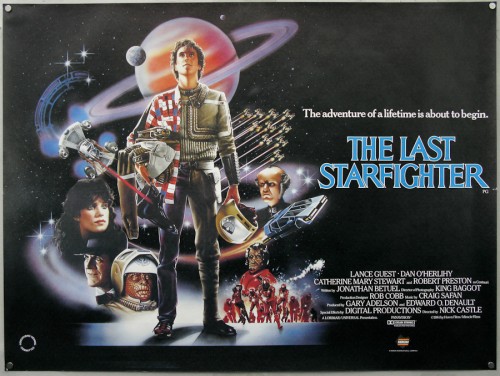
TheLastStarfighter_quad-1-500x376The Last Starfighter (1984): Star Wars produced a glut of young men leaving home and becoming heroes in the vastness of space stories, and while this one is quirky, fun, and has some tremendous performances, overall the story is not that ground breaking. What marks The Last Starfighter as the innovative and formative movie that it is comes from its production. This was the first film to attempt and utilize photorealistic computer generated imagery for nearly all of the special effects produced in the movie. Star Trek II: The Wrath of Khan broke ground with the CGI of the Genesis effect, impressive work that holds up to this day, but it was less than a minute of screen-time while the rest of the film used traditional model photography to achieve the shots of dueling starships. The Last Starfighter has no miniatures or models, all the starships exist solely as CGI imagery. While that CGI is painfully dated by todays standards, it is hugely important in the history of film. It proved that it could be done and that audiences would accept the effects. From there we lead into Babylon 5, Jurassic Park, and every genre film made today. They are all building up in the work done in this film.

Share

Movie Review: Interstellar

I was sold on seeing this film in the theter the moment I heard that writer/director Christopher Nolan was doing a space based SF film. I have been a fan of Mr. Nolan’s work dating back to ‘Memento.’ I have found that from that film onward and without except his movies are intelligence challenging pieces that I have thoroughly enjoyed.

Interstellar is the story of retired engineer/astronaut Cooper. Earth is racked by environmental collapse and each year more crops catastrophically fail into extinction. Nolan’s supplements this grounding of this opening hour of the film with actual survivors tales for the 1930’s Great Dustbowl.

Led by mysterious unexplained events, Coop discovers that a plan is afoot to save humanity from the dying earth and he is recruited for an interstellar survey mission. Emotionally torn by the requirement to abandon his family, the cruel physics of relativity requires that to his family the mission may take decades, Coop joins a small band of scientists on the mission.

The film explores the limits if human costs and bravery in exploration, and comes down solidly on the side of the explorers. (It even takes a moment to ridicule those who believe that the Moon landings were nothing more than a hoax.)

I was evident to me as I watched the film that Christopher Nolan is a huge fan of the classic SF film, 2001: A Space Odyssey. This film is very much a 2001 for a new generation, though with less stringent engineering and science, but not by much.

At nearly three hours I think this film is either too long or not long enough, but either way I enjoyed watching it on the big screen.

Share

A trope I am tired of seeing …

Saturday night a friend and I sat down and watch the 2013 re-make of Carrie, based on King’s novel. The film was a very good adaptation, though it has been a long time since I read the book, I thought that the writers and filmmakers had captured the characters, tone, and heart of the piece.

Of course you can’t delve into Carrie without getting into one of king’s favorite tropes: the crazy christian character (C3.) He uses the C3 over and over again, plus he is not alone. The C3 is an overused stereotype through hollywood and television. Now, I am myself not a Christian. I am of the opinion that all regions look wacky from the outside and I seem to be outside all of them. HoweverI am a writer and I really get tired of seeing lazy, ignorant work.

The C3 is a lazy, stupid, stereotype, These ‘characters’ can very nearly be picked up and dropped in replacing other C3s in a plot and not one thing would really change. They are rarely handled with any sense on an individual with agency and background. as with Nazis, they are go-to bad guys that are used for plot connivence.

As I said before I am not a christian, this is not me taking personal offense at a stereotype. it is the artist in my really sick of the hack work. When we pay money for a piece of commercial art, we deserve the very best the artist could do at that moment, and the C3 is not the very best for many of these artist.

It is important for a writer to treat all the characters as fully realized human beings, with faults and talent, with hopes and dreams, with pain and joy.


Share

My wittle mind is blown

Of all the possible works by SF Grand Master Robert A. Heinlein to adapt into a film this would have been near the bottom of my list. Not due to the quality of the story, it is a classic in time travel and it’s inherent paradoxes, but the mind-blowing inside-out nature of the plot is not something that lends itself to a film…


youtube placeholder image

Share

The Two Most Influential Science-Fiction Films of the 1970’s:

There has been a rather lengthy hiatus in this series as I dove into edits of my novel and composing a new short story, but I have returned to the topic, coming around to perhaps the most important decade in SF cinema except for the 1950’s.

First up I’ll discuss the moon-sized shadow eclipsing all SF films of the 70’s and later;

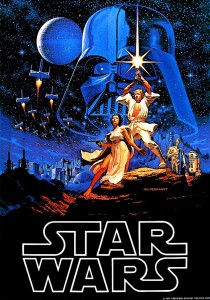
Star Wars (1977)Original-Star-Wars-Poster-1977

I think it is difficult for people who came of age later to appreciate just how monumental Star Wars was in the history of cinema. It is part of the triumvirate that created the block-buster phenomena that Hollywood continues to chase to this very day. (The other two films being JAWS and THE GODFATHER.) Science-Fiction simply had never been as big as Star Wars before and that sort of success casts a might long shadow.

Looking at SF films of the 70’s everything before Star Wars gets lost in the uproar of that space fantasy and everything after it is compared to it. While Hollywood had been moving in fits and starts towards adult science-fiction in the 1970’s with film such as The Omega Man, The Andromeda Strain, and Logan’s Run, the arrival of Lucas’ baby shunted all that aside for a generation as the studios chased after the next massive box-officer adventure.

However the influence of this movie reaches far beyond the pale imitations hurried into production and the senseless pursuit of massive runs, how we watch , hear, and make films changes because of George Lucas.

Today’s theaters packed with digital projectors, multi-channel sounds systems, and comfortable seating owe a great deal of their evolution to Lucas’ and his foresight and insistence on exhibition as well as film production. Behind the scenes, Lucas’ advanced the technology of film making more in the twenty years post Star Wars that in all the years following the introduction of synch-sound, Digital effects, digital processing, non-linear editing, these are tools that make todays production look vastly different to films short and edited traditionally. When you shoot a home video on your camera phone and edit it on your home computer you are participating Lucas’ revolution, it’s that massive.

Selecting a second film for the 1970’s is a very tough thing. Any film produced and released before Star Wars pretty much had any lasting impact erased by the tidal wave that is Star Wars, any film made after Star Wars nearly always is following and in some case just bolding stealing, from Lucas’ massive hit. Personally I came down to two post Star Wars films for my second choice; Star Trek: The Motion Picture and Alien. Alien has been copied endlessly since it’s stellar release in 1979, but I think the broader impact it had was that in theatrical films it pretty much, singlehandedly, destroyed the professional explorer set-up. Before Alien interstellar travel was the domain of military and para-military experts, after Alien’s ‘truckers in space’ approach the professional explorer for all practical purposes vanished from feature films.

However I am going to go with

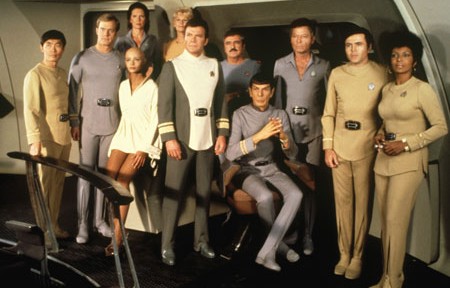
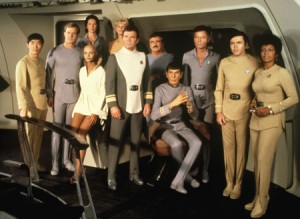
sttmpuniformsStar Trek: the Motion Picture (1979)

After the success of Star Wars Paramount decided that the pilot that they had been planning for a new Star trek television series needed to be a feature film. The script wasn’t in great shape, and Roddenberry wasn’t an experience hand at feature film production. The $20 million dollar budget quickly vanished as the studio spent $40 million, the script was re-written as they filmed, and the production was troubled from the set to the special effects, but still the film was a hit, spawning a franchise of feature films that continue to this day, but I would argue that is not the lasting effect of Star trek: The Motion Picture.

The lasting effect came from the firing of Gene Roddenberry. Now out of the loop in the feature film department, he returned to his true love, television but this time with a Radical concept, a television show that would be sold directly to the stations, instead of a network, Star Trek: The Next Generation.

The success of the show paved the way for a flood of directly syndicated programming, most of it genre, laying the ground work for the fertile and rich television landscape we have to day in SF and fantasy. I don’t think we would have any of this with Star Trek: The Motion Picture.

Share