A few weeks ago I signed up for an on-line college course in Macroeconomics. I am not taking the course for credit, but rather my own enlightenment. Economics is one of those fields of study where I do not have the sort of grounding I would like have, and as an SF author it has also bedeviled me in world-building.
The course has been very interesting and I do not doubt that some of my ignorance is being shaved away. As I have been going over the material I had an idea occur to me. Now I am sure brighter minds than I have already plowed this ground, but it is virgin territory to me and it is certainly something that has captured my attention.
First a re-cap on the Tragedy of the Commons.
Imagine you have a common – a pasture of grass that is owned by no particular individual. A group of people graze their sheep on the common, 2 sheep per person and every sells the wool from their sheep. As long as the number of sheep is not so high as to overgraze the common and kill the crass everything is fine. The trouble comes from the individual’s incentive. Each person can make more money for themselves by grazing more sheep, it cost that person nothing and gains them more wool to sell. If all the people do this, the common is destroyed and all are destitute. The idea of the Tragedy of the Commons is that individual incentives can work against both the common and individual good.
Now out modern economy is driven by a supply of goods and services which are purchased by consumers. The consumption by regular individuals is the largest factor in the equation. As people have greater incomes and more wealth they consumer more, causing greater production and the economy expands. It works best when all person have the greatest possible income that does not endanger production. All is well and good, until we consider the incentives of the individual producers; those who employ and distribute income.
Their twin motivations are to sell their goods and services for the highest possible price and to make the greatest possible profit from their production. In addition to seeking greater efficiencies, and lower cost materials, the producers have an incentive to lower the wage as far down as they can and keep the difference as increased profit. The Tragedy of the Commons rears its head in that if all or even most producers do this, then income falls, consumption falls, and in the end their sales and profit falls. Like the overgrazed common, it becomes a disaster for all.
This brings me to the concept and setting of a minimum wage. Like restriction on how many sheep can be grazed, a minimum wage, as I see it, could be used to stave off a contracting spiral in an unregulated economy. The best argument for a minimum isn’t justice, or fairness, or what kind of apartment can people earning it afford, it is what is the effect on aggregate consumption? When does having it too low become a drag by strangling consumption and when does having it too high choke production? Those, in my mind, are the truly critical questions.


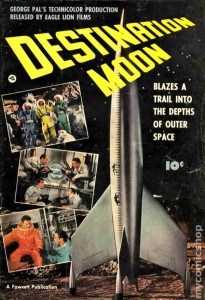 Those who know me might suspect I selected this film because of the close association with one of my favorite SF authors, Robert A. Heinlien, but they would be wrong. This film, as a movie, is in my opinion flawed, but I am not selecting for best SF movies in each decade but most influential and on that count there can be no arguing with Destination Moon. This film, released in 1950, was a box office hit, both domestically and over-seas. It launched George Pal into his love affair with SF film, and for that alone it is an important film but it also launched the SF film crazed of the 1950’s. Without this film we do not have the rich fertile treasury of SF films from this decade and without those movies we do not have modern SF cinema. Destination Moon, while dry and flawed, is one of the most important SF films of any decade.
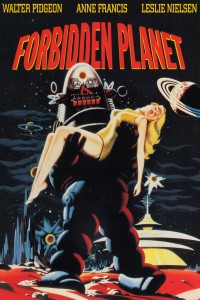 This selection should be less surprising. It is a well know movie, beloved and rescreened often. I had the good fortune to catch it in a theater and the special effect and images still hold up quite nicely. The characters are quite a bit dated, very much the writing is a product of the repressed 50’s, with the Production Code still in full effect, but this is still a movie well worth watching. It is influential because until Forbidden Planet science-fiction films were not literature. Most SF films were heavily plot based, being either adventure stories, such as Destination Moon’s exploration of the adventure inherent in a trip to the moon, allegorical story, or arguments for a particular worldview, such as The Day the Earth Stood Still. Forbidden Planet, an SF adaptation of The Tempest took the SF movie, with credible science, beyond the solar system and into the soul of humanity. It asked, with typical MGM glitz, deep questions about revenge and power and to price might they extract. In addition to opening up SF film to deeply internal stories, though they might be about aliens and robots on the surface, Forbidden Planet also inspired Gene Roddenberry’s Star Trek. The production design of the movie strongly influenced the look of the television series, and the very concept of a paramilitary exploration of new worlds and new life-forms start here. There is no doubt that you can draw a line from Forbidden Planet, through Star Trek, to many shows and films today.
 an American military PR Officer who has never seen a day of combat, now suddenly thrust into the largest invasion in human history. Untested, untrained, and unworthy this is not the sort of assignment Cage wants to participate in.
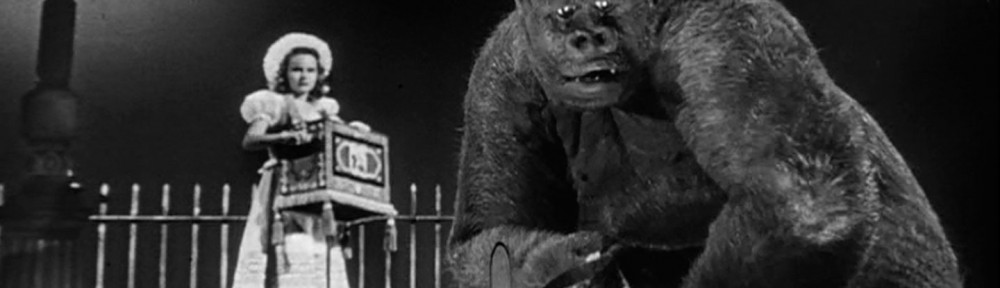
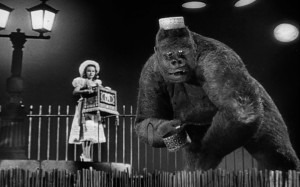 My selection is 1949’s Might Joe Young. It has been called, and rightly so in my opinion, a King Kong knock-off. It is the story of a young woman and her pet 12 foot tall gorilla. They are brought out of the wilds of Africa to the wilds of Hollywood as entertainment for a nightclub. The ape goes mad, there is destruction and terror in the streets of Los Angeles. All in all not a terribly original story line, it features one of the stars of the original King Kong, a truly influential film, and the special effects were headed up by Willis O’Brien, the technical wizard who did the effects for Kong.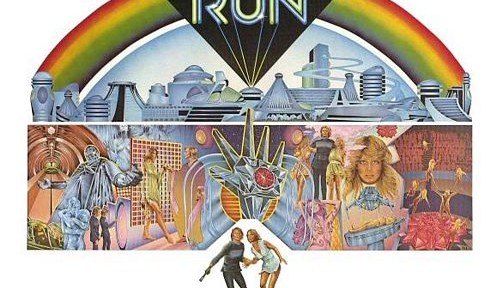
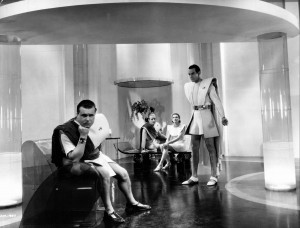
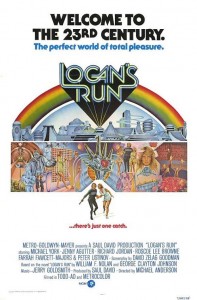 Logan’s Run is a 1976 Science-Fiction film made before that great behemoth Star Wars derailed Science-Fiction films for a generation. The film, based on a novel of the same name written by William F. Nolan and George Clayton Johnson, is set in a utopian 23rd century. Crime, disease, hunger, war, and pollution, are all problems of a literally forgotten past. The story is set in an unnamed city, protected from the war-torn hell that scars the Earth by massive domes, where the citizens lead lives dedicated to frivolity and hedonistic pleasures. Families no longer exist, and people are raised in crèches without ever knowing their parents. All their needs are met, the city is government by a benevolent computer system called the Network, and it all works seamlessly.
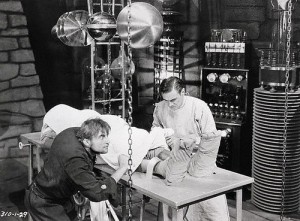 Frankenstein – 1931 – James Whale