Category Archives: Movies

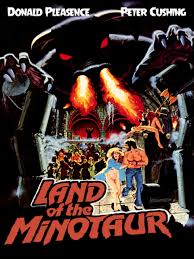
Land of the Minotaur AKA The Devil’s Men

This will be quick. My sweetie-wife found a film she wanted to watch during our 30-day free trial of Fandor, The Devil’s Men US Title Land of the Minotaur.  Starring Peter Cushing and Donald Pleasance this is a Greek horror film about a minotaur-worshipping cult that abducts college students willy nilly and has a young girl kill them in sacrifices to their half bull half man god. Pleasance is a local Irish priest with an accent that is never very good and often disappears entirely while Cushing is an expat Hungarian noble with a wholly English accent that is the high priest of the murderous cult.

Roger Ebert called this ‘the worst Peter Cushing Film ever,’ but we think both Shockwaves and The Uncanny can give this poorly crafted film a run for that title. I have never seen a movie directed with such a lack of spatial awareness, scenes get turned around, characters are unaware of the geography around them and there is nothing in this movie to recommend it. During the climax of the story the priest informs the young heroic man helping him that they must get there before moonrise when their friends will be sacrificed, never mind that there have been loads already without that full moon, now they have a ticking clock. The companion asks how does the priest know this? It’s a good question because absolutely nothing that happened before this clued either the character or the audience to this suddenly critical fact. The priest’s answer? “I just Know.” He might as well have said, “The writer told me!”


Share

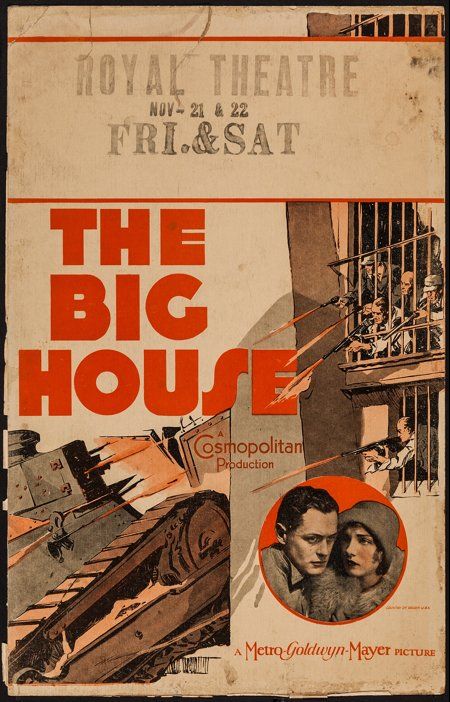
Monday Night Movie: The Big House (1930)

Surfing through the offerings on The Criterion Channel yesterday I landed on The Big House from 1930 as my evening’s entertainment.

With story and dialog credit to Frances Marion and her second Oscar nomination for writing The Big House is the source for many cinematic tropes found in later prison movies. The story is concerned with three principal characters, Kent, a new arrive at the prison, starting a ten-year sentence for man slaughter after he killed a pedestrian while driving drunk, Morgan a forger, and Butch an illiterate thug serving time for murder. While the film makes sociological points about the prison system including having the warden complain that society is happy to throw people into prison but unwilling to pay for it, it avoids pulling out a soap box but instead focuses on the nature of its central characters and how their time in prison reinforces or breaks their character.

Many scenes which would later become clichés in the sub-genre of prison movies are present here in this early ‘talkie.’ The food riot in the massive dinning hall, the full riot with bedding thrown from the upper levels of a massive cell block, the sharp concern among the inmates about ‘squealers,’ and so on though it is far from routine when the climax of a prison movies involves several tanks.

Running just under an hour and a half The Big House doesn’t waste time, there is no preamble and very little fat, something filmmakers today struggle to maintain. With visuals that were sometimes decades ahead of their time this movie remains an important and watchable piece from a time nearly a hundred years ago.


Share

I Went to the Movies!

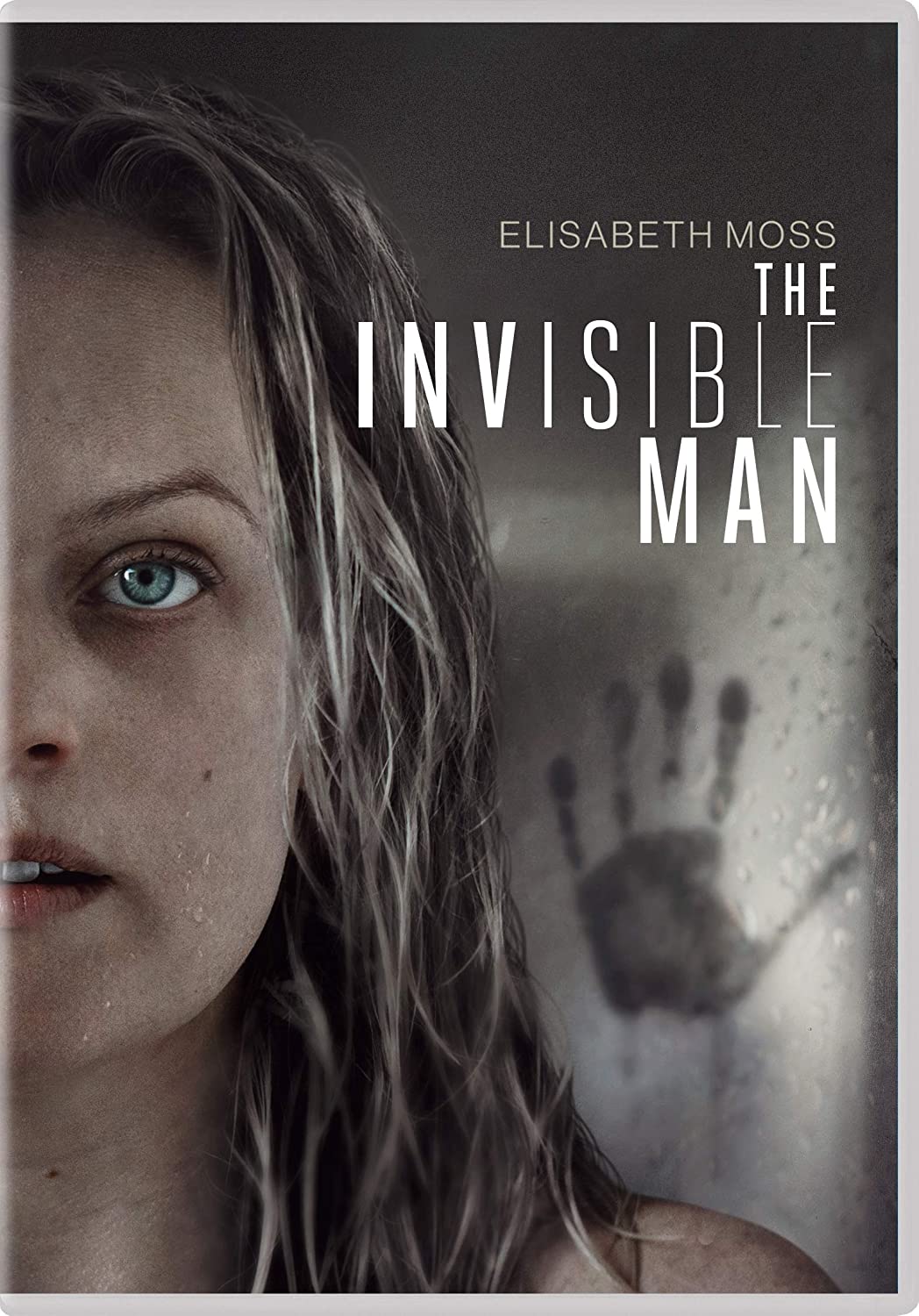
San Diego has two drive-in theaters and both are now operating during the COVID-19 lock-down. Last night I went to the Santee Drive-In and watched the most recent iteration of The Invisible Man.

Universal Studios had planned to make an Invisible Man film as part of the Dark Universe Franchise series but the smoking crater left behand after the release of Tom Cruise’s The Mummy and the disappointing performance a few years earlier of Dracula Untold (2014) destroyed those plans as thoroughly as a snap from Thanos. This movie was produced by horror specialists Blumhouse and is quite the good film.

Written and directed by Leigh Whannell, The Invisible Man stars Elisabeth Moss as Cecilia Kass as a woman who has escaped the physical and mental abuse of her brilliant tech-bro husband Adrian Griffin (Oliver Jackson-Cohen). Following her escape Cecilia grapples with the PTSD from her years in an abusive relationship and learns that Adrian has apparently killed himself but soon she becomes convinced that through his technological brilliance Adrian has faked his own death and is now tormenting her with some manner of invisibility. Friends and authorities are naturally quite skeptical of her assertions and dismiss them as stress induced mental illness leaving Cecilia to reclaim her life and her power alone.

The script is tight with nary a wasted beat or moment and the characters presented are smart and capable. Cecelia, though dealing with sever PTSD, keeps her head and shows a level of intelligence and cunning that is often rare for characters of horror cinema. (Though it was left to the teenager in the story to instruct Cecilia that you never use water to fight a grease fire.) Whannell’s direct sure and on target with even the use of jump-scares, where a sudden action or appearance in frame is used to startle the audience, motivated by character and logical plot developments. I can’t honestly judge the cinematography as the outdoor presentation ruined a number of darker sequences but other than that the film had a sharp, cold, modernist look that well suited the story and tone. The score was neither particularly memorable nor intrusive but support the scenes well without drawing excessing attention. The entire cast delivered competent performances but this movie lived or died on Moss as she carried the entire story and appeared in every scene as our sole viewpoint character. I can report that she excelled and gave us a credible, sympathetic, and ultimately strong character worthy of our support.

The Invisible Man (2020) is well worth the time and I look forward to seeing it again at home where I can enjoy the photography under better conditions. The unsuitability of the venue to films with dark sequences forced me to leave after the first feature as The Wretched promised substantial scenes at night or in deep darkness.

Share

The Inadvertent Comedy of Creature with the Blue Hand

After hearing about the subgenre of films called Krimi on a documentary about Giallo my sweetie-wife and I decided that we needed to watch some of the German crime movies. She found one starring Klaus Kinski as twin brothers, one locked away in an asylum for a heinous murder and after his escape a series of grisly bizarre killings plague his noble English family.

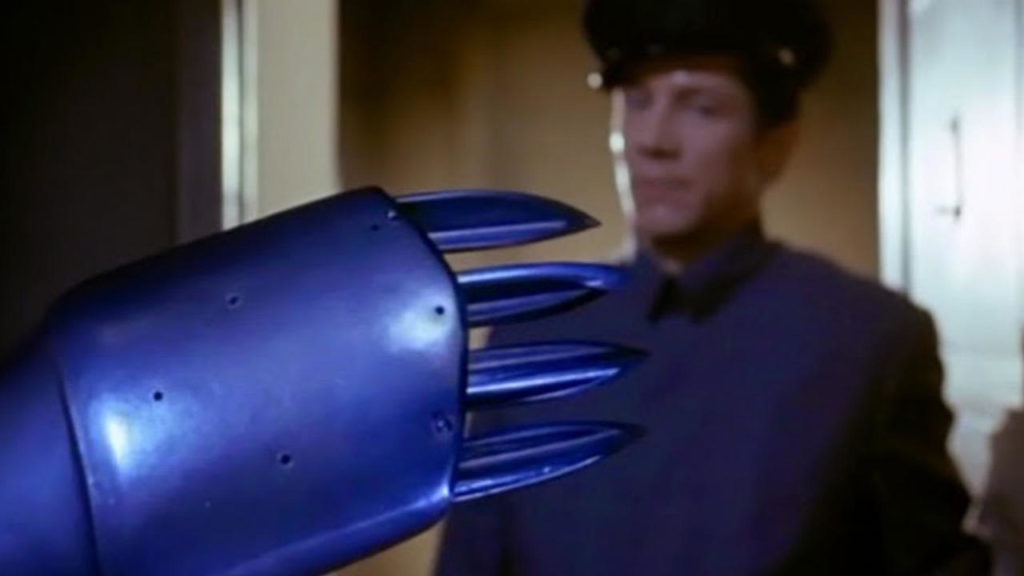
Creature with the Blue Hand is a West German production, for the kids out there Germany used to be broken into two countries one democratic and one communist, based upon the novel The Blue Hand by Edgar Wallace. Sadly, the version on Fandor is not only dubbed but taken from a poor quality video

I really want to know what edition this image is from because nothing in the one watch was this clear.

recording of the film with washed out colors and some scenes so dark that’s it is impossible to discern what is actually transpiring on the screen. On its own Creature with the Blue Hand is a substandard feature, thin characterization, tropes that were tired in the 70s when it was produced, and resolutions to mysterious the repeatedly rely upon information not previously disclosed to the audience.

That said the movie does provide moments of unintentional hilarity.

For example, there is a scene where Dr. Mangrove, a corrupt and evil psychiatrist moves to a secret safe in his office. Really when I have a secret safe it is never going behind an oil painting. With the context of the scene you’d expect that he’s retrieving cash or some other valuable but what is pulled from the locked steel container is a live python with which he murders a disloyal member of his staff.

The other scene which burned into my memory in any other movie would have been placed for deliberate comedy but nothing in the presentation here suggests that the filmmakers were aware of the absurdity I am about to describe.

The heroic police inspector has finally figured out that Mangrove is a villain, but not the ‘Boss’ and after a brief struggle has thrown him to the floor in his asylum and gotten to drop on the thugs/staff with a pistol. Two of the thugs have taken Mangrove by the arms and are helping him to his feet while the others threaten the inspector with club. (Yes, they brought clubs to a gun fight.) The Heroic Inspector orders them to get their hands up, thrust his handgun forward to empathize the threat. They all throw their hands up, including the pair helping Dr Mangrove who tumbles right back down on his ass. There’s no cut to a shot of the outraged or indignant Mangrove to put a button on this comedic scene because they seemed to have truly missed that moment of slapstick.

I can’t say this is even a mediocre movie but we did get entertainment value from it just not what the filmmakers intended.

Share

Noir Review: 5 Against the House

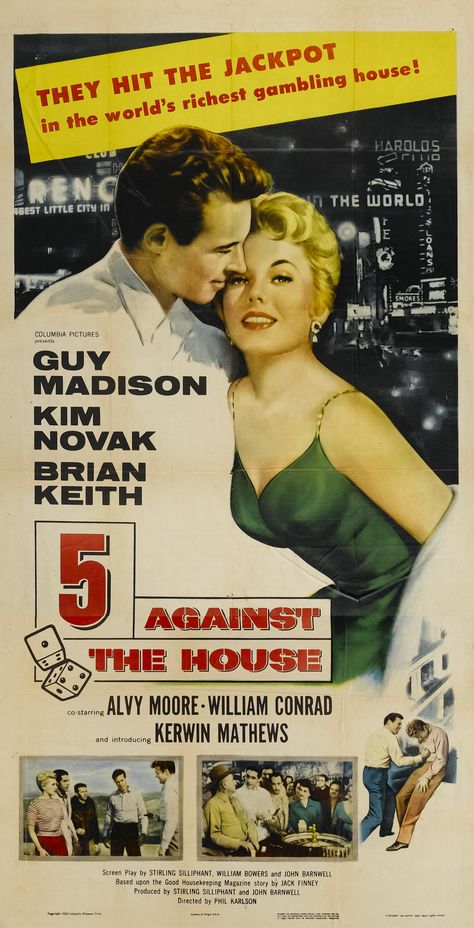
Continuing my expedition into Columbia Noir hosted on the Criterion Channeland early Kim Novak performances Sunday night I streamed the 1955 noir 5 Against the House.

Directed by Phil Karlson from a screenplay by Stirling Silliphant and John Barnwell based on a novel of the same name by Jack Finney who is better known for penning the novel The Invasion of the Body Snatchers. 5 Against the House is about a collection of college students that decide to rob a Reno Casino as a prank with intentions to return the money. Naturally the plan goes from prank to plot when one of the students seizes on the idea that this sudden influx of cash will end his troubles.

While the characters attend Midwestern College, they are older than the usual student body because they are Korean War Veterans going to school on the G.I. Bill, particularly Al, played by Guy Madison, whose life was saved in combat by ‘Brick’, played by Brian Keith. Brick suffers from what is now known as PTSD and struggles both academically and socially due to his difficulty integrating back into civilian life and leaving the horrors of the battlefield behind. His instability coupled with a tendency towards violence drive much of the films tension for the second half.

My trouble with this movie is that while there is taunt tension in the second half the first is devoid of any serious conflict and none that concerns all of our major characters. Al wants to marry his girl Kaye, played by Kim Novak, but she’s uncertain about their love and skittish to commit while the others in the friendly clique engage in freshman hazing and comic banter that is well written but serves no function in advancing the plot, making this 83 minute feature feel much longer. The actors rang from adequate to quite engaging with the obvious star power of Novak and Keith driving much of this movie’s appeal.

Share

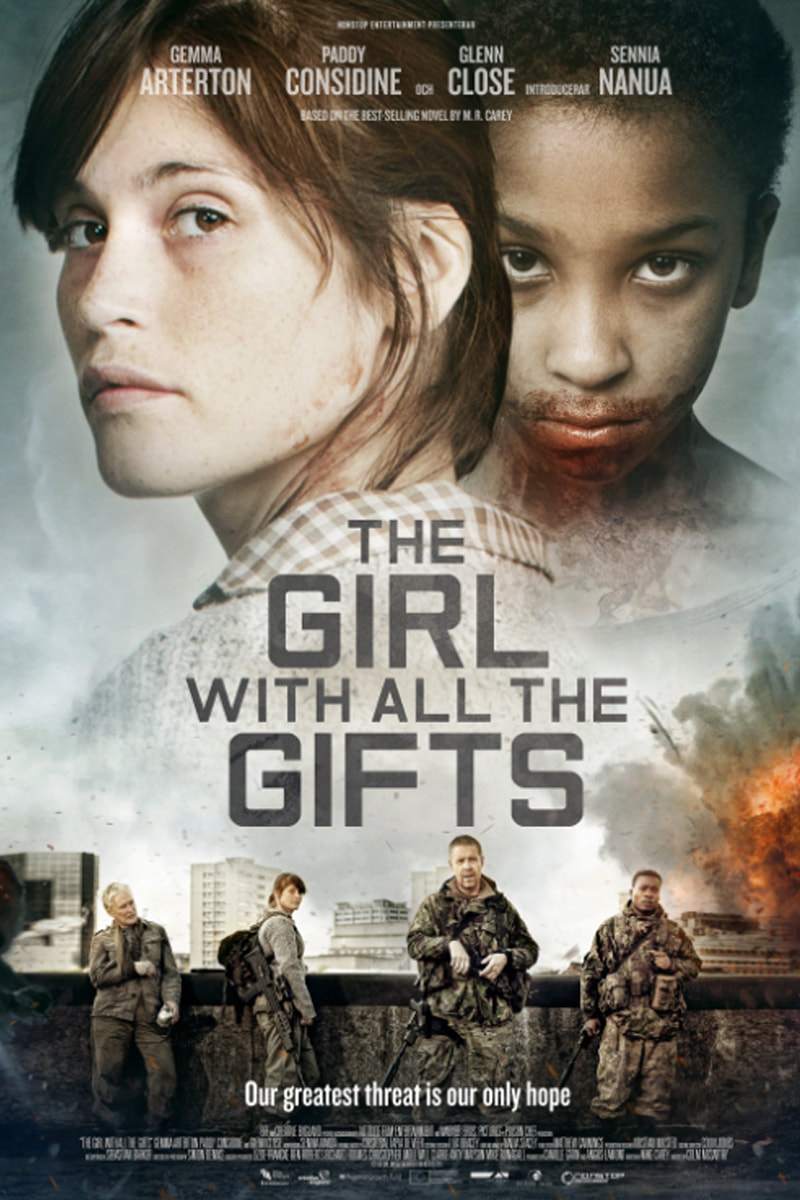
Streaming Review: The Girl with All the Gifts

This film has popped up once or twice on my cinematic radar and yet time and again had managed to slip away unseen until this past weekend. I became much more interested in the film after watching the documentary Horror Noir about the intersection of horror media, principally film, and the depictions of black people in media.

The Girl with All the Gifts is a 2016 post-apocalyptic ‘zombie’ film directed by Colm McCarthy from a screenplay by Mike Carey who also write the original short story and adapted the material into a novel of the same name. Glenn Close stars as Dr Caldwell a medical scientist searching for a vaccine against the fungus that creates the ‘hungries.’ (First rule of up-scale ‘zombie’ movies, never use the word ‘zombie.’) Caldwell works at a remote military installation where a number of children who are infected with the fungus but present as normal children most of the time are studied and dissected in the search for the vaccine. Gemma Arterton plays Helen Justineau a teacher schooling the class of children. Her star pupil is Melanie, played by Sennia Nanua with a skill and competence that promises a bright future as an actor if she chooses to pursue one. Melanie is fantastically bright, charming, inquisitive, and helpful except when she is taken by her feral hunger which can be aroused with a simple smell of human skin. When the base falls to a horde of hungries the three characters along with an Army Sergeant and another solider are forced to flee across territory abandoned to the hungries in an attempt to reach another secure facility near London. Along the way tension erupt between Caldwell need to use Melanie to produce a vaccine and Justineau’s growing affection for the bright friendly girl.

I placed the word ‘zombie’ in quotes not only because the film uses the term hungries but also that these infected are not living dead revenants. In theory these are simply human infect with a parasitic fungus that has usurped control undoubtedly inspired by the spores that does the same to some species of ants. However, in practical considerations the Hungries fall under the ‘fast zombie’ trope and are generally as mindless as previous cinematic generations of the undead. While the film attempts to create a plausible scientific basis for its unending hordes of hungries it is best to place to one side any actual scientific knowledge while watching the feature. Considerations for how quickly a mindless automaton would succumb to hunger and dehydration are typically ignored as are basic tactical operations that would render any well-armed force immune to the horde’s wave attacks. That said this is a really an excellent film that shares a lot of thematic components with Richard Matheson’s I Am Legendnovel. It is currently streaming on Netflix and while violent it does not luxuriate in the gore but rather focuses on idea of identity and character. It is well worth watching.

Share

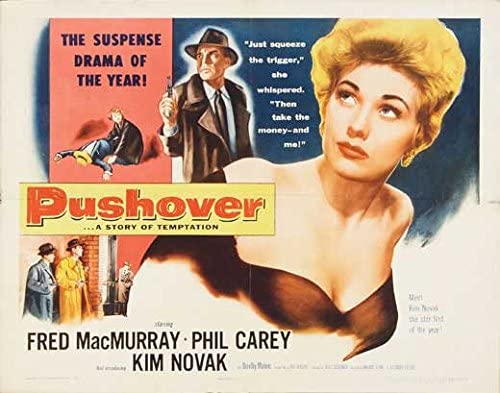
Columbia Noir: Pushover

Continuing my exploration of the Criterion Channel’s hosting of a number of noirs from Columbia studios I watched Pushover from 1954. The movie stars Fred McMurray, a decade after his turn as Walter Neff in Double Indemnity, E.G. Marshall, Phil Carey, and introducing Kim Novak. Directed by Richard Quine and with a screenplay by Roy Huggins based upon two different stories. This is not the only time two source materials have been combined into a single screenplay though the best-known example of that process is probably The Towering Infernowhich was adapted from the novels The Glass Inferno and The Tower, this movie is a serviceable noir, better that Drive a Crooked Road but not quite on target.

McMurray plays police detective Paul Sheridan, who along with his partner Rick (Carey) is staking out Lona (Novak) the girlfriend of a man wanted for bank robbery and murder. Paul’s boss stresses that after Lona leads them to their suspect, he is to be taken alive so that he can disclose where hundreds of thousands stolen from the bank has been hidden. Paul become at first infatuated and then emotionally entangled with Lona and eventually hatches a scheme to, using his duty as an excuse, kill her boyfriend, and then take off with her and the stolen loot. Getting to this point in the film takes about half of the 88-minute running time and felt like a tire re-tread of Double Indemnity. Once Paul’s less than brilliant plan goes astray complication upon complication pile on his haphazard improvisations with escape becoming less and less likely.

During the set-up of this movie I was scarcely engaged with this cruder version of Wilder’s far superior film but once Paul’s plan derailed I became more invested. The nature of the plan’s failure was nicely established but without blaring klaxons announcing that establishment and I found it very credible that a person once they crossed the line discovers that were never the nice and good person that they had imagined themselves to have been. Still that didn’t justify the tedious and well-trod first half and aside from Novak most of the cast seemed to be sleepwalking through the establishment. Perhaps what makes Pushover unique as a noir is that Novak’s character is not a femme fatale and generates considerable sympathy because she is not the murderous schemer.


Share

Looking Back on Star Wars

Today, May the 4th, is the date that fans traditionally celebrate the Star Wars saga of movie.

Star Wars was released in 1977 into a cinema environment so different from the current one, COVID-19 issues excluded, that fans today could have a distinctly difficult time envisioning it. When the first film appeared, it was not the standard practice to open in thousands of theaters across the country and now the  world on the same date. Rather movies opened in perhaps a few hundred locations and then the printed moved from city to city making people wait for highly anticipated films. So, it was weeks and weeks after the movie’s premier before I saw Star Wars. I was already a science-fiction fan and thoroughly enjoyed the movie despite it being more akin to fantasy than any sort of SF. Few could have foreseen that this adventure film was going to radically change motion pictures.

1980 brought The Empire Strikes Back and proved that the audience reaction to Star Wars was not a fluke. Despite a darker theme a different director, and lacking a proper ending, the sequel proved as successful of the original and planted the seeds for a fan community with both good and bad actors and rampant plot speculations that we live with today.

Return of the Jedi arrived in 1983 and concluded the central plot of the three films. Though the weakest of the original trilogy with many of the characters reduced to simplistic versions and its climatic final battle a  thinly disguised commentary on the Vietnam war, one that misunderstand how that war was finally resolved, Jedi produced an emotionally satisfying resolution to Luke’s character arc leaving him in a place of emotional maturity and moral soundness.

16 years after the trilogy’s conclusion Lucas returned to theaters with more films set in the Star Wars universe, a set of prequel movies dealing with the backstory of Darth Vader and the disintegration of the Republic into the Galactic Empire with the movies The Phantom Menace, Attack of the Clones, and Revenge of the Sith. These films proved to be a disappointment. Abandoning the earlier, ‘lived in’ art direction from the original trilogy for a polished, metallic, façade that had no life of its own and with characterization reduced to nothing for the sake of plot propulsion. Still a younger generation of fans embraced the new movies and the franchise proved to be economically a powerhouse in two different centuries.

2015, ten years after the conclusion of the prequel trilogy and the sale of the property to Disney Studios, a new slate of Star Wars movies began with The Force Awakens. Set a generation after the original films the movie returned to the space opera roots of the franchise and repeated core plot elements of Star Wars while introducing a new cast. This was followed by the divisive but brilliant The Last Jedi a film that divided the fan base inciting heated, passionate commentary from admirers and critics of the new thematic ground it broke. 2019 saw the end of the Skywalker Saga with the release of The Rise of Skywalker a movie that was more chase and escape that character and theme. Along with the release of two standalone feature films, Rouge One a film that in mood had more to do with the 1970s that the original Star Wars and Solo another backstory and backfill installment the franchise took in more than 10 billion dollars in box office revenue no counting television, specials, shows, and a flood of merchandising but the long last effects of this amazing profitable franchise will not be found in the growing bank accounts or the endless derivative cinematic followers but in the changing technology of film production. Non-linear editing enhanced theatrical sound systems, photorealistic digital effects, and digital projection are just some of the breakthroughs pioneered by Lucas and his companies. No matter the varying quality of the films as cinema Star Wars and all of its spin-off and sequels have created a new and limitless world for all of us.
Share

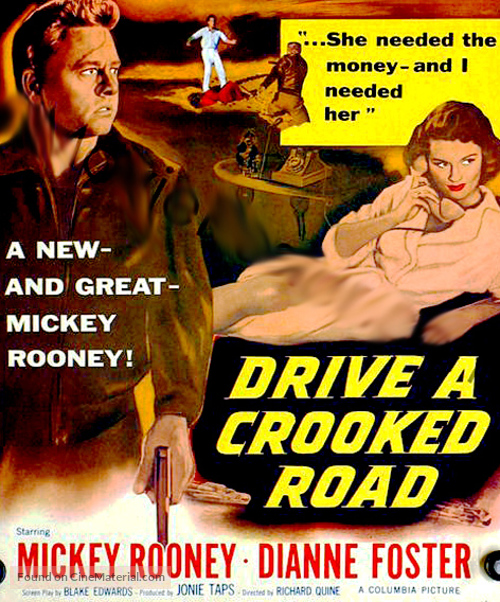
Classic Noir: Drive a Crooked Road

Part of the Columbia Noir series running on the Criterion Channel Drive a Crooked Road stars Mickey Rooney in a dramatic lead along with Kevin McCarthy a couple of years before his encounter with Pod People in Invasion of the Body Snatchers and Diane Foster in the role of the obligatory Femme Fatale.

Rooney plays Eddie Shannon a mechanic and a driver in local car races. After coming in second in a race Steven Norris (McCarthy) and his partner in crime Harold (Jack Kelly) single out Eddie as someone without a family or a girlfriend, perfect for their scheme. Playing upon Eddie’s social awkwardness and self-consciousnesses over his prominently scared face Barbara (Foster) seduces the naïve Eddie emotionally manipulating him so that he will be willing to assist the gang in a daring bank robbery that requires his impressive driving and mechanical skills.

With a brief running time of just 83 minutes Drive a Crooked Road doesn’t have the room to fully explore either that characters or the situation but rather races from plot element to plot element ticking off the elements of a story without ever fully engaging the audience. Directed by Richard Quine from a script by Blake Edwards and Quine this movie presents a serviceable premise that fails to deliver. An overreliance on under cranking the camera, lowering the frame rate artificially acceleration the action on screen, along with an intrusive musical score that doesn’t know when to back off and allow the actors to carry a scene Drive a Crooked Road ends up feeling cheap despite boasting an impressive and skilled cast. While the story is a classic noir set-up and pay off, he did it for the money, he did it for the girl and he didn’t get either the money or the girl, this film spins its wheels without ever reaching a destination.

Share

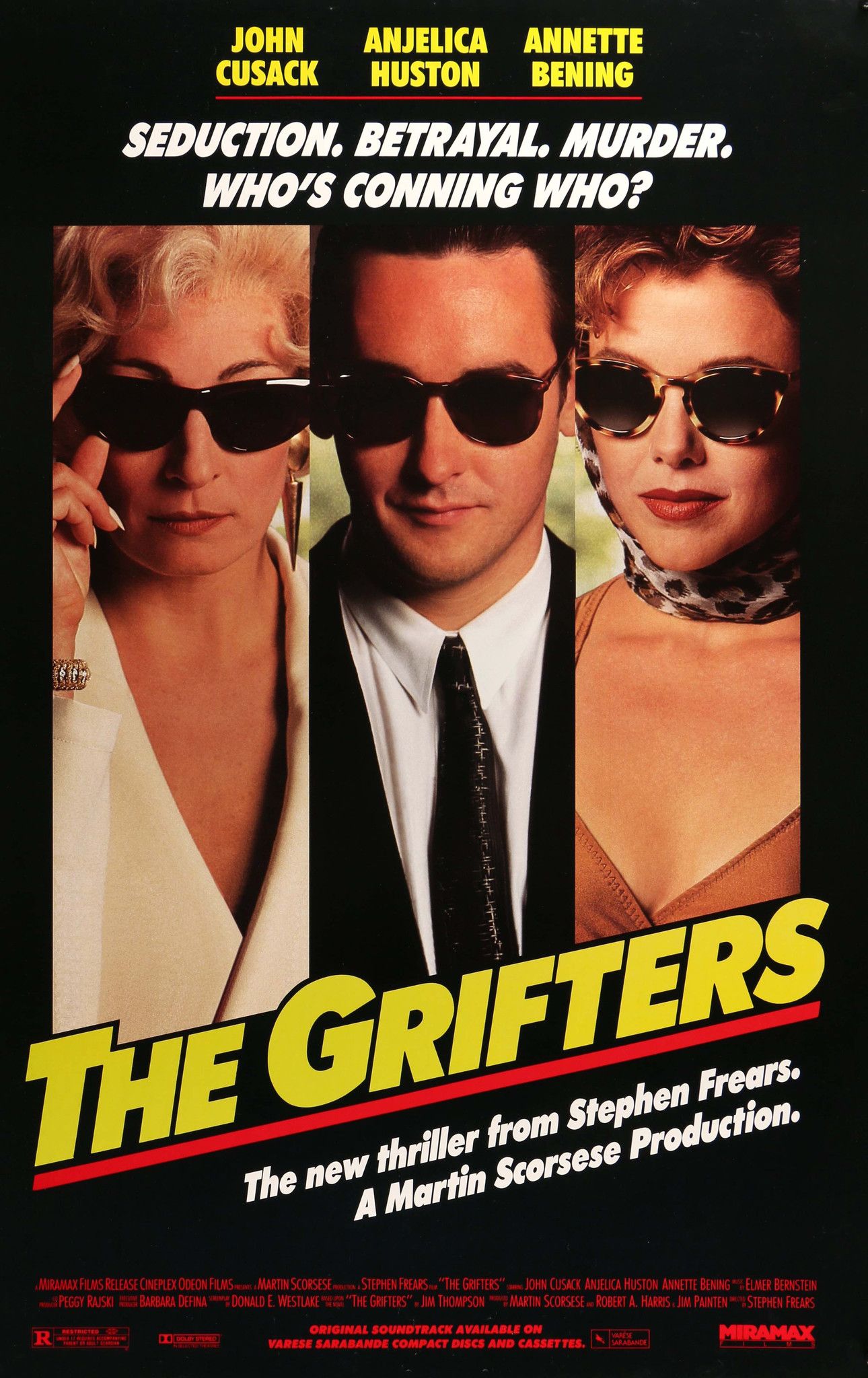
Streaming Review: The Grifters

I remember wanting to see the neo-noir back in 1991 when it played at a local art house theater. Somehow, I never made it to the theater and missed the movie entirely.

The Grifters, adapted from the novel of the same name, stars John Cusack, Anjelica Huston, and Annette Bening as con artists, i.e. grifters, Roy, Lilly, and Myra respectively . Roy is Lilly’s son but because she was so young when he was born he was passed off as her younger brother for most of his life. Lilly works for a major Maryland mobster, Bobo, traveling to racetracks and placing large bets to reduce the odds for longshot horses and is estranged from Roy. Roy is a short con artist, playing trick on marks that pay off quickly with elaborate set-up allowing him to avoid most form of legal entrapment and enforcement. Myra is a long con artist looking for a new partner and is involved with Roy though at the start of the story neither are aware that they are both grifters. Grievously injured by a mark, Roy lands in the hospital bringing all three of the character together and dynamic of the triangle are established. Lilly wants her son out of the racket and to go ‘straight,’ Myra wants to displace Lilly as a major influence in Roy’s life, and Roy struggles to find a way to satisfy both women while maintaining his independence. Stakes quickly rise and soon it becomes a matter of life and death over Roy’s stash of cash and his relationship with Lilly.

Directed by Stephen Frears and produced by Martin Scorsese The Grifters is a bleak, cynical look at humanity and the self-destructive nature of greed and the need to dominate. I enjoyed the film thought I found the ending less than fully satisfying. While the story and plot are both resolved I tend to prefer for a story to force a character to make a choice, a hard, difficult choice, rather than having an impulsive action produce unintended consequences that resolve the conflicts. This is not the same as a deus ex machina where an unestablished power or character magically removes the troubles but rather in this case a realistic and predictable outcome comes from a moment’s anger rather than a character making the decision to produce that final outcome.

Still, I am glad I watched the film before it finished its run on The Criterion Channel at the end of the month.


Share