Category Archives: Horror

Movie Review: Crawl

There are horror film, monster movies, and creature features with significant overlap between these three sub-genres and this week’s releaseCrawl pretty much falls into the Creature Feature definition.

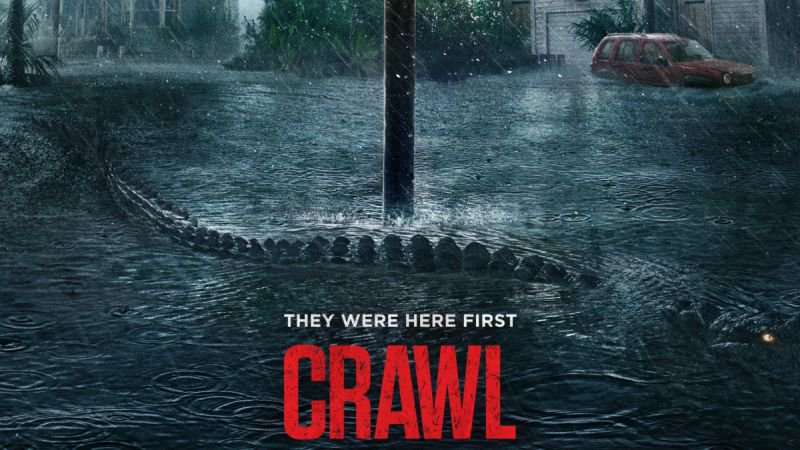
Set in a fictional Florida town of Coral Lake during a category 5 hurricane, Crawl  is about Haley Keller (Kaya Scodelario) and her father Dave (Barry Pepper) trapped in the crawlspace of their home while being menaced by aggressive alligators. If you have seen the trailers for the film then you have pretty much seen the entire premise and set-up. Clocking in at a slim 86 minutes Crawl  doesn’t waste much time, very quickly delivering it’s central character Haley into the jaws of danger and then escalated the obstacles throughout the movie. Focused on the dangers of drowning and deadly alligators the movie is light on character development, though it has some just enough to hang the barest story upon, and any deeper theme beyond survival is wholly absent from the script. With the exception of a few secondary and utterly disposable characters this movies rest entirely upon Haley and Dave as they struggle to survive.
In a high-concept movie there is usually one ‘gimmie’ that is asked of the audience, one element that if accepted though it flies in the face of reality allows the rest of the story to unfold organically and with suspension of disbelief. In the classic film Jaws  one has to ignore actual shark behavior but beyond that the film proceeds logically. With this film the one gimmie should be the alligator behavior but sadly the writers and directors instead ask the audience to accept impossibility upon impossibility particularly as the movies crashes through its third act action. Detailed and graphic tissue damage that the characters, both Haley and Dave, sustain from attacks are minimized beyond belief for the sake of keeping the characters mobile, active, and capable of impressive physical feats for even uninjured persons. The first time the filmmakers ignored the realistic effect of a compound leg fracture, I simply groaned and accepted it, the second I silently growled in frustration, and by the climax I needed to stifle actual laughter.  In addition to the grossly under-valued physical damage the characters nearly ignore, the third act also suffers from contrived coincidences with valuable and critical equipment literally floating to the characters in their moment of dire need. As an additional note, a category 5 hurricane has sustained winds exceeding 157 miles per hour and there will not be rescue helicopters flights in such conditions.

Overall I found Crawlunworthy of the timer I spent watching it and I took solace in knowing that as part of my weekly three movies from the theater chain’s subscription service it cost me no extra money. For others, with less sensitive suspension of belief, this movie may turn out to be a fun roller coaster ride, an exciting summer popcorn movie, but for me it was not.

Share

Movie Review: Midsommar

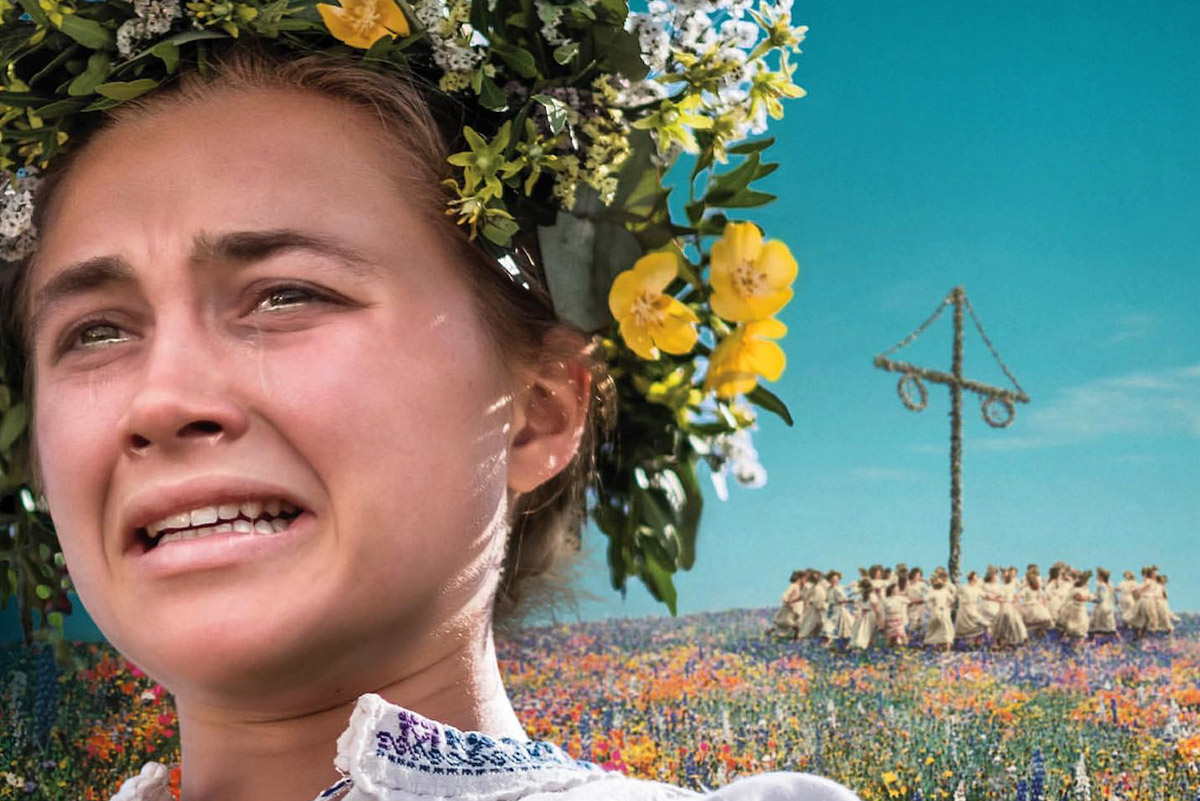
Writer/director Ari Aster the creative forced behind last year’s Hereditary  is back with his sophomore feature film project Midsommar. People who are looking for a horror film in the vein of slashers, monsters, and action are likely to be disappointed with Aster’s slow-burn builds, languid deliberate pacing, and long-take, carefully choreographic photography however those who are enamored with psychological and sociological themed horror such as the originalThe Wicker Man  are likely to find something on Midsommarthat will appeal to their tastes,

Midsommar  centers on Dani ( Florence Pugh) and her disintegrating relationship with Christian (Jack Reynor.) Christian is already searching for a way to end the relationship when a familial tragedy shatters Dani leaving her grief stricken and emotionally vulnerable. Six months later Dani and Christian along with their friends Josh (William Jackson Harper) and Mark (Will Poulter) are invited to vacation and enjoy the mid-summer festivities at an isolated commune The Harga in northern Sweden by their exchange student friend Pelle. Once at the Harga subtle cultural conflicts slowly building between the guests, now including a pair of romantically invested UK students, and the residents of the commune. The guests used psychoactive drugs recreationally while the residents consume them for religious purposes, Christian and Mark want to study the commune for their academic advancement, while for the residents their way of life is part of an ancient and sacred tradition, and Mark sees sexual activities as something of pure pleasure the commune considers it more of cycle of life never foregoing the goal of procreation. These conflicts are not expressed in boisterous loud scenes of shouting but rather build layer by layer a growing sense of dread as the two cultures move irreconcilably towards a devastating final reveal. Dani, unlike the others, starts finding a place and a people that see her emotional injury and, though often concerned about the mysterious events that hint at darker motivations and truths, she discovers an acceptance and even a form of healing that Christian has been unable to give. As the film shifts from the second act into the third the plot descends into revelations, betrayals, the final dissolution of Dani and Christian’s relationship and culminates with Dani’s final resolution the more traditional horror film aspects emerge.

With strong echoes of The Wicker Man, which for those of you in San Diego will be playing soon for one day only at the Ken Cinema, Midsommar  is a movie that invites deep consideration and that for many will haunt their thoughts long after the final credits have vanished from the screen. Gorgeously photographed by Pawel Pogorzelski the film manages a continuously building atmosphere of dread and unease in a setting that has no period of true darkness. It is the rare horror film, psychological or otherwise, that attempts much less succeeds at mood building without a heavy reliance on dark deep shadows. The score is a different sort of musical accompaniment and I do not have the required background in knowledge or terminology to adequately explain it but in terms of mood it fit perfectly, enhancing the film’s emotional subtext without telegraphing it in broad blatant techniques. (Though that aspect of my experiences was marred by the deep bass rumblings from the Imax auditorium next tour ours screening Spider-Man: Far From Home.)

The cast is uniformly terrific, playing each character with credible depth and complexity. I want to make a particular note of William Jackson Harper perhaps best known as Chidi on NBC’s hit show The Good Place. Once again Harper is playing a character with a strong academic nature but through the strength of the script and Harper’s with subtle but effective physicality, I never once had any echoes of his role from that show.

Over all I loved the film and it has elevated Aster into a place where I will go see his next film without any other inducements required. Midsommaris a film that is not for everyone, but if you found Hereditary  or The Witchcompelling viewing then you should waste no time in seeing this movie.

Share

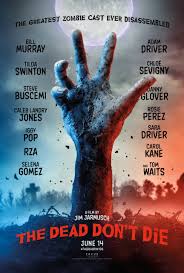
Movie Review: The Dead Don’t Die

It is said that when a genre cycle nears the end of the ‘life’ and the dramatic idea within that genre run dry the artists turn to comedy. I am not sure I buy that even as a general rule and I certainly do not buy in to that for the subset of horror movies built around zombies as flesh eating undead. 2004’s Shaun of the Dead  is often credited as a film that helped re-launch the zombie movie and its comedic nature is undeniable. An even older than that example is Return of the Living Dead  from 1986, a direct sequel to 1968’s Night of the Living Dead, a dark comedy, and the movie that forever implanted in popular culture the concept that zombies eat brains. So the release of this month’s zombie comedy The Dead Don’t Die  is not in my book a sure sign that the genre had reached its end. Though I will admit that finding really good zombie movies is always a difficult pastime.

Written and Directed by Jim Jarmusch the filmmaker behind the vampire movie Only Lovers Left Alive  The Dead Don’t Die  is a story of the zombie apocalypse as experienced in the small one horse town of Centerville USA. Roughly centered on Police Chief Cliff Robertson (Bill Murray) and police officer Ronnie Peterson (Adam Driver) the film follows a diverse set of quirky characters including Farmer Frank Miller (Steve Buscemi), Hermit Bob (Tom Waits), and new comer to the town and apparently a Scottish samurai undertaker Zelda Winston (Tilda Swinton) and a smattering of other famous actors and musicians playing smaller parts.

Unlike most comedies this movie is paced, quite deliberately, at a quite sedate speed. Things unfold in a slow steady progression and scenes play out with a languid sense of timing. Some of the humor comes from character and context but this film also plays with the a meta-narrative that has at least some of the characters seeming aware of the convention of zombies film and even through own more questionable reality. While there is zombie flesh eating action it is far from graphic in this presentation and Jarmusch replaces zombie blood and gore with a wispy black smoke effect that makes this a nearly bloodless horror film.  Near the resolution in the movie’s third act I was reminded of the Spierig’s brother low-budget indie zombie comedy Undead, but only is a passing manner due to a few shared story elements.

The Dead Don’t Die  is not a film for everyone. The humor is often understated, the pacing more fitting to a foreign film than a typical US theatrical release, and the meta-narrative keeps the viewer at distance, but conversely there are some terrifically understated performances, Bill Murray gives perhaps his quietest comedic line readings ever, several interesting ideas are presented on the nature of life versus unlife, and throughout the movie’s run time I was never bored as I was with the much faster paced Dark Phoenix.

Share

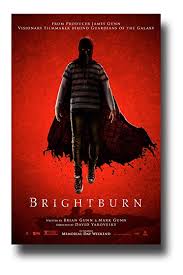
Movie Review: Brightburn

Sunday morning I ventured alone to see the new film Brightburn  as this movie held little interest for my lovely sweetie-wife. The one line description of this feature is ‘The Superman origin story done as a horror film.’

This is a modestly budgeted movie, R-rated for horror, graphic violence and imagery that succeeds on its own terms. Produced by James Gun who is best known widely for the writer/director of the Guardians of the Galaxy  franchise inside the massive machine that is the MCU, though for those of us more familiar with his body work Brightburn  represents a return to the genre where we first discovered his unique vision, horror. Brightburnis also a family affair with Gunn’s brother Brain and cousin Mark writing the screenplay while David Yarovesky directed.

Elizabeth Banks and David Denman star as Torie and Kyle Breyer a loving couple living on an farm in the middle of Kansas struggling with infertility and desperate for a child when a spaceship, more of a pod than a ship, crashes on their property its sole occupant a infant boy. Passing the child off as one that they had adopted Torie and Kyle raise the boy they named Brandon as their own. When Brandon reaches the edge of adolescence his begins to manifest powers and abilities  unlike anything found in nature and the Breyer’s suddenly have to confront the reality behind their fairytale of adoption.

Brightburn  knows what it wants to achieve wastes very little screen time with subplots or extraneous stories focusing on its core theme, what if someone with fantastic powers was simply evil? Jackson A Dunn who plays Brandon caries off the role with a subtle and creepy performs managing to convey menace with only body posture and his expression. David Denman is perfectly adequate as Kyle but the real star of the movie is Elizabeth Banks as Torie, she walks that line portraying a mother who loves her son, does not want to believe the worst is true, and yet has the strength in the end to face reality.

The production design on the film is outstanding. Normally when someone is aware of the production design it is because it captures some sort of beauty, usually an unaffordable one to the audience or an unearthly one such as in Thor: Ragnarok  but neither case applied to Brightburn. The Breyer’s home reflect a reality I recognize, despite having inherited a sizable farm with a large home they are not people of wealth, not even solidly middle class but rather they exist towards the lower end of the middle class. Too often in Hollywood productions this is either made to look much richer than the characters are, with stylish furnishings and art works, or it is made to appear cheap and trashy, but Brightburn  avoids both extremes, presenting a realistic home, one I recognize from my own life.

The violence and injuries in this movie are graphic fully earning the R Rating from MPAA. This movie may not be suitable for younger audiences, certainly children should not see this movie, the themes of vengeance and parents turning against their children in addition to the bloody scenes are too intense for most children, for younger teenagers, depending on their level of maturity, caution should be exercised. Over all I enjoyed this movie and for anyone who is a fan of horror this should be on their list of movies to see.

Share

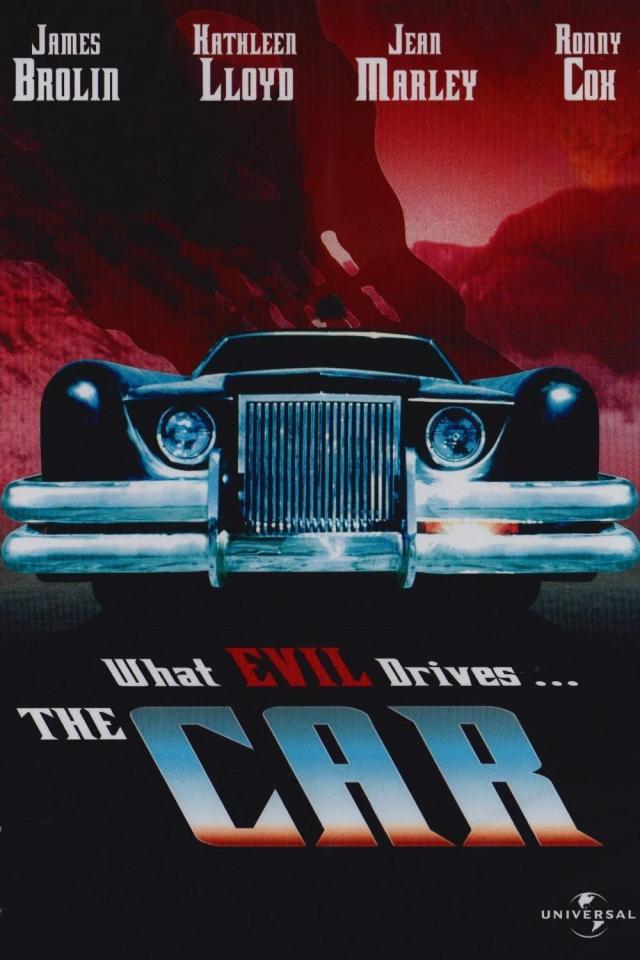
Sunday Shudder: The Car

For my Sunday night movie I decided to take a chance on one of those bizarro horror movies from the 1970s, The Car.Now if you did not know the 1970s were a very odd time for Hollywood and the global film industry. Between the collapse of the classic studios system but before the rise of the mega-corporation analytic and franchise driven system of today there existed a brief window where personal auteur driven films were produced such classics as American Graffiti, The God Father,and Taxi Driver  all hail from this unique era of motion picture production. After the success of Rosemary’s Babyand The Exorcist  the public also seemed tohave developed a taste for demon and evil oriented horror. So in 1977, the same year as Star Warsand two years following Jaws, the film that created the summer blockbuster, Americans were treated to the unique cinematic experience that is The Car.

Set in a remote small town/county in Utah The Caris the story of Wade, a sheriff’s deputy, divorced dad, and general all around good guy dealing with the mysterious murderous motorcar rampaging along the deserted desert roadways. The car, a black two door without any branding, no doubt no automobile manufacturer wished to be associated with such implied carnage, spends the moving mowing down random cyclists, hitchhikers, and lawmen. The film has a number of subplots, Luke the deputy with a drinking problem, Amos the despised abusive husband and general contractor, the old flame relationship between the county sheriff and Amos’ suffering spouse, but none of these are brought to any sort of resolution and as ‘color’ they fail to bring the story any sense of verisimilitude. The car itself looks fantastic, its lack of trademarks or hood emblems, along with the missing door handled gives it a sinister outline that suggests something not crafted by nor intended for human hands. The sequences of roadway violence of tame, even by the standard of late 70s film production and so the film is almost entirely bloodless, perhaps a major detraction to todays audiences. The cast gamely tried to play the scenes and the outlandish plot straight but hampered by a script that is neither bad enough to be enjoyable as a guilty pleasure not skilled enough to generate characters of depth the movie languishes in the mediocre middle ground that will reduced in audience’s memories to a few scenes and set-piece gags.

Most horror films fall into one of two broad categories, an evil with agency and therefore motivation, goals that the evil needs to achieve and ones where the evil represents a random, chaotic, and ultimately nihilistic universe. The Car  could not settle on either and thematically ended up as a muddled mess. The demonic car possessed enough agency to hold grudges and make plans, and yet there was no goal, no explanation for why this evil emerged on this rural community.

Over all the film was perfectly fine for a late Sunday night movie but not worthy of repeat viewings.

Share

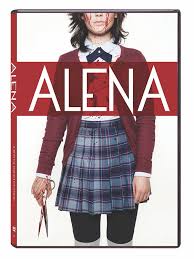
Shudder Review: Alena

Recently when I discovered the movie available on Shudder I re-watched with a friend of mine this marvelous Swedish ghost story. I encountered this movie the first time I attended the Horrible Imaginings Film Festival and it blew me away as the best film of that year. It was presented as part of the LGQT block of films. Repeated viewings have not dimmed my appreciation of it’s characters, story, or production.

Adapted from a Swedish graphic novel of the same title Alena is the story of a teenaged girl, Alena, when she transfers from a public school with a poor reputation to an elite all-girl private school. Immediately classed as a social outcast by Filippa and her closed

clique of popular girls but befriended, and more, by iconoclast Fabienne Alena desperately tried to fit in and find a life for herself at the school and on its lacrosse team. Though not a student at the school Alena is also close with Josefin, a close friend from her life on the wrong side of the tracks. Filippa, who still carries a torch for Fabienne, orchestrates severe harassment against Alena prompting the film’s transition from high school drama to horror culminating in Alena confronting her past and the truth she has fled from.

Stylish, atmospheric, and moody, Alena  is a movie that knows the power of suggestion, the impact of the unseen, and also when to bring out the blood shocking and horrifying the viewing with its brutal and sudden appearance. The violence, both physical and sexual, are handled well enough that this move never slips over into exploitation or titillation keeping its viewpoint firmly grounded the reality of the characters and their lives despite ultimately being a story of the supernatural. While the ghost in this movie exists and have direct influence on characters and events it also stands in as a metaphor for the pasts we try to bury, for the responsibilities we attempt to deny, and the harm we carry forward with us from out past traumas. Alena’s biggest flaws is that there are times here and there that the subtitling, this film’s dialog is entirely in Swedish, is occasionally off and needed at least one more pass from a native English speaker. That said this is a movie I highly recommend, and it is currently available on Shudder and Amazon Prime video.v

Share

Movie Review: Us

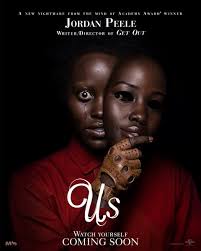
Jordan Peele, the writer, director, and producer of the fantastic film Get Outreturned to theater screens last week with another horror film, Us. Centered on an upper-middle class family during their summer vacation, Us  is a horror film that avoids the cheap and easy gimmicks often employed by lesser films, such as the repetitive ‘jump scare,’ in favor of disturbing images driven by magnificent performances and yet it does not achieve the same heights as get Out  leaving this film as modest enjoyable but subject to several disbelief braking elements.

Led by Lupita Nyong’o as the movie’s central character Adelaide Wilson and supported by Winston Duke playing her husband Gabe, Shahadi Wright Joseph as their eldest daughter Zora and Evan Alex as their youngest Jason the cast is uniformly fantastic. Playing real and relatable characters that draw in the audience’s sympathy their relationship as a family and as individuals powers the emotional heart of this film. Vacationing at Santa Cruz’s boardwalk, in an earlier cinematic decade the site of a vampire infestation in The Lost BoysAdelaide is unnerved by an ominous chain of coincidence echoing her childhood traumatic experiences at the amusement park. Gabe, ignorant of Adelaide’s experiences, insists on visiting the location and as evening falls tensions are running high and Adelaide is fearful of unseen forces when the family is suddenly confronted by doppelgangers of themselves and thrust into a fight for survival.

Much of Us  works beautifully. The characters feel real and their pain and fright are palatable. Lupita anchors the cast’s performances as the emotionally damaged mother giving Winston Duke, perhaps best know for his star making turn in Black Panther  to stretch his comedic chops as a very ‘Dad jokes’ kind of father. Midway though the movie’s second act the story opens up in an unexpected manner raising the stakes and the bring more mystery to the doppelgangers sudden appearance but the third act, while still engaging and superior to many horror films, is hampered by a exposition/info dump that stops the pace cold and pushes too many hurdles for my personal suspension of disbelief. I can’t be specific without venturing deeply into the land of spoilers but I can try to give hypothetical examples of the problems I encountered with the film final reveals.

Imagine a ghost story, going into the film as an audience we are already primed to suspend our disbelief in ghosts. It’s a ‘give’ we are ready to surrender to the filmmaker just from what we have been exposed to in advertising and trailers. Now, as our plucky characters grapple with a vengeful spirit we are suddenly confronted with alien ghost busters who also have been directing human governments and developments since the fall of Rome. This is asking the audience to simultaneously accept too many impossible things and breaks the reality of the story. Us  does not break things as blatantly as my hypothetical scenario but for me the final explanation for the events is far from neat and that I found impossible to accept. The ultimate resolution to Adelaide’s trauma was deep and morally conflicted, I loved that, the grand explanation for the doppelgangers and the wider canvas to story painted starting in the middle of the second act failed for me. Overall Us was an enjoyable film, a cut above most horror movies, though that is a low bar, but not as satisfying as Peele’s masterpiece Get Out.

Share

Double Movie Review: No Blade of Grass & Bird Box

This was a pretty good weekend for the number of movies I have watched but sadly not for the number of good movies I have seen.

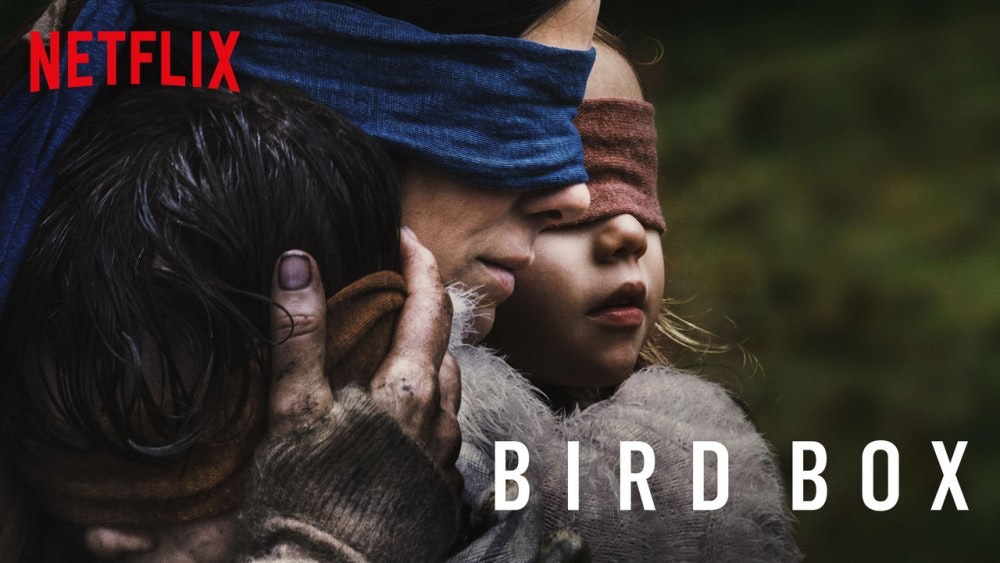
Bird Box   based on a novel. is about a woman, Mallory, played by Sandra Bullock, and two children, Boy and Girl, taking a dangerous river trip while blindfolded in order to avoid seeing a supernatural force that drives people mad, usually into suicidal behavior or depending on plot requirements religious mania to spread the truth of what they have seen coupled with homicidal behavior. Bird Box  operates on the level of plot and really nothing more and even there is fails as it requires suspension of disbelief that I was unable to provide. A person unskilled and blindfolded cannot row a boat for days down a river without ending up on the bank, not to mention running fully blindfolded through heavy growth forest, or accurately wielding shotguns while opposed by multiple attackers. Each of the several characters that begin their siege as the apocalyptic disaster unfolds has a specific plot purpose and once they fill that purpose they die making for route and unimagined writing. Too patly constructed, lacking any characters of depth, and demanding far too much suspension of disbelief Bird Box  fails every test of effective horror.

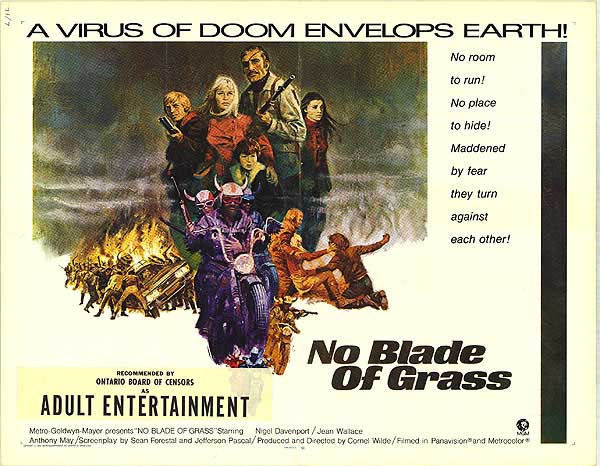
No Blade of Grass,  also adapted from a novel, is another apocalyptic tale, this one focused on environmental destruction and the attending collapse of society. In the film a virus or blight is spreading around the world that destroys all member of the grass family, that includes, wheat, rice, corn, and other cereal grains, leading to mass starvation and anarchy as the governments of the world prove incapable of meeting the existential threat. The story focuses on the trails of the Custance family who, with advance warning of the government’s plan to seal off London, flee with a friend to the safety of a large potato farm owned by the father’s brother in the north of England. Along the way they surrender civilized norms in their fight for survival becoming hard brutal people until reaching their sanctuary and discovering that their plans are upended forcing them into even more immoral choices.

Released in 1970 No Blade of Grass,  which I first heard about from a fellow panelist as we discussed environmental disaster SF stories, is an ambitious but ultimately flawed production. Partly the film suffers from too much compression in both screen time and the passage of time for the characters. With a scant 136  96 minute, and wasting quite a few of those with set up and exposition, and with a fair number of characters, the movies doesn’t have the running time to build, explore, and transform these character in an meaningful method, leaving the viewer to watch a series of scenes that only nominally follow a sequence but lacking in emotional impact. Further more the character appear to travel for only a few days and in that short time they become murderous and hard, transformations that lack any clear baseline, we hardly get a chance to see who they were before the crisis, and as such reinforce the impression that these were evil people all along. No Blade of Grass  required a more epic format and without it the film falls far short of its intended goals.

Share