Author Archives: Bob Evans

Movie Review: Hacksaw Ridge

Originally I had planned to make a political post today but last night a couple of friend and me managed to catch a late showing of the WWII film Hacksaw Ridge.

Mel Gibson has wandered into wilderness for far less than forty years after his drunken racist rant and now returns to feature film direction with the story of Desmond Doss, a pacifist, conscientious objector, Army volunteer, and recipient of the Medal of Honor for valor and courage under fires.

This movie works very well. It takes it time introducing us the Desmond, his family, and the woman he loves and eventually marries. As we journey with him through basic training and the hostile reactions his devout pacifism provokes in his fellow soldiers we come to understand just who he is and his commitment to his convictions. The film deals fairly with those who understand and those who do not presenting us with a character who truly believes in something.

The final act of the film is where it earns its title; Hacksaw Ridge. The invasion of Okinawa was considered by many to be a preview for the upcoming invasion of the Japanese home islands and the carnage, horror, and loss of life shocked the most experiences military planners. Bisecting the island a range nickname Hacksaw Ridge presented a final and terrible obstacle to the allied forces securing the island and into the maelstrom of blood, bullets, and fire Desmond goes refusing to ever touch a weapon. Serving as medic he is credited with pulling more than 70 wounded men from the battle field under utterly horrific conditions and often without any support. The battle scenes of fast, intense, and terribly graphic, but this is a case where explicit violence and its terrible aftermath is justified. Only by seeing that horror can we truly have any hope of the slightest comprehension of Desmond’s bravery and compassion.

The cast is uniformly good, many of them are foreign nationals playing Americans, and for several playing ‘hillbillies’, people of the southern mountains. Hugo Weaving, an actor who also captivates me, is fantastic as Desmond’s father, a man broken by the horror of the Great War.

This is not a movie for everyone. It is loud, it is bloody, it is gory in a way zombies film never manage, but it also speaks to the power of convictions, celebrating the courage of a man who saved lives without taking any by his hand.

Share

Oh, the Horror

So I have been working on a presentation that I intend to pitch to our local SF conventions, a history of zombie films. I’m treating the movies like an evolutionary tree and it’s been a challenge, a fun one, putting the presentation together.

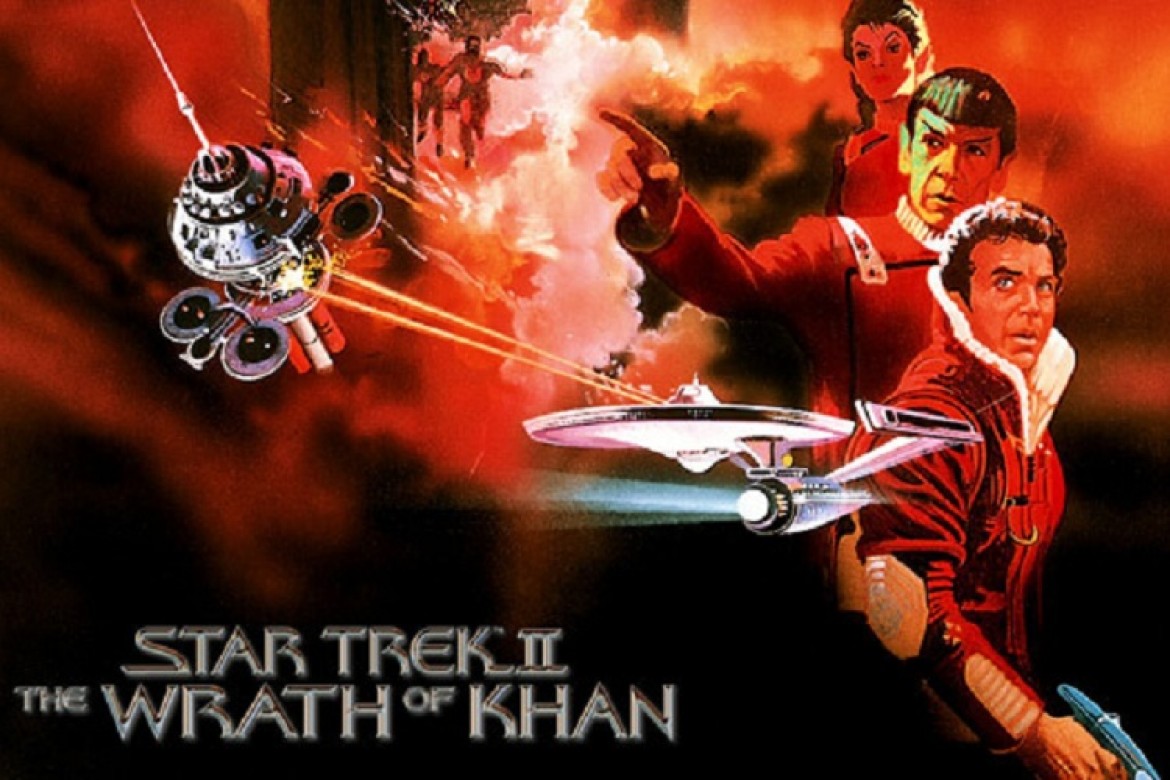
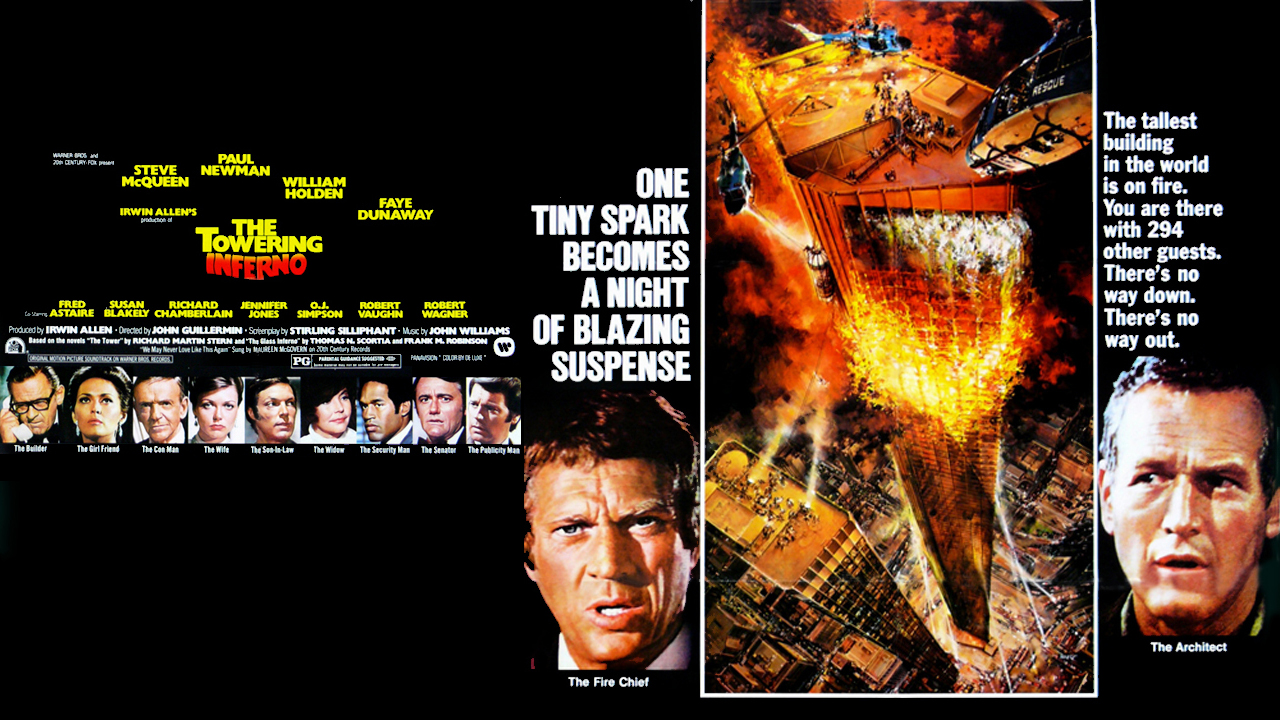
Here is one of the slide to give you an impression of how the thing is looking.

The downside has been some of the research. Now mind you no one at all is making me watch any film. It’s just that your host and narrator is a bit of a masochist.

Hell of the Living Dead, a low budget Italian rip-off movie, (they even steal who music cues from the 1979 Dawn of the Dead)truly tasked me. I couldn’t watch more than 20 minutes at a time and so it was over several night before I completed that one. From the look of it I’d say the producers couldn’t afford to have more than 8 zombie extras in any single scene. It also boasted the least convincing military special forces unit ever. From their equipment, their ‘tactics’, and utterly non-uniform hair, nothing about these men resonated as anything other than second rate actors trying to look tough. Besides insulting the military the film also offended anyone with a care for the social sciences. Truly I had never heard of naked anthropology before. It was the second most gratuitous nude scene I had witnessed. (The first goes to the Roger Corman production of Forbidden World where two female characters have a shower in order discuss what to do about the rampaging killing monster.)

I also watched Shock Waves, an early film with NAZI zombies and Peter Cushing wishing desperately he was back aboard the Death Star. Really, given nothing to do but repeat bad exposition that had already been given in a prologue voice-over, Cushing still performed like a champ and a professional. However this film was a load of slow nothing with aquatic NAZI zombies who can apparently be killed by having their eye-gear removed.

Oh well, this Sunday I go the Universal Studios Hollywood and tat will be fun and relaxing.

Share

Whose Story is it Anyway?

Usually it looks straight forward as to who is the protagonist of a story, but that’s really something that can be a little slippery.

Many people, writers included, easily mistake a viewpoint character for the main character or protagonist. George R.R. Martin has said in interviews that he was inspired by the movie Alien, which kept the protagonist hidden in plain view, for his epic series  A Song of Fire and Ice. Who’s the main character in A Game of Thrones? We don’t know yet and that is because we have such a large number of point of view characters.

But even when there is a very limited number point of view characters identifying the protagonist may still be difficult.

In the film Ferris Buller’s Day Off there is no doubt that the viewpoint character is Ferris, aside from a few scenes here and there everything we see and hear is from Ferris’ viewpoint, but he’s not the main character. He’s just the person telling us the story.

To my way of thinking the main character is the person, or persons as it can be more than one who, over the course of the story, goes through the greatest change. I think ideally the character should take an action that would have simply not been possible for them before the events of the story, In Ferris Buller’s Day Off I think it is clear that Cameron is the main character. His actions over the car and what that represents in his relationship with his father are a dramatic change and growing for his character while Ferris leaves the story exactly the same as he entered it.

When you are looking at your story think about what the character can and cannot do. I do not mean physical powers or ability either, I mean what actions do their nature inhibit and look there for the real center of the story and for your protagonist.

A word of warning however. Do not be too slavish in the application. Rules in art are rarely unbroken. For example in most detective fiction the continuing characters rarely change. Holmes and Watson remain Holmes and Watson, at least for the most part in the original source material, and are not subject to a great deal of character change.


Share

Movie Review: Hidden Figures

Because I had to stay home Tuesday to over the installation of our fiber optic ISP I has the rare chance to go see a late film at the theaters on Monday night. Hidden Figures is a historical drama about the early days of the space program when we strapped men to rockets and launched them into space with the figure worked out with pencil and paper.

Figures that it turns out were worked by a group talented, dedicated, and unsung of African-American women. Told through the point of view of three women, Katherine Johnson, Dorothy Vaughn, and Mary Jackson, the movie is a rocket ride of emotions.

Set in the early 1960s the film I think strikes exactly the right tone in capturing the racial injustice of the era. There aren’t characters hurling crude and insulting insults using verboten words, but rather the film captured the daily indignities the are principally unquestioned by most of the white characters. The grace, intelligence, and perseverance shown by the three women are levels of maturity I doubt I will ever achieve.

As a writer there are plenty of things that can be learned from the screenplay. One lesson I think is that simple human dignity is a high enough stake for your drama. It would have been easy to further fictionalize the story by maker some of the secondary character more militant, a militancy that would not be without cause, but the truth is this story had all the drama it needs.

One of the principal emotions that swept through me as I watched was anger. Of course it’s is no great thing to be anger at the racism and injustice, at the betrayal of the nation’s ideals, but I also became enraged over the waste then and today.

A nation is only as great as its people. To waste human potential is to throw away a nation’s most valuable resource. The human capital it what drives innovation, growth, and invention. Not simply in the areas of science and technology, but in the arts, in ethics, in government. To make our nation stronger, richer, wiser, and better we need people who can do that. I weep thinking about the geniuses we shall never utilize because a foolish shortsightedness.

Is Hidden Figures Oscar™ bait? After last year’s diversity controversy I don’t doubt that in part this film was approved and produced to answer those charges, and it has all the hallmarks of a movie made for the award season, but that takes nothing away from the power of the story, the talent of the filmmkaers, the emotional heft of the performances, and the importance of the themes.

Share

The Boy Who Cried Wolf’s Two Lessons.

Just about everyone is familiar with the fable of the boy who cried wolf. How as he guarded the villages sheep the boy twice raised the alarm of a wolf when none threatened, laughing as everyone rushed to defend the flock, and when a wolf actually threatened the flock and he raised the alarm for a third time no one answered. In the versions I heard the wolf ate the boy, but that it self is patently silly. The wolf is there for the sheep but we have the boy eaten so he suffers for his foolishness.

Of course the lesson everyone takes away from this fable is that you should not raise an alarm without cause lest you be ignored when danger truly raises its head.

However, I think there is a second lesson hidden in the simple story, a lesson that is missed by most listeners.

Consider the ramifications after the boy alarm is ignored that third time. The wolf, unimpeded, ravishes the flock and the village suffers a devastating loss. It is true that the boy’s false alarms created a situation where his word is doubted, but that doesn’t bring back the killed and stolen sheep.

To me the second lesson is that even though the boy has lied and is untrustworthy that does not mean there is no wolf. You must verify for yourself if the alarm is real and fake, to act otherwise is foolish and endangers your own concerns.

I think this second lesson is equally important as the first and has plenty of applicability today.

Share

Blogging Slowdown

THere’s been a slow down in my blogging this week. I ha d acouple of medical appointments, nothing serious but time consuming, that ate up some time and then yesterday my laptop decided to die.

I’m taking it in today, fingers crosses I can get away with just a new HD or such…


Share

It Must be Denounced

It is very hard to summon any sympathy for a NAZI punched in the face. I will confess that the task is beyond my empathic skills; I have no sympathy for him.

That said political violence must never be condoned, celebrated, or tolerated. That is a beast that cannot be controlled.

Last night I was discussing politics with a fellow writer. A smart and well educated man who admitted that he thought the USA right now has a real Weimar Republic feel to it. I disagreed.

I have spoke before on this blog that the depth of our instructions, established for hundreds of years are incomparable to a Republic that existed for less than twenty, but there is another very important distinction between where we are now and where Germany was in the interwar period; violence.

The Weimar Republic in it’s brief run was host to more than three hundred political assassinations, and that’s not tallying the street brawls and violent intimidation that was common, that is just the political murders.

Violence in the name of politics must never be unleashed and those who do it must be punished to the fullest extent of the law.

Even a NAZI must be protected from the rage of the mob or we are all subject their their fickle favors.

Share

Sunday Night Movie: Lights Out

It is no secret that I am a fan of horror films. One of the earliest memories I can access if of a full color bloody horror movie playing on the screen of a southern drive-in. I often tell people that as a child I did not read fiction and as such many of the beloved childhood classics were missed by me, but I recently realized that there was some fiction I read; ghost stories.

Lights Out is a ghost story and there is no doubt that ‘my’ monster is the ghost. I have tried to analyze just what it is about ghost that so fascinates me but that will require someone with a little emotional separation from the subject – me.

Ghost stories have several basic beats and structures that you generally find in common. Lights Out hits all these beats in a competent and clear fashion and yet someone remains a movie that failed to have me fully engaged.

The story of Lights Out is direct and straight-forward. Rebecca is the estranged daughter of Sophie, living on her own over a tattoo parlor unable to reconcile with her mother over her father that, without any word then or since, abandoned the family a decade or more earlier. Now Sophie has remarried and Rebecca has a small half-brother to whom she is devoted.  It is into the volatile mix of family drama that the ghost, with lethal intentions, appears. The gimmick to this movie is that ghost only appears in darkness and so flashing lights creates the image or a spectral figure that appears and vanishes with each flicker.

The plot moves forward to a clean logical progression. The characters’ motivation is understandable and believable. The suspense and shock are delivered in an adequate manner and yet someone the film never caught my undivided attention. IT may be that the mystery of the ghost was not quite deep enough to provide a sense of revelation when it was explained. It may be that the exposition was repeated and it wasn’t a terrible difficult concept to understand. For whatever reason the film was fun enough to watch but not compelling. At times during the climax I found myself wondering just what was the lumen cut-off that dispelled the ghost.

It is not a bad movie and certainly it had a few curves in the plot. A few things that would have been quite cliché they avoided and the resolution, though flawed because it was not driven by the protagonist’s action, brought everything to a satisfactory conclusion.

Overall – worth the time on Disc or streaming, a C grade passing but not memorable.

Share

Protagonists, Heroes, and Anti-Heroes

One of the frustrations and beauties of the arts is that they are subjective. There is no quantifiable standards to most of that arts that can be applied for a good/bad judgment, it is matters of taste and opinion. What follows here are my opinions on how you differ the roles of Protagonist, Hero, and Anti-Hero. I realized that my definitions are not quite in line with what most people use and that’s just fine, but if they make sense to you, please feel free to use them.

When we talk about story these three terms get tossed about quite a bit; Hero, Protagonist, and Anti-Hero but I don’t feel everyone is using them in the same manner. I am going to discuss this in relation to the lead character of a story, but side stepping just what it means to be the lead character. That is a subject for its own essay.

A hero is a character whose goals and means are aligned with what is considered by society to be good. Certainly Superman fits the definition. His goals are justice, to protect those unable to protect themselves, and to bring wrong doers to justice. To achieve his goal Superman will not do evil. He defines that as no more violence than is required, to not kill, and so on. Many western ‘good guys’ are heroes. Will Kane in High Noon has the goal of saving the town from Frank Miller, and you know what sort of man Frank Miller is. However to achieve his goal he will not blow up the train with innocents aboard, he will not hide and gun Frank Miller down from ambush. The code of the hero binds him in means as tightly as it does in goals.

A protagonist is simply the lead character in a story who has a major objective and faces serious opposition in achieving those objectives. Morality has no place in the assignment of the category ‘protagonist.’ A Hero is often a protagonist, but a protagonist need not be a hero. Consider for example Walter Neff from the classic film Double Indemnity. His goals are clear, he wants the girl and he wants the money, these goals by themselves are neither good nor bad, but to achieve them he is willing to commit fraud and murder. Neff is no hero but he is clearly the protagonist.

Anti-Hero is the term that I think is most abused. Too often I see it applied to a protagonist that has amoral or immoral means and objectives. I have people describe Walter Neff from Double Indemnity as an anti-hero, or Walter White from Breaking Bad, but these characters while protagonists are not anti-heroes as I see that category. To me the anti-hero is someone who still has the hero’s objectives, but has abandoned the restrictions on how those objectives are achieved. A classic example of this is Harry Callahan in the Dirty Harry franchise of films. Callahan in Dirty harry never is self-serving, his goal is a societal good the reduction or elimination of crime, particularly violent crime. However to get to his end Harry will use any means at his disposal, torture for example ceases to be an objective wrong and becomes tool the anti-hero deems allowable for his just goal. Westerns and police drams lead the way in placing the anti-hero in the forefront of American Culture but the concept of a hero whose hands are not tied quickly spread fast throughout popular culture that now the very thought of a hero who will not make the ‘hard choices’ to save the day feels antiquated. Think about how much Captain America seems out of step with the world he now inhabits.

Share

Thoughts on HBOs WESTWORLD

I have now watched all the episodes in season one of HBO’s SF series Westworld; what follows will have spoilers about the entire season and as such if you have not watched the series and you want to remain, like the hobbits, unspoiled you should stop reading now.

I was certainly intrigued by the idea of taking the 70s Michael Crichton film and expanding it a full television series. For those unaware of the original movie, robots in a theme park malfunction going on a murderous spree until we are reduced to one robot and one human in a game of survival. Really it has a very Terminator feel to it and it is a decent film but the plot is rather thin for a series.

Jonathan Nolan, brother and frequent collaborator with Christopher Nolan teamed up with his wife Lisa Joy and J.J. Abrams to create this visually stunning, expertly produced, and deeply plotted show. The talent involved is tremendous and the story arc as it progresses through the 10 episodes is intelligent, engaging, and ultimately unsatisfying.

Why the series let me down is very much connected to my last posting on Promise and Flavor in storytelling.

When the first episode open we are following Teddy, a likeable protagonist with what appears to be a good strong moral sense. He quickly becomes reacquainted with Dolores, a farmer’s daughter who sees the beauty in this world and it si clear that they have a history. That night bandits attack Dolores’ farm, Teddy rides to the rescue and defeats the thugs, but then the twist occurs. The Man in Black arrives, defeats Teddy because Teddy is a robot and unable to harm the Man in Black who is human. Having defeated Teddy the Man in Black takes Delores to the barn to sexually assault her.

What does this opening promise us and what flavor are we led to expect?

Playing with our expectations, Teddy isn’t a “guest’, a human playing a game, but a ‘Host’ sets up that this is going to be a story of facades and hidden truths, Dolores’s optimistic views that their is beauty in this world promises an affirming story.

By the end of episode 10 things are very different. We have learned that The Man in Black is William, a guest who 30 years ago fell in love with the host Dolores but the park has awaken and or revealed his true darker nature as a sadist and rapist. Humans turned out to be hosts, hosts overcoming their programing turned out to be puppets playing out someone else’s agenda, the park’s brilliant creator, Dr Robert Ford’s assertion that humanity is a vain, pointless thing no different than the hosts goes unchallenged. The series ends with a massacre of the guests, which Dolores not only take part in but also instigates and leads.

The story’s end is consistent and doesn’t violate any internal logic, the production was outstanding and the performances truly marvelous, but I was left with a bad taste. This ending so dark and cynical seems at odds with the promise and as such I was repulsed by the conclusion.

I know this is not squeamishness on my part. No one who loves film noir can be against cynicism in stories. The deeply dark and cynical movie Night Crawler works for me, but its tone and promise are consistent from start to finished and I do not think this is the case with Westworld

Share