.
Last week I watched a YouTuber movie reactor watch Soylent Green for the first time. That film was the very last movie with Edward G. Robinson a film star whose career stretched back to the very start of the sync-sound era of motion pictures. After viewing the reaction, I had a hankering to watch another film with Edward G. Robinson and instead of pulling Double Indemnity from my collection I decided to go with the movie that launched Robinson as a star Little Caesar.
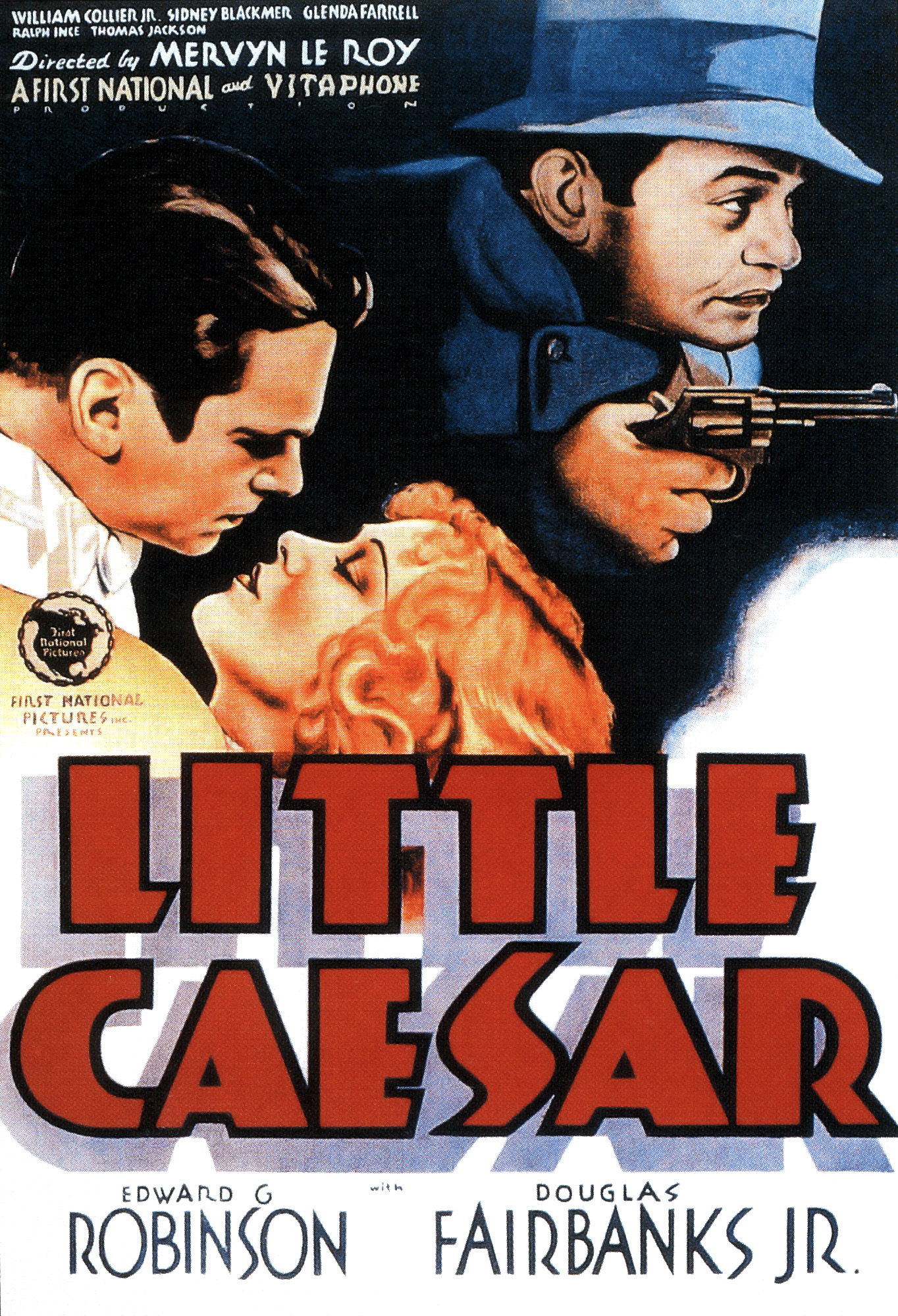
Warner Bros Studios
Released in 1931, Little Caesar is most definitely a pre-code movie. We meet Caesar Enrico ‘Rico’ Bandello (Edward G. Robinson) as he and his buddy Joe (Douglas Fairbanks Jr.) rob a gas station, in the process murdering the attendant. Unlike Joe, Rico has no traces of remorse as they eat supper in an isolated diner following the horrid crime. Ambitious for more than petty robberies, the murder isn’t even on his mind, Rico drags Joe to the ‘big city’ where he quickly joins a mob and begins his meteoric rise (isn’t it ironic that we use ‘meteoric rise’ when meteors are most known for falling) to the top of the city’s organized crime community followed by his equally swift downfall.
Little Caesar is part of the Blu-Ray boxed set The Ultimate Gangster Collection. With its release in 1931, this film is an example of just how quickly Hollywood adopted synchronized sound into their productions. While the quality of the sound still needed improvement, the production capability was there and aside from the occasional use of title cards as deployed in silent movies, Little Caesar looks and sounds very much like the films that would follow for the rest of the decade. As a ‘pre-code’ movie, Little Caesar is a bold tale that follows its lead character as he murders his way to fame and fortune with a downfall that was not engineered by the police forces of the ‘big city’ but rather by betrayal from a friend.
Of course, this was the movie that made a star of Edward G. Robinson, and while he did play gangsters again, most notability in Key Largo, Robinson escaped typecasting and his career stretched from the 1930s into the early 1970s. If you watch classic Looney Tunes cartoons and see Bug Bunny facing off against a gangster, that gangster is a parody of Robinson’s performance in Little Caesar, which set the template for the genre.
At an hour and seventeen minutes, Little Caesar had little time for a ‘realistic’ climb to greatness for Rico and instead swiftly moves the character along, only stopping for an occasional bit of detailed action. Aside from Rico and Joe, the characters are flat, serving more as elements of plot than living breathing people and one should not go into watching this film with modern sensibilities about writing and psychological realism, but one should watch Little Caesar.
