I am quite tardy in posting this essay, but I did finish the original franchise out as I had intended.
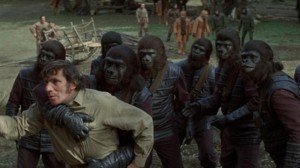 So after the racie war implications driving the plot of Conquest of the Planet of the Apes, 20th Century Fox, fearful that they had driven the kiddie away, took the next, and final, installment of franchise in a lighter and more optimistic direction. The screenwriter for the previous two sequel relinquished his duties, in part due to the dark nature of his proposed script and in part to ill health, while the husband wife team that penned the screenplay for The Omega Man came onto the scene.
In many ways this film is the most direct sequel of the entire franchise. Where Beneath the Planet of the Apes introduced a new astronaut the Ape Planet, nothing in the first film set up the silly concept of a rescue mission. Escape from the Planet of the Apes heavily violates continuity by introducing an unknown Ape genius “Milo” who is able to repair and launch Taylor’s crashed spacecraft. Conquest played buffet with elements put forth in Escape, picking and choosing what they wanted to tell a story with some of the same characters, and throwing away anything that didn’t fit. (retconning long before the term became standard in fandom.) That is not the approach with Battle for the Planet of the Apes.
Battle takes the situation and characters established Conquest and continues the story, playing mostly fair and extrapolating from the scenario already in motion. Despite this, or perhaps even because of it, Battle for the planet of the Apes is the least ambitious, least transgressive, and least daring of the franchise. The budget was again cut, and the situation reduced to the most simplistic elements. A colony of apes, lead my Caesar from Conquest, is building an ape community with humans as second-class citizens, but not slaves or property, amid the ruins of a nuclear war. Racial animosity against the human divides the apes, while a colony of surviving humans, scarred by the constant exposure to radiation in the bombed out city, led by a brutal security man from Conquest, plots a war of ape extermination.
The too small budget hampered the production, reducing the screenplay to one rather lackluster battle and a few set locales. The film ends on a note of optimism, putting it in direction conflict with the tone of the series while implying that the events of the first film were no longer possible.
While the franchise limped on with a short lived and poorly conceived television series, this film represented the end of the series until the terrible attempt at a reboot with Tim Burton’s Planet of the Apes. That failed and the franchise again went dead until the next film Rise of The Planet of the Apes, a success which in many ways was a rebooting of Conquest in that it told the story of how the planet got started on the path toward humanity’s fall and the rise of the apes.
This year saw the next film in the new franchise, Dawn of the Planet of The Apes, and in reality it is a rebooting of Battle, but done with real style, a real budget, and far better written. I will be interesting to see where this new franchise series goes.

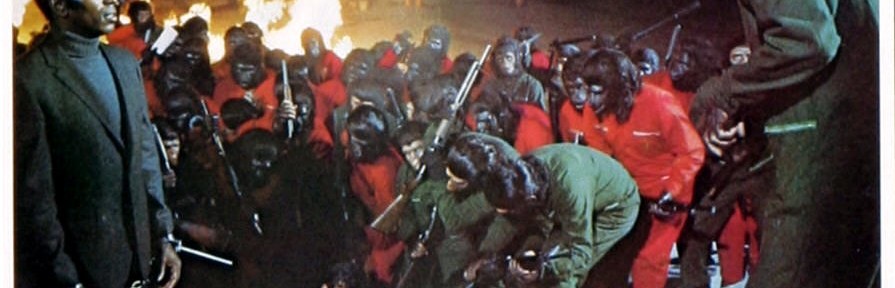
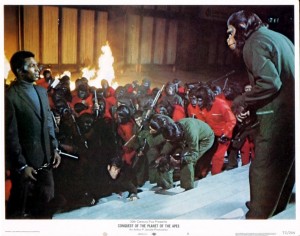 favorite film of the series, Conquest of the Planet of the Apes. While I love me Planet of the Apes and it is wonderful film, more often than any other in the franchise I will pull out the blu-ray of Conquest and sit back to watch it over and over. Once I did get it on Blu-ray I also stopped watching the theatrical cut and exclusively watch the unrated directors edition. When the film was released in 1972 they had hopes of getting a ‘G’ rating, but thee scene of revolution were so intense the studio feared they might get an ‘R’ and ordered the ending re-written and the footage edited to be considerably less graphic.
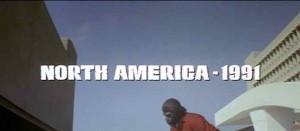 progressed from pets, replacing the cats and dogs that died in a global pandemic into a servant and slaves. Armando, the kind hearted circus owner last seen saving the time-traveling apes’ baby has returned to the city, bring the circus for a need tour, and along with it the now adult intelligent ape Caesar. (Whom was named Milo as a baby in the last film but hey retcon is nothing new.) thing go badly and before long Ceasar is a slave himself, alone and friendless, subject to the same brutal treatment as his ape brothers and sisters, including the producer’s wife in appearance number 3 in the ape movies. In the end Caesar lives up to his new name and leads a revolt overthrowing the fascist power structure in a brutal, bloody, and revenge filled night. The film ends with images of the city burning and nearly all of our principle human characters dead.
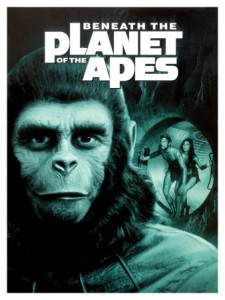 Beneath the Planet of the Apes is the hastily consider sequel to 1968’s smash box-office success Planet of the Apes. However due to financial troubles at 20th Century Fox and boardroom infighting the film suffered from a trouble production from the get-go. Heston, the star of the first film hated the very idea of any sequel and only reluctantly agreed to participate as a favor to Daryl Zanuck, but even this came at the price with Heston insisting that his character of Taylor — spoiler alert stop reading if you care, serious stop reading — be killed off in the story.
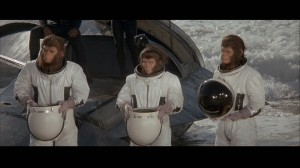 I can clearly remember seeing Escape from the Planet of the Apes at the Sunrise Theater in Fort Pierce Florida. That was 1971 so I would have been 10 years old, and I remember laughing a full belly laugh as the ‘unmasking’ scene at the film’s open. Escape faced the challenge of crafting a continuation of the story when in the pervious film not only did your principle characters get killed, but the entire freakin’ world was turned to ash as a gravely toned narrator informed the audience that the world was now dead.
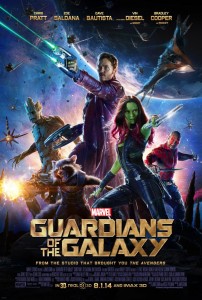 Guardians of the Galaxy (GotG) must count among the strangest concepts ever used to launch a major franchise. GotG concerns a collection of criminals and riff-raff that are thrown together with conflicting motives with the fate of the galaxy resting on their actions.
 Stanley Kubrick’s brilliant and baffling masterpiece, 2001 is truly not only one of the most influential SF films of the 1960s, it is one of the most influential films of any genre of all time. It is groundbreaking in its style, scope, depth of concepts, technical mastery, and sheer artistry. Coming at the end of the decade, this movie raised the bar on what could be expected of a science-fiction film. Where Forbidden Planet brought in literature, 2001 demonstrated that SF, the genre of ideas in print fore decades and decades, could also be the genre of ideas on the silvered screen. Eschewing a traditional plot driven narrative, this film took us from the dawn of humanity through its eventual evolution beyond the cradle of Earth. It did this will a level of technical competence that forever changed what would be expected of a major SF film and set the stage for the dazzling spectacle in the next decade of Star Wars.
 film! Yes it is both of those things, a horror film, just as Frankenstein was a horror film, and it is not just a zombie movie it is the progenitor of all modern zombie movies. It is also, quite clearly, a science-fiction film. First off, co-writer and Direct George A. Romero has mentioned in interviews that the inspiration for this film was Richard Matheson’s novel, I am Legend, a story about a world overrun by scientifically explained vampires. In the film Night of the Living Dead, quite unlike Romero’s other zombie films, there is a clear explanation given for the rise of the dead and their transformation into murderous cannibals – radiation from the Venus probe. This radiation is what ‘activates’ the ghouls’ brains (the term zombie is never used in the movie and was grafted onto these revenants later) and it is what destroyed the brain destroys the ghouls. The cause and explanation is grounded in a scientific reason, though it is terrible science. So, like Dr. No, this is a movie that one rarely thinks of as SF, but clearly falls within those borders.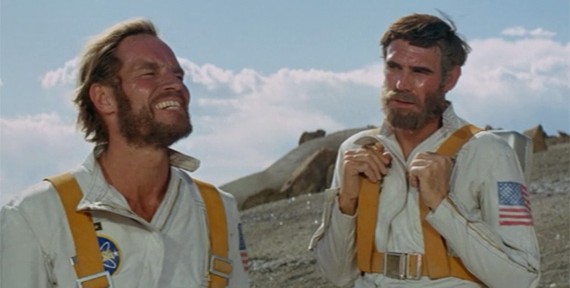
 Released in 1968 Planet of the Apes would certainly be on the short list for best SF movies of that or any decade, but I can tell you that it is not one of the two films I selected as most influential from the 1960s.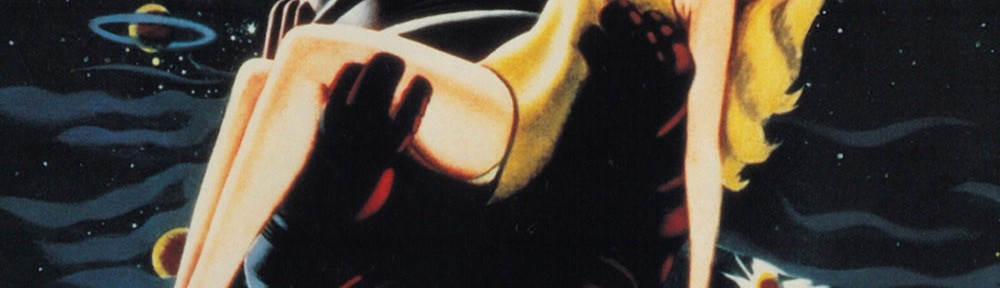
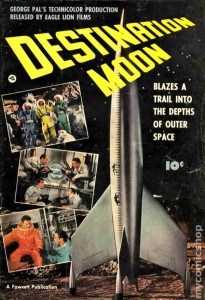 Those who know me might suspect I selected this film because of the close association with one of my favorite SF authors, Robert A. Heinlien, but they would be wrong. This film, as a movie, is in my opinion flawed, but I am not selecting for best SF movies in each decade but most influential and on that count there can be no arguing with Destination Moon. This film, released in 1950, was a box office hit, both domestically and over-seas. It launched George Pal into his love affair with SF film, and for that alone it is an important film but it also launched the SF film crazed of the 1950’s. Without this film we do not have the rich fertile treasury of SF films from this decade and without those movies we do not have modern SF cinema. Destination Moon, while dry and flawed, is one of the most important SF films of any decade.
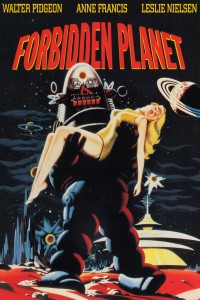 This selection should be less surprising. It is a well know movie, beloved and rescreened often. I had the good fortune to catch it in a theater and the special effect and images still hold up quite nicely. The characters are quite a bit dated, very much the writing is a product of the repressed 50’s, with the Production Code still in full effect, but this is still a movie well worth watching. It is influential because until Forbidden Planet science-fiction films were not literature. Most SF films were heavily plot based, being either adventure stories, such as Destination Moon’s exploration of the adventure inherent in a trip to the moon, allegorical story, or arguments for a particular worldview, such as The Day the Earth Stood Still. Forbidden Planet, an SF adaptation of The Tempest took the SF movie, with credible science, beyond the solar system and into the soul of humanity. It asked, with typical MGM glitz, deep questions about revenge and power and to price might they extract. In addition to opening up SF film to deeply internal stories, though they might be about aliens and robots on the surface, Forbidden Planet also inspired Gene Roddenberry’s Star Trek. The production design of the movie strongly influenced the look of the television series, and the very concept of a paramilitary exploration of new worlds and new life-forms start here. There is no doubt that you can draw a line from Forbidden Planet, through Star Trek, to many shows and films today.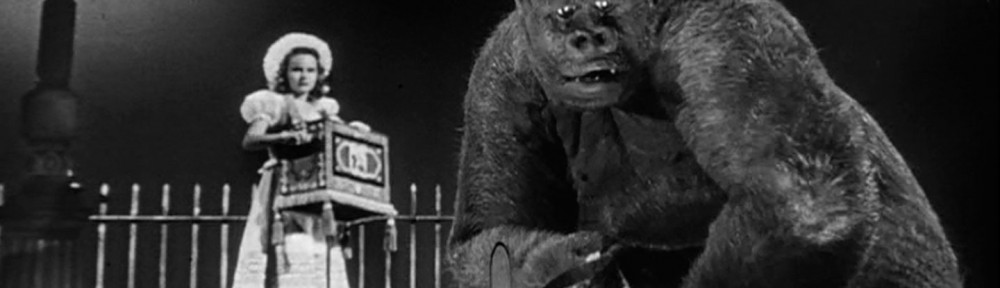
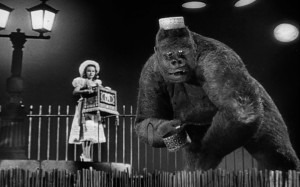 My selection is 1949’s Might Joe Young. It has been called, and rightly so in my opinion, a King Kong knock-off. It is the story of a young woman and her pet 12 foot tall gorilla. They are brought out of the wilds of Africa to the wilds of Hollywood as entertainment for a nightclub. The ape goes mad, there is destruction and terror in the streets of Los Angeles. All in all not a terribly original story line, it features one of the stars of the original King Kong, a truly influential film, and the special effects were headed up by Willis O’Brien, the technical wizard who did the effects for Kong.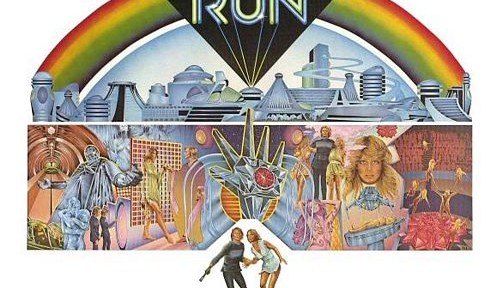
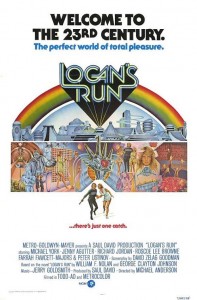 Logan’s Run is a 1976 Science-Fiction film made before that great behemoth Star Wars derailed Science-Fiction films for a generation. The film, based on a novel of the same name written by William F. Nolan and George Clayton Johnson, is set in a utopian 23rd century. Crime, disease, hunger, war, and pollution, are all problems of a literally forgotten past. The story is set in an unnamed city, protected from the war-torn hell that scars the Earth by massive domes, where the citizens lead lives dedicated to frivolity and hedonistic pleasures. Families no longer exist, and people are raised in crèches without ever knowing their parents. All their needs are met, the city is government by a benevolent computer system called the Network, and it all works seamlessly.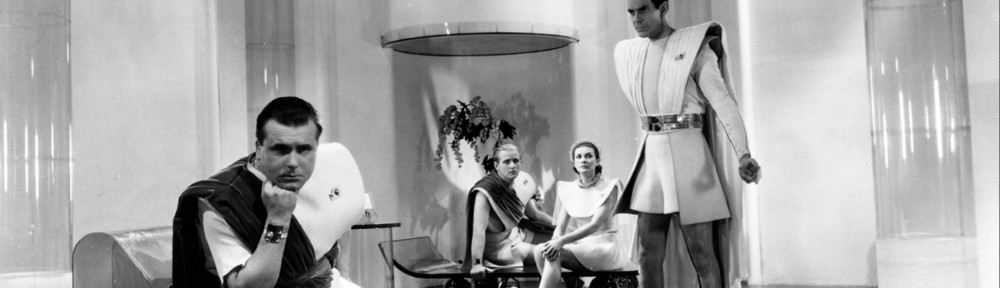
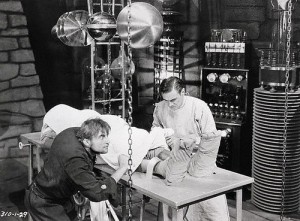 Frankenstein – 1931 – James Whale