Tag Archives: Movies

Movie Review: Maggie

Yesterday was massive movie day here at my condo. During the afternoon I have a few friends over, ordered a couple of pizzas, and we watched three classic Universal Horror Films. (The Invisible Man, The Wolf-Man, & The Phantom of the Opera [1943]) Afterwards we spend a few hours playing board and card games, making for a rather enjoyable day just on that, but there was an interesting discovery still waiting for me.

The zombie genre has seen all sort of films mining this public’s fascination with the terminally hungry. We have the zombie movie as horror, (Night fo the Living Dead-1990), social commentary (Night of the Living Dead-1968), comedy (Return of the Living Dead), satirical commentary (Dawn of the Dead-1979), Romantic-Comedy (Shawn of the Dead), and many more but last time I watched for the first time a film that was a family drama set in a zombie apocalypse, Maggie.

Maggie stars Abigail Breslin, Joely Richardson, and Arnold Schwarzenegger . The set-up and the setting are stark and simple. A father (Arnold Schwarzenegger) is trying to care for zombie virus-infected his daughter Maggie (Abigail Breslin) while dealing with the strain of a world collapsing around him and the forces tearing at at his blended family.  Nearly all of the film takes place at the family’s isolated farm, but it is not isolated by hordes of the undead, but rather the collapse of the infrastructure is isolating people as the world slowly descends into zombie fueled chaos.

There are no action set pieces, there are no massive scenes of the undead tearing into people, there are no scenes of high-velocity destruction as fight off faceless hordes. Instead this a story about people caught in emotionally impossible situations and the terrible decisions and unavoidable fates that lie before them. While this story uses zombies and turning into a flesh-devouring automaton as their plot devices the themes apply equally well to anyone watching a loved one suffering under a terminal condition.

This is film also surprises in the range of acting talent is displays for Arnold. This is a quiet movie about emotional hell and he plays it well. Who knew he could cry on cue? Much like Boggart and The Caine Mutiny, this is the sort of story he could not have made under a studio system.

Maggie had a limited releases this year and is currently available on DVD. It’s worth the time.

Share

Another Benefit from the Internet Age

Clearly there are nearly countless benefits from the internet and the vast and myriad  ways we have to spread information these days, but there is one in particular I want to look at briefly in this post.

I have been a cord cutter (someone without cable television service) for several years. All of my video entertainment arrives on disc or by way of a streaming service. For the last couple of weeks I have been watching various film noirs on the HULU plus service. Some were good, some were not, but the general mood and atmosphere I am marinating in will be helpful in crafting my SF/Noir novel.

I think all of the films I have been watching on HULU are ones that fell into the public domain when the original rights holders opted to not extend their copyrights. Just a few years ago that would have cast these unprofitable properties into the trash bin of entertainment history, subject only to the occasional late night broadcast as part of a station’s ‘Movie ’til Dawn.’ (And not even that as the infomercial killed that.)

Now, thanks to streaming and the status of public domain, these films are available to new audiences. (I particularly liked The Red House. Both a noir and a snap shot of rural living in the mid 40s.)

Many more public domain movies are available on Youtube and sites such as Public Domain Movies.com. True more than 9/10s of these are truly terribly movies, but one usually pans through a lot of mud to find a single nugget.

Share

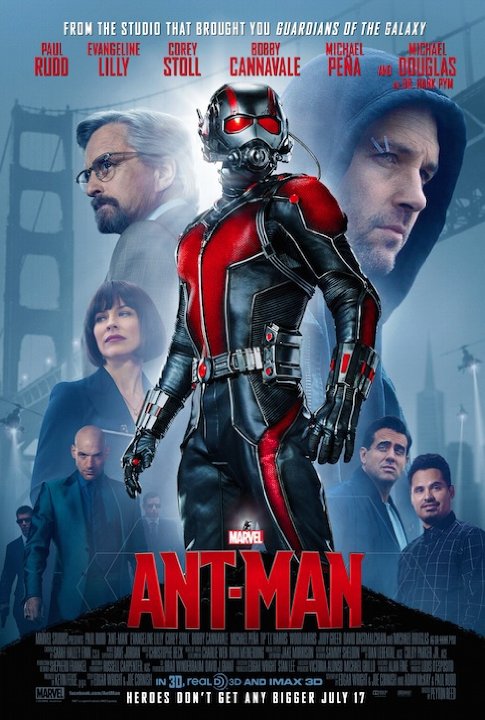
Movie Review: Ant-Man

The Marvel Cinematic Universe moves into Phase III with Ant-Man. (Phase I ended with The Avengers, Phase II with Avengers: The Age of Ultron and Phase III will culminate with Avengers: Infinity War Part 1.)

AntmanAnt-man is a film with a  troubled history. Numerous re-writes and replaced directors rarely yield a classic movie. While that trouble it evident in a somewhat schizophrenic storyline, this film is not a failure. The characters are likable, the action interesting and different, and the intersection with the Marvel Cinematic Universe consistent and  on point. There are nice call-backs to the earlier films with appearances from characters such as Agent Peggy Carter and Howard Stark. The digital process pioneered in Tron: Legacy that allows older actors to portray younger versions of themselves has matured  allowing Michael Douglas to play troubled genius Dr. Hank Pym across a span of ages. The film also pays tribute to the twisted history of the Ant-Man character, paying respect to both the Hank Pym Ant-Man and the new Ant-Man Scott Lang.

In the movie Dr. Hank Pym, decades after being forced out of his own company and from the international security organization S.H.I.E.L.D. is forced into action, replaying upon his daughter and an idealistic ex-con, Scott Lang, to prevent devastating technology from fallen into evil, insane hands. Scott Lang, played in a fairly likable comedic tone by talented actor Paul Rudd, struggles to find himself and a way back into his family’s good graces while dealing with becoming the newest hero in the expanding MCU.  In the end, it is friendship and ingenuity that save the day.

The film is serviceable and I enjoyed the two hours watching it, however, more than once it falls into formula. There is a cliche, well worn in genre films, where an experience or warning that occurs early in the film establishes the method for the hero’s final victory. This was subverted nicely in 2008’s Iron Man when the ‘icing problem’ Tony encounters during his first flight as Iron Man is only part of the climax’s resolution and not the totality of it, In Ant-Man the telegraphed information, plays straight into the hero’s victory in an unoriginal manner typical of the cliche. that said this is a problem that is likely only to be visible to those already deconstructing plots and stories.  Over all I think most people who enjoy the popcorn fun of summertime superheroes will enjoy Ant-Man.


Share

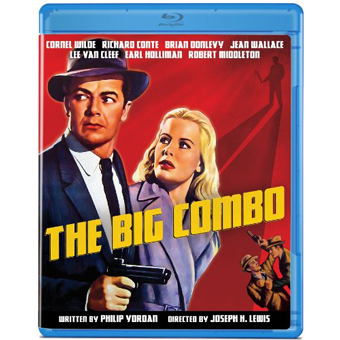
Quickie Movie Review: The Big Combo

My current novel in progress is a science-fiction noir and to put myself in the right mental head-space for plotting it out I am watching a lot of noir films. This week I discovered one that is apparently a favorite of Joss Whedon, The Big Combo. Whedon nods to this movie in his feature film Serenity by naming  twins character duo after a two-man button team from this film, Fanty and Mingo.

Big ComboThis film follows a straight-laced police detective, Leonard Diamond as he tries to bring down an underworld Boss, Mr. Brown. Brown is played with oily smoothness by Richard Conte who played another slick underworld boss in the classic film The Godfather.

For most of this film, I was engaged, but not enthralled. The characters were likable enough and the writing and the production competent enough to make for a watchable experience before bed. (I like to watch 20-30 minutes of stuff to unwind after writing and editing and then go to sleep.)

I didn’t understand why someone of Joss’ talents might have a special place for this film until about an hour in and then the plot twisted into a new and novel shape. Most movies I can see their ‘surprises’ long before the actual reveal. It goes with plotting your own, but not this time. This one, and clearly I am not going to tell you what it comes out of the blue and yet was not forced or gimmicky.

The film has fallen into the public domain so you can likely find it in all sorts of places. I streamed it from Hulu. It’s less than 90 minutes and worth at least one viewing if this genre interests you.


Share

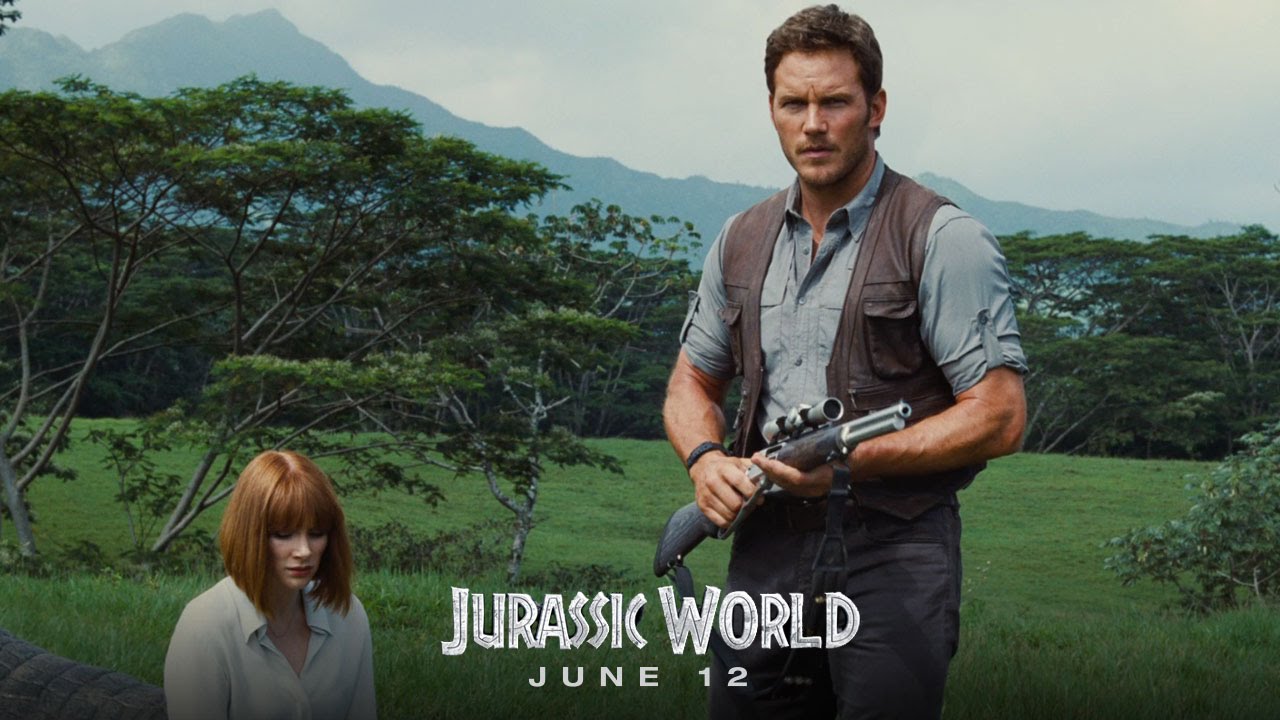
Movie Review: Jurassic World

Friday Night my plans for the night fell through and after a pleasant evening spent with my jurassic worldsweetie-wife I went to the theater and watched the newest installment in the ‘Jurassic‘ franchise. Of the previous three films I have seen two of them in the theater and Jurassic Park III I watched on blu-ray when I picked up the boxed set at a decent price. So I am a fan but not a particularly hard core one. I was not determined the watch this installment on the big screen, but the chance arose and I do believe that a film is best viewed in a proper theater.

Short review: I enjoyed it but I did not love it.

The film is set twenty years after the original Jurassic Park. Jurassic World is a going concern having made real Hammond’s vision of a zoo/theme park with living biological attractions. The story borrows and lifts from previous franchise themes and characters, but in a simplified manner reducing all the people to stock characters with little to inject life into them. Protagonists Corporate characters are cold business people who have a change of heart learning what is really important in life. Child characters are siblings living under the threat of a family dissolution. Scientist characters are haughty in their arrogance in the face of nature and disrespectful of their creations. (There’s an argument to be made that the I-Rex is really a new version of the Frankenstein tale.) Villainous military characters see only the potential for war and death, though the concept of V. Raptors replacing soldiers or drones ranks for stupidity right up their with the company’s weapons division obsession w the Zeta Reticulian parasite in Alien. Chris Pratt’s character is the wise uber-competent hero who is rarely wrong and needs no life lessons to learn.

All that said, and these are real flaws, the films was fun in a theme park kind of way. (I was also amused just how much the set of Jurassic World looked like the theme park Universal Studios.) the film pretty much jumps to action with just minimal set-up and once the action starts, it runs at full speed, pausing occasionally for nods and camera-winks to the original film, and then right back to the scientifically implausible I-Rex and her need for violence.

If you like films with lots of action, and you can tune down your disbelief enough this film is enjoyable, but not one worthy of repeated viewings.

Share

Classic Universal Horror Movie Mini-Marathon

So last weekend I had a couple of friends over and we had a mini-marathon of a few select films from Universal Classic Horror movies. There were three of us and we each selected one film from my new 8 movie Blu-ray boxed set.

Watching in release order we started with Frankenstein (1931).

The second classic horror film produced by Universal Frankenstein followed the boffo box office hit Dracula. Boris Karloff, a working actor at Universal found his star making role in his mime performance as the monster. Possibly more than any other production this film set the image in people mind’s of the sympathetic monster. Tormented by the lab assistant Fritz (Not Igor, Ygor was not to appear for another two films.) the monster is presented as being placed in a incomprehensible world of cruelty and persecution. One elements I do wish other filmmakers take away from this production is how quickly it gets into the meat of the story. When we meet Henry Frankenstein at the films start he is already in the grips of his obsession. We do not waste a quarter or more of the screen time explaining why he has the obsession, exposition that only drags back the force of modern production.

The next film up was The Mummy (1933)

Another franchise launching film again staring Karloff, now billed as Karloff the Uncanny, The Mummy stands apart as a movie monster that is not in someway based upon old European myths. The nation, nay the world, had been gripped by Egyptian fever in the 1920s and this fascination had yet to die  away at the start of the sound era. In 1999 Universal re-launched this franchise with a remake which relied heavily on elements from this film and to a lesser degree from the original sequel The Mummy’s Hand. While the 1999 film presented things with a large dose of camp and world threatening danger, the 1933 film is more tightly focused dealing with danger to just one person and an atmosphere of danger and horror rather than action and effects.

We finished with Creature From the Black Lagoon (1954)

My favorite of the classic Universal Horror movies, Creature is the most recognizable as a modern monster/horror film. Presented without the gothic overtones found in the other movies, this is a tale of scientific exploration and evolution’s dead-end branches. Chasing an amazing fossil find a small team of scientists quickly finds themselves trapped in the South American Jungle, somehow with an always heard and never seen kookaburra that must have gotten lost from Australia, fighting for their lives against a amphibious humanoid with deviant tastes.

Share

A bit of music

And answering a very minor debate from last weekend….

youtube placeholder image

Share

Still waiting

The truth of the matter is that publishing is a game of waiting. However setting aside anxiety attacks and the like, it’s been a fair pleasant couple of week.

I’ve been reading up on he 5 act structure and how that applies to film writing. Naturally I have also been looking to apply it to prose, particularly novels. I think that there is a lot of overlap in story structure between novels and screenplays simply because both are trying t tell a story. The differences come from the nature of the mediums. This past Sunday and Monday nights I watched one of my favorite films — Double Indemnity — but taking notes in how I thought it broke out in five acts.

I have to say that it fit five acts like a well made glove. (Or as Barton Keyes would have said, ‘it fits together like a watch!’) — spoilers ahead —

Act One is set-up: We introduce the characters and their basic problems and nature. For this film act one ends when Neff, our main character understands that what Phyllis is interested in is r and he wants no part of it.

Act Two Thing go into motion: Despite his intention to keep clear of it, Neff is seduced by Phyllis and the act ends with his decision to help her murder her husband, I think it is vital that the final element of the second act is a choice made by the main character versus an external event.

Act Three Crossing the Rubicon: Phyllis and Neff murder her husband, following Neff’s detailed plans for ‘crooking the house’ The act ends with Neff going home but with the silent steps of a dead man.

Act Four Everything spirals out of control: Things go wrong and the situation spins out of Neff’s carefully plotted plans. Keyes has his hunch that the death was murder, the victim’s daughter shows up with alarming evidence, and Phyllis stops being the passive follower and shows she’s unwilling to do as Neff advises. The act ends with Neff learning that Another man is seeing Phyllis.

Act Five Resolution: Act five starts with Neff spying on Keyes to learn that Keyes suspects the other man as the murder. Neff puts into place his plan to set up the other man and remove Phyllis from the picture. Because this is noir and there was the Code to deal with, neff cant get away with his plan. It goes wrong and he pays for his crimes. (interestingly until I read about the behind the scenes on the film I always had assume Neff was dying in the final scene, but originally there was to be a gas chamber scene that was filmed but cut out.)

I have to say that the five act structure worked incredibly well here I plan to experiment with it in my own writing.


Share