Craftsmanship Takes Time

So today Universal, the people who originated the shared cinematic universe, released The Mummy, an attempt to launch a new cinematic universe to drink from the fire hose of money that Marvel discovered.
But the reviews are saying that The Mummy sucks.

And Marvel did not discover that fire hose of money, Marvel laid the pipes, installed the plugs, corrected defects, and the opened the valves.

Oh, and Iron Man did not suck.

In 2008’s Iron Man there are hints of the hopes for a Cinematic Universe, but those hints never upend the storytelling of Tony Stark’s journey to self-discovery. During the play of the film the biggest hint is SHIELD Agent Phil Coulson, a part that looks utterly forgettable on the page but brought to fantastic and sardonic life by Clark Greg. Hell, they don’t even call it SHIELD until the end of the movie, making the long, cumbersome full name a jibe for characters to play off and a hidden bonus for fans of the property. The most famous hint of the wider universe Marvel hoped to bring to life didn’t even happen until after all the credits had finished  when Stark met Fury.

If you never watched another Marvel Cinematic Universe movie in your life, Iron Man would remain a self-contained and fully satisfying film. This is putting the story and the movie first, ahead of corporate plans, but more importantly it is understanding that quality can rarely be rushed.

Warner Brothers, with the suits meddling in the productions, has tried to rush to their big shared universe and to date the movies of that cycle have produced one watchable film, and it just came out last weekend. (The Christopher Nolan Batman movies are lovely but were not designed as part of the DCEU and they do not graft well onto the larger framework because they are best viewed as a stand-alone series.) Mind you, WB/DC has a rich history and mythology to draw from, half the work is done, and still they are botching the project. Universal seems to think you can just slap together any series of movies, force linkages, and that will make people line up at the box office.

The Mummy, classically, is a horror story. (In fact the original film was mainly a rip-off of Universal’s big hit Dracula.) Later, as the Universal’s horror movies stressed the monsters over the horror they began having their creations battle each other, Frankenstein Meets the Wolf-man, and so on, but these films played more and more to children. This incarnation of The Mummy seems to have lost all elements of being a horror story and is instead an action movie. One, if reviews are to be believed, that spends considerable amounts of time delivery poorly written exposition that does not even explain this movie but hopes to establish their ‘Dark Universe.’

Tell this story, tell this story really really well, and lay foundations for future expansions, that’s the thing you needed to do Universal. All you have done this outing is waste money and the audience’s good will.

Share

Comey’s Day Has Come

This is not the end of the scandals over Team Trump and Russia but merely the ending of the prologue. I do not know the truth of what happened and I do not know how this will resolve but I feel certain that there are rough waters ahead and our ship of state is in danger.

Many conservative want to hand wave this away. They’ll spout things like “pressure is not obstruction.’ and that we have only Comey’s word for what happened, or that the previous administration had done much worse things and really this is nothing new.

I don’t buy that, but then again to my conservative friends I am the turncoat. I am the Republican who walked away from the party and voted for the other team, but I have never been a good team player.

The Republican embrace of torture drove me from the party, along with the firm grip of the religious right. The years since my ‘defection’ have only supported that decision.

Today’s GOP is proving that there is an inverse relationship between zealotry and competence. Their inability to deal with Trump as a candidate and their embrace of him as an actual president only confirm that observation.

Share

A Roadmap not Train Tracks

I work from an outline and my current Work in Progress has the most detailed outline I have yet produced for a novel, 85 pages. I also work from an act structure. I used to be a three act sort of writer, Establishment, Conflict, Resolution because it tracked so easily onto western narratives but fairly recently I became a fan of the five act method. (Establishment, Rising Action, Point of No Return, Spiral out of Control, Resolution.) Between those two elements of pre-writing you might think that when it come time to put it all together the process would be fixed, and for some writers that is true, but my process still remains fluid.

My acts and my outlines do not put me on a set of narrow gage railroad tracks carrying inexorably towards a fixed destination. Rather they act like roadmaps, giving me the ability to peer ahead and navigate the terrain to reach my destination. Sometimes I even find that the basic structure as originally envision is in error.

Last night as I worked and neared completion of Act one for the new novel I stumbled across the realization that what I had conceived as the end of Act one simply had nothing to do with the actual organic structure of the act.

Act one started with the characters central story dilemma, the thing that is at the heart of is problem, and it ended with him taking command of the starship that will be the setting for the rest of the story. That taking of command is a very dramatic moment in the character’s life, representing an achievement that he has sacrificed much to achieve, and it has nothing to do with the story or plot structure. It would happen even if the character sat back and did nothing for the entire first act. His earning of the command has been laid out and paid for with the first book in this series.

What the character has been driving for and fighting for in the story so far is the obtain a particular mission for himself and his first command. A mission that he thinks will bring him a resolution to certain problems but in fact will only add to his physical and psychological dangers. It is when he gets the mission, when he thinks he has achieved a goal but instead has actually raised the stakes that the story transitions from Act 1, Establishment, to Act II, Rising Action.

You can spend weeks writing an outline, months thinking on structure, but when you actually start writing there are plenty of elements still to discover.

Share

Movie Review Wonder Woman

Perhaps more than any other review I have written this needs to the be said up front; Your Mileage May Vary & No Honest Feedback Can be Wrong. These ideas form the basis for my thoughts when I talk about and receive feedback on my writing. The Wonder Woman film has carried a lot of expectations and cultural dynamite, generating strong, passionate responses from people.

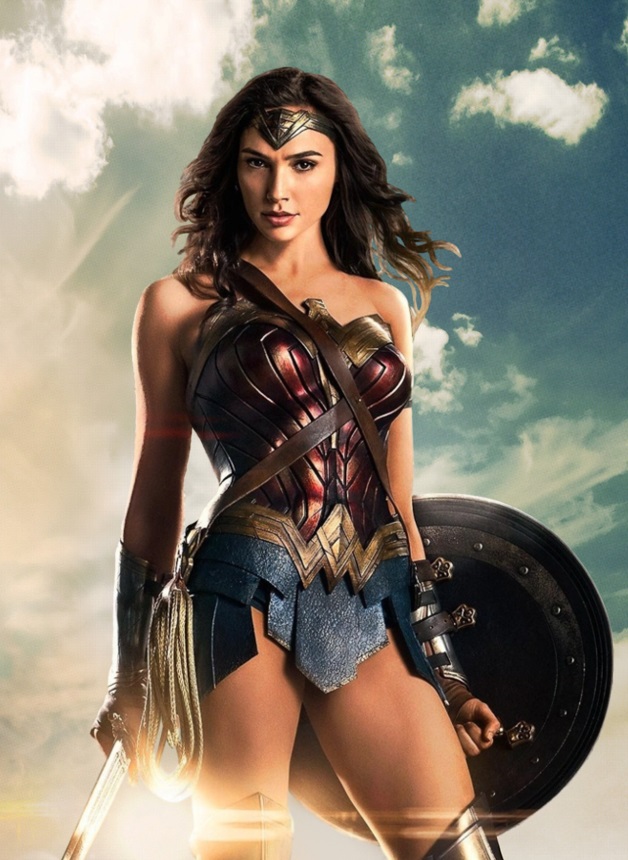
My overall all grade for this movie is somewhere between a C+ and a B-. Wonder Woman is solid film. It makes no gross mistakes of plotting, pacing, or character. It has been well cast and everyone fits well into their roles. Some reveals work rather well while others seemed telegraphed.

This is an origin story. We meet Diana as a child, we learn just enough of her background and story to connect with her as a person and to her wider culture before she leaves her island paradise to stop World War I. (Just as with Captain America: The First Avenger the less you think about the actual war the better the film will play for you, though Captain America played closer to history than Wonder Woman.)

Along the way she collects a band of ragtag teammates including her love interest Steve Trevor. Diana enters the war naive about humanity and its ability to be evil, she loses that childlike worldview and gains a deeper and fuller understanding by the story’s end. Over all the arc works well and it would seem the writers and the director have a better understanding of their character and her history than those who made the most recent Batman and Superman movies.

This film is worth seeing in the theaters and it should be fun for most and inspiring to many.

Share

Sunday Night Movie: Big Trouble in Little China

After spending the afternoon watching The Godfather on the big screen yesterday afternoon I decided that for my Sunday Night Movie feature I wanted something lighter, something more fun.

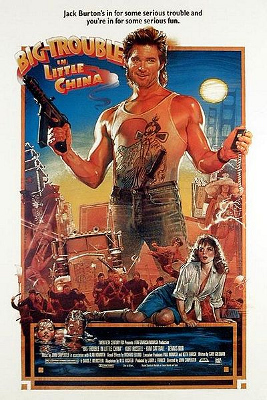
Big Trouble in Little China is an 80’s martial arts/comedy directed by John Carpenter, written by the director W.D. Richter, and starring Kurt Russell. It concerns Jack Burton (Russell) as he gets involved in supernatural affairs hiding in the heart of San Francisco’s Chinatown. What starts out as kidnapping by a street gang transforms into a battle of good and evil against a two thousand year old wizard.

This movie did poorly when it was released, panned by critic and ignored by fans, but over the years and through the sorcery of home video it has gained a devoted following of fan.

Despite Russell leading credit and having a majority of the lines, his character of jack Burton I think can best be understood as the sidekick to Dennis Dun’s Wang Chi and that this film is really a story told from the point of view of a sidekick who thinks he is the hero.

Big Trouble in Little China has many elements that are never explained and several that are used for convenient comedic effect but it is a fun romp with sharp funny characters.


Share

Trust Once Broken is Nearly Impossible to Re-forge

Life is not like the Lord of The Rings and trust once it is shattered is not easily reformed into a new shiny compact like the recreated blade Narsil transformed from its shard into Anduril.

Ask any couple where one has betrayed the other with an affair. Ask anyone who has placed their trust in another person who let them down and then asked to be trusted again. When someone’s given word is broken it is very difficult and usually a lengthy process to regain a measure of trust so it is with nations.

Trump’s lasting impact on the United States is probably going to be in the area of how our allies treat us and our commitments. From his refusal to recommit to Article 5 of the NATO treaty. which is the very heart of the treaty, to the sudden withdrawal from the Paris Accords, our allies are going to understand that America’s word is much less dependable and our actions much more volatile then they have assumed.

Roman maintained Pax Romana through it’s military dominance of the4 ancient world with Rome’s mighty Legions. England maintained Pax Britiana with her Navy and economic colonialism, but Pax American has been something different.

For the most part, and imperfectly, we have maintained a world peace and flowering economic growth around the globe through our leadership and our diplomacy. As I have mentioned in other posts the United States spends far more than other nations on its military because we are the one assuring the world’s peace. We are also the linchpin of the world’s economy, with out dollars acting as the planet’s reserve currency. That power and that responsibility comes entirely from the world’s trust, trust in American agreements and treaties.

While amongst ourselves the right and the left have bitter differences, over seas we have historically presented one face and fully backed our agreements, something the world counted upon. Trump has shattered that. Our allies now publicly state that they can no longer fully count on America, that they must be ready to go it alone. This does not make us stronger it weakens us. This does not secure our economy it imperils it. Other nations are watching us and want our position. There is no love for a fallen empire and no loyalty to an ally to shatters trust.

We are in terrible danger.

Share

On Horror and Un-credited Horror Directors

Horror is a mood, and when we speak of horror in the arts we speaks of an artist’s intent to create that mood. With words, and sounds, and images the artists seeks to undermine the viewer/readers comfort, replacing it with a sense of dread, danger, and unreality.

That unreality is not to the same as a sense of something being unreal, but rather the knowledge that reality is not what you thought it was. The idea that the world does not work along the laws and principals that you thought it did is one of the core elements of horror. When you walk onto a stair, expecting the first step but instead it is missing and your foot falls an extra four inches for that moment when you fall you are in a brief state of horror. You knew that the step was there, in darkness you plunged forward fully confident of its existence, but the instant your foot plummets past the step your world is suddenly rendered wrong.

The moment passes quickly and the horror vanishes with the firm feel of the very next step. The explanation destroys the horror. If excellent horror fiction that return to ‘normal’ reality never arrives and the new unfamiliar reality goes on forever,

I think that David Lynch is one of our greatest horror directors. Not everything he makes is horror, certainly Dune is not, but a lot more is horror than is conventionally recognized.

Lynch’s world are often very much like our own, but quickly he leads the audience into a nightmare where nothing is what it seems, where images and sounds unsettle, where identity crumbles, and sane rational explanations never arrive. In Twin Peaks, now returning for its 3rd season after a break of 25 years, there is unquestioningly super natural elements, but even with demons and doppelgangers Lynch finds horror to unsettle and unnerve us. But in other works, Mulholland Drive, Lost Highway, Earserhead, these same very powerful sensation are invoked and rational explanations are withheld. Though the critics, devoid of thee usual easy identifiers or aliens, monsters, and bloody deaths, rarely labeled these films as horror, to me that is exactly what they are.

The only question is intent. Lynch is famous for never explaining the purpose or meaning of his films. Part of any art is the viewer/reader’s interpretation and for Lynch that means you don’t impose, in any way. your won view as artist, but rather you leave the viewer fully empowered to experience it on their own terms. This is challenging and Lynch has never and will never find easy commercial success but we would be poorer without his visions disturbing and unsettling us.

Share

No Blogging Today

I am suffering a fairly painful bout of arthritis and so no essays today.

I am also not going to my day job or writing.

Today is watching TV, taking painkillers, and icing the finger joints.


Share

Movie Review: Pirates of the Caribbean: Dead Men Tell no Tales

So, we have come to number five in the Pirates franchise. Roger Corman I understand once advised that film franchises rarely go beyond three because after that point you have run out of variations on a theme. Clearly there are exception to Corman Rule, Bond and Godzilla both come to mind. With the Pirates movies I would argue that the series ran out after film one.

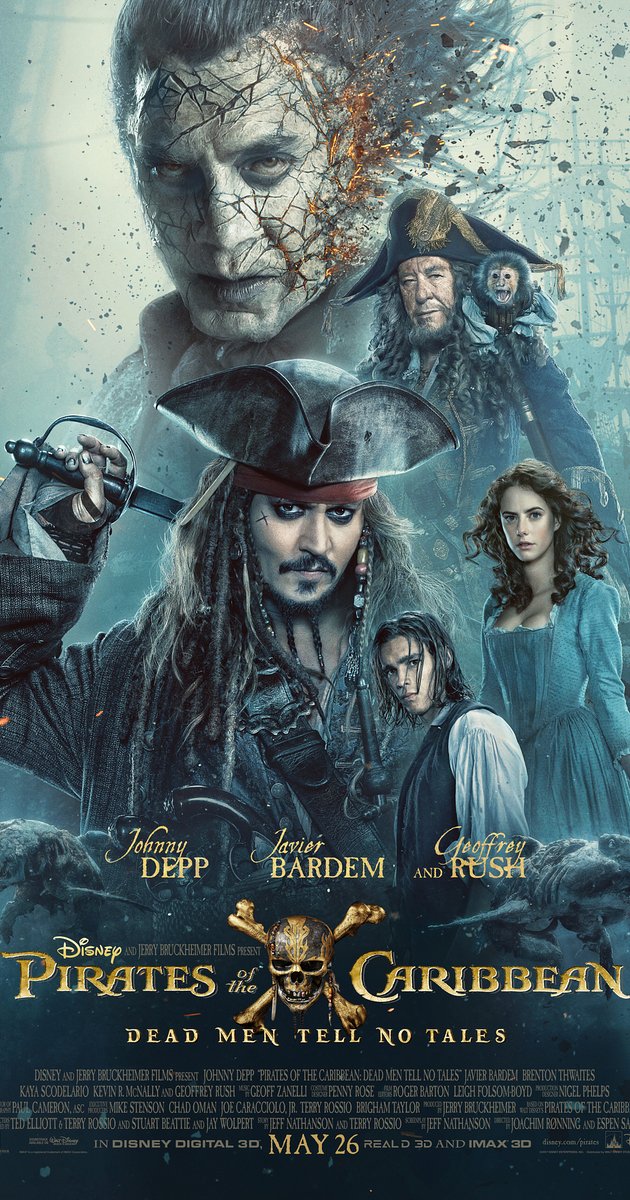
Dead Men Tell no Tales adds very little of value to the wider story of Pirates of the Caribbean though perhaps the producers should have considered that we really didn’t need a wider mythos for that story. The protagonists of the story are Henry, son of Will Truner from the first movie, out on a quest to claim Poseidon Trident to free his father of the curse that makes him Davy Jones, and Carina Smyth, a young woman of scientific inclination out to prove a mythical map is real, said map leading to said Trident. We of course have the Return of Johnny Depp’s Jack Sparrow, crew after his luck has turned bad, and Geoffrey Rush’s Barbosa, no leading a fleet of pirates across the Atlantic. Added to the mix is David Wenham Royal Navy Officer Scarfield, who wants the Trident to make England the undisputed master of the seas, (Wait, at this time she already is, frankly it would have more interesting to posit that is why England rules all the waves around the globe.) and for a villain we have Javier Bardem as an undead Spanish naval officer who hates pirates and Sparrow in particular.

Sounds confusing and overly complicated? It is. This is a script fully slaved to the big set action pieces and special effects with almost nothing left for character. What is left for character is too fragment to hold interest as everyone has a storyline where they briefly feature, learn a valuable life lesson, and grow just a little bit.

The film is not original in story, character, or action and rarely engaging. Frankly, this one is a wait for video and then watch something else.


Share

Memorial Day

Today we remember our fallen soldiers but one aspect I want to mention is that not all fall in combat.

It seems decidedly strange thing think that we now have an entire generation that is rapidly approaching adulthood that have never known a time of peace. 2001 to present has ben continual war for the United States, some times hotter than others but always there. Before the present and enduring crisis there was the peace for the Cold War.

I served, briefly for I was a terribly sailor, and I saw no combat, took part in no exchange of gunfire and never sailed under the direct threat of attack, but still I knew servicemen who died while on duty.

I sailed on one WestPac, a cruise of the Western Pacific, and two men were killed while another was maimed for life during that voyage. One was a marine who fell from a helicopter during on exercise and the other was a crew chief lost when a helicopter crashed and went over the side, vanishing beneath the Pacific’s uncaring surface.

The military in all its branches is a dangerous profession, filled with men and women who for a variety of reason have chosen to place their lives on the line for our greater good.

War, peace, training, or combat all who serve do so at great personal risk and not all survive. It is our duty, our responsibility to make sure those lives were never lost in vain.

Share