There has been a rather lengthy hiatus in this series as I dove into edits of my novel and composing a new short story, but I have returned to the topic, coming around to perhaps the most important decade in SF cinema except for the 1950’s.
First up I’ll discuss the moon-sized shadow eclipsing all SF films of the 70’s and later;
Star Wars (1977)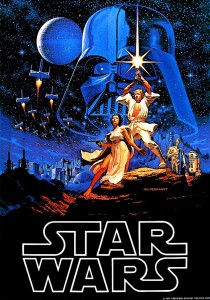
I think it is difficult for people who came of age later to appreciate just how monumental Star Wars was in the history of cinema. It is part of the triumvirate that created the block-buster phenomena that Hollywood continues to chase to this very day. (The other two films being JAWS and THE GODFATHER.) Science-Fiction simply had never been as big as Star Wars before and that sort of success casts a might long shadow.
Looking at SF films of the 70’s everything before Star Wars gets lost in the uproar of that space fantasy and everything after it is compared to it. While Hollywood had been moving in fits and starts towards adult science-fiction in the 1970’s with film such as The Omega Man, The Andromeda Strain, and Logan’s Run, the arrival of Lucas’ baby shunted all that aside for a generation as the studios chased after the next massive box-officer adventure.
However the influence of this movie reaches far beyond the pale imitations hurried into production and the senseless pursuit of massive runs, how we watch , hear, and make films changes because of George Lucas.
Today’s theaters packed with digital projectors, multi-channel sounds systems, and comfortable seating owe a great deal of their evolution to Lucas’ and his foresight and insistence on exhibition as well as film production. Behind the scenes, Lucas’ advanced the technology of film making more in the twenty years post Star Wars that in all the years following the introduction of synch-sound, Digital effects, digital processing, non-linear editing, these are tools that make todays production look vastly different to films short and edited traditionally. When you shoot a home video on your camera phone and edit it on your home computer you are participating Lucas’ revolution, it’s that massive.
Selecting a second film for the 1970’s is a very tough thing. Any film produced and released before Star Wars pretty much had any lasting impact erased by the tidal wave that is Star Wars, any film made after Star Wars nearly always is following and in some case just bolding stealing, from Lucas’ massive hit. Personally I came down to two post Star Wars films for my second choice; Star Trek: The Motion Picture and Alien. Alien has been copied endlessly since it’s stellar release in 1979, but I think the broader impact it had was that in theatrical films it pretty much, singlehandedly, destroyed the professional explorer set-up. Before Alien interstellar travel was the domain of military and para-military experts, after Alien’s ‘truckers in space’ approach the professional explorer for all practical purposes vanished from feature films.
However I am going to go with
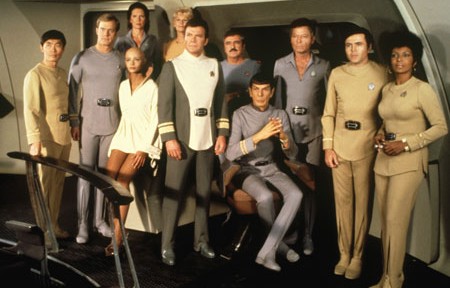
 Star Trek: the Motion Picture (1979)
After the success of Star Wars Paramount decided that the pilot that they had been planning for a new Star trek television series needed to be a feature film. The script wasn’t in great shape, and Roddenberry wasn’t an experience hand at feature film production. The $20 million dollar budget quickly vanished as the studio spent $40 million, the script was re-written as they filmed, and the production was troubled from the set to the special effects, but still the film was a hit, spawning a franchise of feature films that continue to this day, but I would argue that is not the lasting effect of Star trek: The Motion Picture.
The lasting effect came from the firing of Gene Roddenberry. Now out of the loop in the feature film department, he returned to his true love, television but this time with a Radical concept, a television show that would be sold directly to the stations, instead of a network, Star Trek: The Next Generation.
The success of the show paved the way for a flood of directly syndicated programming, most of it genre, laying the ground work for the fertile and rich television landscape we have to day in SF and fantasy. I don’t think we would have any of this with Star Trek: The Motion Picture.



 seen far too many properties from the baby-boom picked up and turned into utter dreck by producers, writers, and directors who had absolutely no respect for the original source material. So Speed Racer waited until I got around to it on Netflix, because that is one thing the service is great for, taking risky experimental leaps in your cinema viewing.