Over several nights via streaming I have re-watched the film Gone with the Wind.I ended up watching this movie because the other Olivia de Havilland The Adventures of Robin Hood was not available on streaming. I know I had seen Gone With the Wind before but it had been some time, decades, and I thought it useful to view the film and the story through my more experienced eye.
Directed by Victor Fleming with music by Max Steiner, and boasting one of the most colorful pallets ever, this movie stands as an achievement in cinema. Grand in scope and in scale and with a cast that is just terrific it is easy to see why this remained the most popular film for a very long time, but it’s impossible to ignore the propagandistic elements of the piece. The barbarity of slavery is utterly absent from the film. Every black character is actually a stereotype and evil of the plantation system is disregarded for a myth of noble benevolent slavers.
The story is about Scarlett O’Hara and follows her from her teenage years, starting right at the onset of the American Civil War, and though the ruin of her personal life as an adult. Scarlett loves Ashley but Ashley loves Melanie while rakish Brett Butler loves Scarlett. Through the war, reconstruction, and beyond we follow Scarlett as she schemes and uses people, always pining for Ashley who remains faithful to the clueless and naive Melanie. (Truly Melanie is tied right up there with Claudio from Much Ado About Nothing as the most gullible and naive character in western literature.) On this production I think Olivia de Havilland I think had the toughest job as an actor. She had to convince us that Melanie could be a real person and she did it. While Vivien Leigh deserve her accolades as an actor, I think Olivia did a far better job with much more challenging material.
As I mentioned in this space several weeks ago my most recent entry into the Writer of the Future contest had scored a finalist. (At that time I though the finalist were six but it turned out there are eight from which the three winners are chosen.) My entry did not win.
Don’t worry about me; I’m good. Rejection is baked into the cake and its labeled right on the tin. Do not attempt traditional publication if you cannot take rejection for it will stalk you every step of the way and throughout any career. I’m proud and happy to have this odd little story score a spot on the finalist list and the contest may print it as a published finalist in next year’s anthology.
I am reminded of a story I once heard Charlton Heston recount on the Late Show with Johnny Carson. (Kids ask your parent or grandparents.) The great actor Laurence Olivier was in a stage production and the play had already been running for several weeks when one night his performance transcended into something beyond words. His fellow actors noticed the heights he suddenly has reached and were spellbound by the achievement. Afterward Maggie Smith, you kids know here from Harry Potter, came to his dressing room and asked if he knew just how good he had been that evening. Reportedly Olivier answered, “Yes, but I don’t know how.”
This is what separates art from science or engineering. You can learn rules, you can learn theories and in science those are unchanging, always producing the same results from the same inputs but art doesn’t work that way.
Under the current coordinating judge I have submitted a dozen stories to the contest, one made finalist, none have made semi-finalist, one scored an honorable mention, and the rest, ten out of twelve were passed over without comment or placement. Why did this story catch Dave’s attention?
I don’t know. A number of those stories that Dave did not care for have sold to other markets, several have gotten feedback and comments from other editors. This is not science and there are no hard and fast rules that assure consistent outcomes. Dave himself has a number of elements or rules that he thinks makes for good story telling and this story, the one he plucked for finalist, ignored or broke a number of the advisory guidelines.
When I have a new short story I will submit again but past performance is not guarantee of future results.
I have written on this topic before but I think it bears a return engagement. Nearly everyone knows the story of The Boy Who Cried Wolf. A young boy is giving the vastly important duty of guarding a herd of sheep; twice it shouts false warning about a wolf and laughs at the panicked village when they respond to his alarm. When the wolf actually does appear no one answers his call and depending on the version you hear, the sheep, the boy, or both are eaten by the wolf. The moral of the story is do not lie for when you need to be believed you may not be. And that itself is a good moral, but the concept if false alarms and the deadened of people to those alarms run deeper than deliberate fabrications.
Consider if the boy had thought that there might be a wolf and he raised the alarm without taking stock of the situation and verifying that the flock was in danger. The result of the story remains unchanged. Twice the village runs to the flock only to discover that there is no wolf and when the boy raises a legitimate alarm they are unlikely to respond quickly or with any conviction. The moral does not need to be about lying but about making sure you are right before you sound that alarm. There needs to be a fire before you pull the fire alarm lever.
This lesson applies to politics as well as other areas of life. One the conservative side of the aisle anything that increases regulation, no mater how rationally or required is met with calls of ‘Socialism!’ Obama was not a center-left politician but a man out to destroy the American way of life and who plotted to institute ‘hard socialism.’ So far we have not been treated to a firebrand eat the rich socialist who has the potential to gain real power but should it happen the right will learn that they have devalued their alarm call into meaningless noise.
Fascist has also become meaningless. The term has been bandied about so often as to be devoid of definition. I can remember people on the left constructing careful arguments that Reagan was a fascist, as was George H. W. Bush, and George W. Bush. It seemed that everyone to their right was automatically a fascist. Is it any surprise that now with a Republican politician who openly admires dictators, jokes about violating the constitution and remaining in power beyond two terms, applauds the slaughter of peaceful protesters, and sided with our geo-political foes over our own intelligence community that the charge of fascist still lacks punch?
The misuse and abuse of such charges, turning them into mere insults has robbed us of a vital tool of information and alarm. There is a wolf about but few are willing to listen and more than ever we must be vigilant.
First off let me split the hair between a conspiracy and a conspiracy theory. Clearly people do conspire and that process is a conspiracy. People conspire to smuggled drugs, contraband, and people across boarders, they conspired to evade their taxation debt, they conspire to conceal evidence of guilt and all manner of things. The real difference is the scale by which real world conspiracies operate and the vast global coordination required for many popular conspiracy theories. A few conspiracy theories that serve as example to me of this deluded impossible thinking:
AIDS was a created disease to eliminate certain racial groups.
The Moon landing was faked.
The US Government has possession of alien technology.
Marxists, after their ideology was discredited, disguised it as post-modernism to infiltrate it into popular culture.
Vaccines cause Autism or mental defects.
International ‘globalist’ (and we all know what that’s code for) control world events. (That one gets tied to Marxists as well.)
9/11 was an act of the US Government.
I admonish everyone to demand proof, not conjecture, not assumption, but evidence before believing vast glob spanning causes for events.
It must have been about 1983 or early 1984 when this started. I was in the apartment of a friend and some movie was playing on HBO. From the dialogue track someone referred to a character named Mr. Devereux. Unrelated to the film playing on the television my memory pulled up a scarp of dialog from another film:
“My Name is Estan Devereux.“
In my memory I could hear the voice quite clearly but I could not visualize the scene. I could not call up the line right before or the one that followed only that fragment of a conversation.
My Name is Estan Devereux.“
For the rest of the day it haunted me. I know it was a minor character and I knew it came from some film I like but I simply could not remember the scene, the characters, or the movie.
It continued into the next day. It was definitely an old man, his voice weakened with age, a horse whisper, but I simply could not remember the movie. Not the genre, not the style, nothing but that annoying voice repeating the fragmentary line.
My Name is Estan Devereux.“
Eventually it faded from my mind and I went on with my life. But a few weeks later something triggered my memory and the line played again, still without identifying context. I struggled, trying to force the epiphany that would answer this mystery but it would not happen. This became a familiar and frustrating cycle. Something triggered the memory and I’d spend hours or even days with it echoing through my mind but unable to resolve the mystery of the movie’s title.
Some may be wondering why not go to the Internet, or Google to find the title and kill the torturous puzzle? Take a look at those date my friends, this is long before any Internet. A few years later I would have my first personal computer and my online interactions would be with early chat rooms on a local Bulletin Board System, but there was no global repository of geeky and obscure knowledge.
This played out over a decade. I did not keep a record but it feels like the line resurfaced perhaps as often as once a month, never bringing with it more information or any sort of context always leaving me frustrated and without an answer.
In the early 90s I acquired my first DVD player and slowly began building my home library of beloved movies. I never had a great collection on VHS, and had possessed a decent collection on Laserdisc, but it was the DVDs where my home collection really took off. Bit by bit I picked up discs, eagerly playing them when I got home. Then one night with a new disc, after so many years, the mystery was solved.
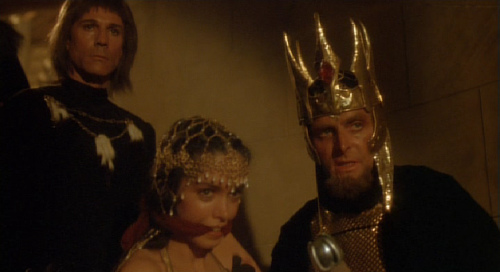
I wish I could say that I got there simply by looking at the title. That picking up the case in the store prompted the floor of memory unlocking the resolution but that did not happen. I got the movie home, peeled off the wrapper and stuck it into the player. As the hero is penetrating the villain’s castle, seeking to rescue a trapped, noble, and foolish hero, he releases a number of prisoners from the evil King’s dungeon. An old man begins to speak and before the words tumble out of his mouth the memory floods my thoughts and the answer is playing on my television.
My Name is Estan Devereux. I was the King’s architect.“
I give you The Sword and Sorcerer the fun, silly, cheesy fantasy film that tormented me for over a decade.
Having been a tabletop role-play gamer since 1979 I have seen my fair share of cheaters. People who produced character with fantastic statistics, math errors that always break in the players favor, and fudged die roll. One thing that seems to exist as a common trait among these varied cheaters over the decades is that the invested considerably in the game as part of their identity. Doing well at the game was not simply fun for them but a validation of their self-worth and confirmation of their superiority. Of course the fact that had to cheat to achieve these aims undercuts the effect. For everyone who was aware of the cheater the effect was quite the opposite and it is only with a heaping serving of denial and delusion can that ultimately weak faced me erected and maintained.
What does this have to do with Star Wars: The Last Jedi?
People invest more than just games with a sense of their identity. People do it with spectator sports, it’s part of why rioting occurs both for victories and defeats, they do it with religion, they do it with their artistic creations. And of course people take popular culture and make it part of their identity.
Several years a national news story centered on a woman who had arrived for her Jury duty wearing a starfleet costume from the Star Trek franchise. She insisted it was not a costume but a uniform and that it represented the high ideals and morality of the United Federation of Planets. She had taken the themes of Star Trek and incorporated them into her identity, binding them so tightly to her sense of self that she simply could not envision performing her civic duty in any other mode than the one she had adopted from the fictional Star Trek setting. Star Wars too has themes and ideals that it presents as a moral good, all fiction does this, and there are fans that take those ideal and meld them into their identity.
Let’s return to gaming for a moment. A strange thing often occurs when you confront someone who has been cheating, they get angry, really really angry. They’ll wail that it has been themselves who have been wronged, they’ll try to divert attention to the misdeeds of others, they’ll lash out at their accusers and not at all uncommon they’ll make it impossible for the game to continue, destroying the enjoyment for everyone. Attacks on the cheating are in effect attacks on their identity and this provokes powerful overreactions. It is far easier to displace that anger than to confront the awful truth of why it mattered so much to the cheater.
Sounds familiar doesn’t it?
It’s clear to me that there are a sizable number of Star Wars fans that have built a significant amount of the self-identity from the fantasy franchise. It’s perfectly okay to dislike a movie, to me disappointed in a franchise, Alien 3, and Star Trek V both leap to mind, but this sort of anger, vitriol, and poison indicates an unhealthy attachment to the fictional characters. There is something about the character Rey, Poe, Finn, and Kylo that strikes these fans right at their cores and is irreconcilable with their self-image.
If you were political knowledgeable during the 1980s you may know what it meant when an environmental activist group was called a watermelon. This charge implied that while the group may have appeared Green from the outside inside with was Red, as in Communist. Usually this charge was hurled with circumstantial evidence that Soviet Intelligence, the KGB and the like, either created the group or had seriously penetrated it, turning it into another arm of the Soviet’s attack on the West. During the Cold War this was a charge had to prove but once the Soviet Union collapsed and secrets spilled out many of the charges were substantiated.
Any good intelligence officer will tell you that you cannot create division in a nation or culture but you can exploit naturally occurring ones. The general members of these environmental and anti-nuclear groups were not the Kremlin’s puppets. These people sincerely believed in their cause, they were concerned about environmental degradation, nuclear waste, and the terrorized by the concept of nuclear war. Their fears and concern were hijacked by a hostile foreign power that did not share their concerns but rather used them as a tool to advance selfish self-interests and authoritarian rule around the globe. The fall of the Wall and the ending of the Cold War consigned calling a group a ‘watermelon’ to the ash heap of history.
America’s culture wars, xenophobia, and sharp political partisanship have created fresh societal fractures for the Kremlin, now under the control of oligarchs instead of communists, to use to divide and weaken the West. Master of human based intelligence the Kremlin’s agents moved against the western democracies and from Brexit to the 2016 American Presidential election they scored hits, wounding, us, their global adversaries. The full extent of their political interference in the US elections is still unknown, the investigations are ongoing though domestic political actors, knowingly or unknowingly, aid the Kremlin’s objective with obstruction, returning us to the 80s where activist political organizations, with resources and aid from our geo-political rivals, undercut our democracy and threaten freedom around the globe. China, even as it retreats further in despotism, is rising, launching ambitious projects for global economic dominance with the decade, Russia invades her neighbors and drives wedges between NATO’s member and her allies, never this century has American leadership been more vital and more absent.
Russia pours money and resources into America sharpening our divisions, turning us on each other and today the political ‘watermelons’ are Facebook groups and memes, partisanship over patriotism, and the destructive pursuit of power absent principles. This may very well be an infliction point in history and what we do and how we do it will shape the future.
One of the great mistakes people make when taking advice or information is the make the assumption expertise in one field confers some sort of basic level of competence in another. Because someone is a talent astronomer does not mean that understand the dynamic of nuclear war, because someone is a gifted businessperson does not mean that understand the complexities of governance, and yet this sort of transference of expertise happens again and again.
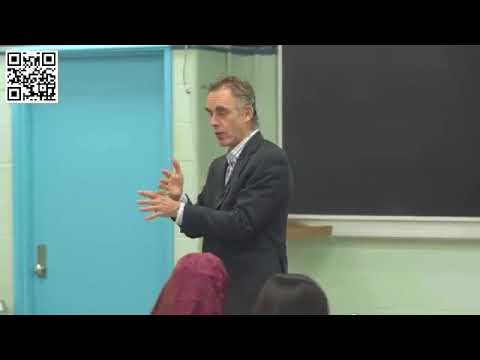
Recently I came across a YouTube video explaining that Dr. Jordan Peterson, a Canadian Academic with advanced degrees in psychology did not understand Nazism. Watching the video, which utilized clips from Peterson 2017 lecture series Maps of Meaning, specifically, lecture 11The Flood and The Tower, I suspected that the clips had been taken out of context. The sheer level of error in the statements by Dr. Peterson seemed beyond belief for a person with a university education.
They were not out of context.
Here is the section of the lecture, just over five minutes, where Peterson diverts from the subject of the lecture to speak about Nazi Germany.
Here are my major objections to Peterson’s opinions.
1) ‘Hitler should have enslaved…’
The Nazis most certainly enslaved their ‘undesirable’ (Jews, Homosexuals, Roma, etc.) Even knowledge gleaned from popular culture such as Schindler’s List should be enough to make this basic knowledge. For those with just a little more understanding of history there is also the famous legend above the gate to history’s most infamous of death camps, Auschwitz, Arbeit Macht Frei, ‘Work Sets You Free.’ The Nazis worked to death the people in the camps and those that could not work they murdered. The V2 factories in addition to raining death on London and other allied cities also boasted one of the most lethal areas in the concentration camp system. It is shocking that a university professor is ignorant to all of this.
2) ‘… Win the war and then…’
Peterson’s argument that the Nazi’s should have won the war and then turn to murder ignores several critical factors. First and foremost is that the Nazi’s anti-Semitism was centered to their political and cultural worldview. The elimination of all Jewish people and influence from German culture, German Life, and German lands had been a stated goal for some time. Quite simply for the Nazis murdering of the Jewish population was a victory condition. It has also been argued and with some validity I think that the Nazi accelerated the mass murder as a way to keep the German’s population food rations higher. The lesson of the First World War where Germany was effectively starved into submission was one ruthless applied to the Second World War.
3) ‘… Significant military resources…’
The military resources diverted to the Nazis campaign of mass murder had no material effect on the war’s outcome. German intelligence seriously underestimated Soviet military strength and with the manufacturing base moved east beyond the war’s destruction, coupled with American entry into the war, doomed German to defeat.
4) ‘ … Fascistic societies are Fascistic at every level…’
Peterson referred to Daniel Goldhagen’s book Hitler’s Willing Executioners: Ordinary German and the Holocaust. I have not read this book but there are a number of good reviews and takes on this work. What is clear is that Goldhagen’s thesis is that Germany held a particularly virulent strain of anti-Semitism that primed the German population to be turned easily murderous. That’s an interesting and not undisputed hypothesis but it is not the same things as declaring a society, much less the German society, as Fascistic at every level.
As a political philosophy Fascism was founded in1915 and I am not sure how you replace an entire culture in just a dew short decades. I think it’s much more reasonable to think the Peterson is misrepresenting Godlhagen’s work. The poison of Anti-Semitism is far older than either Fascists or Nazis and it was merely a tool, a lever, by which the Nazi managed their murders and they found more than enough willing help far beyond Germany’s borders.
5) ‘ … Why do we assume that? …’
Perhaps the most stunning assertion in the entire digression is that possibility that Hitler never planned to win the war and that he actual aim, whether he was aware of it himself or not, was chaos and mass destruction. Certainly, in some case, on individual actions it may be best to determine actual motive from repeated outcomes, but applying this framework to single outcome events such as winning or losing a war strikes me as quite a stretch.
I do not think it was the Kaiser’s intent to destroy the German Empire but that was the outcome of World War I.
I do not think it was the intent of the Japanese government to subject their home islands to destruction and occupations but that was the outcome of World War II when they brought America into the conflict.
I do not think it was the intent of the rebellious Confederacy to end slavery but that was the outcome when they started the American Civil War.
I do not think it was Gorbachev’s intent to dissolve the Soviet Union but that was the outcome of his Glasnost policies.
It’s perfectly reasonable to accept that Hitler and the Nazis wanted to win the war and carry their murderous prejudices across all of Europe and beyond.
Expertise is not transferable and when someone moves beyond their field of training and specialization it is wise to subject their opinions and ‘facts’ to scrutiny.
Marvel Studios continues proving that their juggernaut of interlocking franchises as an unstoppable cinematic force with this weekend’s release of Ant-Man and The Wasp. Returning a lighter tone after the dark themes of overpopulation and scare resources presented in Avengers: Infinity War, AMTW deals the personal fall-out for Scott Lang, and his family, along with Dr Hank Pym and his family from Scott’s adventures with Captain America in Captain America: Civil War.
Having run afoul of the global empowered individual legislation The Sokovia Accords, Scott Lang is sweating out the final days of his house arrest while Doctor Pym and his daughter Hope, estranged from Scott, are fugitives refusing to abide by the accords. The Pyms discover that Scott holds the key to rescuing a long lost member of their family launching them into a desperate race against international arms dealers and a mysterious empowered villain.
Payton Reed returns as director and the short version of this review is if you enjoyed Ant-manthen you are likely to enjoy Ant-Man and The Wasp. Paul Rudd continue to bring is easy likable style to Scott Lang providing both an empathic character and a voice for the audience. Marvel’s special effects wizards again demonstrate mastery at their ability to digitally ‘de-age’ an actor in younger versions of themselves. I do find it curious that Marvel can create digital make-up and faced that transcend the uncanny valley and Lucasfilm’s attempt fell short rendering a Tarkin and Lea that were less than convincing.
This film does not deal with heavy themes and that is not a detriment. While I love movies like Captain America: Civil War it is good to occasionally go to a movie and simply have a good time, something that this movie delivered.
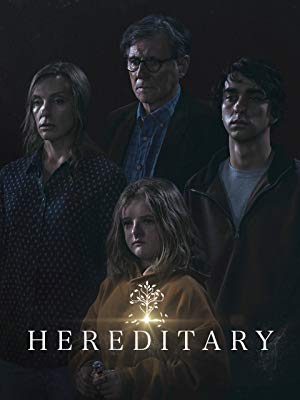
There are a lot of flavors of horror films, and that’s not even getting in a classic versus modern sensibility. Thee are monster movies, slasher movies, psychological horror movies, young people in peril movies, torture porn movies, devil movies, nut after viewing Hereditary I had to come up with what I thought of as a new sub-genre, emotional horror movies. Hereditary does not move by gross out or violence, it is not a film with a central unstoppable threat moving through the plot leaving a wake of corpses, but rather the film forces the audience to confront raw, tragic emotional power.
The focuses on a family grieving after the death of their grandmother, a complex woman who left behind a tangled web of secrets and emotional damage to everyone she touched. Her daughter, Annie is played by Toni Collette, is an artist specializing in realistic miniature dioramas, dioramas taken from her real life and a metaphor for Annie’s desperate need to control her life. With her mother’s influencing her family well after the grandmother’s death, Hereditary at first appears to be following in the tradition of horror literature such as The Turning of the Screw where events may or may not represent the character’s distorted point of view but by the middle of the second act a darker and more mysterious malignancy motivates the movie. This film has one of the most shocking act one to act two transitions I have witnessed and all of it down with off-screen violence and terror that plays out on the actor’s faces and their anguished screams. Truly for several minutes I expected the sequence to be a nightmare but eventually the film forced to me to confront it had really gone where it went.
Drawing on paranoia such as in Polanski’s Rosemary’s Baby and supernatural suburban invasion such as in Friedkin’s The Exorcist, and the inescapable fate of a Greek tragedy. Hereditary is a dark unrelenting film that eschews audience comfort and optimism for its artist vision.
This is by far not a film for everyone. Whenever there is a sharp divergence between the critics’ and general audience scores on aggregate sites such as Rotten Tomatoes such as with The Witch and with Hereditary, it often suggests that a film is more challenging than the usual fare and that is the case here. This is not a horror film for people in search of action, thrills, or escapism. (Not that those are bad things, I enjoy all three but it would be a poorer world if that was all there was to enjoying film.) With only a touch of snark I tweeted that Hereditary is a movie for people who find Black Mirror too optimistic.
I want to give a special shout out to the production design and the fantastic cinematography. This is one of the rare films where I noticed the color palette because it so perfectly fit the tone of the piece. Also director/screenwriter Ari Aster and cinematographer Pawel Pogorzelski creative and visually stunning mishmash of scale where the miniature looked massive and the massive looked miniature not only made for beautiful compositions but perfectly symbolized tone, theme, while keeping the audience off balance, critical