Author Archives: Bob Evans

Post LosCon 45 Report

It’s Monday morning and LosCon 45, The 45th Los Angeles Area Science-Fiction Convention, has receded into history. While attendance this year seemed lower, it fluctuates from year to year; personally the convention was a success. I reconnected with several friends that I only see at this convention, attended fun and interesting panels, pretty much splitting my panels this year between informative and entertainment, and popped in a few parties and actually socialized with people. In addition to that usual convention activities, I also managed to do a revision edit to a short story that I think brought the entire piece to another level. All in all the weekend hit all the marks I wanted it to pan on.

Of course because of the nature of my day-job I missed the first day of programming. Getting the Friday after Thanksgiving off at my employer is a matter of seniority and it takes a very long time to work up enough to be considered. One of my teammates just scored Black Friday off and he has worked here 18 years. However considering the stability, the compensation, and the Union representation, I am perfectly happy to trade away some convention days for this job.

I also received inspiration during the convention that helped break through a couple of future stories. Sometimes it is just a simple word or phrase uttered by a panelist that breaks a logjam and allows a story to start unfolding.

It is sad that the convention is over and I am back at my day-job but there are more conventions in the coming and year and I smile for the future.

Share

The Devil is a Comfort

Last night I watched about half of Dominion: Prequel to The Exorcist, not to be confused with Exorcist: The Beginning, which is the film that resulted when the studio discovered that director Paul Schrader had delivered a thoughtful exploration of faith and evil prompting the executives to turn to Renny Harlin to make them a jump scare movie without any deep questions.

As I watched the young Father Merrin grapple with the evil in the world it occurred to me that the existence of the Devil makes for a strange sort of comfort. If evil exists outside of people, as some directed malicious force constantly tempting, tricking, and deceiving humanity into acts of base cruelty that in some manner absolves humanity of their agency and responsibility. Without the weird sisters Macbeth is simply a bloodthirsty, ambitious, noble willing to murder countrymen and kin alike for his own ends, but with the witches the web of responsibility becomes tangled.

If you reject the theology of a god and his demonic counterpart then you are left with the inescapable and cold conclusion that all evil lies without us, that any one of us is capable of terrible acts. It takes not Prince of Lies to lead us into greed slaughter, and cruelty and that the only things holding our society together is the willingness to be socialized. It must be comforting to be able to hold oneself as inherently good and place all blame for humanity’s evils on some disgruntled rebellious celestial.

There is comfort in the non-deistic view as well. For even thought all that great evil lurks beneath the skin of all of us so does the potential to be great, to do good.

As always the choice is ours. How will you choose?

Share

I Once Dallied With Acting

There was a time in my life when I played with acting. Not professionally but I came close to chasing that at one point, I had met with an agent and she seemed to like me but I had no money for the all important headshots so I never followed up.
However there was one amateur stage production of ‘Pool’s Paradise,’ an English farce, the summer after I graduated from High School and that was a load of fun. When I got out of the US Navy and attended community college here in San Diego I took as an elective an introduction to acting course. That was a great class and I met one of my best friends there. When the end of the semester came around and it was times for finals the member of that class released their governors and people who throughout the course had seemed of modest or little talent suddenly in their monologues found reserves of talent that left the rest of us dumb struck with the suddenly powerful performances. It was during those finals that I had the best experience on a stage.
We had to perform two monologues, one comedic and one dramatic. The less said about my comedic monologue the better but for my dramatic performance I selected a scene from Schaffer’s Amadeus. The film had been released earlier in the semester and quickly became one of my favorites. In the play Salieri summons the ghosts of the future, the audience, and has several monologues pointed directly to them. The one I performed had been split into two different elements in the film where he was confessing to the priest his crime. It starts with the description of Mozart’s music on the page, in the lay Mozart’s has brought sheet compositions to Salieri in hopes of winning a commission for her husband, and transitions into Salieri’s bitter hatred of Mozart, his talent, and culminates with Salieri declaring war upon God.
While I performed the theater’s house lights were down so the class scattered among the rows remained invisible to me. I threw myself into the monologue, using a manila folder as a prop for the sheet music that Salieri was commenting on. When I got the declaration of war with God, I threw the folder down and growled by threats to the heavens and from the darkened theaters I heard one of my female classmates gasp. That was my proudest public performance and it is a memory I treasure.

Share

I Feel Cheated

I recently learned that a piece of American lore has been withheld from me and it has me feeling left out. How is it no one told me that the Cannonball Run is real?

Hailing from 1981 the movie The Cannonball Run was an over the top farce about teams speeding from coast to coast in an unsanctioned and illegal road race. The racers use a number of visually comic and implausible vehicles in this movie that has more in common with cartoon animation than cinema.  I have seen the movie and it is a silly comedy that was a pleasurable was to pass an hour and a half, which also has the distinct of the introduction to American Cinema of Jackie Chan, though he is criminally underused in a stereotypical and borderline racist character.

Recently as I have explored new podcasts to listen to while working I discovered that the film is based on an actual race. While the characters and the exaggerated cars are products of Hollywood there is an illegal competition for the fastest time driving between New York and Los Angeles. The current winning time is 28 hours and 50 minutes with the driver and his team averaging over 1000 miles per hour throughout the entire trip.

The podcast with the story is It Seemed Smart, and it is dedicated to wacky stories from the field of sports. Yes it is odd that I found myself listening to a sports podcast but this one is certainly worth the time. The first episode I listened to was the one about the Cannonball Run and the current record holder. However the other episodes dealing with cheating in professional baseball and college football are also quite amusing, but it’s the race that stays with me.

Share

The Illusion of Strength

In the spring of 1918 Germany, dominant nation of the Central Powers launched a massive assault on the Western Front, smashing through defensive trench lines and advancing miles. From one perspective this looked as though it may change the course of the war and could possibly force the Entente Powers to agree to a peace on terms favorable to Germany and the Central Powers. However this display of strength was an illusion. German’s offensive soon lost momentum, stalled, and then was reversed by the Entente and in November of that same year the Central Powers, wracked by shortages, mutinies, and revolution, capitulated. On the surface during that offensive Germany had appeared powerful but this masked critical shortages of food, fuel, minerals, and men. Senior official in the Kaiser’s government had warned in 1917 that Germany could no longer win the war with a military strategy but these warning has been ignored for a futile show of strength.

I’ve been thinking about illusionary strength and how that may apply to the current state of the Republican Party and Conservatism in general for American politics. The most recent election gave the House of Representative to the Democratic Party and what looks to be a two seat addition for the Republicans and there is a tendency to read this as a slit decision but like the German military in early 1918 I think behind the stern facade the Republicans are starving for resources.

In every demographic category save one, white males without a college degree, the Republican Party is bleeding support. The suburbs, once an unassailable Republican redoubt and even Orange County home to Reagan and Nixon, has moved to supporting the Democratic party, and this has happened during a period of relative peace and with unemployment under four percent.

There is a tendency to blame Trump for this dismal showing in the midterms, and his unpopularity is a critical factor but the party tiled the soil to make Trump not only possible but also inevitable. In 2020 it is very unlikely that Trump will be substantially more popular and should there be an economic reversal or some other calamity he could be an even greater drag on the Conservatives as they head into an election to will determine the districts for a decade.

But beyond Trump what do they have to offer? I can think of no policy position that popular with the general electorate. I do not know if it is too late for the Republicans to change course, electoral politics tends to move slowly and change over generations, but I do believe that they must try and or they will end up on the shoals.

Share

The Twitching Time

Over at the forums for the Writers of the Future contest people referring to get antsy as they await results for a quarter’s judging as ‘twitching.’ The Contest runs on a 90 day cycle meaning that in general you have a vague idea when result will filter out, starting with the dreaded ‘Did not Place’, moving up through the ‘Honorable Mentions’, Semi-Finalist, and onto the ‘Finalist,’ those eight stories out of thousands that get passed by the coordinating judge to the panel that determines the 1st, 2nd, and 3rd place winners. Sometimes a finalist who did not win one of the coveted top three spots is afforded the honor of becoming a published Finalist and appears in anthology along with the winners earning that author not only a professional credit but also a spot in the workshop held for the winners.

Even though results have been released and my 4th quarter entry did not place, that was expected as I really did not think a 1000 word pun story was their style, I am continuing to twitch.

In the 2nd Quarter my story made finalist but did not win but the contest administrator asked if they could hold it as a potential published Finalist and now that the year has closed, the quarters for the contest start with October and do not follow the calendar year, I am waiting to find out if I will be going to workshop, which is taught by one of my favorite writers, Tim Powers.

Amplifying my current state of twitching is that fact that I am waiting on two book publishers to get back to me. Both editors have given rough guidelines for when they may make their decisions, though as harried, underpaid, and over-worked professionals I know that these estimates could end up on the optimistic side, and the window for their replies are beginning to open.

How do I deal with this stress of waiting on others to decided my fate?

I write more. I am finishing up a story that has gotten really nice comments from fellow writers as I seek their feedback, a novel is starti8ng to come together in my noodle, and a strangely sweet and kind short story is also firming up.

As they said on a recent episode of Doctor Who, hope is not passive, it is active; we must chose to hope.

Share

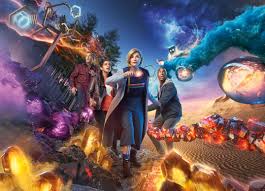
Thoughts on Doctor Who Series 11

We are now six episodes into Jodie Whittaker’s premier run as our iconic Gallifreyian and also Chris Chibnall’s reign as show runner giving us enough material I think to come to some early opinions about the show’s new direction.

In a sentence: I like it.

Chibnall has spilt the series’ episodes between space-based adventures and Earth bound ones. While the previous show runner, Steven Moffat, like to produce grand scale adventures with the entire universe hanging in the balance, Chibnall seems more in tune with small stories that turn on deeper levels of characterization. Of the two approaches I thin, Chibnall’s works better.

I suffered from fatigue over the scale of danger repeatedly thrown at the audience by Moffat’s grand plots. After the first couple of doomsdays it gets rather difficult to invest any emotional weight into the story.  This is very much like the trap the James Bond franchise got it self into, if your stories are more about plot than character, which is often the case in any continuing series, then the stakes in those plots tend to become ‘save the world’ and it is very hard to raise them after you have saved the world a few times.

Another drawback to grand plots is that they also flattened people into faceless masses. In some of my posts about writing I have discussed the difference between hypothetical people and on-screen characters.  Your heroes might be out to save an entire planet but that population is just a number and we are not wired to become emotionally invested in arithmetic. We care about individuals, about characters with lives that connect to our own. The show’s most recent episode ‘Demons of the Punjab‘ displayed perfectly how to handle large-scale stories by drawing us into the troubles of just a few characters. The partition of India was traumatic for millions but giving us one family and the trauma they suffered dramatizes the reality far better than any plot to save the millions. (I also love that title, it’s a misdirect as much as the aliens running around in the story. The ‘demons’ aren’t the aliens but rather the humans there and the ones created the tragic situation.)

Jodie Whittaker is doing a great job as The Doctor. She plays the role with equal parts empathy and manic energy. I am suffering a bit of whiplash as I watch the show because my sweetie-wife and I are also currently watching Broadchurch, a drama about a child’s murder and its reverberations through a small English coastal town, where Jodie plays a very different character.

All in all I am quite pleased with the new direction and the new cast and I look forward to the rest of the series.

Share

This Haunts Me

All mass murders are terrible to contemplate. The fact that they are so terrible and seemingly without reason leads many to decry mental illness for no sane person could desire to perpetrate such an act but that significantly misrepresents what mental illness is and distances us from the reality of not only the events themselves but also the truth about our own human nature. Blessed and cursed with an active and detailed imagination when these dreadful murders occur I often find myself thinking deeply about what it must have been like, what the events themselves must have felt like to the people trapped in those living nightmares.

The recent, and it’s a sad commentary on our culture and our times that I refer to it as the recent rather than as a singular event, mass murder at the Borderline Bar in Thousand Oaks California dogs my thoughts more than other recent acts of horrendous evil and it comes down to a single fact, a single person; Telemachus Orfanos.

Telemachus, who was not even thirty years old and who had also served when his country called by enlisted in the United States Navy died along with dozen people when a gunman opened fired at the Borderline Bar but more than the senseless slaughter I am haunted by the fact that Telemachus had survived the Las Vegas a year earlier when scores of people were murdered.

He was not the only person at the Borderline that had also been at the Las Vegas concert. Both events were centered on Country Western music, thousands had attended the massive concert, and the locations were not that terribly distant but the sheer concept that people who had survived one mass slaughter were a year later subjected to another is truly horrifying and for Telemachus to die at the Borderline would seem to underline that horror with a specificity that refuses to release me. At odd times of the day, when mind may wander, I find myself thinking about that night. How must it have felt when those shots first began ringing out, what terrible flashbacks did that prompt, what thoughts if any passed though his mind before he died?

It would hardly be surprising if someone established a foundation in Telemachus’ name. I have written before on the power of individual identity versus an amorphous and intangible number. This undoubtedly is the reason this person’s story refuses to depart from my mind. Eleven other people died that night, each one had a full life with twists, turns, highs and lows, but Telemachus’ story, easily grasped and powerful transcends being woeful statistic and real tragedy is that it shouldn’t be that way. We can’t hold a dozen points of view, a dozen stories, a dozen lives in our heads but we can picture one smiling man, a veteran, and only time will tell if he becomes a symbol.

Share

The Man Passes, the Ideas Persist

Yesterday Stan Lee one of the principle architects of Marvel Comics, which left a massive impression on our culture, passed away at age 95. Normally I am not one to write eulogies to passing celebrities. My own relationship to death is complex and idiosyncratic but for Mr. Lee I want to talk about the ideas the man pushed from the very start of his career right up to his final days. He was an entertainer, crafting or assisting in the crafting of dramatic stories filled with action, excitement, and stunning visuals but when the plots have faded away, when the reveals transform into clichés, and the characters melt into history the moral philosophy of his work will endure.

“With Great Power Comes Great Responsibility.”

That bit of knowledge from Spider-Man is perhaps the best known of Mr. Lee’s philosophy but there is more compacted into that simple sentence than the call for heroic action from those capable of heroic deeds. If great power compels great responsibility then any amount power also requires an amount of responsibility and while it is never directly expressed, over and over again throughout the long and continuing run of the Marvel Universe we see the responsibility wielded by those with only a little power. We all have the power to hurt, with cruel words, with casual bigotry, with careless indifference, we have the power to make the world a worse place and therefore we have the responsibility to make it a better one. It in on us to utter kind words, to reject all forms of bigotry, to care about our fellow people both as individuals and collectively. The heroism Stan tried to teach us was not fantastical powers but rather in the ability to care and act. In that way he called on all of us to be the heroes we could be.

No One is Perfect, Heroes Least of all

One of the defining divisions between early Marvel and the competitors is that the characters were flawed. They suffered from doubts, they suffered from egotism, and even as they saved other they needed saving themselves. Without the burden of perfection the lesson is clear, we are all heroes. Heroes make mistakes but they learn and correct, guided by the clear morality of what is right and what is wrong.

In the world of comic books villains wear colorful costumes and make clear and grandiose statement of their intent but Stan helped us recognize the villains among us, even as they hid in disguises, masquerading as concerned leaders while steering us away from our better natures and he taught his that our voices are our power and our responsibility. If we just ‘shut up and sing’ as are standing aside as clearly as Peter Parker did when the robber escaped before killing Uncle Ben. You want honor the man who gave you so much, stand up, speak up, and use that voice as he wanted you to.

Share

I’m So White

A few months ago I took one of those DNA tests that helps determine your ancestry and genetic traits. While the results are not particularly surprising it is interesting to see jus how shockingly white I am. Of course anyone who has seen me burn in the sun would intuitively understand my ancestry is European. By the numbers my genes would indicate that I am 98.3 percent European, with a full 64.5 percent from Britain and its islands. Another nearly 14 percent is designated to French and German ancestry which means I am perpetually at war with myself, followed 4 percent Scandinavian, 2 percent Iberian, 1.5 percent comes from Sub-Saharan Africa almost a third of a percent of me is Finnish.

This was all very cool and fun seeing where my material came from before it reached this particular evolutionary dead end. (I have no kids.)

Share